
Picture this: you’re descending into pristine, gin-clear water. Sunlight dances through the surface, illuminating a breathtaking underwater landscape carved by ancient volcanoes. That’s what it’s like to scuba dive on the Big Island. You're exploring a world shaped by lava tubes, decorated with vibrant coral, and filled with marine life you won't find anywhere else on the planet.
Discovering Hawaii’s Underwater Paradise
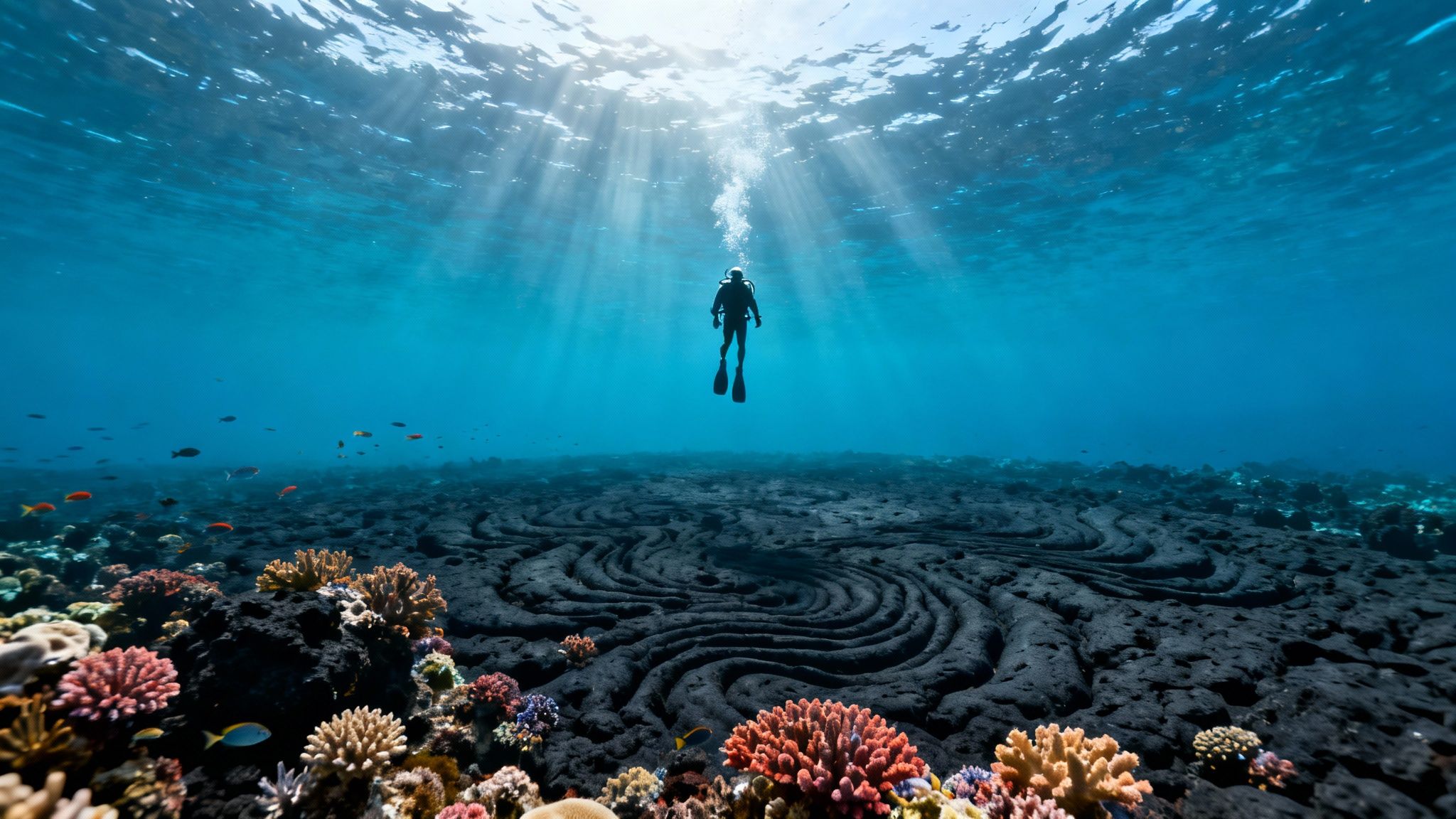
This guide is your complete roadmap to an unforgettable adventure, whether you’re dreaming of gliding alongside gentle giants on the Manta Ray Night Dive or navigating through hidden underwater arches. We'll break down exactly what makes this a top-tier destination for divers of all stripes and help you plan a trip that’s anything but ordinary. The Kona coast is the star of the show, offering a sheltered paradise with dependably calm, clear conditions that make it an incredible year-round destination for diving tours.
The Big Island’s reputation as a world-class diving hub is well-earned and has deep roots. Its one-of-a-kind volcanic topography and incredible marine biodiversity have been drawing divers here for decades. In fact, way back in a 1986 survey, the Big Island was already a huge force in the state's dive industry, accounting for 21.4% of all certified scuba tours. This long-standing history has cemented its place on the bucket list for underwater explorers everywhere.
What Sets the Big Island Apart
So, what’s the secret? It all comes down to a perfect blend of geology and geography that creates a truly unique underwater environment. As the youngest island in the Hawaiian chain, its volcanic origins are on full display, both above and below the waves.
Here's a taste of what defines the Big Island diving experience:
- Lava Formations: Imagine swimming through intricate lava tubes, under massive archways, and into submerged caverns—all created by ancient lava flows. These structures offer a dramatic, almost otherworldly backdrop and provide shelter for countless marine species.
- Vibrant Coral Reefs: The reefs here are just buzzing with life, including many endemic species found only in Hawaii. The coral gardens are healthy and vibrant, bursting with a kaleidoscope of colors.
- Exceptional Visibility: The water along the Kona coast is famous for its clarity, often letting you see for more than 100 feet. This is thanks to the lack of major rivers and runoff, which keeps the ocean beautifully pristine.
- Unique Marine Encounters: From the world-famous Manta Ray Night Dive to spontaneous encounters with spinner dolphins and Hawaiian green sea turtles (honu), the marine life is simply breathtaking. To get the full picture, check out our guide on what makes the Big Island so good for scuba diving.
With its stunning underwater landscapes and diverse marine ecosystems, the Big Island truly offers some of the most memorable and incredible diving opportunities in the world.
Check Availability
Experiencing the Kona Manta Ray Night Dive
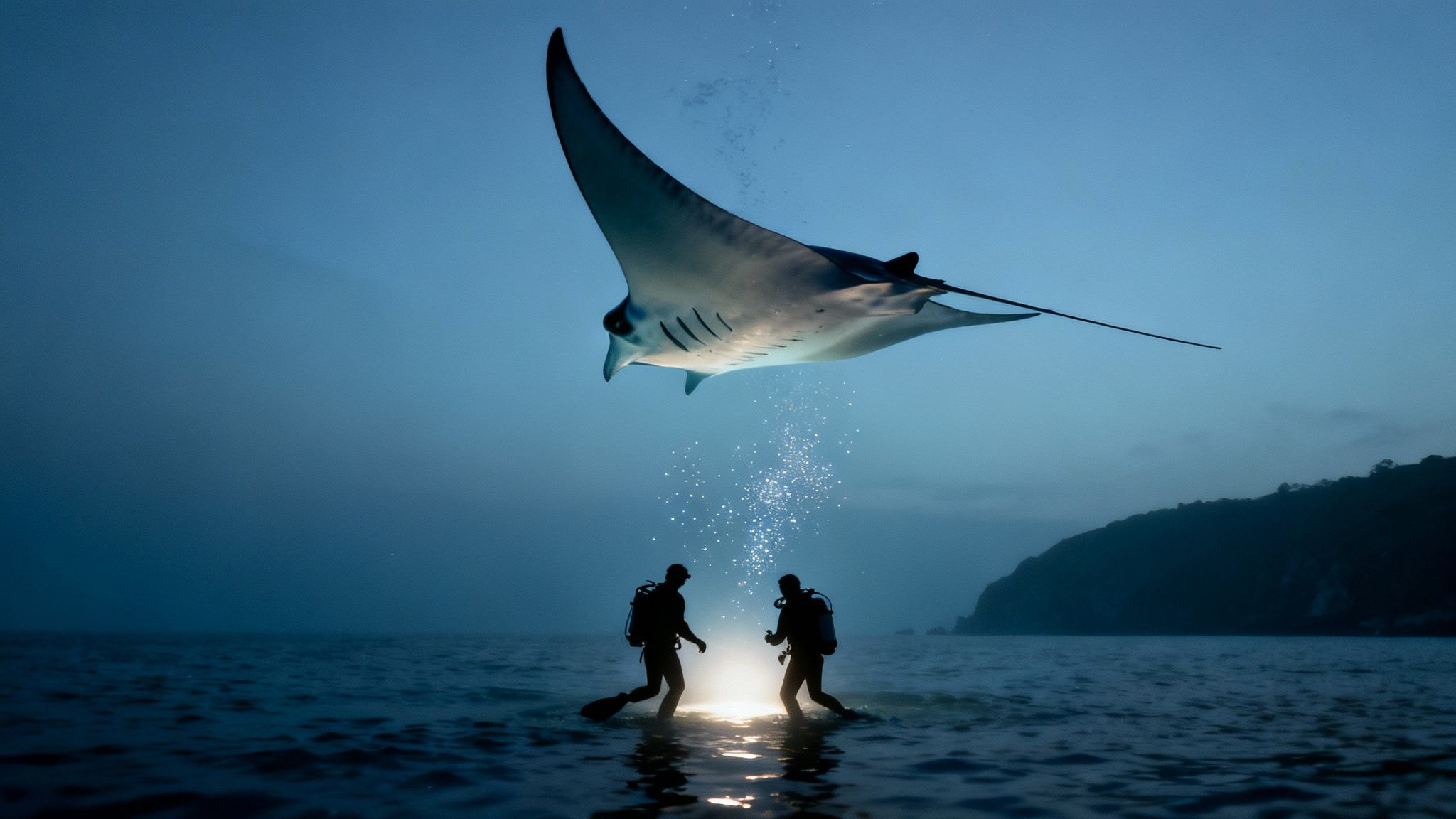
If there's one dive on the Big Island that everyone talks about, it’s this one. The Kona Manta Ray Night Dive isn't just a dive; it's a world-famous underwater spectacle, and for good reason.
Picture this: You slip into the warm, dark ocean just after sunset. Your guide leads you to a spot on the sandy bottom where a powerful light—what we call the "campfire"—shines up into the water column. It turns the dark sea into a glowing, otherworldly stage.
This light is a massive magnet for plankton, and as these tiny organisms swarm to the light, they create an irresistible, all-you-can-eat buffet. Then, the stars of the show arrive. Giant manta rays, some with wingspans stretching over 12 feet, glide out of the darkness and into the beams. They perform a silent, beautiful ballet, swooping and barrel-rolling with their mouths wide open to filter the plankton. Having these gentle giants soar just inches over your head is something you will never, ever forget.
The Big Island is known globally for this incredible encounter, and its reliability is a huge part of the appeal. Manta rays show up on about 85-90% of these dives, making it one of the most dependable places on the planet to see them.
Why Garden Eel Cove is the Premier Location
While you can do this dive at a couple of spots, Garden Eel Cove (also known as Manta Heaven) is hands-down the superior choice for the manta ray dive tour. Its location is naturally protected, which means the conditions are almost always calmer and safer—a huge plus for any night dive.
But the advantages of Garden Eel Cove go beyond just calm water:
- Better Viewing Area: The way the "campfire" is set up here allows divers to settle in a neat semi-circle on the seafloor. This gives everyone a front-row seat to the action without feeling like you're piled on top of each other.
- Better Reefs: The coral reef surrounding the site is noticeably more vibrant and alive. A healthier ecosystem doesn't just look prettier; it supports a richer variety of marine life for you to see during your dive.
- Consistent Encounters: Because it's such an established and ideal spot, Garden Eel Cove consistently draws in a lot of mantas. It's not uncommon to have multiple rays feeding gracefully throughout the entire dive.
Simply put, choosing Garden Eel Cove gives you a calmer, more personal, and ecologically richer experience.
Your Unforgettable Manta Adventure
The whole experience starts with a stunning boat ride along the Kona coast as the sun sets, lighting up the sky. On the way, the crew gives a thorough briefing covering the dive plan, safety protocols, and, most importantly, how to interact with the mantas respectfully.
Once you’re in the water, the real magic starts. You’ll spend about 45 minutes completely mesmerized by the silent, graceful dance of these magnificent animals.
This dive is truly a cornerstone of any Big Island scuba diving trip. The combination of a breathtaking natural phenomenon with a well-run, safe operation makes it an adventure you can’t miss. To get a full rundown of the trip, you can learn more about the Kona Manta Ray night dive here.
Check Availability
Exploring Kona’s Top Dive Sites
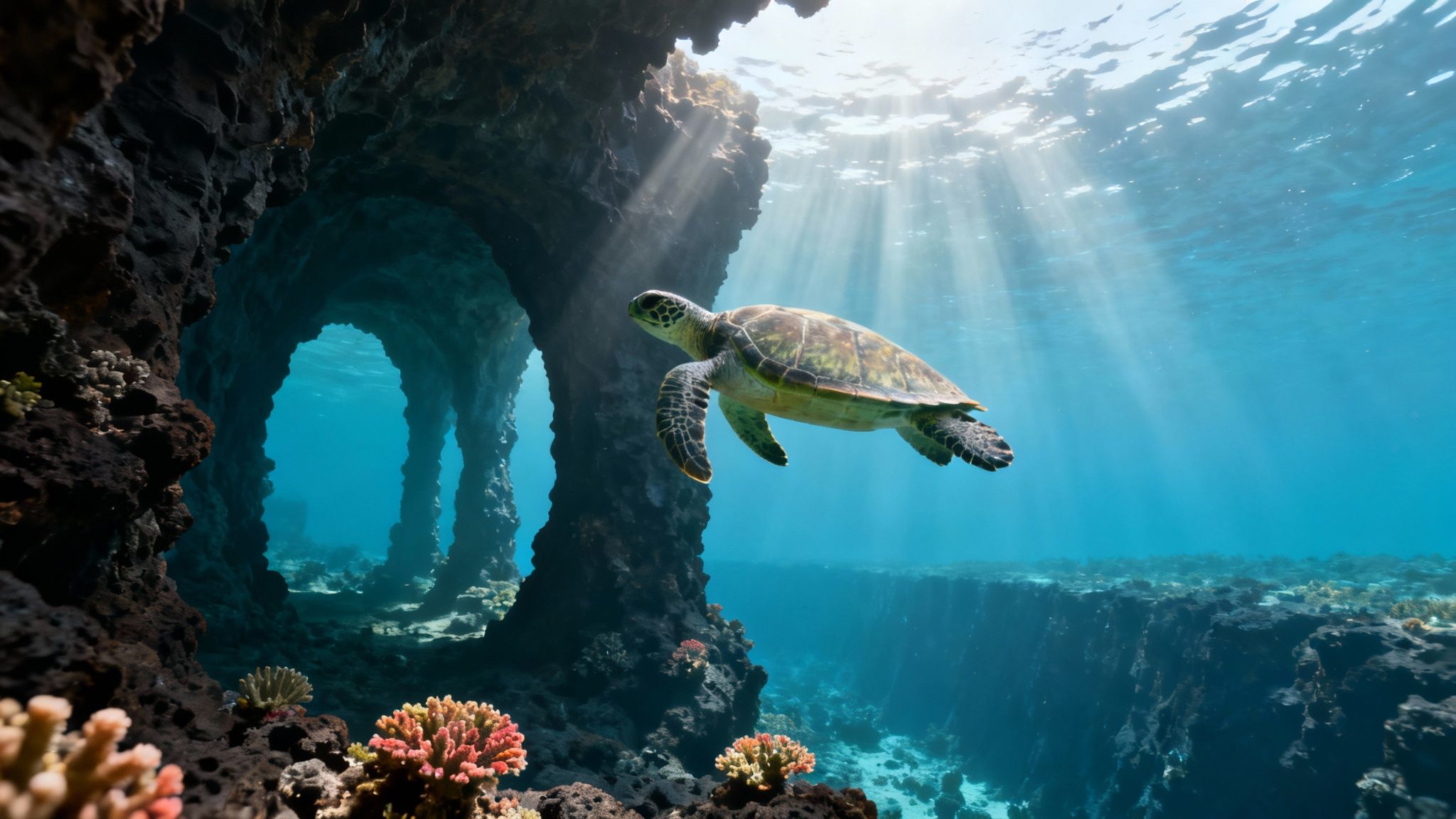
Everyone talks about the Manta Ray Night Dive, and for good reason—it's epic. But let me tell you, the daytime diving along the Kona coast is just as spectacular. The island’s volcanic soul shaped an incredible underwater landscape full of dramatic lava tubes, massive archways, and sprawling coral gardens.
What I love most is that no two dives are ever the same. You can spend a week here and feel like you've explored a dozen different worlds. Let's dive into a few of my favorite spots that you absolutely shouldn't miss.
H3: Au Au Crater: A Submerged Volcanic Wonder
If you want a dive that feels otherworldly, head straight for Au Au Crater. Just north of Kona, this submerged volcanic crater is a geologist's dream. Dropping into the crater through its huge, sweeping archway is an experience you won't forget.
Inside, the walls are covered in coral, and the sandy bottom is a favorite hangout for whitetip reef sharks just chilling out. The whole structure is a powerful, humbling reminder of the island’s fiery origins. It’s a truly unique topography.
H3: Golden Arches: An Underwater Cathedral
The name says it all. Golden Arches is famous for a series of magnificent lava tube formations that create these breathtaking underwater archways. Gliding through them as sunlight streams down from the surface is just magical.
It’s a photographer’s paradise, with endless opportunities for dramatic shots. But it's not just about the rock formations. Keep your eyes peeled for critters tucked away in the nooks and crannies—I’ve found octopuses, colorful nudibranchs, and more. This is a perfect example of what makes Big Island scuba diving sites so special.
H3: Garden Eel Cove: A Daytime Delight
You might know Garden Eel Cove for the manta show at night, but it’s a whole different vibe during the day and just as amazing. The reef here is incredibly healthy and absolutely buzzing with life. You’ll be surrounded by parrotfish, butterflyfish, and Moorish idols as you cruise along the gentle slope.
And of course, there are the garden eels! Find the sandy flats, hover quietly, and watch as hundreds of these shy little creatures pop up and sway in the current. It's mesmerizing. You’re also almost guaranteed to spot a few honu (Hawaiian green sea turtles) gliding effortlessly past.
Exploring Kona's daytime sites is like opening a new chapter in an epic adventure story. Each reef and lava tube tells a different tale of the island's history and showcases a new cast of vibrant marine characters.
Big Island Dive Site Snapshot
To help you get a better feel for what the Kona coast offers, here’s a quick rundown of some of the top spots. Think of it as a cheat sheet for planning your dives.
| Dive Site | Key Features | Average Depth | Best For |
|---|---|---|---|
| Au Au Crater | Submerged volcanic crater, large archway, unique geology. | 40-60 ft | Adventurous divers, photographers, seeing unique topography. |
| Golden Arches | Series of lava tube archways, dramatic lighting. | 35-50 ft | Photographers, divers who love swim-throughs. |
| Garden Eel Cove | Healthy coral, large garden eel colony, turtles. | 30-50 ft | All skill levels, great for a relaxed and vibrant reef dive. |
| Kaiwi Point | Dramatic wall dive, pristine finger coral, turtles. | 50-100+ ft | Advanced divers, those who love deep walls and pelagics. |
This is just a taste, of course. The real magic happens when you get in the water and see it for yourself. Each site has its own personality, and part of the fun is finding your personal favorite.
H3: Kaiwi Point: A Premier Wall Dive
If you love the feeling of floating alongside a massive underwater cliff, you have to check out Kaiwi Point, which we sometimes call Turtle Pinnacle. This is a classic wall dive, with a dramatic drop-off that disappears into the deep blue.
The wall itself is stunning, covered in healthy finger coral and often swarmed by huge schools of fish. But here's what makes it a must-do:
- Pristine Coral: The coral formations here are incredibly dense and healthy.
- Turtle Encounters: As its nickname suggests, this is one of the most reliable spots to find Hawaiian green sea turtles.
- Pelagic Possibilities: Always, always keep an eye out in the blue. You never know when spinner dolphins or even larger sharks might cruise by.
Kona truly has something for everyone, which is why it's a world-class diving destination.
Check Availability
How to Choose the Right Kona Dive Operator
Picking the right dive operator for your Big Island scuba diving adventure is probably the single most important decision you'll make. It’s about so much more than just getting a ride out to a reef; the crew you choose will literally hold your life, and your good time, in their hands. A great operator can make a good dive absolutely unforgettable, while a bad one can ruin a trip.
You have to learn to see past the slick websites and glossy brochures to find an operation that’s the real deal. What you're looking for is a team that’s just as committed to your safety and the health of the reef as they are to showing you a good time. Everything from the captain's briefing to the condition of the O-rings on your rental gear tells a story.
What Really Matters in a Top-Tier Dive Shop
When you start comparing dive companies in Kona, cut through the noise and focus on the things that can't be compromised. These are the markers that separate the truly great from the merely good.
- An Obsession with Safety: This is non-negotiable. Look for shops with well-maintained equipment, clear emergency plans, and guides who are trained and confident. Ask them about their safety protocols—a good shop will be proud to tell you.
- Small Groups: Getting stuffed onto a boat with 20 other divers is a completely different experience than diving with a small, intimate group. Smaller groups mean more personal attention, less chaos underwater, and a much better chance of seeing shy marine life.
- Good Boats and Quality Gear: A cramped, rusty boat with a rickety ladder can put a damper on the day. You want a comfortable boat with shade, a freshwater rinse, and an easy way to get in and out of the water. If you're renting gear, it should be clean, modern, and serviced regularly.
- Guides Who Genuinely Care: The best divemasters are more than just underwater tour guides. They're total ocean nerds who get genuinely excited about spotting a rare nudibranch or sharing a cool fact about coral. Their passion is infectious and makes the whole experience better.
While scuba fatalities in Hawaii are thankfully rare—with 28 recorded between 2009 and 2018—that number is a stark reminder of why you must choose an operator who puts safety above all else. You can dig into more data on Hawaiian water sport safety to get the full context.
A Gold Standard: Kona Honu Divers
In a sea of options, Kona Honu Divers is a perfect example of an operator that just gets it right. Their entire philosophy is built around a premium experience, one that’s grounded in a deep love for the ocean and a serious commitment to conservation. They consistently nail all the things that matter, from their roomy, top-notch boats to their incredibly knowledgeable and friendly crew.
They make a point of keeping their groups small, which means every diver gets the attention they deserve. This is a huge plus, especially if you're a new diver or haven't been in the water for a while. It creates a relaxed, fun vibe on the boat and leads to much more respectful and amazing encounters with wildlife.
But you don’t have to take our word for it. Their reputation speaks for itself through glowing reviews from divers who’ve been out with them.
Other Great Operators in Kona
To give you the full picture, Kona is blessed with several other fantastic dive shops that have built solid reputations over many years. It’s always smart to check out a few options before you decide.
Jack's Diving Locker is an institution on the island. They've been around for ages and are known for their excellent training programs and big, comfortable boats. They have a massive following for a reason.
Big Island Divers is another very popular outfit, often getting high praise for their super-friendly staff and a great mix of tours for all skill levels. They run a tight ship and know how to show their guests a great time.
In the end, the "best" operator often comes down to personal fit. Do your homework, prioritize safety and service, and find a team whose passion for the ocean matches your own. That’s the real secret to an amazing Kona diving experience.
Check Availability
Venturing into Advanced Diving Experiences
For divers with a few more logbook entries and a real taste for adventure, the Big Island scuba diving scene opens up a whole new world. Once you’re solid on your buoyancy and ready for a bit more of a challenge, Kona’s advanced sites are waiting.
These dives often mean deeper profiles, more complex underwater terrain, and the chance of stronger currents. But for a skilled diver, the rewards are absolutely worth it. You’ll get to explore dramatic drop-offs that plunge into the abyss, navigate intricate lava formations that feel like submerged cathedrals, and spot marine life that prefers the deeper, quieter parts of the ocean.
These sites demand sharp skills and awareness, but the payoff is huge. The feeling of gliding along a deep wall or peeking into an ancient lava tube is something that sticks with you long after you've surfaced. If you’re itching to push your limits, signing up for an Advanced Dive Tour is the perfect way to explore these incredible environments safely.
The Kona Blackwater Dive
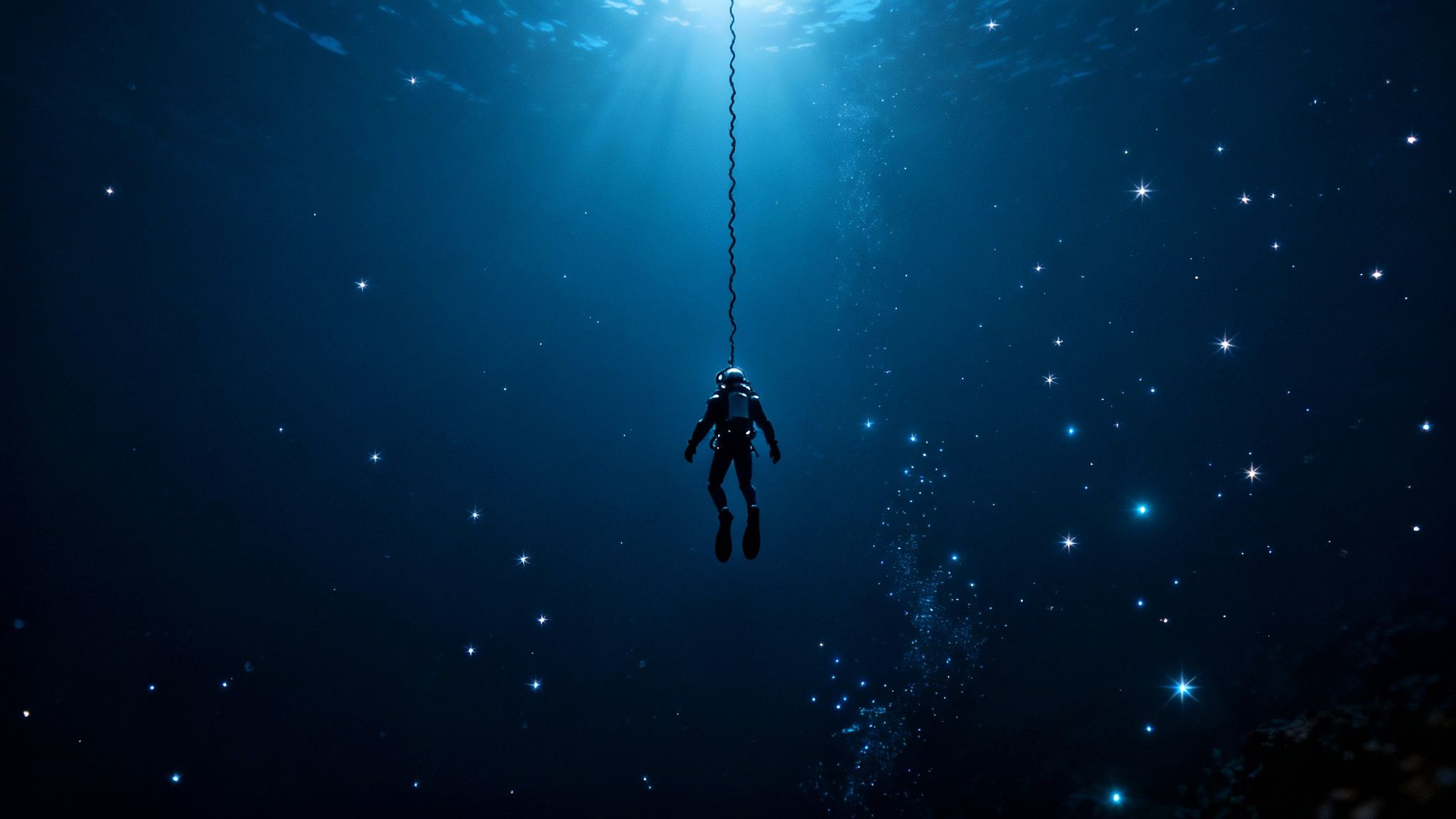
Of all the incredible advanced dives Kona offers, one stands out as truly surreal: the Blackwater Dive. Forget everything you think you know about diving. This isn't about exploring a reef; it’s about exploring the deep, open void. Honestly, most people say it feels more like floating through outer space than swimming in the ocean.
Here’s how it works: the boat takes you miles offshore, where the ocean floor is thousands of feet below. After sunset, you descend to about 50 feet and clip onto a tether connected to the boat. Suspended in the immense darkness of the open ocean, you just float and wait.
A Journey into the Deep
So, what are you waiting for? Only the largest migration on Earth. Every single night, countless bizarre and fascinating creatures rise from the depths to feed near the surface under the cover of darkness. Many of these animals are bioluminescent, creating their own light in the pitch-black water.
The Kona Blackwater Dive is a front-row seat to a nightly alien invasion. You'll witness creatures you've never seen before—and may never see again—as they drift past your light in a silent, mesmerizing procession.
You might come face-to-face with things like:
- Pygmy Squids: Tiny, iridescent cephalopods that pulse with unbelievable colors.
- Venus' Girdles: Shimmering, ribbon-like creatures that flash with rainbow light.
- Larval Fish: The transparent, otherworldly juvenile stages of fish you might recognize from the reef.
- Bioluminescent Jellies: Ethereal blobs that glow with a strange, internal light.
This dive is a macro photographer's dream and an unforgettable adventure for any experienced diver looking for something completely different. It's a specialized trip that requires rock-solid confidence and buoyancy control, but it's easily one of the most remarkable dives you will ever do.
Venturing into these advanced realms of big island scuba diving pushes your skills and opens up a new universe of underwater discovery. The Blackwater Dive tour is the ultimate expression of this—a rare glimpse into a hidden ecosystem that few will ever see firsthand.
Check Availability
Planning Your Ultimate Big Island Dive Trip
Alright, let's get down to the nitty-gritty of planning your trip. Turning that dream of Big Island scuba diving into reality is all about sorting out the details before you get on the plane. A little prep work now means you can spend your vacation focused on the incredible world beneath the waves, not scrambling for forgotten gear.
Choosing the Best Season to Dive
Here's the great news: there’s really no bad time to dive the Kona coast. The island’s massive volcanoes act as a natural shield, blocking the trade winds and leaving the western side with incredibly calm, clear water almost all year long. That said, there are some subtle differences between the seasons that might sway your decision.
- Summer (May – October): This is what most people consider peak season, and for good reason. The ocean often looks like a sheet of glass, and the water is wonderfully warm, usually hovering between a balmy 79-82°F (26-28°C). It's pure bliss.
- Winter (November – April): The water might dip a few degrees, typically into the 74-77°F (23-26°C) range, and you can get the occasional bigger swell rolling in. But the real magic of winter is the humpback whales. While you're unlikely to see one on a dive, hearing their haunting songs echo through the water around you is an experience that will stick with you forever.
Your Dive Trip Packing Checklist
Packing for a dive trip is a balancing act. You want to be prepared, but you don't want to haul your entire dive locker across the Pacific. While you can always rent fantastic gear from top-notch shops like Kona Honu Divers, there's nothing quite like the comfort and fit of your own equipment.
Here’s a quick-and-dirty checklist to get you started:
- Dive Gear Essentials: Your mask, snorkel, fins, and dive computer are the must-haves. If you're bringing your own BCD and regulator, great! A 3mm wetsuit is usually perfect for the summer, but a 5mm is a smart choice for winter, especially if you get chilly.
- Safety & Certification: This is non-negotiable. Bring your c-cards (physical or digital) and your logbook. Good dive insurance is also something you should never leave home without.
- Reef-Safe Sunscreen: Please, please, please pack this. The chemicals in regular sunscreen, like oxybenzone, are devastating to our fragile coral reefs. Do your part and stick to mineral-based, reef-safe options.
- Comfort Items: A reusable water bottle is essential for staying hydrated. I also never go without a light windbreaker for the boat ride home after a cool night dive, and a good pair of polarized sunglasses makes all the difference.
When you plan ahead, you get to focus on what matters: the dive. A little bit of thought before you leave makes for a smooth, unforgettable adventure.
Understanding Certification Levels
Think of your certification card as a key—it determines which doors you can open in Kona's underwater world. And trust me, there are some incredible doors to unlock.
With an Open Water Diver certification, you have access to the vast majority of Kona's stunning reef sites. Most of the action—the vibrant coral gardens, the lava tubes, the bustling fish life—happens in relatively shallow water, usually between 30-60 feet. This certification is all you need to experience the mind-blowing Manta Ray Night Dive.
But if you've got your Advanced Open Water card, a whole new level of diving opens up. This certification prepares you to safely explore deeper sites, like the dramatic walls that plunge into the deep blue. It's also your ticket to one of the most unique experiences on the planet: the Kona Blackwater Dive.
No matter what your certification level is, an amazing dive is waiting for you here. To see what's on offer for every type of diver, you can check out all the available Kona diving tours.
Check Availability
Your Big Island Diving Questions, Answered
Planning a scuba trip to the Big Island always brings up a few questions. Let's tackle some of the most common ones so you can feel confident and ready for your underwater adventure.
What’s the Best Time of Year to Dive?
Here's the great news: Kona diving is fantastic year-round. The island's massive volcanoes act as a natural shield, protecting the western coast from the trade winds and keeping the waters remarkably calm and clear.
That said, there are some subtle differences between the seasons that might influence when you visit:
- Summer (May – October): This is when you'll find the calmest, glassiest ocean conditions. Water temperatures are at their warmest, hovering between a balmy 78-82°F (25-28°C).
- Winter (November – April): The water might be a few degrees cooler, but this is peak humpback whale season. While seeing one underwater is incredibly rare, hearing their haunting songs echo through the water during your dive is an experience you will never forget.
Do I Need to Be an Advanced Diver to Dive in Kona?
Not at all! Kona is a fantastic place for divers of all experience levels. Many of the most stunning and lively reefs are in shallow, protected bays, making them perfect for newly certified Open Water divers.
However, having your Advanced Open Water certification definitely unlocks more of the underwater landscape. It's your ticket to exploring deeper volcanic structures and walls, and it's a must-have for truly unique experiences like the surreal Kona Blackwater Dive. We have diving tours designed for every certification out there.
Is the Manta Ray Night Dive Safe?
Absolutely. When you dive with a professional and experienced operator like Kona Honu Divers, the Manta Ray Night Dive is exceptionally safe. Your safety is, and always will be, our number one priority.
Our expert guides give a thorough pre-dive briefing, stick to strict safety protocols, and stay with you for the entire dive. We primarily use Garden Eel Cove, a well-managed site designed for safe and respectful encounters with these gentle giants.
What Will I See Besides Manta Rays?
The sheer amount of life in the waters off the Big Island is incredible. While the mantas get the spotlight, the Kona coast is teeming with other amazing marine animals. On any given dive, you've got a great shot at spotting:
- Hawaiian green sea turtles (honu) gliding by
- Playful spinner dolphins
- Whitetip reef sharks resting on the seafloor
- Curious eels and clever octopuses
- A kaleidoscope of colorful endemic fish, like Hawaiian sergeants and parrotfish
The island's unique volcanic underwater terrain, full of dramatic lava tubes and arches, provides the perfect home for this incredible diversity. Every dive truly is a new adventure.
Ready to book your underwater adventure?
Check Availability