
Picture this: you descend into crystal-clear, deep blue water, and instead of just sand and coral, the entire seascape is shaped by ancient lava flows. That’s what Big Island scuba diving is all about. It’s an underwater world sculpted by volcanoes, making it a truly unique and world-class destination for divers.
Why the Big Island Is a World-Class Diving Destination
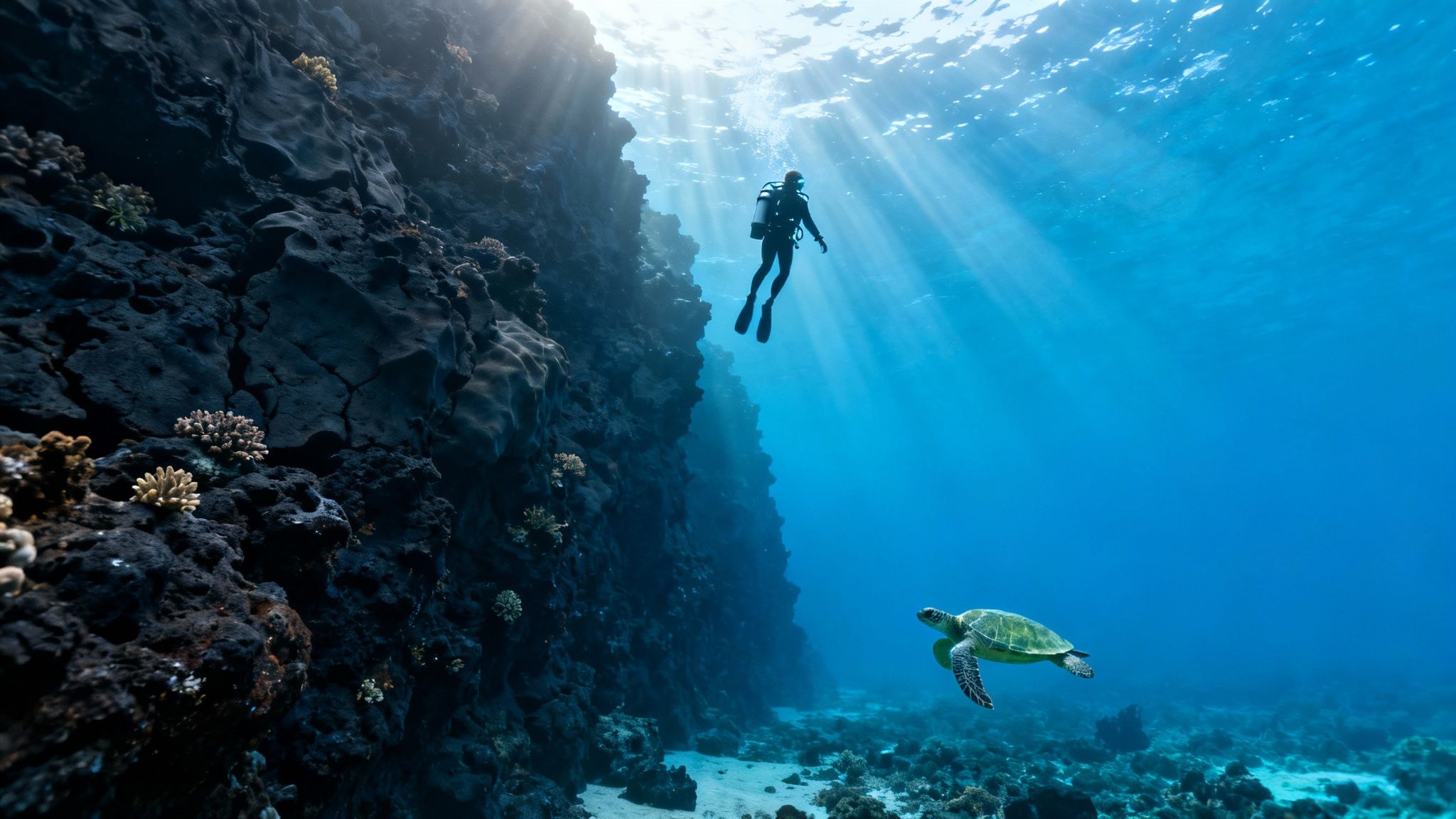
The Big Island isn't just another pretty spot on the map; it’s a living, breathing geological wonder. The island's volcanic past has left behind an incredible underwater playground filled with lava tubes, massive archways, and submerged craters you can actually swim through.
These dramatic structures are the direct result of molten lava hitting the cold Pacific Ocean and hardening over thousands of years. This process created a complex, rugged environment that has since become a thriving home for all kinds of marine life. It’s this wild mix of geology and biology that makes diving here so different from anywhere else.
The Kona Coast Advantage
Most of the island’s best diving happens along the Kona coast, and for good reason. The massive volcanoes of Mauna Loa and Hualalai act as a natural shield, protecting the coastline from the strong trade winds. The result? Consistently calm, clear, and warm water.
Visibility here often stretches beyond 100 feet, which means you can see everything in stunning detail. The conditions are perfect, whether you're a seasoned pro or just getting certified. For a deeper dive on what makes this area so special, check out our guide on why the Big Island is great for scuba diving.
The protected nature of the Kona coast means less current and calmer seas, providing a safe and comfortable environment for both beginner certifications and advanced technical dives.
This natural shelter allows delicate coral gardens to flourish, which in turn support an incredible density of fish and other critters. The Big Island has been a magnet for divers for decades, certifying thousands of visitors who come seeking these exact conditions.
Unforgettable Marine Life Encounters
The real magic, of course, is the life that calls these volcanic reefs home. The Big Island is a hotspot for incredible marine encounters.
You're almost guaranteed to run into:
- Hawaiian Green Sea Turtles (Honu): Seeing these graceful giants glide by is a core part of the Kona diving experience. They're everywhere!
- Endemic Fish Species: Many of the colorful reef fish you'll see are found only in Hawaiian waters, making every dive a unique sighting.
- Manta Rays: Kona is famous for one thing above all else—its legendary manta ray night dive, which is one of the most reliable places on Earth to see these gentle giants.
From the bucket-list Manta Ray Night Dive to exploring lava tubes packed with life, the Big Island delivers one-of-a-kind adventures. To see all the possibilities, take a look at our full range of diving tours.
Experiencing the Legendary Manta Ray Night Dive
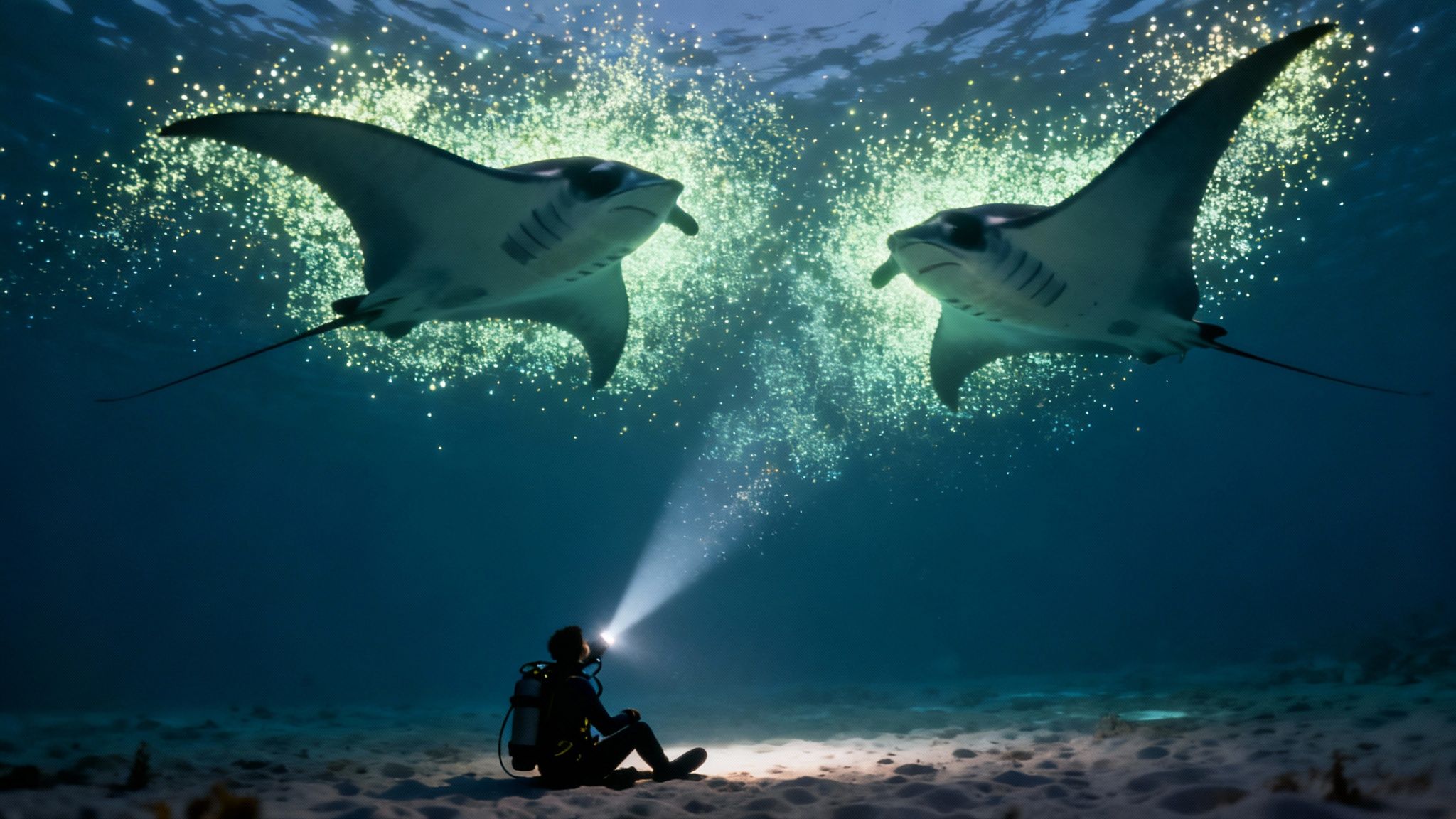
Of all the incredible things you can do while scuba diving on the Big Island, one experience is in a league of its own: the Manta Ray Night Dive. This isn’t just a dive. It's an underwater ballet, a powerful encounter that consistently gets named one of the best wildlife experiences in the world.
Picture this: you descend into the dark, warm ocean just after sunset. You and your group settle on the sandy bottom, arranging yourselves in a semi-circle. On cue, you all point your dive lights straight up. The beams of light converge in the water above you, creating what we affectionately call an "underwater campfire."
This light quickly attracts clouds of microscopic plankton, the manta rays' favorite meal. And then, the show begins. A massive, graceful shadow glides into the light, soon followed by another, and then another. Before you know it, giant manta rays with wingspans reaching 16 feet are swooping and barrel-rolling just inches from your face in a silent, mesmerizing feeding frenzy.
Why Garden Eel Cove Is The Premier Choice
You can do the manta dive at a few different spots, but one place consistently delivers a safer, more magical, and more responsible experience: Garden Eel Cove. While other sites are good, Garden Eel Cove (also known as Manta Heaven) has some key advantages that make it the superior choice for a manta ray dive tour.
So, what makes it the best spot on the island for this dive?
- A Protected Location: The cove is tucked into a bay, naturally shielding it from the big ocean swells. This makes for a much calmer and more comfortable dive, which is a huge plus, especially at night.
- Better Viewing Area: The site features a large sandy patch we call "the campfire." It gives divers a place to gather without damaging the reef and creates a perfect, amphitheater-like view of the action above.
- Healthier Reefs: The coral surrounding the sandy bottom at Garden Eel Cove is vibrant and full of life. A healthy ecosystem means a more consistent supply of plankton, which keeps the mantas coming back night after night.
When you dive this location, you're not just getting a better show—you're supporting a more sustainable model for this incredible wildlife encounter.
What to Expect on Your Manta Adventure
Your manta ray journey starts with a sunset boat ride along the stunning Kona coast. On the way, the crew will give you a detailed briefing, explaining exactly how to interact with the mantas respectfully. The number one rule is "observe, don't touch." This is critical for protecting the rays' delicate, protective mucus coating. You can discover more about the specifics of the Kona manta ray night dive to get fully prepared.
Once you’re in the water and settled on the bottom, the wait is usually short. The Big Island is famous for its reliable manta sightings, with mantas showing up on 85-90% of nights.
There are no words to truly capture the feeling of a creature the size of a small car gliding effortlessly right over your head. It’s a moment of pure, humbling awe that connects you directly to the wild heart of the ocean.
You’ll spend about 45 minutes completely mesmerized as these gentle giants perform their silent dance. After surfacing, you’ll be greeted back on the boat with hot cocoa and snacks—the perfect way to warm up and share the excitement of what you just witnessed. It's a truly unforgettable highlight of any trip to the Big Island.
Discovering Kona’s Premier Underwater Landscapes
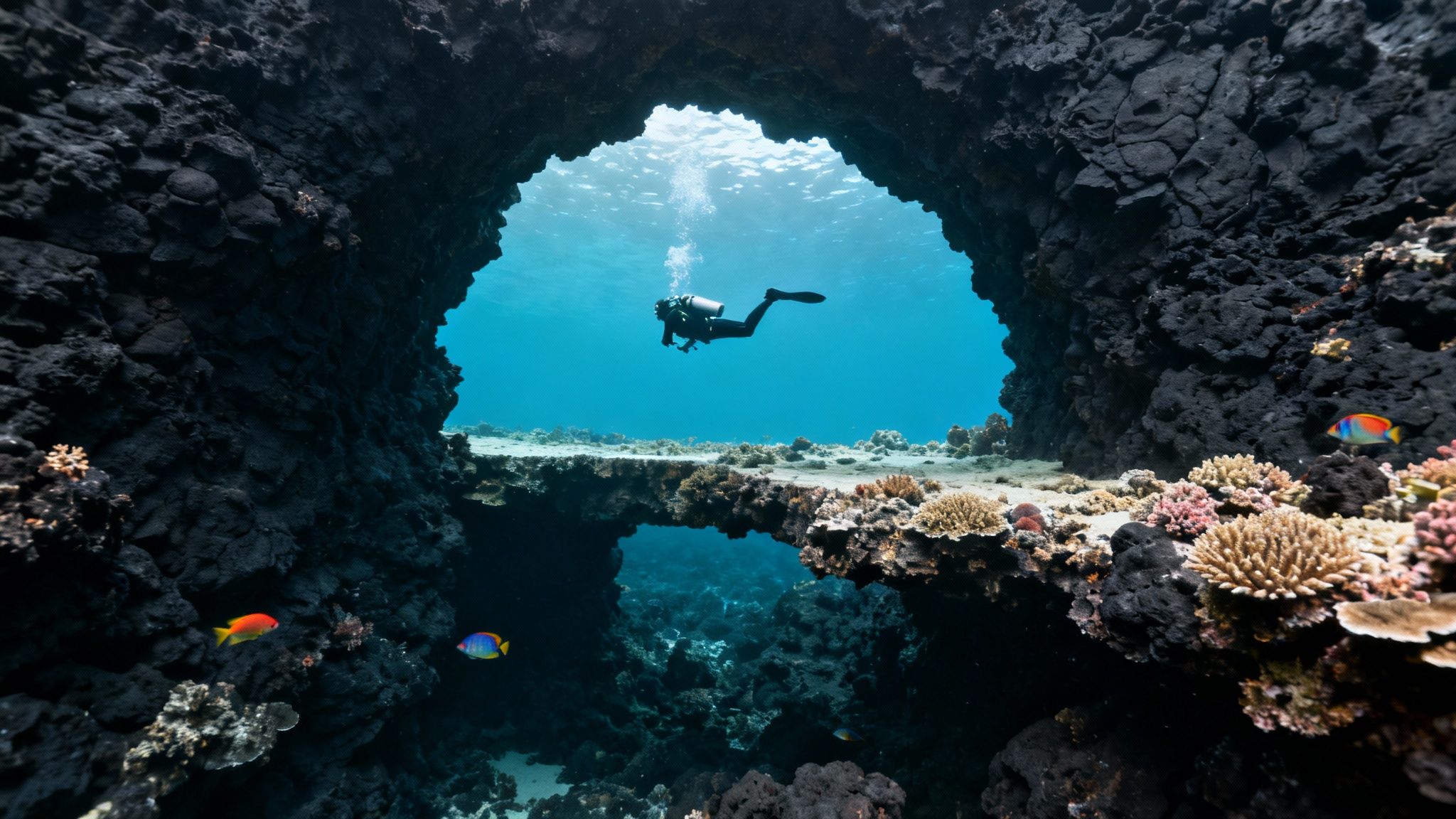
While the Manta Ray Night Dive gets most of the spotlight, what you find during the day is what truly makes Big Island scuba diving legendary. The Kona coast is stacked with world-class dive sites, each offering a unique glimpse into the island's volcanic soul and the incredible marine life that calls it home.
Forget flat, sandy bottoms. Kona's underwater world was sculpted by fire. Ancient lava flows have created a dramatic playground of arches, caverns, and swim-through tubes that are simply breathtaking to explore.
These incredible formations aren't just for show—they create the perfect habitat for everything from tiny, colorful critters found nowhere else on Earth to the beloved Hawaiian green sea turtle, the honu. It's a living, breathing museum of natural history down there.
To help you get a sense of what's out there, I've put together a quick comparison of some of the most popular dive spots along the Kona coast.
Kona's Premier Dive Sites At a Glance
| Dive Site | Key Features | Common Marine Life | Best For |
|---|---|---|---|
| Turtle Pinnacle | Volcanic pinnacle, turtle "cleaning station" | Green sea turtles (honu), reef fish, eels | Observing natural turtle behavior & photographers |
| Golden Arches | Massive lava arch, beautiful swim-through | Butterflyfish, triggerfish, frogfish | Underwater photography & dramatic topography |
| Au Au Crater | Submerged volcanic crater, pristine coral | Huge schools of fish, eels, octopus, sharks | Unique geology & feeling like you're in an aquarium |
| Suck 'em Up | Lava tube swim-through, surge channel | Whitetip reef sharks, invertebrates, nudibranchs | Adventurous divers & exploring lava tubes |
| Nai'a | Deepwater drop-off, "Dolphin House" | Spinner dolphins, garden eels, pelagic species | Spotting dolphins & advanced drift diving |
This is just a small taste, of course. The sheer number of incredible sites means you could dive here for weeks and never get bored.
Each dive site along the Kona coast tells a different story of the island's fiery creation. Navigating through a lava tube or hovering inside a submerged crater connects you directly to the powerful geological forces that shaped Hawaii.
Must-Dive Kona Locations
While every dive offers something special, a few spots consistently blow people away. If you only have a few days to dive, these are the ones you can't miss.
-
Turtle Pinnacle: Just like it sounds, this place is a magnet for honu. The site is a submerged volcanic cone that acts as a "cleaning station," where turtles line up to let reef fish nibble away their parasites. It's an incredible thing to witness.
-
Golden Arches: Get your camera ready. This spot is famous for a massive, stunning lava arch you can swim right through. It's often surrounded by a cloud of brilliant yellow butterflyfish, and the way the light filters through the arch is pure magic.
-
Au Au Crater: For a dive that feels completely different, head to Au Au Crater (pronounced "ow-ow"). You're literally diving inside a submerged volcanic crater. The collapsed wall makes for an easy entrance into a protected world of pristine coral and an insane variety of fish. It's like swimming in a giant, natural aquarium.
This constant variety is what keeps divers coming back to the Big Island year after year. One dive you might be exploring a dark lava tube looking for resting sharks, and the next you're floating over a sun-drenched reef. Every single dive is a new adventure.
Ready to see these incredible underwater landscapes for yourself? You can explore these locations and more on one of our guided Kona diving tours.
Taking on Advanced Dives and Unique Challenges
So, you're a certified diver with a respectable logbook full of beautiful reef tours. What's next? For those ready to push their own boundaries, the Big Island offers a new frontier of underwater exploration. This is where your training and experience truly pay off with sights very few people will ever get to see, showcasing why Big Island scuba diving is a playground for the seasoned adventurer.
Once you’re ready to look past the vibrant, sunlit reefs, Kona's deep, dark waters hold some of the most unique and thrilling experiences in the diving world. These aren’t your average dives; they demand a higher level of skill, total comfort in the water, and a genuine spirit of adventure.
The Otherworldly Kona Blackwater Dive
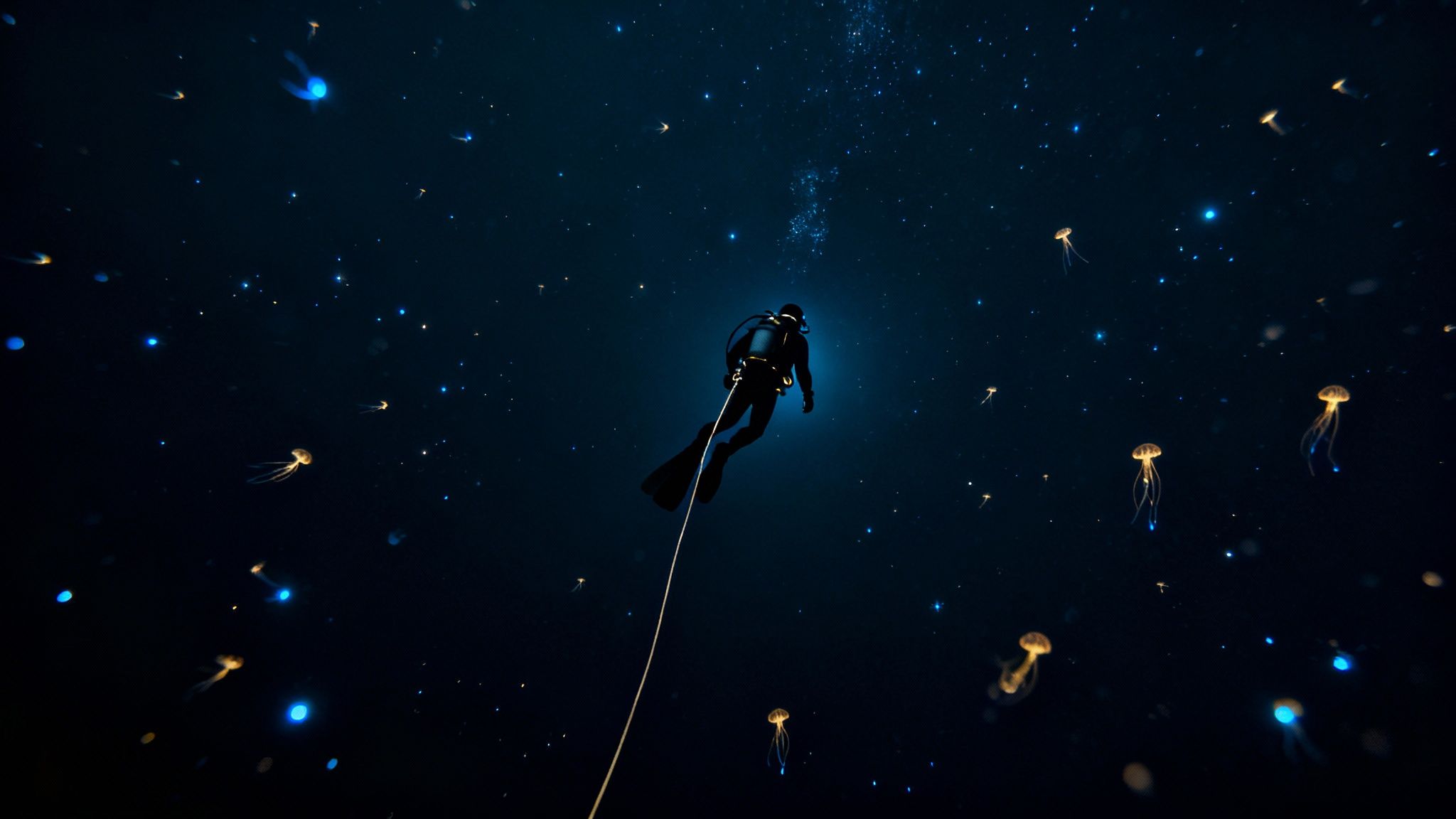
Picture this: you're floating in the inky blackness of the open ocean at night, miles from shore, with thousands of feet of water directly beneath you. Tethered to a boat, you simply drift through the abyss. This is the Pelagic Blackwater Dive, and frankly, it feels less like diving and more like a spacewalk.
What you're witnessing on this one-of-a-kind dive is one of the planet's largest migrations. Every single night, countless bizarre and fascinating creatures rise from the crushing depths to feed near the surface. You'll see many of them in their larval stages, looking absolutely nothing like their adult forms.
You’ll come face-to-face with marine life that seems truly alien, much of it bioluminescent, creating its own light in the profound darkness. It’s an unbelievable opportunity to see rare organisms that spend their entire lives in the open ocean, far from any reef. For the ultimate thrill, you can venture into the deep on our unforgettable Blackwater Dive tour.
Navigating Advanced Reefs and Lava Tubes
Beyond the blackwater experience, the Big Island’s volcanic history has created some seriously complex underwater landscapes that are perfect for advanced divers. These sites often throw stronger currents, deeper profiles, and more intricate navigation at you, but the reward is attracting larger and more diverse marine life.
Here's what you can expect on an advanced dive:
- Deep Pinnacles and Ledges: We're talking about exploring underwater mountains that shoot up from the ocean floor. They act as magnets for large pelagic species like sharks, jacks, and even the occasional whale shark.
- Intricate Lava Tube Systems: This is where you master your buoyancy, navigating through ancient, winding lava tubes. These swim-throughs are often filled with unique critters hiding out in the shadows.
- Drift Dives: Let the ocean do the work. You'll use the currents to your advantage, effortlessly gliding over huge stretches of reef and covering way more ground than on a typical dive.
Advanced diving in Kona is about more than just going deeper. It’s about engaging with the environment on a more technical level, using your skills to unlock access to wilder, more remote parts of the underwater world.
These challenging dives are incredibly rewarding for a reason. The stronger currents bring in nutrient-rich water, which supports a much higher density of life. This is where you have the best chance of encountering bigger animals and seeing the marine ecosystem in its most dynamic, untamed state.
At Kona Honu Divers, we cater to divers who are ready for that next level. Our experienced guides are absolute experts in navigating these demanding sites safely. If you're an experienced diver looking for a real challenge, check out our advanced dive tour, designed specifically for skilled divers like you.
How to Get Certified and Choose a Dive Operator
So, you’re ready to take the plunge into the incredible world of Big Island scuba diving? Awesome. Getting started is easier and way more fun than you might think, especially with the calm, confidence-inspiring waters we have here in Kona.
Whether you just want to give it a try for a day or you're aiming for a lifelong certification, the first step is always the same: finding the right guide. A great dive operator doesn't just point out the fish; they build your skills, make safety their top priority, and turn a good dive into an absolutely unforgettable one.
Your Journey to Becoming a Diver
For anyone new to the sport, the path usually starts with a simple introductory experience and can lead all the way to full certification. Kona's warm, clear, and protected waters are basically the perfect natural classroom for learning to breathe underwater.
Here’s how most people get started:
-
Discover Scuba Diving (DSD): Think of this as your test drive. A DSD is a one-day experience where an instructor teaches you the absolute basics—how to breathe, use the gear, and float effortlessly. You'll practice in shallow water before they take you on a real reef dive. It's the perfect way to see if you love it without committing to a full course.
-
PADI Open Water Diver Certification: This is the big one—the most recognized scuba certification in the world. The course mixes online learning (eLearning) with hands-on practice in a calm, pool-like setting, followed by four real open water dives. Once you're done, you're certified to dive to 60 feet (18 meters) with a buddy anywhere on the planet.
-
PADI Advanced Open Water Diver: Once you've got the basics down, the Advanced course is where you really start to refine your skills. You’ll complete five "adventure dives," including a mandatory deep dive and an underwater navigation dive. The other three are up to you. This certification opens up deeper sites, usually down to 100 feet (30 meters).
Each certification builds on the last, progressively unlocking more of the ocean for you to explore.
How to Select a Top-Notch Dive Operator
I can't stress this enough: choosing the right dive shop is the most critical decision you'll make. It has a direct impact on your safety, how much you enjoy yourself, and the quality of your training. A truly professional operator keeps their groups small, maintains their equipment flawlessly, and hires experienced, passionate instructors who love what they do.
When you're doing your research, zero in on these key factors:
- Safety Record and Reputation: Look for companies that have been around and have a stellar reputation. A quick search for online reviews will often give you the real story behind their commitment to safety and their customers.
- Quality of Gear: Does the shop use modern, well-maintained rental equipment? Gear that's serviced regularly is a non-negotiable sign of a professional operation.
- Instructor Experience: The best instructors are patient, clear, and know how to make learning fun and stress-free. They should build your confidence, not intimidate you.
- Boat Comfort and Amenities: A spacious, comfortable boat with perks like a hot shower and plenty of shade can make a world of difference, especially on your surface interval between dives.
Choosing a dive operator isn't just booking a tour; it's about entrusting a team with your safety and your adventure. The best shops invest heavily in their staff, their boats, and their gear to provide a seamless and secure experience from start to finish.
To help you make a solid choice, we've highlighted a few of Kona's top-rated operators below. For an even more detailed guide, check out our post on how to choose a Kona dive shop.
Comparing Kona's Leading Dive Companies
Transparency is everything, so here’s a look at some of the most respected names in the Kona diving community.
Kona Honu Divers
Known for their amazing customer service, top-tier boats, and a super experienced crew. Kona Honu Divers consistently earns five-star reviews for all their trips, from the world-famous manta ray night dive to advanced charters.
Jack's Diving Locker
A true Kona institution. Jack's has been around for a long time and runs a large operation with a huge range of courses and tours for every skill level.
Big Island Divers
Another one of Kona's established operators, Big Island Divers is known for a friendly staff and offers a full slate of daily dive charters and certification courses.
Taking a little extra time to research your options will pay off big time, ensuring your first (or next) Big Island scuba diving adventure is safe, educational, and absolutely incredible.
Your Kona Diving Questions, Answered
Planning a dive trip always brings up a few questions. To help you get everything squared away, we've put together some quick, straightforward answers about what to expect when you go scuba diving on the Big Island.
What’s the Best Time of Year to Dive the Big Island?
Here’s the great news: Kona is a fantastic, world-class dive destination any time you decide to visit. The water clarity and temperature are remarkably consistent all year long.
If you’re looking for the flattest, calmest seas, the summer months from May to October are your best bet. This is perfect for those who want glassy boat rides and super easy entries. The water is also at its warmest, hovering between a balmy 78-82°F (25-28°C).
Winter, from November to April, can bring a bit more swell to the islands. But thanks to the Kona coast's protected leeward position, the dive sites stay incredibly calm. The real bonus of winter diving? It’s humpback whale season. There's nothing quite like hearing their haunting songs echo through the water during your dive—it’s an experience that will stick with you forever. Water temps are still plenty warm, typically between 75-78°F (24-25°C).
What Kind of Wetsuit Should I Pack?
For almost everyone, a 3mm full wetsuit is the sweet spot for diving in Kona year-round. It gives you just the right amount of warmth for multiple dives without feeling bulky or restrictive.
On the hottest summer days, some divers who run warm might even get by with a 3mm shorty or just a rash guard.
But when the sun goes down, you'll want that extra insulation. For the Manta Ray Night Dive or a Blackwater Dive, a 3mm—or even a 5mm—wetsuit is a must. Your body cools down faster at night, and staying warm means you can relax and truly soak in the amazing sights.
Don't have the right gear? No problem. Top-notch operators like Kona Honu Divers have a full selection of quality rental gear to keep you comfortable. You can check out all their Kona diving tours and gear options before you even arrive.
Besides Mantas, What Else Will I See Down There?
The mantas are definitely the headliners, but the marine life off the Kona coast is absolutely packed with other stars. The underwater volcanic landscapes have created a complex, thriving home for a huge variety of creatures.
On any given dive, you're almost certain to run into:
- Hawaiian Green Sea Turtles (Honu): Seeing these gentle giants resting on the reef or gliding past you is a quintessential Hawaii experience.
- Spinner Dolphins: It's common for pods of these energetic dolphins to escort the boat on the way out to the site in the morning.
- Endemic Reef Fish: A huge number of the fish here can’t be found anywhere else on Earth. Keep an eye out for schools of milletseed butterflyfish, the iconic saddle wrasse, and the hard-working Hawaiian cleaner wrasse.
- Eels, Octopuses, and Critters: The lava rock is full of nooks and crannies, perfect hiding spots for moray eels, shy octopuses, and the bizarre-looking frogfish.
With a little luck, you might also spot whitetip reef sharks napping in lava tubes, elegant eagle rays cruising in the blue, or even bigger pelagic animals out in the deep.
Is Kona a Good Place to Get Scuba Certified?
Kona isn't just a good place to learn—it's one of the best places on the entire planet. The geography here has created a natural, protected classroom that is calm, safe, and breathtakingly beautiful.
The main reason it's so perfect for new divers is the conditions. Most dive sites are shielded from open-ocean swells, meaning the water is incredibly calm with little to no current. This lets you focus on your skills and build confidence without fighting the ocean.
Plus, the water is always warm and the visibility is often more than 100 feet. That crystal-clear view helps ease any anxiety and makes those first breaths underwater truly magical. Seeing a turtle swim by on your very first dive is a pretty powerful motivator!
Professional PADI dive centers like Kona Honu Divers are pros at creating a fun and supportive learning environment. They offer everything from a one-day Discover Scuba Dive to the full Open Water Diver certification course, all led by patient, experienced instructors.
Ready to see what the best of Big Island scuba diving is all about? The expert crew at Kona Honu Divers is ready to show you an unforgettable time, whether it's your very first dive or you're a seasoned pro looking for your next great adventure. Explore our full range of world-class dive tours today.