
Picture yourself slipping into the warm, turquoise Pacific, descending through crystal-clear water. Below you, a landscape sculpted by ancient volcanoes comes into view—a world of vibrant coral gardens, twisting lava tubes, and an incredible amount of marine life. This isn't a dream; it’s what Big Island scuba diving is all about.
Discover a World-Class Underwater Paradise
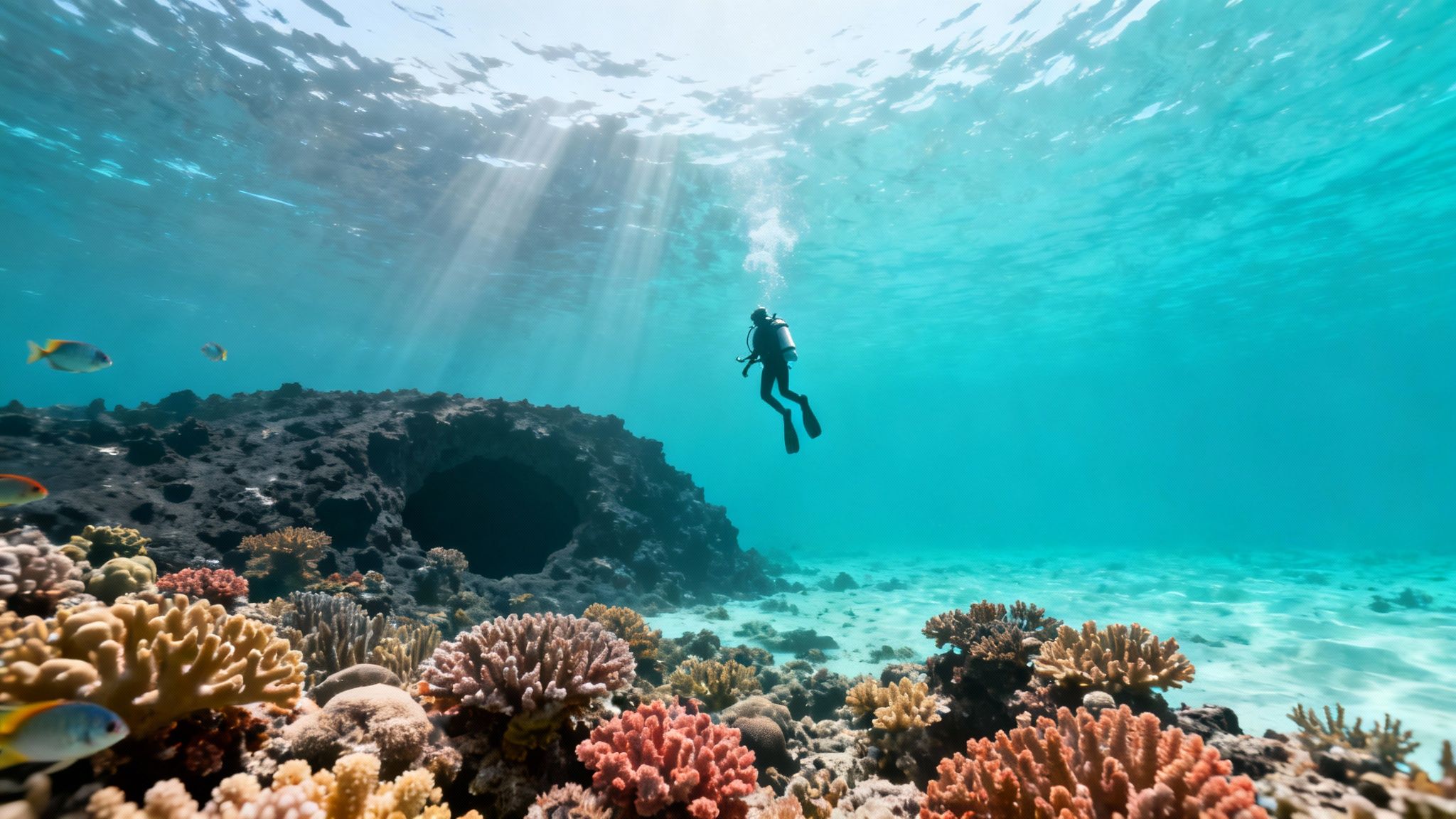
When divers talk about the best spots in the entire Hawaiian archipelago, the Big Island consistently tops the list. It’s a magnet for underwater enthusiasts from all over the world, and for good reason. The island's volcanic past has created a dramatic and breathtaking underwater environment, from intricate lava formations and sprawling coral reefs to stunning vertical drop-offs.
The Kona coast, in particular, is a diver's paradise. Sheltered by the island's massive volcanoes, the water here is famously calm with phenomenal conditions pretty much year-round. You can expect the water temperature to hover between a comfortable 75°F to 80°F (24°C to 27°C). And the visibility? It often pushes past an incredible 100 feet, making it a playground for photographers and anyone who just wants to soak it all in.
What Makes Kona Diving So Special?
The real magic of Big Island scuba diving is how it perfectly mixes easy-access diving with genuine adventure. Along the protected western coastline, you'll find sites for every experience level. There are gentle, shallow reefs perfect for your first few dives, along with deep, challenging pinnacles that will thrill even the most seasoned experts.
This thriving ecosystem is packed with an amazing cast of characters:
- Hawaiian Green Sea Turtles (Honu): These graceful residents are everywhere, often seen resting on the reef or soaring through the blue.
- Spinner Dolphins: It's common to see their playful pods from the dive boat, and if you're lucky, you might even encounter them underwater.
- Endemic Reef Fish: The reefs are alive with a dazzling array of fish species found nowhere else on Earth, adding a unique splash of color to the scenery.
- Larger Marine Life: Depending on the site and season, you could cross paths with eagle rays, various shark species, or even hear the haunting songs of migrating humpback whales.
Kona isn't just a place you go to dive; it's an immersive experience where volcanic geology and a flourishing marine sanctuary collide. Every single descent offers something new, whether it's spotting a tiny, colorful nudibranch hiding in a crevice or seeing the majestic silhouette of a manta ray pass overhead.
If you want an experience that's safe, memorable, and truly eye-opening, diving with a top-notch operator like Kona Honu Divers is the way to go. Their guides know all the secret spots and can introduce you to the wonders of Kona's underwater world. While scuba gets you deep into this marine world, you can also explore Hawaii's underwater paradise with a Captain Cook Snorkel Tour for an amazing view from the surface.
Ready to take the plunge? Check out the different guided diving tours in Kona to find the perfect trip for your skill level and interests.
Experience the Famous Manta Ray Night Dive

Out of all the incredible underwater adventures Hawaii offers, one dive stands in a class of its own. It’s the experience that truly defines Big Island scuba diving: the world-famous manta ray night dive. This isn't just another entry in your logbook; it's a breathtaking spectacle that consistently lands on "best dives in the world" lists.
Picture this: you're kneeling on the sandy ocean floor as dusk fades to night. Your guide gives the signal, and you switch on your dive light, pointing its beam straight up. The light catches millions of tiny plankton, creating a glowing column in the dark water. Then, a shadow emerges from the deep blue.
A giant manta ray, with a wingspan that can stretch over 15 feet, glides effortlessly into the light. It begins a graceful, silent ballet, swooping and barrel-rolling just inches above your head to scoop up the plankton. Before you know it, more mantas join the dance, turning the ocean into a mesmerizing stage.
A Truly Unique Hawaiian Phenomenon
So, what makes this dive so reliable and magical? It’s a brilliant, simple concept that works with nature. The dive community discovered that lights attract plankton, and plankton attract manta rays. This has turned a natural feeding behavior into one of the most consistent and awe-inspiring marine encounters on the planet.
This incredible activity, which really took off in the late 1980s, is now the cornerstone of Kona's dive scene. It’s so reliable that sightings are reported on 85-90% of tours.
The best part? It’s an adventure for almost everyone. Certified divers get a front-row seat on the ocean floor, looking up at the show. But if you're not certified, you can still join! Tour operators offer manta ray night snorkeling, where you can float on the surface and watch the ballet from above.
What to Expect on Your Manta Adventure
Your trip starts with a boat ride to one of the well-established feeding sites, affectionately known as "Manta Village" or "Manta Heaven." Along the way, the crew will give you a detailed briefing on safety and, just as importantly, how to interact with the mantas respectfully.
The golden rule is simple: observe, don't touch. Manta rays are covered in a protective mucous coating. Touching them can strip this layer away, making them vulnerable to infection.
Once you’re in the water, your guide will lead you to a designated spot to settle in and wait for the show to begin. It’s an incredibly organized and safe experience. For an excellent overview of the logistics, check out the ultimate adventure guide to Kona Manta Ray Night Snorkel.
Ready to witness this underwater performance for yourself? You can get all the details about what the dive entails on one of the best manta ray dive tours.
Honestly, this is a must-do for anyone visiting the Big Island. It’s an experience that will stay with you forever.
Explore Top Dive Sites Beyond the Mantas

While the Manta Ray Night Dive gets most of the spotlight, it's really just the opening act for the incredible scuba diving on the Big Island. The Kona coast is stacked with an amazing variety of dive sites, each with its own unique personality and underwater inhabitants. From sun-drenched, easy-going coral gardens to dramatic volcanic formations, there’s an adventure here for every diver.
The island’s fiery origins have sculpted an underwater playground of lava tubes, massive arches, and deep canyons that you won’t find anywhere else. These incredible structures have become the foundation for a vibrant, thriving ecosystem, and exploring them is what makes diving here so unforgettable.
Calm Waters and Coral Gardens for All Skill Levels
If you're new to diving or just want a relaxing tour of a beautiful reef, the Big Island has plenty of spots with calm, clear conditions. These sites are perfect for polishing your skills while being completely surrounded by a kaleidoscope of marine life.
One of the most loved sites is Honaunau Bay, better known as ‘Two Step’ for its easy-to-navigate lava rock entry. It's a world-famous snorkeling spot, but divers get to see the real magic in the deeper sections. Here you'll find gorgeous coral gardens and often spot Hawaiian green sea turtles just chilling out or munching on algae. The water clarity is usually so good it feels like you're floating in air.
Another must-see is Kealakekua Bay, home to the Captain Cook Monument. This entire bay is a protected Marine Life Conservation District, and it shows. It’s basically a sanctuary for fish, and diving here is like swimming in a perfectly curated aquarium. The reef slopes gently from the shore, packed with huge schools of yellow tang, parrotfish, and butterflyfish.
Thrilling Adventures for Experienced Divers
Ready to kick things up a notch? If you’re an experienced diver looking for a challenge, Kona’s underwater terrain delivers. We’re talking about dramatic drop-offs, deep canyons, and mind-bending lava tube swim-throughs that will test your skills and reward you with some truly epic sights.
Au Au Crater is a classic advanced dive for a reason. This submerged volcanic crater has sheer walls that just plunge into the deep blue, creating a sense of scale that’s hard to describe. It's famous for its wild lava formations, including arches you can swim right through. The currents can pick up here, but that’s what attracts the big stuff—we're talking sharks and majestic eagle rays cruising by.
For anyone wanting to explore these more demanding underwater environments, going with a guide isn't just a good idea, it's essential. Local experts know the sites inside and out and will get you through these complex spots safely, making sure you see the absolute best of Kona's advanced diving.
At Kona Honu Divers, we run specialized advanced dive tours for divers who are comfortable with deeper profiles and more challenging conditions. These trips take you to the sites that are a little further off the beaten path, guaranteeing a unique adventure.
The Ultimate Night Dive: The Kona Blackwater Dive
For the truly adventurous diver, there’s an experience that leaves the reef behind and takes you into the vast, dark emptiness of the open ocean. The Kona Blackwater Dive is a completely unique adventure that's quickly becoming a bucket-list dive for seasoned pros.
Here’s the deal: you’re tethered to a boat, drifting over thousands of feet of water in the middle of the night. Your dive lights cut through the darkness, attracting some of the ocean's weirdest and most rarely seen creatures as they make their nightly journey up from the deep. You’ll see bizarre larval fish, translucent squid, and alien-like jellies—creatures that look like they're from another planet entirely.
This dive isn't for the faint of heart, but it’s an incredible opportunity to see a part of the marine world that almost no one ever gets to witness. It's an otherworldly experience that will completely redefine what you think a night dive can be. If you're up for this deep-ocean quest, check out the Kona Blackwater Dive tour.
To help you get a sense of the options, here's a quick look at some of the Big Island's standout dive sites.
Big Island Dive Site Snapshot
| Dive Site | Best For | Key Features | Common Marine Life |
|---|---|---|---|
| Honaunau Bay (Two Step) | Beginners, Snorkelers | Easy shore entry, vibrant shallow reef, great visibility | Dolphins, Turtles, Reef Fish |
| Kealakekua Bay | All Levels | Protected bay, dense coral, calm conditions | Huge schools of Tang, Butterflyfish |
| Au Au Crater | Advanced | Submerged crater, wall dive, swim-throughs, potential currents | Eagle Rays, Sharks, large Jacks |
| Kona Blackwater | Advanced | Open-ocean night dive, pelagic vertical migration | Larval creatures, strange jellies, squids |
This is, of course, just a small sample. Every dive here tells a different story, and the best way to discover your favorite is to get in the water and start exploring.
Plan Your Ultimate Dive Adventure
With so many unbelievable places to explore underwater, a little bit of planning is your best friend for a smooth, unforgettable Big Island scuba diving trip. When you get the logistics dialed in—from timing your visit just right to knowing what to pack—all the guesswork vanishes. You can just focus on the pure excitement of the adventure waiting for you.
There's nothing better than feeling prepared. Knowing you’ve booked at the right time and have the right gear means you can soak in every single moment of Kona's world-class diving.
Choosing the Best Time to Visit
Let's be honest, there's no bad time to dive on the Big Island. The water stays in that perfect sweet spot all year, usually hovering between a comfortable 75°F and 80°F (24°C to 27°C). That said, different seasons bring their own unique brand of magic that might be exactly what you're looking for.
- Winter (December – March): This is humpback whale season. You'd be incredibly lucky to see one underwater, but what you will experience is the sound. Hearing their haunting, complex songs echo through the water during a dive is something you'll never forget. It’s a truly humbling experience.
- Summer (June – September): This is when you can expect the calmest, flattest seas and the warmest water. It's also peak tourist season, so be prepared for more people on the boats and at the popular dive sites.
- Spring & Fall (April-May, October-November): These "shoulder seasons" are my personal favorite. You get that perfect combination of fantastic dive conditions, warm water, and fewer crowds. It just makes for a more laid-back vibe all around.
If you really want to get into the nitty-gritty of weather patterns and what you'll see, we have a complete guide covering the best months to scuba dive in Hawaii.
Your Essential Dive Packing Checklist
Figuring out what to pack versus what to rent on-site is a game-changer for easy travel. While you can rent everything you need here, bringing your own personal gear can make a huge difference in how much you enjoy your dives.
A well-fitting mask and comfortable fins can make all the difference between a good dive and a great one. If you own your own, it's almost always worth bringing them along.
Here’s a quick rundown to help you decide:
What to Bring:
- Personal Gear: Your own mask, snorkel, fins, and dive computer. Comfort is king!
- Certification Cards & Logbook: Every dive operator will need to see proof of certification.
- Swimsuits & Reef-Safe Sunscreen: Help us protect our fragile coral ecosystems by choosing sunscreens without oxybenzone and octinoxate.
- Lightweight Wetsuit: A 3mm wetsuit is usually all you need to stay comfortable year-round.
- A Windbreaker or Jacket: Trust me, it can get chilly on the boat ride home, especially after a night dive when the wind picks up.
What to Rent:
- BCD and Regulator: Unless you're a hardcore diver who travels with perfectly serviced gear, renting these heavier items from a top-notch shop like Kona Honu Divers saves you a ton of hassle and airline baggage fees.
- Tanks and Weights: Don't even think about packing these—they are always provided by the dive operator.
A final pro-tip: book your dives well in advance. This is especially true for must-do experiences like the Manta Ray Night Dive or if you're visiting during the busy season. Securing your spot early means you won’t miss out on the adventures at the very top of your list.
Get Your Scuba Certification in Paradise

If you've ever dreamed of exploring the world beneath the waves, I can’t think of a better place to start than the Big Island. Earning your scuba certification here means your "classroom" is the calm, warm, and impossibly clear water of the Kona coast. It completely transforms the learning process from something that could feel intimidating into a genuine vacation adventure.
Getting certified is an incredible journey. You'll learn the science of diving, practice crucial skills until they become second nature, and finally, put it all together to explore the open ocean. And trust me, the Big Island makes every single step a joy.
Your Path to Becoming an Open Water Diver
The PADI Open Water Diver certification is your ticket to the underwater world, and it's recognized everywhere you go. The course is brilliantly designed to build your confidence from the ground up, breaking everything down into three manageable parts.
- eLearning (The Homework): Long before you dip a toe in the Pacific, you’ll start with an online program. You can chip away at this from your couch, learning the fundamentals of dive physics, gear, and safety. This gets the "book work" out of the way so your time in Hawaii is all about being in the water.
- Confined Water Dives (The Practice): This is where the real fun kicks in. In a super calm environment—like a pool or a sheltered ocean cove—your instructor will walk you through all the hands-on skills. You’ll get comfortable with everything from clearing a foggy mask to fine-tuning your buoyancy, all with an expert right by your side.
- Open Water Dives (The Adventure): This is the grand finale. You’ll complete four dives in the open ocean, applying everything you’ve practiced. Here in Kona, these aren't just training exercises; they're full-blown guided tours where you’ll be swimming with sea turtles, colorful reef fish, and maybe even a pod of dolphins.
Learning to dive in Kona means your very first breaths underwater might be taken while a Hawaiian green sea turtle glides past you. That immediate, profound connection to marine life is something few other places can offer, and it makes the entire experience feel truly magical.
Advancing Your Dive Skills
Already certified? The Big Island is a world-class destination to take your diving to the next level. The underwater terrain here is so diverse—from deep lava tubes to complex reef systems—that it provides the perfect natural training ground for advanced skills.
The Advanced Open Water Diver course is what most people do next. It's a blast. You’ll complete five different "adventure dives," which must include a deep dive and an underwater navigation dive. For the other three, you get to choose what interests you most. You could work on perfecting your buoyancy, try underwater photography, or even do a drift dive.
Beyond that, you can dive deep into specialty courses that match your interests. Imagine getting your Night Diver certification after witnessing the world-famous manta ray ballet, or becoming an Enriched Air (Nitrox) Diver to get more bottom time on Kona’s stunning reefs.
Whether you're just starting out or ready to expand your skills, Kona Honu Divers offers a complete lineup of PADI courses. You can learn more about getting started with our guide to PADI Open Water certification in Hawaii.
Essential Tips for Safe Diving in Hawaii
The thrill of Big Island scuba diving is something special, but your safety is what turns a great dive into a cherished memory. Hawaiian waters are as powerful as they are beautiful, so approaching them with a healthy dose of respect is the key to an amazing, incident-free trip.
First things first: you have to understand the local conditions. Even on the famously calm Kona coast, currents can pop up when you least expect them, especially around headlands or at deeper sites. This is exactly why diving with a professional, reputable dive shop isn't just a good idea—it's the most critical safety call you'll make. Local guides know these sites like the back of their hand and will make sure the conditions are right for your skill level.
Respecting Marine Life and the Reef
Safe diving isn't just about you; it's also about protecting the fragile underwater world you're there to see. Hawaii's coral reefs are living colonies of delicate animals. A single, accidental bump from a fin or hand can cause serious, lasting damage.
This is where your buoyancy control comes in—it's your most important skill as a diver. When you're neutrally buoyant, you can hover effortlessly, observing all the incredible details of the reef without ever touching it. It’s a win-win: you protect the coral and conserve your air, which means longer, more relaxing dives for you.
The golden rule of underwater exploring is simple: look, but don't touch. This goes for everything, from the coral itself to the amazing animals you’ll meet. Chasing or touching marine life, especially the beloved honu (sea turtles), is stressful for the animal and also illegal in Hawaii.
Choosing the Right Dive Operator
I can't stress this enough: your choice of a dive charter is paramount. Things can go wrong in the water, and having professional oversight is the best way to stack the deck in your favor. Data collected over a decade showed that between 2009 and 2018, there were 206 snorkeling-related and 28 scuba-related fatalities in Hawaii. As you can learn more about these water safety findings, it’s clear that professional guidance is not something to skip.
A top-notch operator like Kona Honu Divers puts safety above everything else. Here’s what that looks like in practice:
- Detailed safety briefings are given before every single dive. No exceptions.
- They keep guide-to-diver ratios small so you get personal attention.
- The rental gear is high-quality and meticulously maintained.
- The boat is equipped with oxygen and first aid kits, and the crew knows how to use them.
- Your guides are experts who constantly monitor water conditions and every diver's comfort level.
When you stick to these safety fundamentals and dive with a crew that knows what they’re doing, you’re set. Every drop into Hawaii's underwater paradise will be as safe as it is spectacular.
Your Big Island Diving Questions Answered
Alright, let's wrap this up by tackling some of the most common questions we get from divers planning a trip to the Big Island. Think of this as your final pre-flight check, designed to clear up any lingering uncertainties so you can pack your bags and get ready to jump in with confidence.
We'll cover everything from what it takes to join the world-famous manta ray dive to what other incredible creatures you might meet beneath the waves.
Do I Need To Be Certified for the Manta Ray Night Dive?
This is the big one, and the answer has some good news for everybody! To do the actual scuba dive, where you're down on the ocean floor watching the show from below, you must be a certified Open Water Diver or hold a higher certification. This is a non-negotiable for safety—it ensures you have the skills and comfort level for a night dive.
But what if you're not certified? You absolutely don't have to miss out! Most outfits, including us at Kona Honu Divers, offer a fantastic manta ray night snorkel option. You'll be at the surface, holding onto a special light board that attracts the mantas. They'll swoop and glide right beneath you—it's an equally magical experience, just from a different angle.
What Marine Life Can I See Besides Manta Rays?
While the mantas are definitely the headliners, the rest of the marine life here puts on a spectacular show of its own. The Big Island's volcanic coastline has created a thriving sanctuary for all sorts of amazing creatures. On any given dive, you have a solid chance of running into:
- Hawaiian Green Sea Turtles (Honu): These gentle, ancient-looking reptiles are practically everywhere. You’ll see them napping on the reef or soaring gracefully past you.
- Spinner Dolphins: You’ll often spot their acrobatic displays from the boat, but every now and then, a pod gets curious and treats divers to an unforgettable underwater fly-by.
- Endemic Fish: Get ready for a kaleidoscope of color. So many of the reef fish you'll see, like the vibrant parrotfish and triggerfish, can only be found in Hawaiian waters.
- Other Surprises: Always keep your eyes peeled for moray eels peeking out of crevices, octopuses camouflaged against the rocks, and the occasional eagle ray or white-tip reef shark cruising by. And if you're here in the winter (December to March), you'll often hear the haunting songs of humpback whales echoing through the water on your dives. It's truly incredible.
What Is the Difference Between Kona and Hilo for Diving?
This is an easy one: nearly all the premier Big Island scuba diving happens on the Kona (west) side of the island. Why? The island’s two colossal volcanoes, Mauna Kea and Mauna Loa, act as a massive natural barrier. They block the gusty trade winds, leaving the Kona coast wonderfully calm and protected. This gives us fantastic, clear conditions almost year-round.
The Hilo (east) side, on the other hand, gets the full force of those winds and a lot more rain. The resulting choppy seas and freshwater runoff can make for poor visibility, which isn't great for diving. It’s no surprise that you’ll find nearly every professional dive shop, Kona Honu Divers included, based out of Kona.
Is Scuba Diving on the Big Island Expensive?
When you stack it up against other top-tier diving destinations around the globe, diving here is quite reasonable. A typical two-tank morning boat dive will generally cost between $150 and $250, which includes your tanks and weights. Renting the rest of your gear is usually an extra fee. Specialty dives, like the famous Manta Ray Night Dive, might cost a little more.
Look, it's an investment, but the value you get is phenomenal. You're paying for the expertise of seasoned guides, top-notch safety protocols, and a front-row seat to some of the most unique underwater ecosystems on the planet. Many shops also offer multi-day packages that can bring the per-dive cost down.
Ready to see it all for yourself? Every incredible experience we've talked about is just a few clicks away.
At Kona Honu Divers, our passion is sharing the magic of Hawaii's underwater world, and we're committed to doing it safely and respectfully. Take a look at our full lineup of Big Island diving tours to find the perfect adventure for your trip.