
Picture this: you descend into calm, impossibly clear water, drifting weightlessly through ancient lava tubes and past coral gardens that explode with color. That’s the magic of Big Island scuba diving. It's an underwater world that divers from across the globe dream about, thanks to its protected waters that act like a massive natural aquarium, brimming with life and offering visibility that seems to go on forever.
Why the Big Island Is a Diver’s Paradise
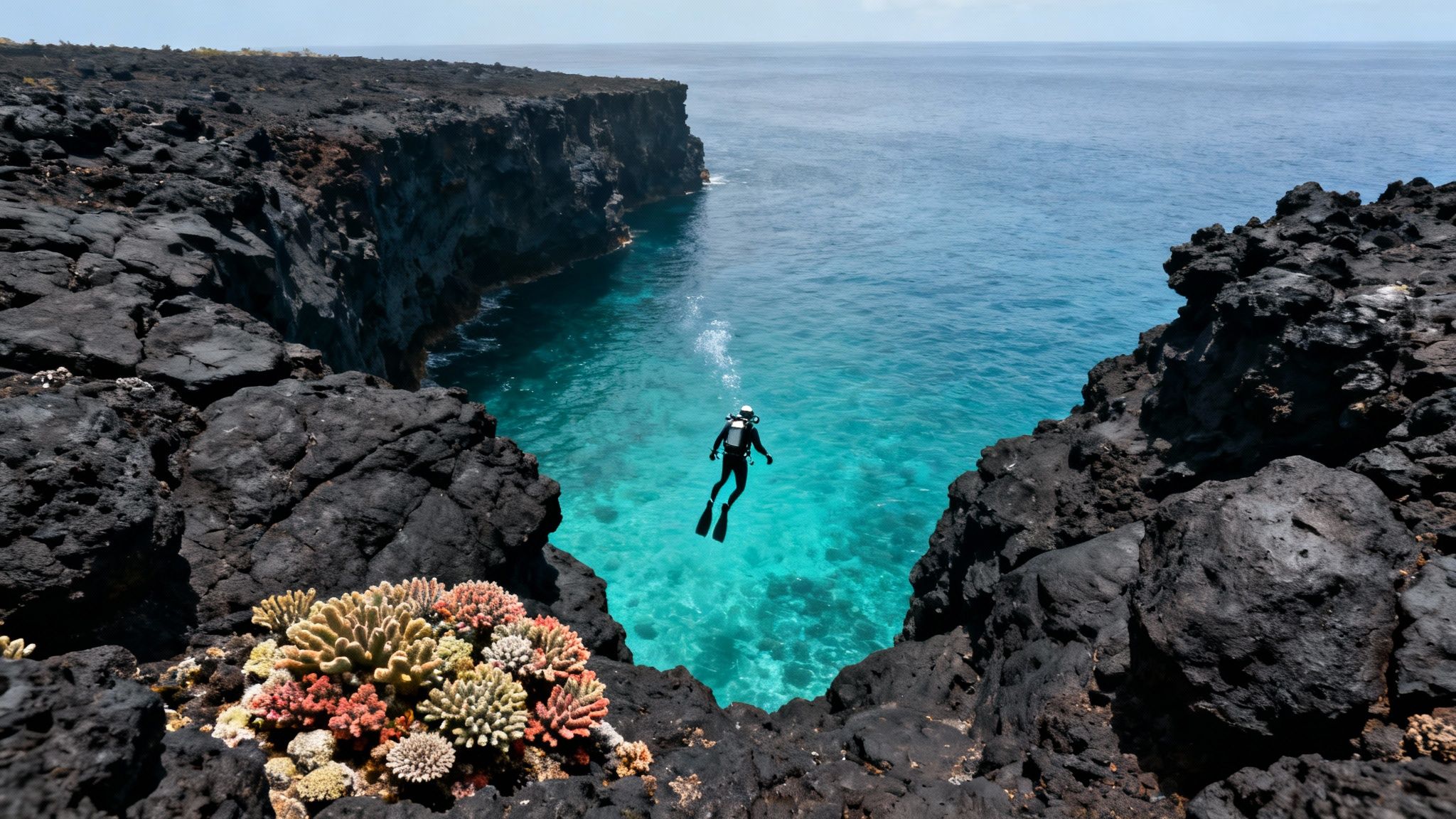
The Big Island isn't just another beautiful spot on the map; it's a world-class scuba destination that offers a truly unique mix of dramatic geology and abundant sea life. The island’s western Kona coast is the main event, sheltered from the powerful trade winds by the sheer size of volcanoes like Mauna Loa and Mauna Kea. This natural barrier creates consistently calm, clear conditions that are just about perfect for diving year-round.
This protection has allowed an incredible ecosystem to thrive. The underwater terrain here is unlike anywhere else, a stunning tapestry of lava tubes, arches, and dramatic drop-offs sculpted by ancient volcanic flows. These formations aren't just incredible to look at—they create the perfect habitat for a staggering variety of marine creatures.
A Sanctuary of Biodiversity
The Big Island is a true biodiversity hotspot, home to over 1,100 marine species, with a remarkable 129 of them found nowhere else on Earth. On any given dive, you might see everything from vibrant raccoon butterflyfish and huge schools of yellow tangs to the unmistakable Moorish idols. Spotting endemic species like the Hawaiian whitespotted pufferfish makes every dive feel like a genuine discovery.
Beyond the bustling reefs, the island is known for a few signature experiences that are on every diver’s bucket list. The most famous is the Manta Ray Night Dive, a surreal and breathtaking ballet where these gentle giants glide just inches above your head. Exploring this underwater sanctuary is more than just a vacation activity; it's an immersion into one of the planet's most dynamic marine environments.
To get a better sense of what makes the island so special, check out our guide on why the Big Island is so good for scuba diving.
Exploring the Top Big Island Dive Sites
The Kona coast is a diver's dream, plain and simple. It's lined with an incredible variety of world-class dive sites, each offering a completely different peek into Hawaii's underwater world. Deciding where to drop in is half the fun, so let’s walk through the legendary spots that every diver should have on their list.
The World-Famous Manta Ray Night Dive
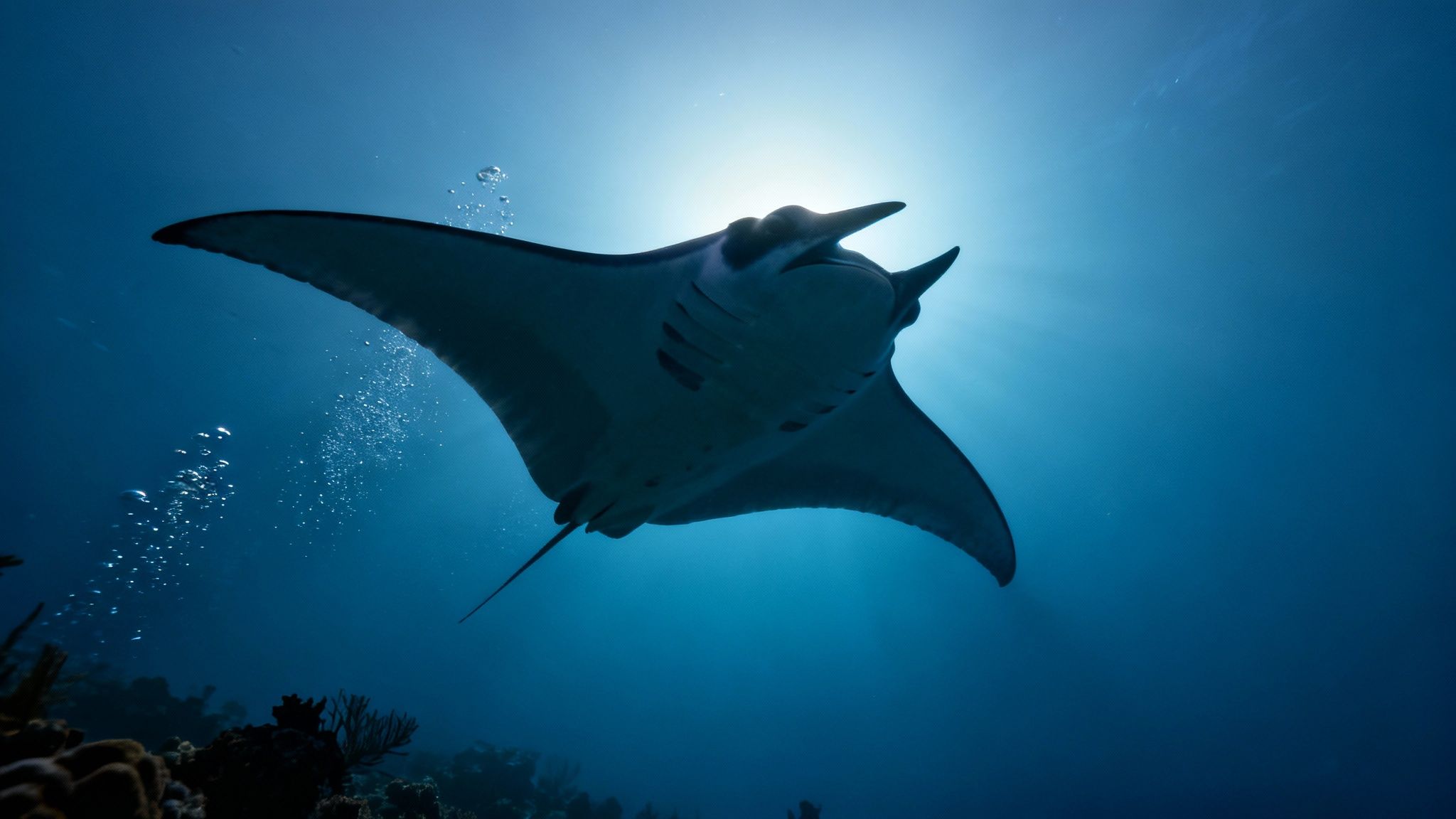
If there's one dive that defines Kona, this is it. People often call it an "underwater ballet," and honestly, that doesn't even do it justice. The Manta Ray Night Dive is a profound, almost spiritual experience—and it's one of the most reliable big animal encounters you'll find anywhere on Earth.
The concept is ingenious. Dive operators anchor near a known manta feeding ground and shine powerful lights into the water. These lights attract a massive buffet of plankton, and it doesn't take long for the gentle giants to show up for dinner.
You and your group simply descend to a sandy spot, usually around 25-40 feet, and watch the magic happen. Manta rays with wingspans stretching over 15 feet glide, swoop, and barrel roll just inches above your head. It's a completely passive, mesmerizing show that’s accessible even if you’re new to diving.
Kealakekua Bay: A Pristine Marine Sanctuary
Ready for vibrant color and crystal-clear water? Kealakekua Bay is your spot. This isn't just another pretty reef; it's a protected marine life conservation district, which means the ecosystem is absolutely thriving.
Because the area is a sanctuary, the fish populations are dense and the coral gardens are some of the healthiest you'll see. Visibility often pushes past 100 feet, revealing a complex world of hard and soft corals teeming with reef fish, moray eels, and octopus. The bay is also historically significant as Captain James Cook's landing site, adding another layer to an already amazing dive. For a closer look at what makes this spot so special, check out this guide to Big Island diving.
Kona Blackwater Dive: An Abyss of Discovery
For the truly adventurous diver who wants something completely different, the Kona Blackwater Dive is a trip into the void. This isn't a reef dive. It happens miles offshore, over thousands of feet of water, in the dead of night.
Tethered to the boat, you drift in the open ocean, suspended in inky blackness. Your dive lights attract some of the ocean's strangest and most rarely seen creatures as they make their nightly vertical migration from the deep. You’ll see things that look like they're straight out of a sci-fi movie—translucent squid, bizarre larval fish, and bioluminescent critters pulsing with their own light. It’s a surreal, mind-bending experience that you can try on a dedicated Blackwater Dive.
To help you choose the right adventure, here's a quick rundown of some of Kona's must-see spots.
Big Island's Must-Visit Dive Sites
| Dive Site | Key Feature | Common Marine Life | Experience Level |
|---|---|---|---|
| Manta Ray Night Dive | An iconic "underwater ballet" with gentle giants. | Giant Manta Rays, plankton | Beginner to Advanced |
| Kealakekua Bay | Protected marine sanctuary with pristine coral. | Colorful reef fish, dolphins, turtles | Beginner to Advanced |
| Kona Blackwater Dive | Open-ocean night drift with bioluminescent life. | Larval fish, jellies, deep-sea critters | Intermediate to Advanced |
| Turtle Pinnacle | A natural turtle "cleaning station." | Hawaiian Green Sea Turtles, reef fish | Intermediate |
| Au Au Crater | Submerged volcanic crater with swim-throughs. | Whitetip reef sharks, eagle rays | Advanced |
Each site offers something unique, whether you're looking for a peaceful reef tour or a journey into the deep unknown.
Advanced Dives: Turtle Pinnacle and Au Au Crater
If you've got the experience and are looking for a bigger challenge, Kona's volcanic geology serves up some spectacular underwater playgrounds.
-
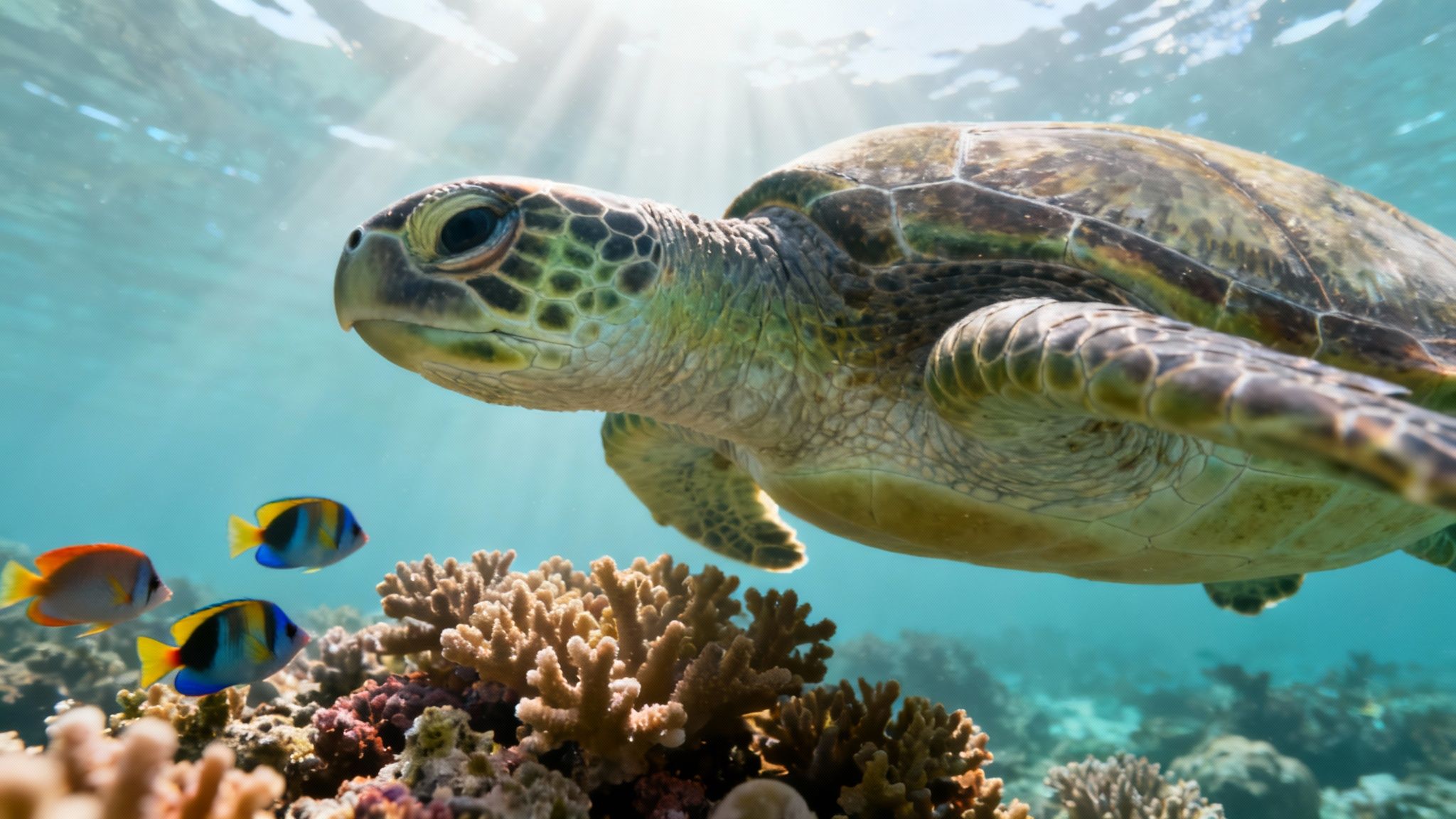
Turtle Pinnacle: This is a classic "cleaning station" where Hawaiian green sea turtles, or honu, gather. They patiently hover while smaller reef fish swim up and pick parasites off their shells—a perfect example of underwater symbiosis.
-
Au Au Crater: This submerged volcanic crater offers incredible topography. You can explore dramatic ledges, caverns, and swim-throughs that are a magnet for marine life. It’s a fantastic spot for seeing whitetip reef sharks resting on the bottom and squadrons of eagle rays cruising by.
These deeper dives demand solid buoyancy control and comfort with potential currents. If you're ready for the challenge, a Premium Advanced Trip is the best way to explore these more remote and thrilling locations.
Meeting the Local Marine Life
Sure, the underwater volcanic landscapes are incredible, but the real magic of Big Island scuba diving comes from the cast of characters you meet down there. The Kona coast is basically a bustling underwater city, and every dive introduces you to a new set of famous residents.
Dropping below the surface here is like entering a completely different world. It’s a living, breathing ecosystem, and your logbook will fill up fast with sightings of Hawaii’s most iconic marine animals.
The Stars of the Show
Let's start with the big ones—the animals that draw divers from all over the globe. These are the encounters you'll be talking about for years to come.
- Manta Rays: The undisputed headliners are the giant manta rays. These graceful, intelligent creatures can have wingspans stretching over 15 feet. The world-famous night dive is the best way to see them, giving you a front-row seat to an incredible underwater ballet as they feed on plankton.
- Hawaiian Green Sea Turtles (Honu): Watching a honu glide effortlessly over the reef is the quintessential Hawaiian moment. These gentle giants are a protected species and a symbol of good luck. You’ll often spot them resting on the seafloor or getting a "spa treatment" at cleaning stations from helpful little fish.
- Spinner Dolphins: You're most likely to see them from the boat, but it's common to have a whole pod of acrobatic spinner dolphins show up during your surface interval. Their playful jumps and spins are the perfect way to kick off or wrap up a day of diving.
Endemic and Unique Species
What really sets diving here apart is the sheer number of animals you won't find anywhere else on the planet. Keep a sharp eye out for these unique locals that make the Big Island's reefs so special.
Because the Hawaiian archipelago is so isolated, it's a hotspot for unique species. About 25% of the reef fish you see here are endemic, meaning they only live in Hawaii. That makes every discovery feel a little more extraordinary.
A perfect example is the Hawaiian whitespotted pufferfish, a quirky little guy you’ll often find hiding out in the coral. You’ll also be surrounded by a kaleidoscope of other reef fish, from all kinds of butterflyfish and vibrant yellow tangs to the elegant Moorish idols that always seem to travel in pairs.
If you want to learn more about the most famous encounter of all, you can get all the details on the Kona Manta Ray Night Dive.
Reclusive Residents of the Reef
Beyond the superstars, the volcanic ledges and lava tubes create the perfect hideouts for more secretive creatures. If you’re patient and look closely, you’ll be rewarded.
Whitetip reef sharks, for instance, are often found chilling out on sandy patches or under ledges during the day. They’re generally harmless and offer a fantastic, low-key shark encounter. You’ll also see moray eels poking their heads out of crevices, their patterned bodies blending in perfectly with the rock.
And for a real treat, spotting an octopus—a true master of disguise—as it flashes different colors and textures is pure underwater magic. These are the sightings that really complete the picture of this vibrant marine community.
How to Choose the Right Dive Operator
Let’s talk about one of the most important decisions you'll make for your dive trip: picking the right dive operator. Think of them as more than just a taxi to the reef. They are your guide, your safety crew, and the key to unlocking the very best Big Island scuba diving. A fantastic operator can elevate a great dive into a lifelong memory, while a subpar one… well, you get the idea.
With so many choices out there, it can feel a bit overwhelming. But if you focus on a few key things, you'll be able to spot the professional, safe, and reputable outfits from the rest. It's like having a quality checklist for your underwater adventure, giving you peace of mind before you even step on the boat.
What to Look For in a Dive Company
Before you even glance at a dive site map, let's vet the companies themselves. Safety is always, always number one. No compromises. After that, it’s all about the quality of the experience they provide.
- An Impeccable Safety Record: This is non-negotiable. Scour reviews and don’t be shy about asking about their safety protocols. A professional shop will have no problem talking about their emergency plans, having oxygen on board, and their staff's training.
- PADI/SSI Certification: Make sure the shop is affiliated with a major training agency like PADI or SSI. This is a stamp of approval, showing they stick to internationally recognized standards for safety and instruction.
- Small Group Sizes: You want to avoid operators that pack divers onto a boat like sardines. Smaller groups mean you get more personal attention from your divemaster, the dive site feels less crowded, and the whole vibe is just more relaxed.
- Boat Comfort and Amenities: You’ll be spending a good chunk of your day on their boat. Look for things that make the experience better—plenty of shade, a simple way to get in and out of the water, and maybe even a hot-water shower after a chilly night dive.
A well-maintained boat and high-quality, regularly serviced rental gear are huge green flags. It tells you they care about the details and invest in their divers' safety and comfort.
For an even deeper look at this, check out our dedicated guide on how to choose a Kona dive shop.
Top-Rated Dive Operators on the Big Island
Scuba diving is a huge part of Hawaii's tourism, with over 1.5 million dives happening here every year. Naturally, the Big Island is home to some truly world-class dive operators who have earned their stellar reputations by delivering incredible experiences, dive after dive.
Here are a few of the most trusted names you'll find on the Kona coast, each bringing something special to the table.
Kona Honu Divers
Known for their top-notch customer service and gorgeous, roomy dive boats, Kona Honu Divers is a fantastic choice for everyone from first-timers to seasoned pros. They run a variety of diving tours, including the legendary Manta Ray Night Dive and charters for more advanced divers. Their commitment to small groups really makes a difference and ensures every trip feels personal. Here's what divers are saying:
Jack's Diving Locker
A true Kona institution, Jack's Diving Locker has been a fixture in the community since 1981. They're highly respected for their comprehensive training programs, covering everything from introductory courses to professional-level certifications. Their big, comfortable boats are perfect for a full day out on the water.
Big Island Divers
Another pillar of the Kona dive scene, Big Island Divers offers a wide range of trips designed to suit any interest, from vibrant reef dives to manta encounters and other specialized charters. Divers consistently praise their friendly, knowledgeable crews and their genuine passion for marine conservation.
Honestly, you can't go wrong with any of these operators. Your best bet is to read some recent reviews and see which company's vibe and specialty trips align best with what you’re looking for. That's the secret to booking with total confidence.
Practical Tips for Planning Your Dive Trip
A great Big Island scuba diving trip doesn’t start when you get on the boat—it starts with smart planning. Getting the logistics sorted out beforehand is the real secret to a stress-free vacation where you can focus on what matters: the incredible underwater world waiting for you.
Let’s walk through the key details so you can arrive in Kona feeling confident and ready to dive.
When Is the Best Time to Visit?
Honestly, there's no bad time to dive in Kona. The conditions are fantastic year-round, but there are some subtle seasonal differences that might help you decide when to book your flight.
- Summer (May to October): This is your ticket to the warmest water, with temperatures hovering between a balmy 78-80°F (25-27°C). The ocean is often incredibly calm, creating glassy, smooth conditions that make for easy boat rides.
- Winter (November to April): The water temperature dips just a bit, down to a still-comfortable 75-77°F (24-25°C). But here's the magic trade-off: this is humpback whale season. Hearing their songs reverberate through the water while you're diving is an experience you will never forget.
No matter when you come, visibility is almost always stellar, frequently clearing 100 feet. It really just comes down to whether you prefer warmer water or the chance to hear the whales.
What to Pack for Your Dive Trip
Packing the right gear can make all the difference between a good dive and a great one. While you can always rent high-quality equipment, most seasoned divers find that bringing a few personal items adds a ton of comfort.
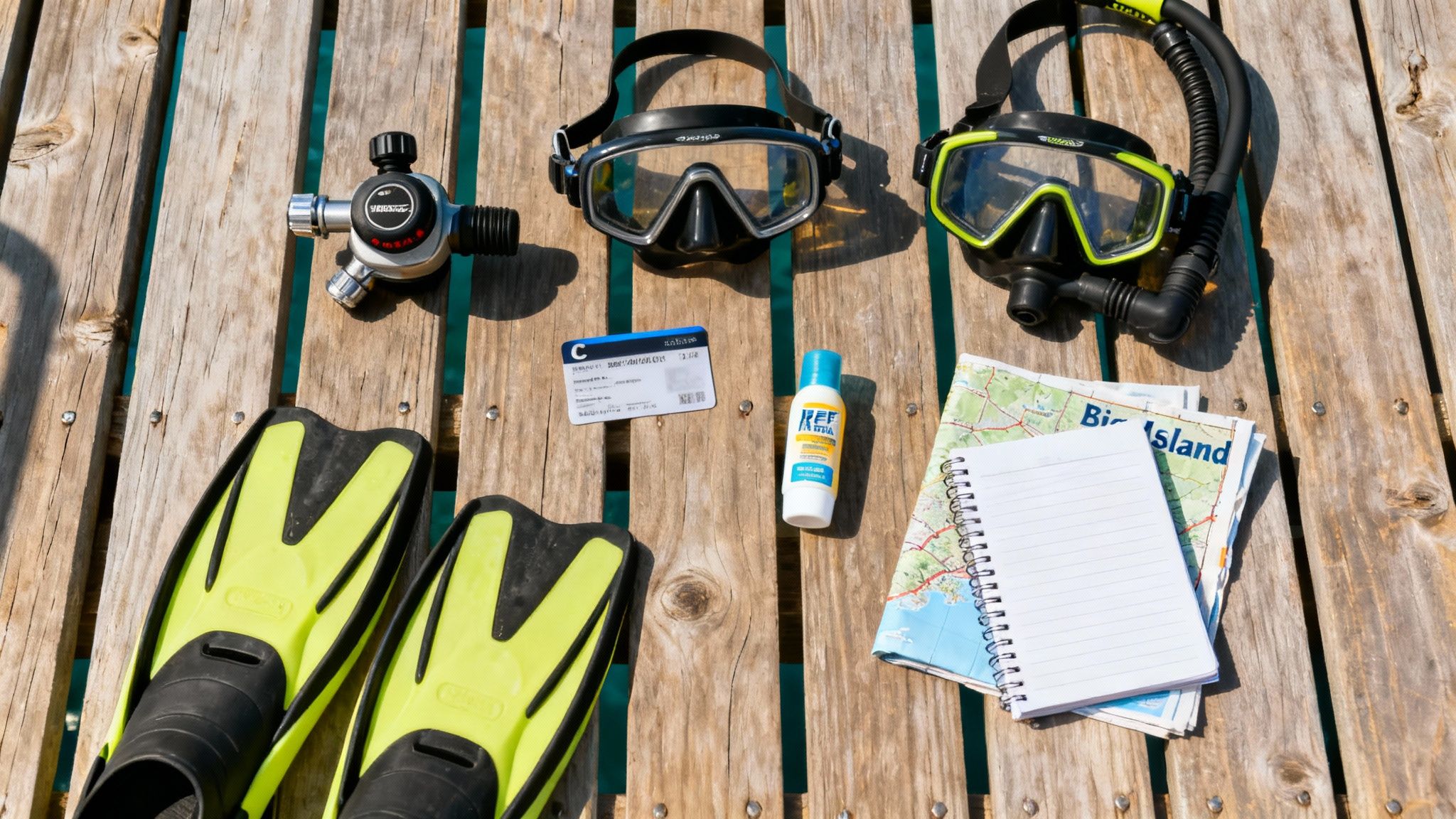
Here’s a quick checklist of what to throw in your bag:
- Your Papers: Don't leave home without your certification card and logbook!
- Personal Gear: At a minimum, bring your own mask. A good fit prevents leaks and makes the whole dive more enjoyable. Your own dive computer is also a great idea since you’re familiar with its display and functions.
- Wetsuit: A 3mm or 5mm full wetsuit is perfect. Even in warm water, your body temperature will drop over multiple dives, and you'll be glad you have it.
- Reef-Safe Sunscreen: This is a big one. The chemicals in regular sunscreen are incredibly damaging to coral. Do your part to protect the very reefs you've come to see.
- Boat Comforts: A reusable water bottle is a must for staying hydrated. Also, pack a hoodie or light jacket for the ride back to the harbor—it can get surprisingly cool once you're out of the water and the boat is moving.
A quick heads-up from experience: the most popular charters, especially the Manta Ray Night Dive, fill up fast. We're talking weeks, sometimes even months, in advance during busy seasons. Book early to lock in your spot and avoid missing out.
Getting Certified on the Big Island
If you've always wanted to learn to scuba dive, there is no better classroom than the Kona coast. The calm, clear, and warm waters create a relaxed environment that’s absolutely perfect for beginners.
Local dive shops offer everything from a one-day PADI Discover Scuba Diving experience to the full Open Water certification course. Imagine your very first certified dives happening over some of the most vibrant reefs on the planet! For any trips involving a boat, it's always wise to familiarize yourself with a comprehensive boat safety checklist beforehand.
With these details handled, you're all set for an epic Big Island scuba diving adventure.
Your Big Island Diving Questions, Answered
Alright, you're getting close to booking that dream dive trip to the Big Island. But a few practical questions are probably still floating around in your head. Let's tackle them head-on so you can get on with the exciting part—planning your dives!
This is where we clear up any lingering uncertainties, from water temps and certification rules to what to pack. Think of it as a final gear check before you giant-stride into your Hawaiian adventure.
What’s the Best Time of Year to Dive the Big Island?
Here’s the great news: there’s really no bad time to dive on the Big Island. Thanks to the calm, protected waters along the Kona coast, conditions are fantastic pretty much year-round. That said, the seasons do have their own unique character.
Summer, which runs from about May to October, serves up the warmest water, usually a balmy 78-80°F (25-27°C). The ocean is often glassy-calm, which makes for super smooth boat rides and incredibly relaxing dives.
Winter (November through April) brings slightly cooler water, dipping to around 75-77°F (24-25°C). But it also brings a huge bonus: humpback whales. This is their breeding and calving season, and hearing their songs resonate through the water while you're on a dive is an absolutely unforgettable, soul-stirring experience. Visibility is generally incredible no matter when you come, often clearing 100 feet.
Do I Need to Be Certified to Scuba Dive in Hawaii?
For any standard boat dive, yes, you'll need to show proof of certification from a recognized agency like PADI, SSI, or another major organization. Dive operators will ask to see your C-card (the physical or digital version) before you can get on the boat.
But what if you're not certified and just want to see what all the fuss is about? You're in luck! Most dive shops, including us at Kona Honu Divers, offer what's called a "Discover Scuba Diving" experience. It's a one-day program where an instructor teaches you the absolute basics in a pool or calm, shallow water.
Once you’ve got the hang of it, they’ll take you on a real, guided dive on a shallow reef. It’s the perfect way to test the waters without committing to a full course. And if you get hooked (which you probably will), you can roll that experience right into getting your full Open Water certification while you're here.
Is the Manta Ray Night Dive Safe for New Divers?
Absolutely. The world-famous Manta Ray Night Dive is one of the most well-managed and beginner-friendly dives you'll ever do. It’s designed to be safe and accessible for divers of all experience levels.
The dive itself is quite shallow, typically between 25 and 40 feet. The biggest factor, though, is that it's a stationary dive. You're not exploring a reef in the dark. Instead, everyone descends to a sandy spot and finds a place to settle in near a central light source.
This bright light acts like a bug zapper for plankton, attracting a massive underwater buffet. All you have to do is relax and watch the show as the gentle giants swoop and glide right over your head. It’s more like an underwater theater than a typical dive.
Every reputable operator staffs the dive with experienced divemasters who give a detailed briefing beforehand and are in the water with you the whole time. Snorkelers can even join in from the surface, making it an amazing activity for the whole family.
What Should I Pack for My Big Island Dive Trip?
Packing the right gear can make the difference between a good trip and a great one. Beyond your shorts and sandals, here are a few dive-specific items you won't want to forget.
Dive Trip Essentials:
- C-Card & Logbook: The most important things to pack! You can't dive without your certification card, and you'll definitely want to log the incredible marine life you'll see.
- Your Own Mask, Fins, and Computer: While rental gear is top-notch, nothing beats the comfort and familiarity of your own equipment, especially a well-fitting mask.
- A Good Wetsuit: We recommend a 3mm or 5mm full wetsuit. Even in warm water, your body temperature will drop over multiple dives, and you’ll be especially glad for the warmth on the Manta Ray Night Dive.
- Reef-Safe Sunscreen: This is a big one. Standard sunscreens contain chemicals that are incredibly harmful to Hawaii’s delicate coral. Please, only pack and use sunscreens that are labeled "reef-safe."
- Boat Comforts: A reusable water bottle is a must for staying hydrated. It’s also a good idea to bring a light jacket or hoodie for the boat ride home—it can get surprisingly chilly once you’re out of the water and the wind picks up.
With your bags packed and your questions answered, you’re all set for the dive adventure of a lifetime.
Ready to see Kona's underwater paradise for yourself? Kona Honu Divers runs a full range of scuba diving tours for every skill level, from the legendary Manta Ray Night Dive to advanced charters exploring ancient lava tubes.