
Picture this: you're sinking slowly into a world of brilliant turquoise, shafts of sunlight piercing the surface from above. Below you, a breathtaking landscape of ancient lava tubes and sprawling coral gardens unfolds. This isn't just a dream; it’s what Big Island scuba diving is all about—an underwater wonderland shaped by volcanic fire and brought to life by a bustling marine ecosystem. It's no surprise this place is on the bucket list for divers of all stripes.
Why Kona is a World-Class Diving Destination
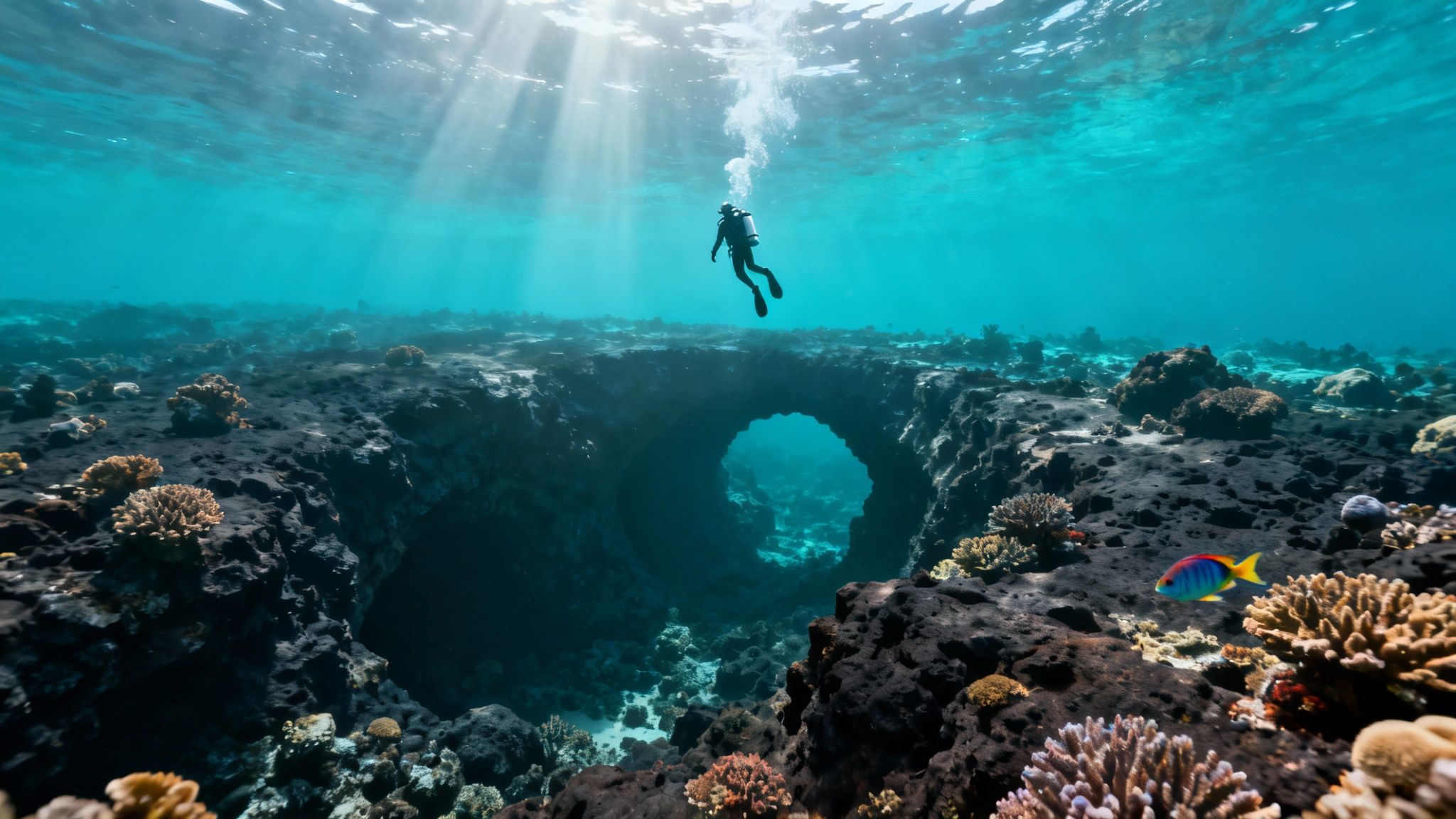
The secret to Kona's incredible diving lies in its unique geology. The massive volcanoes of Mauna Loa and Hualalai act as a natural shield for the western coastline, blocking the powerful trade winds. This lucky break creates some of the calmest, clearest water you'll ever dive in.
Seriously, visibility often pushes past 100 feet (30 meters), giving you jaw-droppingly clear views. But it’s the underwater terrain that truly steals the show. The same volcanic forces that created the island also sculpted an incredible submarine world filled with intricate lava tubes, dramatic arches, and underwater caverns just waiting to be explored.
An Underwater Sanctuary
This volcanic rock is the perfect foundation for a thriving reef. Unlike a flat, sandy bottom, the porous lava rock offers endless nooks, crannies, and hideaways for marine life to flourish. The result is a dense, vibrant ecosystem teeming with activity.
The Big Island's dive scene has come a long way from its humble beginnings. Today, it’s a well-oiled machine with over 50 dive shops and charters catering to more than 150,000 dive tourists annually. With around 100,000 certified dives happening here each year, it’s clear this is a premier global destination. You can learn more about the fascinating history of Big Island diving on konahonudivers.com.
To put it all in perspective, here is a quick summary of what makes scuba diving on the Big Island so exceptional.
Big Island Diving at a Glance
| Feature | Details |
|---|---|
| Water Temperature | A balmy 75-80°F (24-27°C) year-round. |
| Visibility | Frequently exceeds a crystal-clear 100 ft (30m). |
| Key Marine Life | Manta Rays, Sea Turtles, Dolphins, and tons of endemic fish. |
| Must-Do Dive | The world-famous Manta Ray Night Dive. No question. |
| Prime Location | The Kona Coast (West Side) is the sweet spot, thanks to its calm, protected waters. |
This combination of pristine conditions, dramatic geology, and an explosion of wildlife is what solidifies Kona's reputation. It really is that good.
Whether you’re a seasoned pro with hundreds of dives under your belt or you're just getting your fins wet, the Kona coast delivers an unforgettable experience. Ready to take the plunge? Kona Honu Divers has a fantastic lineup of diving tours in Kona, Hawaii that cater to every skill level.
Experiencing the Manta Ray Night Dive
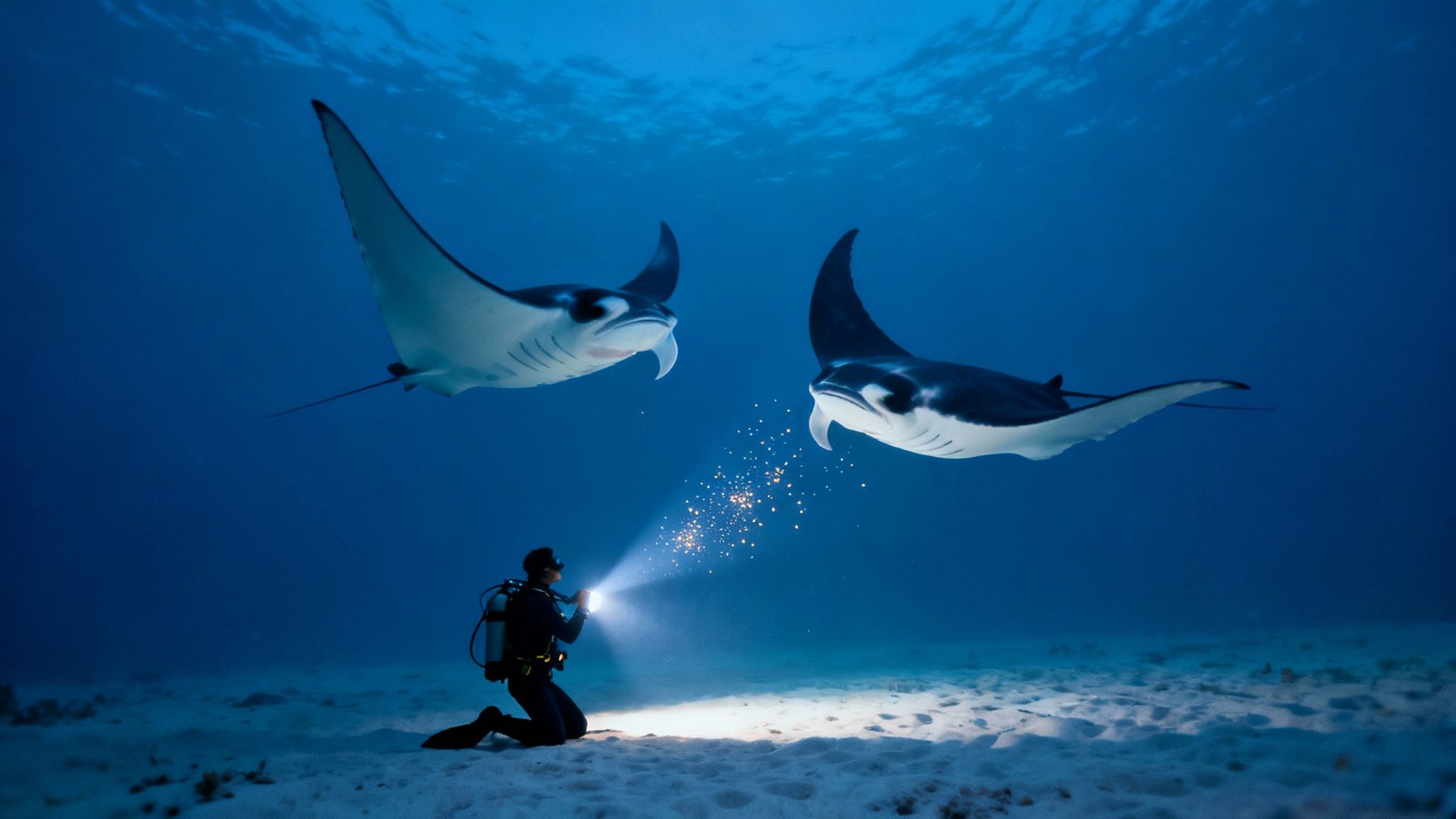
If there's one experience that defines Big Island scuba diving, it's the Manta Ray Night Dive. This isn't just another entry in your logbook; it's a world-famous underwater ballet that has been called one of the most unforgettable dives on the planet. And for good reason.
Imagine this: you're kneeling on the sandy ocean floor as the last bit of daylight disappears. You and your fellow divers form a circle, pointing powerful dive lights toward the surface. It’s a trick divers call the "manta campfire," and it's the dinner bell for the main event.
The bright beams attract clouds of plankton, the manta rays' favorite food. Then, out of the darkness, they appear. These gentle giants, with wingspans that can stretch over 12 feet, glide effortlessly into the light. They perform mesmerizing barrel rolls and graceful somersaults, often just inches from your mask. It's a surreal, heart-stopping spectacle that leaves even the most jaded divers completely awestruck.
How the Manta Encounter Works
The magic behind this dive is actually quite simple. The entire encounter is built around creating an all-you-can-eat plankton buffet for the mantas.
- Setting the Table: Dive operators place a powerful light box on the seafloor, or divers use their own flashlights to create the "campfire." This light draws in millions of microscopic plankton.
- Dinner is Served: The local manta rays are smart. They’ve learned over the years that these lights mean an easy meal is on the menu, so they show up almost every night.
- The Show Begins: To stay in the thickest part of the plankton cloud, the mantas perform their signature barrel rolls. This feeding behavior is what creates the breathtaking underwater show that divers travel from all over the world to see.
This incredible feeding ritual happens reliably at a few key spots along the Kona coast, like Manta Village and Manta Heaven. Because the local reef mantas don't migrate, these dives are available year-round with a success rate of over 90%. To get a better feel for the whole experience, check out this great article on what it's like to go on the manta ray dive in Kona.
Choosing a Responsible Operator
With a dive this popular, who you book with matters. A lot. A responsible operator puts the well-being of the manta rays first, ensuring the encounter is sustainable and doesn't disrupt their natural behavior.
A key part of a safe, ethical dive involves strict guidelines: never, ever touch a manta ray. Touching them can remove their protective mucus coating. Divers stay on the bottom to give the rays plenty of room to maneuver, while snorkelers stay on the surface.
Kona Honu Divers is a fantastic example of an operator committed to these conservation principles. Their expert guides give a thorough briefing, so you know exactly how to act for a safe, respectful, and absolutely mind-blowing encounter.
Ready to see the underwater ballet for yourself? Booking a Manta Ray Dive Tour is your ticket to a night you will never forget.
Exploring Dive Sites Beyond the Mantas
Look, the Manta Ray Night Dive is an absolute must-do. It’s a bucket-list experience for a reason. But don't make the mistake of thinking that's all the Big Island scuba diving has to offer. That incredible show is just the opening act.
The real magic of the Kona coast lies in its sheer variety. The island's volcanic origins have created a spectacular underwater playground, a world of dramatic lava tubes, bustling turtle "cleaning stations," and rare marine life that most divers only dream of seeing. You'll find everything from shallow, sun-drenched reefs perfect for a relaxing first dive to deep, complex caverns that will challenge even the most seasoned pros.
Premier Kona Dive Sites for Every Diver
The great thing about diving here is that so many of Kona’s best spots are just a quick boat ride away. This makes it easy to pack in a couple of fantastic dives and still have your afternoon free. Two sites that are consistently at the top of my list are Turtle Pinnacle and Golden Arches.
Turtle Pinnacle (Au Au Crater)
As you might guess from the name, this place is the spot for seeing our beloved Hawaiian Green Sea Turtles, or Honu. Turtle Pinnacle is an ancient, submerged volcanic crater that’s evolved into a critical cleaning station, and what happens here is pure nature at its best.
- What You'll See: You'll get to watch turtles line up, almost as if they're waiting for their turn at a car wash. They patiently hold still while schools of surgeonfish swim up and nibble away algae from their shells. It's a peaceful, mesmerizing sight.
- Topography: The main feature is a large pinnacle that rises from the seafloor, surrounded by vibrant coral gardens and sandy patches where you might spot a lazy ray or two.
- Best For: This is a dive for everyone. It's relatively shallow and the conditions are usually calm, making it a perfect, rewarding experience whether you're a brand new diver or an old pro.
Golden Arches
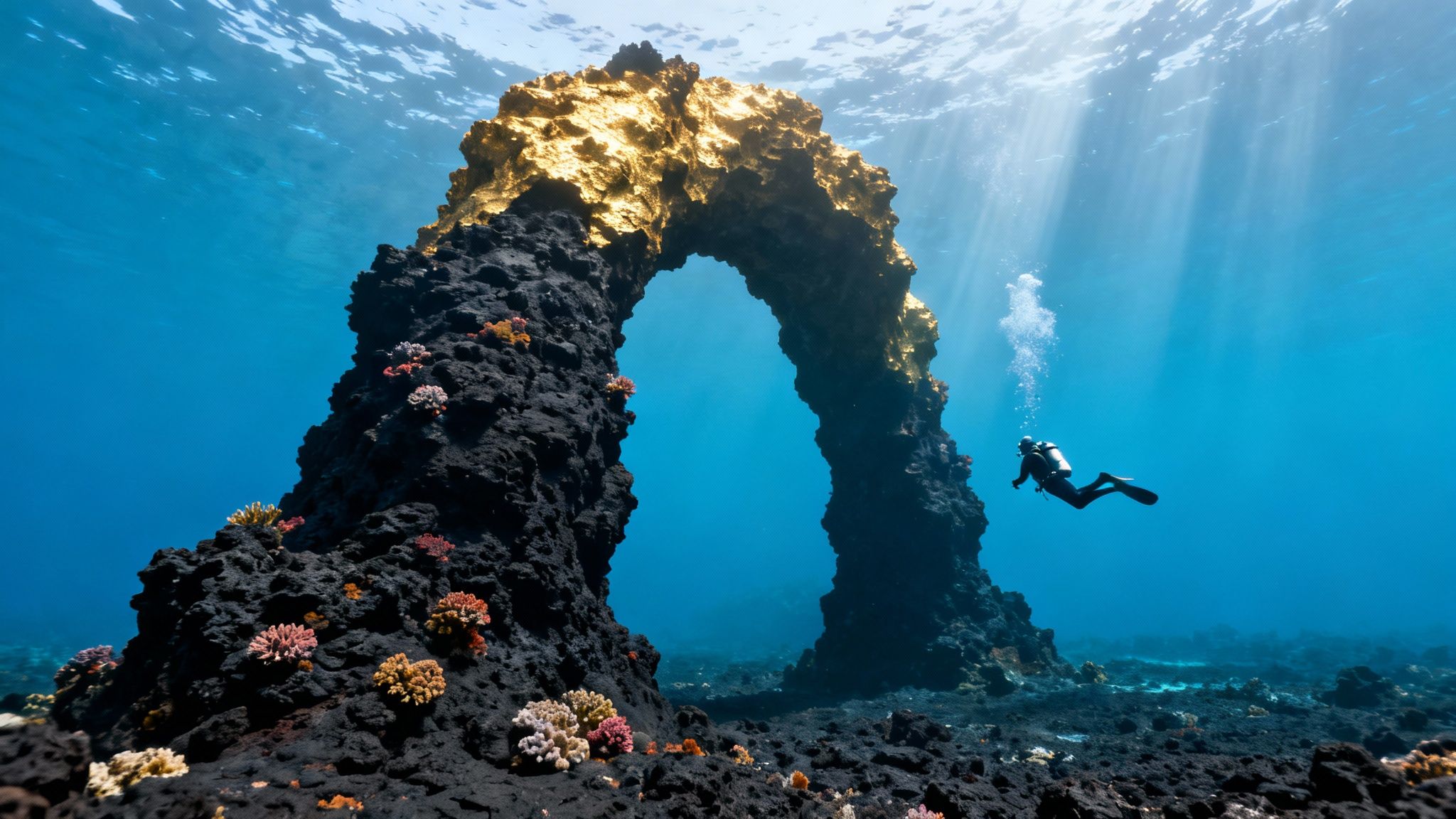
If you want a real sense of the raw, creative power of the island's volcanoes, Golden Arches is a can't-miss site. The underwater architecture here is just stunning, highlighted by a massive lava arch you can actually swim right through.
- What You'll See: Besides the incredible arches, keep your eyes peeled for schools of bright butterflyfish, moray eels peeking out from crevices, and maybe even a whitetip reef shark chilling on the sandy bottom.
- Topography: The whole site is defined by these dramatic lava rock formations, creating all sorts of fun swim-throughs, ledges, and small caverns to explore.
- Best For: I’d say this is great for intermediate divers. It isn't technically difficult, but having good buoyancy control really helps you glide through the arches gracefully and safely.
For the Truly Adventurous Diver
Ready to try something completely different? The Big Island has some specialized dives that offer a whole new level of thrill. These charters are for divers who want an encounter that’s way outside the ordinary, from the bizarre creatures of the deep ocean to the challenge of advanced dive profiles.
Pelagic Magic® Black Water Night Dive
This is absolutely not your average night dive. On a Blackwater Dive, you’re tethered to the boat, drifting in the pitch-black of night over thousands of feet of open ocean. The boat’s lights attract tiny creatures making the largest migration on Earth, rising from the abyss to feed near the surface.
This dive is like floating through outer space. You’ll see things that look truly alien—translucent squids, strange larval fish, and shimmering, bioluminescent creatures you’d never find on a reef. It's a surreal, unforgettable experience.
Advanced and Deep-Water Trips
For experienced divers who want to explore deeper and more remote sites, there are specialized charters that will take you there. These trips head to locations that require an advanced certification and a solid set of skills.
An advanced dive trip could mean exploring deep pinnacles, navigating intricate lava tube systems, or searching for the elusive scalloped hammerhead sharks. These dives are run with smaller groups and are all about catering to divers with a passion for more technical and challenging underwater exploration. From turtles to twilight zone creatures, the Big Island really does have it all.
A Guide to Big Island Marine Life
Slipping beneath the waves off the Kona coast is like dropping into a completely different world. It’s a bustling underwater metropolis, and to really appreciate your Big Island scuba diving experience, you should get to know the locals.
It’s about more than just checking species off a list. It’s about noticing the little things—the way a turtle settles onto the reef for a nap or why you almost always see butterflyfish swimming in pairs. Every single encounter tells a part of the reef's story.
The Gentle Giants and Fan Favorites
While the entire reef is teeming with activity, there are a few A-listers that almost always steal the show. These are the creatures that create those truly unforgettable moments that you’ll be talking about long after you’ve surfaced.
Hawaiian Green Sea Turtle (Honu)
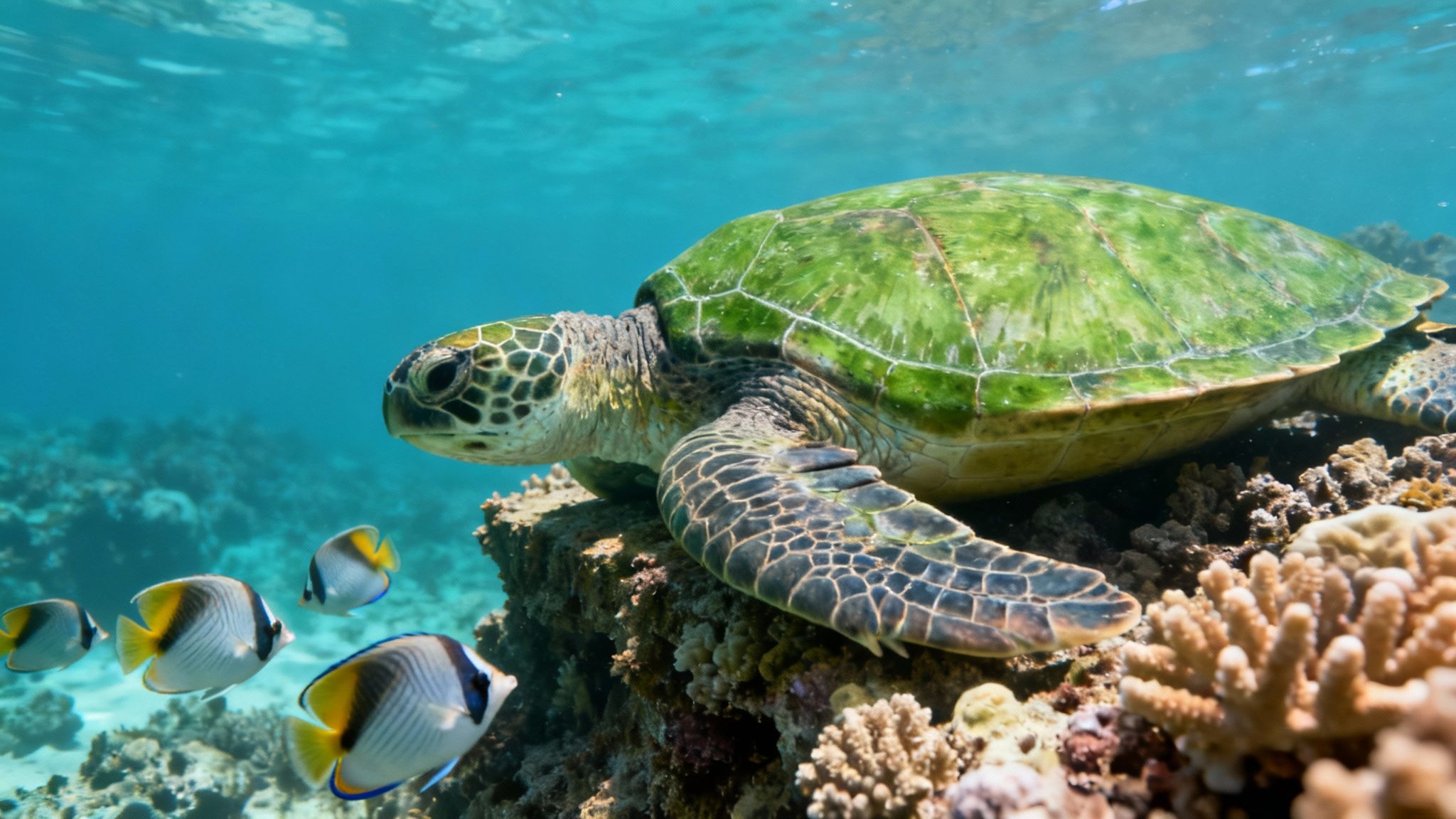
The Honu is a symbol of good luck and longevity in Hawaiian culture, and trust me, you’ll feel incredibly lucky every time you share the water with one. These ancient, gentle reptiles are a common sight, usually found grazing on algae or resting peacefully on the seafloor.
- Viewing Tip: Keep an eye out for "turtle cleaning stations." This is where turtles queue up and patiently wait for small fish to pick algae and parasites off their shells—a natural spa treatment you can witness firsthand.
Spinner Dolphins (Nai'a)
You’ll most likely spot these energetic acrobats from the boat, launching themselves out of the water and spinning through the air. Seeing a large pod of spinner dolphins during your surface interval is a thrilling bonus to any dive day.
The Colorful Locals
Hawaii’s remote location in the middle of the Pacific has turned it into a unique evolutionary laboratory. This isolation means many species here are endemic—they exist here and nowhere else on Earth. To get a better sense of how all these unique creatures fit together, it’s worth understanding the coral reef energy pyramid that supports them.
Hawaii is a true evolutionary hotspot. Nearly 25% of its reef fish are endemic, which means every dive gives you the chance to see fish you literally can't find anywhere else in the world.
Some of the most vibrant endemics to look for include:
- Milletseed Butterflyfish: You'll often see these in huge, shimmering schools that look like a cloud of underwater confetti.
- Psychedelic Wrasse: Aptly named, this fish darts around the reef showing off stunning, electric patterns. It’s a real treat to spot one.
- Hawaiian Cleaner Wrasse: These are the essential workers of the reef. They run cleaning stations where bigger fish stop by to have parasites removed, playing a vital role in keeping the whole community healthy.
Masters of Camouflage and Reef Predators
Look closer. Beyond the bright schools of fish, the reef is home to brilliant hunters and stealthy residents who have mastered the art of hiding in plain sight. Spotting them takes a calm, patient eye, but the payoff is always worth it.
Octopus (He'e or Tako)
Finding an octopus is a genuine highlight for any diver. These incredibly smart creatures are masters of disguise, capable of changing their color and skin texture in the blink of an eye to perfectly match the surrounding coral or rock.
Reef Sharks
The most common shark you're likely to see is the Whitetip Reef Shark. They are generally shy and really not interested in divers. You'll usually find them resting on sandy patches under ledges during the day, as they are more active hunters at night.
Being a Responsible Underwater Guest
Getting to observe this incredible marine life comes with the responsibility to protect it. The future of Kona’s beautiful reefs really depends on us, as divers, acting as respectful visitors.
- Maintain a Safe Distance: Give all marine life plenty of space. Never chase, corner, or try to touch anything. Let them be.
- Practice Perfect Buoyancy: This is huge. Poor buoyancy control can cause you to accidentally bump or kick the reef, damaging fragile corals that took decades to grow.
- Leave No Trace: Double-check your gear before you jump in. Make sure your gauges and octopus are tucked in and not dangling where they can snag on coral.
- No Feeding: Feeding animals disrupts their natural behaviors and the delicate balance of the reef ecosystem.
By following these simple rules, you’re doing your part to ensure Kona's underwater world remains a paradise for many more generations of divers.
How to Choose the Right Dive Operator in Kona
Let's be honest—the dive operator you choose will make or break your entire Big Island scuba diving trip. They're more than just a boat ride; they're your guide, your safety crew, and your ticket to seeing the absolute best the Kona coast has to offer. With so many options out there, it can feel like a tough call, but getting this one decision right sets you up for an incredible, worry-free adventure.
So, how do you see past the slick websites and find the real deal? It starts with looking at the fundamentals. The best shops almost always focus on small group sizes. This isn't just a minor perk; it completely changes the dynamic of the dive.
You're not just another face in a crowd being herded through the water. Instead, you get real attention from your guide, you have more room to explore, and the whole vibe is just more relaxed and personal. It’s the difference between feeling like you're on a field trip and being on a private expedition.
Look for Proven Safety and Expertise
A rock-solid safety record isn't just a nice-to-have, it's the absolute bare minimum. You want to see operators who are open about their safety procedures, keep their boats and gear in pristine condition, and staff their trips with experienced, certified PADI professionals.
A top-tier operator like Kona Honu Divers, which is a PADI 5-Star Instructor Development Center (IDC), embodies the gold standard for diver training and safety. Their guides aren’t just leading tours; they have an intimate, first-hand knowledge of the local sites, from the subtle shifts in the currents to the daily habits of the resident marine life. That’s how you get to the good stuff.
Your dive guide's local knowledge is priceless. They know which specific lava tube the whitetip reef sharks prefer for a daytime nap or the exact cleaning station where you can spot Hawaiian cleaner wrasse in action. This is the kind of insight that turns a pretty dive into a truly unforgettable one.
The quality of their gear also tells you a lot. Clean, modern, and well-maintained rental equipment is a huge sign that an operator cares about your comfort and safety. Don't be shy—ask them how often they service their gear and what kind of boats they run before you put your money down.
Check Reviews and Social Proof
These days, you have an incredible tool at your fingertips: the experiences of divers who have gone before you. Don't just glance at the star rating on Google or Yelp. Dig into the recent reviews and see what people are really saying.
Look for specific comments about the crew. Were they professional and friendly? How was the boat? Did the guides seem knowledgeable and attentive? A consistent pattern of rave reviews is one of the strongest indicators you're looking at a first-class operation. For a more detailed breakdown, you can learn more about how to choose a Kona dive shop right here.
Ultimately, the right dive operator does more than just get you in the water. They share their passion for the ocean, create a genuine sense of adventure, and make sure every minute of your dive is as safe as it is amazing. By focusing on these core elements—safety, group size, gear quality, and reputation—you can book with confidence and get ready to make some incredible underwater memories.
Understanding Scuba Diving Safety in Hawaii
Before you can have an incredible dive, you need to feel confident and safe in the water. Luckily, when it comes to Big Island scuba diving, nature gives us a huge head start. The Kona coast is tucked away from the open ocean, creating calm, protected waters that are remarkably predictable and safe for divers of all skill levels.
Most people think scuba diving is far riskier than other water sports like snorkeling. It feels more intimidating, right? But when you look at the actual numbers, a completely different picture emerges.
A Surprising Safety Comparison
Let's look at the statistics from right here in Hawaii. Between 2009 and 2018, there were 206 fatalities related to snorkeling, and a staggering 189 of those were visitors. During that same ten-year stretch, scuba diving accounted for only 28 fatalities. The data makes it pretty clear: when you dive with certified professionals, scuba is statistically much safer for tourists than snorkeling. If you're curious about this, Divernet.com has a fascinating read on the reasons behind Hawaiian snorkeling deaths.
So, why the huge difference? It all comes down to the structure of the sport. Snorkeling often comes with little to no instruction or supervision, whereas certified scuba diving is built from the ground up on a solid foundation of safety.
Scuba diving safety isn't an accident. It’s the direct result of required training, professional oversight, redundant gear, and thorough pre-dive planning. Every reputable dive operator makes these precautions a standard part of the experience.
Key Pillars of Scuba Safety
A few core principles are responsible for scuba diving’s excellent safety record:
- Mandatory Training: To get certified, you have to prove you can handle yourself underwater. You master everything from managing your buoyancy to handling emergency situations, making sure you’re prepared long before you hit the open water.
- Professional Supervision: Every single guided dive is led by a certified Divemaster or Instructor. Their main job isn't just to show you cool stuff—it's to manage the dive plan and keep everyone in the group safe.
- Equipment Redundancy: Your scuba gear is designed with backups for your backups. You have a secondary air source (your octopus), a pressure gauge to constantly monitor your air, and other features designed to handle any hiccup.
- Pre-Dive Briefings: No one just jumps in the water. Before every dive, your guide will walk you through the entire plan, go over hand signals, and discuss what to do in an emergency. It ensures everyone is on the same page.
- Post-Dive Protocols: Safety doesn't end when you break the surface. There are important rules to follow, like waiting a certain amount of time before getting on a plane. It's a critical step, which is why we explain in detail why you can't fly after diving.
These systems are what turn apprehension into pure confidence. For anyone who wants to go a level deeper, looking into comprehensive risk assessment methods can offer even more insight into how professionals ensure diver safety.
Your Kona Diving Questions, Answered
Got a few questions before you book your trip? You're not alone. Here are some quick, straight-to-the-point answers to the things divers ask us most about a Big Island scuba diving adventure.
Do I Have to Be Certified to Go Scuba Diving?
Not at all! While you'll need your certification card for most of the classic boat dives, you can absolutely get in the water without one.
Most dive shops in Kona, including ours, offer a fantastic program called the PADI Discover Scuba Diving experience. It’s a completely safe, instructor-led introduction that lets you try out the gear and breathe underwater without committing to a full course. It's the perfect way to test the waters, literally.
When Is the Best Time of Year to Dive?
Honestly, any time is a good time in Kona. The water is always a balmy 75-80°F (24-27°C), and conditions are famously calm and clear year-round.
- Winter (December-March): This is when the magic happens. You have a good chance of hearing the haunting songs of humpback whales echoing through the water on your dives.
- Summer (June-August): These months typically have the absolute flattest, glassiest seas, which is a big plus if you're worried about getting seasick.
No matter when you visit, you're in for an incredible experience.
What Should I Pack for a Dive Trip?
You can pack lighter than you think! Aside from your swimsuits and shorts, just focus on the essentials:
- Your C-card and logbook.
- Any personal gear you prefer, like your own mask or dive computer.
- Reef-safe sunscreen (this is a big one for protecting our coral!).
- A good hat, sunglasses, and a reusable water bottle for the boat.
Don't feel like you need to drag your BCD and regs all the way here. The local shops have high-quality rental gear ready to go.
What if I Have a Medical Condition?
Safety always comes first. If you have any medical history that might affect your diving—like heart or lung conditions, or even chronic sinus trouble—you’ll need to chat with your doctor before the trip.
Getting written medical clearance from a physician is a must. Be sure to let your dive operator know about it when you book so the crew can be prepared to give you the safest and most enjoyable dive possible.
Ready to see Hawaii from a whole new angle? From the legendary Manta Ray Night Dive to sun-drenched coral gardens, Kona Honu Divers has an expertly guided tour for you. Book your unforgettable Big Island diving tour and let's get you in the water.