
Picture this: you're sinking slowly into warm, turquoise water, the Hawaiian sun shimmering down from the surface. Below you, the ocean floor isn't just sand—it's a dramatic landscape of ancient lava flows, now carpeted with life. This is what Big Island scuba diving is all about.
It's an incredible blend of raw volcanic power and delicate marine ecosystems. Coral gardens sprout from cooled magma, and unique sea creatures have made their homes in protected bays. It’s no wonder this place is a bucket-list destination for divers from all over the world.
Why the Big Island Is a Diver’s Paradise
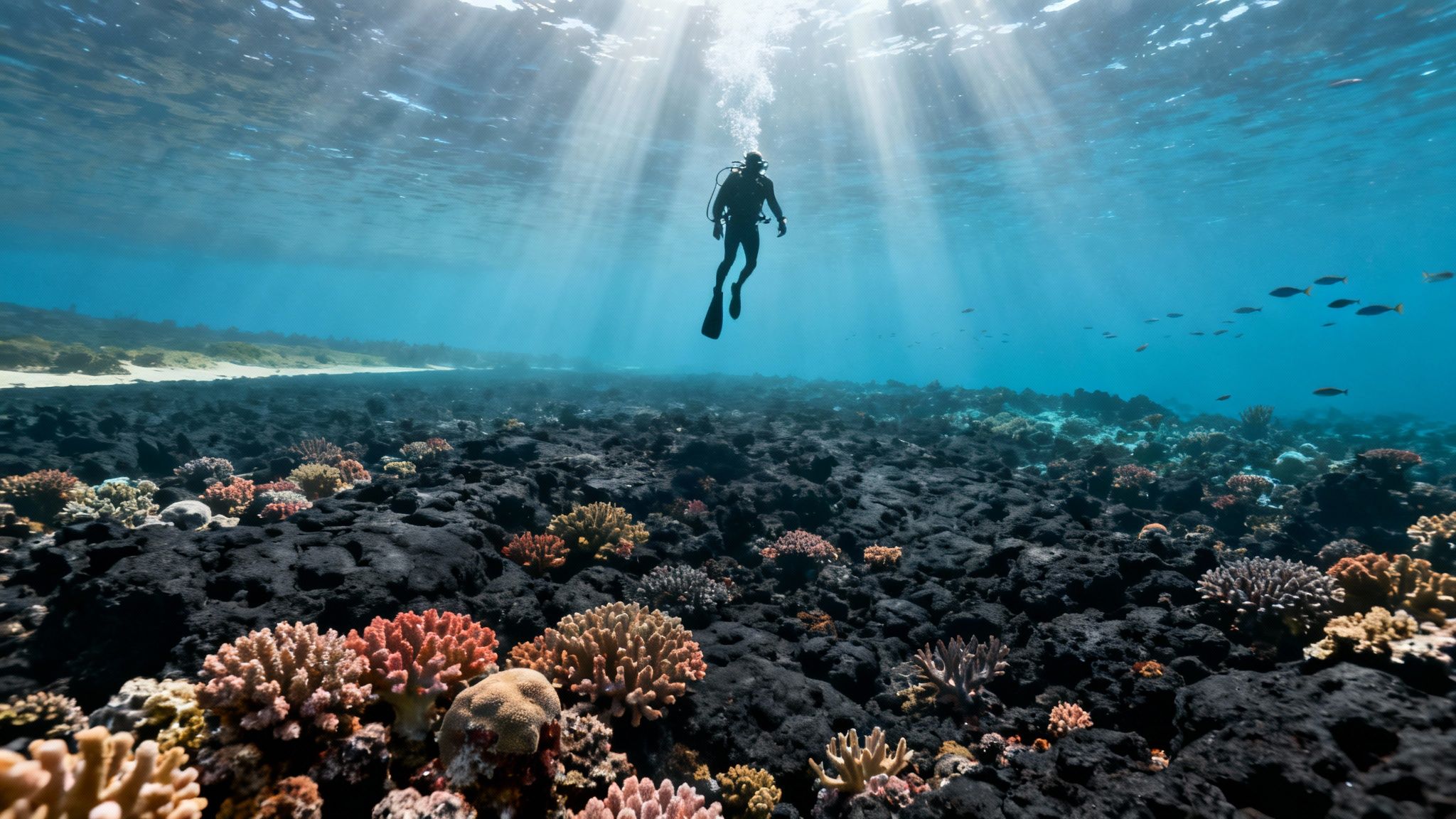
Unlike a lot of other tropical spots, the Big Island’s greatest feature is its geology. The sheer size of the Mauna Loa and Mauna Kea volcanoes creates a massive barrier, shielding the Kona coast from the gusty trade winds. The result? Waters that are almost always calm, clear, and perfect for diving.
This natural protection has allowed for an explosion of biodiversity. The underwater world here is a direct extension of the island’s volcanic past, with incredible lava tubes, arches, and submerged craters that have become bustling cities for all kinds of marine life.
What Makes Kona Diving So Special
Once you get in the water off the Kona coast, you'll see it’s an ecosystem unlike anywhere else. The volcanic terrain creates a stunning and complex underwater topography that’s teeming with life. As a diver, you can expect a few things:
- Mind-Blowing Visibility: The water is often crystal clear, with visibility regularly exceeding 100 feet. You can see the tiniest critters on the reef and watch larger animals approach from way off in the blue.
- Unique Underwater Landscapes: Forget flat, sandy bottoms. Here, you'll be navigating through ancient lava formations, arches, swim-throughs, and towering pinnacles. It’s a playground for exploration.
- A Ton of Marine Life: The Hawaiian islands are famous for having hundreds of species you can't find anywhere else on the planet. Get ready to swim alongside green sea turtles (honu), clouds of colorful reef fish, and majestic eagle rays.
The island’s deep-rooted commitment to conservation, paired with a top-notch dive industry, makes the whole experience even better. With roughly 100,000 certified dives happening annually, the Big Island has secured its spot as a premier scuba destination. More than 50 professional dive operators are here to guide over 150,000 visiting divers each year. You can learn more about the Big Island’s diving industry and its economic impact.
Among these operators, Kona Honu Divers has earned a reputation as one of the best. They focus on small groups, prioritize safety above all else, and have a genuine respect for the ocean, offering a truly special way to experience the magic of Big Island scuba.
It doesn’t matter if you just got your certification or have logged thousands of dives—the island has an adventure waiting for you. From peaceful reef tours to the world-famous manta ray night dive, your perfect underwater experience is here. Go explore the full range of Big Island diving tours and get ready for your next adventure.
Planning Your Dive Trip Around the Seasons
Timing your trip can take a great dive vacation and make it absolutely unforgettable. The good news? When it comes to scuba diving on the Big Island, there’s really no “off-season.” The diving here is fantastic year-round.
Still, knowing the subtle shifts between seasons helps you match your visit to what you most want to see and feel. The biggest differences really boil down to surface conditions and which spectacular marine animals are passing through. Summer brings the calmest, warmest water, while winter delivers bigger swells and the unbelievable soundtrack of migrating humpback whales.
Summer Diving: The Calm Season
From May to September, the Kona coast settles into its most tranquil state. The ocean often looks like a giant sheet of glass, which means smooth boat rides and incredibly easy entries and exits from the water. If you’re a new diver or get a bit queasy on boats, this is your prime time.
Water temperatures are at their peak, hovering around a comfortable 80°F (27°C). Most of us are perfectly happy in just a 3mm wetsuit, even for multiple dives a day. The combination of warm water and calm seas just makes for a blissfully relaxed underwater adventure.
One of the best things about diving in Kona is how consistently great the conditions are. Even when the seasons change, the fundamentals—like great visibility and amazing reefs—are always there.
Winter Diving: The Whale Season
Once December rolls around, the Big Island gets its most famous visitors: the humpback whales. They stick around through March, and while just seeing them from the boat is a thrill, the real magic happens once you drop below the surface. Hearing their complex, haunting songs reverberate through the water on a dive is an experience that will stay with you forever.
Winter does bring slightly cooler water, dipping to about 76°F (24°C), so a 5mm wetsuit is usually the way to go. And while the Kona side stays pretty protected, you can expect some larger ocean swells. This just means that on some days, we might have to switch up the dive plan and head to a more sheltered site.
Here's a quick look at what you can expect throughout the year on the Kona Coast.
Big Island Diving Conditions by Season
| Season | Months | Water Temp (F) | Visibility | Marine Life Highlights |
|---|---|---|---|---|
| Winter | Dec – Mar | 75-77°F | Excellent (100+ ft) | Humpback whales (songs underwater!), manta rays |
| Spring | Apr – May | 76-78°F | Excellent (100+ ft) | Manta ray activity, turtle nesting season begins |
| Summer | Jun – Sep | 78-80°F | Excellent (100+ ft) | Calmest seas, dolphins, peak reef fish activity |
| Fall | Oct – Nov | 77-79°F | Excellent (100+ ft) | Great manta ray encounters, clear & warm water |
As you can see, you really can't go wrong no matter when you decide to visit.
Ultimately, the core of Big Island scuba diving stays remarkably consistent. We’re lucky to have water that’s almost always warm and visibility that routinely exceeds 100 feet (30 meters), no matter the month. Because the Kona coast is so well-sheltered, the surface stays calm most of the time, keeping our dive sites safe and accessible.
For a more detailed breakdown of what each month has to offer, check out our guide on the best months to scuba dive in Hawaii.
And if you’re looking for some help with the rest of your trip, you can find some great general vacation planning advice to get you started. At the end of the day, the best time to come depends on what you’re hoping for. Whether it’s the glassy calm of summer or the humbling whale songs of winter, Kona’s underwater world is always ready to put on a show.
The World-Famous Manta Ray Night Dive

Some dives you remember for a lifetime, and then there’s the Kona Manta Ray Night Dive. It’s an experience that truly stands in a category of its own. This isn’t just another checkmark on a diver's wish list; it's a surreal, silent ballet that has rightfully become the signature event of Big Island scuba diving.
Believe it or not, this world-renowned encounter started by complete accident. Decades ago, a hotel on the coast aimed its lights into the ocean at night, attracting clouds of tiny plankton. It didn't take long for the local manta rays—who love to feast on plankton—to discover this all-you-can-eat buffet. Divers quickly caught on, and a legendary dive was born.
Today, local dive operators have refined this happy accident into a beautifully simple and predictable encounter. It’s a perfect symbiosis of light, plankton, and the gentle giants of the deep.
What to Expect on Your Dive
Your trip begins around twilight, with a boat ride out to one of the designated manta sites. After a solid briefing from your guide, you'll descend into the deep blue as the last light fades, settling onto a sandy patch of ocean floor roughly 30 to 40 feet down. This is where the show begins.
You and your group will form a circle, pointing your powerful dive lights straight up to the surface. These beams of light act like a massive dinner bell, concentrating the plankton into dense, swirling clouds.
And then, you wait. The anticipation is almost thick enough to taste. All of a sudden, a huge, dark shape glides out of the blackness. The first manta has arrived.
There's truly nothing like the feeling of watching these incredible animals, some with wingspans stretching over 12 feet, soar just inches above your head. They perform graceful barrel rolls, swooping through the light beams to filter-feed on plankton in a silent, mesmerizing dance.
The experience is often profoundly moving. With nothing but the sound of your own breathing, you become part of an awe-inspiring natural performance. For a closer look at this unforgettable adventure, you can learn more about the Kona Manta Ray Night Dive and what makes it so special.
Diving With A Purpose: Sustainable Encounters
With such a popular dive comes a massive responsibility to protect these amazing animals. Manta rays are intelligent, curious, and gentle, and their safety is always the number one priority. This is why choosing the right dive operator is so important.
Reputable companies follow a strict set of guidelines to keep the interaction safe for both the divers and the mantas. The core rules are simple but non-negotiable:
- Observe, Don't Touch: Mantas have a protective mucous layer on their skin. Touching them can damage this coating, leaving them open to infection.
- Stay on the Bottom: By remaining on the seabed, divers give the mantas a wide-open water column to feed and maneuver without feeling crowded or trapped.
- No Chasing: Let the mantas come to you. Never chase or attempt to ride them, as this causes stress and disrupts their natural feeding patterns.
Following these rules ensures this incredible encounter remains an ethical and sustainable experience for generations to come. It’s all about being a respectful guest in their world. This magical dive is a must-do for anyone visiting the Big Island. If you’re ready to witness the ballet of the giant mantas for yourself, the first step is to book your spot on a manta ray dive tour.
Exploring Dive Sites for Every Skill Level
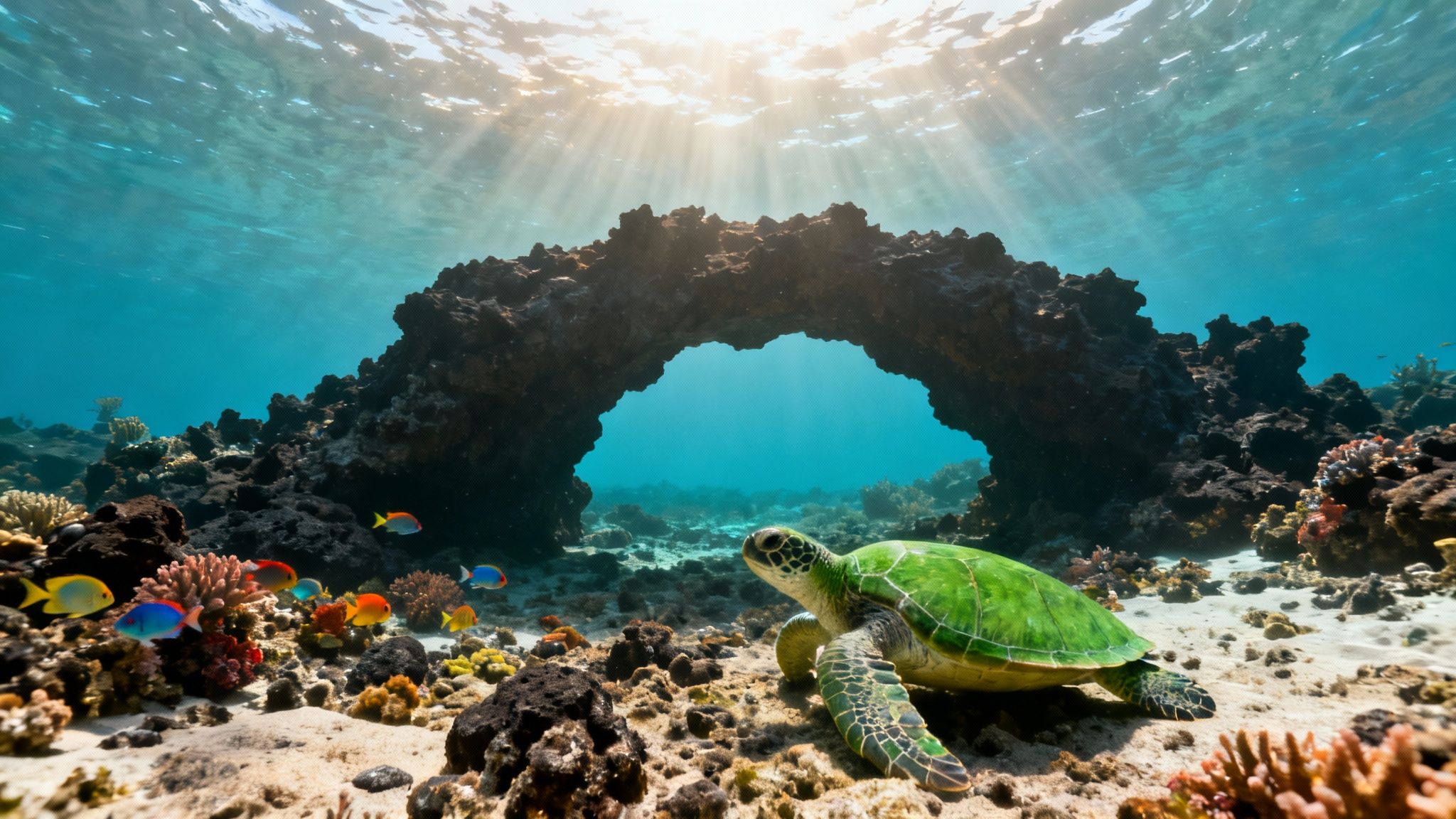
While the manta ray night dive gets all the headlines, it’s really just the beginning of what the Big Island has to offer. The Kona and Kohala coasts are absolutely packed with incredible dive sites, each with its own personality and a unique slice of Hawaii's underwater world. It's a true diver's playground, thanks to the volcanic landscape that created everything from gentle, aquarium-like reefs to dramatic underwater canyons.
Whether you're about to take your first breath on a regulator or you’ve got a thousand dives in your logbook, there's a spot here that’s perfect for you. It's all about knowing where to look.
Calm and Colorful Reefs for Beginners
When you're new to diving, the name of the game is building confidence in a calm, beautiful, and forgiving place. The Kona coast is perfect for this, with dozens of shallow, protected bays that are just teeming with life. These spots are ideal for dialing in your buoyancy and just enjoying the moment, without worrying about deep water or strong currents.
A classic example is Pawai Bay, a gorgeous marine sanctuary that honestly feels like swimming in a giant, perfectly kept aquarium.
- What Makes It Great: The bay is tucked away from the open ocean, so conditions are almost always calm and glassy. With depths ranging from 20 to 50 feet, you get plenty of bottom time and lots of bright sunlight, which really makes the coral colors pop.
- Marine Life You'll See: Pawai Bay is famous for its resident green sea turtles (honu). You'll spot them cruising by, resting on the reef, or munching on algae. The bay is also home to huge, shimmering schools of yellow tang, butterflyfish, and the occasional moray eel peeking out from its rocky home.
A dive at a place like Pawai Bay is the perfect first taste of Big Island diving. It lets you focus less on managing your gear and more on the pure joy of being surrounded by Hawaii’s incredible biodiversity.
Intermediate Adventures Through Lava Tubes
Once you've got a few dives under your belt and are ready for something a bit more adventurous, the Big Island's volcanic geology really starts to show off. Sites for intermediate divers often have more complex structures like lava tubes, archways, and swim-throughs that give you a real sense of exploration.
Turtle Pinnacle is a fantastic example of a site that kicks things up a notch. It’s essentially an underwater volcano peak that rises from the seafloor, acting as a magnet for all kinds of marine life.
The main attraction here is the famous "turtle cleaning station." This is a specific spot on the reef where turtles line up to let small reef fish nibble parasites off their shells. It's an amazing natural behavior to witness up close. Beyond the turtles, the site is riddled with cool lava formations and swim-throughs that make for a really fun, adventurous dive.
Advanced Dives Into the Abyss
For experienced divers looking for a thrill you can’t find just anywhere, the Big Island delivers some truly unique challenges. These dives demand top-notch buoyancy, a cool head, and comfort in deep or dark water. The payoff? An experience that feels like visiting another planet.
The most famous of these is, without a doubt, the legendary Kona Blackwater Dive. This isn't a reef dive—it's a journey into the deep, open ocean.
Here’s how it works: at night, you drift in the middle of the ocean, tethered to a boat floating over thousands of feet of water. Your dive lights cut through the darkness, attracting a parade of bizarre and beautiful creatures that migrate from the abyss to the surface to feed. This is the largest animal migration on Earth, and you're right in the middle of it. You'll see creatures that look like they're straight out of a sci-fi movie—translucent squid, larval fish that look nothing like their adult forms, and shimmering jellies. It’s both surreal and incredibly humbling.
If you’re an experienced diver wanting to see the island’s more challenging sites, Kona Honu Divers runs guided trips for every level. Check out their Premium Advanced 2-Tank Trip for a small-group adventure. And for that ultimate, once-in-a-lifetime thrill, their Black Water Night Dive is an absolute must.
No matter your certification, there's an underwater adventure waiting for you here. The sheer diversity of the Big Island’s dive sites means every time you drop beneath the waves, you’re in for a new discovery.
Choosing the Right Big Island Dive Operator
The dive operator you choose can absolutely make or break your Big Island scuba diving adventure. It's tempting to just compare prices, but the best shops are set apart by things that matter far more once you're on the water—rigorous safety standards, comfortable boats, small group sizes, and a real commitment to protecting the ocean.
A great operator doesn't just ferry you to a dive site; they elevate the whole experience. They make it safer, more fun, and genuinely unforgettable.
Think of it as finding a team that matches your own diving personality. Are you looking for a laid-back, intimate trip with just a few other divers? Or do you prefer the energy of a larger boat? Do you want to push your limits on an advanced dive, or are you hoping for a gentle, guided tour of a calm reef? The Big Island has a fantastic selection of world-class operators, each with its own vibe.
Key Factors to Consider
Before you click "book," it pays to do a little homework. Looking past the glossy tour descriptions and into how a company actually runs its trips will tell you everything you need to know.
Here are a few things I always look for:
- Safety First: Does the shop have a spotless safety record? I look for operators who conduct thorough pre-dive briefings, have clear emergency plans, and use impeccably maintained gear. This is non-negotiable.
- Boat Comfort and Quality: You'll spend a lot of time on the boat between dives. Little things like shade, a hot freshwater shower, and an easy-to-use dive ladder make a huge difference in your overall comfort.
- Group Size: This is a big one. Smaller groups almost always mean you get more personalized attention from your guide. It also means less crowding underwater and a better chance for peaceful encounters with marine life.
- Conservation Ethos: The best operators are true guardians of the reef. They teach divers how to be responsible underwater guests, follow strict guidelines to avoid damaging coral, and often participate in local conservation projects.
Top-Rated Dive Shops in Kona
The Kona coast is home to some of the most respected dive companies in all of Hawaii. Three operators consistently get rave reviews for their professionalism, customer service, and dedication to providing incredible dives: Kona Honu Divers, Jack's Diving Locker, and Big Island Divers. Each has earned a stellar reputation for slightly different reasons, which means there’s a perfect fit for just about every diver.
If you want a really thorough breakdown, this detailed ranking of the top 10 Kona diving companies is a great resource.
The table below offers a quick snapshot to help you compare some of the most popular operators at a glance.
Comparing Top Big Island Dive Operators
This table compares some key features of the most popular dive shops in Kona, giving you a quick idea of what each is known for.
| Operator | Specialty Dives Offered | Group Size Focus | Known For |
|---|---|---|---|
| Kona Honu Divers | Manta Ray Night Dive, Blackwater Dive, Pelagic Magic | Small Groups | Premium service, spacious custom-built boats |
| Jack's Diving Locker | Wide range of PADI courses, Pelagic Magic | Small to Medium | Excellent training programs, family-friendly |
| Big Island Divers | Manta Ray Night Dive, Reef Dives | Medium Groups | Fun and experienced crew, great all-around value |
While this gives you a starting point, it's always best to check out their websites and read recent reviews to find the perfect match for your trip.
A Closer Look at the Leaders
Kona Honu Divers
Kona Honu Divers is famous for its small-group philosophy and exceptional customer service. They run beautiful, spacious boats that never feel crowded, making for a truly premium day on the water. They're a top choice for the world-famous Manta Ray Night Dive and the one-of-a-kind Blackwater Dive.
Jack's Diving Locker
A true Kona legend, Jack's Diving Locker has been a cornerstone of the dive community for decades. They have a fantastic reputation for diver training, offering everything from your very first certification to professional-level courses. Their large, comfortable boats and massive retail shop make them a go-to for families and new divers.
Big Island Divers
Another long-standing and highly-rated Kona operator, Big Island Divers is known for its friendly, professional crew that strikes a great balance between fun and safety. They run a wide variety of charters for all skill levels, from gorgeous morning reef dives to the must-do manta ray experience.
At the end of the day, the "best" operator is the one that fits what you value most. By thinking about these key factors and reading what other divers have to say, you can confidently pick a team that will help you create amazing underwater memories.
How to Protect the Reefs You Explore
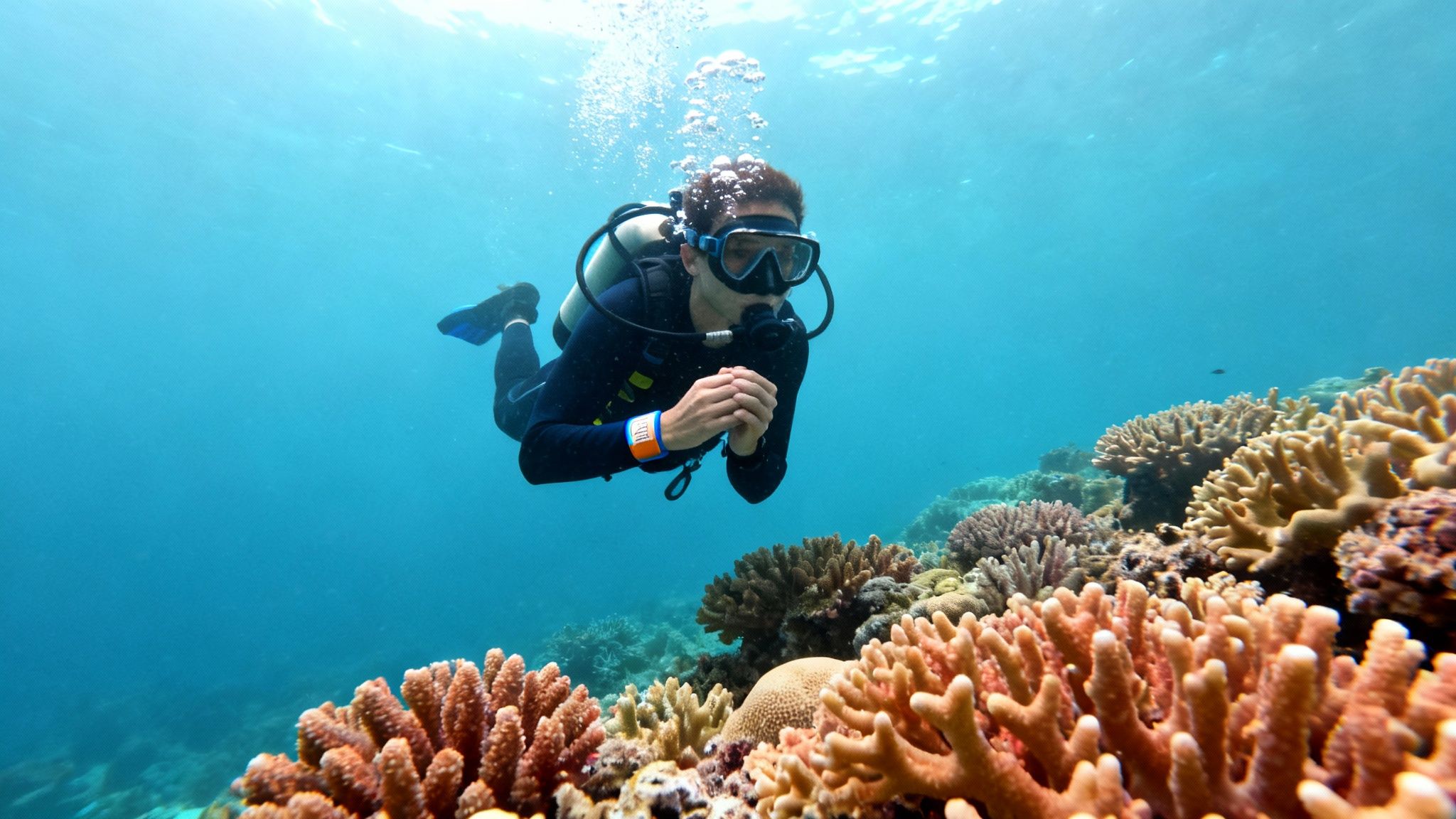
As divers, we get a front-row seat to one of the most incredible shows on Earth. But that access comes with a serious responsibility to act as guardians of that world. Here in Hawaii, there's a powerful concept called mālama i ke kai—to care for and protect the ocean.
This isn't just a saying; it's a way of thinking that transforms every dive into an act of conservation. It’s about the small, thoughtful choices we make that, together, create a massive positive impact on the very ecosystems we've come to see. When you gear up for some Big Island scuba diving, you’re not just a tourist; you’re an ambassador for the reef.
Simple Actions for a Big Impact
Protecting Hawaii’s stunning reefs starts with you. These simple habits, both in and out of the water, can make a real difference in preserving this underwater paradise for generations to come.
- Perfect Your Buoyancy: If you take away one thing, make it this. Great buoyancy control is the most important skill for protecting the reef. It allows you to hover effortlessly, keeping your fins, gear, and body far from fragile coral structures. Even a gentle bump can break or kill coral polyps that have taken decades, sometimes centuries, to grow.
- Go Hands-Free: It can be tempting, but never touch, poke, or grab onto any marine life or the reef itself. Fish and other creatures have a delicate slime coat that protects them from infection, and our touch can easily damage it. Remember, even rocks that look bare are often teeming with tiny, living organisms.
- Choose Reef-Safe Sunscreen: This is a big one. Mainstream sunscreens are often loaded with chemicals like oxybenzone and octinoxate, which are extremely harmful to coral reefs. Always look for mineral-based sunscreens that use non-nano zinc oxide or titanium dioxide as the active ingredients.
When you make these practices second nature, you graduate from being a passive observer to an active steward of the ocean. You become part of the solution, helping ensure the reefs you explore today are just as vibrant for the divers of tomorrow.
Understanding Broader Challenges
While our individual actions are vital, it helps to understand the bigger picture of what Hawaii's marine ecosystems are up against. Overfishing, for instance, throws the delicate balance of a reef completely out of whack.
Research on the Big Island has shown that targeted spearfishing is putting a major strain on certain species. The average size of parrotfish—which are critical for keeping algae from smothering the coral—is now about half of what it was in 1999. This is a clear sign that the breeding population is under serious pressure. You can dive deeper into the impact of fishing on local fish populations with this detailed report.
By being mindful divers and informed visitors, we help build a culture of conservation. Every single dive is another chance to show respect and care for the ocean that gives us so much.
Your Big Island Diving Questions, Answered
Got a few questions before you book your trip? Perfect. Getting the details sorted out is the first step to an amazing dive vacation. Here are some straightforward answers to the questions we hear most often from divers planning a trip to the Big Island.
Do I Need to Be Certified to Dive on the Big Island?
For almost any boat dive, yes, you'll need at least your Open Water certification.
But if you're not certified yet, don't worry! Most dive shops offer a "Discover Scuba Diving" program. It's a fantastic way to get your feet wet—literally. You’ll get a solid safety briefing and then head out for a shallow, fully supervised dive with an instructor. It’s all the thrill without the full course commitment.
Honestly, the Big Island is one of the best places on the planet to get certified. The conditions are usually calm, and the underwater classroom is stunning.
What Kind of Marine Life Will I See in Kona?
The Kona coast is absolutely teeming with life. On just about any given dive, you can bet on seeing green sea turtles (called honu here), a variety of moray eels, and more colorful reef fish than you can count.
It's also pretty common to spot pods of spinner dolphins from the boat. Underwater, keep an eye out for graceful eagle rays and whitetip reef sharks cruising by.
The winter months bring a truly magical element: the sound of humpback whales singing. Hearing their haunting calls echo through the water while you're diving is an experience that will stay with you forever.
And of course, specialty dives like the Manta Ray Night Dive and the Blackwater Dive guarantee encounters with unique creatures you just won’t find on a standard reef dive.
What Should I Pack for My Dive Trip?
First, the essentials: bring your certification card and logbook. Don't forget any personal gear you can't live without, like your own mask or dive computer. For wetsuits, most divers are comfortable in a 3mm or 5mm suit year-round.
Beyond the dive bag, you'll want:
- Reef-safe sunscreen (this is a must!)
- A good hat and sunglasses
- A reusable water bottle to stay hydrated
- A light jacket for breezy boat rides or cooler evenings, especially in winter.
Is the Kona Manta Ray Night Dive Safe?
Absolutely. When you go with a professional, reputable operator, it is an extremely safe and well-managed experience. These shops have been running this dive for decades and have the process down to a science.
They'll give you a thorough safety briefing and manage the entire dive to ensure everyone—divers and mantas alike—is safe. Your only job is to relax, follow your guide’s instructions, and enjoy the show.
For those curious about the broader world of underwater activities, you can find general information on scuba diving and water sports here.