
Picture this: you descend into warm, turquoise water, so clear it feels like you're flying. All around you, ancient lava tubes create stunning underwater cathedrals, and vibrant coral gardens are absolutely teeming with life. That's not a dream—it’s what awaits you when you go scuba diving on the Big Island.
The Kona coast, in particular, offers a truly special combination of protected waters, mind-blowing biodiversity, and encounters you'll be talking about for years to come.
Why Kona Is a World-Class Diving Destination
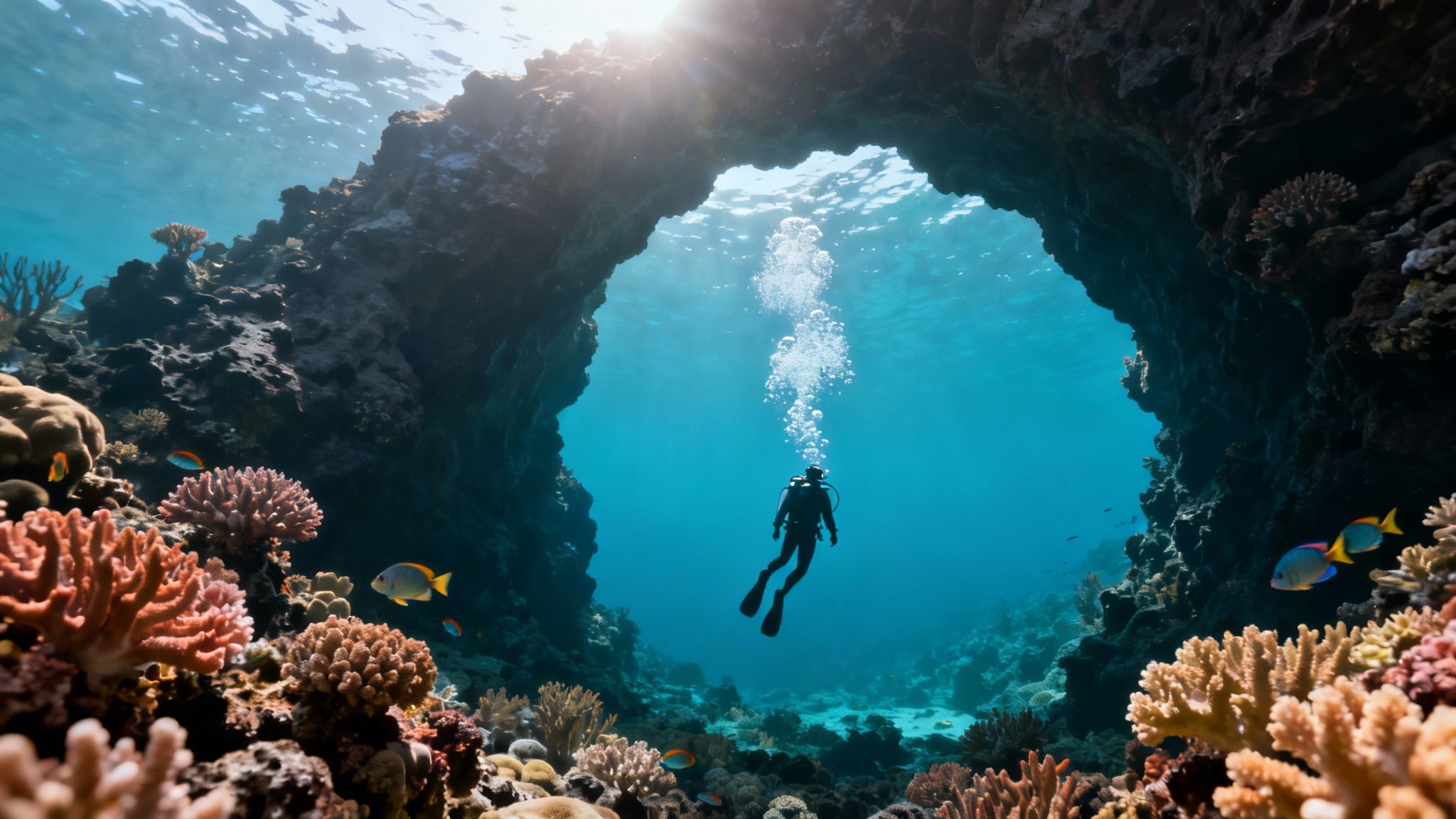
The secret to Kona's incredible diving conditions lies in its volcanic geology. The island’s two colossal volcanoes, Mauna Loa and Mauna Kea, act as a massive natural shield, blocking the prevailing trade winds from reaching the Kona coast. This gift from nature results in exceptionally calm and clear water practically year-round, making it a perfect spot for everyone from first-timers to seasoned pros.
But it's what's under the water that truly sets it apart. Unlike other tropical destinations, Kona's underwater world is a dramatic tapestry of lava formations. You won't just be exploring reefs; you'll be swimming through ancient arches, navigating huge caverns, and exploring intricate lava tubes forged by volcanic flows millennia ago. These unique structures just so happen to create the perfect home for an astonishing variety of marine life.
Unmatched Marine Biodiversity
Kona’s waters are a sanctuary for a wild mix of sea creatures. Thanks to the island's isolation in the vast Pacific, many species you'll see here are endemic—they simply don't exist anywhere else on Earth.
You’ll want to have your camera ready for:
- Honu (Hawaiian Green Sea Turtles): It's common to spot these graceful creatures resting on the seafloor or gliding effortlessly by.
- Spinner Dolphins: Famous for their acrobatic leaps, they often travel in large, playful pods just off the coast.
- Vibrant Reef Fish: The reefs are painted with brilliant color from huge schools of yellow tang, butterflyfish, and parrotfish.
- Unique Critters: Look closely in the nooks and crannies, and you might find well-camouflaged creatures like frogfish, octopuses, and moray eels.
This rich ecosystem is no secret. The Big Island is a premier diving hub, hosting roughly 100,000 certified scuba dives every year through a network of more than 50 professional dive shops. What began with a few pioneers back in the 1960s has blossomed into a world-class industry drawing divers from every corner of the globe. You can learn more about the fascinating history of Big Island diving and see for yourself why people keep coming back.
The Iconic Manta Ray Night Dive
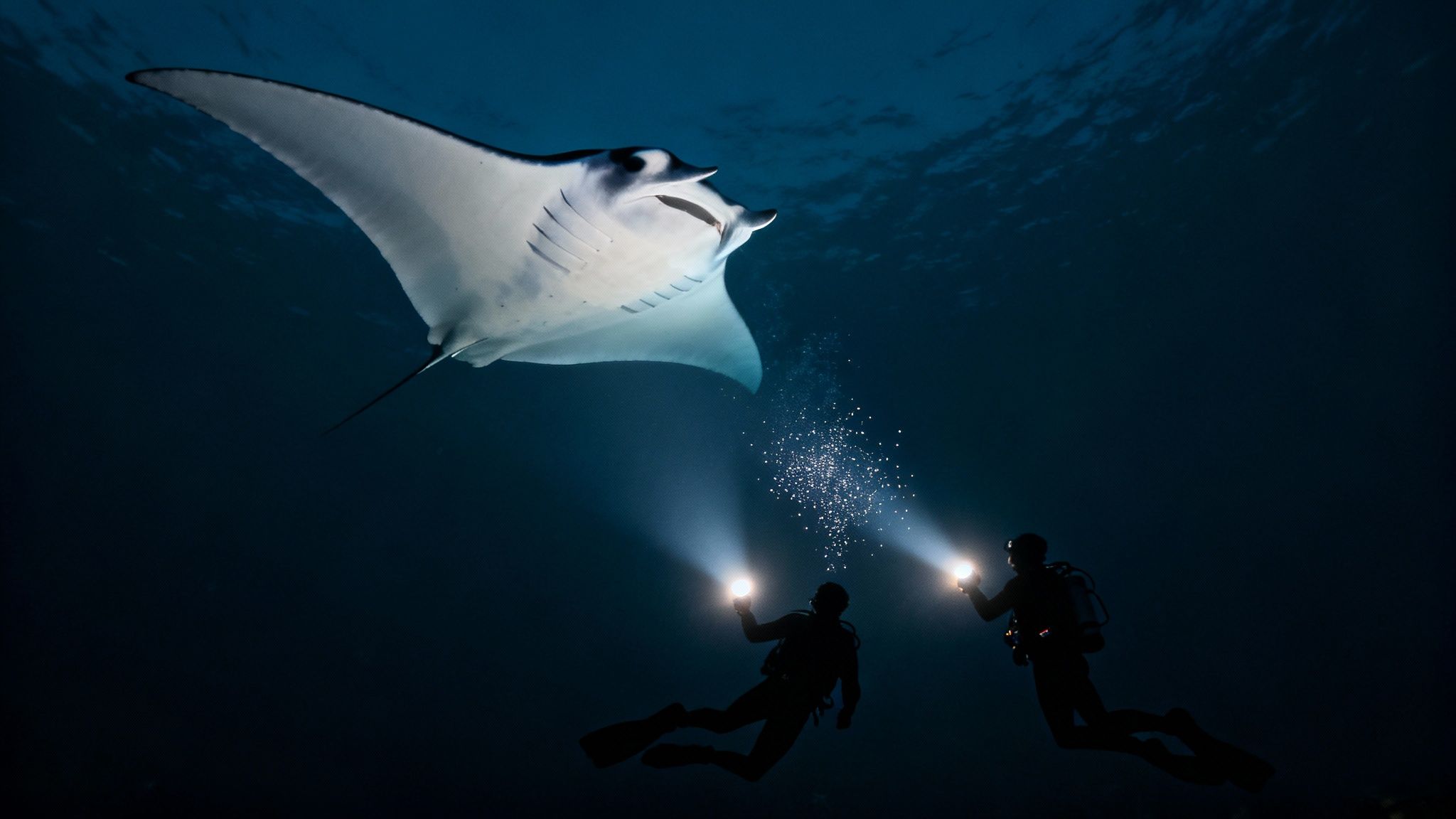
If there's one dive that defines Kona, it's the Manta Ray Night Dive. It’s a true bucket-list experience. After the sun sets, dive boats gather at designated sites and shine powerful lights into the water. The lights attract a massive cloud of plankton, which in turn creates an irresistible buffet for dozens of gentle, giant manta rays.
Watching these majestic animals, with wingspans reaching up to 15 feet, glide and barrel roll just inches from your face is an absolutely surreal and awe-inspiring spectacle. It's the kind of moment that solidifies Kona’s reputation as a top-tier diving destination.
Whether you're exploring a sun-drenched lava tube by day or witnessing the breathtaking ballet of manta rays at night, the Kona coast offers an adventure that goes far beyond your typical reef dive. It’s a chance to see the powerful intersection of volcanic geology and abundant ocean life firsthand. If you're ready to jump in, Kona Honu Divers has a full lineup of diving tours to get you started.
Exploring Kona’s Most Unforgettable Dive Sites
The Kona coast is a diver's playground, a place where ancient volcanic activity has sculpted an underwater world unlike any other. You'll find everything from calm, sun-drenched coral gardens to dramatic lava tubes that feel like submerged cathedrals. The sheer variety is what makes planning your big island scuba diving trip so exciting.
This isn't just a list of places to go. Think of it as an insider's guide to the most memorable experiences waiting for you beneath the waves. We'll break down the must-see sites that define Kona diving, helping you craft an itinerary that fits your comfort level and your thirst for adventure.
Classic Kona Dives For All Skill Levels
Kona has plenty of accessible yet stunning sites that are perfect for divers of all abilities. These spots are a fantastic introduction to the island’s unique topography and vibrant marine life.
A local favorite is Crescent Bay, also known as "The Dome." It’s an incredible site, dominated by a huge underwater lava dome featuring a massive archway you can swim right through. It's a photographer's dream and almost always buzzing with schools of surgeonfish. Keep an eye out for whitetip reef sharks napping on the sandy bottom.
Then there's Turtle Pinnacle, and trust me, it lives up to its name. This spot is a natural "cleaning station" for Hawaiian green sea turtles, the beloved honu. It’s an amazing thing to witness—you'll see these gentle giants lining up, waiting patiently for small reef fish to nibble algae right off their shells. The calm conditions here make it a perfect, unforgettable dive, especially for those new to the sport.
The sheer diversity of Kona's dive sites is what makes it so special. One day you can be gliding through a sunlit coral garden, and the next you're exploring a complex network of ancient lava tubes. Each dive reveals a different facet of the island's incredible underwater world.
The Crown Jewel: The Manta Ray Night Dive
You can't talk about scuba diving on the Big Island without talking about the world-famous Manta Ray Night Dive. This isn't just another dive; it's a true natural spectacle that has put Kona on every diver's bucket list.
The magic starts just as the sun sets. Boats head out to one of the designated feeding areas and submerge powerful lights into the water, which act like a magnet for plankton. Before long, this floating buffet attracts the main event: dozens of giant manta rays, some with wingspans stretching 15 feet or more. As a diver, you get a front-row seat on the ocean floor, watching these majestic creatures perform a silent, weightless ballet as they glide and barrel-roll inches above your head.
This experience has become a cornerstone of the island's dive industry. In fact, a 2016 safety assessment found that local operators run nearly 1,000 charters per year for this dive alone, with one site recording up to 13,000 manta ray encounters in a single year. It's an incredible success story built around a population of over 150 identified mantas, but it also underscores how vital responsible tourism is to protect this amazing encounter.
Kona Honu Divers offers an incredible version of this experience. You can book your spot on their unforgettable Manta Ray Night Dive tour and see the grace and beauty of these gentle giants for yourself.
For The Adventurous: The Blackwater Dive
If you're looking for something truly out of this world, the Kona Blackwater Dive is it. This is unlike any other dive you will ever do. It takes place miles offshore, in the pitch-black of night, over thousands of feet of open ocean. You’re tethered to the boat, suspended in pure darkness, waiting for the show to begin.
Your goal is to witness the largest migration on Earth. Every night, countless bizarre and fascinating deep-sea creatures journey from the abyss toward the surface to feed. Many of these animals are bioluminescent, pulsing with their own light in the darkness, looking like something straight out of a sci-fi film. You’ll see translucent squids, strange larval fish, and alien-like jellies. It's a surreal and humbling adventure into a world very few people ever see.
This is an advanced dive that requires excellent buoyancy control, but the reward is a glimpse into the deep ocean's greatest mysteries. Ready for the challenge? Check out the Blackwater Dive tour.
Advanced Dives And Custom Charters
For experienced divers looking to push their limits, Kona delivers. The island’s deeper sites offer more complex lava tube systems, breathtaking drop-offs, and a better chance of spotting larger pelagic species passing through. These dives demand solid air consumption and pinpoint buoyancy to navigate the intricate environments safely.
To get to these more challenging spots, your best bet is to join an advanced dive tour. These trips are specifically geared toward seasoned divers, letting you explore deeper profiles and more remote locations. For a full rundown of the possibilities, explore our comprehensive list of Kona dive sites that Kona Honu Divers can show you.
When to Plan Your Big Island Scuba Trip
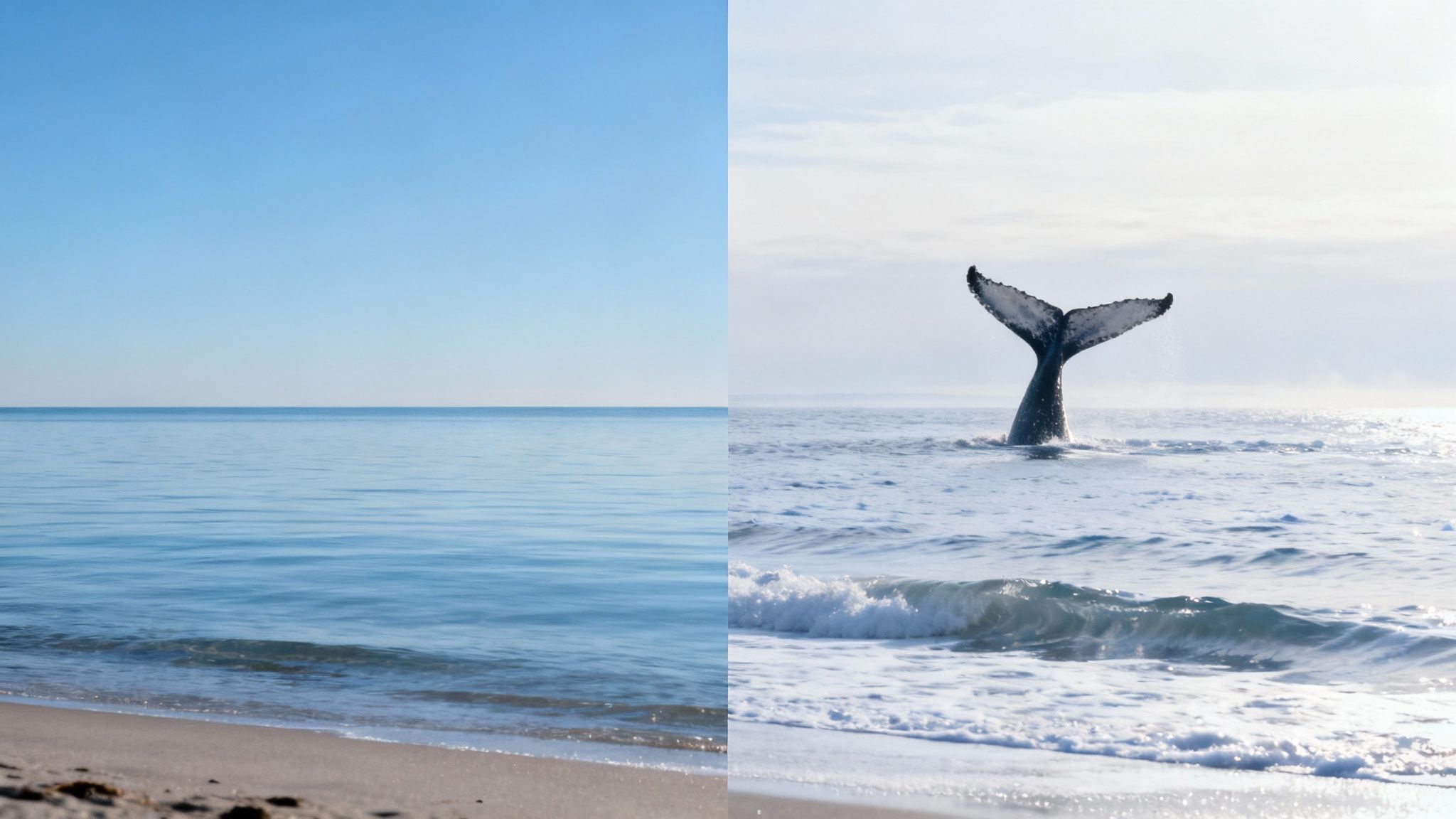
Here’s the great news: there really isn't a bad time for Big Island scuba diving. The massive volcanoes on the island act as a natural shield, protecting the Kona coast from the gusty trade winds. The result is famously calm, clear water pretty much all year long.
That said, the seasons do bring their own unique character to the underwater world. The best time for your trip really boils down to what you're looking for. Is it glassy seas and maximum comfort, or the chance to hear the enchanting songs of migrating whales?
Summer Diving: The Calm Season (May – October)
For many divers, summer in Kona is absolute paradise. This is when you'll find those incredibly flat, calm seas that look just like glass. If you're someone who gets a little queasy on a boat, or you just love a smooth ride out to the dive site, this is your time to shine.
The water is also at its warmest, hovering in the low 80s (around 27-28°C). You can often get away with a thin wetsuit or even just a dive skin, which feels fantastic. Visibility is usually off the charts, frequently pushing past 100 feet. It’s the perfect setup for underwater photographers or anyone who wants to soak in those epic panoramic views of Kona's lava tubes and reefs.
Summer in Kona offers arguably the most comfortable and predictable diving conditions. The combination of warm water and calm surfaces makes it an excellent choice for new divers earning their certification or anyone looking to enjoy purely relaxing dives.
Winter Diving: The Whale Season (November – April)
Winter brings a different kind of magic to the Big Island. This is when the humpback whales arrive, migrating to Hawaii's warm, protected waters to breed and give birth. Their presence completely changes the feel of the place.
While seeing them from the boat is a thrill, the real goosebump-moment happens below the surface. On many winter dives, you can actually hear the male humpbacks singing. Their haunting, complex songs echo through the water, creating an immersive, otherworldly soundtrack for your dive. It's an experience that sticks with you forever.
The water does cool off a bit, dropping into the mid-70s (around 24-25°C), so you’ll want a good 3mm or 5mm wetsuit. You might also encounter a little more surface chop than in the summer, but thanks to Kona's protected coastline, conditions are still fantastic for diving almost every single day.
To help you decide, here’s a quick breakdown of what to expect in each season.
Big Island Scuba Diving Conditions By Season
| Metric | Summer (May – October) | Winter (November – April) |
|---|---|---|
| Water Temperature | Warm: 79-82°F (26-28°C) | Cooler: 75-78°F (24-26°C) |
| Sea Conditions | Exceptionally calm, glassy | Mild to moderate surface chop |
| Visibility | Consistently 100+ feet | Generally 80-100+ feet |
| Key Marine Life | Manta rays, turtles, dolphins, reef fish | Humpback whale songs (and sightings!) |
| Best For | Smooth boat rides, warm water comfort | The unique experience of whale season |
Ultimately, you can't go wrong. Whether you're chasing the calm, warm waters of summer or the awe-inspiring soundtrack of winter, world-class diving is waiting for you.
Whenever you decide to visit, Kona Honu Divers runs incredible diving tours all year round that showcase the best of the Kona coast.
How to Choose the Right Dive Shop in Kona
Picking the right dive operator for your Big Island scuba diving adventure is hands-down the most important decision you'll make. A great shop is so much more than just gear and a boat ride—they're your guides to Kona's incredible underwater world, your safety net, and the people who can turn a good dive into an absolutely unforgettable one.
On the flip side, the wrong choice can mean crowded boats, rushed dives, and just a lackluster experience. Spending a little time upfront to find a quality operator ensures your trip is safe, spectacular, and everything you hoped for.
Getting Certified for the First Time
If you're brand new to diving, you couldn't have picked a better place than Kona to get certified. The calm, warm, and crystal-clear water makes for a perfect classroom. Most reputable shops here offer the PADI (Professional Association of Diving Instructors) Open Water Diver course, which is your ticket to exploring the underwater realm anywhere in the world.
The process is pretty straightforward and designed to maximize your vacation time:
- eLearning First: You'll knock out all the bookwork and theory online from home before you even pack your bags.
- Pool Time: Once in Kona, you'll head to a pool or a calm, shallow bay to get comfortable with the gear and practice essential skills like clearing your mask.
- The Real Deal: This is the fun part! You'll complete four dives in the open ocean with your instructor, putting your new skills to use while exploring Kona's vibrant reefs.
Not quite ready to commit to a full course? No problem. A Discover Scuba Diving experience is the perfect one-day taste test. You’ll learn the absolute basics and go on a real, shallow dive under the close watch of a pro.
Leveling Up Your Skills
Already have your certification card? Kona is an awesome place to take your skills to the next level. The dramatic underwater landscapes, with their lava tubes and deep-water pinnacles, are a natural playground for advanced training.
The Advanced Open Water Diver course is a popular next step. It’s less about tests and more about experience, letting you try out different types of diving like deep diving and underwater navigation. Other great specialties to consider in Kona are Peak Performance Buoyancy (a must for protecting our delicate reefs) and Enriched Air (Nitrox), which lets you safely extend your bottom time.
A dive shop that genuinely cares about continuing education is a huge green flag. It shows they're committed to high standards and professionalism, which translates to a safer, better experience for every single person on their boat.
Your Checklist for Finding a Great Dive Shop
Let’s be honest, not all dive operations are the same. Use this quick checklist to find a shop that puts safety, comfort, and the ocean first.
- Safety Is Everything: Do they have a spotless safety record? Make sure their boats are equipped with emergency oxygen and first aid. A thorough, unhurried dive briefing is non-negotiable.
- Small Groups Matter: You want personalized attention, not to feel like a number. Look for shops that keep their groups small. For certified divers, a ratio of four to six divers per guide is the sweet spot.
- The Boat Experience: A comfortable boat can make or break your day. Is there plenty of shade? A dry place for your stuff? A marine head (toilet)? Little extras like post-dive hot showers and snacks are a sure sign of a top-notch operator.
- Guardians of the Reef: Does the shop walk the walk when it comes to conservation? Look for PADI Green Star award winners or operators who actively teach and practice responsible diving—like not touching anything and maintaining perfect buoyancy.
For a deeper dive into this topic, you can learn more about how to choose the perfect Kona dive shop and make a confident choice.
An Example of Excellence: Kona Honu Divers
If you want to see what a truly exceptional dive operation looks like, look no further than Kona Honu Divers. They've built a stellar reputation for their amazing crew, immaculate boats, and a deep, genuine commitment to protecting the marine environment.
They are known for their small group sizes, which makes every diver—from the first-timer to the seasoned pro—feel safe and well-cared-for. Their passion is contagious, shining through in everything from their detailed fish identification briefings to their active conservation work. But you don't have to take our word for it; see what other divers have to say.
Essential Safety Tips for Hawaii Diving
A great dive is a safe dive. It's a simple truth, but it’s one we live by here on the Big Island. While our waters are known for being welcoming, a little local knowledge goes a long way in making sure your underwater adventure is both incredible and completely safe. The two unbreakable rules of diving always apply: never go alone, and always dive with a certified, reputable guide.
Once you’ve got the basics down, diving well in Hawaii is all about respecting the environment. Your buoyancy, for instance, is more than just a skill—it’s how you protect the very thing you came to see. The coral reefs are living, breathing, and incredibly fragile. A single accidental fin kick can undo years of growth. When you master your buoyancy, you become a silent observer and a guardian of the reef.
That same respect extends to the amazing creatures you'll meet. It's an incredible feeling when a curious honu (Hawaiian green sea turtle) glides by, and the instinct to reach out is understandable. But it’s crucial to resist. Touching marine animals can stress them and strip away their protective coatings. The most magical encounters happen when you simply hang back and observe, letting the wildlife carry on with their day.
Understanding Local Conditions and Health
Kona’s coast is famous for its calm, clear waters, but every dive site has its own personality. That's why the pre-dive briefing from your divemaster is so important. They’ll give you the real-time scoop on any currents or unique conditions, tapping into local expertise you just can’t get from a book.
On the personal health side, two things are non-negotiable for safe diving in the tropics:
- Stay Hydrated: That beautiful Hawaiian sun can dehydrate you quickly, even if you don't feel it. Dehydration is a major risk factor for decompression sickness (DCS), so drink plenty of water before and after every dive.
- Prevent Decompression Sickness: This is Diving 101, but it's worth repeating. Follow your dive computer, always make a slow ascent, and never skip your safety stop. It’s also why you need to plan your flight home carefully. We've got a full guide that explains why you can't fly right after diving.
The Value of Professional Guides
We can’t stress this enough: going with a professional makes all the difference. While scuba diving has an incredible safety record, Hawaii has unfortunately seen a high number of incidents with other unguided water activities.
Statistics show a startling trend. Between 2009 and 2018, there were 206 snorkeling deaths in Hawaii, and a staggering 92% of them were visitors. Scuba fatalities were a fraction of that number, a fact that speaks volumes about the safety net that professional dive operations provide. You can discover more about these findings on Divernet.
This stark contrast underscores a vital truth: diving with a certified guide isn't just a recommendation; it's the smartest way to explore Kona's underwater treasures.
Their expertise in navigation, local marine life, and emergency preparedness lets you completely relax and soak in the experience. When you can trust your guide, you’re free to be fully present in the moment and enjoy the magic of the Big Island.
Your Big Island Scuba Adventure Awaits
Alright, you've seen the pictures and heard the stories. Now it’s time to make it happen. Planning your Big Island scuba diving trip is half the fun, and a little bit of foresight ensures you get to do everything you came for. From booking flights to getting on that charter boat, let's map it out.
The single most important piece of advice? Book your dive charters way ahead of time. I can't stress this enough. The really popular trips, especially the world-famous Manta Ray Night Dive, are often sold out weeks or even months in advance. Getting your spots locked in early means you won't be left on the shore wishing you were out there.
A Typical Day With Kona Honu Divers
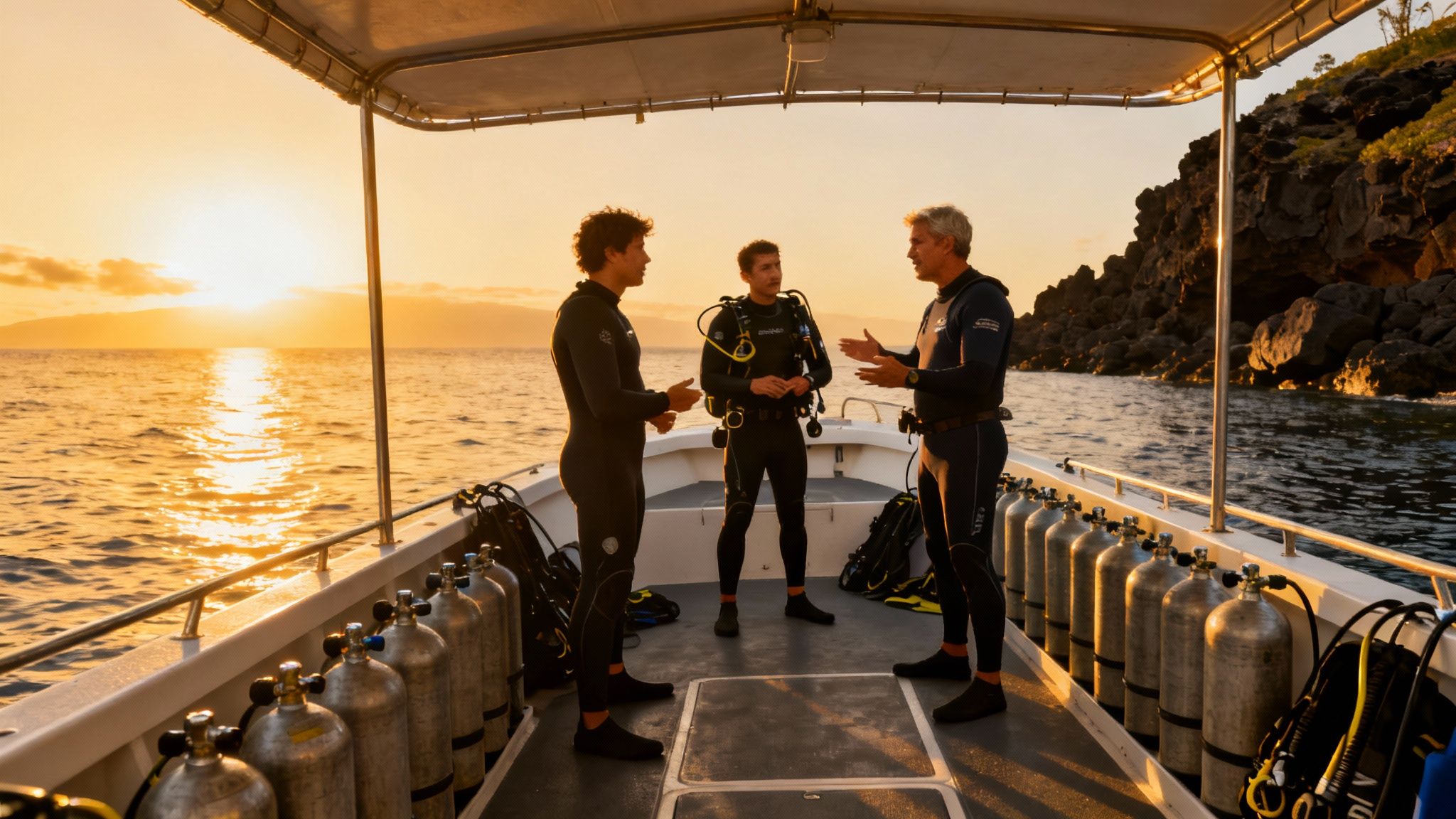
So, what does a day of diving in Kona actually look like? Let's use Kona Honu Divers as an example of what to expect from a great local operator. The day kicks off with a genuine, friendly welcome from a crew that lives and breathes diving. They'll give you an engaging dive briefing that isn't just about rules; it's about getting you excited for the specific reefs, lava tubes, and marine life you're about to see.
Once you’re on board, you’ll feel the laid-back, professional vibe. Good charters focus on small groups, which makes a huge difference. You get more personalized attention, both on the boat and, more importantly, underwater. Between dives, you can kick back, swap stories with other divers, and just soak in the views of the Kona coastline. It’s all about safety, comfort, and having an incredible time. To see what they offer, you can check out their full lineup of diving tours.
Sample Itinerary for a Kona Dive Trip
A perfect dive vacation isn't just about being underwater 24/7. It's about balancing adventure with relaxation. Here’s a rough idea to get your own planning gears turning:
- Day 1: Fly into Kona, settle into your place, and just decompress. Grab a good dinner and watch the sunset.
- Day 2: Jump right in with a classic two-tank morning dive. It's the perfect way to get acquainted with the local lava formations and stunning reefs.
- Day 3: The main event. Experience the Manta Ray Night Dive. It’s a bucket-list dive for a reason, and you'll never forget it.
- Day 4: Give your body a break from the nitrogen. A surface day is perfect for exploring Volcanoes National Park or just lounging on one of Kona's beautiful beaches.
- Day 5: Feeling adventurous? Book an advanced charter to a deeper, more remote site that fewer divers get to see.
While you'll get the standard gear from your charter, many divers like to bring their own personal kit. If you're looking to upgrade your timekeeping gear for better reliability and function, it's worth reading up on the best dive watches available.
The underwater world of the Big Island is calling. It’s time to stop dreaming about it and start planning it.
Your Kona Diving Questions Answered
Planning a dive trip to the Big Island always brings up a few questions. Let's tackle some of the most common ones we hear from divers getting ready for their Kona adventure.
Do I Need to Be Certified to Scuba Dive on the Big Island?
Nope, you don't! If you're new to diving, you can jump right in with a "Discover Scuba Diving" program. Great local shops like Kona Honu Divers offer these introductory experiences.
You'll get to try scuba diving in a safe, shallow spot with a PADI professional guiding you every step of the way. It’s the perfect test drive for exploring the underwater world without committing to a full certification course right away.
What Marine Life Can I Expect to See in Kona?
Get ready for a show. Kona is teeming with life, and you're almost guaranteed to run into Hawaiian green sea turtles (honu), playful spinner dolphins, moray eels, and octopuses. The reefs are also buzzing with a kaleidoscope of colorful fish.
But then there are the special encounters. You might spot majestic eagle rays gliding by, camouflaged frogfish hiding in plain sight, or even a few reef sharks. For a truly unforgettable experience, the Manta Ray Night Dive gets you up close with these gentle giants, while the Blackwater Dive reveals bizarre and beautiful creatures that rise from the deep after dark.
The best part about Kona is how reliable the marine life is. The manta rays, for instance, aren't just passing through. They live and feed here year-round, which makes seeing them on a night dive pretty much a sure thing.
Should I Book My Dive Tours in Advance?
Yes, 100%. We can't stress this enough: book all your diving tours as far ahead as you can.
Experiences like the Manta Ray Night Dive are world-famous and sell out fast, especially during the busy winter and summer months. Booking early means you get the dives you want on the days you want them, so you can build the rest of your vacation around the good stuff. Don't leave it to chance—lock in your adventure before you even pack your bags.