
Picture this: you're sinking slowly into warm, turquoise water. Sunlight filters down from above, illuminating ancient lava tubes and coral gardens bursting with color and life. This is what Big Island scuba diving is all about. The Kona coast, protected by massive volcanoes from the usual Pacific winds, is a diver's dream—perfect whether you're taking your first breath underwater or you're a seasoned pro.
Your Underwater Adventure in Hawaii Begins Here
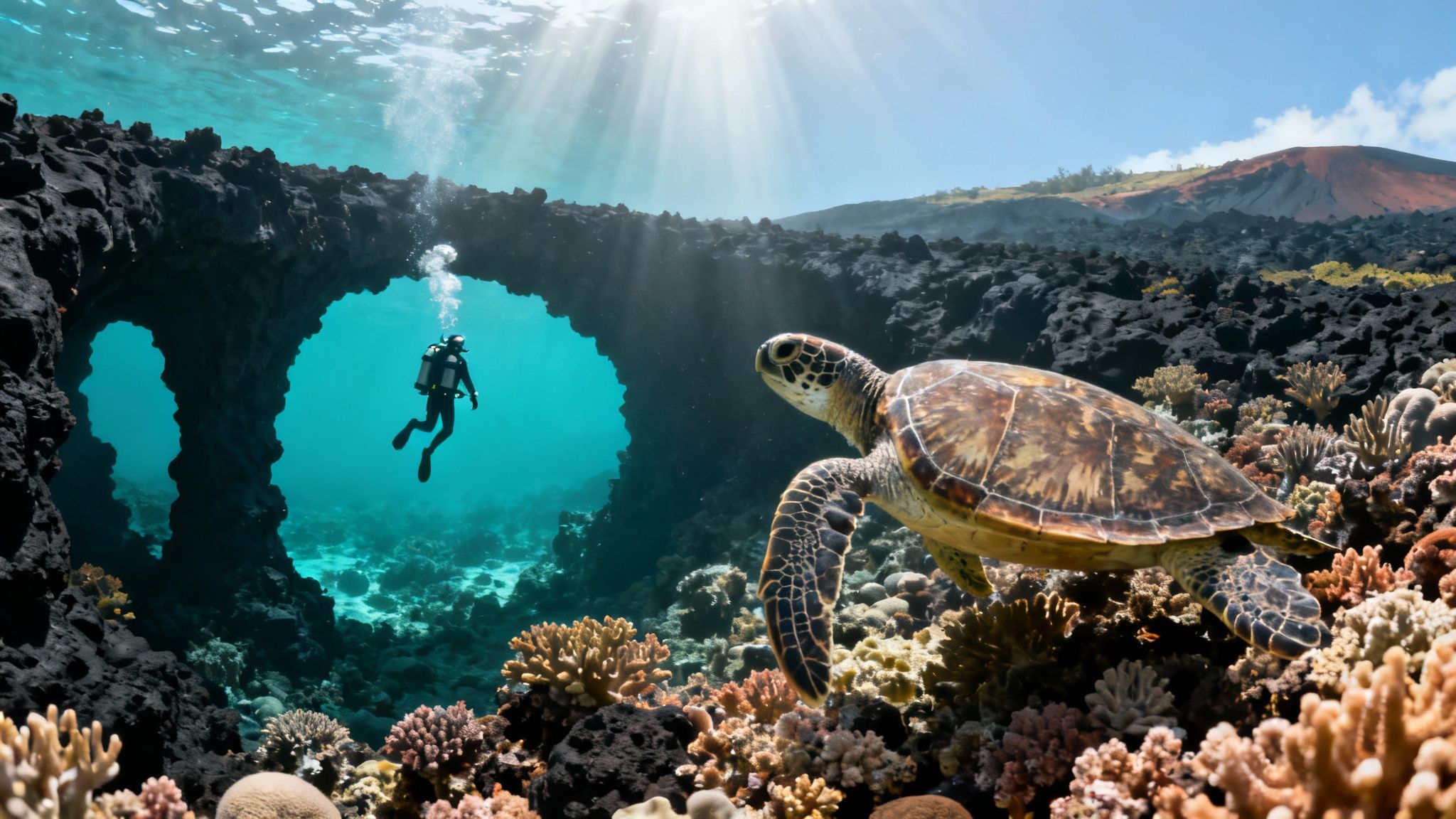
Welcome to the ultimate guide for exploring the incredible underwater world of Hawai‘i's Big Island. This isn’t just another pretty spot to dive; it’s one of the best places on the planet for it, offering experiences you truly can't get anywhere else. From the moment you slip beneath the waves, you’ll see why people come back again and again.
The island’s volcanic past is what makes the diving here so spectacular. Unlike a lot of other destinations battered by open-ocean swells, the Kona side is shielded by those enormous volcanoes. This creates amazingly calm and clear water where visibility often stretches beyond 100 feet. It’s like swimming in high definition.
What to Expect on Your Dive Journey
Think of this guide as your roadmap to everything the Big Island has to offer beneath the surface. We'll take a look at the vibrant ecosystems thriving in lava arches and intricate coral reefs. It doesn't matter if you're gearing up for your first dive or have a logbook full of them—an adventure is waiting for you here.
Here’s a sneak peek at what we'll cover:
- World-Famous Night Dives: We’ll get into the magic of the Manta Ray Night Dive and the surreal Pelagic Blackwater Dive. These two dives are what put Kona on the map.
- Top-Tier Dive Sites: You'll get an insider’s tour of the best spots, from shallow reefs great for beginners to deeper sites that will thrill even the most experienced divers.
- Planning Your Trip: We’ll walk you through picking the best time to visit, finding the right certification course, and booking the perfect diving tours with a crew you can trust.
Diving in Kona isn't just a sport. It's a chance to connect with a thriving marine world in one of the most beautiful and protected environments on Earth.
By the time you're done reading, you'll have everything you need to plan an underwater trip you’ll never forget. So, let’s get started and explore what makes Big Island scuba diving a true bucket-list experience for any ocean lover.
So, What Puts Kona Diving on the World Stage?
Ever wonder why Kona pops up on virtually every "best diving in the world" list? It’s no accident. It all comes down to a perfect storm of geology and biology, creating a diver's paradise unlike any other. The secret lies with the two colossal volcanoes, Mauna Loa and Hualālai, which act as massive bodyguards for the western coastline, shielding it from the powerful trade winds that batter other parts of Hawai‘i.
This natural protection gives us unbelievably calm and clear seas day in and day out. It's why Big Island scuba diving is such a consistently incredible experience. We're talking about visibility that often stretches beyond 100 feet, turning every dive into a crystal-clear, high-definition adventure.
But amazing visibility is just the start. What truly sets Kona apart is the world you discover within that clarity. The coastline here is a dramatic, underwater masterpiece sculpted by millennia of volcanic eruptions.
A Playground Carved by Volcanoes
The underwater terrain here is something else entirely. Imagine navigating through a maze of ancient lava tubes, swimming under majestic archways, and peering into deep caves—all formed when molten lava met the cool Pacific. These unique structures create a complex and thrilling environment that’s as beautiful as it is full of life.
The seafloor is a series of dramatic drop-offs, ledges, and canyons that provide the perfect habitat for an insane amount of marine life. This volcanic architecture is the foundation of the ecosystem, offering shelter and attracting everything from tiny, vibrant critters to huge pelagic visitors.
Kona's one-two punch of unique volcanic topography and protected waters makes it a sure bet for divers. It's one of those rare places where you can count on fantastic conditions and mind-blowing sights almost every time you hit the water.
When you’re choosing who to dive with, you need a team that knows these intricate sites like the back of their hand. Here at Kona Honu Divers, we’ve built our reputation on guiding divers safely through these natural wonders and making sure every single trip is an unforgettable one.
A Hotspot for Marine Life
Those same calm, clear conditions are the perfect recipe for a booming underwater ecosystem. The Big Island is a cradle of biodiversity, home to a huge percentage of endemic species—that means critters you literally can't find anywhere else on the planet.
On any given dive, you're likely to meet some of our famous locals:
- Green Sea Turtles (Honu): Seeing these gentle giants resting on the reef or gliding effortlessly past you never gets old. They're a staple of Kona diving.
- Spinner Dolphins: It's common to see whole pods of these acrobatic dolphins cruising along the coast, often putting on a spectacular show at the surface.
- Vibrant Reef Fish: The dark lava rock provides a stunning backdrop for the brilliant colors of yellow tangs, butterflyfish, and parrotfish. It’s like a living rainbow.
- The Big Guys: Depending on the season and a little bit of luck, you could have a life-changing encounter with manta rays, eagle rays, or even a majestic whale shark passing through.
This incredible biodiversity and reliable conditions have made the Big Island a global hub for dive tourism. The island supports around 100,000 certified scuba dives every year, with a network of over 50 professional dive shops keeping the adventures going. It's a thriving community that ensures divers of all levels, from rookie to seasoned pro, will find the perfect underwater experience. You can get a deeper look into the Big Island scuba diving scene here.
With so many world-class sites and unique encounters, Kona offers a huge variety of diving tours designed to show off the best of what our waters have to offer. Whether you're exploring a sunlit reef or a deep volcanic ledge, you're in for an adventure you won't soon forget.
A Diver’s Guide to Kona’s Best Underwater Spots

The Kona coast is like an underwater treasure map, where every "X" marks a spot more amazing than the last. The sheer variety here is incredible, meaning there's a perfect dive waiting for you, no matter your experience level. If you're just getting your fins wet with Big Island scuba diving, you'll find calm, protected bays that feel like swimming through a massive, natural aquarium.
For divers with more bottom time logged, the dramatic volcanic landscapes offer a chance to test your skills while taking in some truly unforgettable scenery. Let’s jump in and explore a few of the must-see sites that make this place so special.
H3: Perfect for Beginners: Pawai Bay
If you’re a new diver or just looking for a relaxed, beautiful day in the water, Pawai Bay is the place to be. It's famous for its shallow, calm conditions and fantastic visibility, which makes it the ideal spot to build confidence and just enjoy the vibrant marine life all around you.
The bay acts as a nursery for countless reef fish, so you'll often find yourself surrounded by shimmering clouds of color. But the real stars here are the Hawaiian Green Sea Turtles, or Honu. It’s common to see them resting on the reef or gliding gracefully past, giving you some amazing photo ops.
H3: Intermediate Underwater Playgrounds: Golden Arches
Ready to take it up a notch? Golden Arches is a huge favorite for its stunning underwater architecture. The site earned its name from a series of massive lava rock arches you can actually swim through—it’s a surreal and breathtaking experience.
Navigating these ancient formations is a genuine thrill, and they provide the perfect shelter for a ton of marine life. Keep an eye out for eels peeking from crevices, schools of butterflyfish, and the occasional well-camouflaged octopus. This site is a perfect example of how the island's volcanic past created a natural playground for divers.
The diversity of Kona's dive sites is its greatest strength. One day you can be gliding over a serene, shallow reef with turtles, and the next you can be navigating a labyrinth of ancient lava tubes. It keeps every single dive fresh and exciting.
H3: Thrills for Advanced Divers
For those with more experience and a taste for adventure, Kona absolutely delivers. We’re talking deeper sites, more complex navigation, and the chance for some big animal encounters. A great place to see the full range of what’s out there is this list of Big Island dive sites that shows just how diverse the underwater environments are.
Advanced dives can take you to submerged pinnacles or along steep drop-offs where the reef plummets into the deep blue. This is where you have the best shot at spotting larger pelagic species—think eagle rays, sharks, and maybe even a whale shark if you’re really lucky. These sites offer a completely different kind of rush and are a huge reason why Big Island scuba diving attracts seasoned divers from all over the world. Check out our advanced dive tour for a more challenging experience.
To help you get a better sense of what to expect, here’s a quick snapshot of a few popular spots.
Kona Dive Site Snapshot
| Dive Site | Experience Level | Max Depth | What You'll See |
|---|---|---|---|
| Pawai Bay | Beginner | 45 ft (14m) | Green sea turtles, reef fish, calm conditions |
| Golden Arches | Intermediate | 60 ft (18m) | Lava tubes, swim-through arches, eels, octopus |
| Au Au Crater | Intermediate | 60 ft (18m) | Collapsed lava dome, excellent visibility, high fish density |
| St. Augustine | Advanced | 110 ft (34m) | Deep reef, potential for pelagic encounters, strong currents |
Ultimately, choosing the right site is the key to having an amazing day, and the best way to do that is to go with a local crew that knows these waters inside and out. They’ll make sure your dive is perfectly matched to your skill level, ensuring you have a safe, fun, and totally memorable experience.
Experience Kona’s Legendary Night Dives
When the sun dips below the horizon in Kona, the ocean doesn't just get dark—it comes alive. The familiar daytime reefs transform into a mysterious, deep blue world, setting the stage for two of the most unforgettable underwater adventures you can imagine.
For many divers, the real magic of the Big Island scuba diving experience happens after sunset. These aren't just regular dives; they're bucket-list events that showcase the incredible secrets of the Pacific. In the inky blackness, nocturnal hunters emerge and the entire atmosphere shifts to one of thrilling discovery.
The World-Famous Manta Ray Night Dive
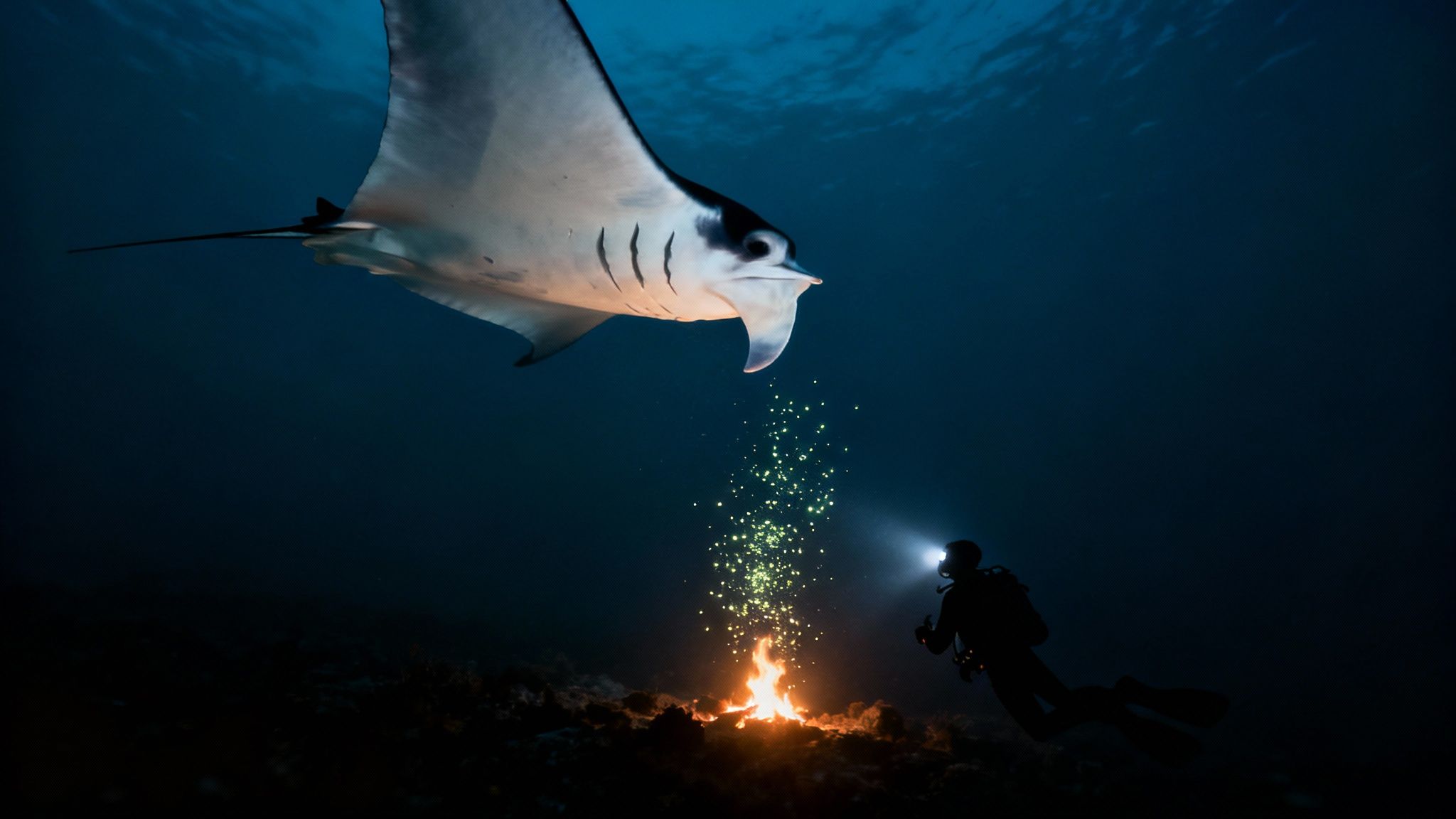
Picture this: you're kneeling on the sandy ocean floor, watching as majestic creatures with wingspans up to 16 feet glide silently, just inches above your head. This is Kona's Manta Ray Night Dive, an experience so powerful that divers often call it life-changing. It’s consistently ranked as one of the best night dives on the planet, and once you do it, you’ll understand why.
The setup is deceptively simple. We gather on the seabed and point our powerful dive lights upward. This creates a "campfire" of light that attracts huge clouds of plankton—the mantas' favorite meal. What happens next is a silent, mesmerizing ballet as these gentle giants swoop and barrel-roll through the light beams, feasting on the buffet.
This encounter is a completely natural feeding event, not an aquarium show. You are a respectful observer of a wild, magnificent spectacle that has made Kona a global icon for marine encounters.
The entire experience is serene and completely safe. Manta rays are gentle giants without teeth, stingers, or barbs, which allows for an incredibly close and peaceful interaction. To learn more about this epic Hawaiian adventure, check out this guide to the Manta Ray Dive Kona.
Ready to see it for yourself? Our team at Kona Honu Divers runs an incredible Manta Ray Dive tour that will leave you absolutely speechless.
Journey Into the Abyss with a Blackwater Dive
If the Manta Ray Dive is a grand underwater ballet, then a Blackwater Dive is a surreal trip into deep space. This is, without a doubt, one of the most unique and advanced dives you can ever do. We head miles offshore, over thousands of feet of water, and drift tethered to the boat in the middle of the water column.
This dive isn't about the reef. It’s about witnessing the largest migration on Earth, which happens every single night as countless strange and beautiful creatures rise from the abyss to feed.
As you float in the darkness, your light reveals bizarre, often bioluminescent organisms you’d never see otherwise. Think tiny, translucent squid, alien-like larval fish, and shimmering jellies pulsing with their own light. It truly feels like you're floating in outer space, surrounded by unknown stars. It’s a dive for the adventurous, but the reward is a glimpse into a hidden world few will ever see.
How to Plan Your Big Island Dive Trip
Turning that dream of Big Island scuba diving into a real-life adventure is a lot simpler than you might think. With just a little bit of planning, you can put together an incredible underwater trip that lines up perfectly with your schedule, budget, and dive skills. Think of this as your roadmap for making the key decisions, from picking the best time to visit to figuring out what gear to bring.
First things first: when should you come? The amazing news is that Kona's protected coastline makes for fantastic diving all year long. That said, different seasons do have their own unique perks.
Choosing the Best Time to Visit
The winter months, from December to March, are a truly special time to be in the water here. The ocean might be a few degrees cooler, but this is prime season for humpback whales. It's a surreal experience to be underwater and hear their hauntingly beautiful songs echoing all around you on a dive.
If you prefer warmer, calmer conditions, then summer is your sweet spot. From June to September, the water is at its warmest and the seas are often glassy-smooth. This makes for super comfortable boat rides and incredibly relaxing dives. But no matter when you decide to visit, the visibility is almost always fantastic.
Getting Certified in Paradise
If you're not a certified diver yet, I can't think of a better place to learn than Kona. The calm, clear, and warm water is the perfect environment to build your confidence as you take your first breaths underwater. Local dive shops offer a full range of PADI courses to get you started.
- Discover Scuba Diving: This is a one-day "try it out" experience. You'll learn the absolute basics from an instructor and then go on a real dive on a shallow reef. It's the perfect way to see if diving is for you without committing to the full course.
- Open Water Certification: This is the big one—the full certification. It usually takes 2-3 days and combines online learning with hands-on, in-water training. When you're done, you'll be a certified diver, ready to explore the underwater world anywhere you go.
What to Pack and What to Rent
Packing for a dive trip is always a balance between convenience and comfort. While you can absolutely rent everything you need, most seasoned divers prefer to bring a few personal items.
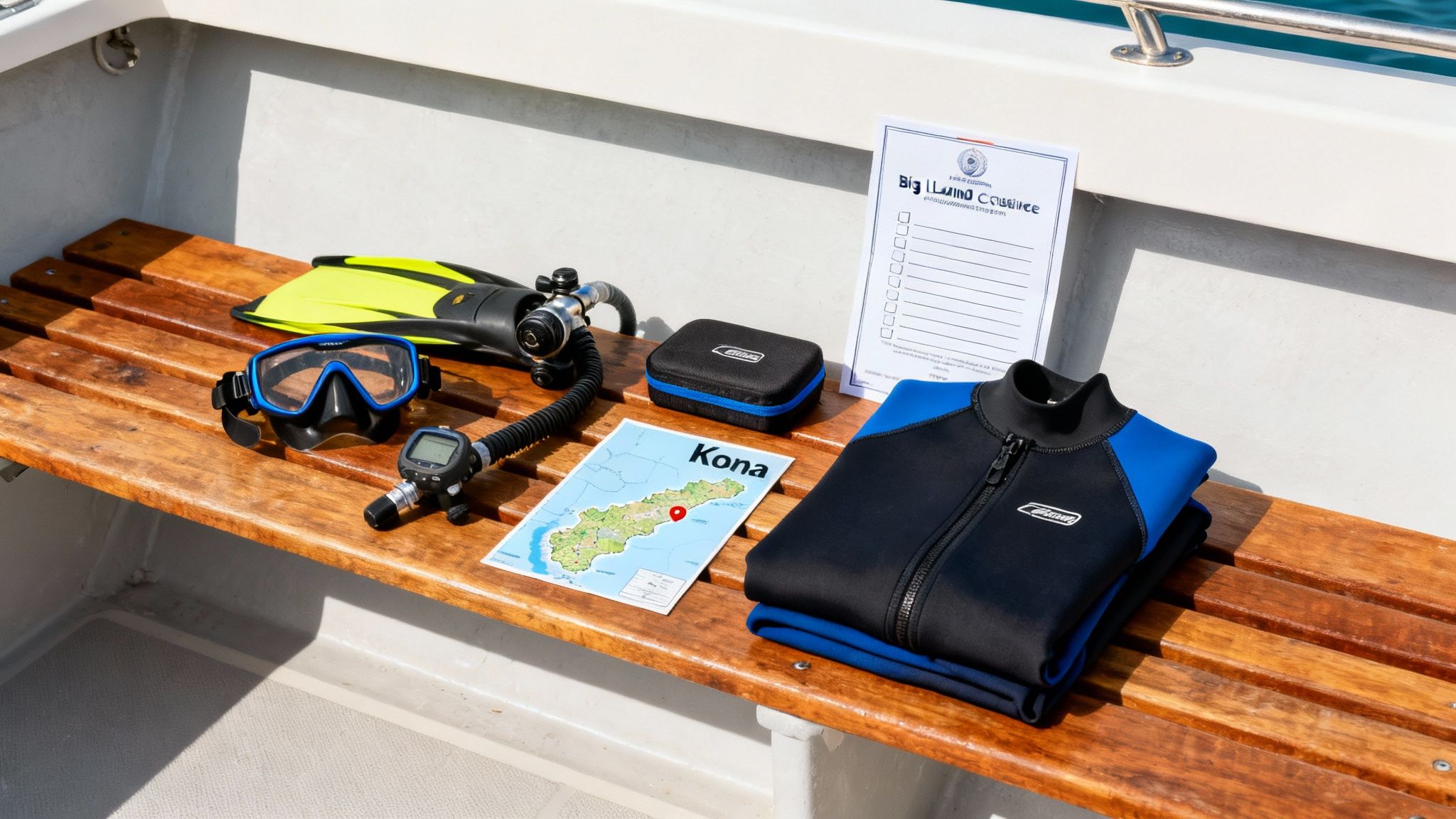
Pro Tip: Bring your own mask and dive computer. A mask that fits your face perfectly can make or break a dive, and being familiar with your own computer's display and settings is a huge plus for both comfort and safety.
Heavier gear like BCDs, regulators, and wetsuits can easily be rented from a professional shop like Kona Honu Divers. You can trust that the gear is well-maintained and perfectly suited for the local conditions. A 3mm wetsuit is typically all you'll need for Kona's warm waters. And don't forget an underwater camera to capture all the magic!
For divers looking for a more immersive, multi-day experience beyond single-day trips, you might want to look into dedicated liveaboard dive trips. With these key details sorted, you're well on your way to an unforgettable Big Island dive adventure.
Essential Dive Safety in Hawaiian Waters
Let's talk about safety, because it’s the foundation of every amazing dive. When you're dreaming of exploring the Big Island's underwater world, it's smart to consider the risks. The great news? Guided scuba diving has an incredible safety record, especially when you stack it up against other unguided ocean activities.
A few key practices are all it takes to make sure your dives are as safe as they are breathtaking. The single most important thing you can do is dive with a certified, reputable operator. A professional guide isn't just there to point out cool fish; they know these sites like the back of their hand and are trained to handle anything the ocean throws at them, from a sudden current shift to a minor gear issue.
Your Pre-Dive Safety Checklist
Little checks before you hit the water make a huge difference. Every diver, from beginner to pro, runs through a pre-dive safety check. We often use the acronym BWRAF (BCD, Weights, Releases, Air, Final OK) to make sure our own gear—and our buddy's—is working perfectly. It's a simple habit that prevents problems before they start.
Another crucial piece of the puzzle is being open with your guide about your dive history and comfort level. This isn't a time to be shy! It helps them pick the perfect spot where you'll feel confident and have an absolute blast. Their number one job is keeping you safe and making sure you love the experience.
Understanding the Risks and Rewards
It helps to put the risks into perspective. Statistically speaking, guided scuba diving is remarkably safe. A study looking at ocean incidents in Hawaii from 2009 to 2018 paints a clear picture. During that decade, there were 206 tragic snorkeling deaths, but only 28 scuba diving fatalities. That huge difference really highlights how much professional training and supervision matter. You can read more about aquatic tourism safety findings over on Divernet.com.
Choosing a professional dive operation isn't just about convenience; it's the single most effective way to manage risk and maximize your enjoyment of Kona's underwater world.
Safety doesn’t stop when you surface, either. You have to think about your plans after the dive, especially if you're flying. Decompression sickness is a real concern, and it's critical to understand the risks of getting on a plane too soon. For a full breakdown, take a moment to learn about why you can't fly after diving.
In the end, staying safe in Hawaiian waters boils down to smart choices. Dive with a certified guide, give the marine life plenty of space, and always listen to your gut—never push your limits. Follow these simple rules, and you can rest easy knowing your Kona diving adventure will be one of the safest and most rewarding ways to experience the magic of the Pacific.
Your Big Island Scuba Questions Answered
Planning a scuba trip to the Big Island always brings up a few questions, even for seasoned divers. We get it. To make sure you feel totally ready for your adventure, we’ve put together answers to some of the things we're asked most often.
What Is the Best Month for Scuba Diving on the Big Island?
Honestly, there’s no bad time to dive here. The Kona coast is wonderfully protected, giving us great conditions pretty much year-round.
That said, different seasons do have their own unique perks. If you dive in the winter, from December to March, you’ll often be treated to the incredible sound of humpback whale songs echoing through the water. It’s a truly humbling experience.
If you prefer the warmest water and flattest seas, aim for the summer months between June and September. Visibility is fantastic all year, frequently clearing 100 feet or more, so you really can't go wrong.
Do I Need to Be Certified to Try Scuba Diving in Kona?
Not at all! If you're curious about breathing underwater but not ready to commit to a full course, the "Discover Scuba Diving" program is perfect for you.
You'll team up with a PADI professional who will walk you through the basics in calm, shallow water. Once you're comfortable, you'll head out for a real dive on one of our beautiful reefs. It’s the ideal way to test the waters, literally, and see if scuba is your new passion.
The Manta Ray Night Dive is consistently rated as one of the best night dives in the world. It's a unique, sustainable interaction where divers observe wild manta rays feeding on plankton attracted by underwater lights.
Are There Sharks in the Waters Around the Big Island?
Yes, and that’s a great thing! A healthy shark population means we have a thriving ocean ecosystem.
On our dives along the Kona coast, the most common shark we see is the whitetip reef shark. They are typically small, pretty shy, and spend most of their time resting under ledges. Spotting one is a real treat for most divers. Encounters with any larger species are extremely rare, and our guides are experts in marine animal behavior and diver safety.
What Makes the Manta Ray Night Dive So Special?
It’s hard to put into words, but I’ll try. This isn't an aquarium show; this is a completely wild and natural encounter. Imagine a dozen or more giant, graceful manta rays swooping and barrel-rolling just inches above your head as they feed in the beams of our lights.
It’s an underwater ballet that’s both thrilling and profoundly moving. While other places have "cleaning stations," our manta dive lets you witness them in a dynamic, active state. This experience is the absolute pinnacle of Big Island scuba diving, and it’s a memory you’ll carry with you forever.
Ready to dive in? The expert team at Kona Honu Divers lives and breathes this stuff, and we'd love to show you the incredible underwater world of Kona. Take a look at our full lineup of diving tours and let's find the perfect adventure for you.