
Imagine descending into a world literally forged by fire. A place where ancient lava tubes form dramatic underwater cathedrals and coral gardens pulse with a life found nowhere else. This is the reality of Big Island scuba diving.
From the legendary Kona Manta Ray night dive to serene turtle cleaning stations, this guide is your key to unlocking one of the planet's most unique diving tours.
Discover a Diver’s Paradise on the Big Island
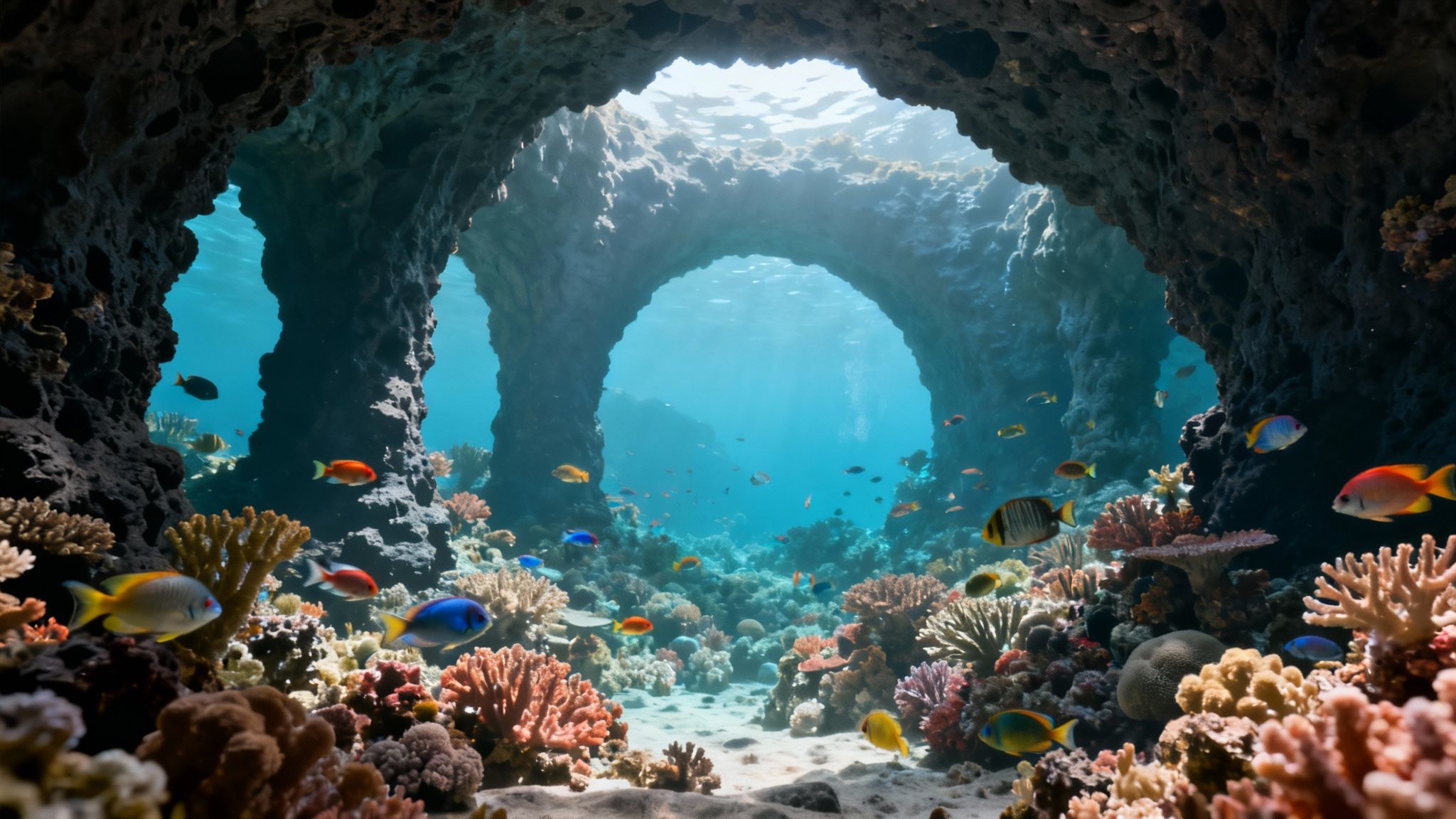
The Big Island of Hawaii is far more than just another tropical spot; it's an underwater playground sculpted by volcanoes. The Kona coast, in particular, is a diver’s dream, blessed with calm, clear waters that are as reliable as they are beautiful.
So, what’s the secret? The island's volcanic past has left behind a stunningly complex underwater landscape. On any given dive, you might find yourself exploring:
- Ancient Lava Tubes: Swim through massive caverns and archways carved out by molten rock centuries ago.
- Dramatic Pinnacles: Ascend underwater mountains that shoot up from the seafloor, acting as magnets for schools of fish.
- Vibrant Coral Gardens: Drift over sprawling reefs that host a mind-boggling array of marine species, many endemic to Hawaii.
This is a place where no two dives are ever the same, and every descent holds the promise of a new discovery.
What to Expect from Kona Diving
The Kona coast is world-famous for a reason. The underwater topography here is simply incredible, and the conditions are just about perfect. Visibility often pushes past 100 feet, and the water temperature rarely drops below a comfortable 75°F, even in winter.
This powerful combination of unique geology, abundant wildlife, and exceptional water clarity truly solidifies the Big Island's reputation as a world-class diving destination. You can learn more about what makes diving in Hawaii a top-tier experience.
Expert operators like Kona Honu Divers have spent years perfecting the art of showing divers the best of this underwater world. Their local knowledge is second to none, and their commitment to safety means everyone, from a brand-new diver to a seasoned pro, can relax and just soak in the magic of Kona.
Whether you’re just starting to plan your first dive trip or you have hundreds of dives logged, this guide will give you the inside scoop to make it perfect. Let’s turn that curiosity into an unforgettable adventure.
Why Kona Is the Heart of Big Island Diving
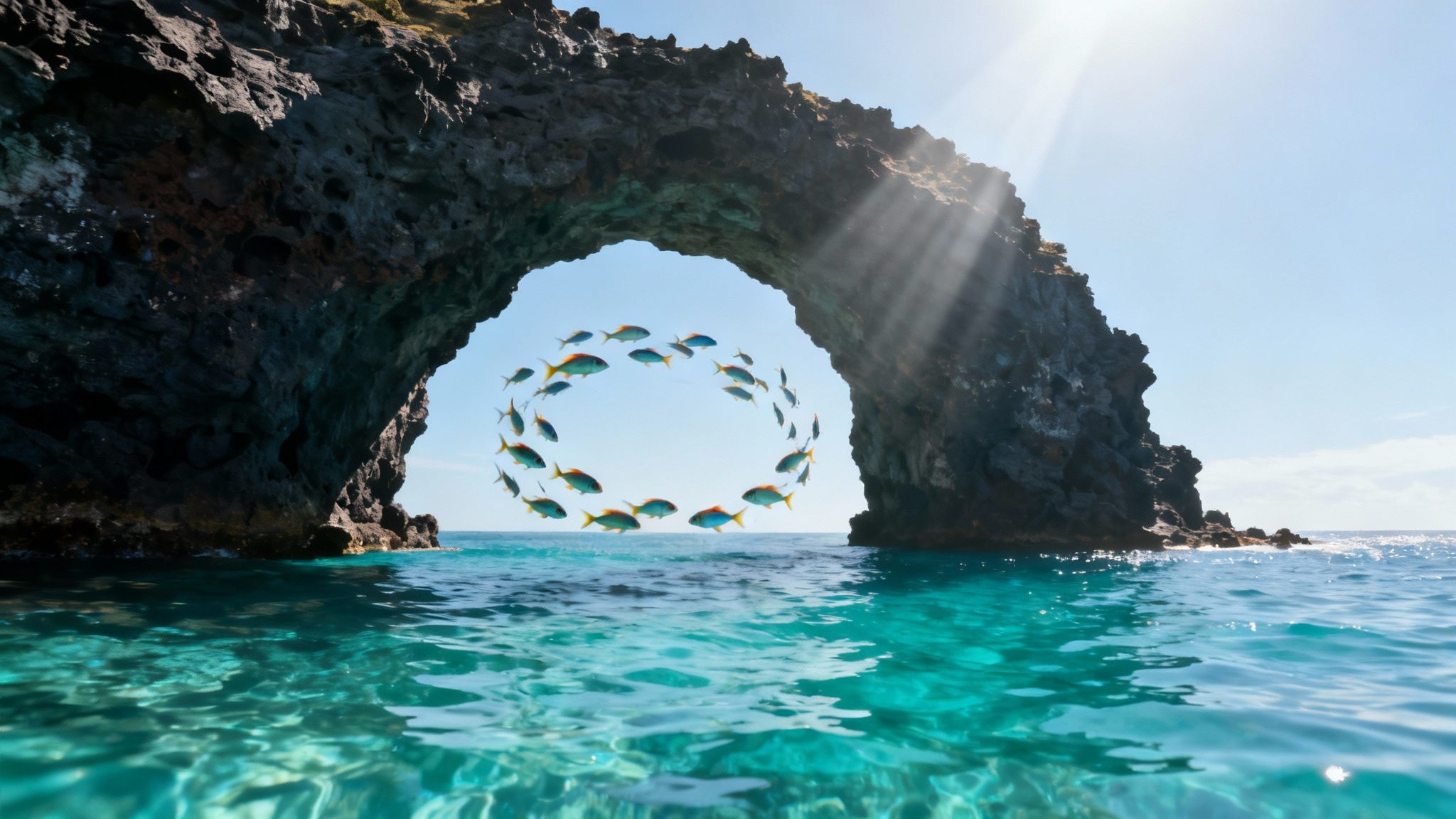
So, what makes the Kona coast the undisputed champion of Big Island scuba diving? It all comes down to geography. Tucked away on the island's leeward side, Kona is sheltered by the immense volcanic mountains of Mauna Loa and Hualalai.
Think of these volcanoes as the ultimate natural windbreak. This massive shield protects the coastline from the powerful trade winds that churn up the waters elsewhere, leaving Kona with incredibly calm and clear conditions almost year-round. It's this lucky accident of geology that creates the perfect underwater playground.
This tranquil environment hasn't just preserved the water clarity; it's allowed a stunningly complex marine ecosystem to thrive. The world beneath the waves here is a direct result of the island's fiery birth.
A Landscape Forged by Fire
Ancient lava flows have carved out an underwater landscape that is nothing short of spectacular. As a diver on the Kona coast, you get to explore a world filled with:
- Dramatic Arches and Caverns: These are old lava tubes and tunnels that now act as incredible swim-throughs, offering a perfect hiding spot for countless marine critters.
- Towering Pinnacles: Imagine underwater mountains shooting up from the seafloor. These serve as popular cleaning stations and gathering spots for everything from schools of fish to bigger pelagic visitors.
- Intricate Reef Structures: Lava rock provides the perfect anchor for coral to grow, forming sprawling reef systems that are basically bustling cities for a dense population of marine life.
Every dive site tells a story of volcanic creation. You're swimming through history, and it's this unique topography that makes the underwater scenery here so famous. You simply won't find this kind of dynamic environment anywhere else. Find out more about what makes Kona famous for its underwater scenery.
The Pioneers of Kona Diving
The Big Island wasn't always a global diving hotspot; its reputation was built by people with a passion for the ocean. While diving got its start here in the late 1960s, it was the founding of Jack's Diving Locker in 1981 by pioneers Jack and Tina Clothier that truly put the island on the map.
Their efforts helped establish the foundation for what is now a world-class diving destination. Today, the island supports roughly 100,000 certified scuba dives annually, and with over 50 dive shops, it’s clear the community they started is still going strong.
That legacy continues with today’s operators, who make it incredibly easy to get in the water. Most of Kona’s best dive sites are just a quick boat ride from the harbor, which means you spend less time traveling and more time exploring.
The combination of protected waters, volcanic topography, and a rich history of exploration has cemented Kona's status as the true heart of diving in Hawaii. It’s a place where nature's power and human passion for the ocean meet.
Planning Your Big Island Underwater Bucket List
Alright, you get it—Kona is the heart of Big Island scuba diving. Now comes the fun part: crafting your own personal must-do list. This isn’t just about ticking boxes; it's about collecting underwater moments that you'll be replaying in your mind for years to come.
Think of this as building your dream dive trip. We'll start with the experiences that put the Big Island on every diver's radar and then explore the vibrant reefs that make this place so special. As you get ready for an unforgettable adventure, don't forget to brush up on smart packing strategies to make sure you have room for all your gear.
The World-Famous Manta Ray Night Dive
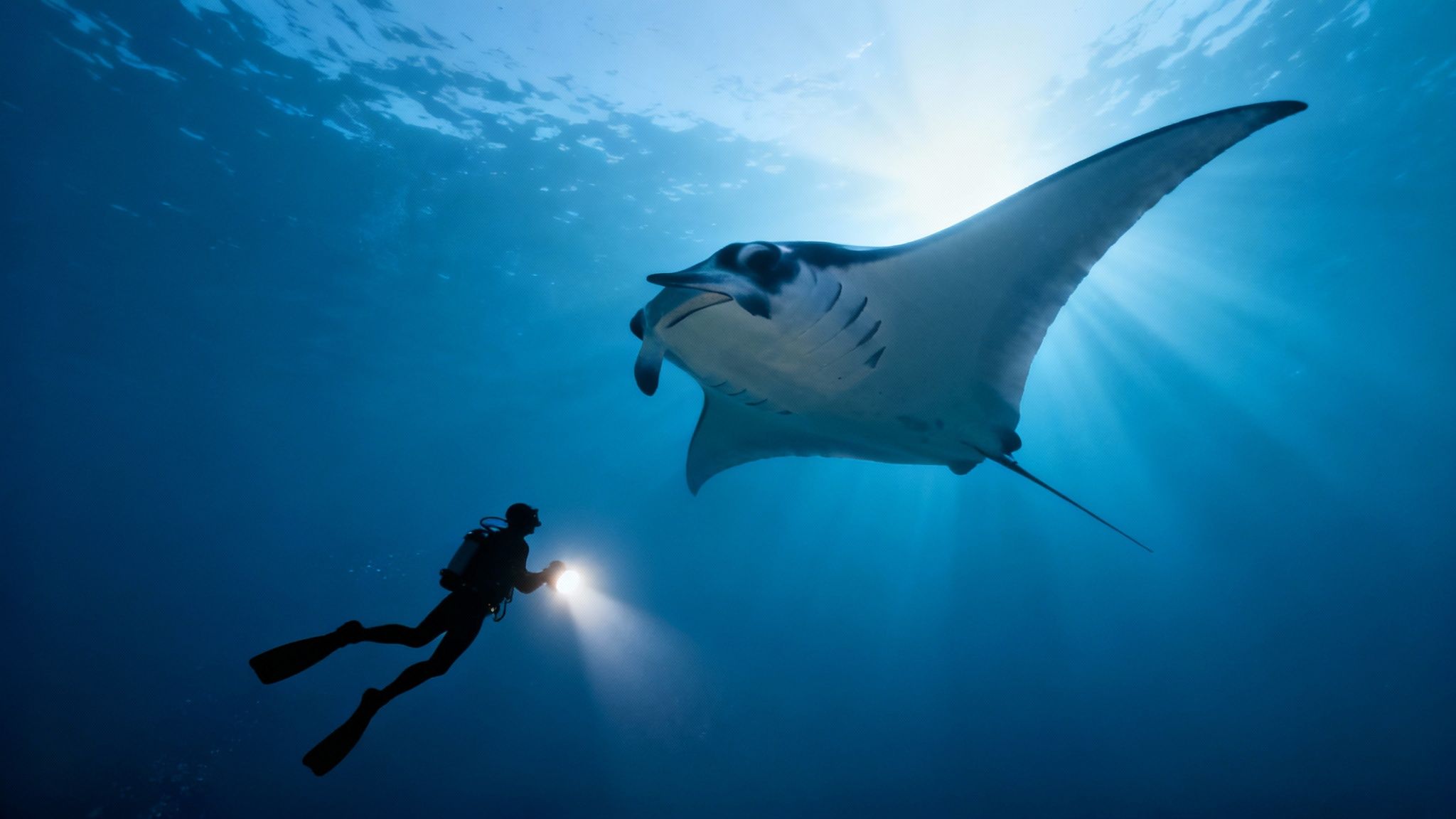
If there’s one dive that is the Big Island, it’s the Manta Ray Night Dive. Honestly, calling it a "dive" doesn't do it justice. It's a full-blown spectacle. You descend into the dark, find a spot on the sandy bottom, and shine your flashlight toward the surface, creating an underwater stage.
What happens next is pure, unadulterated magic. Giant manta rays, some with incredible wingspans of over 12 feet, materialize from the darkness. They swoop, glide, and perform these effortless barrel rolls right through the light beams, feeding on the cloud of plankton your light has attracted.
The reason this is such a reliable encounter is that local operators have been doing this for years at the mantas' natural feeding grounds. Your light is essentially a dinner bell, creating a concentrated buffet that brings the rays in for an up-close-and-personal performance. It’s a surreal, humbling, and unforgettable underwater ballet.
The Mysterious Blackwater Night Dive
Ready for something completely different? For the truly adventurous diver, the Blackwater Night Dive is like a trip to another dimension. This isn’t your typical reef dive. You're drifting in the deep, open ocean, suspended in inky blackness thousands of feet above the seafloor.
Here, you'll witness one of the planet's largest migrations as bizarre and beautiful creatures rise from the abyss under the cover of night. You'll see things that look like they were pulled straight from a sci-fi movie:
- Translucent Squids and Jellies: Many of these are bioluminescent, putting on their own light show.
- Larval Fish and Crustaceans: You get to see the juvenile forms of familiar reef animals, and they often look like tiny, otherworldly aliens.
- Rare Pelagic Life: These are the creatures that live their entire lives in the open ocean, rarely ever seen by human eyes.
This dive is an absolute sensory trip that offers a peek into a hidden world most people don't even know exists.
Classic Daytime Reef Dives
While the night dives get a lot of the glory, don't for a second think the daytime reef diving is anything less than spectacular. The island’s volcanic past has created a wild and wonderful underwater landscape just begging to be explored. There are dozens of amazing sites, but a few have earned their "classic" status. Our guide on where to find the best diving on the Big Island goes into much more detail on these spots.
The sheer variety of Kona's dive sites is incredible. You could spend weeks here and do a different type of dive every single day, from shallow coral gardens to dramatic lava tubes.
A perfect example is Turtle Pinnacle. It’s a classic "cleaning station" where Hawaiian green sea turtles (honu) come to get groomed by smaller reef fish. You just settle down in the sand and watch the show. It's an amazing photo op and a wonderfully peaceful dive.
Another local favorite is Golden Arches, named for the beautiful lava rock arches you can swim right through. This site is a powerful reminder of the island’s volcanic origins, with dramatic structures that are home to schools of colorful butterflyfish and tangs. These sites truly show off the depth and variety that Big Island scuba diving has to offer.
How to Choose the Right Dive Operator
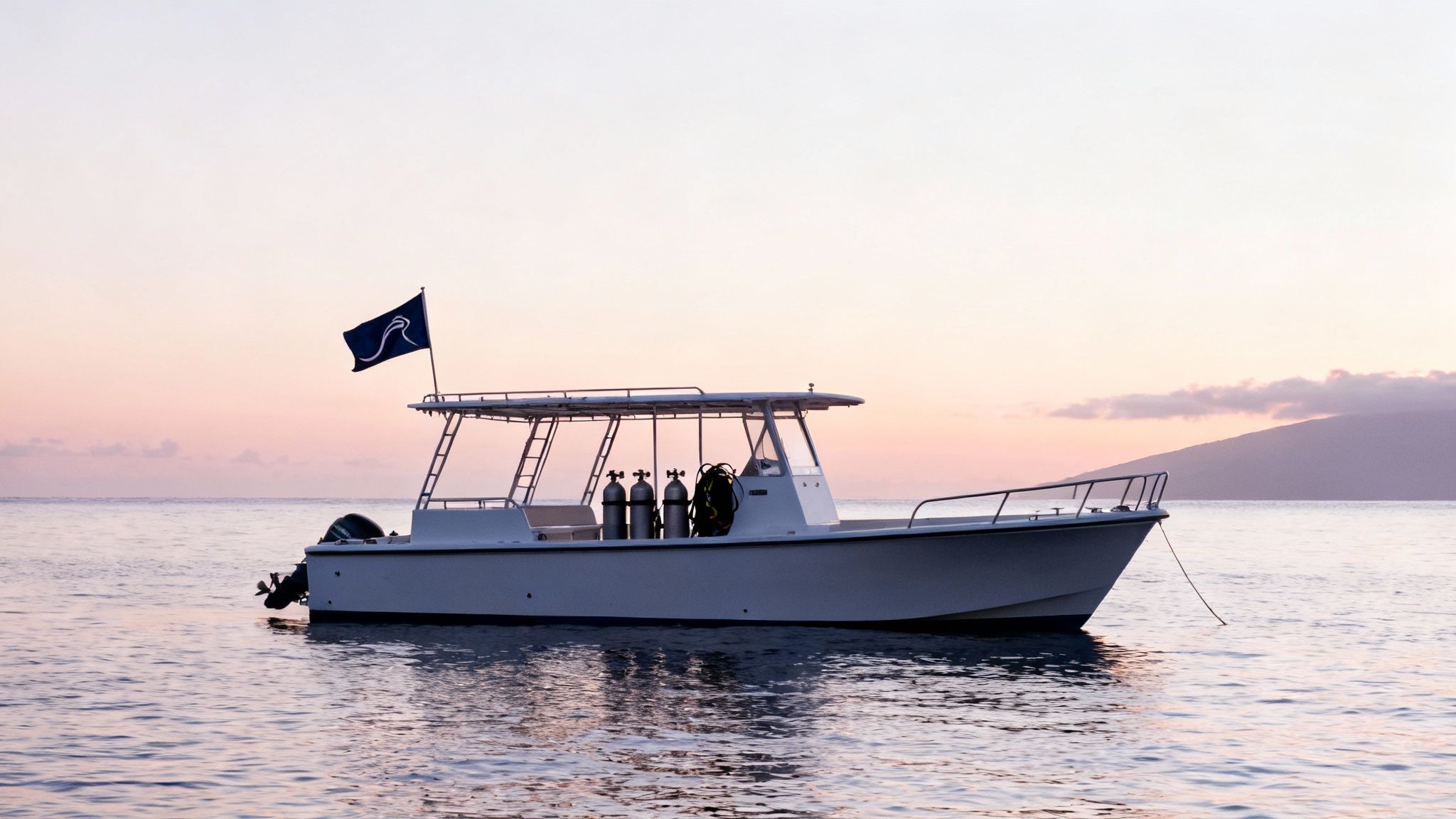
Picking the right dive charter for your Big Island scuba diving adventure is probably the single most important decision you'll make for your trip. A great operator does more than just ferry you to a dive site; they shape your entire experience, ensuring it's safe, comfortable, and absolutely unforgettable.
It’s easy to just look at the price, but the best operators offer value that goes way beyond the bottom line. They’re focused on your safety and the health of the very reefs you're there to see. When you're weighing your options, it's the little details that separate a so-so trip from a truly exceptional one.
Key Factors to Evaluate in a Dive Charter
Let's be honest: not all dive boats are created equal. The quality of the boat and the professionalism of the crew have a massive impact on your day. Always start by asking about their safety record and what kind of emergency gear they have on board.
Next up, look at the guide-to-diver ratio. A smaller group means you get more personal attention, better safety oversight, and a guide who can actually point out the cool, hidden critters you’d swim right past otherwise. It’s the difference between feeling like you’re just one of the crowd and feeling like a welcome guest.
And don't forget the boat itself! Small creature comforts like a hot freshwater shower after a dive, a shady spot to relax between tanks, and some decent snacks can make a world of difference.
The Importance of Sustainability and Experience
A dive shop's commitment to the ocean says a lot about them. Look for operators that have earned certifications like the PADI Green Star award, which is a clear signal they're serious about conservation. These are the crews who actively protect the reefs, not just profit from them.
Kona Honu Divers is a perfect example of this philosophy in action. Their crew has a staggering 200+ years of combined experience, and their local knowledge is matched only by their dedication to sustainable diving. They get it: a healthy reef is what makes for incredible diving, both for us today and for divers who will visit years from now. For a deeper dive into this, check out this guide on how to choose a Kona dive shop.
Here’s what you should expect from a top-tier operator:
- Experienced Guides: A crew that knows the sites like the back of their hand and can show you things you'd never find on your own.
- Comfort and Safety: Boats that are well-maintained, with modern safety equipment and those little comforts that make the day better.
- Small Groups: This is key for a more personal and safer dive for everyone involved.
Getting Certified and Advancing Your Skills
If you're brand new to diving, the Big Island is an amazing place to get certified. Most shops offer a Discover Scuba Diving program, which lets you get in the water with an instructor without having to commit to a full course. It's the perfect way to dip your toes in and see if you love it (spoiler: you probably will).
Already certified? Your diving journey is far from over. The unique underwater landscape around Kona is the perfect natural classroom for honing your skills.
Choosing the right operator is an investment in your safety and the quality of your adventure. A great crew transforms a good dive into a lifelong memory.
Local operators offer all sorts of continuing education courses. You can dial in your buoyancy, master underwater navigation, or even earn your Rescue Diver certification. For those looking for a real challenge, there are some incredible advanced training opportunities that will prepare you to explore deeper sites and more intricate lava tube systems. It's your chance to level up your diving in one of the best places on earth to do it.
Essential Safety Tips for Hawaii Diving
A safe diver is a happy diver. That old saying couldn't be more true, and keeping yourself safe on the Big Island starts well before you even get your feet wet. As inviting as these crystal-clear waters are, they demand your full respect. My best advice? Always dive with a professional, local guide. It's the smartest move you can make, especially when you're in an unfamiliar environment.
You’ve got to get a feel for the local conditions. Even the famously calm Kona coast can throw you a curveball with currents and surge, especially when you’re navigating around rocky points or in shallower spots. Your dive guide's briefing is your single most important tool for the day—listen up, ask questions, and follow their lead. They do this every day.
Let’s be real for a moment. For all its beauty, the ocean has its risks. Between 2009 and 2018, Hawaiian waters saw 28 scuba diving fatalities. That number isn't meant to scare you, but it's a sobering reminder of why solid training, following safety rules, and choosing a top-notch dive operator are non-negotiable. For a deeper dive into the numbers, you can check out the safety statistics in Hawaiian waters on Divernet.com.
Mastering Your Skills for Big Island Conditions
The underwater world here is shaped by lava rock and covered in delicate corals, which means your buoyancy control needs to be on point. Think of your BCD as a precision instrument, not just an inflatable vest. The goal is to hover effortlessly, just inches from the reef, protecting both the fragile marine life and yourself from a nasty scrape on the volcanic rock.
Respect for the locals—the marine life, that is—is just as crucial. The golden rule is simple: look, but don't touch. Give the animals their space. You'll see them behaving more naturally, and you'll keep them safe. This goes double for the honu (turtles) you’ll see at cleaning stations and, of course, the incredible manta rays on the world-famous night dive.
Your confidence in the water is directly tied to your preparation and awareness. Mastering fundamental skills and respecting the environment not only keeps you safe but significantly enhances your enjoyment of every single dive.
Remember, diver safety doesn't end when you surface. Paying attention to your surface intervals, chugging water all day long, and slathering on sunscreen are all part of the game. Dehydration is a serious issue that can drastically increase your risk of decompression sickness (DCS), so make water your best friend.
Before you go, it's always a good idea to run through a quick mental checklist. Here are the key things I review before every dive on the Big Island.
Big Island Diving Safety Checklist
| Checklist Item | Reason | Best Practice |
|---|---|---|
| Gear Check | Malfunctioning equipment is a primary cause of incidents. | Perform a full buddy check (BWRAF) before every single entry. No exceptions. |
| Briefing Attention | Local conditions (current, surge, visibility) can change rapidly. | Pay close attention to your divemaster's briefing on entry/exit points and potential hazards. |
| Buoyancy Control | Sharp lava rock and fragile coral demand precise positioning. | Do a quick weight check at the start of your trip and adjust as needed. |
| Hydration | Dehydration significantly increases the risk of DCS. | Drink plenty of water before your first dive and continue throughout the day. |
| Know Your Limits | Pushing beyond your training or comfort level leads to bad decisions. | Be honest with your guide about your experience. It's okay to sit a dive out. |
| Respect Marine Life | Harassing wildlife can cause stress to the animals and can be dangerous. | Maintain a safe distance. Never touch coral or any marine creature. |
This checklist isn't just a list of rules; it's a mindset. Internalizing these practices helps ensure that your focus stays on the incredible underwater scenery, not on preventable problems.
Finally, always be honest with yourself and your guide. If a dive feels like it might be too much for you, speak up. There's no shame in it. The ocean isn't going anywhere, and making smart, conservative choices is what will keep you coming back for more Big Island scuba diving for years to come.
Got Questions About Diving the Big Island? We’ve Got Answers.
Thinking about a scuba trip to Hawaii's Big Island always sparks a few questions, especially if it's your first time. We get it. To make sure you feel totally ready for your adventure, here are some straightforward answers to the things we hear most often from divers planning a trip to Kona.
When’s the Best Time of Year to Dive?
Honestly, any time is a good time! That’s one of the best things about diving the Kona coast. The massive volcanoes on the island act as a natural shield, blocking the trade winds and keeping the water remarkably calm and clear pretty much 365 days a year.
That being said, there are a couple of seasonal perks to keep in mind:
- Warmest Water: If you're someone who gets chilly easily, aim for a trip between August and October. The water temps often climb into the low 80s (°F), making it feel like a tropical bath.
- Whale Season: This is truly something special. From December through March, humpback whales migrate to Hawaiian waters. You might not see them on your dive, but you'll almost certainly hear their incredible songs echoing through the water—a haunting and unforgettable experience.
Do I Have to Be an Advanced Diver?
Absolutely not. Kona is one of the most welcoming dive destinations you’ll find, perfect for everyone from first-timers to seasoned pros. It doesn't matter if you've never breathed through a regulator before or if you've got a logbook full of deep wrecks; there's a dive site here for you.
New divers will find plenty of calm, shallow reefs packed with colorful fish, while those with more experience can explore dramatic lava tubes, deep-water pinnacles, and more advanced topography. Every reputable dive shop offers a full range of experiences, from introductory "Discover Scuba" dives to advanced certifications, so everyone gets to see the magic.
So, What Am I Going to See Down There?
The better question is, what won't you see? The marine life around Kona is just incredible. On almost any dive, you can expect to spot Hawaiian green sea turtles (honu) munching on algae, different types of moray eels peeking out from their rocky homes, and maybe a reef shark or two cruising by. It’s also super common to see huge pods of spinner dolphins playing near the boat.
But let's be real—the manta rays are the headliners. They're the reason Kona's Manta Ray Night Dive is world-famous. Beyond the big stuff, you’ll be surrounded by a dizzying variety of reef fish, like butterflyfish, tangs, and Hawaii's quirky state fish, the Humuhumunukunukuāpuaʻa (try saying that three times fast!).
What Should I Pack for the Dive Boat?
Great question. Most professional charters, like Kona Honu Divers, have you covered with all the essentials—tanks, weights, and even snacks and water to keep you going. But there are a few personal items you’ll want to bring along to make the day even better:
- Reef-safe sunscreen (this is a must!)
- A towel and maybe a dry shirt for the ride back
- Sunglasses and a hat for when you're on the surface
- Any personal gear you can't live without, like your own mask or dive computer
Now that you have the inside scoop, the only thing left to do is get in the water. Take a look at the incredible diving tours on the Big Island and start planning an adventure you’ll never forget.