
Picture this: you’re weightless, suspended in impossibly clear water. Rays of sunlight dance through the surface, lighting up ancient lava tubes and reefs bursting with color. This isn't just a fantasy; it's what Big Island scuba diving is all about. For years, divers from across the globe have ranked the Kona coast as one of the world's absolute best spots, and it doesn't take long to see why.
Why The Big Island Is a Diver's Paradise
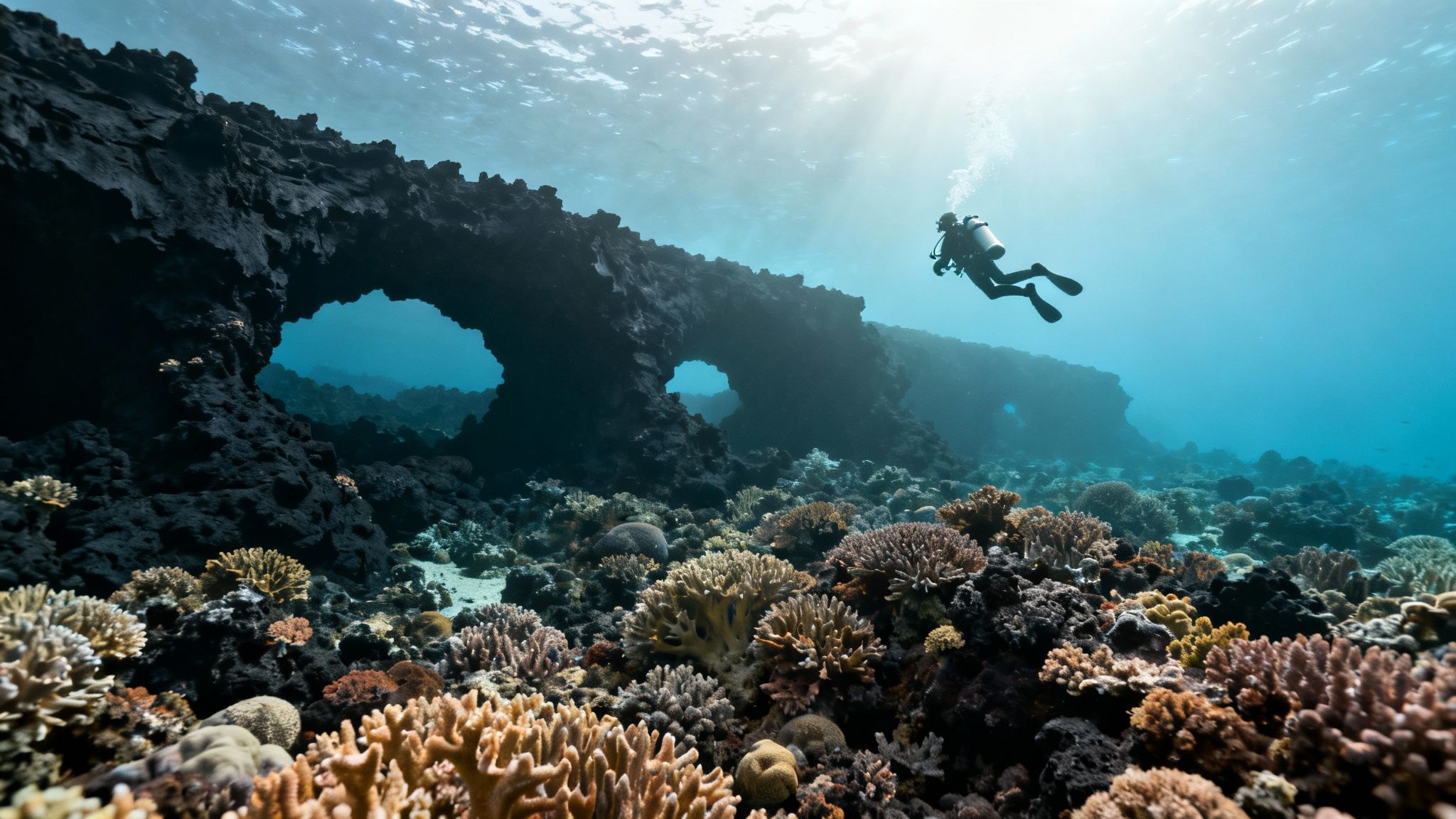
The secret to the Big Island’s incredible diving lies in its fiery origins. The island was literally born from massive shield volcanoes, and this unique geology gives the western Kona coast a massive advantage. It's perfectly sheltered from the strong trade winds, which creates some of the calmest, most predictable ocean conditions you'll find anywhere. It’s an ideal underwater classroom for new divers and an absolute playground for veterans.
Unlike the typical sandy bottoms of other tropical spots, the underwater world here is a dramatic landscape of lava tubes, soaring arches, and sunken craters. These are the remnants of ancient lava flows that have been transformed into complex habitats for a stunning variety of marine life. The volcanic rock provides the perfect foundation for coral to take hold, creating healthy, vibrant reefs that are home to species you won’t find anywhere else on the planet.
What Makes Kona Diving Special
The sheer amount of life in Kona's waters is staggering. Thanks to a combination of protected bays and deep offshore waters, the ecosystem here is thriving. On any given dive, you have a chance for some truly unforgettable encounters.
- Abundant Marine Life: It’s common to see Hawaiian green sea turtles (honu) resting on the reef, while playful spinner dolphins often greet the dive boat.
- Unique Underwater Topography: The real magic is exploring the terrain—the swim-through lava tubes, sheer walls, and sprawling coral gardens are unlike anything else.
- Iconic Night Dives: The Big Island is world-famous for its manta ray night dive. It’s a true bucket-list experience where these gentle giants feed on plankton, gliding just inches away from you in an underwater ballet.
Navigating this remarkable environment safely requires deep local knowledge. Here at Kona Honu Divers, our team has spent years exploring these waters and is passionate about sharing the magic with our guests. We're committed to providing safe, unforgettable, and eco-friendly diving tours for every experience level.
The feeling of watching a massive fish the shape of a stealth bomber coming into vision is impossible to describe. It’s a truly awesome experience that defines Big Island scuba diving.
Our guests consistently tell us our professional crews and top-tier service are what set us apart, making us one of the most trusted dive operators on the island.
Ready to see this underwater wonderland for yourself? Check out our trips and let's find the perfect adventure for you.
Discovering Kona's Top Underwater Sites
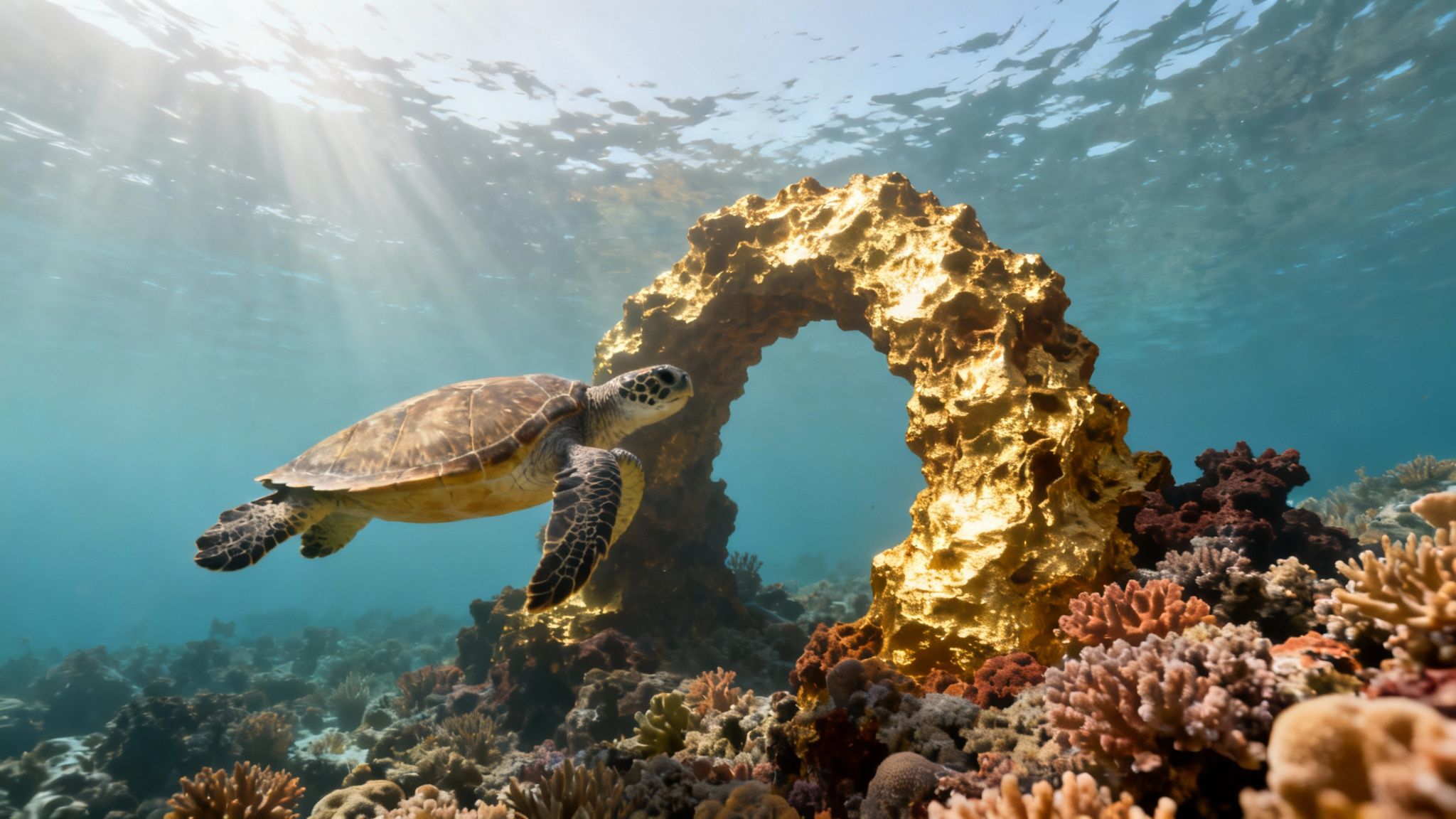
The Kona coast isn't just a place you go diving—it's an underwater library of volcanic history, with every site telling a different story. The dramatic lava formations that define the Big Island above the water continue their descent right into the sea, creating a spectacular and wildly varied underwater world. Here, you'll find everything from shallow, sun-drenched reefs perfect for your first dives to deep, mysterious abysses that will challenge even the most seasoned diver.
This incredible diversity is what makes Big Island scuba diving a truly world-class experience. Since the 1970s, the island's dive scene has exploded, now boasting over 50 dive shops and charters. These operators welcome more than 150,000 dive tourists every year, leading around 100,000 certified scuba dives annually and cementing Kona's reputation as a premier global destination. It's fascinating to learn about how the island became such a hub for diving and the rich biodiversity it protects.
The World-Famous Manta Ray Night Dive
You can't talk about Kona diving without mentioning its star attraction: the Manta Ray Night Dive. This isn't just another dive; it's a full-blown spectacle. As the sun dips below the horizon, boats head out to one of Kona’s established manta feeding grounds. Once anchored, powerful lights are submerged, attracting clouds of plankton—the manta rays' favorite meal.
What happens next is pure magic. Giant manta rays, some with wingspans stretching over 12 feet, glide out of the darkness. They perform an acrobatic ballet, swooping and barrel-rolling through the light beams to scoop up the plankton, often passing just inches from a crowd of awestruck divers. It's an experience that consistently lands on "best night dives in the world" lists for a very good reason.
The sheer grace of these gentle giants feeding in the underwater spotlight is a sight you will never forget. It’s a powerful reminder of the incredible beauty hidden just beneath the waves and an absolute must-do for any diver visiting the Big Island.
Jumping on a professionally guided manta ray dive ensures the experience is both safe for you and respectful of these magnificent creatures.
The Mysterious Kona Blackwater Dive
For the truly adventurous at heart, the Kona Blackwater Dive offers a journey into another dimension. This unique night dive takes you miles offshore, where you're tethered to the boat and descend into the deep, dark, open ocean. Here, you'll witness one of the largest migrations on Earth as strange and wonderful creatures rise from the depths to feed near the surface under the cover of darkness.
This is nothing like a typical reef dive. The critters you'll encounter are often bizarre, bioluminescent, and things most people will never see. You might spot:
- Pygmy Squids: Tiny, iridescent cephalopods that dart through the water.
- Larval Fish: Transparent, alien-like versions of familiar reef fish.
- Ctenophores: Gelatinous creatures that pulse with rainbow-colored lights.
The Kona blackwater dive is a highly specialized experience that demands a calm demeanor and good buoyancy control. The reward? An unparalleled glimpse into the secrets of the deep ocean.
Classic Kona Dive Sites For Every Diver
Beyond its world-renowned night dives, Kona’s coastline is dotted with dozens of exceptional daytime sites. Each one offers a unique blend of topography and marine life, which means no two dives are ever quite the same.
Golden Arches is a perfect example of Kona's underwater volcanic architecture. Named for its stunning lava rock archways, this site is a photographer's dream. Divers can swim through these natural formations while on the lookout for eels, frogfish, and large schools of vibrant reef fish that call the intricate structures home.
Another local favorite is Turtle Pinnacle, better known as "Turtle Heaven." This spot is a cleaning station for Hawaiian green sea turtles, or honu. Divers can settle onto the sandy bottom and simply watch as turtles line up to have their shells cleaned by surgeonfish. It's a fantastic and almost guaranteed opportunity to see these serene reptiles up close.
Advanced Dives For The Experienced Adventurer
While Kona has plenty of sites for all levels, it also offers some serious thrills for those with more experience under their weight belts. The underwater landscape is perfect for deeper dives, intricate swim-throughs, and encounters with open-ocean species. Sites like Au Au Crater and Suck ‘em Up feature dramatic drop-offs, lava tubes, and occasionally stronger currents that attract larger marine life like sharks and eagle rays.
These advanced sites demand excellent buoyancy control, sharp navigation skills, and comfort with deeper profiles. For certified divers looking to push their limits and explore the more remote and challenging parts of the Kona coast, joining a specialized advanced dive tour is the way to go. These trips are led by experienced guides who know the sites inside and out, providing the support you need for a rewarding and unforgettable adventure.
Experiencing The Legendary Manta Ray Night Dive
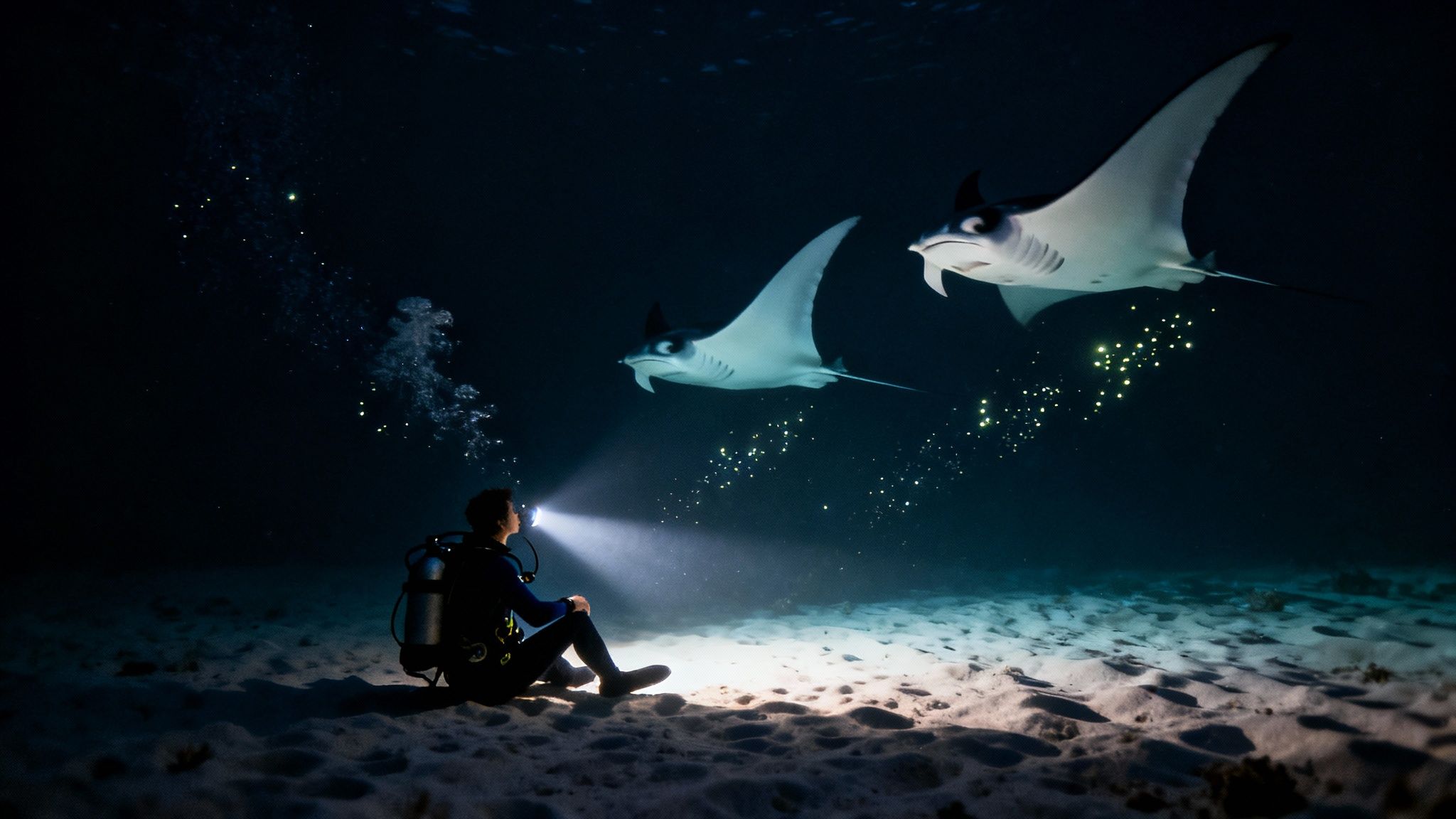
If there's one experience that defines Big Island scuba diving, this is it. The Manta Ray Night Dive isn't just another item on a list; it's a world-famous, bucket-list spectacle that draws people from every corner of the globe right here to the Kona coast. It's often called one of the most unforgettable dives on the planet, and for good reason.
The magic behind it is surprisingly simple. As the sun dips below the horizon, dive boats head out to well-known manta feeding grounds. Once anchored, powerful lights are lowered into the dark water, creating glowing columns that attract a massive feast of microscopic plankton.
This cloud of plankton is basically a dinner bell for the stars of the show: the majestic reef manta rays.
The Underwater Ballet Begins
After you descend, you and your group will find a spot on the sandy ocean floor, forming a circle. Everyone points their dive lights up, creating a glowing "campfire" of light that concentrates the plankton even more. Then, you just wait. That sense of anticipation in the darkness is a huge part of the thrill.
Suddenly, a giant, shadow-like figure glides into view from the abyss. Then another, and another. These gentle giants, with wingspans that can stretch over 12 feet, perform a mesmerizing acrobatic ballet just for you. They swoop, loop, and barrel-roll through the beams of light, their cavernous mouths wide open to filter their food from the water.
You really can't prepare for the feeling of watching a massive creature shaped like a stealth bomber materialize out of the darkness. It's a truly awesome and unforgettable experience.
They often soar just inches above your head, their movements impossibly graceful and fluid. You're not just watching a nature documentary—you're part of the scene, a silent guest at their nightly feast. To get all the details on this incredible encounter, check out our complete guide on the Kona manta ray night dive.
A Commitment to Sustainable Encounters
This iconic dive has become a cornerstone of Kona's identity, but with popularity comes responsibility. Because these manta rays are a protected local population, their safety is the absolute top priority. Strict guidelines are in place to ensure every encounter is respectful and non-invasive. As boat traffic and tourism have grown, safety assessments and new rules have been put in place to protect the mantas’ natural behaviors and keep this amazing experience sustainable for the long haul.
Here are the key rules for a responsible manta dive:
- Observe Only: This is non-negotiable. Never touch, chase, or try to ride the mantas. Touching them can strip away their protective mucous coating.
- Maintain Your Position: Divers stay on the bottom, and snorkelers stay on the surface. This keeps the water column clear for the mantas to move freely.
- Proper Lighting: Divers shine their lights up, while snorkelers shine theirs down, creating a concentrated plankton field between the two groups.
The best way to ensure these rules are followed is to go with a professional, guided tour. This protects both you and these magnificent rays, guaranteeing they'll be here to inspire divers for generations to come.
How To Get Scuba Certified In Paradise
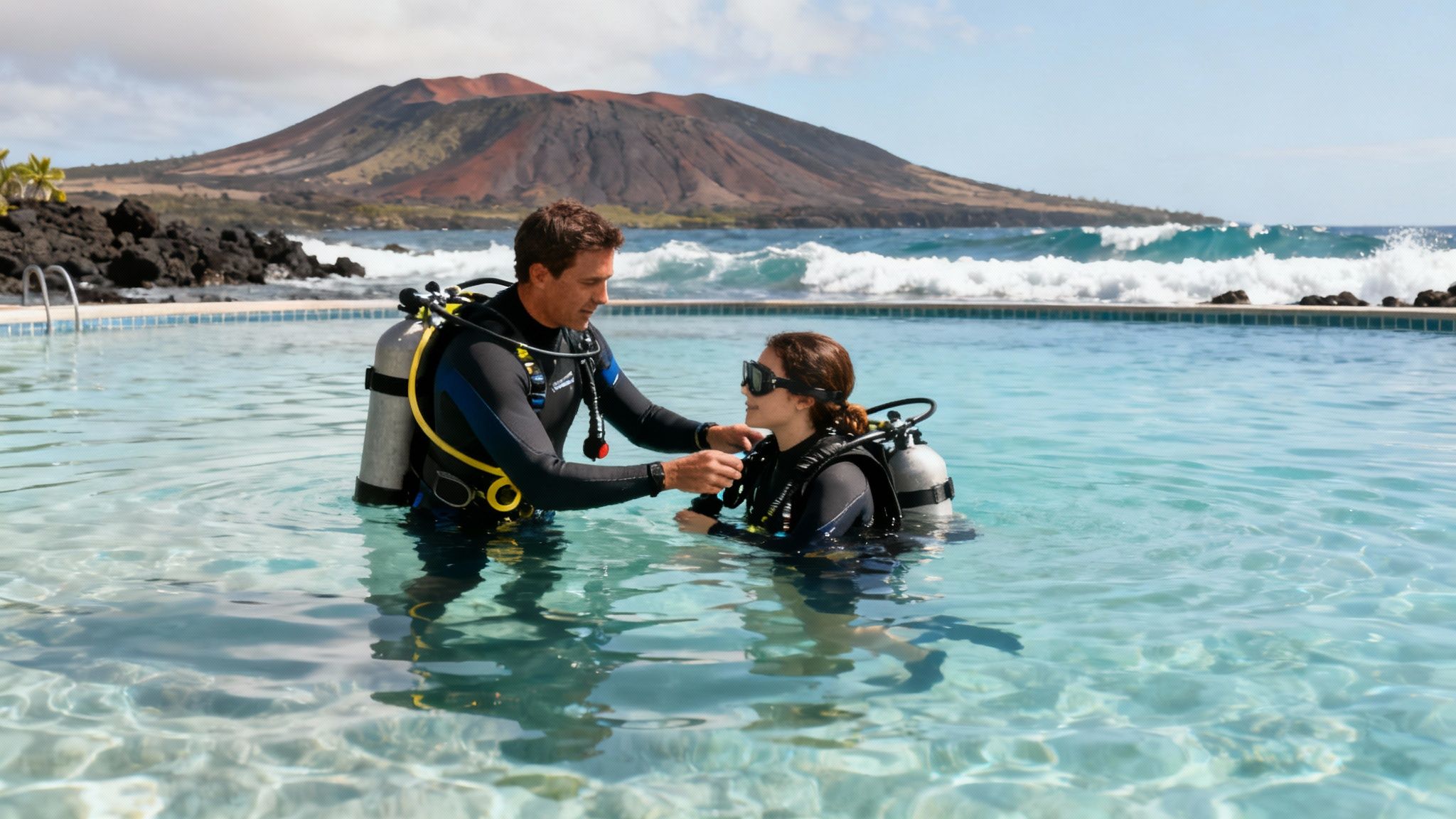
Ever found yourself mesmerized by a nature documentary, wishing you could float weightlessly alongside those incredible sea creatures? There’s honestly no better place to make that happen than the warm, crystal-clear waters of the Big Island. Getting your scuba certification here isn't just a course; it's an adventure where your classroom is one of the most vibrant ecosystems on the planet.
The golden ticket to this underwater world is the PADI (Professional Association of Diving Instructors) Open Water Diver certification. It's the most recognized scuba credential on Earth, and the training is smartly broken down into three manageable parts, so you build real confidence, not just knowledge.
The Three Steps to Certification
Becoming a certified diver is a pretty straightforward process. Each step logically builds on the one before it, taking you from a curious beginner to a competent explorer. Think of it like learning to drive a car—you start with the theory, move to a safe parking lot to practice, and then head out onto the open road with an instructor by your side.
- Knowledge Development (eLearning): This is the textbook part, but you can do it all online from your couch before you even leave for Hawaii. You’ll get a solid grasp of the basics—things like how pressure affects your body and how your gear actually works.
- Confined Water Dives: Once you’re on the island, you'll gear up and hop into a pool or a calm, shallow part of the ocean that feels like one. An experienced instructor will walk you through all the essential hands-on skills, from clearing water out of your mask to achieving that awesome feeling of neutral buoyancy.
- Open Water Dives: Now for the fun part! This is where it all comes together. You'll complete four actual ocean dives, putting all your new skills to use while exploring Kona's incredible reefs—all under the watchful eye of your instructor.
This step-by-step method makes sure you’re completely comfortable and prepared long before you come face-to-face with your first sea turtle. Most people knock out their PADI Open Water course in just three or four days.
Getting certified in a world-class destination like Kona is a total game-changer. You aren't just practicing skills in a pool; you're immediately rewarded with amazing marine life. It transforms a simple course into an unforgettable highlight of your vacation.
Requirements and What to Expect
Ready to take the plunge? To get started, you just need to be at least 10 years old, in good physical health, and know how to swim. You’ll fill out a standard medical questionnaire just to make sure diving is a safe activity for you. A typical course fee will cover your online learning materials, all the gear you'll need, and the instruction and certification cards.
If you're already certified, Big Island scuba diving is the perfect playground to level up your skills. You can take courses like Advanced Open Water to try out different types of diving, like exploring deeper sites or mastering underwater navigation, which opens up even more of Kona’s most spectacular spots.
Whether you're about to take your very first breath underwater or you're an experienced diver looking for the next challenge, Kona Honu Divers offers a full range of PADI courses. Find out more about how to learn to scuba dive in paradise and kickstart your adventure.
Essential Tips For Safe And Responsible Diving
A great dive is a safe dive. It's that simple. While the Big Island offers some of the most mind-blowing underwater scenery on the planet, the ocean always gets the last word. Getting smart about safety isn't meant to scare you; it's about building the confidence to be a prepared, conscientious diver who can truly soak in every moment below the surface.
The fundamental rules of diving always apply, but they take on a special importance here. Double-check your gear. Then, check your buddy’s gear. Stick with a partner you trust and stay in constant communication. Most importantly, know your own limits and never let anyone pressure you into a dive you’re not comfortable with.
Hawaii-Specific Safety Considerations
The waters around the Big Island are often calm and inviting, but that doesn't tell the whole story. Local knowledge is everything. Currents can be tricky and change dramatically from one spot to the next, which is why choosing a professional, certified dive operator is the best decision you'll make. A good local guide knows these sites like the back of their hand and will only take you out when conditions are right.
The numbers back this up. A report on water incidents in Hawaii from 2009 to 2018 painted a stark picture. There were 206 snorkeling fatalities, and a staggering 189 of them were visitors. Scuba diving, on the other hand, had far fewer incidents, with 28 fatalities in that same decade. This difference really drives home the value of the professional training and strict safety protocols that are baked into the dive community.
Being a good diver is about more than just your own safety. It's about protecting the incredible world you’re there to see. Hawaii's delicate coral reefs and the creatures that call them home are counting on us to be good guests.
Protecting The Underwater World
Our goal as divers is simple: leave no trace. The fragile coral ecosystems are the heart of Kona's marine life, and it’s shockingly easy to cause damage. One clumsy fin kick can wipe out years of coral growth in a second.
Here are a few things to keep front of mind on every dive:
- Master Your Buoyancy: This is your number one job. The ability to float effortlessly, without waving your hands or kicking up silt, is the key to being a reef-safe diver.
- Tuck It In: Let nothing dangle. Secure your gauges, octopus, and any other gear to your BCD so it isn't dragging across the delicate coral.
- Look, Don't Touch: It’s a simple rule for a reason. Never handle, chase, or otherwise bother the marine life. Let the turtles, manta rays, and fish go about their business.
Nailing these skills makes you an ambassador for the ocean. For a more detailed look at best practices, check out our guide on responsible and considerate diver etiquette.
Finally, while you're packing your dive gear, think about protecting yourself and your trip. It's smart to look into specialized travel insurance for adventure sports. A little extra peace of mind can go a long way when you're exploring the Big Island's amazing underwater world.
Planning Your Big Island Diving Vacation
Alright, let's get down to the fun part: turning that dream of a Big Island scuba diving trip into a reality. A little bit of planning now makes all the difference later, ensuring your time underwater is as seamless and spectacular as you've imagined. Figuring out the best time to come, what to pack, and where to stay will set you up for success.
The good news is that the Kona coast is pretty much a diver’s paradise year-round. Its western shoreline is naturally protected from the prevailing trade winds, which means calm, clear water is the standard, not the exception. Still, there are a few seasonal differences that might help you pinpoint the perfect time for your visit.
When To Visit For The Best Diving
Hawaii really only has two seasons: summer, or Kau, which runs from May to October, and winter, or Hooilo, from November to April. You’ll find incredible diving in both, but they each have their own unique vibe.
-
Summer (May – October): This is when the water gets wonderfully warm, often hitting a balmy 80°F (27°C). The seas are usually at their absolute calmest, making for glassy boat rides and insane visibility that can easily top 100 feet. It's a fantastic time for any diver, but especially for anyone just getting certified or those who love easy, relaxing conditions.
-
Winter (November – April): The water temperature cools down a bit, usually hovering around a comfortable 75°F (24°C). The real headliner for the winter season, though, is the arrival of humpback whales. From December through March, hearing their haunting songs echo through the water on a dive is an experience that will stick with you forever. It's also incredibly common to spot them from the boat between dives—a truly unforgettable bonus.
No matter when you book your trip, the local marine life isn’t going anywhere. Our world-famous manta rays, for example, are year-round residents. They don’t migrate, so you can always find them at their favorite feeding spots. There's really no "bad" time for Big Island scuba diving; it just boils down to what you want to see and feel.
What To Pack For Your Dive Trip
Packing the right stuff can be the difference between a good trip and a great one. While the local shops offer excellent rental gear, most seasoned divers know the comfort of bringing a few key pieces of their own kit.
Here’s a quick checklist to get you started:
- Dive Gear Basics: If you bring nothing else, bring your own mask and dive computer. A mask that fits your face perfectly means no annoying leaks, and being intimately familiar with your own computer is a huge safety and confidence booster.
- Exposure Protection: For most people, a 3mm or 5mm wetsuit is perfect year-round. If you know you get chilly, especially on a second or third dive, err on the side of caution and pack the 5mm. You won't regret it on a night dive!
- Underwater Camera: The photo ops in Kona are just ridiculous. You’ve got everything from tiny, camouflaged frogfish to massive manta rays gliding overhead. Don't forget to pack extra batteries and a spare memory card.
- Reef-Safe Sunscreen: This is a huge one, and it's non-negotiable. Regular sunscreens contain chemicals like oxybenzone that are incredibly damaging to our delicate coral reefs. Do your part by choosing a mineral-based sunscreen with zinc oxide or titanium dioxide. Protect yourself and the ocean.
- Surface Comforts: A light jacket or windbreaker is a lifesaver on the boat ride back after a sunset or night dive when the air gets a little crisp. A reusable water bottle is also a must for staying hydrated and cutting down on plastic waste.
Where To Stay On The Kona Coast
To get the most out of your diving, you'll want to stay on the Kona side of the island. This puts you right in the heart of the action, close to all the main harbors and dive shops, which means less time in the car and more time in the water.
Kailua-Kona is the main hub, buzzing with energy and offering a ton of options for hotels, condos, and great places to eat.
If you're looking for something a bit more relaxed, check out Keauhou, just a few miles south of Kona. It’s home to Keauhou Bay, the departure point for many manta ray tours, which is incredibly convenient. For a more high-end, resort-style vacation, the Kohala Coast to the north is beautiful, but be prepared for a longer drive to reach most of the iconic southern dive sites.
Choosing The Right Dive Operator
This is probably one of the most important decisions you'll make. A fantastic dive operator doesn't just keep you safe; they elevate your entire vacation with their local expertise, passion, and top-tier service.
As you do your research, keep an eye out for shops with a PADI 5-Star rating—it’s a solid indicator of professionalism and a commitment to quality training. Beyond that, read reviews from other divers and get a feel for the quality of their boats and rental equipment. A good crew makes all the difference.
To help you narrow down the choices, let's look at a few of the most respected dive shops on the Kona coast. Booking one of their top-notch diving tours is a great first step toward an unforgettable trip.
Comparing Top Kona Dive Shops
Every dive shop has its own personality. Some are all about high-adventure and specialty dives, while others focus on providing a super comfortable, premium experience. Finding the one that matches your diving style is key.
| Dive Operator | PADI Rating | Key Specialty Dives | Boat Capacity | Noteworthy Features |
|---|---|---|---|---|
| Kona Honu Divers | 5-Star IDC | Manta Ray, Blackwater, Advanced Trips | Medium (Custom-built boats) | Offers free Nitrox, hot showers on boats, highly experienced crew. |
| Jack's Diving Locker | 5-Star IDC | Manta Ray, Pelagic Magic, Tech Diving | Varies (Large fleet) | A Kona institution. Long-established with a huge retail center and a dedicated training pool. |
| Big Island Divers | 5-Star IDC | Manta Ray, Blackwater, Shark Dives | Varies (Multiple boats) | Great central location in Kailua-Kona and offers a massive range of certification courses. |
Of course, the best intel comes from divers who have been there. Don't just take our word for it—see what fellow divers have to say about their real-world experiences with these operators.
Kona Honu Divers Reviews
Jack's Diving Locker Reviews
Big Island Divers Reviews
Once you have your logistics dialed in, you're just one step away from slipping beneath the surface and experiencing the magic of the Big Island firsthand.
Your Kona Diving Questions, Answered
Got questions about your first Big Island scuba diving trip? You're not alone. Here are the answers to the questions we hear most often from divers getting ready to explore Kona's amazing underwater world.
What’s The Water Temperature Like In Kona?
You’re in for a treat—the water here is beautiful year-round. It hovers around a comfortable 75°F (24°C) in the cooler months and warms up to about 80°F (27°C) in the summer.
For most people, a 3mm wetsuit is plenty. If you get cold easily or are planning multiple dives in a day (especially a night dive), a 5mm suit is a great choice to stay cozy.
Do I Need To Be Certified For The Manta Ray Night Dive?
Yes, if you want to scuba dive with the mantas, you absolutely need to be at least an Open Water certified diver. It’s all about safety, and this unique dive requires you to be comfortable and proficient with your core skills.
But don't worry, non-certified friends and family don't have to miss the show! We, and most other operators, offer an incredible snorkeling version. You'll float on the surface, holding onto a lighted board, and watch the mantas glide and feed just inches below you. It's a truly unforgettable experience for everyone.
What Will I See Besides The Manta Rays?
Kona’s coastline is bursting with life! The manta rays might be the headliners, but the supporting cast is just as impressive. You’re almost guaranteed to spot Hawaiian green sea turtles (honu) cruising along the reef, and it's common to see pods of spinner dolphins playing from the boat.
The reefs themselves are a kaleidoscope of color, home to all sorts of incredible creatures:
- Vibrant schools of yellow tang
- Dozens of species of butterflyfish and angelfish
- Curious octopuses and moray eels peeking out from their homes
- White-tip reef sharks snoozing on the sandy bottom
You might even get lucky and see a majestic eagle ray glide by. Every dive is a new adventure.
Should I Bring My Own Dive Gear Or Rent?
This really boils down to personal preference. There's nothing quite like diving with your own gear—especially a mask that fits perfectly and a computer you know inside and out. It just adds a level of comfort and familiarity.
That said, traveling with a full set of dive gear can be a pain. Renting from a top-notch shop like Kona Honu Divers means you get high-quality, professionally serviced equipment without the hassle of extra luggage. It’s a fantastic, stress-free option.
Ready to see it all for yourself? Kona Honu Divers has a full lineup of diving tours designed for every diver, from the world-famous manta ray night dive to advanced deep-water adventures.