
Scuba diving on the Big Island is something special. It's a place where the raw power of volcanic coastlines crashes into the delicate beauty of vibrant coral reefs, creating an underwater world you just won't find anywhere else.
Why The Big Island Is a World-Class Diving Destination
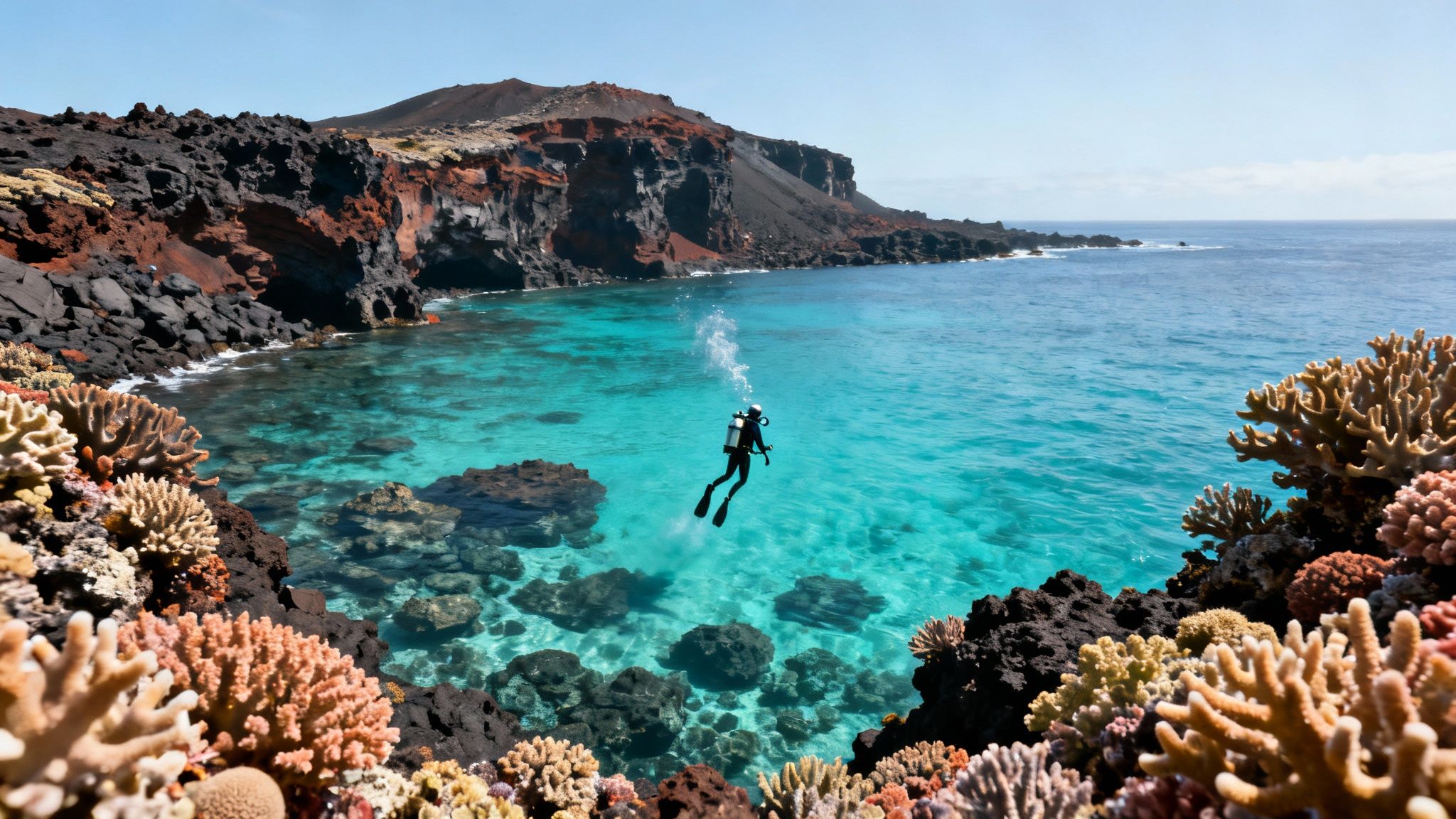
Picture this: you roll back into the warm, blue Pacific, and as you descend, sunlight streams down, lighting up a landscape literally sculpted by fire. That's the core of Big Island scuba diving. The island is geologically young, which means you're not just floating over reefs—you're weaving through a dramatic underwater world of ancient lava tubes, huge archways, and sunken craters.
This one-of-a-kind terrain provides the perfect home for an incredible variety of marine life. The Kona coast, especially, benefits from being shielded from the strong trade winds, which keeps the water remarkably calm and clear. It’s not uncommon for visibility to stretch past 100 feet, making it feel less like swimming and more like flying.
The Kona Coast: An Underwater Haven
If there's a heart to the Big Island's diving scene, it's the Kona coast. This western shoreline is lined with over 50 distinct dive sites, and each one offers something a little different. A huge plus is how close everything is. Unlike other places where you might spend hours on a boat, many of Kona's best spots are just a quick ride from the harbor, making it easy to fit two or three dives into your day.
What really makes Kona stand out is the sheer variety you can experience in just one trip:
- Vibrant Coral Gardens: You can spend hours exploring shallow reefs that are absolutely packed with colorful, tropical fish you’ll only find in Hawaii.
- Dramatic Lava Formations: Get ready to navigate incredible swim-throughs, tunnels, and arches carved out by ancient lava flows.
- Unique Marine Encounters: The wildlife is the main event, from graceful sea turtles at their "cleaning stations" to the world-famous manta ray night dive.
The island’s reputation is no fluke. It pulls in over 150,000 dive tourists every year who log around 100,000 certified dives. Those numbers speak for themselves, showing just how incredible the underwater world is here. You can read more about the island's rise as a top dive spot on OceanographicMagazine.com.
Of course, to truly experience this aquatic wonderland, you need a great guide. Kona Honu Divers is a name that comes up again and again. They’re known for their seasoned crew, a serious commitment to safety, and a genuine passion for showing people the magic of Kona's waters. Their local know-how means you get to the right sites at the right times for the best possible encounters.
It doesn’t matter if you’re a brand-new diver or have logged hundreds of dives. The Big Island has an endless list of diving tours that will blow you away. Your next adventure is waiting.
Experiencing the Famous Manta Ray Night Dive
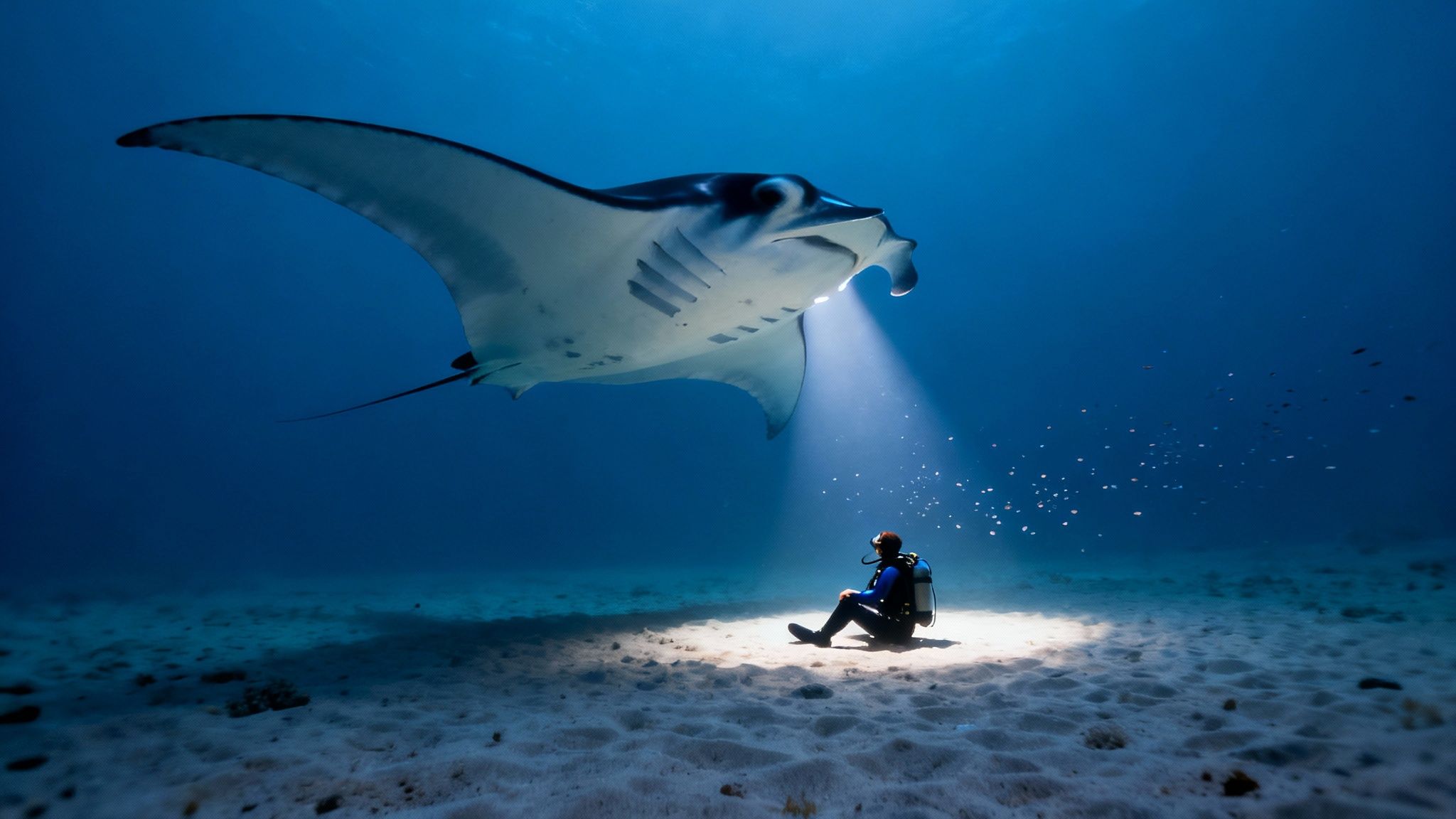
Of all the incredible things you can do while Big Island scuba diving, there’s one experience that truly stands apart. It’s a dive that finds its way onto bucket lists all over the world: the famous Manta Ray Night Dive. Honestly, calling it a dive doesn't quite do it justice. It's more like a silent, underwater ballet.
Picture this: you descend into the warm, dark ocean just after sunset. You and your group settle onto the sandy bottom, around 30-40 feet down, and point your powerful dive lights straight up toward the surface. Then, you wait.
Before long, the show begins. Giant manta rays, some with wingspans stretching over 12 feet, emerge from the blackness. They swoop and glide through the light beams, performing effortless barrel rolls as they feed on the dense clouds of plankton your lights have attracted. It's a genuinely humbling spectacle that connects you to the ocean in a way few things can.
What Makes This Dive So Special
The Kona coast is one of the only places on the planet where you can witness this nightly feeding ritual so consistently. We're not talking about a quick, fleeting glimpse of a passing animal; this is a full-on, up-close performance that can last for the entire dive.
These are completely wild animals. They haven't been baited or trained. Over decades, they’ve simply learned that the lights from divers create a concentrated buffet of their favorite food.
This unique interaction has become an icon of the Big Island. In fact, the success rate for spotting mantas at sites like Makako Bay (Manta Heaven) and Keauhou Bay (Manta Village) is an astounding 85-90%. This reliability has made the experience a cornerstone of the island's entire dive scene.
The most important rule on this dive is simple: look, but don't touch. Manta rays are covered in a protective mucus layer that acts as their immune system. Touching them can strip this coating away, leaving them vulnerable to infection. The best thing you can do is stay still and let these gentle giants put on their show around you.
Preparing for Your Manta Encounter
The experience starts well before you get in the water, with a thorough pre-dive briefing from your guide. They’ll run through everything you need to know for a safe and respectful encounter.
- Proper Positioning: You'll be instructed to stay on the sandy bottom, shining your light upward. This creates a column of light where the mantas can come to feed.
- Bubble Etiquette: A good tip is to time your breathing so you don't blow a big cloud of bubbles right into a manta's path as it glides just inches above your head.
- Equipment Check: Your guide will make sure all your gear is secure and your light is working perfectly for the main event.
This careful preparation ensures the dive is safe for everyone—divers and mantas included—and helps preserve this incredible interaction for years to come. The whole operation is managed to minimize human impact, allowing the mantas to feed naturally. You can get a deeper look into the dive and what to expect with our guide to the Kona manta ray night dive.
Ready to see this unforgettable underwater spectacle for yourself? Booking a tour with a reputable operator is your first step. The expert teams provide everything you need, from gear to guidance, so all you have to do is focus on the breathtaking performance in front of you.
Whether you're a seasoned pro or just got certified, the manta ray night dive tour is an accessible and profound experience that will, without a doubt, be the highlight of your trip to Hawaii.
Exploring Kona’s Top Underwater Sites
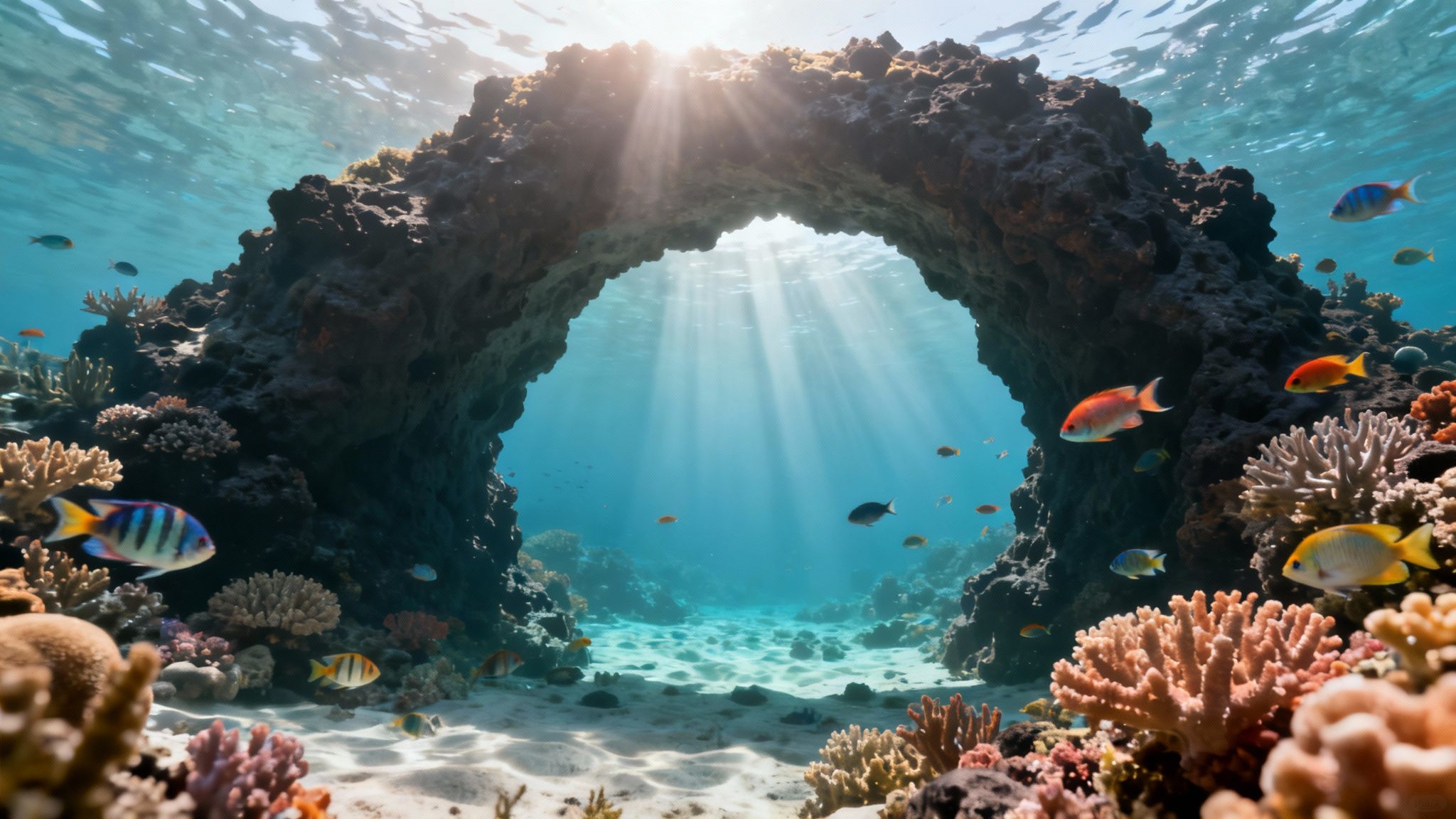
While the Manta Ray Night Dive gets most of the attention, it’s really just the beginning of what the Kona coast has to offer. The island’s volcanic past has left behind a stunning underwater world full of dramatic lava tubes, soaring arches, and vibrant coral gardens. No two dives here are ever quite the same.
Many of the best spots are just a short boat ride from Honokohau Harbor, making for easy morning or afternoon trips. Whether you're a new diver just looking for colorful fish or an old pro hunting for exciting topography, Kona has a dive site with your name on it.
Coral Gardens and Turtle Sanctuaries
Some of Kona’s most popular dives are its sprawling reefs and famous "turtle cleaning stations." These are spots where Hawaiian Green Sea Turtles, the beloved Honu, gather to let smaller reef fish nibble away algae and parasites from their shells. It's a natural spa treatment, and we get a front-row seat.
Sites like Turtle Pinnacle and Golden Arches are legendary for these encounters. When you drop in, you can expect to find:
- Tons of Reef Fish: Schools of bright yellow tangs, ornate butterflyfish, and chunky parrotfish create a moving kaleidoscope of color.
- Close Turtle Encounters: The Honu here are quite used to divers and will often glide right past you without a second thought.
- Healthy Coral Formations: You'll drift over acres of finger, lobe, and cauliflower corals, which provide homes for countless critters like eels and octopuses.
What really makes these sites special is the sheer density of life. You're not just spotting one or two turtles; you're immersing yourself in a busy, thriving ecosystem where every nook and cranny holds a new surprise.
Volcanic Landscapes and Thrilling Swim-Throughs
The real signature of Kona diving is the dramatic underwater terrain. Ancient lava flows carved out an incredible network of caves, tubes, and arches that are an absolute thrill to explore. It feels like you're navigating another planet.
Sites like Cathedral, Suck 'em Up, and Au Au Crater are must-do's for anyone who loves unique topography. These dives are a fun test of your buoyancy control as you float through caverns lit by shafts of sunlight. Inside these lava tubes, it's common to find whitetip reef sharks resting on the sandy floor or shy crustaceans hiding in the shadows.
For a deeper look into the island's best locations, check out this guide to Big Island scuba diving sites.
To help you get a sense of the variety, here’s a quick rundown of some of the premier sites along the Kona coast.
Kona's Premier Dive Sites At A Glance
This table gives you a quick snapshot of what to expect from some of the most-requested dive sites, helping you match a location to your skill level and interests.
| Dive Site Name | Key Features | Typical Depth | Best For |
|---|---|---|---|
| Turtle Pinnacle | Famous turtle cleaning station, healthy coral, abundant reef fish. | 25-60 ft | All skill levels, photographers, turtle lovers. |
| Cathedral | Massive lava tube swim-through resembling a church, dramatic lighting. | 30-55 ft | Intermediate divers with good buoyancy. |
| Golden Arches | Underwater arches covered in golden gorgonians, turtle sightings. | 30-60 ft | All skill levels, great for underwater scenery. |
| Suck 'em Up | Lava tube with a surge-driven "exit" that pushes divers out. | 25-50 ft | Intermediate to advanced, adventure seekers. |
Each of these spots offers a completely different experience, showcasing the incredible diversity that makes Kona a world-class diving destination.
Pushing the Boundaries with Advanced Dives
For those with more experience logged, Kona serves up some serious adventures that will put your skills to the test. These advanced dive tours take you deeper and into more demanding conditions, but the payoff is unforgettable.
The most famous advanced dive here is, without a doubt, the Kona Blackwater Dive. This isn't your typical reef dive. It's a drift dive in the middle of the night, miles offshore, suspended over thousands of feet of open ocean. You descend to about 50 feet on a tether and watch as bizarre, bioluminescent creatures rise from the deep—things you would never see during the day. It’s less like scuba diving and more like a spacewalk.
If deep reefs are more your style, other advanced tours explore remote pinnacles and ledges where you have a better chance of spotting big pelagic species like eagle rays or even hammerhead sharks. These dives prove that on the Big Island, there's always another adventure waiting just beneath the surface.
How to Get Scuba Certified in Paradise
Ever daydream about floating weightless, breathing underwater while sea turtles glide by? For a lot of people, that dream seems out of reach—too complicated or maybe even a little intimidating. But here on the Big Island, it's not just a dream; it's an incredibly fun and accessible reality.
Getting your scuba certification in Kona means your classroom is one of the most vibrant underwater ecosystems in the world. The whole process is designed to build your confidence step by step. It’s not about being tossed in the deep end, but about a gradual, exciting journey from beginner to capable diver, all with the Kona coast as your backdrop.
Your First Breaths Underwater
Not quite ready to jump into a full certification course? No problem. The perfect place to start is with a Discover Scuba Diving (DSD) experience. Think of it as a test drive.
A professional instructor will be by your side the entire time, showing you the absolute basics of using scuba gear in calm, shallow water. You get to feel that incredible sensation of breathing underwater and see a real Hawaiian reef, all without the commitment of a multi-day course. It’s the perfect way to decide if Big Island scuba diving is for you, and honestly, it’s how most of us get hooked for life.
The Path to PADI Open Water Diver
Once you know you love it, the next move is getting your PADI Open Water Diver certification. This is the real deal—your lifetime passport to exploring the underwater world, recognized anywhere you go. The course itself is brilliant, mixing online learning with hands-on, in-water practice.
It all breaks down into three simple parts:
- Knowledge Development (eLearning): Forget spending your vacation in a stuffy classroom. You can now complete all the theory—the science, safety, and procedures—online before you even pack your bags for Hawaii. Learn at your own pace, from your own couch.
- Confined Water Dives: This is where the real fun starts. You’ll head to a calm, pool-like spot in the ocean to get comfortable with your gear. Your instructor will walk you through everything, from clearing a foggy mask to managing your buoyancy, until it all feels like second nature.
- Open Water Dives: Time to put it all together! You'll complete four dives at actual Kona dive sites, with your instructor right there to guide you. This is where you really start to feel like a diver, exploring the reefs and seeing all the incredible marine life you've been dreaming about.
Becoming a certified diver isn't just about learning a new skill; it's about gaining the confidence to explore a part of our planet that most people never get to see. The calm, clear conditions of Kona provide the perfect, low-stress environment to build that confidence.
Professional dive shops make this whole process a breeze. They provide all the gear and expert instruction to make sure you feel safe and comfortable from start to finish. If you’re ready to take the plunge, you can learn more about the complete Kona scuba certification course and kickstart your adventure. It’s a decision that opens up a whole new world.
A Guide to Big Island Marine Life Encounters
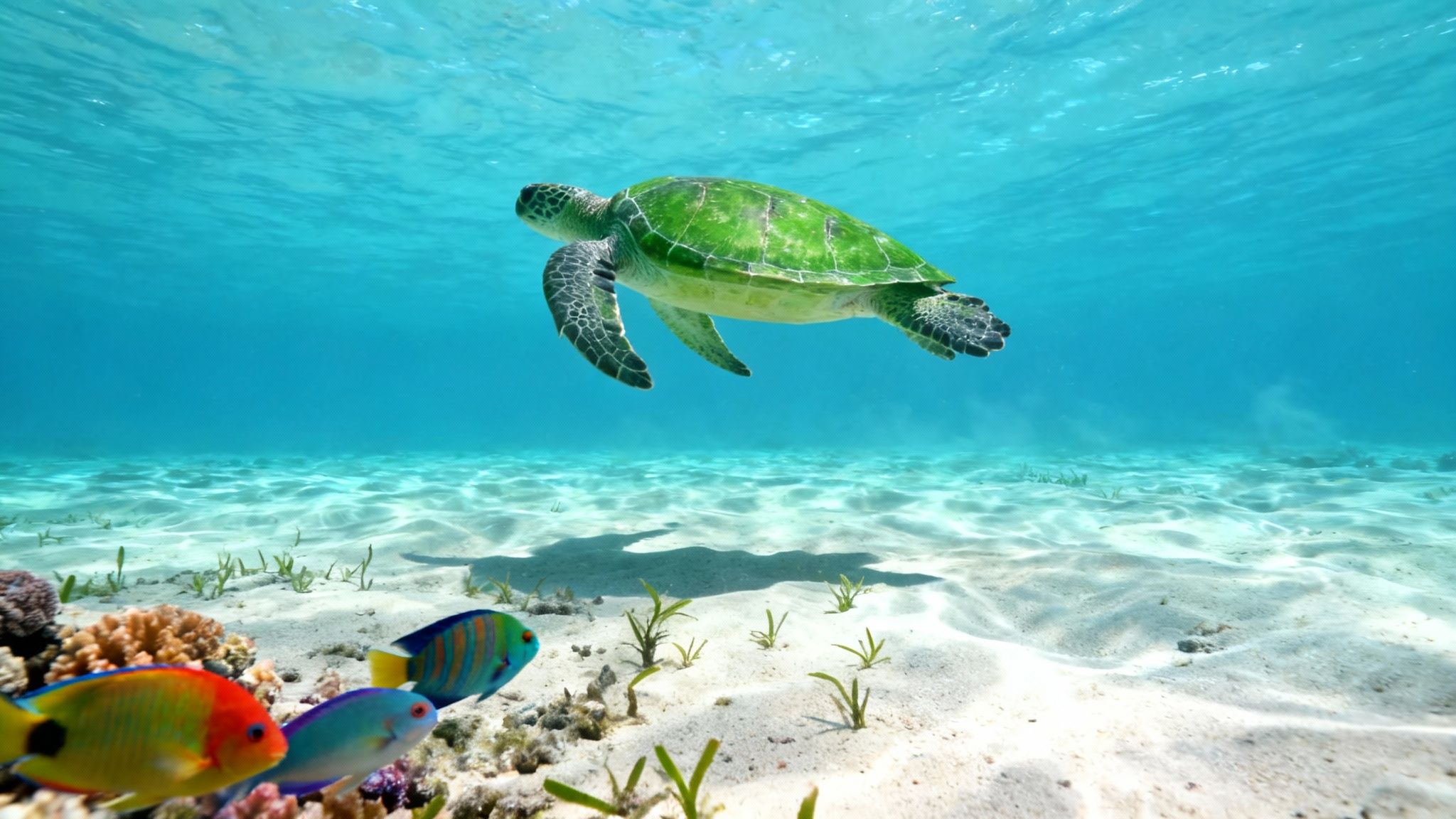
While the giant mantas are an undeniable highlight, they’re just the beginning of the story. Big Island scuba diving drops you into an underwater world teeming with life, a direct result of the islands' incredible isolation. Out here in the middle of the Pacific, unique ecosystems have flourished, giving us a huge number of endemic species you just won't find anywhere else on the planet.
One of the most iconic and beloved residents is the Hawaiian Green Sea Turtle, known locally as Honu. There’s something truly magical about watching one of these ancient mariners glide effortlessly past you. You’ll often find them munching on algae, resting on the reef, or getting a shell scrub at a “cleaning station” from helpful little fish.
And it’s not just the turtles. Look for playful spinner dolphins zipping alongside the dive boat, often putting on a spectacular aerial show. Below the waves, it's common to spot whitetip reef sharks—a fantastic sign of a healthy reef—chilling out on sandy patches for a midday nap.
The Colorful Residents of the Reef
The sheer density of fish on a Kona reef is what really blows people away. Imagine dropping into a perfectly curated aquarium, but it's all completely wild. The volcanic ledges and lava tubes are encrusted with coral, creating the perfect playground for thousands of tropical fish.
Keep your eyes peeled for some of Hawaii's most famous underwater locals:
- Yellow Tang: A flash of brilliant lemon yellow is often a school of these guys, lighting up the reef as they cruise by.
- Parrotfish (Uhu): Listen closely—that faint crunching sound is probably a parrotfish using its powerful beak to munch on coral.
- Moorish Idol: A photographer’s dream, these fish are unmistakable with their elegant shape and bold black, white, and yellow stripes.
- Humuhumunukunukuāpuaʻa: Trying to say the name of Hawaii's state fish is half the fun. This feisty little triggerfish is a common and colorful sight.
Because the Hawaiian Islands are so remote, a significant number of the fish you'll encounter are found only here. This incredible biodiversity is a direct result of the islands' volcanic geology and isolation, which created a unique evolutionary path for all its marine life.
Respectful Wildlife Encounters
The golden rule for every incredible animal encounter is respect. These are wild creatures in their natural home, and it’s our job as divers to be polite guests. Keeping a safe distance doesn't just protect the animals; it allows you to see their genuine, natural behavior unfold.
That means no touching, no chasing, and definitely no feeding. Your dive guide will give you a full briefing on how to be a good underwater neighbor. By being passive observers, we ensure that these amazing encounters will be here for future generations of divers to experience, too.
On any given dive, you might spot a master-of-disguise octopus, a free-flying eagle ray, or something you've never even seen before. That’s the beauty of diving here—every descent is a brand new adventure.
Planning Your Big Island Dive Trip
A great Big Island scuba trip really begins before you even pack your bags. A little foresight goes a long way, ensuring your vacation is smooth, safe, and timed just right for the kind of underwater world you want to see.
The best part? Kona’s dive conditions are incredible pretty much all year. Thanks to the massive volcanoes shielding the coastline, the water stays calm and clear on most days. Still, there are some subtle seasonal differences worth keeping in mind when you're booking.
Best Time of Year to Dive
While the Big Island doesn’t have the dramatic seasonal shifts you’ll find elsewhere, there are a few things to consider:
- Summer & Fall (June – November): Most divers will tell you this is prime time. The water is at its warmest, a balmy 80-82°F (27-28°C), and the ocean is often as flat as glass. Visibility during these months can be absolutely spectacular.
- Winter & Spring (December – May): The water dips a little to a very comfortable 75-77°F (24-25°C). You might get a bit more surface chop from the trade winds, but the real draw this time of year is the humpback whales. There’s nothing quite like hearing their songs echo through the water while you’re on a dive—it’s an experience that will stay with you forever.
What to Pack for Your Dive Adventure
You know the basics—swimsuit, sunglasses, aloha spirit. But for the diving portion of your trip, there are a few must-haves you won’t want to leave behind.
- Certification Card & Logbook: Simple enough, but you’d be surprised how often they get forgotten! Don't leave home without them.
- Your Personal Gear: Even if you plan on renting the big stuff, most divers find it’s worth bringing their own mask, snorkel, fins, and dive computer. A familiar fit makes all the difference.
- Reef-Safe Sunscreen: This is a big one. Standard sunscreens have chemicals like oxybenzone that are devastating to our coral reefs. To protect the very ecosystem you’ve come to admire, please only pack mineral-based sunscreens with zinc oxide or titanium dioxide.
- A Light Jacket or Windbreaker: It can get surprisingly chilly on the boat ride back to the harbor, even after a warm day in the sun. You'll be glad you have it.
Choosing the Right Dive Operator
This is probably the most important decision you'll make for your trip. A top-notch dive shop does more than just get you in the water; they make the entire experience unforgettable with their local know-how, unwavering commitment to safety, and genuine love for the ocean.
The island’s dive scene has a fascinating backstory, built by pioneers who established the professional, world-class operations we enjoy today. The founding of Jack's Diving Locker in 1981 by Jack and Tina Clothier, for instance, was a pivotal moment for the island.
To get a better sense of how it all came to be, you can dive into the history of Big Island scuba diving.
When you're doing your research, look for shops that emphasize small groups. It’s a much more personal experience and gentler on the delicate dive sites. Read their reviews carefully, paying attention to what people say about their safety briefings, the condition of their rental gear, and the skill of their divemasters. A truly great guide can spot a perfectly camouflaged frogfish you’d swim right past, turning a good dive into a truly incredible one.
Frequently Asked Questions About Diving in Kona
Got a few lingering questions as you map out your Big Island scuba diving trip? It's totally normal. Here are the answers to the questions we hear most often from divers getting ready to explore Kona.
Is The Big Island Good For Beginner Scuba Divers?
It’s not just good—it’s fantastic. The Kona coast is genuinely one of the world's best classrooms for learning to scuba dive. Many of the most stunning dive sites are tucked into calm, protected bays where you’ll find minimal current and amazing clarity. It's the perfect, low-stress setting for taking your first breaths underwater.
Local dive shops here are pros at creating a safe, encouraging space for new divers. Whether you’re just trying it out with a Discover Scuba Diving experience or going for your full PADI certification, you’ll be in great hands, learning in an environment that helps you build confidence quickly.
What Is The Water Temperature When Scuba Diving In Kona?
You’re in for a treat because the water here is warm and inviting year-round. In the winter months, you can expect the water to be a comfortable 75-77°F (24-25°C).
By late summer and fall, it warms up to a bath-like 80-82°F (27-28°C). For most people, a 3mm wetsuit is plenty during the summer, and you might prefer a 5mm wetsuit for a little extra coziness in the winter.
The real magic of Kona's diving conditions is their consistency. The coast is shielded by massive volcanoes, which often keeps the water glassy and clear. This makes it an incredibly reliable spot for amazing dives, no matter when you visit.
Do I Need To Be Certified To Do The Manta Ray Night Dive?
Yes, if you want to do the Manta Ray Night Dive, you'll need to be a certified diver. Heading down to the seafloor is a skill you learn in your Open Water course.
But here’s the great news: your non-certified friends and family don't have to miss the show! Almost every boat offers a Manta Ray Night Snorkel trip. Snorkelers hang onto a custom float with lights pointing down, and they get a front-row seat as the mantas swoop and glide just feet below them. It’s an unforgettable experience whether you're on the surface or the sand.
Are There Sharks In The Waters Around The Big Island?
Absolutely, and spotting one is a real highlight! Hawaii is home to a thriving marine ecosystem, and sharks are a crucial part of that balance. The shark you're most likely to see cruising the Kona reefs is the whitetip reef shark.
These guys are generally quite shy and not aggressive. You'll often find them resting on sandy patches during the day. Having one swim by is a beautiful, thrilling moment, and your dive guide will always cover how to observe them and all other marine life respectfully.
Your epic underwater journey is waiting. The seasoned crew at Kona Honu Divers can show you the very best of Big Island scuba diving. Go ahead and book your tour—you're about to make some incredible memories. Explore all diving tours and find the perfect adventure for you.