
Picture this: you descend into impossibly clear, blue water. The world above disappears, replaced by a dramatic underwater landscape shaped by ancient lava flows. You're weightless, drifting through massive arches and into hidden sea caves, with vibrant coral reefs on every side. This isn’t a dream; this is what it’s like to scuba dive on the Big Island.
It’s an experience that easily ranks among the best in the world. From the iconic Manta Ray Night Dive to the peaceful coral gardens dotting the Kona coast, this island offers something truly special for every diver.
Discovering an Underwater Volcanic Paradise
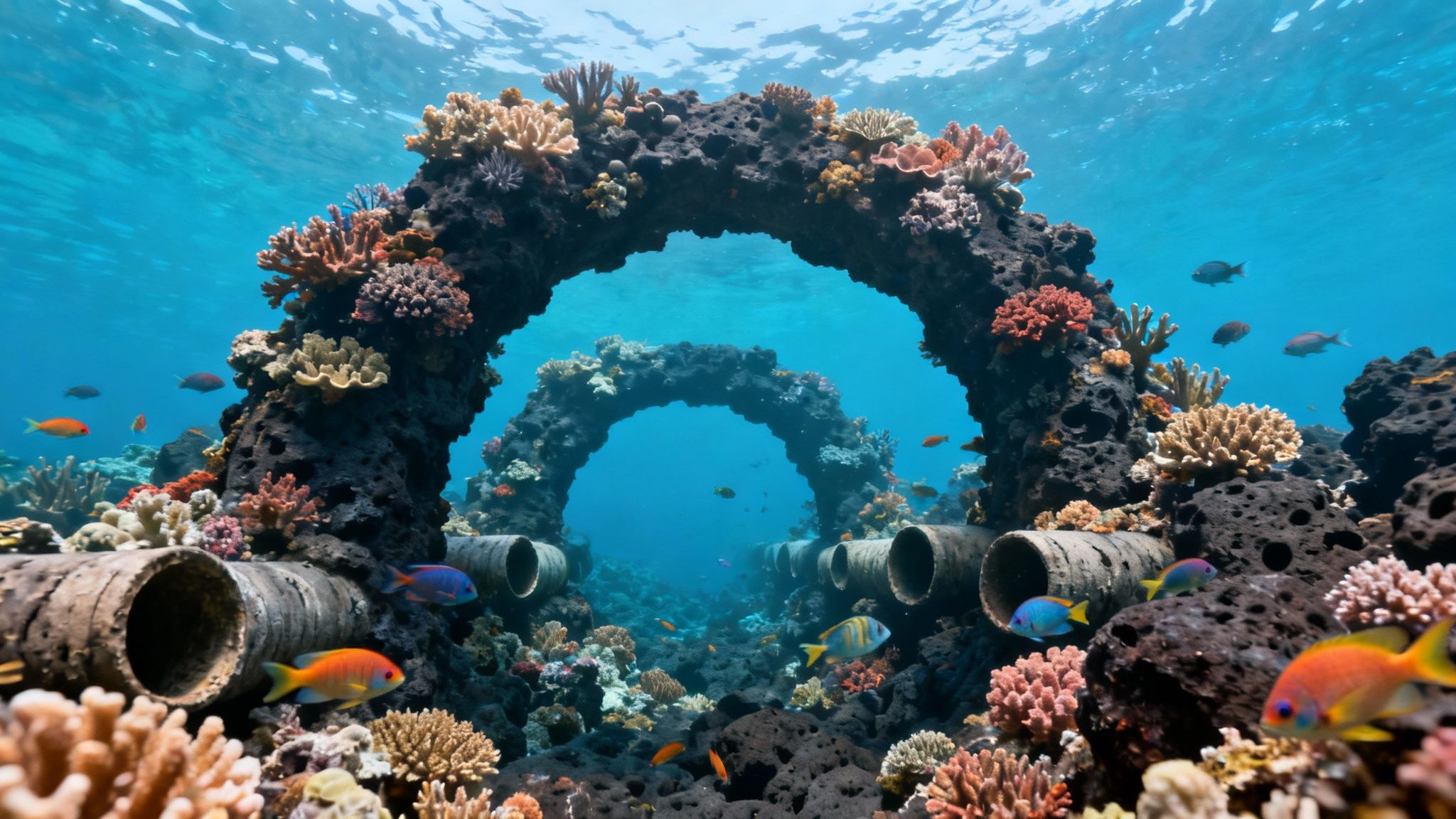
The Big Island’s magic isn't just on the surface; its true wonder lies beneath the waves. The very same volcanoes that formed the island created one of the most dynamic and unique underwater ecosystems you'll ever see. Let's dive into what makes this place a must-visit destination for scuba enthusiasts from around the globe.
It all starts with the geology. Millennia of lava flows have sculpted an incredible subaquatic world filled with intricate structures. As a diver, you get to navigate through huge archways, poke around in hidden caverns, and drift along complex lava tubes that are now bursting with life.
This rugged topography provides the perfect home for a staggering variety of marine creatures, many of which you can't find anywhere else on Earth. The island is always changing, too. To get a sense of how powerful these forces are, you can read our article on how the recent Mauna Loa eruption reshaped the landscape.
We'll also explain why the Kona coast, sheltered and calm, offers nearly perfect conditions all year. It’s an ideal spot for brand-new divers getting certified and for salty veterans looking for their next great adventure.
Big Island Diving At a Glance
So, what makes diving here so special? This table gives you a quick snapshot of what to expect when you start planning your trip.
| Feature | Details |
|---|---|
| Average Visibility | Often exceeds 100 feet (30 meters) |
| Water Temperature | 75-80°F (24-27°C) year-round |
| Key Attraction | World-Famous Manta Ray Night Dive |
| Marine Life | Turtles, dolphins, sharks, eagle rays, endemic fish |
| Best Season | Year-round, with calmest seas from April to October |
This combination of phenomenal visibility, warm water, and jaw-dropping marine life makes for an unforgettable diving environment. Whether you're gliding alongside gentle giants or exploring sun-drenched reefs, the conditions are perfect for an amazing experience. To see the adventures waiting for you, check out our full range of Kona diving tours.
Why the Kona Coast Is a Diver’s Dream
What is it about Kona that makes it the heart and soul of Big Island scuba diving? It all comes down to the island's incredible geology. The massive shields of the Mauna Loa and Hualalai volcanoes create a colossal natural wall, protecting the western coast from the strong trade winds that hammer the rest of the island.
This protection results in a diver's paradise. The waters here are consistently calm, clear, and predictable, making for fantastic diving conditions pretty much any day of the year. It’s this natural serenity that lets divers, from beginners to seasoned pros, feel completely at ease while exploring.
Once you slip beneath the surface, the drama really begins. Millennia of volcanic eruptions have sculpted an underwater world that's nothing short of spectacular. Think of vast, sprawling landscapes of arches, caverns, and twisting lava tubes formed from ancient lava flows.
These volcanic structures aren't just for show. They're the very foundation of a complex and buzzing marine ecosystem, offering shelter, nurseries, and hunting grounds for an incredible diversity of life.
This unique underwater architecture has allowed vibrant coral gardens to take root, splashing brilliant color across the dark volcanic rock. It’s a place where every crack and overhang promises a new discovery.
A Hotspot for Unique Marine Life
The Hawaiian Islands are famously isolated, a fact that has led to the evolution of countless species you simply won't find anywhere else on the planet. The sheltered waters of the Kona coast are ground zero for this incredible biodiversity.
- Complex Habitats: The intricate lava formations create thousands of tiny, specialized homes, allowing an amazing variety of species to live together in a compact area.
- Rich Waters: Gentle currents keep a steady stream of nutrients flowing, which fuels the entire food chain from the tiniest plankton right up to the apex predators.
- Healthy Reefs: Thriving coral reefs provide the essential backbone for hundreds of species of fish, invertebrates, and crustaceans to call home.
This perfect storm of conditions turns every single dive into a treasure hunt. Hawaii is a major hub for scuba diving, attracting a significant portion of the over 1.5 million scuba dives that happen annually statewide. The Big Island's waters are home to approximately 1,100 species of fish, and an astonishing 129 of them are endemic—meaning they are unique to the Hawaiian island chain. You can learn more about the popularity of diving in Hawaii and its unique marine life.
The Kona Honu Divers Experience
Of course, to truly get the most out of what Kona has to offer, you need to go with an operator that puts safety and quality first. Kona Honu Divers has earned its reputation for running outstanding underwater trips, keeping group sizes small and focusing on eco-conscious practices that help protect this delicate environment.
Their guides know these waters like the back of their hand. They ensure every dive is not just safe, but a genuine adventure filled with discovery, guiding you to hidden lava tubes and the "cleaning stations" where sea turtles and rays gather.
But you don't have to take our word for it. See what fellow divers have to say about their experiences with Kona Honu Divers.
When you put it all together—the calm waters, the mind-blowing volcanic scenery, and the sheer abundance of unique sea life—it's easy to see why the Kona coast isn't just a dive spot; it's a diver's dream.
Experiencing the World-Famous Manta Ray Night Dive
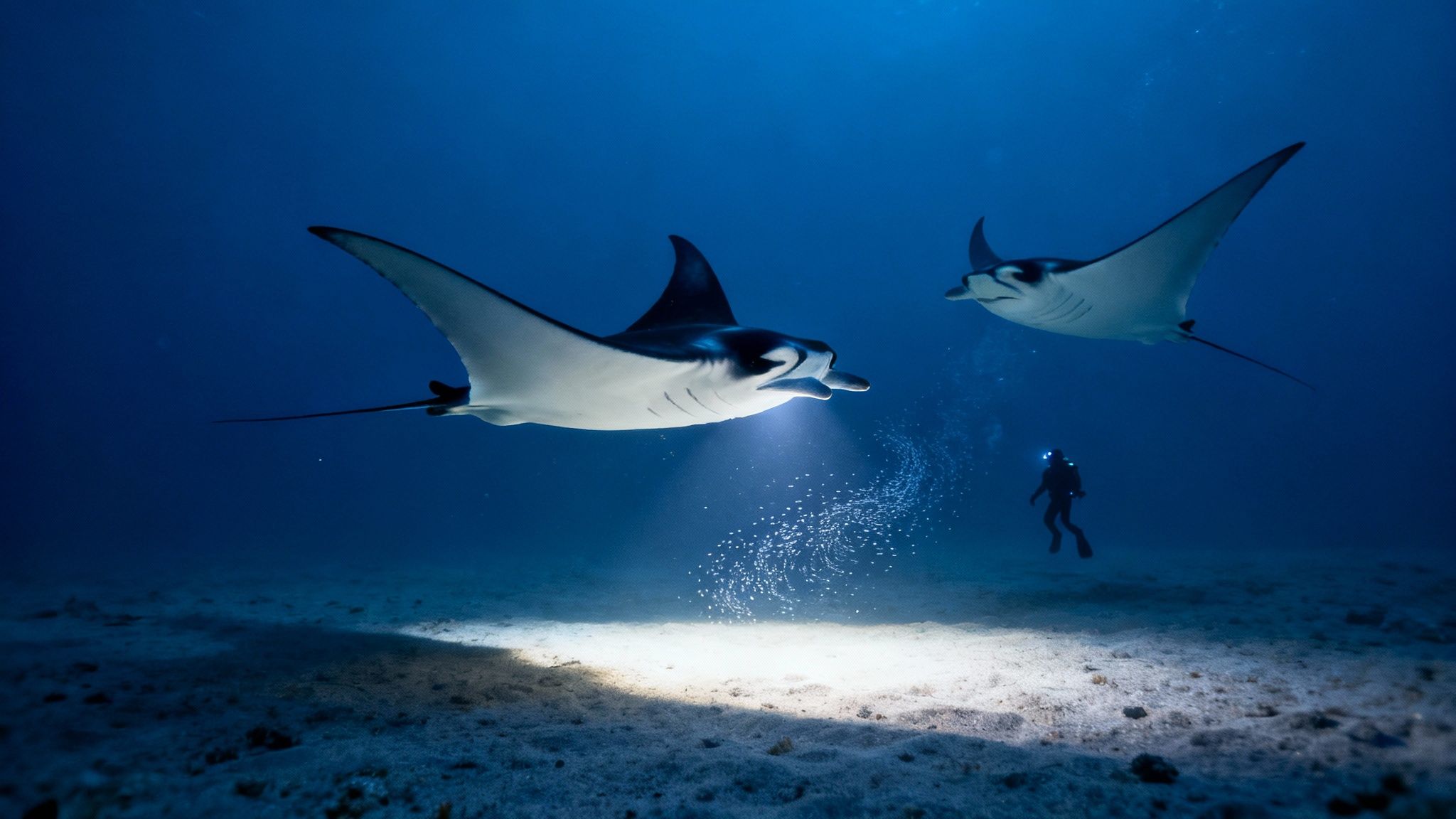
Of all the incredible underwater adventures you can have, very few come close to the pure magic of the Kona Manta Ray Night Dive. This isn't just another dive on the logbook; it's a genuine spectacle that consistently lands on divers' bucket lists and defines what makes Big Island scuba diving so legendary.
It all starts as the sun melts into the horizon. You’ll enjoy a calm boat ride out to the site as the sky puts on a show of fiery colors. After a solid briefing from the crew, you’ll take a giant stride into the warm, dark Pacific. As you descend, a strange glow appears on the seafloor below—a "campfire" of powerful lights set up by your dive guides.
The concept is beautifully simple. The intense lights attract clouds of microscopic plankton, essentially creating an all-you-can-eat buffet. And where there’s a plankton buffet, the mantas are never far behind.
The Underwater Ballet Begins
You won't be waiting long. Within minutes, a massive, shadowy figure emerges from the blackness, gliding effortlessly into the beams of light. Then another appears, and another. These are Kona's resident reef manta rays, gentle giants with wingspans that can stretch up to an incredible 16 feet.
They aren't just swimming past you; they're performing a silent, graceful ballet. To feed, they swoop and barrel-roll through the clouds of plankton, often passing just inches above your head. It’s an intimate, humbling, and completely surreal encounter.
The feeling of a massive manta ray gliding directly over you, its immense shadow momentarily blocking out the lights, is something you will never, ever forget. It’s a powerful connection with one of the ocean's most majestic creatures.
This world-famous dive, primarily happening at spots like Garden Eel Cove and Keauhou Bay, is one of the most reliable wildlife encounters on the planet. Sighting success rates hover between 85-90%—a testament to just how established this nightly feeding ritual has become.
Why This Dive Is a Must-Do
So many wildlife encounters happen from a distance, but this one is incredibly up close and personal. You become part of the scenery, a quiet spectator with a front-row seat to one of nature’s greatest shows. The mantas are completely wild but have grown used to the lights and divers, which allows for an experience you just can't get anywhere else.
Best of all, this dive is open to certified divers of all skill levels. The sites are fairly shallow, and you’ll be stationary on the sandy bottom, making for a very calm and controlled dive. All your focus can be on the breathtaking feeding frenzy above. It’s an experience that truly captures the magic of the Big Island. You can learn more about what to expect on the Kona manta ray night dive right here on our site.
Exploring Top Dive Sites Beyond the Mantas
Look, the Manta Ray Night Dive is an absolute must-do, no question. But it's really just the tip of the iceberg when it comes to Big Island scuba diving. The Kona coast is stacked with world-class dive sites, each with its own vibe and underwater scenery. Once you look past the famous manta show, you’ll find a whole world of historic sanctuaries, wild lava formations, and an incredible amount of marine life.
As we cruise the coast, you'll see just how much variety there is. We've got calm, shallow coral gardens perfect for a chill afternoon dive, and then we have these incredible structures where turtles hang out all day. There’s always something new to see. These sites are the bread and butter of our daily charters, and you can see the full lineup on our diving tours page.
Kealakekua Bay: A Protected Paradise
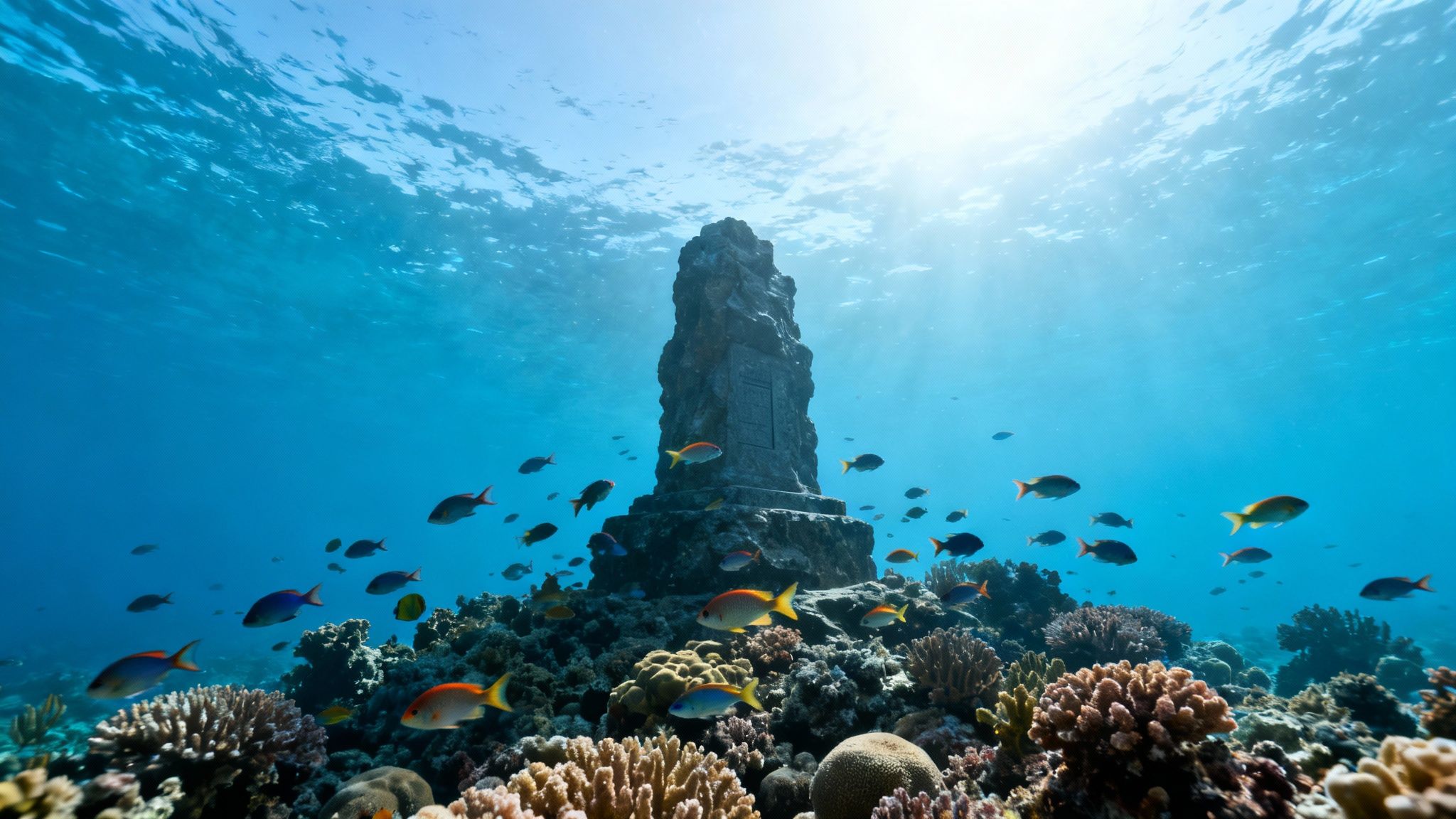
Kealakekua Bay, where you'll find the Captain Cook Monument, is so much more than a spot on a map—it's a legally protected Marine Life Conservation District. This is huge. It means no fishing, no taking anything. For decades, the marine life here has been left to thrive, and the result is one of the healthiest and most electric reef systems in all of Hawaii.
The second your head goes underwater, you get it. The visibility often pushes past 100 feet, and the colors are just popping. Healthy coral gardens slope out from the shore, creating a home for absolutely massive schools of fish.
- What You'll See: You can expect to swim right through giant clouds of yellow tang, see beautiful ornate butterflyfish everywhere, and maybe spot an eel poking its head out. Spinner dolphins love to cruise through the bay, too.
- Conditions: The bay is naturally sheltered and almost always calm, which makes it an amazing spot for divers of all levels, from your first open-water dive to a seasoned pro with a camera rig.
- Depth: We typically dive between 20 and 80 feet, which gives us plenty of bottom time to just relax and take it all in.
Kealakekua Bay is a living aquarium. Its protected status has created an ecosystem so healthy and dense with life that it feels like you're diving into a nature documentary. It’s a must-see for anyone wanting to experience the best of Kona’s reefs.
Turtle Pinnacle: Where Honu Gather
Just as the name implies, Turtle Pinnacle is the spot for seeing Hawaiian Green Sea Turtles, our beloved honu. The site is centered around a big underwater pinnacle that acts as a natural "cleaning station." It’s a fascinating setup where small Hawaiian cleaner wrasse gather to pick algae and parasites right off the turtles' shells.
It's an incredible thing to witness. You can just hover a respectful distance away and watch as turtles line up, almost like they're waiting for their turn at the spa. The pinnacle itself is also covered in beautiful finger corals and is a great place to find moray eels, octopuses, and tons of other reef fish. If you want a guaranteed, truly special turtle encounter, this is where you go.
Golden Arches: Lava Landscapes
Want a dive that screams "Big Island"? Golden Arches is it. This site is famous for its incredible underwater topography, with a whole series of massive lava arches you can actually swim through. The visuals are just stunning, especially when the sunlight streams down through the openings and lights up the passageways.
Swimming through these ancient lava tubes feels like you're exploring a sunken cathedral. The arches are decorated with colorful sponges and corals, and you'll often see schools of goatfish hanging around. Keep an eye on the sandy bottom, too—it's a favorite resting spot for whitetip reef sharks.
The sheer variety of dive sites along the Kona coast is what makes diving here so special. Every single spot offers a different piece of Hawaii's underwater puzzle, from serene coral reefs to dramatic volcanic structures. It’s easy to build a dive trip where every single day brings a completely new and amazing adventure.
Advanced Dives for Experienced Divers
Sure, the vibrant reefs and graceful manta rays are what bring most people to Kona. But for those of us with a few more dives under our weight belts, the real magic of Big Island scuba diving happens when we venture a little further off the beaten path. If you're an experienced diver looking for something truly unique, Kona’s specialty charters deliver.
These aren't your average reef tours. They're designed to show you a side of Hawaii that's wilder, deeper, and full of mystery. Let's talk about two of the most unforgettable experiences that will test your skills and give you bragging rights back home.
The Kona Blackwater Dive
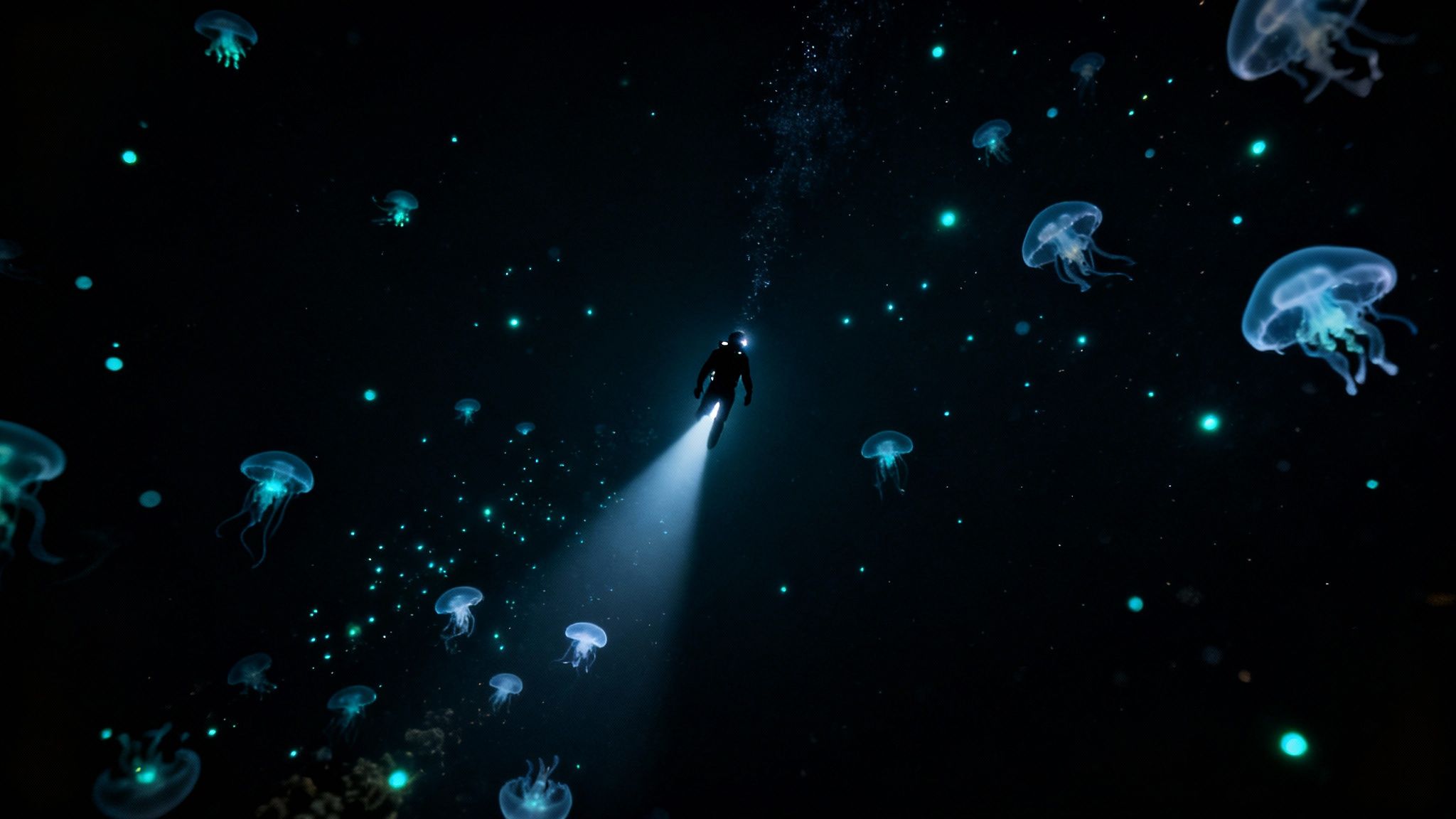
Picture this: you’re floating miles from shore in the dead of night, suspended over thousands of feet of inky black water. It’s a feeling often compared to being an astronaut in deep space. Welcome to the Kona Blackwater Dive.
This is a drift dive in its purest form. At night, one of the planet's largest migrations takes place as countless strange and wonderful creatures rise from the abyss to feed near the surface. You’re there to greet them. What you’ll see looks like something straight out of a sci-fi movie—tiny, see-through squids, bizarre larval-stage fish, and jellies that pulse with their own bioluminescent light.
- How it Works: We're all tethered to a central line attached to a large float on the surface. As the boat and float drift with the current, so do we. It’s a simple, safe system that keeps the group together in the vast open ocean.
- The Vibe: Forget everything you know about a typical night dive. This is a sensory journey into a world of alien-like creatures that glow, pulse, and shimmer in the beam of your torch.
- The Challenge: Rock-solid buoyancy is a must. You also need to be completely comfortable in a pitch-black, open-ocean environment. It's a dive that builds serious confidence.
The Blackwater Dive isn't about chasing big animals. It’s about witnessing a hidden universe of tiny, surreal life. You're getting a front-row seat to the ocean's massive food web in action, and it’s an experience that will stick with you forever.
Ready to see what comes up from the deep? Get all the details on our Blackwater Dive tour page.
Deeper Reefs and Pelagic Encounters
Beyond the blackwater, we also run advanced charters to sites that are deeper, more remote, and often have a bit more "juice" in the currents. And where there's current, there are usually bigger animals. This is where you go looking for the big stuff.
These trips are geared for divers with an Advanced Open Water certification or higher, as we’re often exploring depths between 80 and 130 feet. The currents act like a conveyor belt, bringing in nutrients that attract sharks, eagle rays, and big schools of game fish like jacks and barracuda.
We might explore deep-water pinnacles that shoot up from the seafloor, navigate intricate lava tube systems, or drift along dramatic walls that plunge into the deep blue. These dives demand more from a diver, but the payoff is incredible—thrilling encounters and access to pristine, untouched parts of the reef.
If you’re an experienced diver ready to take your Big Island scuba diving to the next level, these are the trips for you. Check out what’s possible on our advanced dive tour page.
How to Prepare for Your Dive Trip
A little bit of planning on the front end goes a long way toward a smooth, unforgettable Big Island scuba diving trip. Get the logistics sorted out before you leave home, and you’ll spend less time stressing and more time enjoying what you came for: the incredible world beneath the waves.
First thing's first: when should you visit? Honestly, the diving in Kona is great year-round, but if you want the absolute calmest, most predictable seas, aim for sometime between April and October. That’s our sweet spot for glassy conditions, making it easy to get to just about any dive site.
Gearing Up and Getting Ready
Being comfortable in the water is everything. One of the best parts about diving the Big Island is the warm, clear water, which stays in a blissful 75-80°F (24-27°C) range all year. That means you can ditch the bulky 7mm wetsuit. For most of us, a simple 3mm suit is the perfect balance of warmth and flexibility.
As you start packing your bags, make sure a few key items are right at the top of your list.
- Certification Card and Logbook: You absolutely cannot forget these. Every reputable dive operator will need to see proof of your certification before letting you get in the water. No card, no dive.
- Your Own Mask and Computer: Even if you’re renting the rest of your kit, bringing a mask that you know fits your face perfectly is a game-changer. Same goes for a dive computer you're familiar with—it’s a huge plus for both comfort and safety.
- Think About More Training: If you're an Open Water diver, consider getting your Advanced or Nitrox certification before you arrive. It opens up so many more of Kona’s deeper sites and lets you safely extend your bottom time.
For a full rundown of what to bring, take a look at our complete guide on the gear you will need for your Kona diving adventure.
Diving with Aloha: Our Commitment to the Reef
Hawaii's underwater world is a fragile treasure. As divers, we’re privileged guests here, and we all share a responsibility to protect these reefs for generations to come. A few mindful habits can make a world of difference.
Responsible diving isn't just a set of rules; it's an attitude. It’s about showing deep respect for the ocean. When we’re mindful of our actions, we help ensure this vibrant world stays healthy for everyone to experience.
Before you even hit the water, let's all commit to a few core principles:
- Nail Your Buoyancy: This is the single most important skill for reef protection. Perfecting your buoyancy control means you won’t accidentally bump, kick, or crush the fragile coral. A single misplaced fin kick can destroy years of coral growth.
- Look, Don’t Touch: We know it's tempting, but please resist the urge to touch, chase, or poke any marine life. The best encounters happen when we observe animals quietly in their own habitat, without stressing them out.
- Use Reef-Safe Sunscreen: Many common sunscreens contain chemicals like oxybenzone and octinoxate, which are poison to coral reefs. Always choose a mineral-based sunscreen that is specifically labeled "reef-safe." It protects your skin and our ocean at the same time.
Common Questions About Big Island Scuba Diving
Planning a dive trip to a new place always brings up a few questions. We get it! To help you get your gear in order, here are the answers to the queries we hear most often about Big Island scuba diving.
Do I Need to Be an Advanced Diver?
Not at all! One of the best things about diving the Kona coast is the sheer variety of sites. We have plenty of spots in calm, protected bays that are absolutely perfect for your first-ever dive or for newly certified Open Water divers to build confidence. The conditions are generally mild and forgiving.
That said, if you’re an experienced diver looking for a challenge, we’ve got you covered. The Big Island offers deep reef drop-offs, mind-bending lava tube swim-throughs, and some seriously fun drift dives that will keep even the most seasoned pros on their fins.
What Is the Best Time of Year for Scuba Diving in Kona?
Honestly, any time is a good time to dive here. The water temperature is consistently fantastic, staying in a comfortable 75-80°F (24-27°C) range all year long. You really can't go wrong.
If you're aiming for those picture-perfect, glass-calm days, the sweet spot is typically between April and October. That’s when the seas are at their flattest and the underwater visibility can be absolutely stunning. Winter can bring bigger swells, but because the Kona coast is on the leeward side of the island, we can almost always find a great, protected site to explore.
What Kind of Marine Life Can I Expect to See?
Get ready for an incredible show. The Big Island is teeming with life! On just about any dive, you can expect to run into Hawaiian green sea turtles (honu), see a pod of spinner dolphins cruising by, or spot graceful eagle rays gliding through the blue. We also have plenty of reef sharks, usually whitetips, napping on the sandy bottom.
What makes our reefs extra special is the huge number of endemic fish—species you won't find anywhere else on the planet. Keep an eye out for the vibrant Potter's angelfish or massive schools of milletseed butterflyfish. And of course, the star of the show for many is the majestic manta ray, especially on the world-famous night dive.
What Should I Pack for My Big Island Diving Trip?
Besides your swim trunks and aloha shirt, there are a few key items you won't want to forget.
- Certification Card & Logbook: Don't leave home without them!
- Personal Gear: We have excellent rental gear, but nothing beats the comfort of your own mask and the familiarity of your own dive computer.
- Wetsuit: A 3mm wetsuit is usually all you need to stay comfortable in our warm waters.
- Reef-Safe Sunscreen: This is a big one. Please help us protect our fragile coral by only using reef-safe sunscreen.
- Reusable Water Bottle: Stay hydrated and help us cut down on plastic waste. It's a win-win.
Ready to experience the best Big Island scuba diving for yourself? The team at Kona Honu Divers lives and breathes this stuff, and we'd love to show you our amazing underwater world. Whether you’re just starting out or have hundreds of dives under your belt, we have the perfect trip waiting for you.
Explore our full range of Kona diving tours and book your spot today