
Picture this: you descend into impossibly clear, turquoise water. Sunlight streams down, lighting up dramatic underwater canyons, arches, and tunnels carved out by ancient lava flows. This is the very heart of Big Island scuba diving—an otherworldly realm where vibrant coral reefs have taken hold on volcanic rock, creating a haven for unique marine life. It's a place that delivers unforgettable underwater adventures, whether you're a seasoned pro or just getting your fins wet.
Why the Big Island Is a World-Class Diving Destination
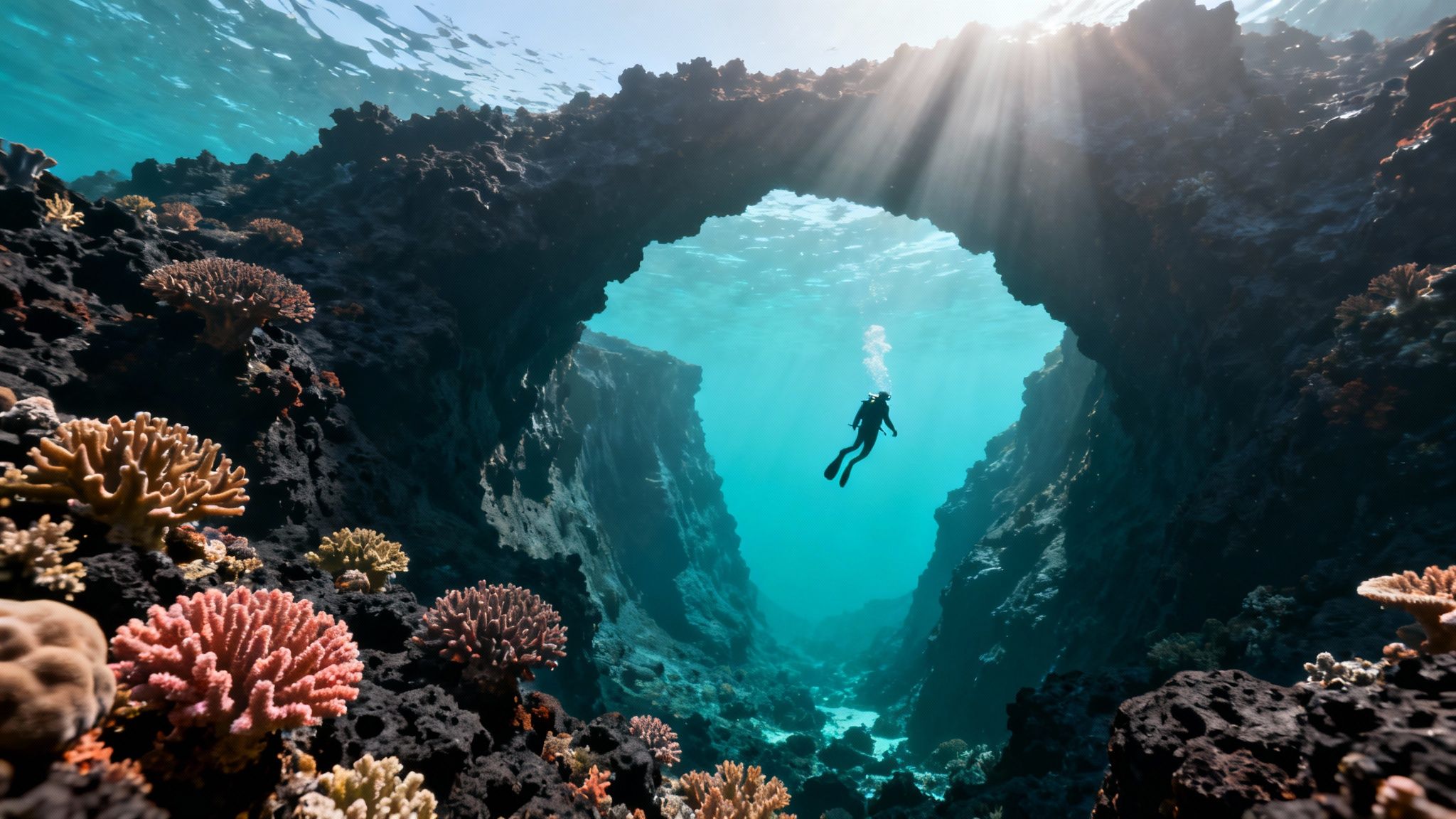
The Big Island isn't just another dot on the map of tropical dive spots; it’s a premier global destination forged by raw volcanic power. The island's Kona coast is the undisputed epicenter of this aquatic paradise. Tucked away on the western shoreline, it’s shielded from the powerful trade winds by the colossal volcanoes of Mauna Loa and Hualalai. The result? Exceptionally calm seas and jaw-dropping visibility that often stretches beyond 100 feet.
This unique geology has sculpted a submerged landscape you won't find anywhere else on Earth. As a diver, you get to explore intricate lava tubes, glide through massive archways, and navigate underwater pinnacles that rise dramatically from the ocean floor. It's these ancient volcanic structures that provide the perfect foundation for Hawaii’s rich and colorful coral reef ecosystems to flourish.
A Hub for Underwater Exploration
The island’s reputation as a diving hotspot is rock-solid. It hosts an incredible 100,000 certified scuba dives every single year, a testament to its appeal. This is all supported by a fantastic infrastructure of over 50 dive shops and charter boats.
This thriving dive community caters to the more than 150,000 dive tourists who flock here annually, all drawn by the promise of pristine conditions and spectacular marine encounters. If you want to learn more about the history of Big Island diving, it’s a fascinating story of discovery.
Operators like Kona Honu Divers have built their reputation on showcasing the very best of what these waters have to offer. They guide divers through this incredible underwater world with deep expertise and a genuine passion for marine conservation.
What Makes Big Island Diving So Unique?
It's the powerful one-two punch of volcanic topography and vibrant marine life that truly sets the Big Island apart. Here's a quick look at why it should be at the top of every diver's bucket list.
Big Island Scuba Diving Highlights at a Glance
This table breaks down the key ingredients that make the Big Island an unforgettable dive destination.
| Feature | What Makes It Special | Best For |
|---|---|---|
| Volcanic Topography | Explore lava tubes, arches, and underwater craters formed by ancient volcanic activity. | Divers who love unique underwater landscapes and swim-throughs. |
| Exceptional Visibility | Calm, clear waters often provide visibility of over 100 feet, ideal for observation. | Underwater photographers and anyone who appreciates pristine conditions. |
| Diverse Marine Life | Encounter Hawaiian green sea turtles, manta rays, spinner dolphins, and endemic fish. | Marine life enthusiasts and divers seeking memorable animal encounters. |
| Year-Round Diving | Consistent water temperatures and calm conditions make any season a great time to dive. | Travelers looking for a reliable, world-class diving destination anytime. |
As you can see, the appeal is broad and compelling.
Whether you're a beginner excited for your first open-water course or an advanced diver hunting for a new challenge, the Big Island delivers. The incredible variety of sites and professionally guided diving tours make it easy to craft the perfect underwater journey.
Experience the Famous Kona Manta Ray Night Dive
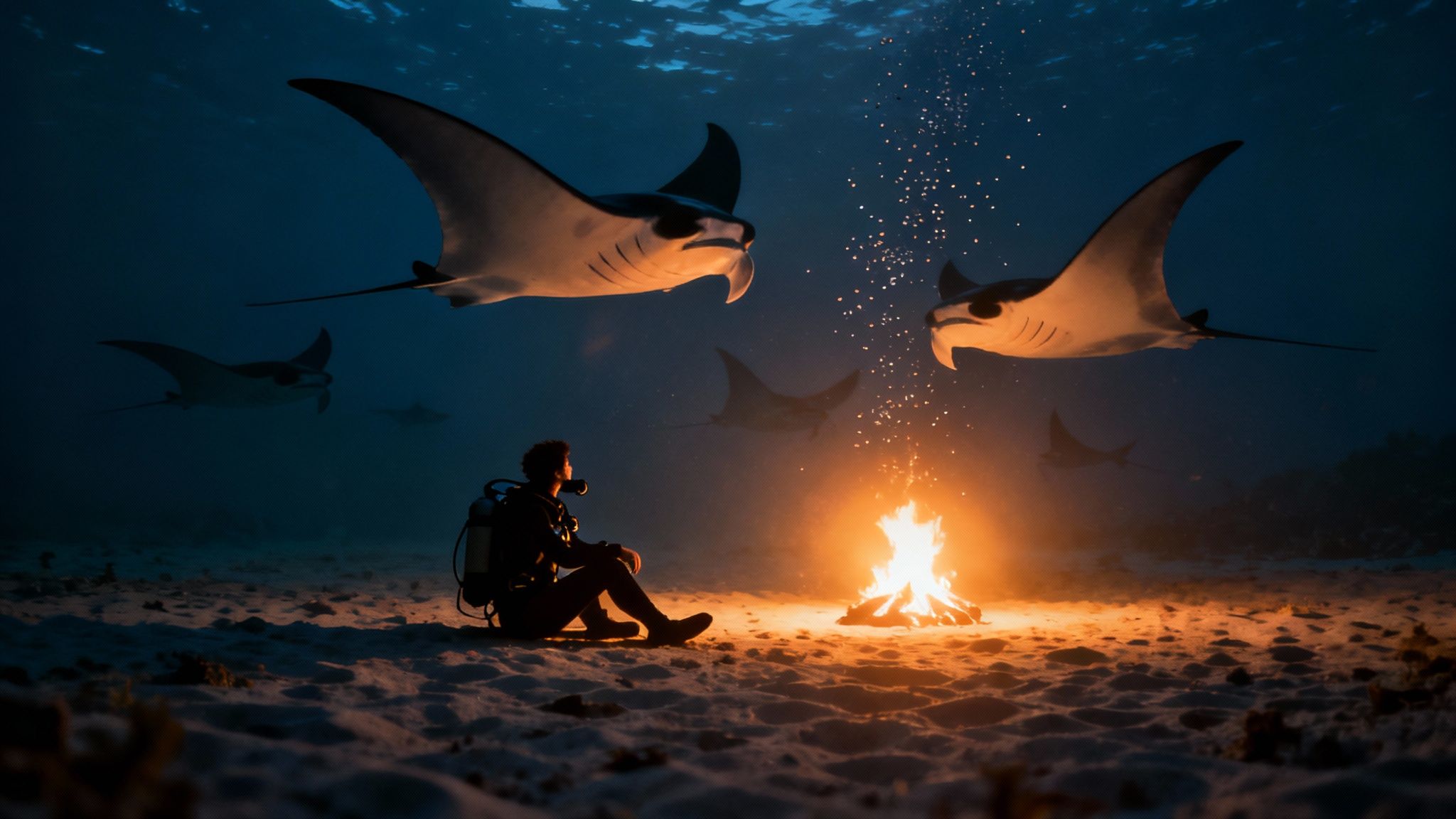
There are dives, and then there are legends. The Kona manta ray night dive is without a doubt one of the legends, consistently ranked as one of the most incredible underwater experiences you can have anywhere in the world. This isn't just another checkmark for your logbook; it's a genuine, bucket-list adventure that blends the thrill of night diving with the silent, graceful dance of true ocean giants.
Picture it: your trip starts with a beautiful boat ride along the Kona coast as the sun melts into the Pacific, setting the sky ablaze. Once twilight fades to dark, you gear up and descend into the warm, inky water. You’ll find a spot on a sandy patch of the seafloor, joining a circle of other divers who are all pointing their powerful lights straight up.
The Underwater Campfire Effect
All those beams pointing upward create what we call an "underwater campfire." The intense light acts like a giant magnet for tiny, free-floating plankton, pulling a dense cloud of them into the illuminated water column. This floating buffet is exactly what the stars of the show are waiting for.
Suddenly, a huge, dark shape emerges from the blackness. Then another, and another. These are majestic manta rays, some with wingspans stretching over 12 feet, gliding effortlessly into the light. They perform a silent, mesmerizing ballet just inches above your head, swooping and barrel-rolling with their cavernous mouths wide open to filter the plankton from the water.
It's an experience that’s nearly impossible to put into words. The feeling of a creature the size of a small car soaring gracefully over you is both humbling and completely awe-inspiring. This isn't just about watching marine life; it's a profound, up-close encounter that connects you to the ocean in a powerful way.
Why This Dive Is So Reliable and Special
So what makes the Kona coast the world's best spot for this? The local reef manta rays here aren't migratory; they live here year-round. Over decades, they’ve learned to associate the lights from boats and divers with an easy meal, turning this into one of the most reliable wildlife encounters on Earth.
In fact, the Big Island scuba diving scene is famous for this dive precisely because of its incredibly high success rate. Tour operators report sightings on about 85-90% of their trips because the whole operation is designed to create an irresistible feeding station the mantas can't ignore. You can even read a government assessment that details the science behind this amazing manta ray viewing experience in Hawaii.
The entire encounter is carefully managed to protect these magnificent animals. Divers are instructed to stay on the bottom and never touch the mantas, as this can damage the protective mucous coating on their skin. By following these simple rules, we can ensure this incredible interaction continues for generations. To learn more about what makes this dive so unique, check out our guide to the Kona manta ray night dive.
This isn't just one of the best dives in Hawaii—it’s often named one of the top ten dives in the world. If you're planning a Big Island scuba diving trip, this is the one adventure you simply cannot miss. Kona Honu Divers runs an exceptional version of this world-class excursion, ensuring a safe, respectful, and truly unforgettable night with Kona's gentle giants.
Ready to witness the magic for yourself? Book your unforgettable manta ray night dive and get ready for an evening that will stay with you forever.
Discovering Kona’s Top Daytime Dive Sites
While the manta ray night dive is the star of the show for a reason, don't let it overshadow the incredible world waiting for you during the day. Daytime big island scuba diving reveals a totally different side of Kona's personality—a vibrant, sunlit paradise of healthy coral, dramatic volcanic formations, and a staggering amount of marine life. A classic two-tank morning dive is the perfect way to experience it all.
The Kona coast is naturally sheltered, which often means you're treated to glassy, calm seas and visibility that seems to go on forever. Once you drop below the surface, the sunlight pierces the water and lights up an underwater world sculpted by ancient volcanoes. Think lava tubes, soaring arches, and pinnacles swarming with life. You never know what you'll see, from playful spinner dolphins cruising past in the blue to a master-of-disguise frogfish hiding in plain sight.
These daytime trips are where you'll truly appreciate the biodiversity that puts Hawaii on the map as a world-class dive destination. Let’s dive into a few of the must-see spots that really define the Kona daytime experience.
Turtle Pinnacle: An Iconic Cleaning Station
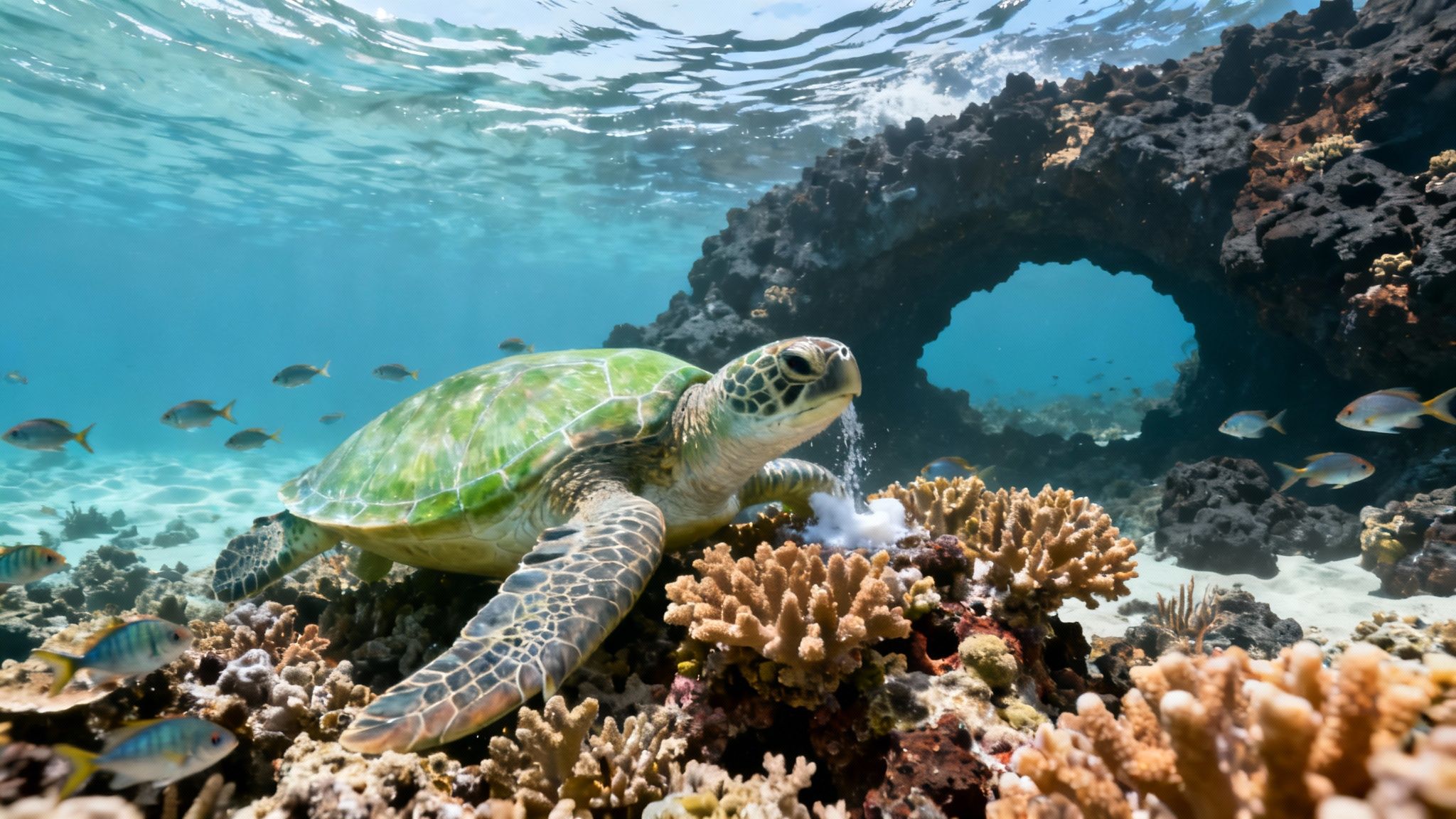
One of the most beloved and frankly, magical, dive sites on the Big Island has to be Turtle Pinnacle. It’s a perfect showcase of the fascinating, symbiotic relationships that make a reef tick. Think of it as a natural day spa for Hawaiian green sea turtles, or honu.
This shallow reef, sitting at a comfortable 30 to 60 feet deep, is a "cleaning station." Turtles from all over the area come here to patiently hover while surgeonfish and other small reef fish nibble away algae and parasites from their shells. It's a real-life nature documentary happening right in front of you. This behavior provides an incredible opportunity for divers to observe these gentle giants in a completely natural and calm state, making it a dream spot for photographers and anyone who just loves marine life.
Watching the honu queue up, waiting for their turn to be cleaned, is an unforgettable experience. It’s such a peaceful, profound moment that gives you a real glimpse into the intricate balance of the reef and the daily lives of these ancient mariners.
Golden Arches and Lava Tube Adventures
Another huge part of daytime big island scuba diving is getting to explore the dramatic underwater architecture left behind by ancient lava flows. Sites like Golden Arches are famous for their jaw-dropping swim-throughs and caverns that make you feel like a true explorer.
Golden Arches earned its name from two massive, beautiful archways formed by lava that you can easily swim through. The way the sunlight streams through the openings creates this ethereal, cathedral-like glow that's just breathtaking. The arches themselves are covered in colorful sponges and corals, and the whole area is buzzing with activity.
Many of Kona’s dive sites feature similar geological wonders. Ducking into a lava tube feels like entering a secret world. You might spot whitetip reef sharks resting on the sandy floor of a cavern or discover a whole community of fish taking shelter inside the volcanic rock.
What to Expect on a Daytime Dive Trip
A typical morning dive trip with a great operator is all about safety, comfort, and of course, seeing incredible stuff. Here’s a quick rundown of what the experience usually feels like:
- Small Groups: Reputable shops keep their groups small. This makes for a much more personal and relaxed dive, and it allows your guide to point out cool critters you'd definitely miss on your own.
- Expert Guidance: You’ll be led by experienced divemasters who know these sites like the back of their hand. They’ll show you the best features while always keeping an eye on safety.
- Diverse Sites: Charters almost always visit two different sites on a single trip. This gives you a great taste of the different topography and marine life the Kona coast offers.
- Comfort and Amenities: Most dive boats are spacious and well-equipped. It’s not uncommon to find things like hot showers, snacks, drinks, and plenty of shade for relaxing between dives.
These morning charters are the heart and soul of the big island scuba diving scene. They’re your best bet for seeing just how healthy and vibrant Kona’s reefs are in crystal-clear water. Whether you’re gliding next to a majestic turtle or navigating an ancient lava tube, a daytime dive is a must-do on any Hawaiian adventure.
Advanced Diving and Blackwater Adventures
If your logbook is already packed with stories and you're hunting for that next unforgettable, "I can't believe I saw that" moment, then you're in the right place. The Big Island’s sun-drenched reefs and the famous manta ray ballet are incredible, no doubt. But for those ready to push their own boundaries, a whole other level of adventure is waiting in the deep blue.
This is where advanced big island scuba diving truly shines, turning a great dive trip into a genuine expedition. These dives aren't for everyone; they’re designed for experienced divers who have their buoyancy dialed in, are comfortable in challenging conditions, and bring a calm, focused mindset. It's not just about going deeper—it's about seeing things that very few people ever will.
The Legendary Kona Blackwater Dive
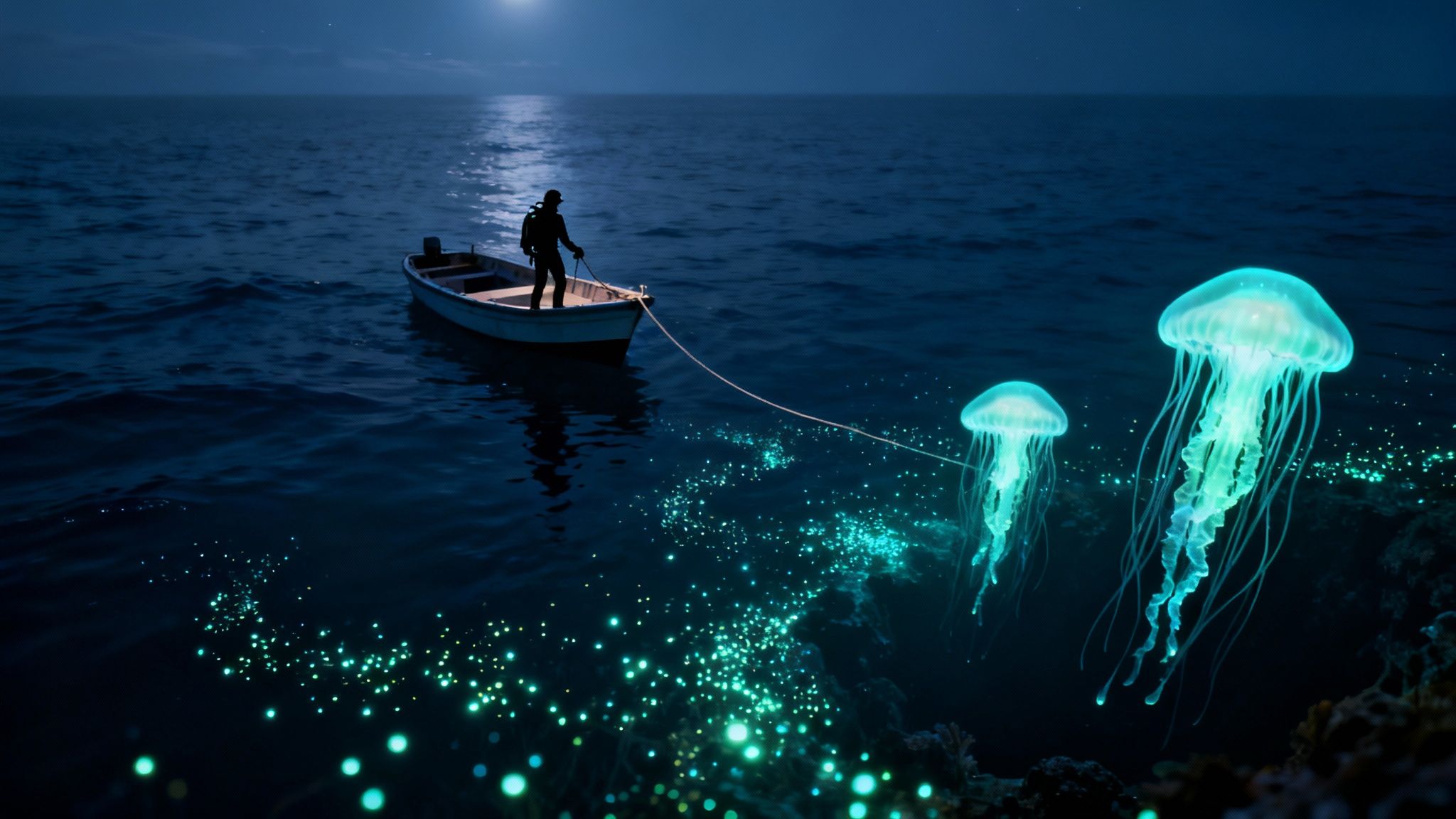
Picture this: you're suspended in pure darkness, miles from shore. Below you lies over 5,000 feet of inky black ocean. You're safely tethered to the boat, but you’re essentially floating in outer space. The only light is the beam from your torch, cutting a path through the void and illuminating things you've only seen in sci-fi movies.
Welcome to the Kona Blackwater Dive. It's less of a scuba dive and more of an interstellar journey.
This one-of-a-kind experience puts you right in the middle of the largest vertical migration on the planet. Every night, a countless host of bizarre, alien-like creatures travels from the crushing depths toward the surface to feed. Many of these animals are bioluminescent, creating their own light. You’ll be surrounded by pulses, flashes, and ethereal glows in the absolute blackness.
You will see things that defy description. Larval fish that look nothing like their adult forms, strange jellies with electric-looking tentacles, and tiny, jewel-like squid shimmering in your light. Floating in that immense darkness, watching these otherworldly creatures drift past, is a profoundly humbling experience.
Because you’re drifting in open water at night over extreme depths, this dive is strictly for the pros. Rock-solid buoyancy control isn't just a suggestion; it's a non-negotiable requirement for your safety and enjoyment. If you're an advanced diver looking for something truly different, you can learn more about booking a Kona Blackwater Dive tour and prepare for an adventure you’ll be talking about for the rest of your life.
Exploring Deeper Lava Tubes and Remote Reefs
Beyond the blackwater trip, advanced big island scuba diving unlocks access to some of the most remote and technically challenging sites around Kona. While plenty of shallower lava tubes are open to all divers, deeper, more complex systems await those with the right training. Weaving through these submerged volcanic tunnels is an exhilarating feeling, revealing hidden chambers and geological wonders that most visitors completely miss.
It's the same story with the reefs. Some of the most vibrant, untouched coral gardens are found further offshore or in areas with stronger currents. These spots are often reserved for advanced charters, where you can explore dramatic deep walls, towering pinnacles, and even potential shark hangouts. To get on these boats, you'll generally need skills like:
- Deep Diver Certification: Your ticket to safely exploring sites beyond the standard 60-foot recreational limit.
- Peak Performance Buoyancy: Absolutely essential for navigating tight passages in lava tubes and protecting the fragile life around you.
- Enriched Air (Nitrox) Certification: The key to safely extending your bottom time on those amazing deeper dives.
If you’re a seasoned diver ready to see what lies beyond the typical dive sites, we have trips built just for you. Kona Honu Divers' premium advanced dive tours are specifically designed to get you to these remarkable environments for a true sense of exploration.
How to Choose Your Dive Course and Operator
So, you're ready to explore the underwater world of the Big Island? Fantastic choice. The warm, clear, and calm waters here are pretty much the perfect classroom, whether you've never breathed through a regulator before or you're looking to level up your skills. Picking the right course—and even more importantly, the right dive shop—is the single biggest decision you'll make for a safe and incredible adventure.
The options can feel a little overwhelming at first, but it really just boils down to what you want to achieve. If you're just curious and want to see what all the fuss is about, a Discover Scuba Diving experience is your best bet. It’s a one-day taste test where you get to use all the gear and explore a shallow reef with an instructor right by your side. No certificate, no big commitment, just pure fun.
But if you're hooked and ready to go all in, the PADI Open Water Diver course is the gold standard. It’s the world's most popular certification for a reason, giving you the knowledge and skills to confidently plan and execute dives with a buddy.
Finding a High-Quality Dive Operator
Once you know what you want to do, the next step is finding the right people to do it with. Let me be clear: not all dive shops are created equal. Your choice of operator will shape everything about your experience, from your safety and comfort to how much you actually enjoy yourself. A great shop doesn't just take you out on a boat; they make the entire day an experience.
Here’s a no-nonsense checklist I use when I’m checking out a new operator:
- Safety Is Everything: This is non-negotiable. What's their safety record? Do they give detailed, understandable briefings before every single dive? Does their equipment look like it’s been cared for? If you get a bad vibe here, walk away.
- The Crew Matters: Look for instructors and divemasters who are genuinely excited about what they do. You want guides who not only know the dive sites and the local marine life inside and out but are also passionate about sharing it. Their energy is contagious and can turn a good dive into an unforgettable one.
- The Boat Experience: You’ll be spending a good chunk of your day on the boat, so it better be comfortable. Is there plenty of space to move around? Is there shade? Little things like a hot-water shower after a dive, decent snacks, and a clean head (that's boat-speak for a toilet) make a world of difference.
- Good Rental Gear: If you're renting, take a look at their equipment. Is it a major brand? Does it look clean and well-maintained? Professional outfits invest in quality gear because they know it’s essential for both safety and comfort.
Why a Premier Operator Matters
Going with a top-tier company like Kona Honu Divers means you don't have to worry about that checklist—they’ve already got it covered. Their reputation has been built over years of focusing on safety, taking great care of their divers, and showing genuine respect for the ocean. You can feel the difference when you're with an experienced crew on a boat that’s designed for diver comfort. It lets you just relax and enjoy the ride.
Of course, you don’t have to take my word for it. Hearing from other divers is one of the best ways to get a real feel for an operation.
Ultimately, think of your operator choice as an investment in your own adventure. A professional, passionate, and safety-focused team lets you fully immerse yourself in the magic of Kona's underwater world, helping you create memories that will stick with you for a lifetime. Whether you're getting certified for the first time or joining one of the incredible Big Island diving tours, the right guide changes everything.
Planning Your Big Island Dive Trip
Alright, now that you’ve got visions of lava tubes and giant mantas dancing in your head, let's get down to the brass tacks. Good planning is what separates a decent dive trip from a truly epic one. This is your guide to handling the details that will make your Big Island scuba diving adventure smooth, safe, and perfectly timed.
Let's start with the big question: when to go? The best part about diving here is that there’s really no bad time. The massive volcanoes on the Big Island act as a natural barrier against the trade winds, which means the Kona coast stays incredibly calm and clear almost all year.
That said, there are a few subtle differences between the seasons that might sway you one way or the other.
Big Island Diving Conditions by Season
Diving conditions in Kona are fantastic year-round, but knowing what to expect can help you pick the perfect time for your trip. The water is always warm, but there are slight shifts in temperature and some very special seasonal visitors.
Here’s a look at what the diving calendar looks like on the Big Island.
| Season | Average Water Temp (F) | Typical Visibility | Key Marine Life Sightings |
|---|---|---|---|
| Summer (Jun – Oct) | 78°F – 81°F | 100+ feet | Manta Rays, Turtles, Dolphins, Eagle Rays |
| Winter (Nov – May) | 75°F – 78°F | 80 – 100 feet | Humpback Whales (singing), Manta Rays, Turtles |
In the summer, from about June to October, the water hits its peak warmth, often reaching a balmy 80°F (27°C). This is when you'll often find those glassy, mirror-flat sea conditions that make Kona a diver’s dream.
Come winter, from November to May, the water dips just a bit to around 75°F (24°C). The real highlight of this season? It’s when humpback whales migrate through Hawaiian waters. There's nothing quite like hearing their haunting songs reverberate through the water on a dive—it’s an experience that will stay with you forever.
Your Essential Packing List
Packing for a dive trip is a game of balancing what to bring versus what to rent. Even if you plan on renting your main gear, having a few personal items can make a world of difference.
Here’s a quick checklist to get you started:
- Dive Essentials: Don’t leave home without them! This means your certification cards (physical or digital), logbook, and dive computer. No card, no dive.
- Personal Gear: If you own them, bring your mask, snorkel, and fins. A mask that fits your face perfectly is a game-changer for comfort and enjoyment.
- Exposure Protection: A 3mm or 5mm full wetsuit is ideal for Kona’s water temperatures. Most people find a 3mm is perfect for the summer, while a 5mm offers extra warmth in the winter.
- Hawaii Must-Haves: The sun here is no joke. Pack plenty of reef-safe sunscreen to protect both your skin and the coral. A reusable water bottle is also essential for staying hydrated.
Key Safety Protocols to Remember
Safety is everything in diving. You learned the fundamentals in your certification course, but a few reminders are especially critical for a successful trip to the Big Island.
Hydration is king. It’s easy to get dehydrated in the warm Hawaiian air, and dehydration is a major risk factor for decompression sickness. Make it a habit to drink water constantly—before, between, and after your dives.
And don't forget the cardinal rule of dive travel: plan your "no-fly" time. The standard recommendation is to wait 12 hours after a single dive and a more conservative 18 hours after multiple dives before hopping on a plane. The easiest way to handle this is to schedule all your diving for the beginning of your trip.
Finally, be a good ocean ambassador. Look, but don’t touch. Admire the incredible marine life from a respectful distance and leave the reef exactly as you found it.
With these logistics sorted out, you're ready for an incredible adventure. Now, the only thing left to do is book your dives and start the countdown
Frequently Asked Questions
Alright, let's wrap this up by tackling some of the questions we get all the time. Think of this as your final checklist before you get your fins wet and dive into one of the world's most incredible underwater environments.
Do I Need to Be Certified to Scuba Dive in Kona?
Not at all! While you'll need your Open Water certification for most of our boat dives, you can absolutely get a taste of the underwater world without it. We offer a "Discover Scuba Diving" experience, which is a fantastic, single-day program where an instructor is right by your side for a genuine dive on a beautiful reef.
And don't forget, non-diving friends and family can still join the adventure! Many of our most popular trips, including the legendary Manta Ray Night Dive, have spots for snorkelers. They get to see the action from the surface while you're down below.
What Is the Water Temperature in Kona?
You can pretty much count on comfortable water year-round here. In the winter, the water hovers around a pleasant 75°F (24°C), and during the summer months, it warms up to a balmy 80°F (27°C).
For most people, a standard 3mm or 5mm wetsuit is all you need to stay perfectly comfortable throughout your dive.
What Marine Life Can I See Besides Mantas and Turtles?
Oh, where to begin? While mantas and turtles are the headliners, the supporting cast is just as amazing. The volcanic ledges and lava tubes are home to an incredible diversity of life.
It's common to spot pods of spinner dolphins, various types of moray eels peeking out from their holes, and even the occasional whitetip reef shark resting on the sand. Look closely, and you might find a master-of-disguise frogfish. Plus, the reefs are bustling with fish found nowhere else on Earth, like Hawaiian butterflyfish, angelfish, and the state fish with the famously long name—the humuhumunukunukuāpuaʻa!
Are There Dive Sites on the Hilo Side?
While you can technically find some spots for shore diving over on the Hilo side, it’s really not where the action is for scuba charters. The Kona coast is the undisputed hub for a reason.
Its waters are naturally protected and consistently calm, offering phenomenal visibility that the windward Hilo side just can't match. That’s why all the premier boat operations and world-renowned dive sites are right here on the Kona coast—it's the true heart of Big Island scuba diving.
Ready to see it all for yourself? The crew at Kona Honu Divers lives and breathes this stuff, and we'd love to show you why we think these are the best dive sites on the planet. Whether you're a seasoned diver with hundreds of log entries or you're about to take your very first breath underwater, we've got an adventure waiting for you.
Check out our full lineup of Big Island diving tours and find the perfect trip for you.