
When you think of world-class scuba diving, a few key things probably come to mind: crystal-clear water, vibrant marine life, and maybe a unique underwater landscape. The Big Island of Hawaii delivers on all fronts, and then some. It’s a place where volcanic geology has created an underwater world that feels straight out of a documentary.
Why The Big Island Is a World-Class Dive Destination
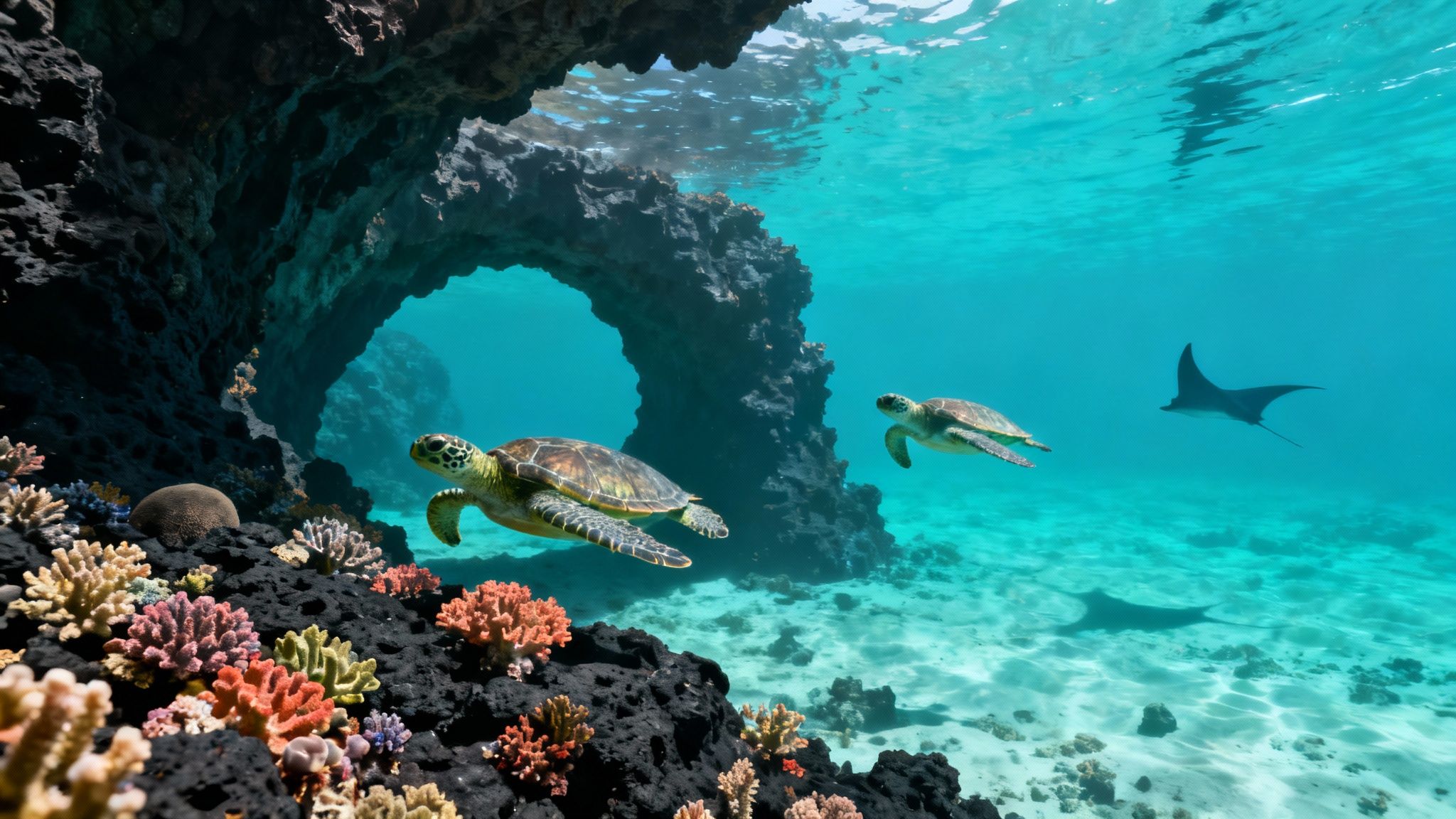
The secret to the Big Island’s magic lies in its fiery origins. Imagine ancient lava flows spilling into the ocean, cooling to form a breathtaking underwater playground. That’s what you get here. Instead of just gentle, sandy slopes, the Kona coast is a maze of underwater cathedrals, intricate lava tubes, and dramatic drop-offs that plunge into the deep blue.
This dark volcanic rock provides the perfect canvas for life. Bright, healthy coral gardens pop against the dark background, creating a visual contrast that photographers go absolutely wild for. This rich environment supports an incredible amount of marine life, making every single dive a fresh adventure. You never know what you'll find.
A Sanctuary for Iconic Marine Life
The Big Island is famous for its incredible biodiversity, and it’s especially known for a few bucket-list encounters, like the world-famous manta ray night dive. The island is practically a treasure map of dive sites, from those mind-bending lava tubes to sprawling coral reefs that are home to countless species.
One of the most beloved spots is Turtle Pinnacle. It's a shallow reef that acts as a natural “cleaning station” where Hawaiian green sea turtles, or honu, come to get spruced up by reef fish. It's an amazing opportunity to observe these gentle giants up close. The site, which is usually between 30 and 60 feet deep, is also bursting with colorful butterflyfish and wrasse, making it a perfect dive for all skill levels.
But the cast of characters doesn't stop with turtles and mantas. On any given dive, you’re likely to see:
- Huge schools of bright yellow tang and chunky parrotfish.
- The elusive frogfish, perfectly camouflaged against the reef.
- White-tip reef sharks resting peacefully on sandy patches.
- And if you're lucky, a pod of spinner dolphins might just escort your boat.
Ideal Conditions for Every Diver
What really seals the deal for the Big Island is how consistently fantastic the conditions are. The colossal volcanoes of Mauna Loa and Mauna Kea act as a natural shield for the Kona coast, blocking the strong trade winds that affect other parts of Hawaii. The result? Unbelievably calm, clear water nearly all year round, with visibility often pushing past 100 feet.
This natural protection makes Kona an incredibly safe and enjoyable place for everyone, whether you’re taking your very first breath underwater or you’re an old pro looking for a new challenge.
Ready to jump in? You can start by exploring the incredible variety of Big Island diving tours to find the perfect underwater adventure for you.
Exploring The Premier Dive Sites Of The Kona Coast
The Kona coast isn't just one dive spot; it's an entire underwater kingdom. Think of it as a sprawling city with dozens of unique neighborhoods, each with its own vibe and local residents. The volcanic history of the island has sculpted an incredible variety of underwater landscapes, from shallow, bustling reefs to dramatic lava tubes that feel like secret passageways. Honestly, choosing where to drop in is half the fun of planning your Big Island scuba diving trip.
Every site tells a different story. One day you might be drifting through a massive archway carved out by ancient lava flows, and the next, you're watching Hawaiian green sea turtles—our beloved honu—getting a spa day from eager cleaner fish. It’s this incredible diversity that keeps divers like me coming back year after year.
H3: Turtle Pinnacle: A Beloved Cleaning Station
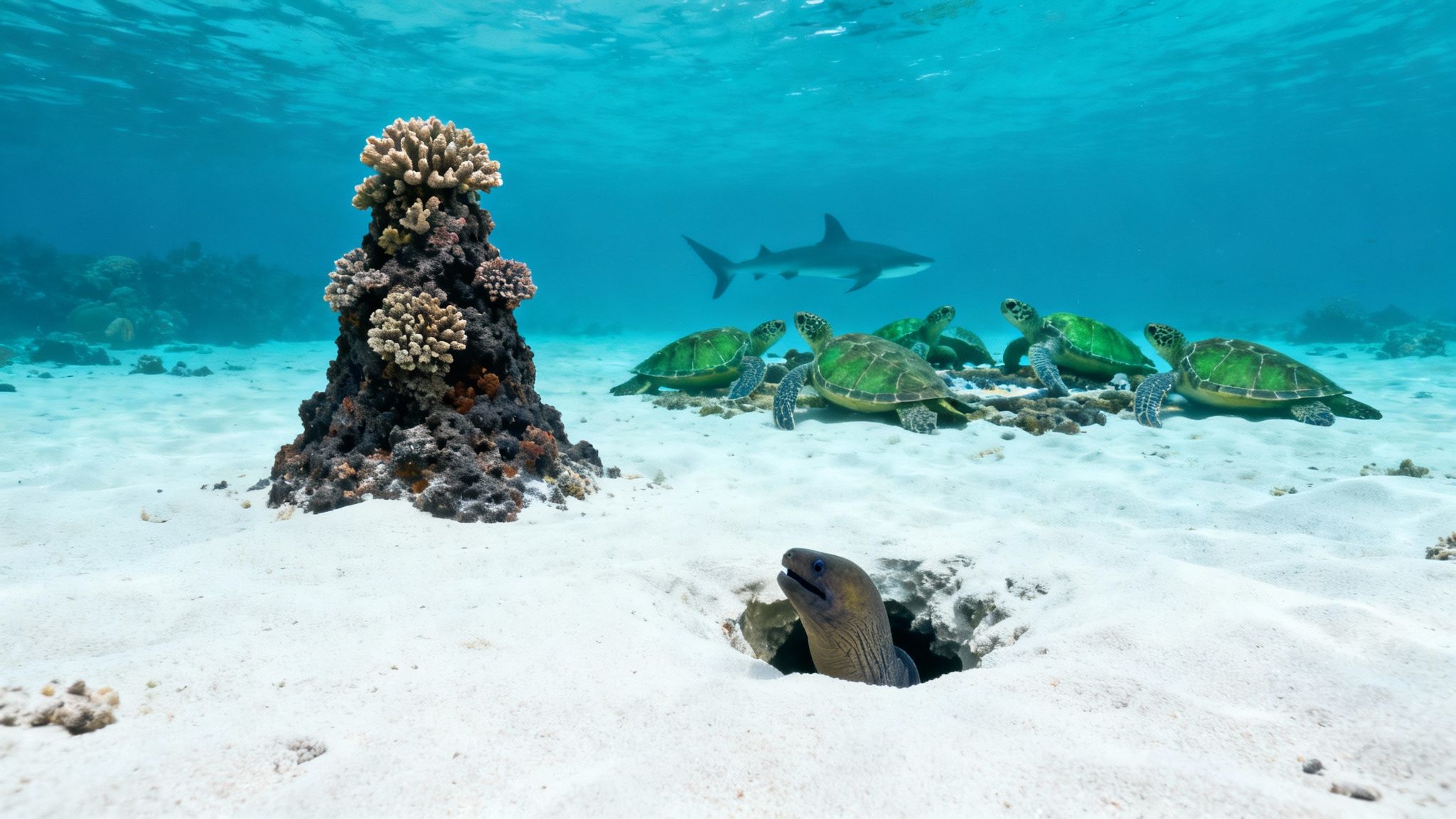
If there’s one site that truly captures the magic of Kona, it's Turtle Pinnacle. We affectionately call it "Turtle Heaven," and for good reason. This spot is a perfect example of nature’s incredible teamwork. It’s essentially a natural 'cleaning station,' where green sea turtles gather to let schools of surgeonfish and other reef dwellers nibble away algae and parasites from their shells.
Descending here feels like you’ve been let in on a local secret. It’s common to find several turtles lined up, patiently waiting their turn or just blissfully enjoying the grooming. It’s a fantastic chance to see these majestic animals in their element, completely relaxed and undisturbed.
Because the pinnacle sits in relatively shallow water, usually between 30 to 60 feet, it’s a fantastic dive for all skill levels. And it’s not just about the turtles! The reef is teeming with life, including:
- Yellow Tang: You'll often see them in huge, dazzling schools that move like a single golden cloud.
- Butterflyfish: Dozens of species add intricate splashes of color to the coral.
- Moray Eels: I love spotting these guys peeking out from their rocky homes, just watching the world go by.
H3: Au Au Crater: Sunken Treasure
For those who love dramatic scenery, Au Au Crater (sometimes called "The Dome") is an absolute must. This isn't your typical reef dive. Here, a massive, collapsed lava dome has created a breathtaking underwater amphitheater. Swimming through the giant archways and swim-throughs honestly feels like you're exploring the ruins of a lost city.
The topography is just stunning. Light filters down through openings in the crater's ceiling, creating ethereal beams that dance in the water. This unique structure is also the perfect hideout for a ton of marine life. It’s a favorite resting spot for white-tip reef sharks, which you can often find napping on the sandy floor inside the crater. The currents also bring in nutrients, attracting larger pelagic species for unforgettable surprise encounters.
"The sheer scale of the lava formations at Au Au Crater is something you have to see to believe. It's like the volcano itself is showing off its architectural skills. Every dive there reveals a new nook or a different creature hiding in plain sight."
H3: Comparing Top Big Island Dive Sites
With so many incredible options, where do you start? The right dive site really depends on what you're hoping to see and your comfort level in the water. The good news is, the Kona coast has something for everyone. For a deeper look at what’s out there, you can explore the variety of Kona dive sites and start dreaming about your underwater adventure.
To give you a head start, here’s a quick-glance table to help you compare some of our premier spots.
Top Big Island Dive Sites At A Glance
| Dive Site | Key Features | Common Marine Life | Experience Level |
|---|---|---|---|
| Turtle Pinnacle | Natural turtle cleaning station | Green sea turtles, yellow tang, butterflyfish | Beginner / All Levels |
| Au Au Crater | Collapsed lava dome with large archways and swim-throughs | White-tip reef sharks, eagle rays, moray eels | Intermediate |
| Garden Eel Cove | Sandy bottom with a large colony of garden eels | Garden eels, manta rays (at night), frogfish | Beginner / All Levels |
| Golden Arches | Shallow dive with beautiful lava arches | Colorful reef fish, octopus, crustaceans | Beginner / All Levels |
Planning your dives is genuinely one of the most exciting parts of the trip. Whether you're drawn to the serene turtle encounters at Turtle Pinnacle or the epic architecture of Au Au Crater, the Kona coast is ready to deliver an underwater journey you won't forget.
The World-Famous Manta Ray Night Dive Experience
If there's one dive on the Big Island that everyone talks about, it's the manta ray night dive. Honestly, words don't do it justice. It’s less of a dive and more of a front-row seat to one of nature's most spectacular ballets. I've heard divers with thousands of hours logged call it one of the most memorable underwater encounters on the planet. It's the one Big Island scuba diving adventure you absolutely have to experience for yourself.
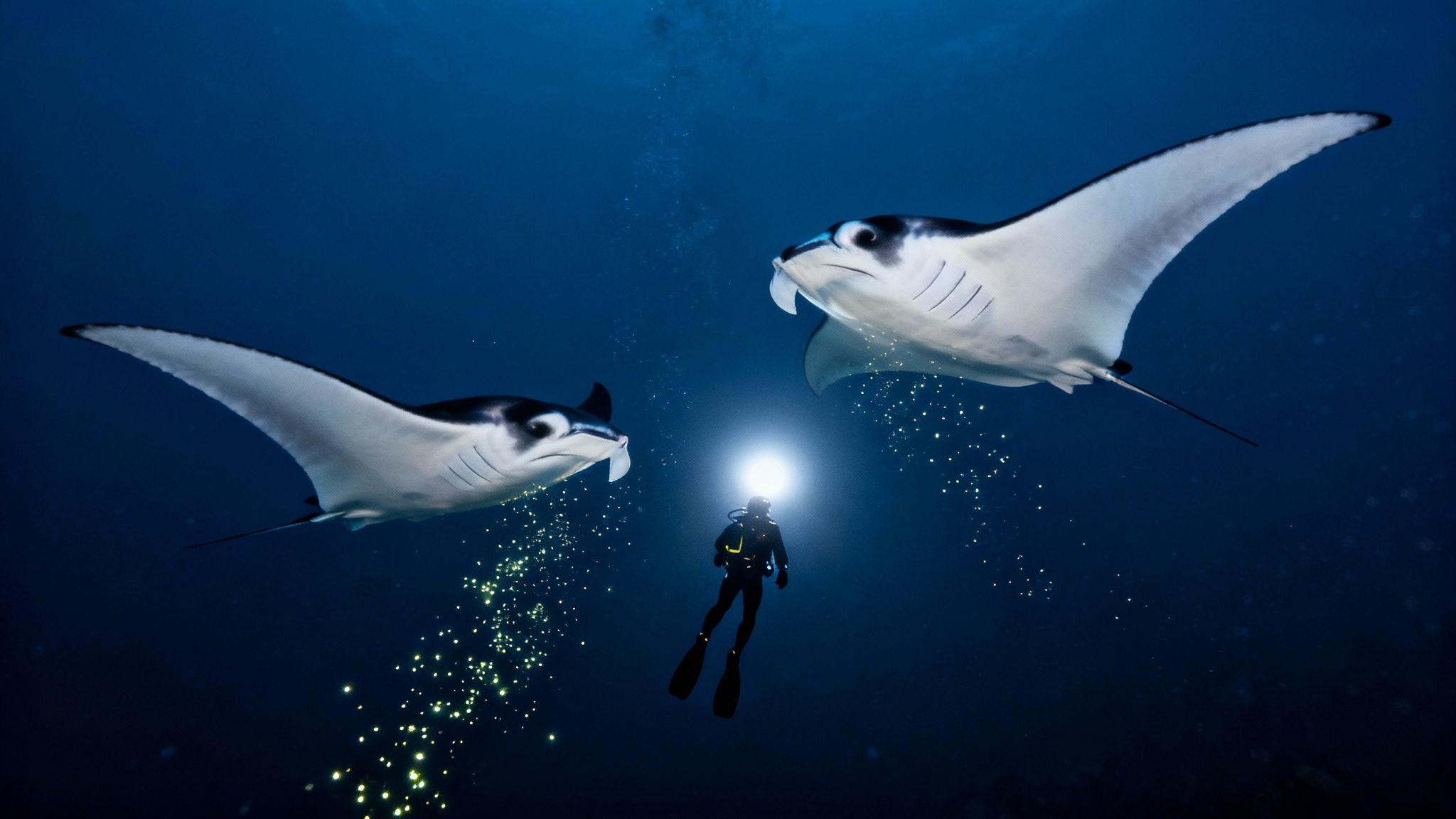
The magic behind this dive is brilliantly simple. Dive operators take you to well-known feeding spots like "Manta Heaven" or "Manta Village." As the sun sets, they submerge powerful lights that create a massive glowing column in the dark water.
This underwater "campfire" acts like a giant bug zapper for plankton, the manta rays' favorite food. What happens next is nothing short of breathtaking. Drawn in by the all-you-can-eat buffet, majestic manta rays, with wingspans that can stretch over 16 feet, glide in from the deep to feast.
Your Experience Underwater
Picture this: you descend into the quiet, inky-black ocean. You and the other divers find a spot on the sandy bottom, arranging yourselves in a semi-circle around the main lights. You then switch on your own dive light and point it straight up, adding your beam to the buffet.
At first, there’s just the hum of your own breathing and a sense of pure anticipation. Then, a shadow emerges from the darkness. It grows larger and larger until a giant, graceful shape swoops effortlessly into the light, right above your head.
The mantas perform these incredible barrel rolls and summersaults, sometimes just inches away, their huge mouths wide open as they filter the plankton. It’s a silent, mesmerizing dance as several rays perform their own acrobatic routines in what feels like beautifully choreographed chaos. There’s really no way to describe the feeling of having one of these gentle giants glide so close to you—it's a profoundly moving experience.
The best part? This dive is incredibly reliable. The reef manta rays (Mobula alfredi) around Hawaii are residents; they don't migrate. This means they consistently show up for dinner all year long, so pretty much any night is a good night for the show.
Safe and Respectful Manta Interaction
To keep this incredible encounter safe for both the divers and the mantas, everyone follows a strict set of rules. Your divemaster will give you a thorough briefing on the proper etiquette, and paying attention is key to a great experience for all. The golden rule is simple: look, but don't touch.
- Hold Your Position: You'll stay on or very near the sandy bottom. This keeps the "dance floor" open for the mantas, giving them plenty of room to maneuver without feeling crowded.
- Buoyancy is Key: Good buoyancy control is a must. You need to remain stationary and avoid accidentally floating up and bumping into a manta.
- Let Them Come to You: Never, ever chase or try to "pet" a manta ray. Their skin has a protective mucous coating that our touch can damage, leaving them vulnerable to infections.
By following these simple guidelines, we all play a part in protecting these magnificent animals and ensuring this world-class dive can be enjoyed for years to come. This dive is truly the highlight of any trip, and you can learn even more about where to see manta rays in Hawaii.
Advanced And Specialized Big Island Diving Adventures
Sure, the sun-drenched reefs and the famous manta ray ballet are incredible. But for some of us, there's a pull to go deeper, to see something truly different. If you're an experienced diver looking for a challenge that pushes your skills and rewards you with sights few will ever see, the Big Island scuba diving scene has you covered.
These aren't your average dives. We're talking about exploring deep volcanic drop-offs, navigating ancient lava tubes, and venturing into the open ocean. These are the kinds of dives that require rock-solid buoyancy and a calm, confident mindset. They’re the adventures that become the stories you tell for years to come.
The Kona Blackwater Dive: An Otherworldly Experience
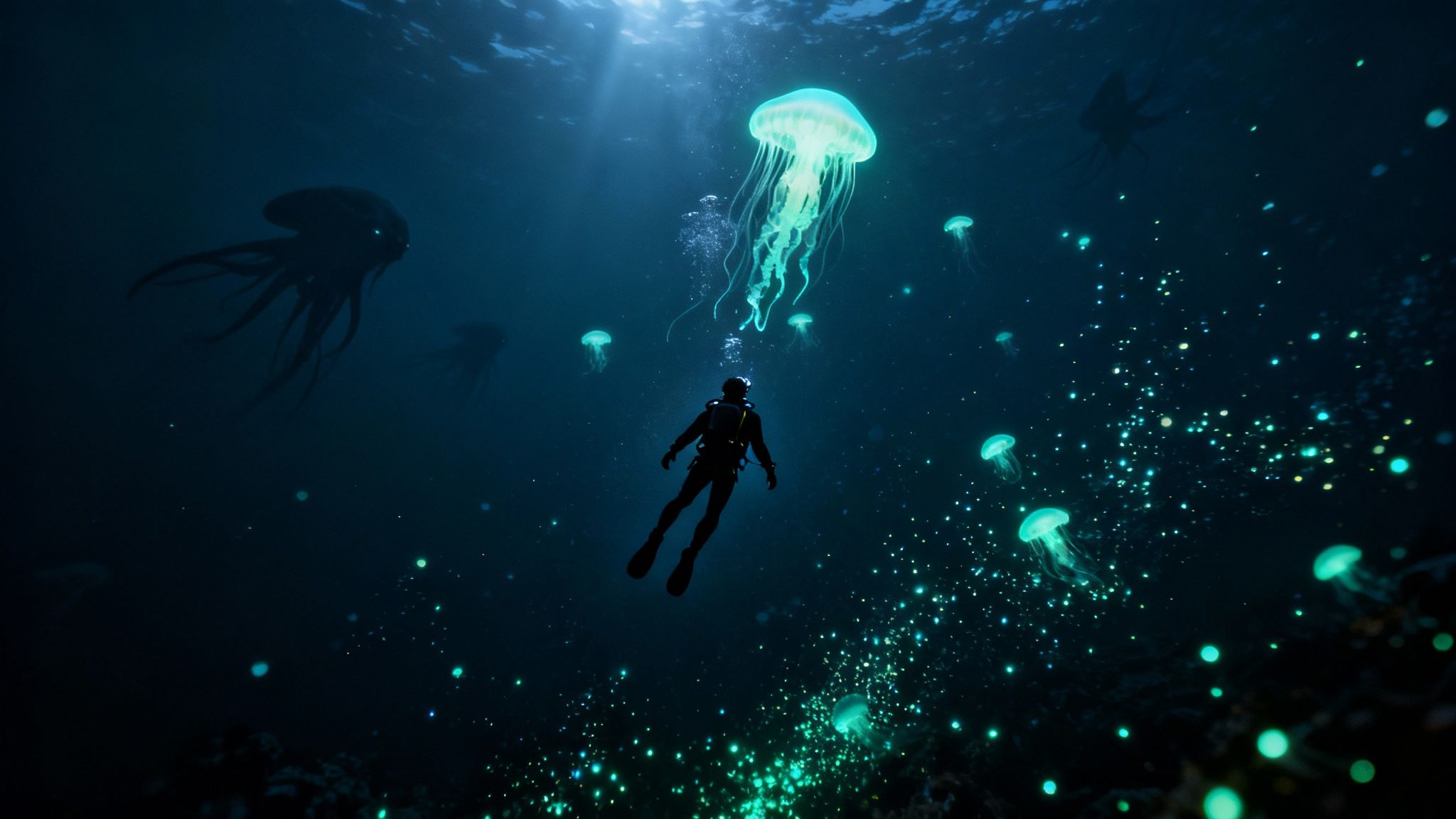
Picture this: you’re floating in the middle of the Pacific, miles from shore, with thousands of feet of inky black water right below you. That's the Kona Blackwater Dive. It’s less like a reef dive and more like a spacewalk through another dimension.
Tethered to the boat for safety, you become a spectator to one of the planet's largest migrations. Every single night, a universe of strange, bioluminescent creatures rises from the crushing depths to feed near the surface. You'll see things that look like they swam right out of a sci-fi film—life forms you simply won't find anywhere else.
This dive is a journey into the unknown. The creatures you encounter are part of the deep scattering layer, a dense biomass of organisms that rises and falls with the sun. It's a living light show in the middle of the Pacific Ocean.
What You Might See On A Blackwater Dive
The cast of characters on a blackwater dive is completely alien compared to any other Big Island scuba diving trip. Every dive is different, but here are some of the regulars:
- Pelagic Larval Fish: You might see baby swordfish or marlin when they are tiny, translucent, and look nothing like their adult forms.
- Bioluminescent Jellies: Ctenophores and siphonophores pulse with their own internal light, creating a surreal light show in the dark.
- Cephalopods: Keep an eye out for tiny, jewel-like squid and octopuses hunting in the water column.
This is an absolute must-do for underwater photographers and any diver craving an adventure that borders on the profound. If you're ready to see what comes up from the deep, you can book the Kona Blackwater Dive and witness it for yourself.
Other Advanced Diving Opportunities
Not quite ready to float in the open ocean at night? No problem. Kona still offers plenty of challenges for certified divers. These advanced sites often feature greater depths, stronger currents, and more complex navigation around dramatic underwater landscapes.
Dropping down along sheer volcanic walls and deep pinnacles reveals a whole new ecosystem of marine life that prefers the cooler, darker waters. These dives demand excellent buoyancy control to protect the fragile environment and ensure a safe, controlled ascent. For those ready to test their skills, there are premium advanced dive tours specifically designed for seasoned adventurers.
How To Choose The Right Big Island Dive Operator
Let's be honest, picking the right dive operator for your Big Island scuba diving adventure is one of the biggest decisions you'll make. It can be the difference between a good dive and a truly mind-blowing one. The right crew, a comfortable boat, and an unwavering focus on safety don't just get you in the water—they completely shape your experience.
The Kona coast has plenty of operators, and staring at a long list can feel a bit daunting. But don't worry. You can quickly narrow down the options by asking yourself what you really value in a dive trip. Is it a small, intimate group? Top-of-the-line rental gear? Or guides who are as passionate about marine biology as they are about diving?
If you want to really get into the nitty-gritty, we've put together a full guide on how to choose a Kona dive shop.
Key Factors To Consider
When you're comparing shops, a few things should be non-negotiable. First, check for professional credentials. Are they affiliated with globally recognized agencies like PADI or SSI? This is your first clue that they adhere to high standards for training and safety.
Then, think about the on-the-water experience. What’s their guide-to-diver ratio? Smaller groups almost always mean more personal attention and a better chance of spotting that elusive octopus your guide knows how to find. The boat itself matters, too. For a two-tank trip, you’ll want a few creature comforts.
Look for boats that have:
- Plenty of shaded areas for relaxing between dives.
- An on-board restroom (you'll be glad it's there!).
- A smart setup for easy water entry and exit.
- Refreshments like water and snacks to keep you energized.
A Legacy of Diving in Kona
The Big Island’s reputation as a world-class diving destination didn't happen overnight. Back in the late 1960s and 70s, it was a different world, run by a few pioneers with a love for the ocean and some pretty basic gear. Visionaries like Jack and Tina Clothier, who founded the legendary Jack's Diving Locker in 1981, were instrumental in putting Kona on the map. This grassroots growth, combined with the rise of professional training organizations, helped create the vibrant scene we see today. We're now talking about an industry that supports over 100,000 certified dives and welcomes more than 150,000 dive tourists every single year.
Finding Your Perfect Dive Partner
While technical specs are important, nothing beats hearing from fellow divers. Real-world reviews give you the inside scoop on a company’s vibe, customer service, and day-to-day operations.
"A great dive operator does more than just get you in the water. They are stewards of the reef, educators, and your trusted guides to a world most people never get to see. Their passion and professionalism are what make a dive truly special."
To help you out, we've pulled together a few of the most respected dive shops on the Big Island. We’ll let their customer reviews do the talking.
Kona Honu Divers
As one of the top-rated operators on the island, Kona Honu Divers consistently earns praise for its amazing customer service, expert guides, and genuine passion for marine conservation.
Jack’s Diving Locker
An institution in Kona, Jack’s was founded by true pioneers of the local dive scene and remains a highly respected name.
Big Island Divers
Another fantastic choice, known for offering a wide array of dive tours to suit different interests and skill levels.
Your Big Island Diving Questions, Answered
Alright, let's get down to the nitty-gritty. You're planning your trip, and a few key questions are probably bouncing around in your head. Think of this as your final briefing before you hop on the plane. We'll cover the essential details to make sure you arrive ready for an incredible underwater adventure.
When Is The Best Time To Dive The Big Island?
Honestly, there's no bad time to dive here—the Big Island is a year-round paradise for scuba. The "best" time really just depends on what you're looking for.
If you love glassy seas and bathtub-warm water, aim for the summer months between April and October. The ocean is typically at its calmest, and water temps hover in that perfect 78-82°F (25-28°C) range. It makes for super smooth boat rides and easy entries.
Now, if you visit during the winter (November to March), you might encounter some bigger surface swells. But the diving is still fantastic, and you get an incredible bonus: it's peak humpback whale season. You may not see them underwater, but hearing their songs echo through the reef is a truly unforgettable, once-in-a-lifetime experience. Visibility is almost always excellent, often clearing 100 feet or more no matter when you come.
Do I Need A Scuba Certification To Dive?
Yes, to join our boat dives and explore the deeper reefs, you'll need to be a certified diver. But if you're not certified yet, don't worry! You absolutely have options for getting in the water.
Most dive shops, including us at Kona Honu Divers, offer an introductory "Discover Scuba Diving" program. It's a fantastic way to test the waters, literally. You'll get a quick lesson on the basics from a pro, practice a few skills in shallow water, and then go on a real dive under the direct supervision of your instructor.
If you get hooked (and we're betting you will), you can get your full PADI Open Water certification right here on the island. The course usually takes just three or four days, so you can turn your vacation into a life-changing new skill.
What Wetsuit Should I Bring?
This is a key piece of gear for a comfortable dive. Big Island water stays pretty warm, ranging from about 75°F in winter to 82°F in summer.
For almost everyone, a 3mm full wetsuit is the sweet spot. It provides just the right amount of warmth for a two-tank dive trip and also protects you from the sun and any accidental bumps against the volcanic rock. It’s the go-to choice for year-round diving here.
If you know you get cold easily, you might consider a 5mm wetsuit, especially if you plan on doing a night dive. On the world-famous manta ray night dive, you're not moving around much, so that extra insulation can make a huge difference. On the flip side, some folks are perfectly happy in just a rash guard during the hottest summer months.
What Will I See Besides Turtles and Mantas?
The honu (Hawaiian green sea turtles) and manta rays are the headliners, for sure. But the underwater world off the Kona coast is absolutely packed with life, thanks to the rich habitat created by our volcanic coastline.
On any given dive, you've got a great shot at seeing all kinds of amazing creatures:
- Colorful Reef Fish: Get ready for huge schools of bright yellow tangs, parrotfish chomping on the reef, and Hawaii's state fish, the famously named Humuhumunukunukuāpuaʻa.
- Eels and Sharks: You'll almost certainly spot moray eels poking their heads out of rocky crevices and white-tip reef sharks snoozing on sandy patches.
- Other Cool Critters: Keep an eye on the blue for graceful spotted eagle rays gliding past. It's also super common for pods of playful spinner dolphins to follow the dive boats!
- Weird and Wonderful Night Life: For a truly mind-blowing experience, the Kona Blackwater Dive lets you witness bizarre, bioluminescent creatures that migrate from the deep ocean abyss each night. It's like diving in outer space.
The best way to see it all is to check out the full range of Big Island diving tours and find the ones that get you most excited.
Here at Kona Honu Divers, we live and breathe this stuff. We're all about providing safe, amazing, and unforgettable underwater experiences. Whether you're a seasoned pro or it's your very first time, our crew is here to show you the absolute best of Kona's underwater world.