
Welcome to the Big Island, where the island's fiery volcanic heart has created an underwater world unlike any other. Scuba diving here, especially along the Kona coast, isn't just a fun activity—it's one of the most consistently amazing underwater experiences you can have anywhere on Earth.
What’s the secret? It all comes down to geography. The massive volcanoes of Mauna Loa and Hualalai act as a natural shield, protecting the Kona side from the powerful trade winds. This lucky positioning gives us calm, crystal-clear water nearly every day of the year, making it a dream destination for divers of every skill level.
Why Kona Is a World-Class Diving Destination
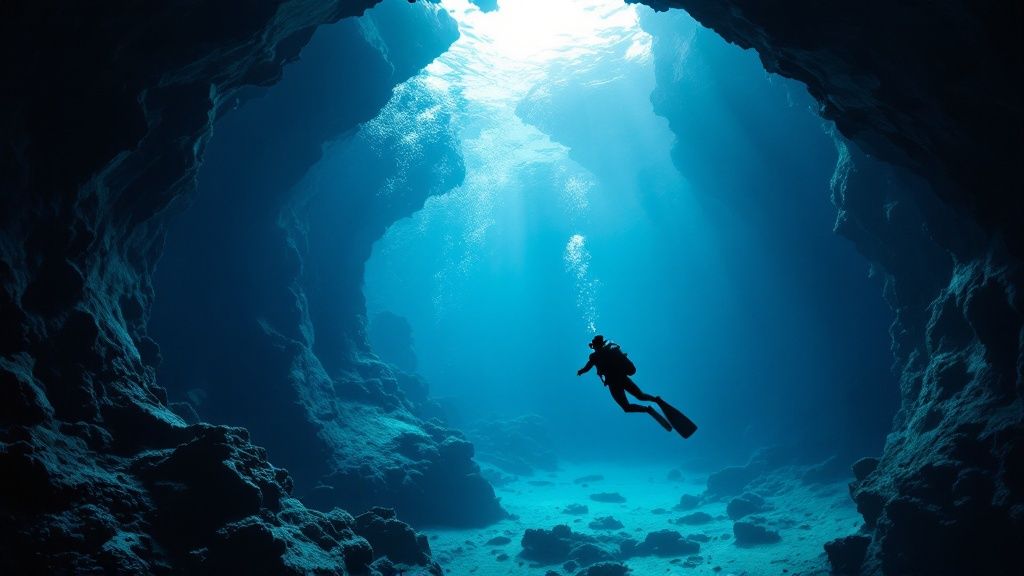
So, what really makes the Kona coast stand out from other amazing dive spots around the globe? It’s that perfect mix of calm conditions and mind-blowing underwater scenery. With visibility often pushing past 100 feet, you get a front-row seat to an ocean floor sculpted by ancient lava flows.
Think dramatic lava tubes you can swim through, massive archways, and vibrant coral gardens flourishing on old volcanic rock. This isn't your typical sandy-bottom reef; it’s a complex, rugged landscape that creates the perfect habitat for an incredible variety of marine life, including many species you can only find here in Hawaii.
For a quick overview of what makes diving here so special, take a look at this table.
Big Island Scuba Diving at a Glance
| Feature | Details |
|---|---|
| Water Temperature | 76-80°F (24-27°C) year-round |
| Visibility | Often exceeds 100+ feet (30+ meters) |
| Best Dive Season | Year-round, with the calmest conditions in the summer months |
| Marine Life | Manta rays, sea turtles, spinner dolphins, eels, and endemic reef fish |
| Topography | Lava tubes, arches, caverns, and coral-covered volcanic rock formations |
| Skill Level | Suitable for all levels, from beginners to advanced technical divers |
These conditions create the ideal underwater playground for divers.
The Heartbeat of Hawaiian Diving
Kona's reputation isn't just a recent trend. The Big Island has been a diving mecca since the 1960s, growing from a handful of intrepid explorers to a world-renowned destination. Today, the island sees over 100,000 certified scuba dives every single year, supported by more than 50 dive shops. It’s a testament to just how incredible the diving is here.
But it’s the sheer variety that truly sets Kona apart. One day you can be exploring a sun-dappled shallow reef, and the next you're drifting through a deep-water lava tube. The possibilities are endless.
The real magic of Kona is being able to experience completely different worlds in a single day. You can swim through an ancient lava tube in the morning and then dance with giant manta rays after the sun goes down.
Here's why Kona consistently ranks as a top-tier diving hub:
- Protected Waters: Being on the leeward side of the island means calm, clear seas are the norm, not the exception.
- Incredible Biodiversity: Hawaii's isolation means a huge number of our local fish and critters can't be found anywhere else on the planet.
- Unique Underwater Topography: Forget flat reefs. Here, you'll navigate through lava tubes, arches, and underwater pinnacles shaped by volcanoes.
- Iconic Dives: Kona is home to the world-famous manta ray night dive, a bucket-list experience that you will never, ever forget.
Whether this is your very first dive or you’re a seasoned pro with hundreds of dives under your belt, the Kona coast has an adventure waiting for you. To figure out where to begin, our guide on where the best diving on the Big Island is found is a great place to start.
Exploring the Top Dive Sites Along the Kona Coast
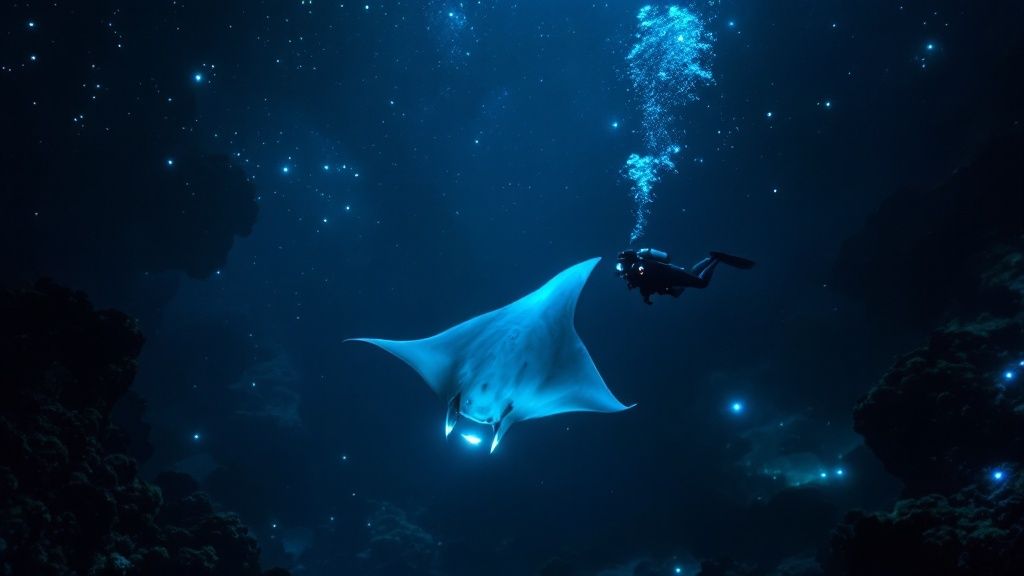
The Big Island's volcanic shoreline hides an incredible underwater world. Diving here isn't just about coral reefs; it’s about exploring a landscape sculpted by lava. Think dramatic drop-offs, mysterious caverns, and ancient lava tubes that have become a playground for Hawaii's marine life.
The Kona coast alone boasts over 40 established mooring sites, which means you could dive for weeks and never see the same thing twice. From sun-drenched coral gardens perfect for your first few dives to deep, complex caverns that will challenge seasoned pros, the variety is simply outstanding. Let’s dive into some of the must-see spots that make Big Island scuba diving so legendary.
Legendary Dives for Every Skill Level
Some dive sites are famous for a reason. They've earned a legendary status among divers worldwide for their breathtaking underwater scenery and reliable wildlife encounters. These are the places that should be on every Kona dive itinerary.
Turtle Pinnacle is a prime example. It's what we call a "cleaning station," where Hawaiian Green Sea Turtles, or Honu, line up to let small reef fish nibble parasites off their shells. It's an incredible natural spectacle to witness. The pinnacle itself rises from about 60 feet up to 30 feet, putting it well within reach for most certified divers.
Then there's Garden Eel Cove, a site known for its huge sandy flats filled with thousands of… you guessed it, garden eels. These shy creatures poke out of their burrows and sway in the current like blades of grass. As you swim closer, they vanish back into the sand in a mesmerizing wave. It’s a surreal experience and also a top spot for the world-famous manta ray night dive.
Curious about what else is out there? You can get a great feel for the underwater adventures waiting for you by checking out these Kona dive site descriptions.
The Magic of the Manta Ray Night Dive
You can't talk about scuba diving on the Big Island without getting excited about the manta ray night dive. This isn't just another dive—it's a full-blown spectacle that’s consistently ranked as one of the best night dives on the planet.
The concept is beautifully simple. Powerful, eco-friendly lights are placed on the ocean floor, attracting massive clouds of plankton. This all-you-can-eat buffet draws in the graceful giants of the sea: majestic manta rays, some with wingspans stretching up to 16 feet.
As a diver, you get a front-row seat. You settle on the sandy bottom, look up, and watch in absolute awe as these gentle giants perform a silent, weightless ballet, gliding and somersaulting just inches over your head. It's a profoundly moving experience that’s surprisingly accessible, taking place in just 35-40 feet of water. If you do one dive in Kona, this should be it.
Advanced Dives and Hidden Gems
Once you've ticked off the famous spots, Kona still has plenty of secrets to share with experienced divers. These sites often involve more challenging conditions or deeper profiles, but the payoff is huge. For those looking for more advanced diving opportunities, check out the advanced dive tour page.
- Lava Tubes and Arches: Sites like "Golden Arches" or "Catacombs" really show off the island's volcanic soul. Navigating these intricate swim-throughs and massive archways feels like exploring a submerged cathedral carved by nature.
- Deep Pinnacles and Drop-Offs: At places like "Au Au Crater," you'll find sheer walls that disappear into the deep blue. This is where you have the best chance of spotting pelagic species—think sharks, massive jacks, and if you’re really lucky, a whale shark cruising by in the distance.
- Drift Dives: Some sites are perfect for a thrilling drift dive. You just relax and let a gentle current carry you effortlessly along the reef, allowing you to cover more ground and see a much wider slice of the underwater world.
The best way to experience these sites safely is with a trusted guide. Booking a trip with an operator like Kona Honu Divers means you’ll be taken to the best spots for that day’s conditions, making sure your dive is as incredible as it is safe.
Meeting Hawaii’s Unique Underwater Residents
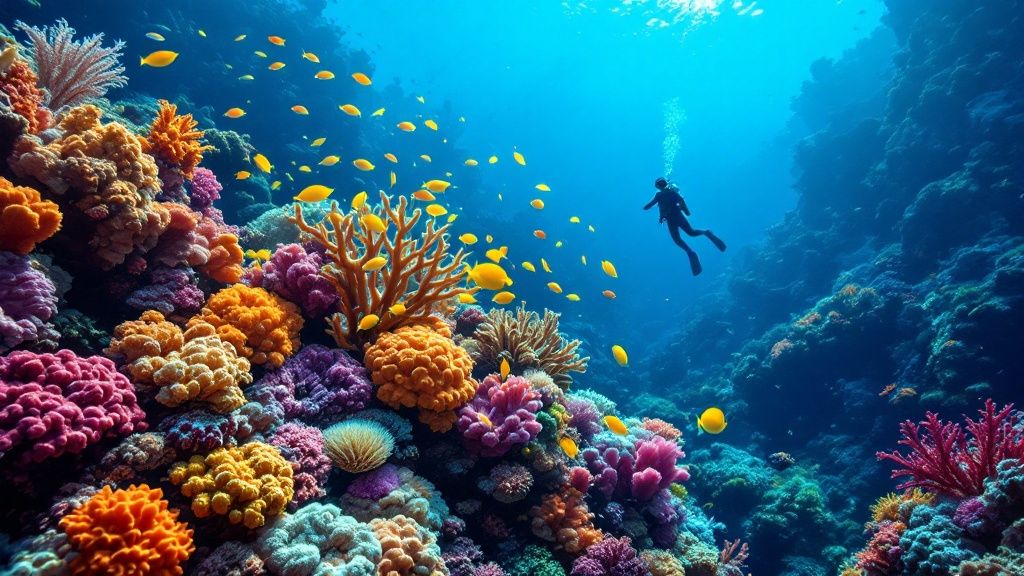
Sure, the volcanic landscapes are breathtaking, but the real magic of Big Island scuba diving happens when you meet the locals who call these waters home. Hawaii's isolation in the middle of the Pacific has made it a kind of natural laboratory for evolution. The result? An underwater ecosystem teeming with life you won't find anywhere else on the planet. In fact, over 25% of the marine species here are endemic—this is the only place in the world to see them.
Every single dive feels like an introduction to a new cast of characters. You'll quickly get to know the serene Hawaiian Green Sea Turtle, or Honu, a sacred animal in Hawaiian culture often spotted resting on the reef or gliding gracefully past you. It's not uncommon for playful pods of spinner dolphins to greet the dive boat, putting on an acrobatic show before you even get in the water. These aren't just sightings; they feel like a personal welcome into an ancient, thriving world.
The Stars of the Reef
The coral reefs along the Kona coast are an explosion of color, largely thanks to the incredible variety of fish that dart through them. Keep an eye out for Hawaii's state fish, the humuhumunukunukuāpuaʻa (reef triggerfish), which is as fun to spot as it is to say. Drifting alongside them, you'll see entire schools of butterflyfish, angelfish, and parrotfish painting the coral gardens.
But it’s not just about the fish. The reef is a complex city of fascinating creatures:
- Heʻe (Octopus): These are the true masters of camouflage. Spotting an octopus as it instantly changes its color and texture to blend in is a genuine thrill for any diver.
- Puhi (Eels): From the formidable whitemouth moray to the more delicate ribbon eel, these guys love to peer out from crevices in the lava rock, adding a touch of mystery to your dive.
- Eagle Rays: You’ll often see these elegant rays cruising by in the deep blue, moving with an effortless grace that's simply mesmerizing to watch.
The sheer diversity of life on a single Kona reef is astonishing. It's a living, breathing city where every resident plays a crucial role, from the tiniest cleaner shrimp to the largest visiting shark. Respectful observation is key to preserving this delicate balance.
Plunging Into the Abyss on a Blackwater Dive
If you're looking for a truly otherworldly experience, nothing comes close to the famous Kona blackwater dive. This isn't your standard night dive. Instead of exploring the reef, you're tethered to the boat, drifting in the deep, inky-black open ocean miles from shore. Here, something incredible happens every night: a phenomenon known as vertical migration.
Strange and beautiful creatures from the deep abyss—many of them bioluminescent—rise toward the surface to feed under the cover of darkness. You'll float alongside bizarre larval fish, translucent squids, and otherworldly jellies pulsing with their own internal light. It feels less like diving and more like floating through outer space, surrounded by alien life. This is easily one of the most unique dives on the planet and a must-do for the adventurous at heart.
Responsible and Respectful Wildlife Encounters
Every interaction we have underwater leaves an impact. To make sure these amazing animals continue to thrive for generations to come, we have to practice responsible diving. That means never touching, chasing, or cornering marine life. This is especially true for sea turtles and manta rays, which have a protective mucous layer on their skin that our touch can damage.
When you give animals their space and just observe, you not only protect them but also get to witness their true, natural behaviors. The best encounters always happen when wildlife feels safe and comfortable in our presence. If you're curious to learn more, take a look at this guide on where to see manta rays in Hawaii.
How to Choose the Best Dive Operator in Kona
Let's be honest, the dive operator you choose can completely shape your experience on the Big Island. It's the difference between an okay dive and a truly unforgettable adventure. You're not just booking a boat ride; you're trusting a team with your safety and your precious vacation time.
A great company is more than just a taxi to the reef. They're your guides, your safety net, and your connection to the underwater world. The right operator will make you feel confident and comfortable from the moment you book until you're back on shore, buzzing about everything you saw.
What to Look For in a Top-Tier Dive Company
So, how do you sort the great from the good? It comes down to a few key things that you should never compromise on.
First and foremost, safety is non-negotiable. Look for a company with a spotless track record and clear, well-practiced safety protocols. A PADI certification is a great starting point, as it shows a commitment to the industry's highest training standards.
Then, think about the gear and the boat. Is the equipment from a reputable brand and clearly well-maintained? Are the boats clean, spacious, and built for diver comfort? Finally, the crew is everything. You want guides who are not just experienced, but who live and breathe Kona's waters. They're the ones who can show you a secret octopus den or spot a rare frogfish you'd otherwise swim right past.
Here’s a quick checklist of what really matters:
- Impeccable Safety Record: Do they have a long history of safe dives? Are their emergency procedures clear?
- PADI 5-Star Rating: This isn't just a plaque on the wall. It signifies excellence in training, safety, and customer service.
- Quality Boats and Gear: A professional operation invests in its equipment. Look for comfortable boats (a hot shower is a huge plus!) and reliable rental gear.
- Experienced Local Guides: There's no substitute for local knowledge. The best guides know the dive sites like the back of their hand.
Why Kona Honu Divers Stands Out
This is where Kona Honu Divers really shines. They don't just check the boxes; they set the standard. The crew has decades of combined local experience, and their passion for marine conservation is obvious in everything they do.
They deliberately keep their groups small, which makes a massive difference in the water. You get personalized attention, whether you're a brand-new diver or a seasoned pro. It's a level of care and expertise that has earned them a stellar reputation and rave reviews from fellow divers.
Don't just take our word for it—see what people are saying.
When you dive with a trusted operator like Kona Honu Divers, you can truly relax and just soak in the magic of Hawaii's underwater world, knowing you’re in the best hands possible.
Ready to book an adventure with a team you can count on?
Essential Safety Tips for Hawaii’s Ocean Environment
Hawaii's ocean is a beautiful, powerful, and ever-changing force. To really enjoy Big Island scuba diving, you have to respect it. True safety isn't just about the gear you wear; it's an attitude you bring with you, one that starts long before you even step on the boat.
Getting comfortable underwater here means knowing what to expect from local conditions. Surge—that back-and-forth push of water from the waves—can be surprisingly strong, especially close to shore or over shallow reefs. Currents shift with the tides, too. This is why paying close attention during the pre-dive briefing is non-negotiable; your guide will tell you exactly what to anticipate that day.
Mastering Your Position in the Water
If there's one skill that will make or break your dive in Kona, it's buoyancy control. Think of our underwater landscape as a living museum, full of delicate coral gardens and ancient lava rock formations. One clumsy kick or uncontrolled descent can destroy decades of coral growth or put you face-to-face with a sharp lava rock.
The goal is to achieve what we call neutral buoyancy, where you're essentially weightless, hovering in place without sinking or floating up. It’s the closest you’ll ever get to flying. Nailing this skill is crucial when you’re navigating tight lava tubes or getting into the perfect spot to watch the mantas on the night dive.
The golden rule of scuba has always been: Take only pictures, leave only bubbles. It’s more than just a catchy phrase; it's a promise to protect this incredible ecosystem so that divers fifty years from now can see the same vibrant reefs we enjoy today.
Rules of Engagement with Marine Life
When we're underwater, we're visitors in someone else's home. That means being a polite guest. The number one rule is to keep a respectful distance from every creature you see. You should never, ever touch, chase, or try to pet an animal, especially our beloved honu, the Hawaiian Green Sea Turtles, which are protected by law. Touching them can strip away their protective mucous coating, making them susceptible to disease.
Here are a few simple guidelines to follow:
- Observe from a Distance: If an animal is curious, it will come to you. Don't force an interaction.
- Move Slowly and Predictably: Quick, jerky movements can spook even the boldest fish.
- Never Block an Animal's Path: Always give wildlife a clear path to swim away.
Beyond the dive itself, it’s always smart to be aware of general ocean health considerations, including understanding potential waterborne diseases in ocean environments.
The Unseen Risks and Why Guides Matter
Scuba diving has a fantastic safety record, but that’s because we follow strict protocols. For those who are unprepared, Hawaii's waters can be unforgiving. The statistics speak for themselves: from 2009 to 2018, Hawaii saw 206 snorkeling-related fatalities, a rate 13 times the U.S. national average. In that same timeframe, there were 28 scuba fatalities. The difference highlights the incredible value of professional training and guidance.
Choosing a certified, professional dive operator is the most important safety decision you'll make on your trip. Period. An experienced guide knows the currents, manages the dive plan, and makes sure your gear is good to go, leaving you free to soak in the experience. Sticking to your certification limits and diving with a trusted local crew is the best way to ensure every single dive is as safe as it is breathtaking.
Your Step-by-Step Big Island Dive Trip Planner
A truly epic Big Island scuba diving trip is no accident—it's all about smart planning. Putting together the perfect underwater getaway comes down to timing your visit, packing the right gear, and creating an itinerary that balances adventure with relaxation. A little prep work upfront means less stress and more time enjoying the magic of Kona.
First things first: when should you come? The simple answer is, anytime! Kona's diving is fantastic year-round. If you love warm, glassy water, aim for summer (May-October), when temperatures often hit a blissful 80°F (27°C).
But winter (November-April) has a unique draw of its own. There's nothing quite like hearing the haunting songs of humpback whales echoing through the water while you're exploring a reef. It's an experience that will stay with you forever.
Packing Your Dive Bag
Once your dates are set, it’s time to think about gear. Your wetsuit is your best friend in the water, so choosing the right thickness is key for comfort. A 3mm wetsuit is typically all you need for the balmy summer months. For the slightly cooler winter season, a 5mm wetsuit will keep you perfectly warm and toasty.
Beyond the essentials, a few smart items can elevate your entire trip. When you’re packing, think about things that pull double duty. For example, having the right towel to dry off between dives makes a huge difference, so grabbing one of these lightweight and quick-drying travel beach towels is a pro move.
Here's a quick checklist to make sure you don't forget the essentials:
- Certification Card & Logbook: Proof of your hard-earned certification is a must-have.
- Reef-Safe Sunscreen: Protect yourself and the coral by only using mineral-based sunscreens without oxybenzone.
- Reusable Water Bottle: Staying hydrated is non-negotiable, and you’ll be doing the island a favor by cutting down on plastic.
- Dry Bag: A small dry bag is a lifesaver for keeping your phone, wallet, and keys protected on the boat.
- Dramamine or Ginger Chews: If you're even a little prone to seasickness, it's always better to have something on hand, just in case.
Booking Your Trip and Building Your Itinerary
With your bags mentally packed, let's talk logistics. The easiest way to get here is by flying into Kona International Airport (KOA), which puts you right on the doorstep of the best dive sites. As for where to stay, setting up base in or around Kailua-Kona is your best bet. You’ll be close to the dive shops, great restaurants, and stunning beaches.
A well-rounded trip mixes world-class diving with the island's other incredible sights. You could spend a morning diving through ancient lava tubes with us at Kona Honu Divers, then head up the mountain to a local coffee farm in the afternoon. The key is to blend your adventures to make the trip your own.
Here's a pro tip: schedule your absolute must-do dives, like the Manta Ray Night Dive, toward the beginning of your vacation. That way, if a rare weather cancellation happens, you have a buffer to reschedule and won't miss out on that bucket-list experience.
The best dive charters fill up fast, so booking your spots in advance is always a good idea. Once your dives are locked in, you can kick back and just get excited for the adventure ahead.
Ready to make it happen?
Your Kona Diving Questions, Answered
As you get ready for your big scuba trip to the Big Island, you probably have a few questions rolling around in your head. It's totally normal. To help you feel confident and prepared, we've put together answers to the questions we hear most often from fellow divers.
Let's clear everything up so you can focus on the incredible underwater experiences waiting for you.
What’s the Best Time of Year to Dive the Big Island?
Honestly, there’s no bad time to dive in Kona. We're incredibly lucky because the island's massive volcanoes act as a natural shield, blocking the trade winds and keeping the water calm and clear pretty much all year.
If you love warm water, aim for the summer months between May and October. The ocean is like a bathtub, hovering around a pleasant 80°F (27°C). But winter, from November to April, has its own unique magic. You can often hear the haunting songs of migrating humpback whales echoing underwater during your dives—it's an experience that will give you goosebumps. The water dips slightly to about 75°F (24°C), but the visibility is still fantastic, often clearing 100 feet.
Do I Need a Scuba Certification to Dive on the Big Island?
Not at all! You don't need any experience to get a taste of Kona's underwater world. While our certified divers can explore all our Kona diving tours, we have fantastic introductory programs for beginners.
A "Discover Scuba Diving" experience is the perfect first step. A certified instructor will walk you through the basics in a calm, controlled setting and then guide you on your very first shallow ocean dive. It’s a safe, confidence-boosting way to take that first breath underwater and see what all the fuss is about.
Is the Manta Ray Night Dive Safe for Beginners?
Yes, absolutely. The world-famous manta ray night dive is one of the safest and most awe-inspiring dives you can do, even if you just got your certification.
The whole thing happens in a shallow, sandy area, usually only 30-40 feet deep. You won't be swimming around a complex reef; instead, you'll settle on the ocean floor and simply watch the incredible spectacle unfold above you. It's not a technically difficult dive, and our guides give a thorough briefing beforehand and are right there with you the entire time to make sure everyone is safe and comfortable.
What Kind of Marine Life Will I See in Kona?
Kona is a special place. The waters here are teeming with life, and over 25% of the marine species are found nowhere else on Earth. On just about any dive, you can count on seeing Honu (Hawaiian Green Sea Turtles), moray eels peeking out from their homes, octopuses, and a whole spectrum of vibrant reef fish.
It’s also pretty common to see pods of spinner dolphins from the boat—and sometimes they’ll even buzz you underwater. Depending on where we go, you might also run into eagle rays, whitetip reef sharks, and other larger fish. And of course, there are the true stars of Kona: the majestic manta rays on the night dive and the bizarre, otherworldly creatures you can only find on a Kona blackwater dive. Every single dive here offers a new cast of characters.
Your underwater adventure is just around the corner. Book your next dive with Kona Honu Divers and let us show you the best of Big Island scuba diving with a team that lives and breathes safety, service, and the spirit of aloha.