
Picture this: you're weightless, suspended in perfectly clear, warm water. All around you, ancient lava formations are covered in a tapestry of vibrant coral, and schools of electric-colored fish drift by. This isn't a dream—it's what Big Island scuba diving is all about, and the calm, protected waters of the Kona coast are where your adventure begins.
Your Underwater Adventure Begins in Kona
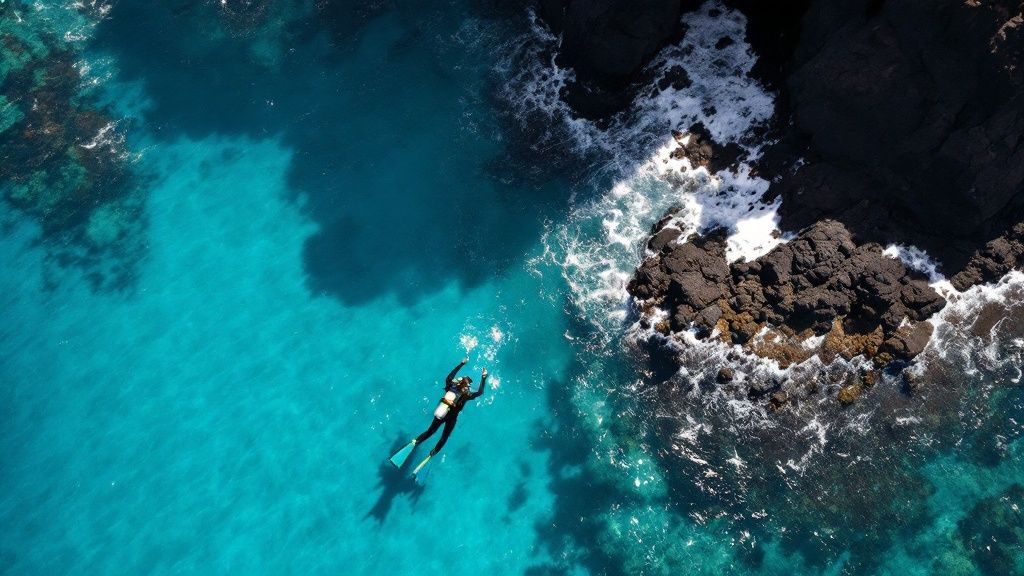
Think of this guide as your personal roadmap to an unforgettable underwater journey, built from years of local experience here at Kona Honu Divers. We're going to cover everything, from the must-see dive sites to those incredible encounters with gentle giants that make Hawaii's ocean so magical.
Our mission is simple: to take all the guesswork out of planning your dive trip. By the time you're done reading, you'll feel confident and ready to go, from the moment you book your charter to your final, happy ascent back to the surface.
What Makes Kona Diving So Special?
The Kona coast is a diver's paradise for one huge reason: its geography. The massive volcanoes of Mauna Loa and Hualalai act as a natural shield, protecting this side of the island from the powerful trade winds that batter other parts of Hawaii. This creates a uniquely calm and clear environment that is simply perfect for diving.
Here’s what that unique setup means for you when you get in the water:
- Incredible Visibility: It’s common for the water clarity here to exceed 100 feet. You'll be able to see everything, from the tiniest critters hiding in the reef to larger animals cruising in the distance.
- Volcanic Underwater Landscapes: The seafloor was literally forged by fire. Ancient lava flows have created a breathtaking underwater world full of dramatic arches, swim-through caverns, and intricate lava tubes just waiting to be explored.
- A Ton of Marine Life: The healthy coral gardens and unique topography support a huge diversity of sea creatures, including many endemic species you won't find anywhere else on the planet.
Your Trusted Partner in the Water
Getting the most out of this incredible environment means going with people who know it best. At Kona Honu Divers, we've spent years sharing our passion and deep knowledge of these waters with divers from all over the world. Our team lives and breathes Kona diving, and our top priorities are always your safety, fun, and learning something new.
It doesn’t matter if you’re about to take your very first breath underwater or you’re a seasoned diver with hundreds of log entries. We have the perfect trip for you. From colorful reef dives to the world-famous Manta Ray Night Dive, we offer adventures for every skill level. To get a better feel for a day on our boat, you can learn more about what you can expect when diving in Kona.
Ready to see it for yourself? Explore our Kona diving tours to find the adventure that awaits.
Why Divers Choose the Kona Coast
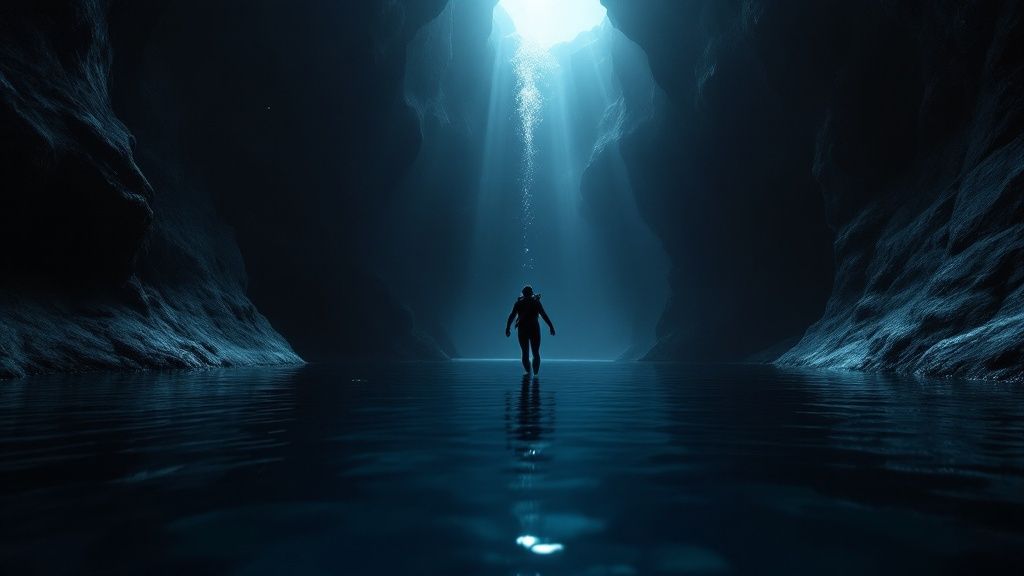
Ask any seasoned diver about Hawaii, and they'll quickly point you to one place: Kona. So what’s the secret? It all comes down to a lucky break in geography. The Kona coast sits on the leeward (or sheltered) side of the Big Island, protected from the powerful trade winds by the sheer mass of Mauna Loa and Hualālai.
This massive natural shield keeps the ocean remarkably calm and clear. Seriously, we’re talking about visibility that regularly pushes past 100 feet. It's the kind of clarity that lets you spot every tiny detail on the reef and still catch a glimpse of a manta ray gliding by in the distance. That predictability makes planning a dive here a joy, not a gamble.
A Landscape Forged by Fire
The Big Island’s volcanic heart created an underwater world that’s anything but ordinary. Forget flat, sandy bottoms. Here, ancient lava flows have sculpted an incredible playground of natural lava tubes, dramatic arches, and intricate cavern systems.
These unique formations are more than just pretty scenery; they create the perfect habitats for an explosion of marine life, turning every dive into a new adventure. One of the most iconic spots is right here, where you can explore Captain Cook's underwater wonders in Kona, a place celebrated for its history and buzzing reef. Even if you've dived all over the world, Kona’s topography will keep you coming back for more.
A Year-Round Diving Paradise
Thanks to our stable climate, the diving season in Kona never really ends. Water temperatures are consistently comfortable, hovering between 75 and 80 degrees Fahrenheit (24-27°C) year-round. Most divers are perfectly happy in a 1mm to 3mm wetsuit, even in the slightly cooler winter months.
This volcanic seascape is teeming with life, from white-tip reef sharks resting in the sand to the occasional tiger shark cruising the deep. And if you’re here between December and March, you’ll be treated to an incredible bonus: the haunting songs of migrating humpback whales, who use these waters as their nursery.
It's this unique mix—calm waters, fascinating volcanic structures, and consistent conditions—that makes Kona so special. It’s accessible enough for new divers to feel confident, yet endlessly complex for even the most experienced pros.
We’re lucky to call this paradise home, and at Kona Honu Divers, our expertise is built on years of exploring these very waters. We know the best sites and the best times to visit, ensuring you get an unforgettable experience. Whether you're looking for a relaxed reef tour or a challenging new adventure, we have a trip for you.
But don't just take our word for it. See what fellow divers have to say about their experiences with us:
Ready to see the magic of Kona for yourself? Let's get you in the water.
Exploring Iconic Big Island Dive Sites
The Kona coast is basically a treasure map of world-class dive sites, and each one offers a unique window into the island’s volcanic past and incredible marine ecosystem. Getting out and exploring these spots is the absolute heart of any Big Island scuba diving adventure. You’ll see landscapes and marine life that make this place truly unforgettable.
From easily accessible shore dives to remote spots only reachable by boat, the variety is just staggering. Honestly, you could spend weeks here and still feel like you're discovering new underwater canyons, untouched coral gardens, and wild geological features for the first time. This diversity is what allows us to make every single dive charter a fresh, exciting experience.
Kealakekua Bay: A Protected Paradise
You can't talk about Kona diving without starting with Kealakekua Bay. This isn't just another dive site; it’s a protected Marine Life Conservation District where history and nature collide in the most spectacular way. Because the bay faces south, it’s shielded from the usual trade winds, which means the water is almost always calm with visibility that often pushes past 100 feet.
That kind of clarity lets you fully appreciate the ridiculously healthy coral reefs thriving inside the protected zone. These vibrant coral gardens are home to countless fish species, and it’s not uncommon to see massive schools of yellow tangs and parrotfish. On top of its natural beauty, the bay is also where Captain James Cook landed in 1779, which adds a fascinating historical layer to every dive here.
Two Step: An Aquarium-Like Shore Dive
If you're looking for a breathtaking dive that’s also incredibly easy to get to, "Two Step" (Honaunau Bay) is a huge favorite for locals and visitors alike. The name comes from the two natural lava rock "steps" that create one of the smoothest shore entries on the island. The moment you slip into the water, it feels like you've dropped straight into a giant, bustling aquarium.
The shallow reef is just packed with life, making it a dream for photographers or anyone who loves to maximize their bottom time. You’ll almost certainly see green sea turtles (honu) chilling on the reef, moray eels peeking out from their homes, and even playful spinner dolphins cruising through the bay. Its easy access makes it a fantastic spot for divers of all skill levels.
Beyond the Famous Sites: The Volcanic Underworld
While Kealakekua and Two Step get a lot of love—and for good reason—the real magic of Big Island scuba diving often lies in the hidden gems. The island’s volcanic origins created a dramatic underwater landscape that you just won't find anywhere else on Earth.
Imagine gliding through a massive, ancient lava tube, your dive light revealing the intricate textures of cooled magma from centuries ago. Or picture yourself navigating a series of majestic underwater arches and caverns that feel like submerged cathedrals.
These sites are more than just geological oddities; they’re dynamic habitats that attract unique marine life. You might find reef sharks resting inside a cavern or spot rare fish that prefer the shelter of these overhead environments. It’s an experience that connects you directly to the raw power that formed the Hawaiian islands. To see some of the specific locations we can take you, check out our comprehensive guide to Kona dive sites.
Every spot along the Kona coast tells a different story. From the protected reefs of historic bays to the dramatic architecture of submerged lava flows, an incredible adventure is always waiting just beneath the surface.
A Guide to Kona’s Unique Marine Life

Sure, the volcanic landscapes are breathtaking, but the real magic of Big Island scuba diving is the incredible cast of characters you meet underwater. The island’s isolation in the middle of the Pacific has created a private sanctuary for a huge number of endemic species—critters you simply won't find anywhere else on the planet.
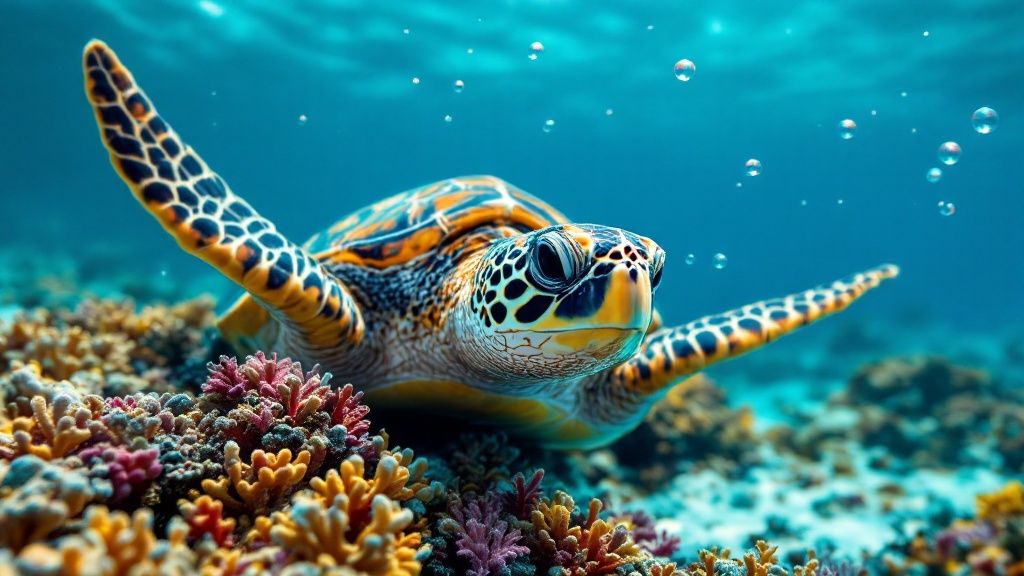
Each dive here is a chance to share the water with graceful green sea turtles (honu) as they glide past, or to watch playful spinner dolphins dance on the surface between dives. It’s hard not to be mesmerized by the massive, shimmering schools of yellow tangs that move like a single golden cloud across the reef.
But the encounters don't stop there. Keep your eyes peeled for the more elusive residents. You might spot a spotted eagle ray soaring through the deep blue, a curious moray eel peeking out from its rocky den, or a harmless whitetip reef shark patrolling the reef's edge.
The Endemic Wonders of Hawaii
The Big Island is home to a wildly diverse marine ecosystem, with an estimated 1,100 species of fish. What’s truly remarkable is that around 129 of these are endemic, meaning they've evolved right here and exist nowhere else in the world. This is possible because the island's unique underwater topography—a maze of caves, arches, and ancient lava tubes—provides the perfect collection of habitats for this incredible biodiversity to flourish. You can learn more about Hawaii's unique marine ecosystems here.
From December to March, the adventure gets a powerful soundtrack. The haunting songs of migrating humpback whales echo through the water on your dives—a constant, humbling reminder of the ocean's true grandeur.
Where to Find Your Favorite Marine Life
While the Kona coast is teeming with life, certain animals definitely have their favorite hangouts. Knowing where to look is half the battle when you're hoping for that special encounter on your next Big Island scuba diving adventure.
- Green Sea Turtles (Honu): These gentle giants are often found munching on algae in shallower reefs or just chilling out at "turtle cleaning stations," where smaller fish help them stay algae-free. Dive sites like Two Step are famous for near-guaranteed turtle sightings.
- Spinner Dolphins: You're most likely to spot these acrobatic dolphins from the boat. They travel in big, energetic pods along the coast and often head into calm bays to rest during the day.
- Manta Rays: The undisputed superstars of Kona's nightlife. These gentle giants congregate at established feeding sites like Manta Village and Manta Heaven for the world-famous Manta Ray Night Dive.
- Reef Sharks: Whitetip reef sharks are a common sight, usually found resting on sandy patches or tucked under ledges during the day. They're typically quite shy and pose absolutely no threat to divers.
- Eels and Octopus: The intricate network of lava rock and coral provides endless hiding spots for moray eels, octopuses, and other cryptic creatures. A sharp eye and a good dive guide are your best tools for spotting them.
To help you know what to look for, here’s a quick guide to some of the most sought-after marine life and where you’re most likely to cross paths with them.
Big Island Marine Life Encounters
| Marine Life | Common Sighting Locations | Best Time to See |
|---|---|---|
| Manta Rays | Manta Village, Manta Heaven | Night Dives, Year-round |
| Green Sea Turtles | Shallow Reefs, Turtle Cleaning Stations | Day Dives, Year-round |
| Spinner Dolphins | Kealakekua Bay, Open Ocean | Surface Intervals, Morning |
| Humpback Whales | Offshore Waters (heard underwater) | Day & Night, Dec-Mar |
| Reef Sharks | Lava Tubes, Sandy Bottoms | Day Dives, Year-round |
Every single dive in Kona is a new opportunity to witness something amazing. From the smallest endemic fish to the largest visiting whales, the waters here are absolutely electric with unforgettable encounters.
Two Dives You Absolutely Cannot Miss
Sure, the sunlit reefs are gorgeous, but the Big Island's real magic comes out after dark. Two world-famous dives define the Kona coast once the sun goes down, and they're the kind of experiences that stick with you forever.
One is an ethereal, silent ballet. The other is like drifting through deep space. If you're coming to dive in Hawaii, these are the two you absolutely have to put at the top of your list.
The World-Famous Manta Ray Night Dive
Picture this: you slip into the warm water just as the last colors of sunset fade from the sky. You descend to a sandy patch on the ocean floor, turn on your light, and point it straight up into the darkness. At first, there's just the quiet hum of your own breathing.
Then, a shadow appears. A massive, graceful shape glides into the light, followed by another, and another. Soon, you're surrounded by giant manta rays, some with wingspans over 12 feet, soaring and barrel-rolling just inches above your head. They're drawn to the plankton that gathers in your light beam, performing an otherworldly feeding dance that is nothing short of breathtaking.
It's one thing to see a manta ray swim by. It’s a completely different experience to watch them feed. They loop and somersault with effortless grace, filtering plankton in a silent, hypnotic performance. You feel impossibly small and incredibly lucky all at once.
This isn't a fluke sighting. The Kona mantas are year-round residents, and the dive has a success rate of over 90%. It’s a reliable, world-class spectacle. To get the full scoop on this incredible encounter, check out our complete guide to the Kona Manta Ray Night Dive.
The Mysterious Kona Blackwater Dive
If you're an experienced diver looking for something truly out of this world, the Kona Blackwater Dive is calling your name. This isn't your typical reef dive. We head miles offshore, over thousands of feet of inky black water, and tether ourselves to the boat.
Then, we just drift. In the deep, open ocean, you'll witness the largest migration of life on the planet as bizarre, bioluminescent creatures rise from the abyss to feed.
You’ll see things that look like they're straight out of a sci-fi movie—translucent squids, larval fish that look like tiny aliens, and pulsing jellyfish that glow in the dark. It feels less like scuba diving and more like a spacewalk.
This is a dive for the confident and the curious. It will push your boundaries and completely change your perspective on what lives in the ocean. It’s a truly unique adventure that you'll be talking about for years to come. For those with the right experience, we offer advanced dive tours that can include this and other challenging sites.
How to Plan Your Big Island Dive Trip
Alright, let's get you set up for an incredible Big Island dive adventure. Planning is half the fun, and getting a few key details sorted out beforehand means you can just show up, relax, and enjoy the amazing underwater world we have here.
Kona is fantastic for diving any time of year, but there are a few things to consider. If you love warm water, aim for August through October when the ocean can hit a balmy 80°F (27°C). On the other hand, visiting between December and March means slightly cooler water—around 75°F (24°C)—but you'll be treated to the unforgettable sound of migrating humpback whales singing during your dives. It's a trade-off, but there's really no bad choice.
Packing the Essentials
Most of us are perfectly comfortable in a 3mm wetsuit year-round, but if you run cold or plan on night diving, you might appreciate the extra warmth of a 5mm. Beyond your own gear, don't forget the essentials for a day on the water: reef-safe sunscreen, a good hat, sunglasses, and a reusable water bottle to stay hydrated. We've got everything else covered on the boat.
Speaking of the boat, you'll be diving from the Honu One. We designed her specifically with divers in mind, focusing on comfort and safety. She’s roomy, always in top shape, and has great amenities like a hot shower for after your dive, plenty of shade, and secure spots for all your equipment. We want you to feel prepared and totally at ease.
Booking in Advance is Key
This is a big one. Our most popular trips, especially the legendary Manta Ray Night Dive, often sell out weeks or even months ahead of time. I can't stress this enough: book your diving tours as early as you can to guarantee you get a spot.
Don't wait until the last minute! Planning ahead is the single best way to avoid disappointment, particularly if you're traveling during a busy season. Locking in your spots early lets you design the dive vacation you've been dreaming of, minus the stress.
Whether you're a seasoned pro or have never even breathed underwater before, we've got something for you. We run introductory Discover Scuba Dives for beginners who just want to give it a try without the commitment of a full certification course. And if you're already certified, the sheer variety of dive sites will blow you away. Our entire goal is to make your trip seamless, safe, and something you'll be talking about for years.
Common Questions About Kona Diving
Anytime you're heading to a new dive spot, a few questions are bound to pop up. We get it. To help you get your sea legs before you even arrive, we’ve answered some of the questions we hear most often from divers planning their Big Island scuba diving trip with us.
Getting these details handled ahead of time means less stress on your vacation and more time to focus on what really matters: soaking in the incredible underwater world of Kona.
What Certification Level Do I Need to Dive in Kona?
The great thing about Kona is that there’s truly something for everyone, no matter your certification level. Many of our classic, colorful reef dives are fantastic for Open Water certified divers, usually in that perfect 30-60 foot range. You'll be blown away by the sheer amount of life packed into these sites.
For some of our more unique adventures, like the world-famous Kona Blackwater Dive or navigating deeper lava tubes, you’ll want to have your Advanced Open Water certification. But don't worry if you're not certified at all! You can still get in the water with a Discover Scuba Diving experience, where one of our pros will be right by your side.
Is It Better to Dive in the Morning or Afternoon?
Ah, the classic question! Honestly, both are fantastic, just different. Mornings here usually bring the calmest, glassiest water and the brightest sunlight. If you're a photographer, that morning light really makes the reef colors explode.
That said, some critters prefer the afternoon. You might find certain eels and octopuses are a bit more active as the day winds down. And of course, the most iconic dive of all, the Manta Ray Night Dive, doesn't even get started until the sun is long gone. It really just depends on what you're hoping to see, which is why we run a variety of diving tours all day long.
Can I See Manta Rays During the Day?
It’s possible, but you’d have to get pretty lucky. You might catch a fleeting glimpse of one at a cleaning station on a day dive, but it's not something you can count on. The real show—the reliable, jaw-dropping, unforgettable experience—is the Manta Ray Night Dive.
We use powerful, submerged lights to attract clouds of plankton, which in turn brings the giant mantas in for their nightly acrobatic feast. If you want a guaranteed front-row seat, booking a dedicated manta ray dive tour is the only way to go.
What Should I Bring on the Dive Boat?
We’ve got the heavy gear covered—tanks and weights are on us. Here’s what you’ll want to pack in your own bag:
- Your certification card and logbook
- Swimsuit and a towel
- Reef-safe sunscreen, sunglasses, and a hat
- A reusable water bottle to stay hydrated
- A light jacket or hoodie for after the dive (especially on night trips!)