
Picture this: you descend into calm, impossibly clear blue water. Sunlight filters down, illuminating ancient volcanic lava tubes and vibrant coral gardens buzzing with life. This is the magic of Big Island scuba diving, an experience that puts you front and center in one of the most unique underwater environments on the planet.
From the legendary Kona coast to dive sites tucked away from the crowds, the island delivers a perfect mix of thrilling wildlife encounters and breathtaking underwater scenery.
Why Is the Big Island a Diver’s Paradise?
The Big Island is far more than just another pretty spot to dive. It's an underwater world literally sculpted by volcanoes. The island's fiery origins have created a stunning subaquatic landscape of arches, caves, and intricate reef structures that you just won't find anywhere else.
This unique geology is the perfect foundation for a rich and surprisingly diverse marine ecosystem. Thanks to its isolated location in the vast Pacific, the island acts as a magnet for an incredible variety of sea life, making every single dive a genuine opportunity for discovery.
What Makes Diving Here So Special?
The buzz around Big Island scuba diving really boils down to a handful of key ingredients that make it a bucket-list destination. When they come together, you get reliably fantastic conditions and moments you'll be talking about for years.
- Unbelievable Water Clarity: The Kona coast is perfectly sheltered from the prevailing trade winds, which often means glassy, calm seas and visibility that can easily exceed 100 feet. It's a dream for underwater photographers and anyone who just wants to soak in the view.
- Unique Volcanic Landscapes: Where else can you swim through ancient lava tubes, poke around in underwater caverns, and glide along dramatic volcanic drop-offs? The island’s geology provides a dynamic and visually stunning backdrop for every dive.
- A Who's Who of Marine Life: The reefs are packed with critters found nowhere else on Earth, not to mention countless Hawaiian green sea turtles (honu), playful spinner dolphins, and schools of colorful reef fish. It’s also common to spot whitetip reef sharks, eagle rays, and moray eels.
The Big Island isn't just a local secret; it's a major global hub for underwater exploration. An estimated 100,000 certified scuba dives happen here every year. This is all supported by over 50 dive shops and charters that welcome more than 150,000 dive tourists annually. The island's reputation as a premier destination was built over decades, starting in the 1970s with pioneers like Jack's Diving Locker. You can learn more about the fascinating history of Big Island diving on konahonudivers.com.
To give you a quick snapshot, here are the standout features that make the Big Island a must-visit for any diver.
Big Island Diving Highlights at a Glance
| Feature | Why It's a Must-Do | Best Suited For |
|---|---|---|
| Volcanic Topography | Explore underwater lava tubes, arches, and caverns created by ancient lava flows. | All divers, especially those seeking unique underwater landscapes. |
| Manta Ray Night Dive | An iconic, world-famous encounter with gentle giant manta rays feeding on plankton. | Certified divers of all experience levels; a true bucket-list dive. |
| High Visibility | The Kona coast's calm, clear waters often provide 100+ feet of visibility. | Underwater photographers and divers who love panoramic reef views. |
| Rich Marine Biodiversity | Home to endemic Hawaiian species, turtles, dolphins, and vibrant coral reefs. | Wildlife enthusiasts and divers who enjoy spotting diverse sea life. |
Ultimately, whether you're joining a guided tour to explore the reefs or signing up for a specialized trip, the conditions here are incredible for divers of all skill levels.
If you’re ready to see it for yourself, Kona Honu Divers runs a whole range of diving tours on the Big Island designed to showcase the very best these waters have to offer.
Experiencing the Kona Manta Ray Night Dive
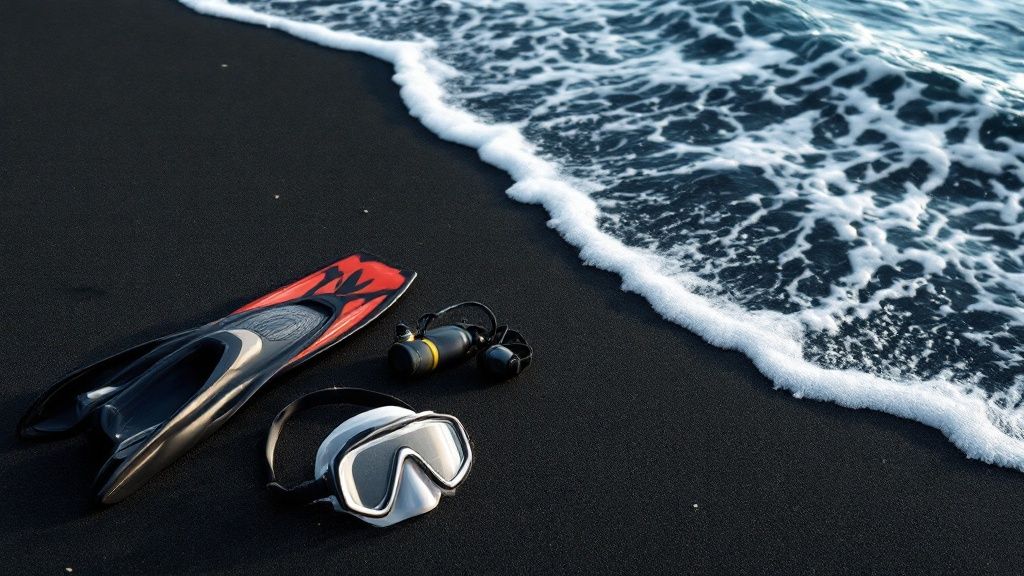
Of all the amazing underwater encounters the Big Island has to offer, one sits in a class all its own: the Kona manta ray night dive. This isn't just another dive on your logbook. It’s an ethereal, underwater ballet where gentle giants perform an acrobatic spectacle, gliding and swooping through the darkness. It’s the kind of experience people fly across the world for.
The whole thing works on a brilliantly simple principle. For years, local dive operators have established specific sites perfect for attracting these majestic animals. After the sun dips below the horizon, you'll descend to a designated spot on the ocean floor, get settled, and point your powerful dive light straight up.
This column of light acts like a giant beacon, drawing in clouds of microscopic plankton—the manta rays' favorite meal. It doesn't take long for the main event to begin.
An Unforgettable Underwater Show
Imagine settling onto the sandy bottom, the world fading away until the only sounds are your own steady breathing and the quiet crackle of the reef around you. Suddenly, a massive shadow emerges from the blackness, swooping gracefully into the beams of light. Then another follows, and another, until you're surrounded by a dozen or more manta rays, some with wingspans stretching an incredible 16 feet.
They perform a hypnotic, effortless dance just inches over your head, their huge mouths open to filter the plankton-rich water. Being this close to such massive, intelligent, and peaceful creatures in their own world is a profoundly humbling experience. It truly has to be seen to be believed.
The Manta Ray Night Dive is more than just an activity; it's a world-renowned phenomenon. The dive gained its legendary status back in the 1980s, thanks to the pioneering efforts of a few local dive shops. Their work turned the Kona coast into the global hub for this unique encounter, which now serves as a cornerstone of the island's dive tourism under strict guidelines to keep it sustainable.
Picking the right dive operator is everything. You want a company that doesn't just give you a great show but also puts the mantas' well-being first. Look for operators who follow responsible viewing guidelines, like those in the Manta Ray Green Listed program. They enforce strict rules to ensure the animals are safe and respected. Many operators offer excellent manta ray dive tours that adhere to these principles.
Best Practices for Manta Ray Dives
To protect these gentle giants and make sure the dive is safe for everyone, there are a few simple but non-negotiable rules to follow:
- Look, Don't Touch: Manta rays have a special mucous coating on their skin that protects them from infection. Touching them can rub it off and leave them vulnerable. So, hands off, always.
- Stay on the Bottom: Divers are asked to stay on the sand to keep the water column clear. This gives the mantas plenty of room to maneuver and feed without obstruction.
- Mind Your Bubbles: As a manta approaches, try to time your breathing so you aren't exhaling a big cloud of bubbles right into its path.
Following these guidelines helps ensure this incredible natural wonder will be around for generations of divers to enjoy. For an even closer look at what to expect, check out our complete guide on the Kona Manta Ray Night Dive.
Discovering the Big Island’s Best Dive Sites
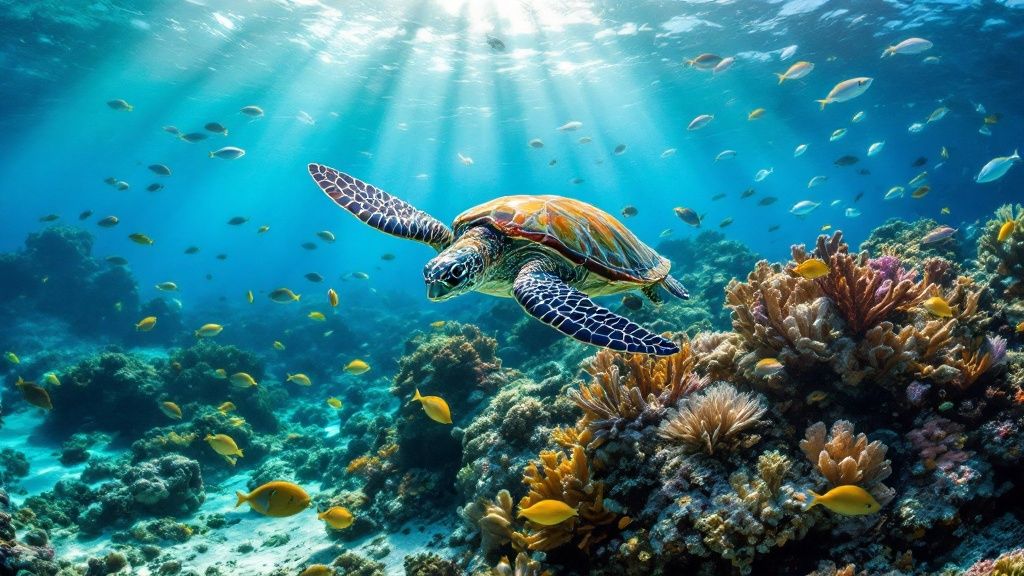
Everyone talks about the manta ray night dive, and for good reason—it’s unforgettable. But that world-famous experience is really just the beginning of what Big Island scuba diving has to offer. The Kona and Kohala coasts are lined with dozens of dive sites, each one a unique world shaped by ancient lava flows and buzzing with life.
Once you look past the mantas, you’ll find a diver's paradise of dramatic underwater landscapes. Picture yourself gliding through massive lava tubes, exploring intricate arches, and navigating swim-throughs carved out centuries ago. These aren't just cool rock formations; they're bustling neighborhoods for an incredible amount of marine life.
Exploring Kona's Lava Tube Playgrounds
The Big Island’s volcanic heart created an underwater world you won't find anywhere else. The Kona coast is loaded with dive sites famous for these lava tube formations, making for a thrilling day of exploring wild topography. These underwater caverns and tunnels are magnets for all sorts of sea creatures.
A few of the must-see sites include:
- Golden Arches: Just like it sounds, this site features a massive, gorgeous archway. When the sun hits it just right, the whole thing lights up, creating a perfect photo op. It's also a great spot to hunt for tiny nudibranchs and other macro critters.
- Turtle Pinnacle: This spot is a well-known "cleaning station." It’s where Hawaiian green sea turtles, or honu, come to get a spa treatment from the local reef fish who nibble off algae and parasites. The pinnacle itself is a fascinating structure with little caves and overhangs to peek into.
- Kaiwi Point (Suck 'em Up): You’ll know how it got its nickname the second you enter the main lava tube. The gentle surge "sucks you up" and pushes you through—it’s a total blast and a real taste of the ocean’s power against the island's volcanic past.
These volcanic structures aren't just for show. They create incredibly complex habitats that support a huge amount of biodiversity. Every nook and cranny in the lava rock is a potential hiding spot for octopuses, moray eels, or even sleeping whitetip reef sharks. Every dive feels like a treasure hunt.
The Thrill of Advanced and Specialty Dives
Got a few dives under your weight belt and looking for something more? The Big Island delivers some truly unique challenges that push the boundaries of recreational diving. These are the kinds of dives that let you see creatures and environments most people never will.
The most famous of these is the Kona blackwater dive. This isn’t your typical reef dive. You head miles offshore at night, tether to the boat, and drift in thousands of feet of water. You're there to witness the largest migration on Earth, as bizarre, bioluminescent creatures rise from the abyss to feed. It’s a surreal, humbling experience that feels more like floating in outer space than in the ocean. Many dive shops now offer a specific Blackwater Dive tour for those brave enough to try it.
If you’re ready for a different kind of challenge, you can also find premium advanced dive trips designed to explore deeper, more remote sites. These charters are perfect for certified divers who want to sharpen their skills and see a side of Kona's underwater world that few others get to.
Vibrant Reefs and One-of-a-Kind Creatures
Beyond the dramatic lava rock, the Big Island boasts some of Hawaii’s healthiest and most vibrant coral reefs. These underwater gardens are absolutely packed with fish, and many of them are endemic—meaning you can only find them here in Hawaiian waters. The islands' isolation has let them evolve into something truly special.
While you're exploring the reefs, keep an eye out for these local celebrities:
- Yellow Tangs: Seeing a massive school of these brilliant yellow fish flash past you is a classic Kona moment.
- Butterflyfish: You'll spot dozens of species, like the ornate and raccoon butterflyfish, fluttering around the coral heads.
- Hawaiian Cleaner Wrasse: These little guys are the unsung heroes of the reef, running the cleaning stations that keep bigger fish healthy.
These thriving ecosystems are the true heart of Big Island scuba diving. Each site offers a different mix of topography and marine life, which means you’ll never have the same dive twice. You can browse a whole list of incredible Kona dive sites that the pros frequent to get a better sense of what's waiting for you.
Whether you're a new diver hoping to see your first sea turtle or a seasoned pro ready for a blackwater adventure, Kona has the perfect dive site for you.
How to Choose the Best Dive Operator in Kona
When you're planning a Big Island scuba diving trip, picking the right guide is easily one of the most critical decisions you'll make. The dive operator you choose has a massive impact on your safety, comfort, and just how much you enjoy your time underwater. A truly great crew can turn a good dive into an unforgettable memory, while the wrong one can leave you feeling frustrated.
The best dive shops in Kona do more than just taxi you to a dive site—they create an entire experience. It's the little things that count, like keeping dive groups small so you're not bumping into a dozen other divers. This personal touch allows guides to point out that elusive octopus hiding in a crevice or give you the individual attention needed to feel totally at ease.
At Kona Honu Divers, that’s exactly the philosophy we bring to every single trip. Our crew is passionate and deeply experienced, and their number one goal is creating a safe, fun, and educational atmosphere. From gear that's in perfect condition to boats decked out with perks like hot showers, everything is designed with the diver in mind. We're also serious about ocean conservation, so you know you're diving with a team that actively protects the very reefs you've come to explore.
Key Factors to Consider
As you start comparing dive operators, it helps to have a mental checklist. You need to look past just the price and think about what really makes for a quality day on the water.
Here’s what I always tell people to look for:
- Safety Record and Reputation: This is the big one. Safety is absolutely non-negotiable. Hunt for operators with a long, solid reputation in the community. Read recent reviews online and don’t be shy about asking about their safety procedures, emergency gear, and the certifications their staff holds.
- Guide Experience and Passion: The best guides aren't just certified—they're total ocean nerds who get genuinely excited about what they do. Their passion is contagious, and it can transform a routine reef tour into a fascinating lesson in marine biology.
- Boat Comfort and Amenities: You’ll be spending a fair bit of time on the boat, so it matters. Is it roomy? Is there plenty of shade? Is there a proper marine toilet (or "head")? Little things like freshwater rinses and post-dive snacks can make a world of difference.
- Quality of Rental Gear: If you're renting, check that the shop uses well-known brands and maintains their gear religiously. Nothing kills the vibe of a dive faster than a leaky mask or a finicky regulator.
- Group Size: In my experience, smaller groups almost always mean a better, safer, and more personal dive. An operator that intentionally limits how many divers go with each guide really cares about your experience, not just their bottom line.
A dive operator's commitment to the ocean is a strong indicator of their overall quality. Companies that participate in reef cleanups, follow Manta Ray Green Listed practices, and educate divers on conservation are invested in the long-term health of the ecosystem you've come to see.
Other Reputable Dive Shops in Kona
While we’re incredibly proud of the top-tier service at Kona Honu Divers, the island is home to several other fantastic operators who have helped cement Kona's reputation as a world-class diving spot. It’s always smart to check out a few options to find the perfect match for your style.
Jack's Diving Locker: A true Kona classic, Jack's has been around since 1981. They’re a large operation with a huge range of courses and dive trips, making them a go-to for divers of all skill levels.
Big Island Divers: Known for their friendly crew and solid reputation, Big Island Divers is another excellent choice. They run a great variety of charters, from the famous manta ray night dive to daily reef trips, and cater to a wide audience.
At the end of the day, the best operator for you is the one that aligns with your experience level, personality, and what you hope to get out of your underwater adventure. For a more in-depth look, check out our detailed guide on how to choose a Kona dive shop.
Putting in a little research upfront ensures your Big Island scuba diving trip will be safe, incredible, and everything you hoped it would be.
Diving Safely in Hawaiian Waters
There's nothing quite like the feeling of descending into the Big Island's underwater world, but making sure you do it safely is what allows you to truly relax and soak it all in. When you're prepared, you can dive with confidence. While Hawaiian waters are famous for being crystal clear and inviting, they're still the wild ocean—a powerful environment that always deserves our respect.
The first step is getting a feel for the local conditions. The Kona coast is usually calm and protected, but that doesn't mean there are no currents or surge. You'll often find them around interesting underwater features like lava tubes and arches. They aren't inherently dangerous, but you need to know how to navigate them, which is exactly why pretty much all boat diving here is done with a professional guide. Their local knowledge is priceless.
Why Professional Guides Are a Game-Changer
A good dive guide does so much more than just point out the cool fish. These pros are experts at reading the ocean's subtle clues. They pick the best dive sites based on the day's conditions and manage the dive from start to finish to keep everyone comfortable and safe. That oversight is what turns a potentially unpredictable outing into a smooth, incredible adventure.
This is a huge reason why guided scuba diving has such a fantastic safety record. It's easy to assume that something "simpler" like snorkeling is automatically safer, but the numbers tell a very different story. Between 2009 and 2018, Hawaii saw 206 fatalities related to snorkeling, and a shocking 189 of those were visitors. In that same timeframe, scuba diving—with all its gear and training—only accounted for 28 fatalities. This really drives home the value of the training, certification, and professional supervision that are core to the sport. You can read more about the data behind Hawaiian ocean activity safety on divernet.com.
The massive gap in safety statistics makes one thing crystal clear: professional guidance and proper training are the single most important pieces of safety gear you can have. An experienced guide simply makes all the difference when you're in an unfamiliar environment.
Essential Safety Habits for Every Diver
Of course, it's not all on the guide. Your own habits and personal responsibility are just as crucial for a safe and fun dive. Building these good practices from the ground up ensures you and your buddy have a stress-free time underwater.
Before you even think about getting on the boat, make sure you're well-rested, hydrated, and feeling good. Diving when you're tired or under the weather is never a good idea and can seriously increase your risk of running into problems.
Once you're on the boat and getting ready, stick to these fundamentals:
- Listen to the Briefing: Don't tune out the dive briefing. This is where you get the vital info on the site, the day's conditions, and the plan for the dive.
- Do Your Buddy Check: Always run through a pre-dive safety check with your buddy (think of the classic BWRAF acronym from PADI). Make sure your air is on, your computer is set, and you both know how to use each other's gear in an emergency.
- Watch Your Gauges: This is non-negotiable. Keep a constant eye on your air pressure and depth. Your dive should always end well before you hit your planned limits, leaving you with a comfortable safety reserve in your tank.
- Respect the Locals: By locals, I mean the marine life. Keep a respectful distance, never touch the coral (it's alive!), and don't harass the animals. Just calmly observe, and you'll have a much better encounter—and so will they.
When you combine the expertise of a professional guide with your own solid diving habits, you can explore the wonders of big island scuba diving with total peace of mind, knowing you're set up for a safe and unforgettable adventure.
Your Big Island Diving Questions, Answered
Alright, let's get down to the details. You've probably got a few lingering questions as you map out your trip. Here are some straight-up answers to the things divers ask us most often, so you can show up ready to hit the water.
What's the Best Time of Year to Dive the Big Island?
Here's the great thing about diving in Kona: there really isn't a bad time to come. The Kona coast is tucked away from the prevailing trade winds, which means we get stunningly calm, clear water most days of the year.
Water temps are always pleasant, hovering around a comfortable 76°F (24°C) in the cooler months and peaking at a balmy 82°F (28°C) in the summer. Visibility is often incredible, frequently stretching past 100 feet. While the summer months (June-September) tend to have the glassiest seas, the winter (December-March) has a special kind of magic—you can often hear the songs of migrating humpback whales echoing through the water on your dives. It's a truly unforgettable experience.
Do I Need to Be Certified to Scuba Dive Here?
For any of our standard boat dives, yes, you'll need to show a valid scuba certification card from a recognized training agency. We take safety seriously, and proper training is the foundation of every good dive.
But what if you're not certified? No problem at all! You can still experience the underwater world with us. We offer a Discover Scuba Diving (DSD) program which is perfect for beginners. One of our instructors will teach you the basics in a calm, controlled setting and then personally guide you on a beautiful shallow reef dive. It’s the perfect way to give diving a try without committing to the full course.
The Discover Scuba program is a fantastic, no-pressure introduction to diving. It’s built for first-timers who just want to see the incredible reefs and fish under the careful supervision of a pro.
What Kind of Marine Life Will I See?
The Big Island is teeming with life! On almost every dive, you'll be greeted by Hawaiian green sea turtles (we call them honu), pods of playful spinner dolphins, and huge schools of colorful reef fish you can't find anywhere else on earth. Look for bright yellow tangs and striking butterflyfish darting around the coral.
If you peek into the reef's nooks and crannies, you're bound to find moray eels, octopuses, and maybe even a whitetip reef shark taking a nap. But the Big Island is really famous for its bucket-list encounters. Think of the world-famous manta ray night dive, or even spotting pilot whales and tiger sharks on our more advanced charters. And if you're up for something truly unique, the Kona blackwater dive reveals a bizarre and beautiful world of bioluminescent creatures that migrate from the deep sea every night.
What Should I Pack for My Dive Trip?
A little smart packing goes a long way. Besides your certification card and logbook, here are a few things that will make your dives much more enjoyable.
- Your Own Gear: If you can, bring your own mask and dive computer. A mask that fits your face perfectly is a game-changer (no annoying leaks!), and being familiar with your computer is a huge plus for safety and comfort.
- Wetsuit: A 3mm wetsuit is usually perfect for most divers year-round. If you get cold easily or are planning on doing the manta night dive, you might be happier in a 5mm suit.
- Reef-Safe Sunscreen: This is non-negotiable. Standard sunscreens contain chemicals that absolutely devastate our coral reefs. Please, only pack and use reef-safe sunscreen. A reusable water bottle is also a great way to cut down on plastic waste.
- Other Essentials: A dry bag is a lifesaver for keeping your phone, wallet, and keys safe from splashes on the boat. And don't forget your underwater camera—the photo ops here are truly epic!
Whether you're taking your very first breath underwater or you're a seasoned diver chasing your next big thrill, Kona Honu Divers is ready to show you the best of the Big Island. Our expert guides, top-notch boats, and dedication to small groups make for an unforgettable Big Island scuba diving adventure.
Ready to explore the underwater world of Hawaii? At Kona Honu Divers, we offer a full range of diving tours designed to showcase the very best of the Big Island.