
Picture this: you descend into the deep blue, sunlight streaming from above, illuminating a breathtaking landscape carved by volcanoes. This isn't just another dive. This is the Big Island of Hawaii, where ancient underwater lava tubes create massive, cathedral-like arches and vibrant reefs burst with life you won’t find anywhere else on the planet. For anyone chasing a truly unforgettable underwater adventure, the Big Island delivers.
Why The Big Island Is A World-Class Diving Destination
What really makes the Big Island a diver’s dream is its one-of-a-kind geology. The Kona coast sits on the leeward side of the island, meaning it’s sheltered from the powerful trade winds. This natural protection blesses us with incredibly calm and clear water year-round, with visibility often stretching beyond 100 feet. It’s like swimming in a giant, pristine aquarium.
This volcanic terrain isn’t just for looks—it has shaped a dynamic underwater playground. We get to guide divers through intricate lava arches, swim through ancient lava tubes, and explore dramatic drop-offs that fall away into the deep. This incredible structure provides the perfect home for a stunning variety of marine life.
The Big Island is a diver’s paradise for so many reasons. We've put together a quick table to show you just what makes this place so special.
Top Reasons to Dive on The Big Island
| Feature | Why It's Special | Best For |
|---|---|---|
| Volcanic Topography | Explore lava tubes, arches, and dramatic drop-offs created by ancient lava flows. | Adventure seekers and underwater photographers. |
| Calm Kona Coast | Sheltered from trade winds, the water is consistently calm and clear. | Divers of all skill levels, especially beginners. |
| High Endemic Species | Over 20% of the reef fish here are found only in Hawaii. | Marine life enthusiasts and nature lovers. |
| Manta Ray Night Dive | A world-famous, bucket-list experience to see mantas feed up close. | Thrill-seekers and anyone looking for a magical dive. |
| Exceptional Visibility | Crystal-clear water often allows for 100+ feet of visibility. | Everyone! It makes every dive more spectacular. |
As you can see, the combination of unique underwater landscapes and rare marine life creates a dive experience you just can't get anywhere else.
An Unforgettable Marine Ecosystem
Hawaii is one of the most isolated island chains in the world. That isolation led to a remarkable evolutionary path, resulting in a huge number of endemic species. In fact, more than 20% of the reef fish you’ll see here are found nowhere else on Earth.
Every dive feels like a treasure hunt. You might spot a Hawaiian green sea turtle (honu) at a cleaning station or a perfectly camouflaged frogfish hiding in plain sight. If you're curious about all the unique creatures you might encounter, our guide on looking for endemic marine animals while diving the Big Island of Hawaii is a great place to start.
Signature Underwater Experiences
The Big Island is famous for a few signature dives that bring people here from all over the world. The most legendary is, without a doubt, the Manta Ray Night Dive. It’s a true bucket-list experience where these gentle giants perform an incredible underwater ballet just inches from you. It’s a dive we’ve been perfecting since the 1980s, and it never gets old.
But it’s not just about the mantas. From exhilarating drift dives to peaceful reef explorations, the possibilities here are endless. Whether you're taking your first breaths underwater or you're a seasoned pro, the Big Island offers an unmatched setting for your next adventure. Check out our full range of diving tours to find the perfect trip for you.
Exploring the Kona Coast’s Must-Visit Dive Sites
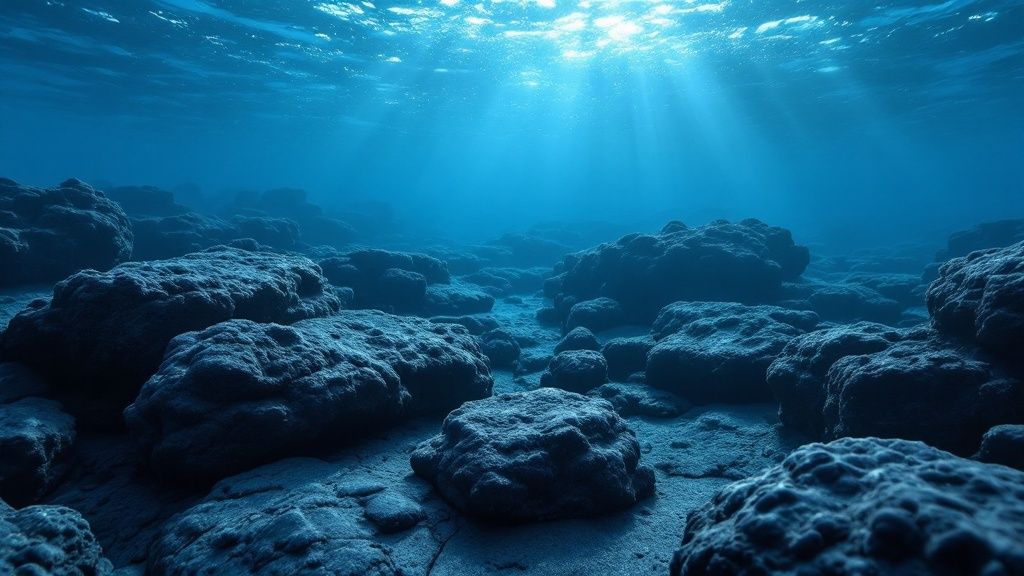
The Kona coast isn't just one dive destination—it's dozens of them, each a unique chapter in an underwater story shaped by volcanic fire and Pacific currents. I want to give you an insider's feel for these incredible spots, helping you picture yourself there long before you even get your fins wet.
These aren't just coordinates on a map; they're living, breathing ecosystems. Our guided diving tours are all about immersing you in the very best of Kona, making sure every dive is as safe as it is unforgettable. Let's explore a few of the iconic sites that make Big Island scuba diving a truly world-class experience.
Turtle Pinnacle: A Natural Cleaning Station
Picture a bustling underwater spa where Hawaiian green sea turtles, the beloved honu, line up for a cleaning from eager reef fish. That’s Turtle Pinnacle in a nutshell. It’s a perfect example of the symbiotic relationships that make Kona diving so fascinating. This natural "cleaning station" is a specific patch of reef where turtles gather to have algae and parasites nibbled away by fish like the Hawaiian cleaner wrasse.
Turtle Pinnacle is a fantastic dive for all skill levels, with depths typically ranging from 30 to 60 feet. Its easy-going conditions and near-guaranteed turtle sightings make it a perennial favorite. It’s not uncommon to see several honu on a single dive, giving you incredible opportunities for respectful observation and stunning photos.
But it’s not just about the turtles. The reef itself is a thriving community. You'll see schools of brilliant yellow tangs, curious butterflyfish, and moray eels peeking out from their rocky lairs. This site really is a fantastic snapshot of a healthy Hawaiian reef. You can learn more about the unique ecology of these spots at top Big Island dive sites.
Crescent Beach: Lava Arches and Caverns
If you love dramatic underwater landscapes, Crescent Beach is a must. This site puts the island’s volcanic origins on full display with breathtaking lava arches, swim-throughs, and caverns that create a maze-like playground for divers.
Sunlight filters through cracks and openings in the rock, sending down gorgeous light beams that dance in the water. These formations also happen to be prime real estate for a different class of marine life.
Diving through a massive lava tube for the first time is just awe-inspiring. It feels like you're exploring a hidden underwater cathedral, where the geology is every bit as captivating as the animals.
Here, you're much more likely to find larger creatures taking shelter. Keep your eyes peeled for:
- Whitetip Reef Sharks: Often found chilling out on the sandy floor inside the caverns.
- Large Jacks (Ulua): These powerful predators sometimes patrol the entrances to the lava tubes.
- Spiny Lobsters: Look for their long antennae poking out from the crevices in the rock.
The complexity of the site makes it ideal for divers with solid buoyancy control. Navigating the swim-throughs requires a calm, steady hand, but the reward is an otherworldly experience you won't soon forget.
Garden Eel Cove: A Sandy Amphitheater
Just like its name suggests, Garden Eel Cove is famous for its massive colony of Hawaiian garden eels. At a depth of about 50 to 60 feet, the sandy bottom comes alive with thousands of these shy little creatures, poking out of their burrows and swaying in the current like blades of grass. As you get closer, they'll duck back into the sand, only to pop back up once you've passed.
But there's a whole other side to this site. This spot, also known as Manta Heaven, is one of the premier locations for Kona's world-famous Manta Ray Night Dive.
By day, it's a beautiful, gently sloping reef where you can explore coral heads and hunt for octopus, frogfish, and all sorts of colorful reef fish. The combination of the quirky garden eels and its role as a five-star manta destination makes it one of Kona's most versatile and exciting dive spots. Each location along this coast truly offers a different adventure, highlighting the incredible diversity of big island scuba diving.
Experiencing the World-Famous Manta Ray Night Dive
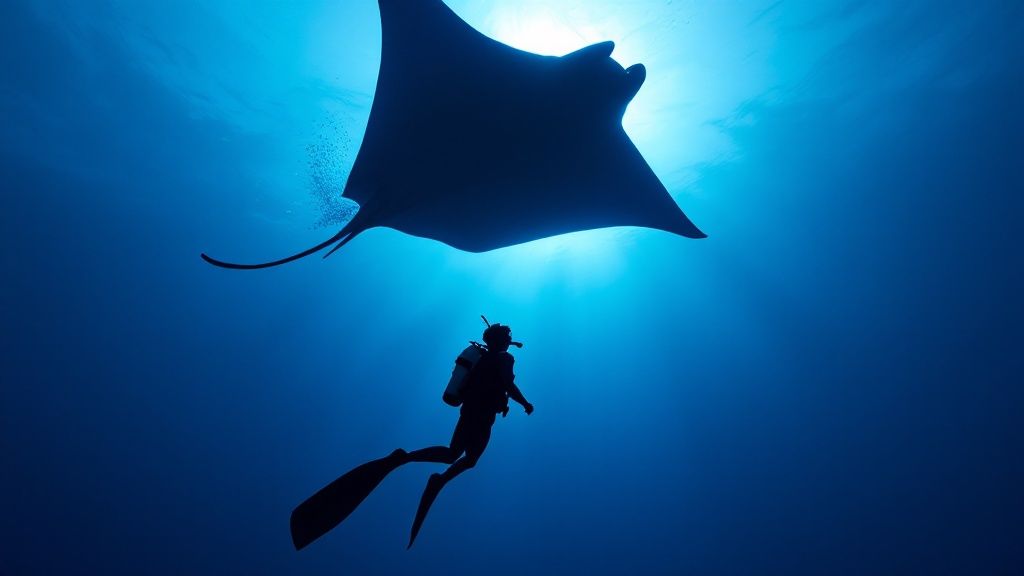
If there's one experience that defines Big Island diving, this is it. The Manta Ray Night Dive isn't just another dive—it's a world-renowned spectacle, a true bucket-list adventure that you'll talk about for years to come. The magic unfolds just after sunset, as we head out to one of Kona's special manta feeding sites.
The setup is actually quite simple, but the result is pure genius. We submerge powerful, eco-friendly lights into the water, which instantly attract clouds of plankton—the microscopic critters that manta rays love to eat. This creates a floating buffet that draws the mantas in for their evening meal, and you get a front-row seat to the incredible underwater ballet that follows.
The Diver's Perspective
From a diver's point of view, the experience is completely immersive. You’ll descend into the dark, calm water and find your spot on the sandy bottom, usually around 30 to 40 feet deep. Once settled, you and the other divers will aim your lights straight up, creating a brilliant "campfire" of light that sets the stage for the main event.
And then, it happens. A massive, shadowy shape glides out of the darkness and into the light. Then another, and another. These gentle giants, with wingspans that can stretch over 16 feet, soar and somersault through the light beams, scooping up plankton just inches above your head. It’s a humbling, awe-inspiring moment to be so close to such majestic wild animals.
It’s impossible to describe the feeling of watching a massive fish the shape of a stealth bomber coming into vision. It’s akin to watching your child ride a bike for the first time or finding a winning lottery ticket.
Diving vs. Snorkeling: What's the Difference?
While divers get an incredible view from below, snorkelers are right in the middle of the action on the surface. They hold onto a large, custom-made float that's also equipped with powerful lights shining down. This attracts the plankton right to the surface, bringing the mantas up to feed just below them.
So, which should you choose?
- Diving: Gives you a unique "bottom-up" perspective. You get to see the mantas' entire bodies silhouetted against the dark surface as they swoop over you. It feels like you're sitting in an underwater amphitheater.
- Snorkeling: Offers a "top-down" view and is perfect for everyone, since no certification is needed. The mantas often get incredibly close as they perform barrel rolls to feed, giving you an unforgettable, face-to-face encounter.
Both options are spectacular, so nobody in your group has to miss out. We run expert-led manta ray dive and snorkel tours that cater to everyone, no matter their experience level.
Safe and Responsible Manta Encounters
Protecting these magnificent creatures is our absolute top priority. The mantas you’ll see are part of a resident population—they live here year-round, and local researchers have even identified and named many of them! We are fully committed to the Manta Ray Green List guidelines to ensure every interaction is safe for both the mantas and our guests.
This means there is a strict no-touching policy. A manta’s skin is covered in a protective mucous coating that can be damaged by human touch, leaving them vulnerable to infection. Before you get in the water, our guides will give you a detailed briefing on the rules, like staying in your spot and keeping your movements calm and predictable. By respecting their space, we ensure the mantas stay healthy and continue to grace us with their presence for generations. You can learn more about the history and guidelines for the Kona Manta Ray Night Dive.
Ready for a Real Challenge? Advanced and Blackwater Dives Await

If your logbook is already bursting with coral reef dives and you're craving something that truly pushes your limits, the Big Island has you covered. Once you venture beyond the sun-drenched coral gardens, you’ll find a world of deeper, more demanding, and utterly unforgettable underwater adventures. These dives are for seasoned divers ready to put their skills to the test and see things few others ever will.
The Kona coast might be famous for its calm waters, but it also has sites where stronger currents create underwater highways for big pelagic animals. Riding these currents takes confidence and skill, but the payoff can be a breathtaking fly-by from schools of jacks, barracuda, and even the occasional shark cruising the deep blue. You can also explore the island's dramatic lava tube systems on a whole new level, venturing into intricate, deeper passages that demand pinpoint buoyancy control.
For experienced divers looking to step up their big island scuba diving game, our premium advanced dive trips are designed specifically for these more challenging and rewarding sites.
The Kona Blackwater Dive: A Spacewalk in the Ocean
Picture this: you’re floating in absolute darkness, miles offshore, suspended over thousands of feet of inky black water. This isn't your average night dive. This is the Kona Blackwater Dive, an experience many call an "inner-space walk." You're about to witness one of the largest migrations on Earth—the nightly vertical migration.
Every single night, an incredible array of strange and beautiful creatures travels from the deep ocean to feed near the surface. A Blackwater Dive puts you right in their path, giving you a front-row seat to a parade of life that looks like it came straight out of a sci-fi movie.
You'll be safely tethered to the boat as you drift with the current, watching a world of unbelievable creatures float by. These are the true aliens of the deep, many of them gelatinous, transparent, or glowing with their own bioluminescent light.
What might you see?
- Alien-Like Larvae: You'll see the baby versions of familiar animals like eels and lobsters, which look completely bizarre in their larval stage.
- Glowing Jellies: Pulsating jellies and long, stringy siphonophores drift past, lighting up the darkness from within.
- Weird and Wonderful Squid: Keep an eye out for tiny, jewel-like squid and other cephalopods that are almost never seen in shallow water.
This dive is a true test of your composure and skill. It demands exceptional buoyancy and a calm mind in a totally surreal environment. It's an adventure reserved for divers who are completely comfortable in the water and ready for something truly extraordinary.
For the ultimate underwater thrill, the Kona Blackwater Dive will completely change how you see marine life. It's more than a dive; it's a journey to another dimension. Are you up for it?
Choosing Your Dive Operator and Getting Certified in Kona
Let’s be honest, who you dive with can make or break your entire big island scuba diving trip. It’s one of the most important choices you'll make. The right guide, a comfortable boat, and a crew that’s serious about safety—these things don't just add to the experience; they are the experience. A great dive shop doesn’t just show you a spot on a map; they help you truly connect with the ocean.
When you start looking at different dive charters, try to look past the price tag. What's their safety record like? How big are their dive groups? Is their rental gear in good shape? Smaller groups almost always mean you get more personal attention from your guide, and well-maintained equipment is simply non-negotiable for a safe and fun dive. At Kona Honu Divers, we’re obsessed with getting these details right, and our guides are as passionate about protecting the reef as they are about your safety.
What Makes a Great Dive Operator
Figuring out the best dive shop for your trip is a big deal. To help you sort through the options, we put together a detailed guide on how to choose a Kona dive shop. The best outfits all seem to share a few common traits:
- Top-Notch Safety Standards: This means clear, thorough dive briefings every single time, gear that’s in perfect working order, and professional, certified guides who know the sites inside and out.
- Comfortable, Well-Equipped Boats: A good boat should have plenty of shade, freshwater for rinsing off, and an easy way to get in and out of the water.
- Small Dive Groups: This is key. It makes the dive safer and way more personal, giving your guide the chance to point out cool critters you might have missed.
- A Real Commitment to Conservation: The best operators respect the ocean and teach divers how to be good stewards of the reef.
We hear it from our guests all the time—it’s this focus on the little things that makes all the difference. Their stories say more about our commitment than we ever could.
Getting Certified in an Underwater Paradise
If you've ever thought about getting scuba certified, it’s hard to imagine a better place to do it than Kona. The water here is calm, warm, and ridiculously clear. It’s the perfect natural classroom, turning what could be a boring pool session into a genuine adventure from day one.
Think about it: getting certified in Kona means your first-ever training dives happen on a living, breathing reef. You’re not just clearing your mask; you’re clearing your mask while a curious turtle swims by or a school of yellow tangs drifts past.
Whether you're starting with the PADI Open Water Diver course or moving on to an advanced specialty, learning here gives you a huge advantage. You build confidence so much faster in these ideal conditions, all while being guided by patient instructors who point out amazing marine life between skill drills. It makes getting certified a highlight of your vacation, not a chore.
The local dive scene here is mature and professional. Safety briefings are thorough, and the guides are experts. It's also common to dive with Nitrox (enriched air), with tanks often filled to over 3100 psi, giving you longer, safer dives. These high standards are a hallmark of the Kona diving community. You can find more trip details about the matured diving industry in Kona on ScubaBoard.com.
So, whether you're just getting your fins wet or you're an experienced diver looking for the next thrill, Kona has you covered.
Ready to take the plunge? We offer a full range of diving tours and certification courses to get you started.
Your Big Island Scuba Questions, Answered
Got questions about diving in Kona? You're not alone. Planning the details of a dive trip always brings up a few things. Let's walk through some of the most common questions we hear so you can plan your underwater adventure with total confidence.
What Is The Best Time of Year To Dive?
Honestly, any time is a great time to dive on the Big Island! We’re lucky enough to have warm water all year long, usually hovering between a comfortable 76-80°F (24-27°C).
The Kona coast gets a special advantage—it's shielded from the stronger trade winds, which means the ocean here stays remarkably calm and clear most of the time. While we might see bigger swells in the winter months (December to February), it rarely stops us from getting out. For the absolute calmest, warmest water, you can't beat the summer months from June to August.
Do I Need To Be Certified For The Manta Ray Dive?
You don't have to be a certified diver to have an incredible experience with the manta rays. While divers get to watch the show from the seafloor, snorkelers have their own front-row seat.
Snorkelers hang onto a custom-made light board that floats on the surface. This light attracts the plankton, which in turn brings the giant mantas swooping right up to the top. Our manta ray dive tours are designed for both divers and snorkelers, so everyone on the boat gets an equally mind-blowing encounter.
What Will I See Besides Mantas and Turtles?
The reefs here are absolutely bursting with life! Beyond the famous mantas and honu (turtles), a typical dive will have you swimming through schools of colorful reef fish—think butterflyfish, parrotfish, and triggerfish. Keep an eye on the lava rock formations, and you’re almost guaranteed to spot a moray eel poking its head out.
We also frequently find octopus, elusive frogfish, and pods of spinner dolphins. It's not uncommon to see whitetip reef sharks relaxing on the sandy bottom. What's really special is that Hawaii has many endemic species, so you'll meet fish here that exist nowhere else on Earth!
How Safe Is Scuba Diving On The Big Island?
Diving on the Big Island is incredibly safe, especially along the Kona coast where the sites are protected from big ocean swells. The key is choosing a professional, safety-conscious operator like Kona Honu Divers.
Before anyone hits the water, our dive pros give a thorough safety briefing, and our boats are fully decked out with all the necessary safety gear, including emergency oxygen. We also keep our groups small. This isn't just about a better experience; it means every diver gets the personal attention needed to feel secure and have an amazing time underwater.
Ready to see Hawaii from a whole new perspective? At Kona Honu Divers, we have a full lineup of diving tours for every diver, from chill reef explorations to the world-famous manta ray night dive.