
When you think of scuba diving on the Big Island, you’re not just picturing another tropical reef. You’re imagining a world-class underwater adventure shaped by fire and water, where ancient lava tubes, vibrant corals, and legendary marine life create an experience unlike any other. The Kona coast, in particular, is a global hotspot for divers, known for its calm, crystal-clear waters that welcome everyone from first-timers to seasoned pros.
Why Is the Big Island a Diver’s Dream Come True?
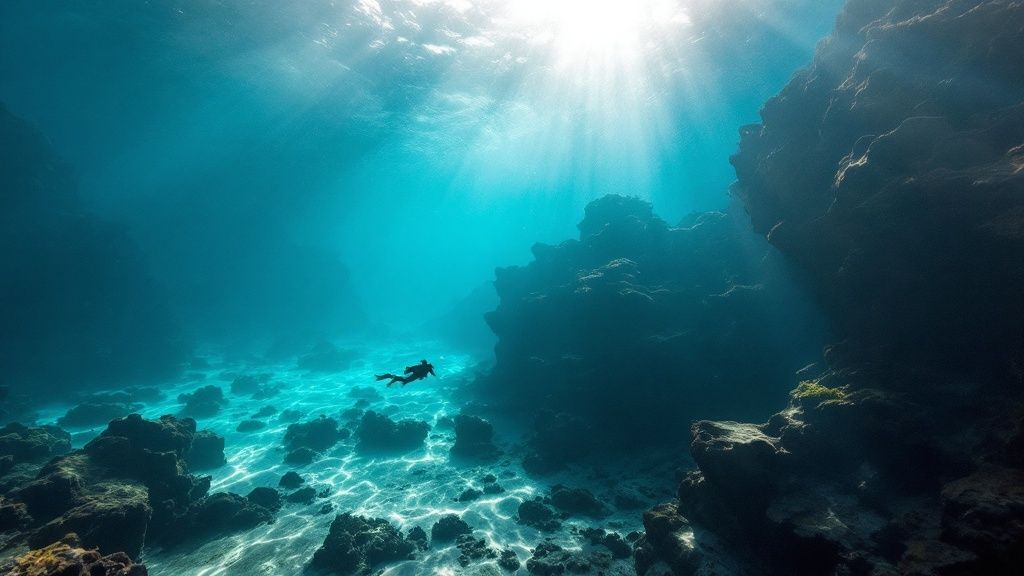
So, what’s the secret behind Kona’s magic? It all comes down to a perfect blend of geology, biology, and near-perfect conditions. The island’s massive volcanoes, Mauna Loa and Hualalai, act as natural barriers, shielding the western coastline from the prevailing trade winds. The result is exceptionally calm and clear water almost year-round.
This protected environment allows for some truly unique underwater features:
- Incredible Volcanic Topography: You can literally swim through history here. The underwater landscape is a maze of lava tubes, submerged craters, and dramatic archways formed by ancient lava flows.
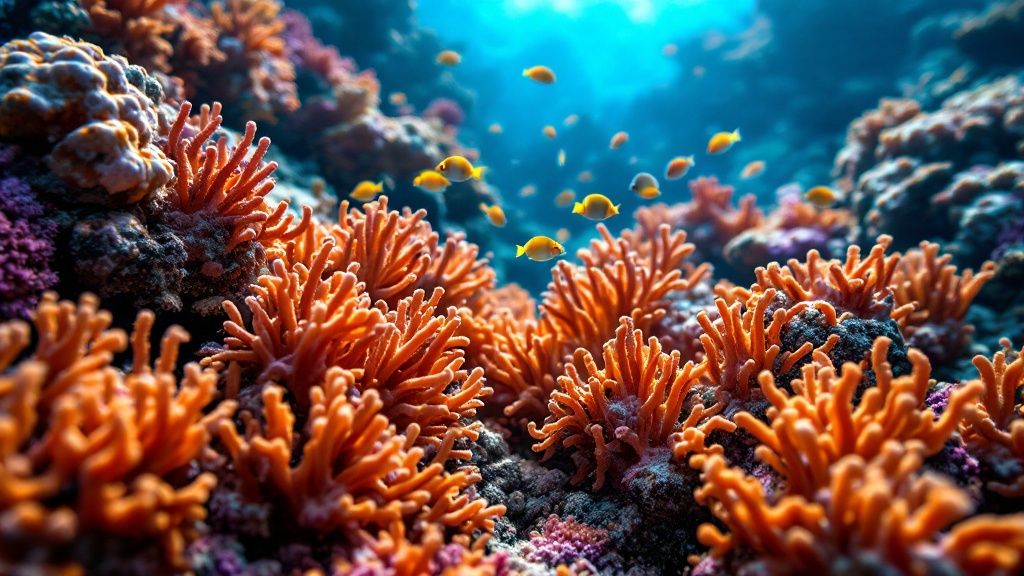
- Thriving, Unique Reefs: These volcanic structures are now home to sprawling, healthy coral reefs. What's more, a huge percentage of the fish you'll see here are endemic, meaning you won’t find them anywhere else on the planet.
- Legendary Marine Encounters: The Big Island is famous for its gentle giants. Encounters with graceful Hawaiian green sea turtles (honu) are almost a daily occurrence, and the iconic manta ray experiences are simply unforgettable.
The Big Island’s underwater world is a direct reflection of its dramatic landscape above the surface—powerful, full of life, and constantly evolving. Every dive here tells a story.
Before we dive deeper into the specific sites and tours, let's break down exactly why this island stands out from other world-renowned diving destinations.
Why Choose the Big Island for Your Next Scuba Trip
| Feature | Why It's Exceptional for Divers |
|---|---|
| Volcanic Underwater Landscapes | Diving through lava tubes, arches, and craters offers a unique experience you won't find in typical coral-reef destinations. |
| Year-Round Calm Conditions | The Kona coast is protected from winds, providing consistently clear and calm water, making it perfect for all skill levels. |
| High Endemic Species Count | 20-25% of the reef fish here are found nowhere else on Earth, making every dive a unique biological treasure hunt. |
| Manta Ray Night Dive | Home to one of the most famous and reliable manta ray night dives in the world, it's a true bucket-list experience. |
| Abundant Green Sea Turtles | You’ll have countless opportunities to see honu at "cleaning stations," where they patiently let smaller fish clean their shells. |
Simply put, the combination of unique geology and protected waters has created an underwater ecosystem that feels both ancient and vibrantly alive.
Unforgettable Adventures Await
Two experiences truly define Big Island scuba diving. First, the world-famous Manta Ray Night Dive is a mind-blowing spectacle. You kneel on the ocean floor as these majestic creatures, some with wingspans over 12 feet, glide just inches above your head, feeding on plankton attracted to your lights. It’s pure magic.
Then there are the serene daytime dives with the honu. Finding a turtle cleaning station and watching these ancient mariners interact with their environment is a peaceful, almost spiritual experience.
Whether you're exploring a shallow, sunlit reef or descending along a deep volcanic ledge, the Kona coast delivers one incredible adventure after another. This guide will walk you through everything you need to know to plan the perfect Kona diving tour and prepare for the underwater wonders that await.
How Kona Became a World-Class Diving Hub
The vibrant, professional big island scuba diving scene we all know today didn’t just pop up out of nowhere. Its story begins way back in the late 1960s, when diving was a rugged adventure for just a handful of dedicated pioneers. With basic gear and not much else, these early explorers saw the incredible potential hidden just beneath Kona’s calm, blue surface.
They saw more than just beautiful reefs; they saw a future. These visionaries started laying the groundwork for a community built on a deep respect for the ocean and a passion for sharing its wonders. It was their hard work and dedication that slowly but surely put Kona on the global diving map, transforming it from a sleepy fishing village into a premier underwater destination.
The Pioneers Who Shaped Kona Diving
That shift from a niche hobby to a world-class industry was really driven by a few key people and dive shops that have since become local legends. One of the most influential was Jack's Diving Locker, founded in 1981 by Jack and Tina Clothier. Their shop quickly became a cornerstone of the island's growing scuba community, setting a high bar for professionalism and adventure that helped define Kona's entire diving culture.
Tragically, Jack passed away just eight months after opening, but his legacy was built to last. When Jeff and Teri Leicher took over in the late 1980s, they continued to build on that foundation, cementing the shop's legendary status. Today, the Big Island is home to over 50 dive shops and charters, serving more than 150,000 dive tourists who complete around 100,000 certified dives here every single year. That incredible growth stands on the shoulders of those early trailblazers. You can dive deeper into the rich history of Big Island scuba diving to learn more.
Standardization and Global Recognition
While local passion was the spark, a global movement toward standardization was the fuel that really made Kona's dive scene explode. The rise of international training organizations like PADI (Professional Association of Diving Instructors) and SSI (Scuba Schools International) was a game-changer.
These organizations brought in standardized training and safety protocols, making the sport safer and way more accessible to people all over the world. This had a few huge impacts:
- Opened the Floodgates: With standardized courses, a diver certified in Europe could confidently book a dive in Kona, opening the island up to a truly global market.
- Boosted Confidence: Universal safety standards gave new divers the peace of mind they needed to take the plunge, knowing they were getting reliable, high-quality instruction.
- Raised the Bar: Affiliating with these respected agencies elevated the professionalism of local shops, guaranteeing a consistent, top-notch experience for visitors.
It was the perfect storm: local expertise met global standards, creating the ideal environment for Kona to thrive. It wasn't just about having amazing dive sites anymore; it was about building a safe, professional, and welcoming infrastructure around them.
This blend of pioneering spirit and professional development is exactly why Big Island scuba diving is a cut above the rest. When you book a diving tour here, you’re not just going for a dive—you’re stepping into a rich history that spans decades. That deeply-rooted, expert-driven culture is what ensures every underwater adventure is as safe as it is spectacular.
Exploring the Big Island’s Top Dive Sites
The Kona coast is a diver’s paradise, plain and simple. Thanks to the island's volcanic past, the underwater world is a masterpiece of lava tubes, dramatic arches, and vibrant reefs. Every dive site has its own personality, which is what makes Big Island scuba diving so addictive.
What's truly incredible is the sheer variety. One day you could be gliding through a peaceful coral garden, and the next you're exploring a massive lava arch. This diversity means there's always a perfect spot, whether you're a brand new diver or a seasoned pro looking for a challenge. Dive operators here are masters at reading the daily conditions to pick the absolute best site for the group, so you're always in for an amazing experience.
Let's dive into a few of the must-see spots that keep people coming back year after year.
Turtle Pinnacle (Makako Bay)
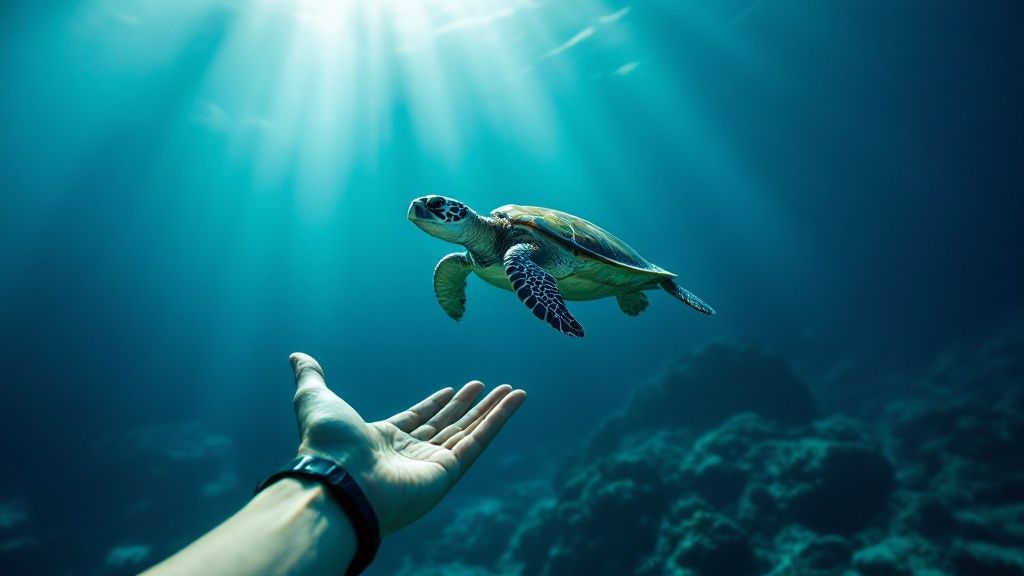
There's a reason Turtle Pinnacle is one of the most famous dives on the Kona coast. The name says it all—this is the place to see Hawaiian green sea turtles, or honu. It’s not just a chance encounter; this specific underwater pinnacle acts as a natural "cleaning station" for them.
Think of it as a turtle spa day. It's an incredible sight to witness.
- The Cleaning Crew: The turtles line up and patiently hover while small reef fish, especially Hawaiian cleaner wrasse, get to work. These little helpers nibble away at algae and parasites on the turtles' shells and skin.
- Picture Perfect: Visibility is usually fantastic, and the honu are so relaxed you can often get some breathtaking photos (from a respectful distance, of course).
- Great for Everyone: The dive is relatively shallow, typically between 30 and 60 feet, which means it's perfect for divers of all levels and allows for plenty of bottom time to just hang out and watch the show.
Crescent Beach (Kua Bay)
If you’re a fan of dramatic underwater landscapes, Crescent Beach is your kind of dive. Located in beautiful Kua Bay, this site is a showcase of volcanic power. The main attraction is a captivating maze of lava rock formations, full of swim-through arches and small caverns just waiting to be explored.
It’s this rugged terrain that creates the perfect habitat for a huge range of marine life. You’ll find eels and octopuses tucked into the crevices of the dark volcanic rock, while colorful reef fish swarm all around. Keep an eye on the deep blue, too—it’s not uncommon to spot larger pelagic species cruising past.
Finding Your Perfect Underwater Adventure
These are just two of the dozens of incredible dive sites lining the Kona coast. Each one offers something unique, from shallow, sun-drenched reefs to deep drop-offs that attract bigger animals.
The best part is that the adventure is always different. A good local dive operator knows every site like the back of their hand and will choose where to go based on the day's conditions, ensuring you get the safest and most spectacular dive possible. To get a better sense of just how much there is to see, check out this comprehensive guide to Kona dive sites.
Experiencing Iconic Night Dives in Kona
When the sun dips below the horizon in Kona, the real show is just about to begin. The Kona coast is famous for its night dives, drawing divers from all over the world for underwater encounters you simply can't find anywhere else. Forget everything you know about day diving; this is a completely different world.
Two dives, in particular, define the Kona after-dark experience. One is an elegant, world-renowned ballet that has become a must-do for any serious diver. The other is a strange and thrilling plunge into the deep ocean's mysteries. Both are unforgettable.
The World-Famous Manta Ray Night Dive
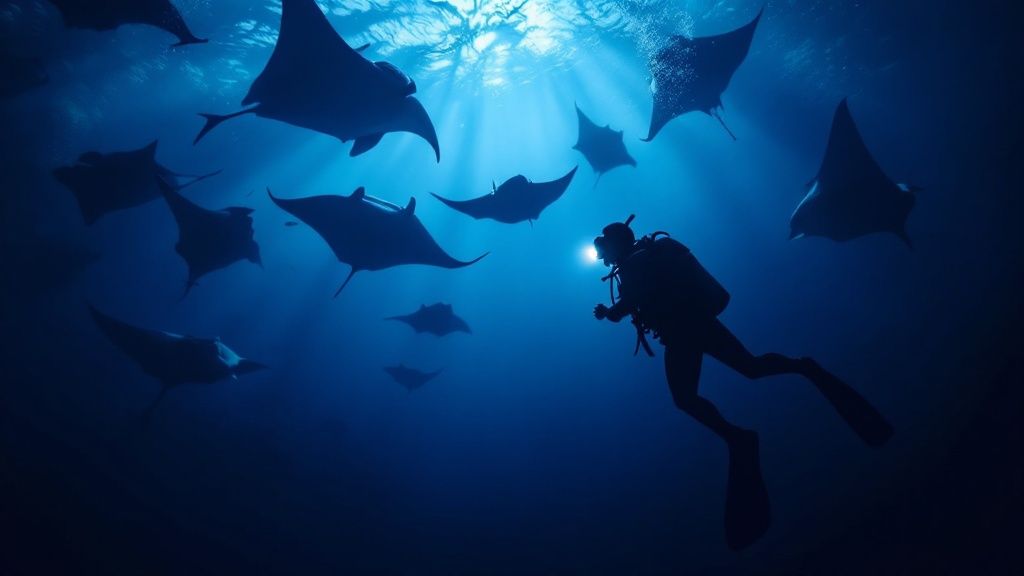
If there's one dive that puts the Big Island on the map, it's the Manta Ray Night Dive. Honestly, it’s more of a spectacle than a dive. The setup is genius in its simplicity: powerful lights are set up on the ocean floor, which attract swarms of plankton. This creates an all-you-can-eat buffet for the local manta rays.
As a diver, you get a front-row seat. You'll descend in the dark, settle on the sandy bottom, and point your dive light straight up. Then, you wait. Before long, these gentle giants emerge from the darkness, gliding in to feast. They swoop, roll, and somersault just inches over your head, some with wingspans stretching over 12 feet. It's a humbling and absolutely magical experience.
For many, a Manta Ray Dive Kona is the highlight of their trip, a truly epic adventure that solidifies the Big Island's reputation as a top-tier diving destination.
The Surreal Kona Blackwater Dive
Ready for something completely different? The Kona Blackwater Dive is for the diver who's seen it all and wants a taste of the truly unknown. This isn't a reef dive. Far from it.
Your boat heads miles offshore, over water thousands of feet deep. You and your group will be tethered to the boat as you drift in the immense, inky blackness. It sounds intense, and it is—in the best way possible.
Down here, you're witnessing the largest migration on Earth, as creatures from the abyss rise toward the surface to feed. You’ll see life forms that look like they're straight out of a sci-fi movie: tiny, see-through squid, otherworldly larval fish, and countless bioluminescent critters pulsing with their own light. It’s a mind-bending experience that connects you to the deep, mysterious heart of the ocean.
To learn more about the logistics and magic behind the manta encounter, check out our deep dive on the Kona Manta Ray Night Dive.
How To Choose the Right Dive Shop in Kona
Let’s be honest, the dive operator you choose can make or break your entire trip. This isn't just about renting some gear and catching a ride to a reef. The right shop is your partner in adventure, the one responsible for your safety, comfort, and ultimately, how much fun you have exploring Kona's underwater world.
So, with a bunch of great options out there, how do you pick the best one for you? It all starts with a few non-negotiables.
First, look for a shop that takes safety and professionalism seriously. This is easy to spot. Are they affiliated with well-known agencies like PADI or SSI? That's a good sign they stick to high standards for training and safety protocols. Don't be shy about asking about their safety record or emergency plans, either. A top-notch operator will be happy to tell you.
Next, think about the experience itself. A clean, comfortable, and well-maintained boat makes a world of difference, especially on your surface intervals. And the rental gear? It absolutely has to be in good shape and serviced regularly. Faulty equipment is not just an annoyance; it’s a serious safety risk.
Why Small Groups Make a Big Difference
Here's a piece of advice I give every diver: always ask about group sizes. Some outfits try to cram as many people as possible onto their boats, and that can lead to a chaotic, crowded dive where you're more focused on not kicking someone than enjoying the view.
The real magic happens in small groups. You get more one-on-one time with your guide, you have the freedom to explore without feeling rushed, and marine life is far less likely to be spooked away. It just makes for a calmer, more personal experience.
This is exactly where a shop like Kona Honu Divers really shines. They’ve built their reputation on keeping groups small, which means their expert guides can focus on giving you a safer and more memorable dive. These folks live and breathe Kona's dive sites, so you know they're taking you to the best possible spot for that day's conditions.
The glowing reviews for Kona Honu Divers aren't a coincidence; they're earned through fantastic customer service and incredible local knowledge. See what other divers have said:
Finding the Right Trip for Your Skill Level
A great dive shop knows that one size doesn't fit all. They should have a menu of diving tours that caters to everyone, from first-timers blowing their first bubbles to salty veterans looking for a thrill.
Here’s what a good lineup looks like:
- For Beginners: You should see options for introductory experiences (like a Discover Scuba Dive) and full Open Water certification courses held in calm, safe waters.
- For Certified Divers: The bread and butter is the daily two-tank morning charter, perfect for exploring Kona's classic reefs and dramatic lava tube formations.
- For the Adventurous: Look for specialty trips. If you're an experienced diver ready for something more, an advanced dive tour is an awesome way to see deeper sites and navigate more challenging underwater landscapes.
At the end of the day, picking your dive shop is about finding a team you trust to show you the best of the Big Island, both above and below the surface. Focus on safety, small groups, and a good variety of trips, and you're setting yourself up for an underwater adventure you won't soon forget.
Your Essential Dive Trip Planning Checklist
A bit of planning before you leave can make the difference between a good dive trip and an absolutely incredible one. When you're heading to the Big Island, a little prep work ensures your underwater adventure is smooth, safe, and everything you dreamed it would be.
Honestly, there’s never really a bad time to dive in Kona. The water stays comfortable all year, hovering around a pleasant 76°F (24°C) in the winter and warming up to a balmy 81°F (27°C) in the summer. If you're after the flattest, calmest seas, the summer months are your best bet. But winter offers something truly magical: the chance to hear the haunting songs of migrating humpback whales echoing through the water on your dive. It's an experience you'll never forget.
Gearing Up for Your Dive
One of the biggest questions is always what to pack and what to rent. For most people, a 3mm or 5mm wetsuit is all you need to stay comfortable year-round. If you tend to get chilly or are planning multiple dives a day (especially a night dive!), you might lean towards the 5mm.
Bringing your own mask, fins, and dive computer is always a good idea—nothing beats a perfect fit and gear you're familiar with. But when it comes to the bulky stuff like BCDs and regulators, renting on the island is often the easiest path. The top dive shops keep their rental gear in fantastic shape, and it saves you from lugging extra bags through the airport. For a deeper look at your equipment options, check out this guide on the gear you will need for your Kona diving adventure.
Safety and Eco-Conscious Diving
Your safety and the health of our reefs are what matter most. Before you even pack, take a look at your certification card. If it’s been a year or more since you were last underwater, a quick refresher course is the perfect way to knock the rust off and get your confidence back up.
Here are a few key things to keep in mind for a safe and responsible trip:
- Dive Insurance: We strongly recommend it. Companies like DAN (Divers Alert Network) offer plans that give you major peace of mind, just in case something unexpected happens.
- Respect Marine Life: The golden rule of diving is simple: look, but don't touch. This is crucial for animals like our beloved manta rays and sea turtles. They have a protective slime coat that our touch can damage.
- Practice Buoyancy Control: The best thing you can do for the reef is to master your buoyancy. Staying neutral means you won't accidentally kick up sand or bump into the fragile coral, helping to keep it beautiful for everyone.
By following these simple guidelines, you’re not just having a great dive; you’re becoming a steward of the ocean, helping to protect the very environment you came to explore.
Once you have your gear and safety plan sorted, you can focus on the real reason you're here—the dive itself. A little forethought means you’ll land in Kona feeling prepared, confident, and ready for an underwater journey you'll be talking about for years to come.
Your Big Island Diving Questions, Answered
Alright, let's tie it all together. You've got the lay of the land (and sea), but a few questions might still be bubbling up. Here are some quick answers to the things we get asked all the time, designed to help you lock in your plans and get pumped for your dives.
When’s the Best Time of Year To Dive?
Honestly, thanks to Hawaii's amazing climate, there’s no "off-season" for diving here. But the time of year does change the experience a bit.
Summer gives you the warmest water, often creeping into the low 80s (°F), and the seas are usually glassy and calm. It’s pure easy-living, comfortable diving. Winter, on the other hand, brings a touch of magic. The water is a bit cooler, but you get an incredible soundtrack: the songs of migrating humpback whales echoing through the water on your dives. It's truly haunting and unforgettable. So, the "best" time really comes down to personal preference.
Do I Need To Be an Expert Diver for Kona?
Not at all! This is probably the biggest myth we hear, and it keeps too many new divers on the shore. While Kona has some seriously epic sites for the advanced crowd, it’s also famous for its protected bays and shallow reefs that are absolutely perfect for beginners.
In fact, the Kona coast is one of the best places on earth to get certified or even just try diving for the first time. Great local outfits like Kona Honu Divers are masters at handling mixed groups. They'll make sure the sites you visit are a perfect match for your certification and comfort level, so everyone from a first-timer to a seasoned pro has an amazing, safe, and comfortable time.
What Kind of Marine Life Can I Expect To See?
Prepare to be amazed. The amount of life packed onto these reefs is just incredible. Of course, you have the headliners—the manta rays and the beloved honu (Hawaiian green sea turtles)—but there's so much more going on.
On any given dive, you have a solid chance of seeing:
- Reef Sharks: White-tip reef sharks are a common sight, usually just chilling out on the sandy bottom.
- Playful Dolphins: Spinner dolphins often escort the dive boats, and getting a glimpse of them underwater is a real treat.
- Weird and Wonderful Critters: Keep your eyes peeled for moray eels peeking out of crevices, cleverly camouflaged frogfish, and intelligent octopuses.
- Fish You'll Only See Here: A huge percentage of the colorful reef fish here are endemic, meaning they're found nowhere else on Earth.
Every single dive is a treasure hunt, a chance to see something new in this uniquely Hawaiian ecosystem.
Now you’re armed with all the info you need to experience the best Big Island scuba diving for yourself. When you're ready for a world-class adventure with a crew that puts safety and fun first, book your next dive with Kona Honu Divers. Take a look at their complete list of diving tours and get ready to create some incredible underwater memories.