
Scuba diving on the Big Island is a truly world-class experience, and for good reason. It’s a spectacular blend of crystal-clear water, mind-bending volcanic formations, and a sheer abundance of marine life. The Kona coast, in particular, is legendary for its calm seas and once-in-a-lifetime encounters—most notably, the world-famous manta ray night dive. This unique combination puts the Big Island on the bucket list for divers of every skill level.
Your Underwater Adventure on the Big Island Starts Here
Welcome to your complete guide for an unforgettable underwater journey. The Big Island isn’t just another pretty tropical dive spot; it's an aquatic world shaped by volcanoes, creating a sub-aquatic landscape you simply won’t find anywhere else on the planet.
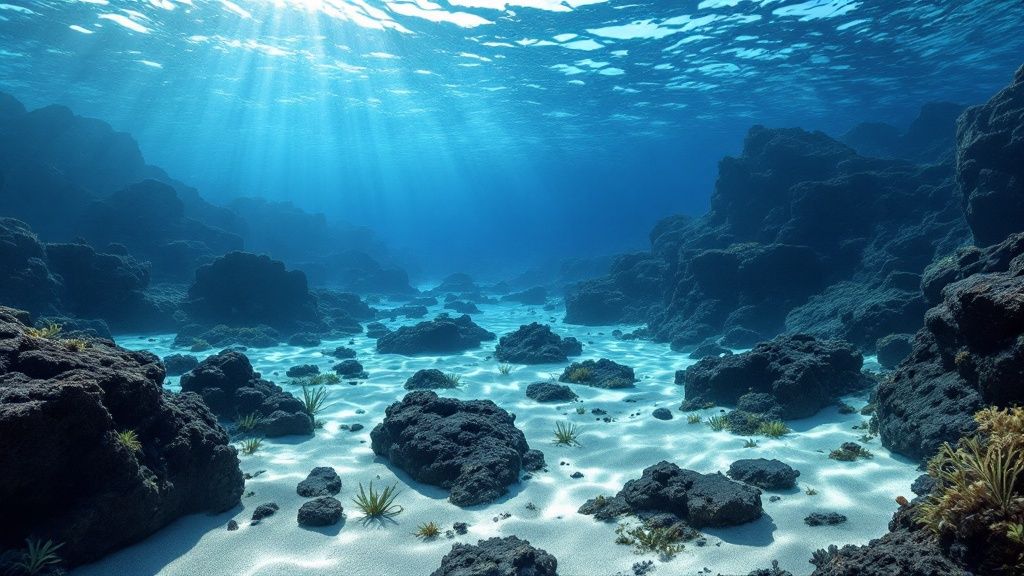
Picture this: you descend into warm, blue water where the visibility regularly stretches beyond 100 feet, revealing ancient lava tubes, dramatic underwater arches, and vibrant coral gardens teeming with life.
This isn't just a lucky break with the weather. The exceptional clarity and calm seas are a direct gift from the island's massive volcanoes, Mauna Loa and Hualalai. They act as a natural shield, protecting the Kona coast from the gusty trade winds and creating a perfect, tranquil playground for divers and marine life alike.
What Makes Big Island Scuba Diving Unique?
This guide is designed to walk you through everything that makes this Hawaiian paradise a global diving hotspot. We'll start with the basics of why the conditions are so good and then explore the must-see sites that should be on your list.
"Diving with mantas is one of the most satisfying things a person can do in the water. It’s impossible to describe the feeling of watching a massive fish the shape of a stealth bomber coming into vision. It’s akin to watching your child ride a bike for the first time or finding a winning lottery ticket." – Samuel Beckett, Planet Dive
Whether you're gearing up for your very first dive or you're a seasoned pro searching for a new challenge, you’ll find everything you need right here. We'll cover it all—from the legendary manta ray night dive to specialized excursions and practical tips for planning your trip.
To get a sense of what’s in store, here’s a quick overview of what makes diving here so incredible.
Big Island Scuba Diving Highlights
| Feature | What Makes It Special | Perfect For |
|---|---|---|
| Calm, Clear Waters | The massive volcanoes create a shield, resulting in calm conditions and visibility often exceeding 100 ft. | All divers, especially underwater photographers. |
| Manta Ray Night Dive | A world-renowned 'underwater ballet' where giant manta rays feed on plankton drawn to dive lights. | Anyone seeking a truly unforgettable experience. |
| Volcanic Topography | You can explore ancient lava tubes, dramatic drop-offs, arches, and underwater caverns. | Adventurous and certified divers looking for unique terrain. |
| Rich Marine Life | It’s home to Hawaiian green sea turtles (honu), endless tropical fish, and unique open-ocean creatures. | Absolutely everyone. |
As you can see, there's a little something for every kind of diver.
With a variety of fantastic, professional operators like Kona Honu Divers ready to guide you, your perfect underwater adventure is just a booking away. Their local expertise is key to having a safe, memorable, and absolutely mind-blowing experience exploring the wonders of the Pacific.
So, when you're ready to take the plunge, this guide is your first step.
Why Kona Is Hawaii’s Premier Diving Destination
Ask any seasoned diver about their favorite spots, and Kona will almost always be part of the conversation. But what’s the secret? Why is this specific stretch of the Big Island's coast a world-class destination? It’s not just a lucky accident—it’s the perfect storm of geology, geography, and incredible ocean conditions.
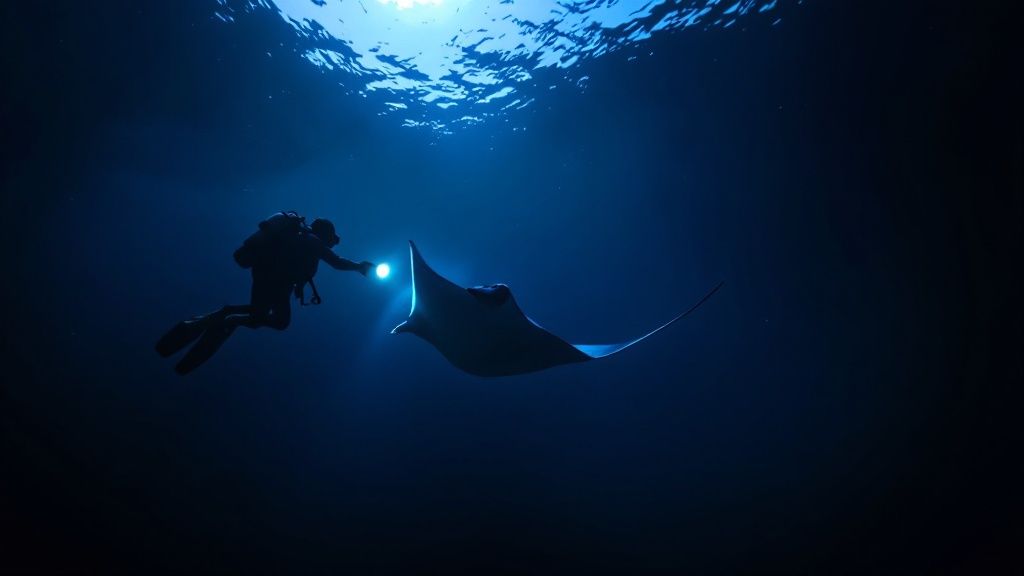
The story starts with the island’s massive volcanoes, Mauna Loa and Hualalai. These giants act as a natural wall, blocking the powerful northeasterly trade winds that can churn up the seas elsewhere in Hawaii. This creates a huge "wind shadow" along the Kona coast, blessing it with remarkably calm and predictable waters nearly all year long.
What that means for you is less chop, weaker currents, and a much more comfortable, safe, and enjoyable dive. It's like having your own private aquatic playground, protected from the elements.
An Underwater World Forged by Fire
That volcanic influence doesn't stop at the surface. Below the waves, the Big Island’s fiery past has created a breathtaking underwater landscape. Millennia of lava flows have cooled into a diver’s dream: a world of dramatic drop-offs, stunning archways, and intricate networks of lava tubes just begging to be explored.
This unique, rugged geology is the perfect foundation for a thriving marine ecosystem. All those nooks, crannies, and complex structures in the volcanic rock provide a safe home for countless critters. It’s this rich topography that makes Big Island scuba diving so vibrant and full of life.
If you’re keen to see it for yourself, there’s a whole range of diving tours on the Big Island that can guide you through this underwater volcanic wonderland.
Unbeatable Visibility and Warm Waters
Kona’s good fortune continues with its water clarity. Because the coast lacks major rivers, there’s very little surface runoff to dump sediment into the ocean. The result is astonishingly clear water where visibility often exceeds 100 feet, letting you take in the full, panoramic beauty of the reef.
On top of that, the water is consistently warm and inviting, staying in a comfortable 75-80°F (24-27°C) range year-round. This incredible one-two punch of amazing visibility and warm temperatures makes every single dive a genuine pleasure.
The Big Island is widely considered the best diving spot in Hawai'i, largely due to its crystal-clear water, diverse volcanic underwater formations, and abundant marine life. Iconic sites like Turtle Pinnacle, a vital cleaning station for Hawaiian green sea turtles (honu), perfectly illustrate this. The island’s unique volcanic terrain, with its lava tubes and underwater caves, creates experiences distinct from any other destination, supported by warm, calm waters that fuel a thriving dive tourism market. Dive into more details about what makes the Big Island a premier scuba destination.
A Haven for Diverse Marine Life
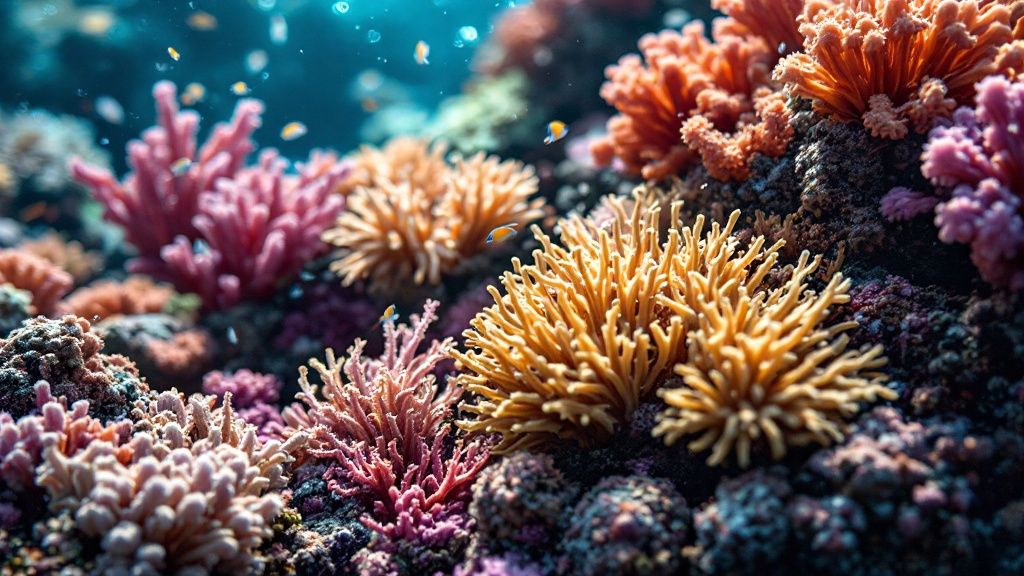
When you bring it all together—the calm seas, the unique volcanic structures, and the gin-clear water—you get the perfect recipe for an explosion of marine life. Kona is a true hotspot for endemic Hawaiian species, meaning many of the animals you’ll encounter here can’t be found anywhere else on Earth.
From the tiniest, most colorful reef fish to majestic deep-water creatures passing through, every dive feels like a new adventure. This incredible biodiversity is what truly cements the Kona coast's reputation as Hawaii’s top diving destination. And for many divers, the amazing service from operators like Kona Honu Divers is the cherry on top.
Kona’s Can’t-Miss Underwater Hotspots
Alright, you know why the conditions here are so special. Now for the main event—the dives themselves. The Kona coast is stacked with world-class sites, and each one gives you a totally different look into the Big Island’s volcanic soul.
Think of this as your inside guide to building the perfect dive trip. We're hitting the legendary spots that put Kona on the map. From gentle giants doing a nightly dance to dramatic lava formations, let’s get into the best dives the island has to offer.
Manta Heaven: The World-Famous Night Dive
The Manta Ray Night Dive isn't just a dive; it's a phenomenon. Seriously, people come from all over the world just for this. At spots like Manta Heaven, dive operators set up powerful lights on the ocean floor, creating what we affectionately call an "underwater campfire." This light show attracts clouds of plankton, which just so happens to be a manta ray’s favorite meal.
And what happens next is pure magic. These massive rays, some with wingspans over 12 feet, glide out of the darkness to feast. They put on an incredible underwater ballet, swooping and somersaulting right through the beams of light, often just inches over your head. It’s an incredibly moving and humbling experience to be that close to such majestic creatures.
What makes this dive so special is that you're not just a spectator. You kneel on the sandy bottom, and the mantas perform right in front of you. It’s a front-row seat to one of the greatest shows in the natural world.
Turtle Pinnacle: A Bustling Cleaning Station
If you have a soft spot for sea turtles—and who doesn't?—then Turtle Pinnacle is your spot. This site is a perfect example of a "cleaning station," which is like a day spa for marine life. It’s a crucial part of the reef ecosystem where Hawaiian green sea turtles, or honu, come to get primped and polished by smaller fish.
You can just hang back and watch as surgeonfish and cleaner wrasse get to work, nibbling algae and parasites off the turtles' shells and skin. It’s a busy little hub of activity, and you get to observe this amazing natural behavior in a totally relaxed setting.
The site itself is a gorgeous, shallow reef, making it an easy and enjoyable dive for any skill level. You'll be amazed at how many turtles you can see on a single dive. It's an underwater photographer's dream.
Crescent Beach: Lava Arches and Reef Sharks
For those who get excited by dramatic underwater landscapes, Crescent Beach (sometimes called Pāpā Bay) is the place to be. This dive is famous for its incredible lava formations. We're talking massive arches, tunnels, and swim-throughs that create an underwater playground unlike any other.
Just exploring these ancient volcanic structures is an adventure, but the wildlife here kicks it up a notch. Crescent Beach is a fantastic place to find whitetip reef sharks. You'll often see them chilling out on the sandy bottom under a ledge or tucked away inside a small cavern.
Besides the sharks, the whole reef is buzzing with life. Expect to see big schools of tropical fish and maybe a moray eel or two peeking out from the lava rock. This dive really captures the raw, volcanic beauty that makes Big Island scuba diving so unique.
Hidden Gems and Adventures for the Advanced Diver
While the big-name sites are famous for a reason, Kona’s coast is riddled with hidden gems that offer a quieter, more pristine experience. Every dive operator has their secret spots. To get a better idea of the variety out there, you can see the many dive sites Kona Honu Divers will take you to.
Got your advanced certification? The adventure goes deeper. For more experienced diving opportunities, the Big Island opens up a whole new world of deep pinnacles, sheer underwater cliffs, and more complex lava tube systems. These advanced dive sites often bring you face-to-face with different marine life and give you that true feeling of exploration. Consider an advanced dive tour to take your adventure to the next level.
Unforgettable Night Dives: The Manta Ray and Black Water Experience
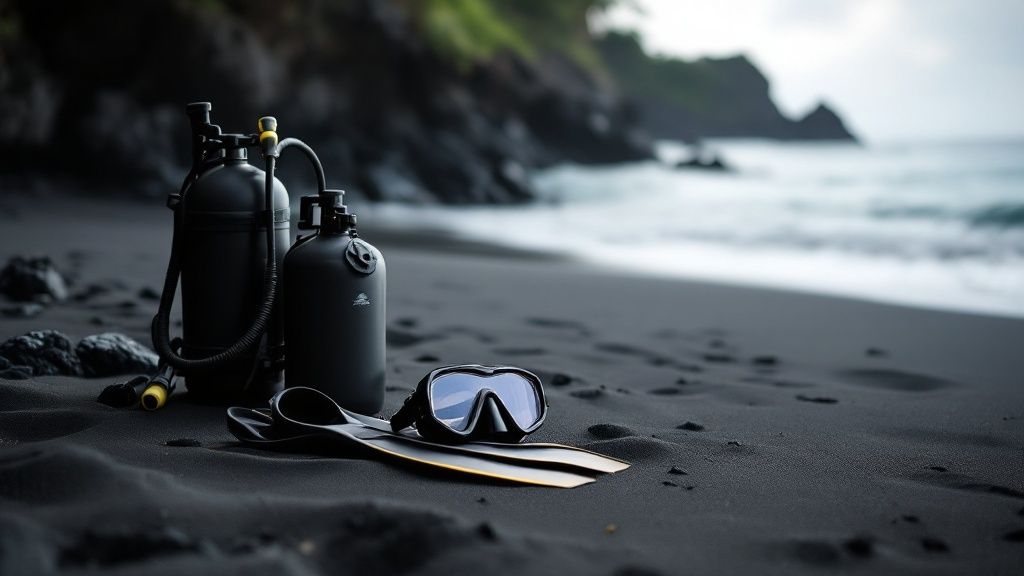
When the sun goes down on the Big Island, the ocean doesn’t just get dark—it comes alive. The Kona coast transforms after sunset, offering two of the most incredible night dives you'll find anywhere on the planet. These aren't just scuba trips; they are true bucket-list experiences that will completely change how you see the underwater world.
First, there’s the world-famous Manta Ray Night Dive, which is less of a dive and more of an underwater ballet. It’s the spectacle that put Big Island scuba diving on the map for a reason. Then, for the really adventurous souls, there's the Kona Black Water Dive—a surreal drift through the deep ocean that feels more like floating in outer space.
The Manta Ray Night Dive: An Underwater Ballet
Picture this: you're kneeling on the sandy ocean floor in the dark. Suddenly, a giant, majestic manta ray with a wingspan stretching over 12 feet glides silently, just inches over your head. This is the magic of the Manta Ray Night Dive. The setup is actually pretty simple—dive operators shine powerful lights on the seafloor, which attract clouds of plankton, the mantas' favorite food.
The mantas show up for their nightly buffet, performing incredible barrel rolls and graceful loops as they feed in the beams of light. You're not just watching from afar; you have a front-row seat to the whole show as these gentle giants dance all around you. It's a powerful, humbling experience that connects you with one of the ocean's most magnificent creatures.
For a safe and unforgettable encounter, it’s best to book with seasoned professionals who know these waters and the mantas personally. If you're not a certified diver, don't worry! You can check out Manta Ray Night Snorkel tours, which offer a similarly breathtaking view from the surface.
The Manta rays you'll see are locals! They don't migrate and show up reliably year-round for their plankton dinner. This means any time of year is a great time to witness this incredible spectacle.
Ready to see this for yourself? Check out the schedule for a Manta Ray Dive tour and book your spot.
The Kona Black Water Dive: A Journey Into the Abyss
If the manta dive is a ballet, then the Kona Black Water Dive is like a trip to another dimension. This is, without a doubt, one of the most unique and thrilling night dives you can ever do. Instead of exploring a reef, your boat takes you miles offshore where the ocean floor is thousands of feet below.
You drift in the deep, dark, open ocean, safely tethered to the boat. It might sound a little intimidating, but it's a completely controlled and mesmerizing experience. Your dive lights cut through the blackness, revealing a world that almost no one ever gets to see: a nightly vertical migration of strange and beautiful deep-sea creatures.
You’ll see a parade of tiny, glowing organisms, bizarre-looking larval fish, and transparent, gelatinous critters that look like they're straight out of a sci-fi movie. This dive gives you a rare glimpse into the largest animal migration on Earth, which happens every single night. For an adventure that’s truly out of this world, you can book a Kona Blackwater Dive tour and watch the abyss come alive.
You can learn more about what to expect by reading our complete guide to the https://konahonudivers.com/kona-manta-ray-night-dive/. These two dives are perfect examples of the incredible diversity of underwater adventures waiting for you on the Big Island.
How to Choose the Right Kona Dive Operator
Picking the right dive shop for your trip is probably the biggest decision you'll make. It’s not just about getting a boat ride to a cool spot; it's about who you’re trusting with your safety and your overall experience. A great operator is the difference between a decent dive and a truly epic one.
Think about it—you’re literally putting your life in their hands underwater. That means things like strict safety standards, gear that's in top-notch condition, and professional guides aren't just nice-to-haves, they're absolute musts. Shops like Kona Honu Divers really set the bar high, focusing on detailed pre-dive briefings and providing excellent, well-maintained equipment so everyone feels comfortable and ready to go.
Key Questions to Ask Before You Book
So, how do you sort the great from the just-okay? Here are a few simple questions you should ask any potential dive shop. Their answers will tell you everything you need to know about their commitment to quality and safety.
- What's your guide-to-diver ratio? You're looking for smaller groups. Ideally, you want 6 divers or fewer per guide, which means more personal attention and a much safer, more relaxed dive.
- What safety gear is on the boat? They should be able to instantly list off things like emergency oxygen, first aid kits, a marine radio, and have a clear emergency plan ready.
- How often do you service your rental gear? Any professional shop will have a regular, documented maintenance schedule for their regulators, BCDs, and tanks. Don't be shy about asking.
- Are your dive guides certified and insured? Your guide should, at the very least, be a certified Divemaster or Instructor with their own professional liability insurance.
The Big Island’s reputation as a world-class diving destination is built on the professionalism of its operators. For example, one recent independent diver report raved about the high standards in Kona. It noted that shops provided high-pressure Nitrox fills over 3100 psi and that guides gave incredibly detailed briefings on local wildlife. That's the kind of stuff that takes a dive from good to great. You can read that diver's full trip report and shop comparison on ScubaBoard.com.
Finding Your Perfect Dive Partner
Beyond the safety checklist, you also want to find a shop that fits your vibe. Are you looking for a high-energy adventure or a more laid-back, personalized experience? Reading reviews from other divers is one of the best ways to get a real feel for a company's personality. Our detailed breakdown of the top 10 Kona diving companies ranked is a great place to start your research.
Ultimately, you want to find an operator that gets you genuinely excited for your dives. A crew’s passion for the ocean is contagious, and it will make your whole adventure that much better. When you’re ready to see Kona’s incredible underwater world, picking a top-tier operator is the first and most important step.
How to Plan the Perfect Big Island Dive Trip
Turning that dream of a Big Island scuba adventure into a reality comes down to a bit of smart planning. Thinking ahead about when to go, where to stay, and how you’ll get around is the key to making your vacation as effortless and incredible as the Kona coast itself.
So, when’s the best time to visit? Honestly, there’s no bad time. The island’s massive volcanoes act as a natural shield, keeping the diving conditions fantastic all year long. But if you’re looking for something truly unforgettable, aim for the winter months, from December to March.
This is when humpback whales make their annual journey to Hawaiian waters to breed and give birth. While you might not see one on every dive, hearing their haunting songs echo through the water is an experience that will stay with you forever. It's a surreal, beautiful soundtrack to an already amazing dive.
Where to Stay and Getting Around
For sheer convenience, you can't beat staying in or near Kailua-Kona. This is the heart of the action. Most dive shops, including ours, set off from Honokohau Harbor, which is just a quick drive from town. Staying close by means less time in transit and more time relaxing.
You'll be flying into Kona International Airport (KOA). I’d strongly recommend renting a car. It gives you the freedom to explore everything the Big Island has to offer on your days off from diving—from the misty rainforests on the Hilo side to the otherworldly volcanic landscapes.
Pro Tip: Book your manta ray dive for one of your first nights on the island. On the rare occasion the mantas are shy, most operators offer a free re-booking. Scheduling it early gives you plenty of time to take them up on that offer if you need to.
Diving into Kona's Rich History
When you dive here, you're becoming part of a story that goes back decades. Kona's reputation as a world-class diving destination wasn't built overnight. It was forged by passionate pioneers who discovered its underwater treasures and wanted to share them with the world.
People like Jack Clothier, who founded Jack's Diving Locker with his wife Tina back in 1981, were true visionaries. Having been a major part of Hawaii's dive scene since the 70s, Jack was crucial in putting the Big Island on the map—especially for the manta ray night dive that's now famous worldwide. You can read more about the pioneers of Hawaii's manta ray dives at Oceanographic Magazine.
By diving with a reputable operator, you're not just ensuring a safe and memorable trip. You're also supporting the community that works tirelessly to protect this incredible marine ecosystem. When you're ready to plan your own adventure, take a look at the different diving tours available on the Big Island.
Your Big Island Scuba Questions, Answered
Planning a dive trip always brings up a few questions. To help you get your fins wet with confidence, I’ve put together answers to some of the most common things people ask about diving on the Big Island.
Do I Need to Be Certified to Dive on the Big Island?
For most boat dives, yes, you'll need at least an Open Water certification from an agency like PADI. It's your ticket to exploring the island's best sites with a dive buddy.
But if you're not certified, don't worry! You can still experience the magic. Look for a "Discover Scuba Diving" program. It's a one-day experience where a professional instructor guides you through the basics and takes you on a shallow, supervised dive. It's the perfect way to see if diving is for you.
What’s the Best Time of Year to Dive in Kona?
Honestly, there's no bad time. Kona is blessed with remarkably calm and clear water all year long. The water temperature is always comfortable, hovering between a balmy 75-80°F.
That said, if you want a truly unforgettable experience, plan your trip between December and March. This is when humpback whales migrate through the area, and hearing their songs reverberate through the water on a dive is something you'll never forget.
What Kind of Marine Life Will I See?
The Big Island is a hotspot for biodiversity! You’re almost guaranteed to see Hawaiian green sea turtles (we call them honu), graceful manta rays, and playful spinner dolphins.
The reefs are also bursting with colorful tropical fish like butterflyfish and parrotfish. Keep an eye out for moray eels peeking out of crevices, a shy octopus, and maybe even a reef shark or eagle ray cruising by in the blue.
Is the Manta Ray Night Dive Safe?
It’s incredibly safe. This isn't some chaotic free-for-all; it's a well-organized and professionally managed dive. You and your group will settle on the sandy bottom in a designated spot, and the divemasters ensure everything runs smoothly while the gentle giants glide above you.
Of course, all diving carries inherent risks, which is why safety training is so important. Part of that training involves understanding decompression sickness and the medical treatments available, just in case. For those interested in the broader medical science, you can review the official indications for hyperbaric oxygen therapy.
Ready to see Hawaii's underwater paradise for yourself? Kona Honu Divers has diving tours on the Big Island perfect for any experience level.