
Picture this: you're sinking slowly into warm, crystal-clear turquoise water. Below you, ancient lava tubes form dramatic underwater cathedrals, their dark arches teeming with colorful fish. This is the heart of big island scuba diving—a truly world-class destination forged by volcanic fire and home to an incredible diversity of marine life.
It’s a place that offers underwater adventures you won't find anywhere else, from swimming alongside graceful manta rays in the dark to exploring sun-drenched coral gardens by day.
Your Underwater Adventure Begins Here
Think of this guide as your personal roadmap for planning the perfect dive trip, whether you’ve logged thousands of dives or are just getting your fins wet. The Kona coast, in particular, is the real epicenter of Hawaiian diving. It’s a unique mix of thrilling wildlife encounters and mind-blowing underwater geology.
Here, the ocean is so much more than just water; it’s a living museum carved out by millennia of volcanic activity. Unlike many tropical spots known primarily for sandy bottoms and reefs, the Big Island’s underwater world is defined by its volcanic origins. You won't just see coral; you’ll explore intricate structures like massive archways, towering pinnacles, and submerged lava tubes that create a natural playground for divers and a perfect home for a dense population of marine creatures.
What Makes Big Island Diving So Special?
The magic of diving here really comes down to a few key ingredients that set it apart from anywhere else on the planet. The conditions are consistently fantastic, and the marine life is both plentiful and unique.
- Calm and Clear Waters: The Kona coast is tucked into the leeward side of the island, sheltered from the powerful trade winds by the colossal volcanoes of Mauna Loa and Hualalai. This creates exceptionally calm, clear conditions all year long, with visibility often stretching beyond 100 feet.
- Unique Volcanic Topography: Every dive is an exploration. The underwater landscapes are sculpted by historic lava flows, creating incredible structures you have to see to believe. Navigating these arches, caves, and tubes feels like you’re exploring another planet.
- Iconic Marine Encounters: The island is world-famous for its Manta Ray Night Dive—a truly unforgettable experience where these gentle giants swoop in to feed just inches from your face. We cover more about what makes Big Island diving unique in our detailed overview.
- Abundant Endemic Species: Because Hawaii is one of the most isolated island chains on Earth, a huge chunk of its marine life has evolved to be found nowhere else. You’re guaranteed to see fish you’ve never spotted before.
Here at Kona Honu Divers, we’ve spent years perfecting how we share this amazing environment with our guests. We're committed to offering safe, respectful, and absolutely awe-inspiring diving tours that connect you with the pure magic of Hawaii's underwater world. We believe a great dive is about more than just what you see—it's about the entire experience, from the moment you step on the boat to the stories you’ll be telling for years to come.
Why Kona Is Hawaii’s Diving Epicenter
While you can find beautiful water all across the Hawaiian archipelago, the Kona coast has rightfully earned its reputation as the undisputed heart and soul of Big Island scuba diving. It’s more than just a place with a few good dive sites; it's a world-class destination built on a deep-rooted history, a passionate community, and a unique geographical advantage that creates nearly perfect conditions.
To really appreciate a dive here, you have to understand what makes Kona so special. The story starts back in the late 1960s and early 70s, with pioneers who saw the incredible potential hiding just beneath the waves. The island’s reputation grew immensely with the founding of trailblazing shops like Jack's Diving Locker in 1981, which helped cement the Big Island as a hub for safe, professional diving.
Fast forward to today, and the Big Island hosts over 50 dive charters and shops. Together, they guide an estimated 100,000 certified scuba dives every year for more than 150,000 dive tourists. You can read more about the fascinating history of Kona scuba diving on konahonudivers.com.
A Shield from the Elements
One of the biggest reasons Kona dominates Hawaii’s dive scene is its incredible geography. The western coast sits perfectly in the "rain shadow" of two massive shield volcanoes: Mauna Loa and Hualalai. These colossal mountains act as a natural barrier, blocking the powerful northeasterly trade winds that can churn up the waters on other parts of the island.
The result? Consistently calm and clear seas, making diving possible nearly every day of the year. While other coastlines might be battling rough surf and murky water, Kona often feels like a tranquil, protected lake.
This natural protection is the secret ingredient to Kona's world-class diving. It means less time worrying about conditions and more time enjoying the spectacular underwater world, with visibility frequently exceeding 100 feet.
This reliable calmness allows delicate coral gardens to flourish and provides a safe haven for an incredible diversity of marine life. It’s what makes the huge variety of diving tours along this coast so consistently amazing.
A Legacy of Passion and Professionalism
Beyond the calm waters, Kona’s dive culture is defined by the community that built it. The early shops didn’t just offer boat rides; they fostered a culture of safety, respect for the marine environment, and a genuine passion for sharing Hawaii’s underwater treasures.
That legacy is alive and well today. The dive industry here isn't some fleeting tourist trend—it's a well-established, professional community that has spent decades perfecting the art of the dive experience. When you book a trip, you’re not just getting on a boat; you're benefiting from generations of local knowledge, proven safety protocols, and a shared commitment to preserving the very ecosystem that makes Kona so magical.
It’s this powerful combination of ideal geography and a dedicated community that truly solidifies Kona's status as Hawaii's diving epicenter.
Iconic Dive Experiences You Can’t Miss
Some underwater adventures are so special they belong on every diver's bucket list. The Big Island happens to be home to a few of these—experiences that go beyond a simple dive and become moments you remember for a lifetime. These aren't just entries in a logbook; they are the heart and soul of Big Island scuba diving.
The undisputed star of the show here is the world-famous Manta Ray Night Dive. Honestly, it’s hard to even call it a dive; it’s more like an underwater ballet, and you have a front-row seat. After the sun goes down, you descend to a sandy spot, point your lights up, and just wait.
Before long, giant manta rays, some with wingspans stretching over 12 feet, begin to glide into the light. They swoop, somersault, and barrel-roll with a grace that seems impossible for their size, feeding on the plankton drawn to your beams. It's a humbling, moving, and unbelievably close encounter, often happening just inches from your mask.
The Legendary Manta Ray Night Dive
The Kona coast is, without a doubt, one of the most reliable places on Earth to see this spectacle. This one-of-a-kind dive has put the Big Island on the map, drawing people from all over the world to see these gentle giants.
It’s not just about seeing the mantas; it's the whole atmosphere. Picture it: you're weightless in the dark ocean, surrounded by beams of light, watching these magnificent creatures perform their silent dance. It’s a moment that will stick with you forever.
To really get a feel for what makes this experience so magical, you should check out our in-depth guide to the manta ray dive.
Journey into the Abyss: The Blackwater Dive
If you're a more seasoned diver looking for a totally different kind of thrill, the Pelagic Blackwater Night Dive is your ticket to another world. This is nothing like a reef dive. Instead, you'll find yourself tethered to a line, drifting in the deep, dark open ocean—thousands of feet of water beneath you.
The purpose? To witness one of the planet's largest migrations, as deep-sea creatures travel toward the surface under the cover of darkness. In the focused beam of your dive light, you’ll encounter bizarre and beautiful bioluminescent organisms that few people ever get to see.
This dive is often described as "diving in outer space." You're suspended in pure blackness, watching strange, glowing creatures drift by. It’s a surreal and fascinating adventure for those with a strong sense of adventure.
From tiny larval fish to mesmerizing, glowing jellyfish, the critters you’ll meet look like they're straight out of a sci-fi movie. This dive demands excellent buoyancy control and being comfortable in the dark, making it a true badge of honor for advanced divers.
Daytime Wonders: Turtle Pinnacle
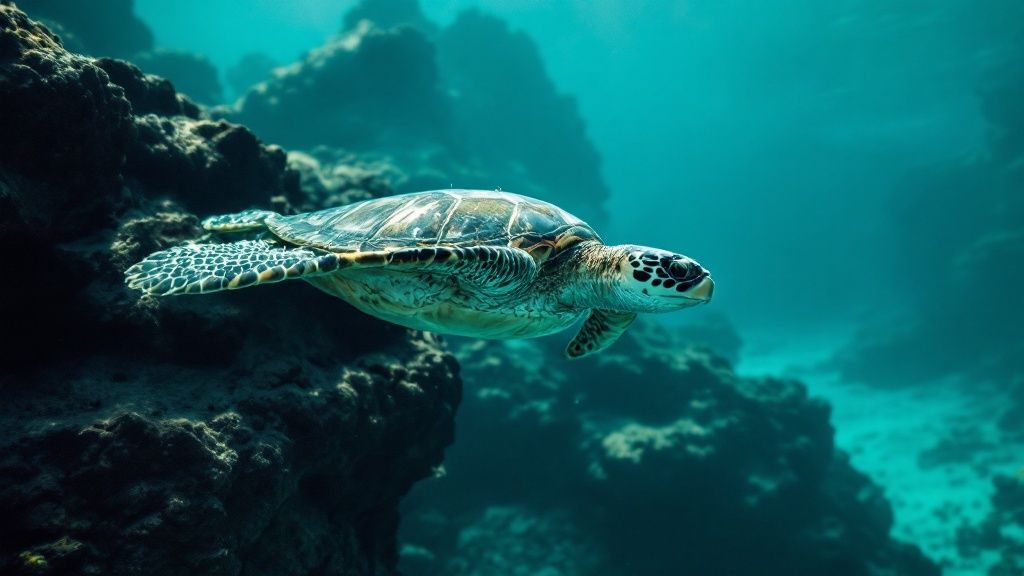
While the night dives steal a lot of the spotlight, the Big Island’s daytime diving is every bit as incredible. A must-do site is Turtle Pinnacle, a perfect example of the island's vibrant underwater ecosystem. This submerged volcanic pinnacle acts as a natural "cleaning station" for Hawaiian green sea turtles, or honu.
Here, you can watch as multiple turtles patiently rest on the reef, allowing smaller fish to nibble away algae and parasites from their shells. It's a bustling hub of marine activity and an amazing opportunity for underwater photography. The site itself is very accessible, with depths typically between 30 and 60 feet, so divers of most skill levels can enjoy this peaceful and captivating scene.
Finding the Perfect Dive Tour for You
The Big Island offers an incredible menu of underwater experiences, and picking the right one is the first step to an amazing dive trip. With so many options, it might seem overwhelming, but it really just comes down to what you're looking for.
Think about your certification level, your interests, and the kind of memories you want to make. Are you dreaming of sun-drenched reefs or a mysterious night dive? Each trip has its own unique personality, and the fun is in finding the one that speaks to you.
Big Island Dive Tours at a Glance
With so many incredible options, it helps to see them side-by-side. Here’s a quick comparison of the most popular dive tour types to help you choose the best fit for your adventure.
| Dive Tour Type | Ideal For | Typical Depth | Key Highlight |
|---|---|---|---|
| 2-Tank Morning Charter | All certified divers; great for seeing classic Kona reefs. | 40-80 feet | Exploring vibrant coral gardens and lava formations. |
| Advanced Dives | Experienced divers with AOW or higher certification. | 60-130 feet | Accessing deeper, more challenging and unique sites. |
| Manta Ray Night Dive | Divers of all levels seeking a world-famous spectacle. | 25-40 feet | Watching giant mantas feed just inches away. |
| Black Water Dive | Adventurous divers looking for a one-of-a-kind experience. | 30-50 feet | Encountering bizarre, bioluminescent deep-sea creatures. |
No matter which you choose, you're in for an unforgettable time exploring the underwater world of the Big Island.
The Classic 2-Tank Morning Charter
The 2-tank morning dive is the bread and butter of any great dive vacation. It’s the perfect way to get acquainted with Kona’s stunning volcanic topography and the incredible marine life that calls it home. These trips are a fantastic fit for just about any certified diver, whether you just got your Open Water card or you've been diving for decades.
The plan is simple but brilliant: the boat takes you to two distinct dive sites. On the first dive, you might be navigating the dramatic archways of an ancient lava tube. On the second, you could be drifting along a pristine coral reef, spotting schools of colorful fish. It's a reliable, fun, and breathtaking way to experience the best of Kona during the day.
If you’re planning on being here for a few days, it’s worth looking into Kona diving packages to bundle your dives and make the most of your time in the water.
Specialized and Advanced Dives
Got a few more dives under your weight belt? For certified divers with an adventurous spirit, the Big Island opens up a whole new world of thrilling, next-level experiences. These tours are built for divers with an Advanced Open Water certification or higher who are ready to explore deeper and more complex environments.
- Deep Reef Explorations: Plunge to depths between 60 and 130 feet to discover unique geological structures and marine species that you just won't find in the shallows.
- Drift Dives: Let the ocean do the work. You’ll use the natural currents to soar effortlessly over vast stretches of reef, covering more ground and feeling like you're flying.
- Lava Tube Navigations: For divers with the right training, slipping into the sun-dappled, cavernous interiors of submerged lava tubes is an experience that will stay with you forever.
These advanced dive tours give you a chance to see a different side of Kona's underwater world, all while sharpening your skills alongside highly experienced guides.
A Note on Choosing an Operator: This is where the details matter. Always look for a dive shop that prioritizes small group sizes. A more personal experience isn't just about comfort—it's a massive boost to safety and allows the guides to tailor the dive to the group's specific skill level and interests.
What to Expect from a Premier Dive Operator
Choosing the right dive operator is probably the single most important decision you'll make for your big island scuba diving trip. It’s what separates a run-of-the-mill boat ride from a truly unforgettable underwater adventure. You're not just paying for a tank and a ride; you're investing in expertise, safety, and the quality of the memories you'll bring home.
So, what does a top-tier operator look like? Their commitment to safety is the first thing you'll notice. It starts before you even get your fins wet with a thorough, clear pre-dive briefing. This isn't just a quick "everyone follow me" chat; it's a detailed game plan.
These briefings are the hallmark of a professional outfit. The best shops on the island dedicate a good five to ten minutes before hitting the water to walk you through the dive site, cover safety protocols, and get you excited about what you might see. Many also offer extras like Nitrox—often EAN32 for the first dive and EAN36 for the second—and use high-pressure steel tanks filled over 3100 psi to give you more precious time on the reef. For firsthand accounts, you can find a ton of great Kona dive shop comparisons on Scubaboard.
The Difference is in the Details
Beyond the essential safety checks, the great shops sweat the small stuff. They get that a fantastic dive day is about more than just what happens 60 feet down. Think well-maintained, quality rental gear that doesn't fail you mid-dive, a comfortable boat, and amenities like fresh water, snacks, and maybe even a hot shower for a post-dive rinse.
These little touches make a huge difference, turning a good day into a great one.
A truly exceptional dive operator doesn't just meet the standards; they elevate them. They are passionate educators and conservationists who see every dive as an opportunity to share their love for the ocean and its inhabitants.
This passion really shines through in their guides. A divemaster who's a genuine marine life nerd can completely transform your dive. They won't just point out a turtle; they'll tell you it's a specific one they've known for years, explain its behavior, and then show you the perfectly camouflaged frogfish you were about to swim right over.
Strategic Planning for Maximum Amazement
The best operators also put their deep local knowledge to work for you. This is never more obvious than on the world-famous Manta Ray Night Dive. An average charter might just show up when everyone else does, dropping you into a crowd.
A premier operator knows the rhythm of the sites. They'll time their arrival just right, giving their group precious minutes alone with the mantas before the other boats descend. That kind of smart planning can turn a chaotic underwater light show into a personal, awe-inspiring encounter.
When you book with a company like Kona Honu Divers, this is what you're paying for. It’s an investment in detail-oriented service that ensures every part of your big island scuba diving experience is a cut above the rest.
Your Big Island Diving Questions Answered
Planning any dive trip brings up a handful of important questions. To help you get your details dialed in, we've pulled together the most common things people ask about Big Island scuba diving. Think of this as your quick-start guide to get you ready for the water.
When Is The Best Time Of Year For Big Island Scuba Diving?
Here’s the great news: it’s always a good time to dive here. The Kona coast is wonderfully sheltered, which means we get consistently calm and clear conditions just about every day of the year.
The water temperature hovers between a comfortable 75-77°F (24-25°C) in the winter and warms up to a balmy 80-82°F (27-28°C) in the summer. Some divers live for that warmer summer water, while others plan their trips for winter. Why winter? You get the incredible, once-in-a-lifetime chance to hear migrating humpback whales singing during your dives. It’s absolutely unforgettable.
What Kind Of Marine Life Can I Expect To See?
The waters off the Big Island are just teeming with life. On almost any given dive, you'll likely cross paths with Hawaiian green sea turtles (we call them honu), see big schools of colorful butterflyfish, and spot moray eels poking their heads out from the reef.
Every dive feels like a treasure hunt. You’ll find that the underwater ecosystem here is incredibly diverse—it's common to spot octopuses, camouflaged frogfish, and different types of rays.
And of course, there are the real superstars: the giant manta rays on the world-famous night dive. On top of that, you'll probably see spinner dolphins from the boat, and you might even catch a glimpse of eagle rays or reef sharks gliding by on a daytime dive.
What Thickness Wetsuit Should I Bring?
This is all about comfort, and it’s a great question. For diving in Kona, most people are perfectly comfortable in either a 3mm or 5mm full wetsuit.
- Summer Months (June – October): A 3mm wetsuit is usually plenty for the warmer water.
- Winter Months (November – May): A 5mm wetsuit gives you that extra bit of warmth, which is especially nice on night dives or if you know you get chilly easily.
It really comes down to what you’re used to. If you’re planning on doing multiple dives in one day, the extra insulation from a 5mm can make a big difference, even in the summer.
Do I Need To Be Certified To Go Scuba Diving?
Yes, to join one of our regular boat diving tours, you need to be a certified diver.
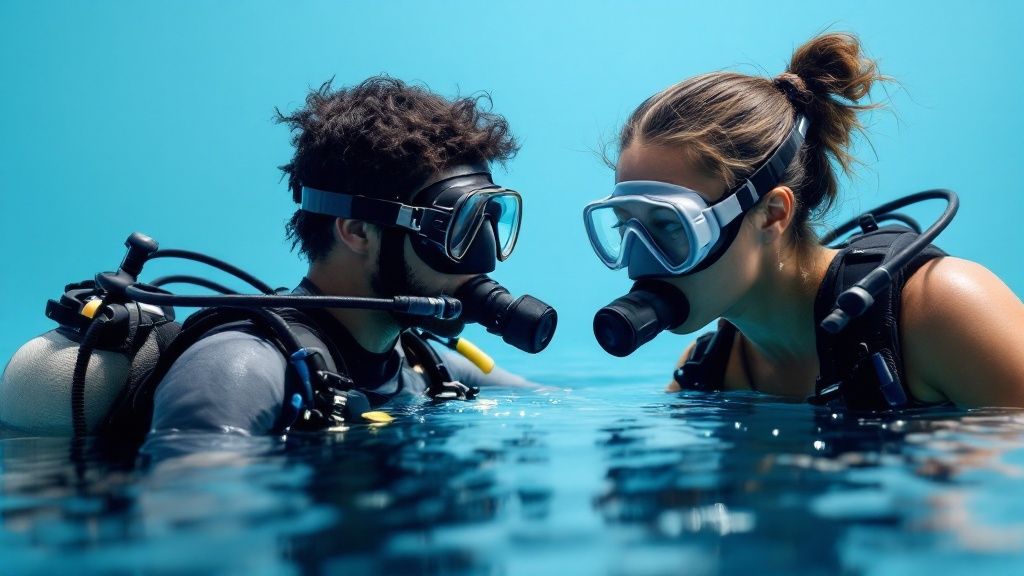
But if you’re not certified yet, don’t worry—you can still get in the water! You can sign up for an introductory experience, often called a Discover Scuba Dive. It’s the perfect way to try diving safely with one of our professional instructors right by your side, no certification required. It's a fantastic taste of the adventure that awaits.
Ready to dive into the crystal-clear waters of Kona? At Kona Honu Divers, we offer a range of tours for every skill level, from breathtaking reef explorations to the unforgettable Manta Ray Night Dive. Let our experienced crew show you the best of Big Island scuba diving.