
Imagine dropping into perfectly clear, turquoise water. Sunlight streams down from the surface, lighting up an incredible underwater world of ancient lava tubes and sprawling coral gardens. That's the magic of scuba diving on the Big Island—it’s an experience you just can't find anywhere else.
Exploring the Underwater World of Hawaii’s Big Island
This guide is your ticket to that world. We're going to dive deep into what makes this place so special, exploring why the calm, sheltered Kona coast is a paradise for divers and a sanctuary for gentle giants like graceful manta rays and serene Hawaiian green sea turtles.
We'll show you not just where to go, but how to truly connect with this unique underwater ecosystem. Whether you're dreaming of the world-famous Manta Ray Night Dive or a quiet afternoon exploring a submerged volcanic crater, we'll cover everything you need to plan an unforgettable adventure with a top-notch operator like Kona Honu Divers.
A Landscape Forged by Fire
The Big Island’s volcanic heart is what makes the diving here so unique. Forget typical, flat reefs; here, the underwater landscape is a dramatic tapestry of rugged lava tubes, massive archways, and intricate formations sculpted by ancient lava flows. This creates a playground for divers and a perfect habitat for marine life.
A perfect example is Turtle Pinnacle. This shallow reef is a natural 'cleaning station' for Hawaiian green sea turtles, or honu. It’s not uncommon to see several of them at once, just hanging out or gliding through the water, which is usually between 30 to 60 feet deep. This one site shows just how much life the island’s complex geology supports, drawing divers from all over for incredible encounters. You can learn more about the unique topography of Kona dive sites to get a better sense of what’s waiting for you.
What to Expect on Your Dive
Diving in Kona is about more than just looking at fish—it’s about immersing yourself in a vibrant, living environment. Here’s a little taste of what makes it so incredible:
- Mind-Blowing Visibility: The water clarity here is unreal, often stretching beyond 100 feet. It really feels like you’re flying through a vast, blue cathedral.
- Volcanic Topography: You won't find boring, sandy bottoms. Instead, you'll be navigating through dramatic archways, swim-throughs, and caverns that lava flows carved out centuries ago.
- Tons of Marine Life: All those nooks and crannies create the perfect home for an incredible density of marine creatures, from tiny, colorful nudibranchs to big, open-ocean visitors.
So, let's get started and explore the best diving tours the Big Island has to offer.
What Makes Kona Diving a World-Class Experience
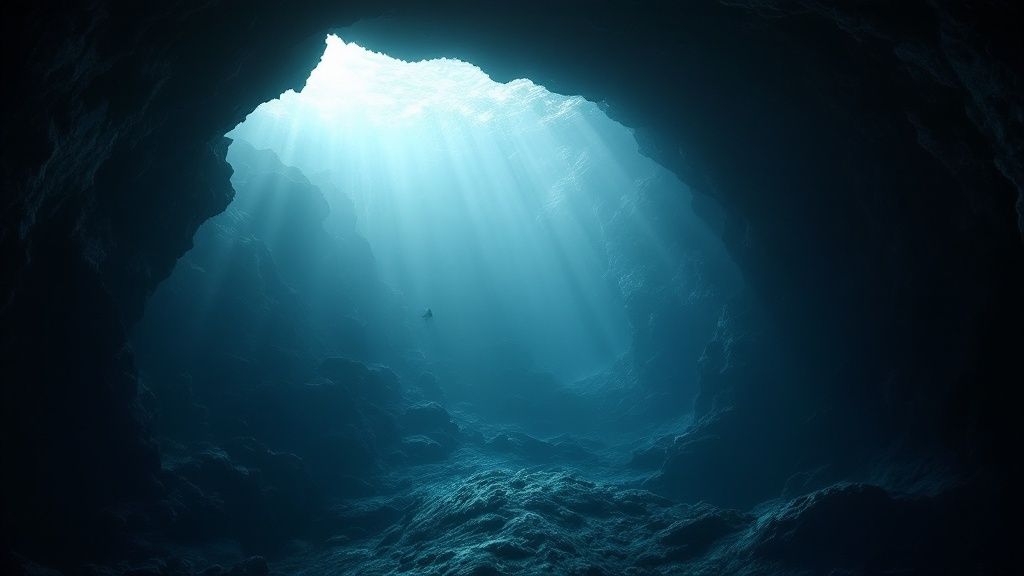
Ask any seasoned diver about their bucket list, and you'll probably hear them mention Kona. There's a reason divers flock to the Big Island from all over the world. It’s not just one thing; it's a perfect storm of geology and geography that has created an underwater playground unlike anywhere else.
The secret starts with the island itself. The massive volcanoes, Mauna Loa and Hualalai, act as a natural shield, protecting the Kona coast from the gusty trade winds and heavy ocean swells that churn up the waters elsewhere. This creates incredibly calm, predictable conditions almost year-round.
The result? Water clarity that will absolutely spoil you. Visibility often pushes past 100 feet, making you feel like you're floating through a sun-drenched cathedral. You see everything, which is good, because there is so much to see.
An Underwater Landscape Forged by Fire
The true magic of diving here lies in the topography. This isn't your typical flat, sandy reef. The seafloor is a direct reflection of the island's volcanic birth, and it is spectacular. Instead of a gentle slope, you get a dynamic, three-dimensional world to explore.
Get ready to navigate some of the most incredible natural structures imaginable:
- Ancient Lava Tubes: Imagine swimming through a massive, hollowed-out tunnel formed by flowing lava centuries ago. These tubes are now highways for schools of fish and hideouts for reclusive eels.
- Dramatic Arches and Pinnacles: You'll encounter stunning underwater archways and towering rock spires that rise from the abyss. They’re breathtaking landmarks in their own right.
- Submerged Craters: Descend into the remnants of old volcanic craters, where the circular walls have become a sanctuary for a dense concentration of marine life.
These aren't just pretty rock formations; they create an incredibly complex and diverse habitat. Every crack and crevice is a home for something, from tiny, jewel-colored nudibranchs to larger predators like jacks and moray eels. It means every single dive is a genuine adventure of discovery.
A Year-Round Diver's Paradise
The dive season in Kona never really ends. The water temperature is wonderfully consistent, hovering between a comfortable 75°F in the winter and a balmy 80°F in the summer. This stability makes planning a trip a breeze, no matter when you can get away.
If you happen to visit between December and March, you’re in for an extra treat—the sound of humpback whales singing as they pass through on their annual migration. It's a haunting, beautiful soundtrack to a dive you'll never forget. You can get more details on Hawaii's year-round diving conditions to plan the perfect trip.
The combination of protected waters, volcanic structures, and consistent conditions means there's a perfect dive site for everyone, from a first-time certification student to a seasoned explorer seeking new challenges.
Whether you're taking your first breath underwater or have hundreds of dives under your weight belt, the Kona coast offers an experience that will leave you speechless. It’s an environment that constantly reveals new wonders, cementing its reputation as a world-class diving destination.
Ready to see it for yourself?
Bucket-List Dives You Can Only Do in Kona
Some dives just hit different. They aren't just another entry in your logbook; they're the ones that stick with you, the stories you can't wait to tell. The Big Island is home to a few of these life-changing underwater experiences—encounters you genuinely can't get anywhere else on the planet.
The undisputed champion of Big Island scuba diving has to be the world-famous Manta Ray Night Dive. Honestly, calling it a "dive" doesn't do it justice. It's more like an underwater ballet. Picture this: you kneel on the sandy ocean floor just after sunset, click on your dive light, and wait. Before long, giant shadows emerge from the deep blue, and suddenly you’re surrounded by dozens of massive manta rays, some with wingspans up to 16 feet, gliding and somersaulting inches from your face.
They’re drawn in by the plankton that flock to the lights, putting on a show of silent, graceful flight that is absolutely mesmerizing. It's a humbling, almost spiritual connection with nature that leaves even the most jaded divers completely spellbound. This is the iconic Kona experience, and you can learn more about how to prepare for it in our Kona Manta Ray Night Dive guide.
The Thrill of the Abyss: The Kona Blackwater Dive
If you've got a taste for the truly adventurous, the Kona Blackwater Dive is a trip into another dimension. This isn’t your typical reef dive. Here, you’re tethered to a boat miles offshore, drifting in the pitch-black over thousands of feet of open ocean.
Every night, the largest migration on Earth happens when countless strange creatures swim up from the crushing depths to feed near the surface. You just float in the darkness, and your light beam becomes a stage for a parade of bizarre and beautiful deep-sea organisms. Many are bioluminescent, creating their own light, and some are so new to us they haven't even been named by science. It's the closest you'll ever get to being an astronaut exploring a galaxy of alien life.
This dive is pure adrenaline mixed with the thrill of discovery. You have absolutely no idea what will drift into your beam of light—it could be an iridescent comb jelly or an otherworldly larval fish.
Beyond the Night: Honu and Lava Tubes
While the night dives get a lot of the hype, Kona’s daytime diving has its own unique magic. The island’s volcanic past has sculpted an underwater landscape that’s an adventure all on its own.
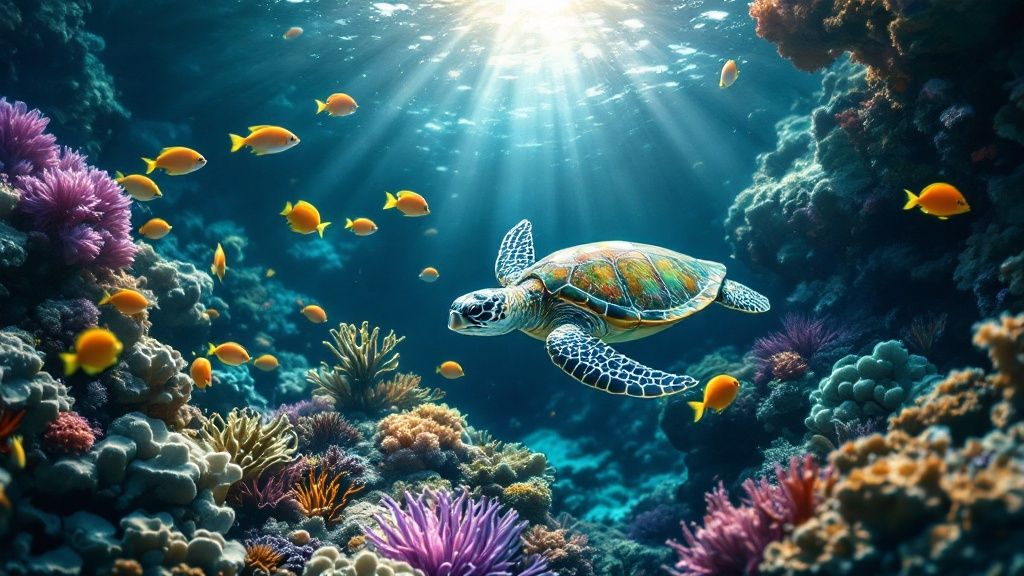
- Turtle Cleaning Stations: One of the most peaceful and reliable encounters you can have is with the Hawaiian green sea turtle, or honu. At specific spots known as "cleaning stations," these gentle giants gather to let smaller reef fish nibble parasites off their shells. You get to watch them up close in a totally natural, relaxed state.
- Exploring Lava Tubes: Those same volcanic forces also created an incredible network of submerged lava tubes, caverns, and archways. Swimming through these ancient formations feels like exploring another world. The way the light filters through cracks in the ceiling is just spectacular, revealing the raw power of the lava that once flowed there.
These signature dives—the manta ballet, the blackwater abyss, and the volcanic playgrounds—are what make Big Island scuba diving a true bucket-list adventure. They’re the reason Kona stands out as a world-class destination.
Finding the Perfect Dive Site for Your Skill Level
The Kona coast is absolutely packed with incredible dive sites, and the real secret to an amazing Big Island scuba diving adventure is matching the right spot to your comfort and skill level. Whether you're about to take your first breaths underwater or you've got a logbook full of deep dives, there's a piece of this volcanic paradise waiting for you.
One of the best things about diving here? "Easy" never means "boring." Our calm, protected waters mean you don't have to fight strong currents to see world-class marine life. It’s the perfect setup for new divers or anyone who just wants a relaxed, beautiful day on the reef.
When you dive with a top-notch crew like Kona Honu Divers, you know they'll pick the perfect spot based on the day's conditions and the group's experience. It takes all the guesswork out of it.
For Beginners and Casual Divers
Just got certified? Or maybe you just want a chill dive to soak in the scenery. Kona’s shallow reefs are your answer. These sites are tucked away in protected bays, offering calm water and super easy navigation.
A perfect example is Pawai Bay. This place is a living kaleidoscope, buzzing with colorful tropical fish—think bright yellow tangs, butterflyfish, and parrotfish everywhere you look. With max depths around 40-50 feet, you get tons of bottom time to explore the healthy corals and cool lava rock formations. It’s an ideal spot to build confidence and just enjoy the ride.
For the Intermediate Explorer
Once you’ve got a few dives under your belt and your buoyancy is dialed in, a whole new set of sites opens up. These spots often have more interesting topography, like lava tube swim-throughs, dramatic arches, and deeper pinnacles that require a bit more awareness.
Turtle Pinnacle is a must-do for any intermediate diver. It's a well-known "cleaning station," a spot where Hawaiian green sea turtles (honu) hang out while smaller fish nibble parasites off their shells. Seeing these ancient animals up close is just magic. The site also has some fun swim-throughs and a max depth of around 60-70 feet, making it the perfect mix of wildlife and adventure.
This is where you really start to appreciate the three-dimensional world of Kona diving. You're not just swimming over a reef; you're moving through it.
For the Advanced and Adventurous Diver
Ready to push your limits? For seasoned divers, Kona delivers with deeper, more remote, and technically challenging sites. The reward for your experience is stunning geology and a real chance of spotting bigger pelagic species.
One of the most jaw-dropping advanced sites is Au Au Crater. Dropping down into this submerged volcanic cone is an unforgettable experience. You can descend along the crater wall as it plunges into the deep, exploring ledges that shelter a ton of life. It’s common to find whitetip reef sharks resting on the sandy bottom, and if you’re lucky, you might even spot scalloped hammerheads cruising by in the blue.
For the ultimate thrill, a charter to a more remote site could put you face-to-face with sharks, rays, and other big animals. Kona Honu Divers runs specialized trips for certified divers ready for a bigger challenge. If you've got an advanced certification and are looking for a trip you’ll never forget, check out their premium advanced dive tours.
To give you a better idea of what to expect, here’s a quick rundown of some of the most popular dive sites along the Kona coast.
Big Island Dive Site Comparison
| Dive Site | Best For | Max Depth | Key Marine Life |
|---|---|---|---|
| Pawai Bay | Beginners | 50 ft | Tropical fish, eels, octopus |
| Turtle Pinnacle | Intermediate | 70 ft | Green sea turtles, frogfish, eels |
| Au Au Crater | Advanced | 100+ ft | Whitetip reef sharks, eagle rays |
| Golden Arches | All Levels | 60 ft | Manta rays, vibrant corals, eels |
| Suck 'em Up | Intermediate | 60 ft | Lava tubes, unique topography |
This is just a small sample, of course. The best site for any given day always depends on the ocean conditions, but this gives you a great starting point for planning your dives.
No matter your level, the most important thing is diving with a professional crew who knows these waters inside and out. They’ll ensure you’re safe while putting you in the best possible position for the incredible underwater experience that makes Big Island scuba diving so legendary.
Why Your Kona Dive Operator Matters
Let’s be honest, the difference between a pretty good dive and a mind-blowing one almost always comes down to the crew leading you. When you’re planning your Big Island scuba diving adventure, who you dive with is just as important as where you dive. It’s not just about a boat ride; it’s about having total trust in the team, their expertise, and their genuine love for the ocean.
A truly great dive operator turns a trip underwater into something you'll talk about for years. Their passion is contagious. Suddenly, you're not just looking at coral; you're learning its story. They don't just point out fish; they introduce you to the locals.
What to Look for in a Dive Company
As you’re weighing your options, a few things really stand out. A PADI 5-Star Instructor Development Center is a huge green flag—it's a sign that they meet the very highest standards for training and professionalism. But what I really tell people to look for is the PADI 'Green Star' award.
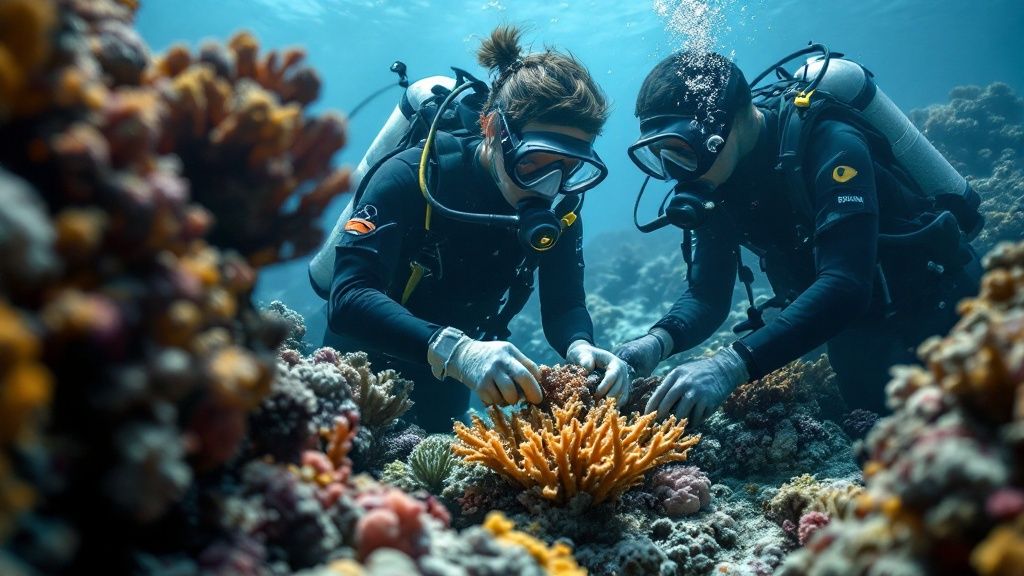
That 'Green Star' isn't just a sticker. It’s a serious commitment. It means the dive shop actively works to protect the very reefs you’ve traveled all this way to see. By choosing them, you know your money is helping to preserve this incredible underwater world.
The right guide doesn't just show you fish; they reveal the secrets of the reef. They know the hidden corners where rare creatures hide and can spot marine life you might otherwise miss, ensuring every dive is packed with wonder.
Small Groups and Big Experiences
Nothing beats a personalized dive. An operator who keeps their groups small is one who cares about your experience. It’s safer, more fun, and lets the crew really tune the dive to what the group wants to see and do.
Here are a few things that truly separate the best from the rest:
- Experienced Crew: A seasoned captain who knows how to find calm water on a choppy day is worth their weight in gold. And divemasters who know these sites like their own backyard? They’ll take you to the spots that aren’t on the standard map.
- Meticulous Gear Maintenance: Your safety is everything. A top-notch shop doesn't cut corners on gear. When the equipment is high-quality and perfectly maintained, you can relax and just enjoy the dive.
- A Culture of Respect: The best guides don’t just love the ocean; they protect it. They’ll give you a solid briefing on how to interact with marine life respectfully, making sure we all leave the reef just as beautiful as we found it.
Choosing a team like Kona Honu Divers means you’re more than a customer—you’re a guest being invited into their world. To get a better sense of what diving here is all about, check out our complete guide to Big Island scuba diving. You can also see what other divers thought about their trips with us below.
Ready to book an unforgettable dive?
Planning Your Big Island Diving Trip
A little bit of prep work can make a world of difference for your Big Island scuba diving vacation. Taking care of the logistics—from flights to gear—before you leave means you can spend less time stressing and more time enjoying the incredible underwater world waiting for you.
First thing’s first: when should you visit? Honestly, there’s really no bad time to dive in Kona. The water stays warm and the conditions are consistently calm pretty much all year.
That said, if you come during the winter months, from about December through March, you get a spectacular bonus. It’s humpback whale season, and while seeing one on a dive is rare, hearing their haunting songs underwater is an experience you will never, ever forget. It adds a whole other layer of magic to the dive.
Getting Here and Getting Around
You'll almost certainly fly into Kona International Airport (KOA). It's a classic open-air airport that instantly welcomes you with that aloha spirit. Best of all, it’s just a quick drive from Honokohau Harbor, the hub for nearly all Kona dive boats, including our fleet at Kona Honu Divers.
I’d highly recommend renting a car. It gives you the freedom to explore the island on your non-diving days. You can go from the lush rainforests on the Hilo side to the stark, beautiful volcanic landscapes down south—it’s an incredibly diverse place.
Your Essential Packing List
While we have excellent rental gear available, most seasoned divers know there’s nothing like the comfort and fit of your own equipment. For a full rundown, check out our guide on the gear you will need for your Kona diving adventure.
At the very least, you should think about packing these personal items:
- Your Own Mask and Dive Computer: A mask that fits your face perfectly is the difference between a great dive and a frustrating, leaky one. And bringing your own computer means you’re already comfortable with its settings and display.
- Reef-Safe Sunscreen: To protect our fragile coral, Hawaii has banned sunscreens with oxybenzone and octinoxate. Please help us preserve this amazing ecosystem by using a mineral-based sunscreen with zinc oxide or titanium dioxide.
- Reusable Water Bottle: Staying hydrated is key, especially in the Hawaiian sun. Bringing your own bottle helps cut down on plastic waste.
- A Light Jacket or Windbreaker: You’d be surprised how chilly the boat ride back can feel, especially after a night dive when the sun is down.
Here's the single most important tip I can give you: book your dives well in advance. Our most popular trips, especially the Manta Ray Night Dive, can be fully booked weeks or even months out. Lock in your spot early so you don't miss out.
Once you have these details sorted, you’re ready for the trip of a lifetime.
Frequently Asked Questions About Kona Diving
Planning your dive trip to the Big Island? You've probably got a few questions. Here are the answers to some of the most common things we get asked, straight from our team of experienced Kona divers.
How Cold Is the Water? What Wetsuit Should I Pack?
The water here is wonderfully warm all year. You can expect temperatures to hover around a comfortable 75°F (24°C) in the winter and climb to a balmy 80°F (27°C) in the summer.
For most people, a 3mm or 5mm full wetsuit is perfect. It really comes down to your personal preference—if you tend to get chilly, go for the 5mm, but a 3mm is often more than enough to keep you comfortable.
Do I Need to Be an Advanced Diver for the Manta Ray Night Dive?
Absolutely not! This is one of the biggest misconceptions. The world-famous Manta Ray Night Dive is actually one of the most accessible and incredible dives you can do, even as a brand new diver.
You'll be kneeling on the sandy bottom in a pretty shallow spot, usually around 30-40 feet. Your job is to just relax and watch the show. It's a breathtaking experience for divers of all skill levels.
What About Sharks or Other Dangerous Animals?
It's a fair question, but serious incidents with marine life in Kona are extremely rare. The local underwater residents are generally quite used to divers and are not aggressive.
Your dive guide will give you a detailed briefing on how to interact with wildlife respectfully and safely. The golden rule is simple: listen to your guide, keep your hands to yourself, and you'll have an amazing, safe time.
How Far in Advance Should I Book My Dives?
I can't stress this enough: book ahead, especially if you're traveling during a busy season like summer or over the holidays.
The Manta Ray Night Dive is on almost everyone's bucket list and sells out fast. To avoid missing out, we strongly suggest booking your spot at least a month in advance. For other dives, a few weeks out is usually a safe bet.
Ready to book your underwater adventure?
At Kona Honu Divers, our passion is sharing Hawaii's incredible underwater world with you safely. Take a look at all our diving tours and let's get you in the water.