
Picture this: you're sinking into a silent world, a landscape carved by molten rock meeting the vast Pacific Ocean. Ancient lava tubes, once channels for flowing fire, are now intricate hallways teeming with life. This is what scuba diving on the Big Island is all about—a raw, powerful blend of volcanic geology and a flourishing underwater world. The Kona coast, in particular, is a diver's dream, with conditions that are simply world-class.
Welcome to Hawaii’s Underwater Volcano Playground
The Big Island isn't just another pretty spot to go diving. It's an aquatic wilderness forged by volcanic fury. That dramatic underwater topography—the arches, caves, and canyons—is a direct result of the island's fiery birth, creating a playground unlike any other. This is what makes every dive here feel like you're exploring a new planet.
So, what's Kona's secret? It's all about the volcanoes. The coast is perfectly shielded from the Pacific's relentless trade winds by the sheer mass of Mauna Loa and Mauna Kea. This massive natural barrier creates the calm, clear water we divers live for, making it a spectacular place to dive any day of the year. We dive deep into how these geological giants shape our island in our article on the Mauna Loa volcano eruption.
What Makes Kona Diving So Special
Simply put, the conditions here are fantastic, day in and day out. The water stays in that perfect sweet spot between 75-80°F (24-27°C), and it's not uncommon for visibility to stretch well past 90 feet. That kind of clarity and warmth sets the stage for the incredible marine life that thrives along our shores.
This stable environment is a magnet for a huge variety of species, many of which you can only find right here in Hawaiian waters. On any given dive, you're likely to see:
- Majestic green sea turtles cruising by.
- Dazzling schools of endemic reef fish.
- And of course, the world-famous manta rays performing their incredible nighttime feeding ballet.
With over 1,000 established dive sites, the Big Island truly has something for everyone. We have shallow, protected reefs perfect for those just getting their fins wet, as well as deep volcanic structures like lava tubes and dramatic arches for more experienced divers seeking advanced dive opportunities. This incredible range cements its reputation as one of the best places to dive on Earth, a topic we explore more in this guide on why the Big Island is a top choice for divers. Ready to see it for yourself? Take a look at our diving tours and let's plan your adventure.
Why Divers Choose the Big Island Over Other Destinations
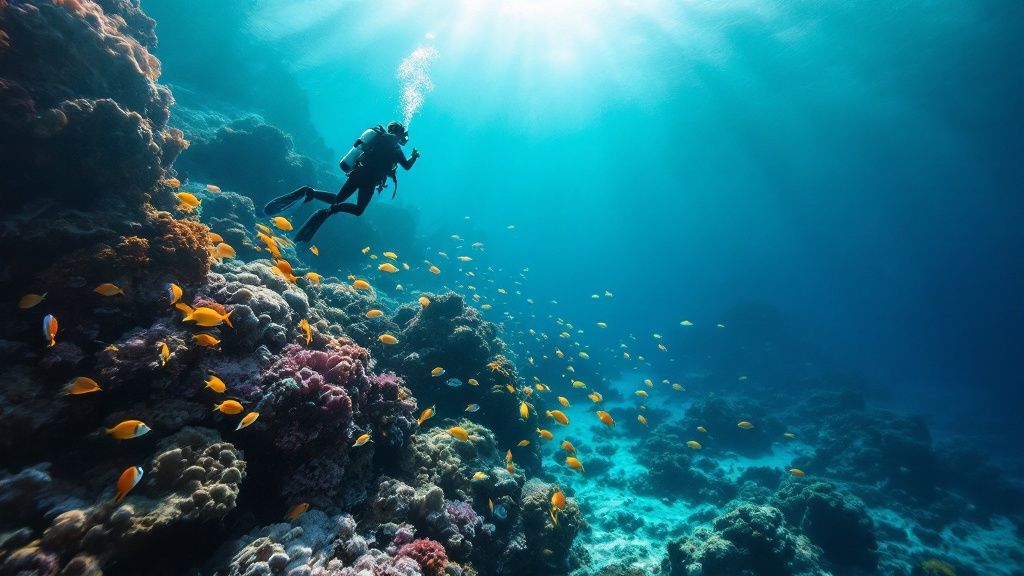
So, with a whole planet of incredible diving spots, what makes the Big Island so special? It's a powerful combination you just don't find anywhere else: raw volcanic geology meeting a burst of marine biodiversity.
Plenty of tropical places have pretty reefs, but the Big Island offers a dramatic underwater world forged by fire.
Imagine dropping into a landscape of massive underwater arches, old craters, and ancient lava tubes. These aren't just cool rock formations; they're bustling neighborhoods for marine life. This volcanic foundation creates a complex, rugged seascape that feels more like exploring an untouched wilderness than a manicured garden.
This unique environment is also a haven for species you won’t easily find elsewhere, including a high percentage of endemic fish that live only in Hawaiian waters. It’s this blend of dramatic structure and one-of-a-kind life that makes diving here so adventurous and unforgettable.
Unbeatable Conditions and Unique Encounters
Beyond the striking topography, the Big Island serves up some of the most consistent and comfortable diving conditions on Earth. Tucked away on the Kona coast and sheltered by massive volcanoes, the seas stay remarkably calm, and the water clarity often pushes past 100 feet.
Plus, water temperatures hang out in a pleasant 75-80°F (24-27°C) all year long. That means you can leave the bulky cold-water gear at home.
These dream conditions make every dive, from a shallow reef exploration to a deep volcanic wall, both comfortable and visually stunning. That reliability is a huge advantage over other top-tier destinations where unpredictable weather can scrap your plans. The calm waters also make the island's famous dives, like the Manta Ray Night Dive, possible and spectacular almost every single night.
The consistency on the Kona coast means you can plan a dive trip any month and expect fantastic visibility and warm water. That’s a luxury not many world-class diving locations can guarantee.
Big Island Diving vs. Other Global Hotspots
Every major diving destination brings something different to the table. While Australia's world-renowned Ningaloo Reef is famous for its massive coral systems, the Big Island’s appeal lies in its volcanic soul. Here’s a quick look at how they stack up.
| Feature | Big Island (Kona Coast) | Caribbean | Great Barrier Reef |
|---|---|---|---|
| Underwater Landscape | Volcanic lava tubes, arches, craters | Colorful coral reefs, shipwrecks | Extensive coral formations, bommies |
| Marine Life Highlights | Manta rays, endemic fish, sea turtles | Diverse reef fish, rays, nurse sharks | Sharks, turtles, vibrant coral gardens |
| Typical Visibility | Excellent (80-100+ feet) | Good (50-80 feet) | Varies (30-100 feet) |
| Best Diving Season | Year-round due to sheltered coast | Primarily during the dry season | Varies by region; cyclone risk |
As you can see, the Big Island’s edge comes from its truly unique volcanic topography and incredibly consistent, year-round diving conditions. This is what ensures that every underwater adventure here is unlike any other on the planet.
The Big Island’s Must-See Dive Sites
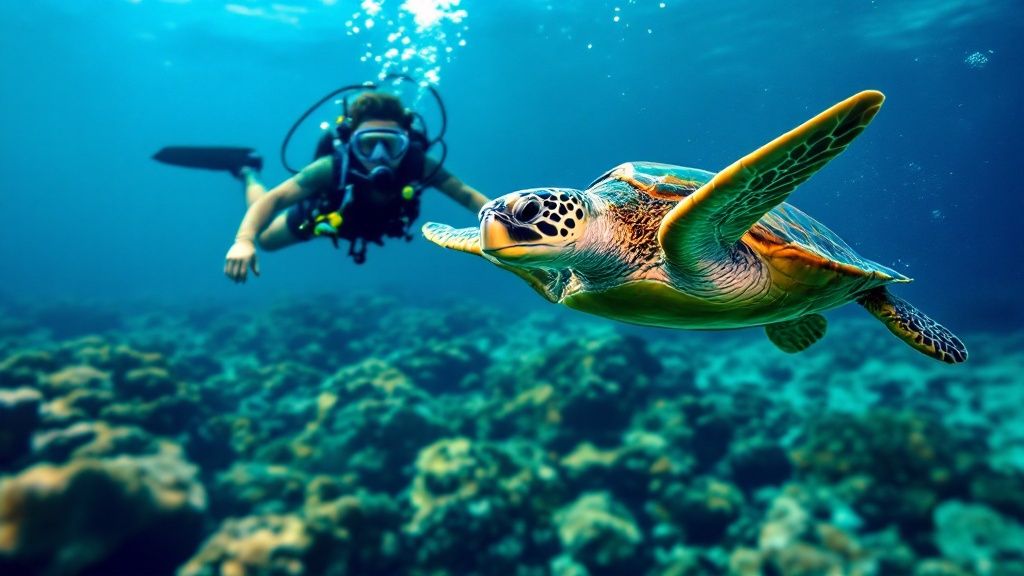
The Big Island isn't just a place to dive; it's a collection of legendary underwater experiences. You’re not just checking spots off a list. You’re signing up for the world-famous manta ray ballet, serene afternoons with sea turtles, and explorations through ancient lava tubes.
Each site along the volcanic coastline tells a different story. The sheer variety here is incredible, ensuring no two dives are ever the same. Ready to see what makes Big Island scuba diving so unforgettable? Let's jump in.
The Legendary Manta Ray Night Dive
There are dives you remember, and then there's the Manta Ray Night Dive. This is more than just a dive; it's a full-blown spectacle that has earned its place on bucket lists worldwide. Explore manta ray dive tours to see it for yourself.
As the sun sets, boats head out to what the locals call "feeding stations." Powerful lights are placed on the ocean floor, which act like a giant beacon for plankton. Soon, the water column is thick with it.
And then, the magic starts. Giant manta rays, some with wingspans over 12 feet, emerge from the darkness. They glide, swoop, and perform effortless barrel rolls through the light beams, feasting on the plankton in a silent, hypnotic ballet. It's consistently ranked as one of the best night dives on the planet for a very good reason.
The feeling of a massive manta ray gliding inches above your head is indescribable. It’s a powerful connection to the ocean that stays with you long after you surface.
Turtle Pinnacle: A Haven for Honu
If your dream is to swim alongside the beloved Hawaiian Green Sea Turtle, or honu, then Turtle Pinnacle is your spot. Think of this place as a natural day spa for turtles.
It’s a classic "cleaning station," where turtles line up to let smaller reef fish nibble away algae and parasites. As a diver, you can find a comfortable spot on the sand, relax, and just watch the show as turtle after turtle drifts in for a cleaning. They’re so used to divers here that they go about their business completely unfazed, giving you incredible, up-close encounters.
- What to Expect: Generally calm conditions and great visibility, making it a perfect dive for any skill level.
- Marine Life: Besides the dozens of turtles, you'll see the "cleaner crew" of butterflyfish, tangs, and wrasses hard at work.
- Best Time to Dive: The spa is busiest in the morning, so that’s your best bet for seeing the most action.
Golden Arches: Dramatic Volcanic Formations
Golden Arches is where the Big Island really shows off its volcanic soul. This dive site is all about the breathtaking underwater architecture—huge lava rock arches you can actually swim through.
Exploring these formations feels like you’re navigating the ruins of an ancient, sunken cathedral. The arches are draped in colorful corals and sponges, and when the sunlight filters through from above, it creates stunning light rays that photographers go crazy for. It's a powerful reminder of how the island was forged by fire.
This is the kind of unique topography that really sets Big Island scuba diving apart. If you're itching to see more of these underwater marvels, the crew at Kona Honu Divers knows all the best spots and shares a great list of their favorite Kona dive sites.
The Mysterious Kona Blackwater Dive
Ready for something completely different? The Kona Blackwater Dive is for the truly adventurous soul. This isn't a reef dive. At all.
Instead, a boat takes you miles offshore at night, over thousands of feet of inky black water. You're connected to the boat by a tether and just… float. You're suspended in the open ocean, waiting to see what comes up from the deep.
And what comes up is truly alien. This is your chance to witness one of the largest migrations on Earth, as bizarre, translucent, and bioluminescent creatures rise from the abyss to feed. You’ll see larval fish, otherworldly squid, and jellies that pulse with their own light. It’s a glimpse into a part of the planet that very few people will ever see. This is a highly specialized dive, but if you have the experience and a thirst for the unknown, it's an absolute must-do. You can book a Blackwater Dive tour here.
Planning Your Big Island Dive Trip
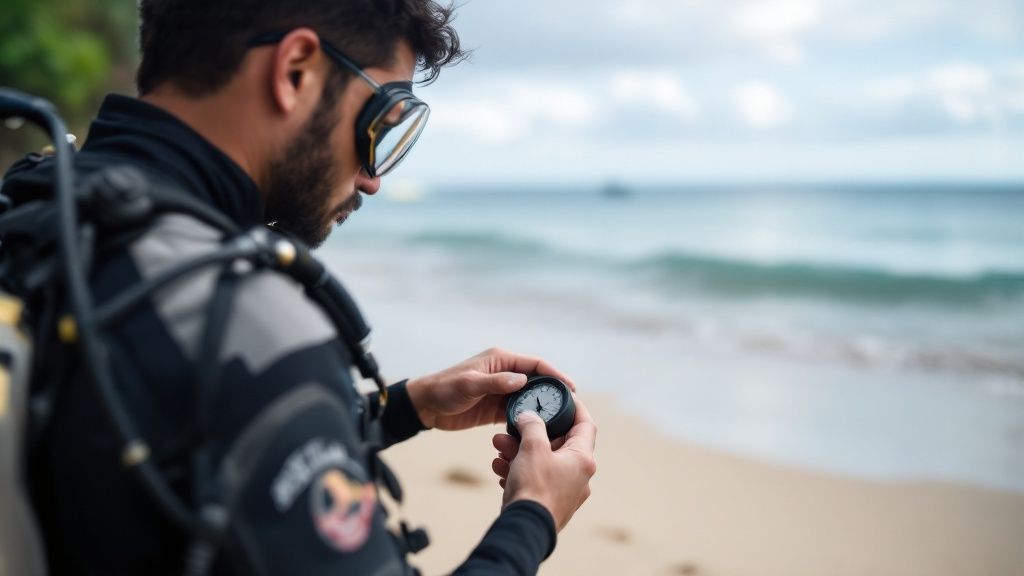
A successful dive trip to the Big Island starts long before you ever hit the water. Think of the planning phase as your pre-dive check; getting all the details sorted out now means you can show up relaxed and ready to fully immerse yourself in the experience.
We'll walk through the essentials, from picking the right season for your goals to deciding what gear is worth packing. Getting this right is what separates a good trip from an unforgettable one.
When Is the Best Time for Big Island Scuba Diving
One of the best things about diving the Kona coast is that there's really no bad time to go. The massive volcanoes on the island act as a natural shield, keeping the waters remarkably calm and clear almost all year.
Still, there are a couple of seasonal quirks that might help you decide when to book your flight.
- Summer (May to September): This is what most people consider the peak season. The water is at its warmest, usually around a balmy 80°F (27°C), and the ocean is often as flat as a lake. It's ideal for those long, leisurely dives and glassy-smooth boat rides.
- Winter (December to March): The water might cool down a touch to about 75°F (24°C), but winter offers something truly special: humpback whale season. You haven't lived until you're underwater and can hear whale songs echoing around you. It's a powerful, humbling experience you'll never forget.
The Big Island consistently ranks as Hawaii's premier diving destination, and for good reason. Conditions are fantastic year-round, but those calmest, warmest waters between May and September are hard to beat. The world-famous Manta Ray Night Dive is a huge draw, with visibility often better than 60 feet at a site that’s accessible for everyone. Find out more about why Big Island scuba diving is a world-class experience on konahonudivers.com.
What to Expect from Diving Conditions
Knowing what you’re jumping into helps you prepare and get the most out of every dive. The good news is, Kona’s conditions are typically a diver’s dream.
Water Temperature
The water stays in a very comfortable 75-80°F (24-27°C) range. For most people, a 3mm or 5mm wetsuit is perfect. I usually recommend a 5mm if you tend to get chilly or are planning multiple dives in a day, especially if one of them is a night dive.
Visibility
Kona is legendary for its water clarity. It's not uncommon for visibility to push past 80 feet, and on a good day, it can easily exceed 100 feet. This is what makes underwater photography here so spectacular—you can see everything!
Currents
Because the Kona coast is so well-protected, currents are rarely an issue. At most of the popular sites, you'll find conditions are mild to non-existent. This makes for wonderfully relaxed diving that's great for beginners and seasoned pros alike. Your divemaster will always give you a thorough briefing on the day's specific conditions before you get in.
Packing Your Dive Gear
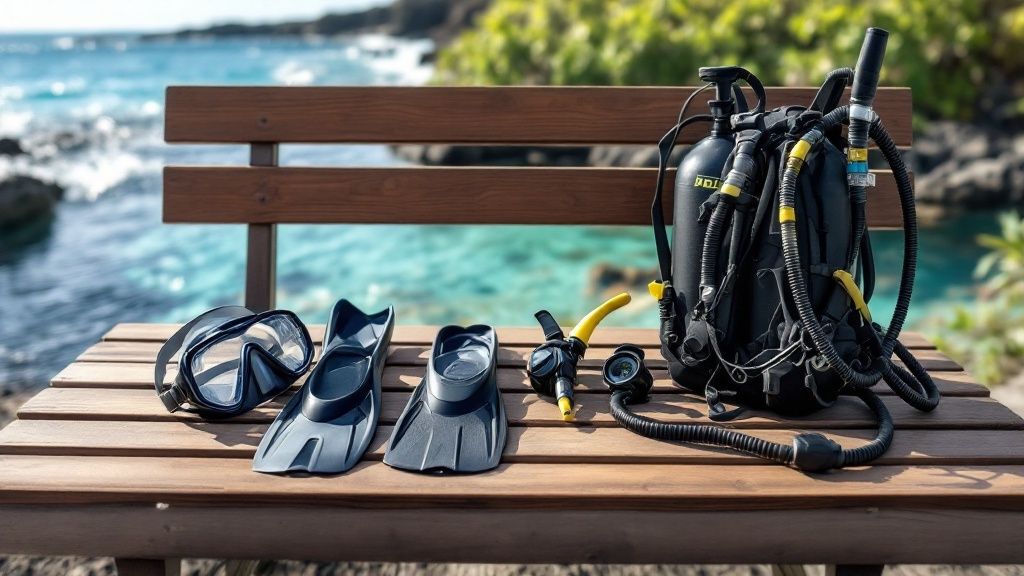
The age-old question: pack it or rent it? While there’s nothing like the comfort of your own gear, you can save a ton of hassle and airline fees by renting quality equipment from a reputable shop like Kona Honu Divers.
Packing Tip: My rule of thumb is to bring the things that are all about personal fit. Your mask, dive computer, and maybe your wetsuit should come with you. Bulky items like BCDs and regulators are easy to rent and are professionally serviced by the best operators.
Here’s a quick checklist to make the decision easier:
- Must-Bring: Your certification card, logbook, dive computer, and mask. No exceptions.
- Consider Bringing: Your wetsuit and fins if you love the fit, plus any personal camera gear.
- Easy to Rent: BCD, regulators, tanks, and weights. Let the dive shop handle the heavy lifting.
Nailing down these details ahead of time paves the way for a smooth, stress-free vacation. That way, you can save all your energy for the incredible adventure waiting just below the surface.
How to Choose the Right Kona Dive Operator
Let's talk about the most important choice you'll make for your Big Island scuba diving trip: picking the right dive operator. This decision goes way beyond just getting a boat ride to a reef. The crew you dive with is responsible for your safety, your comfort, and ultimately, how amazing your underwater experience will be.
A great operator can turn a good dive into the highlight of your entire vacation. A bad one? Well, let's just say it can ruin the whole thing. The best companies put safety first, run comfortable and well-maintained boats, and have divemasters who know the local sites like their own backyard. They’re your key to unlocking Kona's incredible underwater world.
What to Look for in a Dive Company
When you start looking at different dive shops, there are a few non-negotiables you should check for. These aren't just details; they're strong signs of a professional, safe, and customer-focused operation that genuinely cares about your experience and the health of the ocean.
First up, check their credentials. Are they a PADI 5-Star Dive Center? Think of this as a badge of honor in the scuba world. It means they’ve met high standards for training, safety, and service, so it’s a great starting point.
Next, ask about their guide-to-diver ratio. The best operators know that small groups are better for everyone. You get more personal attention from your divemaster, and you avoid that crowded, cattle-car feeling you get with some of the bigger tours. It’s just a safer, more relaxed, and personal way to see the reefs.
Here are a few other crucial questions to get answers to:
- What are their safety protocols? Do they give solid briefings before every dive? Is there emergency oxygen on the boat? How often do they service their gear?
- How's the boat? You’ll be spending a good chunk of your day on it, so comfort matters. Look for things like shade, a freshwater rinse, and an easy way to get in and out of the water.
- What's their take on the environment? A truly great operator acts as a guardian of the ocean. They should be all about responsible diving practices and marine conservation.
Top-Rated Operators in Kona
When it comes to Big Island scuba diving, a few names consistently stand out from the crowd. Kona Honu Divers is widely seen as one of the top choices, and for good reason. They've built a stellar reputation on fantastic customer service, a seriously experienced crew, and a real knack for creating dive trips that feel special.
Read their five-star reviews, and you'll see a common theme: people rave about the crew's professionalism and the quality of the whole operation. They’re a perfect example of a company that gets everything right—safety, comfort, and local expertise.
Of course, there are other fantastic options in town. Jack's Diving Locker and Big Island Divers are also local institutions with long histories of running excellent diving tours. It's always a good idea to check out a few places to see who you connect with.
The dive industry is a huge part of the local economy here, and the best operators set the standard. By keeping group sizes small, they not only improve safety but also attract divers who are looking for a more personal, guided experience. This focus on quality and conservation is what keeps Kona's dive scene so strong.
At the end of the day, a little research goes a long way. Choosing a company that fits your style ensures your underwater adventure will be safe, fun, and totally unforgettable. To get a better idea of all the incredible sites you can explore, check out our complete guide to Big Island scuba diving.
Your Big Island Diving Questions, Answered
https://www.youtube.com/embed/qr8iY4Xrxs0
Alright, let's wrap things up by tackling some of the most common questions divers have before heading to the Big Island. Getting these sorted out ahead of time is the key to a smooth, safe, and incredible trip. Think of this as your final checklist before you pack your bags and get ready to hit the water.
From what gear to bring to what you might see, we’ve got you covered.
Do I Need to Be Certified to Scuba Dive on the Big Island?
For just about any boat dive, the answer is yes. Reputable dive shops require an Open Water certification (or equivalent) from a recognized agency like PADI. This isn't just a rule; it's a safety standard to make sure everyone in the water has the essential skills to dive responsibly.
But what if you're not certified? No problem. You're in luck! Most Kona dive shops offer a "Discover Scuba Diving" experience. It’s a fantastic way to test the waters, literally. You'll get a quick rundown of the basics, practice a few skills in a pool, and then go on a shallow dive with an instructor right by your side. It’s all the thrill without the full commitment of a multi-day course.
Important Takeaway: While you need a certification for most dives, beginners can easily join an introductory "Discover Scuba" experience. Just be sure to ask the dive shop about their specific requirements when you book.
What Is the Water Temperature and What Wetsuit Should I Bring?
One of the best things about diving off the Kona coast is the water temperature—it’s wonderfully consistent year-round. You can count on the water being a comfortable 75-80°F (24-27°C) pretty much any time you visit.
This makes packing a wetsuit pretty straightforward. For most people, a 5mm full wetsuit is the sweet spot. It's the go-to recommendation for a reason: it keeps you warm and comfortable, even if you’re doing multiple dives in a day or diving in the slightly cooler winter months.
A 3mm suit can work, especially in the summer, but a 5mm gives you that extra bit of warmth that can make all the difference. It's practically essential for the Manta Ray Night Dive, where you're not moving much and can get chilled more quickly. If you're someone who gets cold easily, don't even think twice—bring the 5mm.
Are Shark Encounters Common While Diving in Kona?
You might see sharks, but it’s more of a treat than a threat. The most common shark you’ll encounter on Kona’s reefs is the whitetip reef shark. They’re generally small, pretty shy, and usually just resting under ledges or in small lava tube caves during the day.
Seeing one glide effortlessly over the reef is a beautiful, memorable moment, not a scary one. These encounters are almost always passive. Your dive guide will give you a thorough briefing on how to respectfully observe all marine life, sharks included. Kona is a very safe place to dive, and the sharks are just another amazing part of a thriving reef ecosystem.
What Is the Best Way to Book a Dive Tour?
The simplest and most reliable method is to book directly through the dive operator’s website well in advance. This is especially true if you’re traveling during peak season, like summer or over the winter holidays.
Booking direct just makes sense:
- You secure your spot. Trips like the Manta Ray Night Dive are world-famous and can be sold out for weeks.
- You can talk to them directly. Have a question about gear, experience levels, or a special request? You get a straight answer.
- No surprises. All the details on pricing, schedules, and what’s included are laid out clearly.
You can start checking out a great selection of Big Island diving tours right now to find the perfect trip for your style and skill level. Planning ahead means you can just show up and enjoy the adventure.
Ready to see the magic of Big Island scuba diving for yourself? Kona Honu Divers offers a lineup of world-class tours, from the unforgettable Manta Ray Night Dive to stunning explorations of volcanic reefs. Book your underwater adventure today!