
The Big Island of Hawaii isn't just a paradise of volcanoes and pristine beaches; it's a world-class destination for underwater exploration. With crystal-clear visibility, dramatic volcanic topography, and a protected coastline teeming with unique marine life, big island scuba diving offers an unparalleled adventure for divers of every skill level. From the moment you descend into the warm Pacific waters, you are greeted by vibrant coral reefs, ancient lava tubes, and iconic creatures like the Hawaiian green sea turtle (honu).
Whether you're a seasoned pro seeking the thrill of a deep-water blackwater dive or a newcomer ready for your first breathtaking encounter with a manta ray, the Kona coast has a dive site that will leave you speechless. This comprehensive guide is designed to be your ultimate resource, covering everything needed for an unforgettable underwater journey. We will explore the absolute best dive sites, detail the incredible marine life you can expect to encounter, and outline top-tier diving tours options.
This listicle will serve as your blueprint for planning the perfect dive trip. We'll provide actionable insights on everything from the world-famous Manta Ray Night Dive to hidden gems that only local experts know about. You will learn about certification paths, essential gear tips, and critical safety guidelines to ensure your adventure is both thrilling and secure. Get ready to gear up and discover why Hawaii's largest island is also its grandest underwater playground.
1. The Manta Ray Night Dive: An Otherworldly Ballet
If there is one experience that defines Big Island scuba diving, it's the world-famous Manta Ray Night Dive. Consistently ranked as one of the best night dives on the planet, this is more than just a dive; it's a profound, almost spiritual, encounter with some of the ocean’s most majestic creatures. This isn't just a highlight of diving in Hawaii, it's a global bucket-list item for divers of all experience levels.
How the Manta Encounter Works
The concept is simple yet brilliantly effective. Dive operators have established specific, well-lit "campfire" sites on the sandy ocean floor near Kona. After sunset, powerful lights are turned on, illuminating the water column. This light attracts immense clouds of phytoplankton, the primary food source for manta rays.
As the plankton gathers, the main event begins. Giant manta rays, with wingspans that can exceed 16 feet, gracefully glide in from the darkness to feed. Divers and snorkelers position themselves around the light source, and the mantas perform an incredible, acrobatic ballet, barrel-rolling and swooping through the plankton feast, often coming within inches of observers.
A Gentle and Accessible Giant
Despite their immense size, manta rays are gentle filter-feeders with no teeth, barbs, or stingers. Their placid nature makes this a uniquely safe and awe-inspiring interaction with marine megafauna.
Pro Tip: Stay calm and keep your hands to yourself. The mantas are accustomed to divers, but touching them can harm their protective mucus coating. Let the animals control the interaction; they will get impressively close on their own terms.
Choosing Your Manta Ray Experience
This dive is incredibly accessible, even for newly certified Open Water divers, as it takes place in relatively shallow water (around 30-40 feet). Top-tier operators like Kona Honu Divers have perfected this experience, prioritizing both diver safety and the well-being of the manta rays. They offer guided Manta Ray Dive and Snorkel tours that ensure a sustainable and unforgettable encounter.
For an experience you will remember for a lifetime, witnessing this underwater ballet is an absolute must-do for anyone visiting the Big Island.
2. Exploring the Cathedrals of Lanai
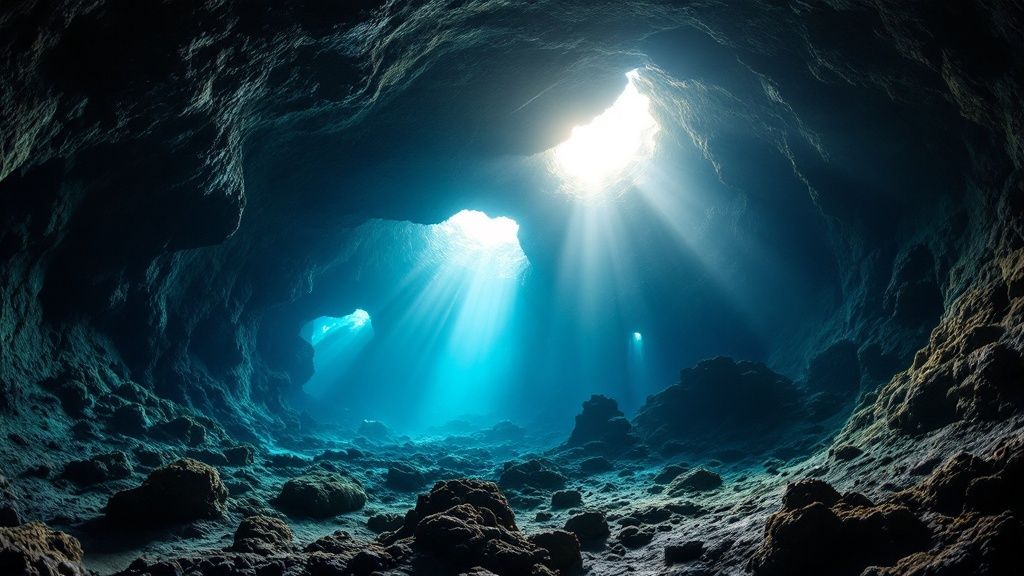
While technically off the coast of the nearby island of Lanai, the legendary Cathedrals dive sites are often accessed via full-day charters from the Big Island, offering a dramatic change of scenery from Kona's lava tubes. These are not man-made structures but magnificent, cavernous lava formations that create an ethereal, almost holy, underwater experience. Diving here feels like exploring a submerged gothic cathedral, making it a pinnacle of Big Island scuba diving adventures for those seeking unique topography.
What Makes the Cathedrals Unique
The magic of these sites comes from their massive, two-story caverns formed by ancient volcanic activity. Large sections of the lava tube ceilings collapsed, creating huge, skylight-like openings. Sunlight streams through these gaps, illuminating the vast interior spaces with breathtaking, church-like rays of light.
Divers can explore a complex labyrinth of swim-throughs, arches, and chambers. Cathedral I is famous for its "altar" or "Pope's Chair" rock formation, while Cathedral II boasts a larger "grand ballroom" chamber. The play of light and shadow on the intricate lava walls, combined with the feeling of being inside a vast, underwater space, is an unforgettable spectacle.
Navigating the Underwater Sanctuary
Excellent buoyancy is key to enjoying these sites safely and preserving their delicate environment. The interiors are home to a variety of marine life seeking shelter, including shrimp, crabs, and nudibranchs hiding in crevices, as well as passing schools of fish.
Pro Tip: Bring a good dive light. While the main chambers are lit by skylights, a powerful torch will help you explore the darker corners and reveal the true colors of the marine life and lava formations hidden within the shadows.
Planning Your Lanai Dive Trip
Because these sites are more advanced and require a longer boat journey, they are typically offered on special charters for experienced divers. This type of excursion is a full-day commitment but rewards divers with a truly unique environment distinct from the Kona coast. Companies offering advanced charters provide the best opportunity to experience this incredible underwater architecture.
These sites are a perfect example of the diverse and thrilling opportunities available through advanced dive tours, which are designed for certified divers looking to explore more challenging and remote locations. For divers who are comfortable in overhead environments and have solid buoyancy skills, a trip to the Cathedrals is a must-do.
3. Black Water Night Diving: A Journey into the Abyss
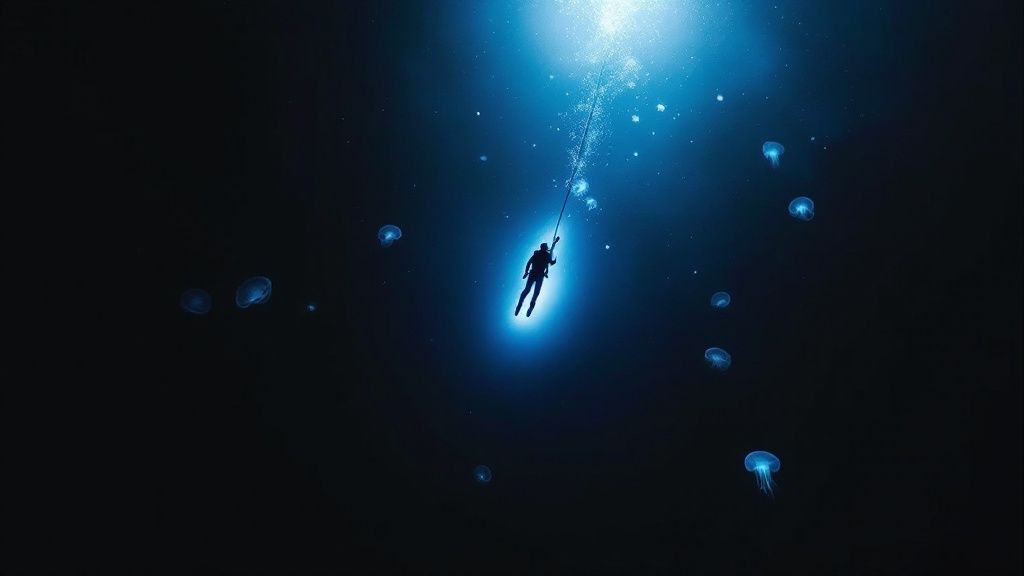
For the truly adventurous diver seeking an experience that feels like exploring outer space, the Black Water Night Dive is an unparalleled frontier in Big Island scuba diving. This is not your typical reef dive. Instead, you'll drift miles offshore over thousands of feet of water, tethered to a boat, and witness one of the planet's largest migrations as deep-sea creatures ascend from the abyss to feed under the cover of darkness.
How the Black Water Encounter Works
The setup involves a boat venturing far from the coast into deep pelagic waters. A specialized weighted downline with high-intensity lights is deployed, creating a beacon in the vast darkness. Divers are connected to this system via tethers for safety and drift along with the current at a depth of about 50 feet.
This light source interrupts the nightly vertical migration of zooplankton and other bizarre, rarely-seen organisms. What follows is an encounter with a world of alien-like creatures: larval fish in translucent developmental stages, bioluminescent jellies, impossibly intricate siphonophores, and even juvenile cephalopods like octopus and squid. Each dive reveals a new cast of characters from the deep.
A Dive for the Experienced Adventurer
This is an advanced dive that demands excellent buoyancy control and a calm demeanor. You are suspended in the infinite black, with the only reference points being the downline and your guide's lights. The reward is a chance to see marine life that few people on Earth will ever witness, making it a pinnacle achievement for many serious divers and underwater photographers.
Pro Tip: Master your buoyancy and trim in a familiar environment before attempting this dive. Being completely comfortable and stable in the water column is crucial for both safety and enjoyment. Your focus should be on the incredible creatures, not on struggling to maintain your depth.
Choosing Your Black Water Experience
Pioneered in Kona, this dive has become a bucket-list item for those looking to push the boundaries of their diving experience. Top-tier operators like Kona Honu Divers run professional and safe charters specifically designed for this unique environment. Their experienced guides are experts at spotting these tiny, often transparent, critters. This is a highly specialized trip, and you can learn more about their Black Water Night Dive tour and what to expect.
If you're an advanced diver ready to witness the hidden, vibrant life of the deep ocean, this surreal and captivating dive is an absolute must.
4. Kealakekua Bay Marine Life Conservation District: A Pristine Sanctuary
More than just a dive site, Kealakekua Bay is a protected Marine Life Conservation District (MLCD) and a place of immense historical and cultural significance. Famous for its stunning coral gardens and the monument to Captain James Cook, this bay offers some of the most vibrant and sheltered Big Island scuba diving available. Its protected status has allowed marine life to flourish, resulting in exceptionally clear waters and dense fish populations.
What Makes Kealakekua Bay So Special?
As a state-protected MLCD, Kealakekua Bay is a no-take zone, which means fishing and anchoring are heavily restricted. This protection has cultivated an incredibly healthy and resilient reef ecosystem. The bay's natural geography shields it from the open ocean, creating calm, swimming-pool-like conditions that are perfect for divers of all skill levels, from beginners to seasoned photographers.
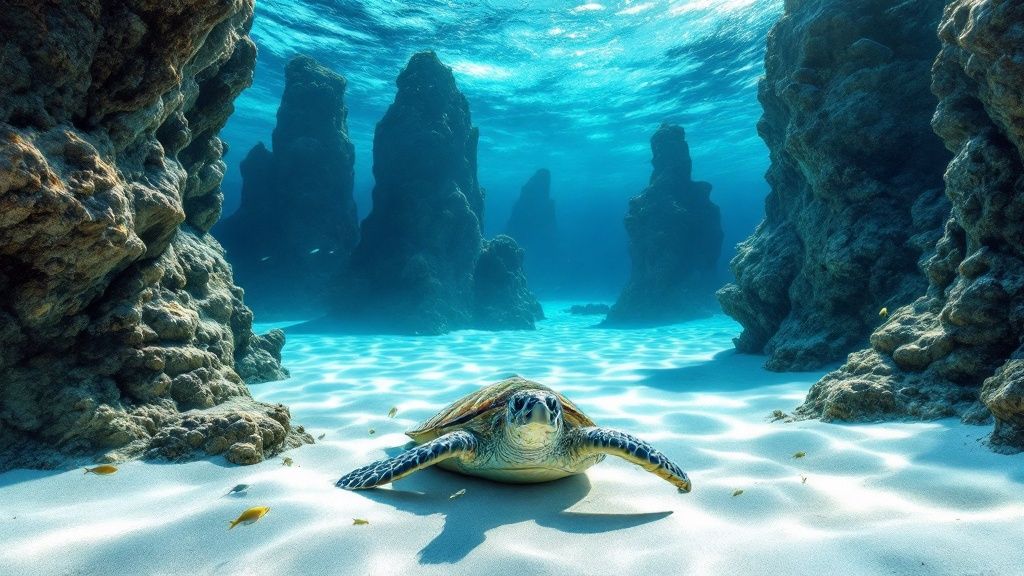
Divers can expect to see vast, intricate coral formations teeming with life. Schools of yellow tang, spinner dolphins, and Hawaiian green sea turtles are common sights. The vibrant reef slopes gently from the shore, providing a colorful and dynamic underwater landscape to explore without the challenges of strong currents.
Diving with Respect in a Protected Area
Because this is a protected and historically significant site, diving here comes with a responsibility to be an exemplary ocean steward. The health of this unique ecosystem depends on visitor respect and adherence to conservation rules.
Pro Tip: Access to the bay is best achieved by a licensed boat tour, as land access is difficult. This also ensures you are with operators who understand and respect the area's specific regulations. Always use reef-safe sunscreen and practice perfect buoyancy to avoid contact with the fragile coral.
Choosing Your Kealakekua Bay Experience
The calm conditions make Kealakekua Bay an ideal spot for an introductory dive or a relaxing exploration for certified divers. Many operators combine diving with snorkeling, making it a fantastic destination for groups with mixed interests. Tour boats, like those operated by Kona Honu Divers, provide a comfortable and responsible way to access this remote location, often including historical narration and a respectful approach to the site. If you're looking for an unforgettable underwater journey through a thriving reef, you can learn more about the best ways to experience Kealakekua Bay on this resource page for Kealakekua Bay snorkeling.
For a dive that combines breathtaking natural beauty with a rich historical backdrop, Kealakekua Bay is an unparalleled destination on the Big Island.
5. Puako Reef System: A Shore Diver’s Paradise
For certified divers seeking autonomy and some of the healthiest coral on the island, the Puako Reef System offers an unparalleled shore diving experience. This extensive reef, located along the sunny Kohala Coast, is a highlight of Big Island scuba diving for its accessibility, vibrant marine life, and stunning underwater topography. Its multiple entry points make it a location you can explore repeatedly, discovering new wonders each time.
How the Puako Reef System Works
The beauty of Puako lies in its simplicity. A series of public access points along Puako Beach Drive lead directly to the ocean, allowing certified divers to gear up and walk right into a thriving coral ecosystem. The reef starts in shallow water and gradually slopes down, featuring intricate lava rock formations, finger corals, and cleaning stations that attract a vast array of marine creatures.
Unlike boat dives, shore diving here gives you the freedom to set your own pace and dive plan. The system is so large that different entry points feel like entirely different dive sites. You might start at Puako Bay Park for an easy entry and encounter sea turtles, or choose a more northern access point near Holoholokai Beach Park to explore different coral gardens and lava tubes.
Diverse Marine Life and Healthy Corals
The reef's health is a major draw. It is home to some of the most robust coral formations on the Big Island, providing a sanctuary for a dense population of reef fish. Expect to see schools of yellow tang, Moorish idols, butterflyfish, and parrotfish. Eels, octopuses, and the occasional whitetip reef shark are also common sightings in the reef's many crevices.
Pro Tip: Always dive with a buddy and a dive flag. Wear sturdy reef shoes or booties for the rocky entries, as lava rock can be sharp. Check the surf report before you go, as conditions can change quickly.
Planning Your Puako Shore Dive
Success at Puako requires planning. There are no rental facilities on-site, so you must bring all your own gear, including tanks. If you're new to the area, a guided shore dive is an excellent way to get acquainted with the entry points and local conditions. Operators like Kohala Divers are experts in this region and can provide invaluable guidance. To get an in-depth look at this and other prime locations, learn more about the best shore diving on the Big Island.
For certified divers who value independence and want to experience a pristine reef ecosystem, Puako is an essential addition to any Big Island dive itinerary.
6. Turtle Pinnacle (Turtle Pinnacles): A Sanctuary for Honu
While manta rays might be the superstars of Kona's night life, the Hawaiian green sea turtles, or honu, are the beloved daytime residents. Turtle Pinnacle is a premier dive site for those seeking a tranquil and almost guaranteed encounter with these gentle reptiles. This location isn’t just a passing point; it's a vital "cleaning station" where turtles congregate, making it a cornerstone experience of Big Island scuba diving.
How the Turtle Pinnacle Encounter Works
The site consists of a series of underwater lava rock formations, or pinnacles, that rise from the sandy ocean floor at depths of around 30 to 60 feet. These ancient lava structures have become a crucial ecological hub. The rocks are covered in algae, a primary food source for the turtles, and are also home to various species of reef fish, like the Hawaiian cleaner wrasse.
Divers can position themselves on the sandy bottom surrounding the pinnacles and watch as the honu arrive. The turtles will rest on the lava rock or hover peacefully in the water column while the smaller fish swim up and meticulously clean algae and parasites from their shells and skin. Observing this symbiotic relationship in a natural underwater amphitheater is a truly memorable spectacle.
A Gentle and Protected Species
Hawaiian green sea turtles are a protected species, and their population has made a remarkable recovery thanks to conservation efforts. They are curious and calm creatures, often appearing unfazed by the presence of respectful divers. This allows for fantastic underwater photography opportunities as they go about their daily routines.
Pro Tip: Remember the "rule of thumb" and stay at least 10 feet (or a bus length, as locals say) away from the turtles. Move slowly, breathe calmly, and never block their path to the surface. Following NOAA guidelines ensures the turtles remain safe and comfortable.
Choosing Your Turtle Pinnacle Experience
This dive is perfect for divers of all skill levels, from beginners to seasoned photographers, due to its relatively shallow depth and calm conditions. Operators like Jack's Diving Locker are well-acquainted with this site and offer guided diving tours that highlight the best of Kona's reef life. Morning dives are often recommended as the turtles tend to be most active during this time.
For a dive that combines beautiful volcanic topography with serene wildlife encounters, Turtle Pinnacle is an essential stop on any Big Island dive itinerary.
7. Red Hill (Lava Tubes and Arches): Journey into the Volcano
For divers with a taste for adventure and advanced skills, Big Island scuba diving offers a unique opportunity to explore the island's volcanic heart from below. Red Hill is an exceptional dive site that showcases the raw power of ancient lava flows, featuring a dramatic underwater landscape of extensive lava tubes, swim-through arches, and interconnected caverns that demand precision and respect. This isn't your average reef dive; it's a journey into a geological masterpiece.
How the Volcanic Formations Work
Red Hill’s stunning topography was forged when molten lava from Hualālai volcano met the cool Pacific Ocean centuries ago. The rapid cooling of the lava's exterior created a hardened crust, while the molten rock inside continued to flow, eventually draining out to leave behind hollow, tunnel-like structures. These lava tubes and arches create a complex, multi-level environment perfect for exploration. Divers can navigate through massive archways that frame the deep blue and penetrate into dark, overhead caverns that feel like submerged cathedrals.
A Dive for the Experienced Adventurer
This site is strictly for advanced divers due to its depth and the challenges of overhead environments. Proper training in cavern or cave diving, along with excellent buoyancy control, is essential for a safe and enjoyable experience. The thrill comes from navigating these intricate volcanic systems, watching your light beam cut through the darkness to reveal textured walls and hidden marine life seeking shelter.
Pro Tip: Air management is critical. Always follow the rule of thirds (one-third in, one-third out, one-third reserve) and carry redundant lights. Never enter an overhead environment without a local guide who knows the site’s layout intimately.
Choosing Your Advanced Dive Experience
Because of its complexity, Red Hill should only be explored with a highly reputable operator that specializes in advanced and technical dives. Companies like Kona Honu Divers offer premium advanced dive trips led by experienced guides who can ensure your exploration of these formations is both breathtaking and safe. Their expert-led Advanced Dive Tours are designed for certified divers looking to push their limits and witness the truly unique underwater geology of Hawaii.
Exploring Red Hill is a humbling reminder of the Big Island's volcanic origins and offers an unparalleled adventure for those qualified to answer the call.
Big Island Scuba Diving Sites Comparison
| Dive Site | 🔄 Implementation Complexity | ⚡ Resource Requirements | 📊 Expected Outcomes | 💡 Ideal Use Cases | ⭐ Key Advantages |
|---|---|---|---|---|---|
| Manta Ray Night Dive at Kona Coast | Moderate – night dive with lights | Specialized lights, boat, trained guides | High manta ray encounter rate (90%+) | Beginner to advanced divers seeking unique night encounters | Virtually guaranteed manta sightings; year-round availability |
| Cathedrals I & II off Lanai | Intermediate – swim-throughs & overhead | Boat trip, powerful dive lights, guide | Stunning geological formations & photo ops | Intermediate divers exploring volcanic formations | Dramatic lava caverns; good visibility; protected environment |
| Black Water Night Diving | High – deep ocean night dive | Advanced gear, tethering, expert guides | Encounters with rare pelagic species | Advanced certified divers & underwater photographers | Rare species sightings; world-class photo opportunities |
| Kealakekua Bay Marine Life Conservation District | Low to moderate – shallow to mid-depth | Boat/kayak access, snorkel/dive gear | Exceptional reef biodiversity & visibility | Beginners to intermediate divers; cultural & nature interest | Outstanding water clarity; protected marine environment |
| Puako Reef System | Low – shore accessible | Minimal gear, shore entry | Healthy coral reefs with diverse marine life | All skill levels; independent exploration | No boat needed; extensive reef system; multiple entry points |
| Turtle Pinnacle | Moderate – boat dive with currents | Boat access, dive gear | Frequent close turtle encounters | Intermediate divers interested in wildlife | High turtle encounter probability; educational wildlife views |
| Red Hill (Lava Tubes and Arches) | High – cavern penetration | Advanced diving skills, multiple powerful lights | Complex volcanic lava tube exploration | Advanced/technical divers seeking challenging topography | Unique volcanic formations; less crowded; multi-level profiles |
Your Big Island Dive Adventure Awaits
You've journeyed through a comprehensive guide to Big Island scuba diving, exploring a world sculpted by fire and sea. From the ethereal underwater ballet of the Manta Ray Night Dive to the otherworldly spectacle of the Black Water Night Dive, it's clear that Hawaii's largest island offers an unparalleled spectrum of aquatic adventures. We've navigated the vibrant coral gardens of Puako Reef, explored the dramatic lava tubes at Red Hill, and witnessed the thriving ecosystems protected within Kealakekua Bay. Each location tells a unique story of volcanic origins and resilient marine life.
The key takeaway is that the Big Island isn’t just a single destination; it's a collection of diverse, world-class underwater experiences packed into one coastline. Whether you're a novice diver captivated by the gentle sea turtles at Turtle Pinnacle or an advanced explorer ready for the challenges of a deep lava arch, the opportunities are as vast as the Pacific itself. The common thread connecting these incredible sites is the dramatic volcanic topography, creating a dynamic environment of caves, arches, and pinnacles that you won't find anywhere else. This unique geology is the foundation for the rich biodiversity that makes Big Island scuba diving so memorable.
Turning Your Dive Plans into Reality
Now that you're equipped with this knowledge, it's time to take actionable steps toward your underwater journey. The difference between a good dive and a truly epic one often comes down to preparation and choosing the right team to guide you. Here’s how to transition from dreaming to doing:
- Identify Your Must-Do Dives: Review the list of sites and experiences. Are you drawn to the gentle giants of the manta ray dive? Do you crave the adrenaline of exploring the deep with the advanced dive tour? Or perhaps the bizarre creatures of the Kona blackwater dive call to you. Prioritize what excites you most.
- Assess Your Skill Level: Be honest about your certification and comfort level. If you're a new diver, focus on getting certified and enjoying sites like Kealakekua Bay. If you're experienced, you can plan for more challenging environments.
- Book with a Reputable Operator: Your dive operator is your gateway to these underwater wonders. Look for companies with a strong safety record, experienced guides who are passionate about marine conservation, and excellent reviews. A great guide doesn't just show you a reef; they reveal its secrets. As you conclude your research on Big Island scuba diving, remember to record these incredible experiences. You might find a dedicated tool useful; explore the best bucket list app options to keep track of every underwater adventure you conquer.
The underwater realm of Hawaii is a precious, life-altering gift. By investing the time to understand its offerings and prepare accordingly, you're not just planning a vacation; you're setting the stage for an encounter with the raw, beautiful power of nature. The vibrant reefs, the graceful mantas, and the mysterious abyss are all waiting. The only remaining question is, are you ready to take the plunge?
Ready to dive into the best the Big Island has to offer? Let the expert team at Kona Honu Divers guide you on an unforgettable underwater journey. With a focus on safety, education, and creating amazing memories, they offer a wide range of diving tours perfect for every skill level.