
Picture this: you're descending into impossibly clear turquoise water, surrounded by ancient volcanic lava tubes and vibrant coral reefs absolutely buzzing with life. That's what Big Island scuba diving is all about—an adventure where geological wonders meet a truly staggering amount of marine biodiversity. Ready to explore the best diving tours Kona, Hawaii has to offer?
Why The Big Island Offers Unforgettable Diving
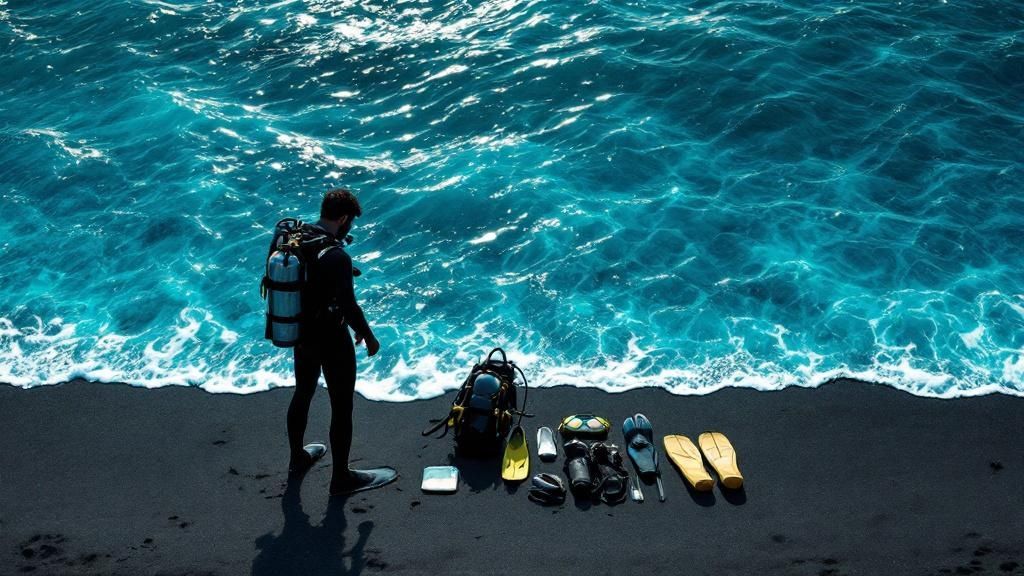
The Big Island of Hawaii isn't just another pretty spot to go diving; it’s a world-class destination literally forged by volcanic fire and sculpted by the Pacific Ocean. Unlike a lot of other places, the underwater landscape here is dominated by dramatic lava formations. We're talking arches, caverns, and massive craters that create a natural playground for divers and a perfect home for countless marine species.
This one-of-a-kind topography is a direct result of the island's active volcanic past. As lava flowed into the ocean over millennia, it cooled rapidly to form the intricate, otherworldly structures we get to explore today. These formations are now draped in flourishing coral gardens and are home to an incredible array of fish, many of which are endemic, meaning you can't find them anywhere else on Earth.
A Premier Global Diving Hub
The secret is definitely out. The Big Island, especially the Kona coast, has become a globally recognized hub for scuba diving. It draws around 150,000 dive tourists annually, who together log over 100,000 certified dives each year. This boom in popularity is all thanks to the island’s completely unique underwater environment, which combines those rare volcanic features with stunningly clear water and reliably calm seas. Discover more insights about what makes Kona diving so exceptional.
To give you a clearer picture, here’s a quick rundown of what makes diving here so special.
Big Island Diving At a Glance
| Feature | Why It's Special | Best Time to Experience |
|---|---|---|
| Volcanic Topography | Explore lava tubes, arches, and craters you won't find anywhere else. | Year-round |
| Exceptional Visibility | Crystal-clear water, often exceeding 100 feet, for amazing views. | Year-round |
| Calm Sea Conditions | The Kona coast is sheltered from trade winds, creating lake-like calm. | Year-round, especially summer |
| Endemic Marine Life | See species like the Hawaiian cleaner wrasse and Milletseed butterflyfish. | Year-round |
| Manta Ray Night Dives | World-famous, reliable encounters with gentle giants. | Year-round |
These features come together to create a diving experience that's hard to beat.
What Makes Kona's Waters So Special
So, what’s the secret recipe for these perfect diving conditions? A few key factors come into play, creating a reliable and spectacular experience for divers of all levels.
-
Exceptional Visibility: The water clarity is often mind-blowing, frequently pushing past 100 feet. This lets you really soak in the dramatic underwater scenery and spot marine life from way off.
-
Calm Conditions: The Kona coast is tucked away on the leeward side of the island, which shields it from the strong trade winds. The result is consistently calm, almost lake-like conditions that make for ideal diving pretty much any day of the year.
-
Unique Marine Life: From the world-famous Manta Ray Night Dive to bumping into sea turtles, dolphins, and even the occasional whale shark, the biodiversity here is just on another level.
This potent mix of geology, calm seas, and vibrant ecosystems makes every single dive an unforgettable experience. Whether you're exploring a shallow reef or a deep lava tube, you're getting a front-row seat to a truly unique corner of the underwater world. Explore the variety of incredible diving tours available to see it for yourself.
Advanced Diving Adventures Beyond The Reef
For certified divers who've seen their share of beautiful coral gardens and want something… different, the Big Island delivers. We're talking about adventures that push your skills and show you a side of Kona's underwater world that most people never even dream of.
These aren't just your average reef dives. They're unique, challenging, and utterly unforgettable. We're passionate about guiding fellow adventurers on these specialized dives, and we do it with the highest standards of safety and professionalism.
Forget everything you think you know about night diving. These experiences are about entering a completely different realm, one ruled by the profound darkness of the deep ocean.
The Surreal Kona Blackwater Dive
Picture this: you're floating in absolute darkness, miles from shore, with thousands of feet of inky black water beneath you. It’s often called a spacewalk in the ocean's "inner space," and it is hands-down one of the most unique night dives on the entire planet. This is the Kona Blackwater Dive.
How does it work? We drop a weighted tether with powerful down-lights from the boat. This creates a single column of light in the vast, empty blackness. That light acts like a magnet, drawing in creatures taking part in the largest migration on Earth—the nightly vertical migration of deep-sea organisms.
As you drift along that tether, the most bizarre and beautiful critters rise from the abyss to feed near the surface. You'll see things that look like they're straight out of a sci-fi movie.
The Blackwater Dive is a sensory experience unlike any other. It recalibrates your understanding of marine life, revealing a hidden ecosystem that thrives in the dark. It is a humbling and awe-inspiring journey into the heart of the pelagic zone.
This dive demands excellent buoyancy control and a calm, adventurous spirit. You are, after all, floating in a totally alien environment. For those ready for the challenge, it’s a chance to see some of the rarest and most fascinating animals on Earth. Think you're up for it? Learn more about the incredible Kona Blackwater Dive and book your spot.
Pushing The Limits with Advanced Dive Tours
Beyond the blackwater trip, Kona’s volcanic origins have created an incredible underwater playground for experienced divers. We have deep canyons, remote pinnacles, and intricate lava formations that demand a higher level of skill and training to explore safely.
Our advanced dive tours are built for divers who are comfortable with deeper profiles, tricky navigation, and conditions that require you to be on your A-game.
These sites are often further offshore, exposing you to different currents and more dramatic depth changes. So what’s the payoff?
- Pristine Environments: These less-visited sites are often in immaculate condition, offering a glimpse into an untouched underwater ecosystem.
- Unique Topography: Explore dramatic drop-offs, swim-throughs, and lava tube formations that are way more complex than what you'll find on shallower reefs.
- Big Animal Encounters: Deeper sites increase your chances of running into larger pelagic life like sharks, rays, and massive schools of jacks.
The Big Island’s underwater landscape is a fascinating mix, from shallow coral reefs to deep volcanic structures, offering a huge range of environments for both fun and science. You can learn more about the history of underwater exploration in this region from NOAA.
These trips are perfect for divers with an advanced certification or those with plenty of dives under their belt who are ready to take it to the next level. If you want to see what lies in the deeper blue, check out our exclusive Advanced Dive Tours.
How To Plan Your Big Island Diving Trip
Alright, you've seen what's waiting for you underwater—now let's talk logistics. Nailing down a few key details is what separates a good dive trip from an absolutely epic one.
The best part about diving in Kona? It's phenomenal all year round. The island’s unique geography acts as a natural shield for the coast, meaning the water is almost always calm and inviting. Still, there are a few seasonal quirks to keep in mind.
- Summer (June – September): This is when you'll find the warmest, flattest water. Temps often hang around a blissful 80°F (27°C), making it perfect for divers who get chilled easily or just love that bathwater feel.
- Winter (December – March): The water might cool down a touch to about 75°F (24°C), but what you get in return is pure magic. This is peak humpback whale season, and hearing their haunting songs echoing through the reef on a dive is an experience that will stay with you forever.
Should You Bring Your Own Gear?
This is the classic diver's dilemma: pack it all or rent? If you have a mask that fits your face perfectly, a trusty dive computer, and a regulator you know and love, it's definitely worth bringing them along. But dragging a full kit—BCD, wetsuit, and all—can be a real hassle.
This is where choosing a top-tier operator like Kona Honu Divers makes things simple. We have a full stock of high-quality, meticulously maintained rental gear ready to go. You get to travel light without sacrificing comfort or safety.
We pride ourselves on our equipment, so you can just show up and focus on the incredible underwater sights. For a more detailed look at the conditions and what we recommend, check out our complete guide on what to expect when scuba diving on the Big Island.
Picking the Right Dive Operator
Honestly, the dive operator you choose will make or break your trip. It's the most critical decision you'll make. You want a company with an impeccable safety record, guides who know the dive sites like the back of their hand, and a true passion for protecting the marine environment.
Here at Kona Honu Divers, our entire operation—from our seasoned crew to our custom-built dive boats—is designed to give you a safe, comfortable, and unforgettable adventure. We live and breathe this stuff, and we can't wait to share the magic of Kona's underwater world with you.
Your Big Island Diving Questions, Answered
Alright, let's tackle some of the questions that are probably swimming around in your head. Here are the quick-and-dirty answers to help you lock in your dive plans.
What’s The Water Temperature Like In Kona?
You’re in for a treat. Kona’s water temperatures are beautifully stable all year. Expect a comfortable 75°F (24°C) in the cooler winter months, climbing to a balmy 80°F (27°C) in the summer. It makes deciding when to visit pretty easy!
Do I Actually Need A Wetsuit In Hawaii?
I get this one all the time. While the water feels like a warm bath at first, you'll definitely want a wetsuit. Even in 80-degree water, your body slowly loses heat over the course of a 45-minute dive. A good 3mm or 5mm wetsuit isn't just about warmth; it also protects you from bumps and scrapes on the reef. Trust me, it makes the whole experience way more comfortable.
When Is The Best Time To Dive The Big Island?
Honestly, there’s no "bad" time to dive in Kona. It really just depends on what you’re hoping to see.
Summer brings the calmest seas and warmest water, which is fantastic for smooth, easy dives. But winter? That's when you might hear the incredible sound of humpback whales singing underwater during your dive—a truly unforgettable experience. No matter when you come, all of our diving tours on the Big Island run year-round, so we’re always ready for an adventure.
Can I Do The Manta Ray Night Dive If I'm A Beginner?
Absolutely! The idea of a night dive can sound a little intense, but the manta ray dive is perfect for certified divers of any skill level.
The whole dive is pretty shallow and you stay in one general area, making it a super controlled and safe environment. It’s the perfect setting to just relax and watch one of nature's most incredible shows. If you're newer to the underwater world, it never hurts to brush up on some general beginner tips for safe underwater exploration. Ready to see the magic for yourself? Check out our Manta Ray Dive tour page for all the details.