
Picture this: you descend into impossibly clear, turquoise water, surrounded by vibrant coral reefs that have grown over ancient lava flows. This is Big Island scuba diving in a nutshell—an experience totally defined by its one-of-a-kind volcanic underwater landscape and the thriving marine life that calls it home. Hawaii's fiery origins have literally sculpted a world of dramatic lava tubes, massive arches, and deep craters now teeming with creatures you just won't find anywhere else on Earth.
Why The Big Island Offers Unforgettable Diving
There's a good reason the Big Island, and the Kona coast in particular, is a bucket-list destination for divers from all over the globe. The island's unique geology provides a spectacular canvas for some of the most memorable underwater adventures you could ask for. Tucked away in the shadow of massive volcanoes that block the trade winds, the water here is often incredibly calm and clear—it’s not uncommon for visibility to push past 100 feet.
That kind of clarity opens up an underwater world that is anything but ordinary. Instead of flat, sandy bottoms, you get to explore intricate structures forged by ancient lava flows. These formations are now home to sprawling coral gardens and a mind-boggling diversity of marine life. This unique environment makes every single dive feel like a true journey of discovery.
A Sanctuary For Unique Marine Life
The Hawaiian islands are famously isolated out here in the middle of the Pacific. This has led to an incredible concentration of endemic species—animals you simply won’t see anywhere else. Diving these reefs feels like visiting a living, breathing museum of evolution.
So, who might you run into down there?
- Honu (Green Sea Turtles): You'll see these graceful, serene turtles just about everywhere. They're a common and beloved sight at most of our dive sites.
- Endemic Fish: Keep an eye out for the vibrant milletseed butterflyfish or the masked angelfish. They add a splash of local color you can't find on any other reef in the world.
- Manta Rays: Kona is world-famous for its gentle giants, especially during the iconic Manta Ray Night Dive. It’s an absolute must-do.
The combination of volcanic terrain and unique marine biodiversity truly sets Big Island scuba diving apart. It’s an environment where every dive reveals something new, from hidden lava tubes to rare fish species that have evolved in isolation for millennia.
On top of all the cool critters, the coral health along the Kona coast is exceptional. Years of conservation work have helped preserve these delicate ecosystems, making sure the reefs stay vibrant and healthy for future divers to enjoy. To get a better feel for what makes this place so special, check out our complete guide to Big Island scuba diving. And if you’re ready to see it for yourself, Kona Honu Divers has a fantastic lineup of diving tours for every skill level.
Exploring Kona’s Top Underwater Wonders
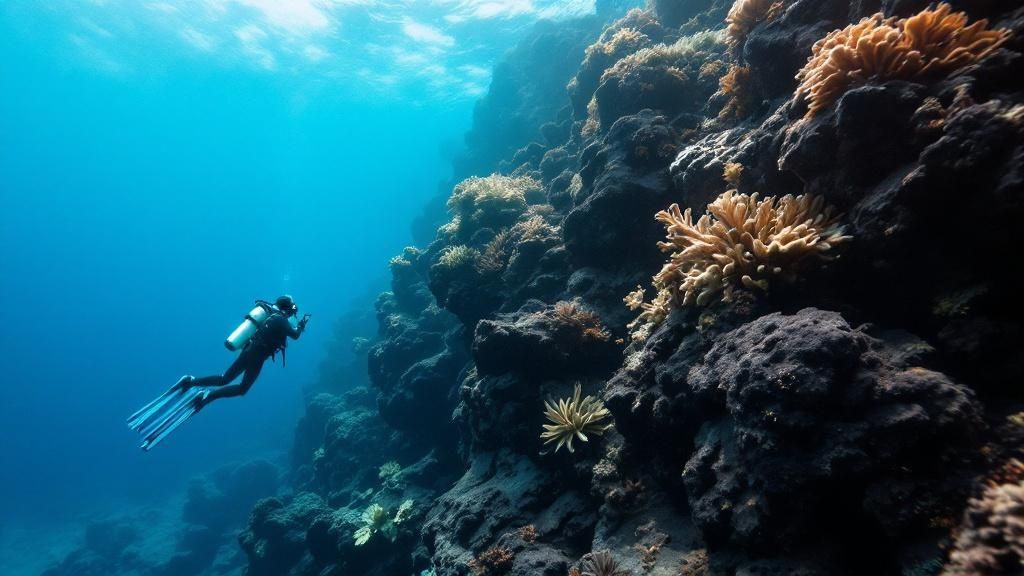
The Kona Coast is, without a doubt, the heart of Big Island scuba diving. It’s home to a mind-blowing collection of world-class dive sites, all neatly tucked away from the Pacific's rougher trade winds. This isn't just a list of places to dive; it’s a tour through some of the most vibrant underwater landscapes you'll ever see, all shaped by ancient volcanic flows and carved by the ocean.
As a local operator, we're proud to offer guided diving tours in Kona, Hawaii that show off these incredible spots. But you don't have to take our word for it—here's what other divers have said about their adventures with us:
Puuhonua O Honaunau (Two Step)
Locals call it "Two Step" because of the super-easy shore entry, but Pu'uhonua O Honaunau is so much more than just a convenient dive. This whole area is a protected national historical park, meaning the marine life has been left to thrive for generations. It really shows.
Once you dip below the surface, you're greeted by massive, sprawling coral gardens that blanket the bay floor. This spot is also famous for its spinner dolphin pods, which often come into the bay to rest during the day. While there are never any guarantees with wildlife, just hearing their clicks and whistles echoing underwater is an experience you won't forget. With depths from a mellow 20 feet to over 100 feet on the outer edges, it’s a perfect playground for divers of all levels.
The Golden Arches And Lava Tubes
Kona's volcanic soul is on full display at sites riddled with dramatic lava tubes and breathtaking archways. A spot called "Golden Arches" is a perfect example, named for a huge, picture-perfect lava arch that often gets backlit by schools of bright yellow tangs. Swimming through these ancient formations feels like exploring a sunken cathedral.
These underwater structures are magnets for all sorts of cool critters. You might find a reclusive white-tip reef shark taking a nap on the sand or spot a funky-looking frogfish camouflaged against a sponge. The unique terrain makes for a dive you’ll never forget, full of twists, turns, and constant discovery.
The real magic of Kona diving lies in its architecture. You're not just swimming over a reef; you're actively exploring a complex, three-dimensional environment created by geological forces.
Navigating these sites takes solid buoyancy control, but the payoff is a feeling of pure adventure. It’s this blend of natural beauty and raw geology that makes Big Island scuba diving truly one of a kind.
Turtle Pinnacle And Its Famous Residents
You can't come to Kona and not hang out with the honu (Hawaiian green sea turtles). Turtle Pinnacle is a legendary site known for being a "cleaning station," where turtles line up to let reef fish nibble away algae and parasites. It's a textbook example of underwater symbiosis, and it's amazing to watch.
Here, you can just hover and watch as these graceful giants glide in, settle down on the reef, and patiently wait for their spa day to begin. The site itself is a submerged pinnacle that rises from the seafloor, drawing in moray eels, octopus, and tons of reef fish in addition to the turtles. It’s an easy, laid-back dive that always delivers on incredible marine life encounters. If you're passionate about marine life and history, you might also enjoy discovering other vibrant underwater ecosystems and their secrets.
Top Kona Dive Sites At A Glance
To help you get your dive plan sorted, here's a quick rundown of some of our favorite sites along the Kona coast. Each one offers something different, so you can be sure every dive will bring a new adventure.
| Dive Site | Best For | Max Depth | Common Sightings |
|---|---|---|---|
| Pu'uhonua O Honaunau | All skill levels, coral gardens, and potential dolphin sightings. | 100+ ft | Spinner dolphins, extensive coral, endemic reef fish. |
| Golden Arches | Intermediate divers, underwater photography, and exploring lava formations. | 60 ft | Yellow tangs, eels, unique geological structures. |
| Turtle Pinnacle | All skill levels and guaranteed turtle encounters. | 70 ft | Green sea turtles, frogfish, cleaner wrasse. |
| Suck 'em Up | Advanced divers comfortable with surge and lava tube exploration. | 50 ft | White-tip reef sharks, exciting swim-throughs. |
| Kailua Pier | Macro life enthusiasts and photographers, great for a mellow second dive. | 40 ft | Frogfish, scorpionfish, nudibranchs, seahorses. |
This sheer variety is what puts Kona on the map as a premier dive destination. Whether you're into big animals, wild lava flows, or tiny, weird critters, the underwater world here will absolutely blow you away.
Experiencing The Legendary Manta Ray Night Dive
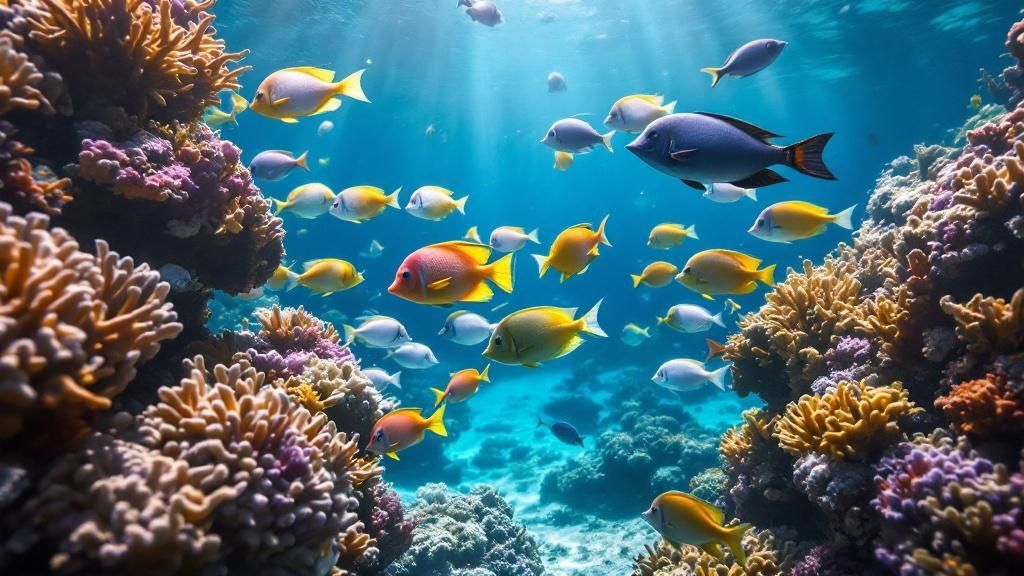
Let's be clear: the Kona Manta Ray Night Dive isn't just another dive. It's the signature experience of Big Island scuba diving. This is more than a checklist item; it’s an otherworldly, underwater ballet that has rightfully earned its reputation as one of the most unforgettable dives on the planet.
Picture this. You descend into the dark, warm Pacific just as the last bits of sunlight fade. Your group settles on a sandy patch on the ocean floor as your guides place a powerful, eco-friendly light in the center, aiming its beam straight up. This light is a massive magnet for plankton, and almost immediately, swarms of these tiny organisms create a thick, glowing cloud in the water.
Then, the show begins. Out of the darkness, majestic manta rays glide in, some with wingspans stretching up to 16 feet. They swoop effortlessly into the column of light, performing graceful somersaults and barrel rolls as they feast on the plankton buffet. Words just don't do justice to the feeling of having these gentle giants soar inches above your head.
How The Dive Unfolds
The entire operation is a well-oiled machine, carefully designed to give you an incredible experience while putting the mantas' well-being first. It all kicks off with a detailed briefing from your guides, covering everything from safety protocols to the best ways to be a responsible observer. This makes sure everyone—divers and mantas alike—has a safe and positive interaction.
Once you motor out to a famous spot like "Manta Village" or "Manta Heaven," you'll gear up and descend to a designated viewing area. Divers usually kneel or sit on the sand in a wide circle around the central light. This setup is key; it keeps the water column wide open, giving the mantas a clear "dance floor" to feed without bumping into anyone. You’ll spend the next 30 to 45 minutes completely mesmerized by the silent, graceful performance unfolding right in front of you.
Best Practices For A Responsible Encounter
Getting this close to these magnificent creatures comes with a huge responsibility. The local dive community has worked hard to establish strict guidelines to keep the manta rays safe and stress-free. Following these rules is non-negotiable for protecting this amazing encounter for years to come.
- Look, Don't Touch: This is the golden rule. Manta rays have a protective mucus coating on their skin that acts as a shield against infection. Touching them strips this layer away, leaving them vulnerable to disease.
- Stay On The Bottom: By remaining on the sand, you create a predictable environment and keep the water column clear for the mantas to do their thing.
- Mind Your Bubbles: Try to time your breathing so you aren't exhaling directly into a manta's path. It won't hurt them, but it can be startling.
- Lights Up: Point your dive light up toward the surface. This helps attract even more plankton. The snorkelers on the surface will be pointing their lights down, creating a "plankton sandwich" that the mantas absolutely love.
The success of the manta ray night dive is built on a foundation of respect. By being a passive observer, you allow the mantas to behave naturally, ensuring this incredible spectacle can be enjoyed for generations to come.
This world-famous dive is an absolute must for any diver visiting the Big Island. To get a deeper look into what makes this bucket-list adventure so special, check out our complete guide to the Kona Manta Ray Night Dive.
Ready to see the magic for yourself? You can book your spot on our manta ray dive tours and get ready for a night you'll never forget.
Advanced Diving For The Adventurous Explorer
Alright, you're certified, you've logged some dives, and now you're feeling that pull. The one that asks, "What else is out there?" For divers like you, the Big Island offers a whole other world that starts where the typical tour boat turns around. If you’re ready to see the wilder side of Kona, this is where your next real adventure begins.
We're talking about dives that are less about just seeing fish and more about a profound, unforgettable experience. It's for the explorers, the thrill-seekers, and anyone who wants to peer into the abyss and see what stares back. These dives demand confidence and a solid skillset, but the payoff is something you'll talk about for years.
At Kona Honu Divers, we specialize in guiding small groups of experienced divers on these exact kinds of trips. Safety is always number one, which allows you to relax and fully immerse yourself in these challenging, incredible environments. Here’s what fellow divers have to say about getting off the beaten path with us:
The Legendary Kona Blackwater Dive
Picture this: you're floating in perfect, inky blackness. You're miles from shore, suspended over thousands of feet of ocean. It’s often compared to a spacewalk, and honestly, that’s not far off. The Kona Blackwater Dive is, hands down, one of the most unique and mind-bending night dives on the entire planet.
So how does it work? We head way offshore, tether you to the boat, and simply drift with the current. We switch on powerful down-lights that attract some of the strangest and most beautiful creatures imaginable as they migrate from the crushing depths toward the surface to feed. This nightly vertical migration is the largest on Earth, and you're floating right in the middle of it.
You'll see things that look like they're straight out of a sci-fi movie.
- Bioluminescent Critters: Tiny organisms that light up the water around you like a private galaxy.
- Pelagic Larvae: The baby versions of reef creatures like eels and lobsters, looking completely alien in their earliest forms.
- Exotic Jellyfish: Bizarre, intricate jellies pulsing with an otherworldly glow.
The Kona Blackwater Dive isn't just a dive; it's a sensory trip into a hidden universe. Floating in the abyss, you get a front-row seat to the largest animal migration on Earth, a spectacle few people will ever get to see.
This is a bucket-list dive, especially for underwater photographers. To get the full scoop on this incredible journey into the deep, check out the details on our Blackwater Dive tour page.
Exploring Deeper Reefs And Untouched Sites
Beyond the blackwater experience, Kona has plenty more to offer divers with advanced certifications. These trips usually mean longer boat rides to get to the more remote, pristine spots—the places where the underwater landscape gets way more dramatic and the marine life isn't as used to seeing people.
On these advanced dives, we might explore deep pinnacles that shoot up from the seafloor, navigate intricate lava tube systems, or drift along sheer walls that plunge into the deep blue. The reward for going the extra mile is seeing untouched ecosystems and having a real chance of encountering bigger pelagic species like sharks, rays, and sometimes even dolphins.
Kona Honu Divers runs exclusive charters for experienced divers who want to see the raw, untamed beauty of the Big Island's coastline. These trips are built for divers comfortable with deeper profiles and more challenging conditions, offering a true sense of exploration. You can find out more on our advanced dive tour page. For the seasoned diver, the adventure here never has to end.
How Kona Became A World-Class Diving Hub
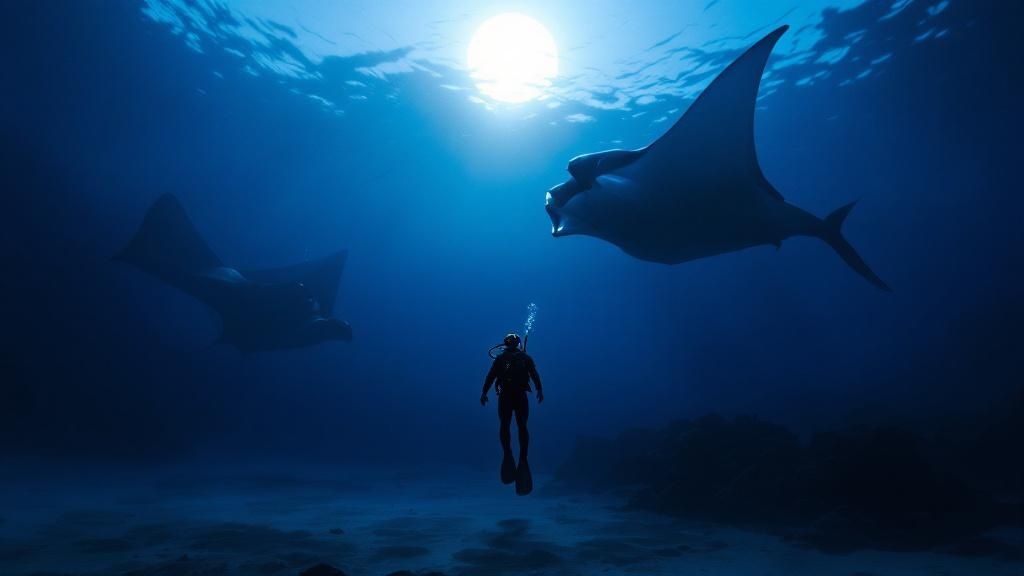
The Big Island didn't just stumble into its reputation as a premier global diving destination; it was earned. The story of Big Island scuba diving is one of raw adventure, a deep love for the ocean, and a community built from the ground up on professionalism and conservation. It all kicked off back in the 60s and 70s, when a few intrepid explorers first started mapping the wild underwater landscapes forged by ancient lava flows.
Those early divers were the first to witness a world of untouched reefs, protected coves, and bizarre geological formations hiding just below the surface. They navigated the lava tubes, documented the mind-blowing biodiversity along the Kona coast, and laid the foundation for everything that followed.
The Pioneers Of Kona Diving
The real turning point, though, came when visionaries took that passion and built a professional industry around it. One of the biggest moments was the founding of Jack's Diving Locker in 1981 by Jack and Tina Clothier—a name that became legendary. While Jack tragically passed away only eight months later, Jeff and Teri Leicher eventually took the helm and built the shop into one of Hawaii's most respected operations, now guiding over 25,000 dives every year. Shops like theirs set the bar for the safety and service that define Kona diving today.
These pioneers did far more than just lead tours; they built a culture. By partnering with organizations like PADI, they established strict training and safety protocols, making sure divers of any skill level could explore Kona's waters with total confidence.
The legacy of Kona's diving pioneers isn't just in the dive sites they found, but in the professional, safety-conscious, and conservation-focused community they built. That foundation is what makes today’s underwater experiences so incredible and reliable.
This history is exactly why you can trust local operators. When you dive with a long-standing company like Kona Honu Divers, you're tapping into decades of hard-won knowledge and a serious commitment to protecting the ocean.
A Community Built On Conservation And Professionalism
The growth of Big Island scuba diving has always gone hand-in-hand with a powerful conservation ethic. From the very beginning, the local dive community knew the reefs were their livelihood and the island's natural treasure. You can see this commitment everywhere, from mooring buoys that protect coral from anchor damage to regular reef cleanup dives.
That dedication is still going strong. Every dive briefing hammers home the importance of responsible behavior, especially on iconic dives like the manta ray night dive. The mantra is always the same: be a passive, respectful observer.
- Safety First: A non-negotiable adherence to safety standards creates a secure environment for every diver.
- Environmental Stewardship: A deep-rooted promise to protect these fragile underwater worlds for generations to come.
- Professional Training: Constant education ensures dive leaders have the latest skills and knowledge.
This rich history of exploration, professionalism, and conservation is what makes diving here feel so different. It’s a legacy you feel on every boat and every dive. You can even check out some of the original, best-loved spots by exploring our guide to the best shore diving sites in Kona, Hawaii.
Your Big Island Diving Questions Answered
Alright, let's tackle some of the common questions we get from divers planning their trip. Think of this as your quick-start guide to the nuts and bolts of diving here in Kona. Getting these details ironed out ahead of time means less stress and more time enjoying what you came here for—the incredible underwater world.
We'll cover the when, what, and how of Kona diving so you can show up ready to go.
What Is The Best Time Of Year For Big Island Scuba Diving?
Honestly, one of the best things about diving in Kona is that there’s no bad time to visit. The massive volcanoes on the island do us a huge favor by blocking the strong trade winds, which keeps the Kona coast calm and clear pretty much year-round. It's our own little protected paradise.
If you're chasing the warmest water and flattest seas, the summer months from about April to October are your best bet. But winter diving, from November through March, has a magic of its own. On many dives, you can hear the haunting songs of humpback whales echoing through the water. It’s an experience that’s hard to describe and impossible to forget.
Do I Need To Be Certified To Scuba Dive In Kona?
You do need certification for our boat dives to the premier sites, but if you've never dived before, you've come to the right place. You absolutely don't need to be certified to get started! We, along with other top dive shops, offer a "Discover Scuba Diving" experience. It’s the perfect introduction.
An instructor will walk you through the basics in a super relaxed way and then personally guide you on a shallow reef dive. It's a fantastic, stress-free way to take your first breath underwater. In fact, Kona's calm, clear conditions make it one of the best classrooms in the world for getting your full Open Water certification.
So whether you’re a complete beginner or bringing a friend who wants to try it out, Kona makes it easy. It's a huge reason why families and groups with different experience levels have such a great time here.
What Should I Pack For A Kona Diving Trip?
Packing the right stuff can make your trip so much more comfortable. Aside from your usual shorts and sandals, here are a few dive-specific things you’ll be glad you brought.
- Certification Card and Logbook: Don’t leave home without them! You'll need to show your C-card to join any certified dive, and your logbook is the best way to prove your experience level for more advanced sites.
- Personal Gear: While we have excellent rental gear, nothing beats the comfort of your own mask that fits just right. Many divers also prefer to bring their own fins and dive computer.
- Reef-Safe Sunscreen: This is a big one. Hawaii state law requires reef-safe sunscreen to protect our fragile coral from nasty chemicals. Please help us keep our reefs healthy.
- Comfort Items: A reusable water bottle is a must for staying hydrated on the boat. A hat and a light windbreaker are also great ideas for the ride back to the harbor after you’ve been in the water.
A little prep goes a long way. And hey, if you forget something, our local dive shops have you covered with just about anything you might need.
What Is The Water Temperature And What Wetsuit Do I Need?
The water here is wonderfully warm all year. You can expect temperatures to hover between 75-77°F (24-25°C) in the winter and warm up to a balmy 78-81°F (26-27°C) in the summer.
For most people, a 3mm or 5mm full wetsuit is perfect for staying comfortable across multiple dives. It really comes down to your personal thermostat—some divers just run colder than others. If you're on the fence, it’s always better to be a little too warm than to spend your dive shivering. Local shops like Kona Honu Divers have a full selection of quality rental wetsuits and will get you fitted with the right one for the day's conditions.
At the end of the day, getting ready for a Big Island scuba diving trip is pretty simple. The conditions are fantastic, the dive community is here to help, and the underwater sights are truly world-class. With these questions answered, you're all set to jump in and see why Kona is a diver's dream.
Ready to explore the incredible underwater world of Kona? Kona Honu Divers offers a full range of adventures for every skill level. Learn more about our top-rated diving tours in Kona, Hawaii and book your unforgettable experience today.