
So, you're thinking about scuba diving on the Big Island? Good choice. This isn't just another dive destination; it's a front-row seat to a world carved by volcanoes, teeming with vibrant reefs, and filled with marine life that will leave you speechless. The second you drop beneath the surface of the Kona coast, you'll get it. You'll understand why divers from every corner of the globe make the pilgrimage here. It’s an adventure that captures the very soul of Hawaii.
Embark on Your Big Island Diving Adventure
Picture this: you're effortlessly gliding through an ancient underwater lava tube, a massive tunnel forged by molten rock centuries ago, now home to a kaleidoscope of fish. A moment later, a majestic green sea turtle—a honu as the locals call them—cruises by, close enough to see the ancient wisdom in its eyes. This isn't a once-in-a-lifetime moment on the Kona coast; it's just another Tuesday. That's the magic of diving here, and it hooks everyone from fresh-faced beginners to salty, seasoned pros.
Think of this guide as your treasure map to the best underwater spots the Big Island has up its sleeve. We're going to cover it all, from the world-famous Manta Ray Night Dive (an absolute must-do) to the surreal, inky-black depths of a Blackwater Dive. Whether you’re about to take your first breath on a regulator or you've got hundreds of dives in your logbook, Kona is ready to blow you away.
What Makes Kona Diving So Special?
The secret sauce for Kona's incredible diving is a perfect storm of geology and geography. The colossal volcanoes, Mauna Loa and Hualalai, stand like giant bodyguards, shielding the western coast from the gusty trade winds. The result? Exceptionally calm, clear water pretty much year-round, where the visibility often punches past 100 feet.
This protected, crystal-clear playground has allowed a spectacular underwater world to flourish. You’ll find:
- Insane Underwater Landscapes: We’re talking dramatic lava arches, complex cave systems, and submerged volcanic craters. It's like exploring another planet.
- Non-Stop Marine Life: You'll see everything. Colorful reef fish darting everywhere, moray eels peeking out from crevices, graceful eagle rays soaring past, and pods of playful spinner dolphins.
- Creatures You'll Only Find Here: A huge chunk of Hawaii's marine life is endemic, meaning you literally can't see them anywhere else on Earth. It's a unique chance to encounter some truly rare and beautiful animals.
Along the way, we’ll introduce you to the crew at Kona Honu Divers. These guys aren't just tour operators; they're passionate experts who live and breathe this stuff. Their local know-how and commitment to safety turn every trip from just a dive into a genuine exploration.
Ready to see for yourself? To get a taste of what’s waiting for you, check out the full lineup of diving tours they offer. Let's get started and uncover the wonders of the Big Island, one dive at a time.
Why the Big Island Is a Diver’s Paradise
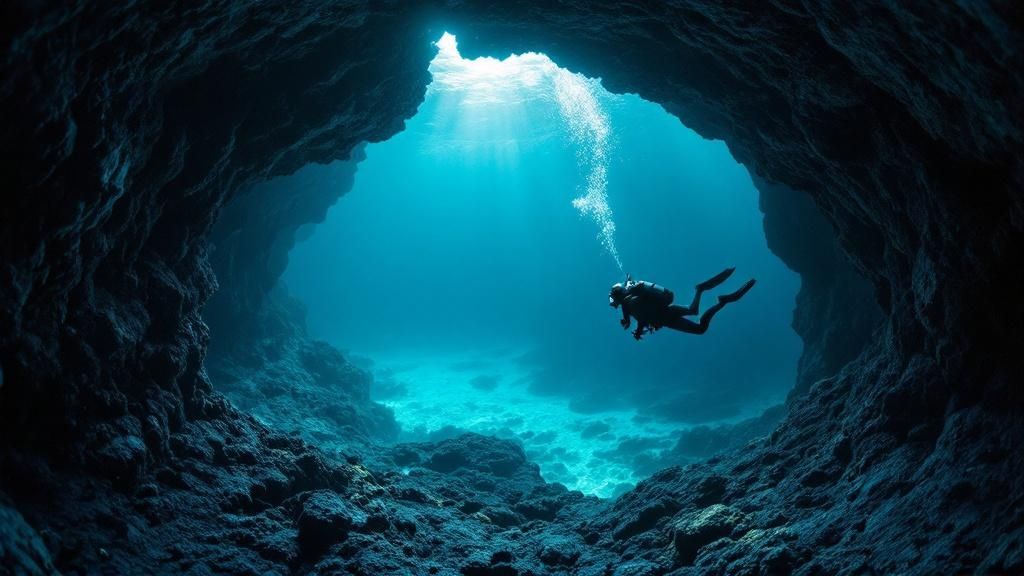
What makes a dive destination truly world-class? For the Big Island, it’s a potent mix of raw geology and a buzzing marine ecosystem. This place isn't a diver's paradise by accident; it's a direct result of the island's fiery, volcanic heart. Millennia of lava flows have sculpted an underwater landscape you won't find anywhere else, a dramatic playground of incredible lava tubes, massive arches, and intricate caverns.
When you drop beneath the surface here, you're descending into a world where the seafloor tells a story of creation itself. Every formation is a chapter in the island's volcanic history, offering a wild and ever-changing landscape to explore. You're not just looking at rocks; you're diving through geologic time.
On top of that, the island’s immense size, thanks to the behemoth volcanoes Mauna Loa and Hualalai, creates a natural shield. They block the disruptive trade winds from reaching the western Kona coast, which is a massive gift for divers. The result is astonishingly calm and clear water pretty much all year. It's totally normal for visibility to push past 100 feet, making you feel like you're flying through a giant, open-ocean aquarium.
Thriving Marine Ecosystems
This sheltered, crystal-clear environment is the perfect recipe for an explosion of marine life. The coral reefs here aren't just getting by—they are absolutely thriving. They form sprawling, intricate cities that are home to an incredible diversity of critters. From tiny creatures tucked into crevices to the big pelagic animals that cruise by, the Kona coast is always humming with activity.
What really sets big island scuba diving apart, though, is the sheer number of endemic species. These are animals found nowhere else on Earth, turning every single dive into a genuine opportunity for discovery.
- Hawaiian Cleaner Wrasse: You can spot these vibrant little fish working hard at their "cleaning stations," providing a vital service to bigger fish.
- Milletseed Butterflyfish: Often seen in huge, mesmerizing schools, their bright yellow bodies are like a splash of sunshine on the reef.
- Hawaiian Sergeant: These sharp-looking, black-and-white striped fish are a familiar and welcome sight on just about every dive.
This mind-blowing biodiversity is exactly why the Big Island has earned its reputation as a premier global destination. To give you an idea of its popularity, roughly 100,000 certified scuba dives happen around the island each year. This fuels a healthy industry of over 50 dive shops and charters, including our top-rated team at Kona Honu Divers, who welcome around 150,000 dive tourists annually. If you want to dive deeper into the island's scene, you can explore more insights about Big Island scuba diving.
A Dive for Every Skill Level
The beauty of the Kona coastline is just how versatile it is. The massive variety of dive sites means there's a perfect spot for everyone, no matter their experience level. Whether you're about to take your first breaths underwater or you've got thousands of dives in your logbook, the Big Island has an adventure teed up for you.
The convergence of unique volcanic topography, crystal-clear waters, and a high percentage of endemic marine life makes the Big Island a truly elite diving destination. Every descent promises a new adventure and a deeper connection to the ocean.
From shallow, protected coves that are perfect for beginners to deep ledges and challenging swim-throughs for the seasoned pros, the options are practically endless. This diversity means you can always find a dive that hits that sweet spot between your comfort level and your curiosity. Here at Kona Honu Divers, our team excels at tailoring these experiences to make sure every diver has a safe, incredible time exploring these underwater wonders. Check out all the possibilities on our diving tours page.
Experience the Manta Ray Night Dive
Get ready for an experience that divers consistently rank as one of the most magical, unforgettable underwater encounters on the entire planet. The Manta Ray Night Dive is more than just another part of Big Island scuba diving—it's a true bucket-list adventure that feels like you’ve entered another dimension.
Picture this: you descend into the calm, dark ocean, settle onto the sandy bottom, and then just watch. In moments, colossal, gentle giants begin performing a silent aquatic ballet just inches above your head. It’s absolutely surreal.
Majestic manta rays, with wingspans that can stretch over 12 feet, glide, swoop, and somersault through the beams of light from your dive torches. It’s a silent, graceful performance that leaves even the most seasoned divers completely speechless. This isn't just a dive; it’s a profound connection with one of the ocean's most intelligent and awe-inspiring creatures.
The Science Behind the Spectacle
So, how does this incredible show even happen? The secret is a brilliant and surprisingly simple bit of marine biology in action. The whole encounter is built around attracting the mantas' favorite food: plankton.
It’s pretty clever, really. Dive operators set up powerful, stationary lights on the ocean floor, creating a "campfire" of light. Divers gather in a circle around it, pointing their own dive lights upward. All of this concentrated light attracts billions of microscopic plankton, creating a dense, floating buffet that mantas just can't resist.
Since manta rays are filter feeders, they simply show up for an easy, all-you-can-eat meal. The result is a symbiotic and sustainable interaction. The mantas get a reliable dinner, and we get a front-row seat to one of nature’s most spectacular displays without disturbing their natural behavior.
This unique feeding opportunity has turned Kona into a world-renowned destination, drawing hundreds of thousands of visitors every year. To really dive deep into the history and safety protocols, check out the official Manta Ray Viewing Assessment.
For a quick look at what makes this dive so special, here are the key highlights.
Manta Ray Night Dive Key Facts
| Feature | Description |
|---|---|
| Location | Kona Coast, Big Island, Hawaii |
| Creatures | Giant Pacific Manta Rays |
| Wingspan | Up to 12+ feet |
| Interaction | Passive viewing from the seafloor |
| Key Attraction | Mantas feeding on plankton attracted to lights |
| Best Time | Night, after sunset |
| Booking | Highly recommended to book in advance |
This table just scratches the surface of an experience that truly has to be seen to be believed.
What to Expect on Your Dive
From start to finish, the manta ray dive is a well-orchestrated adventure. Your trip will kick off with a thorough pre-dive briefing from your guide. They’ll cover everything you need to know, from manta ray biology to the specific guidelines for interacting with them safely and respectfully. This ensures both your safety and the well-being of these protected animals.
Once you hit the water and descend, your group will settle on the ocean floor in a designated viewing area. This "campfire" formation is crucial because it keeps the water column clear for the mantas to maneuver.
Then, the show begins. The rays will gracefully swoop in, their massive mouths open, to filter plankton from the water illuminated by your lights. They often come so close you could almost reach out and touch them—but it's absolutely critical that you don't. Touching a manta ray can remove its protective mucous layer, leaving it vulnerable to dangerous infections.
The team at Kona Honu Divers provides a premier, safety-focused experience for this once-in-a-lifetime adventure. Their guides are passionate about marine conservation and go the extra mile to make sure every dive is conducted responsibly. Book your manta ray dive tour with us today.
If you want the full scoop on this incredible encounter, you might be interested in our complete guide to the Kona manta ray night dive.
Discover Kona’s Premier Dive Sites
Everyone talks about the Manta Ray Night Dive, and for good reason, but it’s only one chapter in a much bigger story. The Kona coast is absolutely packed with incredible, world-class dive sites, each giving you a totally different look at Hawaii's underwater world. Thanks to the island's volcanic past, the submerged landscape here is nothing short of spectacular—think dramatic lava formations, winding swim-throughs, and reefs bursting with color. This is your insider's guide to the best big island scuba diving spots, the ones that truly show off the insane diversity waiting just below the surface.
We’ve spent years and years exploring these waters at Kona Honu Divers, and we know exactly where to go to find the most mind-blowing scenery and marine life. Our guides are out there every day, ready to show you why these spots are so special.
Golden Arches: A Photographer's Dream
Picture this: you descend into a massive, sun-drenched cavern where golden light streams through ancient lava rock arches. That's Golden Arches. It feels like you're swimming through an underwater cathedral. The way the light plays through the water and lights up the formations is pure magic, which is why photographers and sightseers can't get enough of it.
But it's not just about the rock formations. The place is teeming with life. Huge schools of brilliant yellow Milletseed Butterflyfish often swarm the arches, a stunning contrast against the dark volcanic rock. And if you peek into the little nooks and crannies, you’ll often find a shy octopus or a moray eel checking out the visitors.
Turtle Pinnacle: The Local Honu Hangout
Just like the name suggests, Turtle Pinnacle is the spot for Hawaii’s beloved green sea turtles, or honu. It's a unique pinnacle that rises up from the seafloor, acting as a natural "cleaning station." Turtles literally line up here to get parasites and algae scrubbed from their shells by helpful surgeonfish and Hawaiian cleaner wrasse.
It's an amazing thing to witness—these gentle, ancient creatures just chilling out, waiting for their turn at the spa. Watching this natural partnership in action is a true highlight for so many divers. The pinnacle itself is also covered in healthy coral and attracts all kinds of reef fish, making it a bustling underwater city.
The sheer variety of dive sites along the Kona coast is astonishing. One day you're exploring a complex lava tube, and the next, you're observing turtles at a cleaning station. It's this diversity that keeps divers coming back year after year.
Kona Honu Divers hits these incredible spots all the time on our expertly guided diving tours. Don’t just take our word for it—see what other divers are saying about their trips with us:
Suck ‘Em Up: A Thrilling Lava Tube Adventure
Looking for a little bit of a thrill? Suck ‘Em Up always delivers. This site is famous for its dynamic lava tube swim-through where the ocean surge gives you a gentle push-and-pull ride. As you glide through, you can feel the rhythm of the ocean guiding you. It's just plain fun.
The tube opens up into a big cavern called the "bowl," and the walls are covered with critters. It's an awesome spot for macro photography lovers hunting for nudibranchs, shrimp, and tiny crabs. We’ve even had eagle rays and pods of spinner dolphins make surprise appearances here, which always adds to the excitement. To get a better feel for the underwater environments here, you can learn more about the Big Island's unique diving conditions.
This list is really just the tip of the iceberg of what Kona offers. There are dozens of named sites, each with its own personality. We can help you build the perfect dive trip based on exactly what you want to see.
Ready to explore these underwater marvels?
Take on Advanced Diving Challenges
For divers who have been around the block, the real magic happens when you push past the familiar and drop into a world few will ever see. The Big Island’s sun-drenched reefs are spectacular, no doubt. But for those with the right training and a taste for adventure, the deeper, darker waters offer something truly special.
If you’re ready to move beyond the coral gardens, a whole different playground opens up. Think about navigating the twists and turns of ancient lava tube systems or exploring sheer volcanic drop-offs where bizarre and beautiful creatures make their homes. These aren't your average dives; they demand sharp skills, solid buoyancy, and a healthy respect for the ocean. But the payoff? Absolutely unforgettable.
The island’s unique geology is what makes these dives possible. While we stick to recreational limits, the spirit of exploration runs deep here. Scientific missions have been plumbing these depths for decades, with submersible dives hitting 576 meters way back in 1984. This history of deep diving has given us an incredible window into the volcanic structures that make big island scuba diving so unique. You can get a sense of that pioneering spirit and discover more about Hawaii's unique marine geology.
The Legendary Kona Blackwater Dive
Picture this: you're floating in the middle of the ocean at night, miles from shore, suspended over thousands of feet of inky black water. You’re clipped to a line that runs back to the boat, your world shrunk to the beam of your dive light in an endless void. Welcome to the Kona Blackwater Dive—easily one of the most surreal and mind-bending experiences you can have underwater.
This isn't a reef dive. There is no bottom in sight. What you’re doing is witnessing the largest migration on Earth, as strange, bioluminescent creatures rise from the abyss to feed near the surface under the cover of darkness. You’ll see things that look like they were dreamed up for a sci-fi movie—glassy larval fish, pulsing jellies, and squids that seem more alien than animal.
The Blackwater Dive is less of a dive and more of a sensory journey. You’re dropping into the heart of the ocean’s nightly vertical migration, coming face-to-face with life forms that are rarely, if ever, seen by humans. It’s humbling, exhilarating, and a little bit spooky all at once.
This is a dive for advanced divers with rock-solid buoyancy control and a calm head. It’s a genuine test of skill and composure. If you’re up for the challenge, Kona Honu Divers runs a professional, safety-first Blackwater Dive tour that will give you stories for a lifetime.
Choosing the Right Operator for Advanced Dives
When you start tackling more technical dives, your choice of dive operator becomes absolutely critical. Advanced big island scuba diving isn't just about jumping in the water; it requires meticulous planning, deep local knowledge, and an unwavering focus on safety.
Here’s what you should be looking for:
- Experienced Guides: You want a crew that has been to these advanced sites countless times. They know the currents, the terrain, and the specific challenges of a deep ledge or an open-ocean blackwater dive.
- Small Group Sizes: This is a big one. Smaller groups mean more personalized attention from the guide, which is essential when conditions get tricky or the navigation is complex.
- Proper Equipment: A serious operator will have immaculately maintained gear and all the necessary safety equipment on board, from oxygen to redundant systems for more demanding dives.
Here at Kona Honu Divers, our team is made up of seasoned instructors who live for this stuff. We love sharing these bigger adventures, but we always do it the right way—safely.
If you’re certified and ready to explore deeper, swim through lava tubes, and see what mysteries the deep holds, check out our premium advanced dive tour page to see what we have lined up.
Planning Your Big Island Dive Trip
Alright, let's turn that dream dive trip into a reality. You've seen what the Big Island has to offer, and now it's time to nail down the details. A little bit of smart planning now means your trip will be smooth, safe, and totally unforgettable from the moment you land.
First, the good news: there's really no bad time to dive in Kona. The water stays in that perfect sweet spot, hovering between a comfortable 77-80°F (25-27°C) in the summer and just barely dipping in the winter. While summer often brings glassy, calm seas, the Kona coast is naturally protected, so conditions are fantastic year-round.
What to Pack and How to Prepare
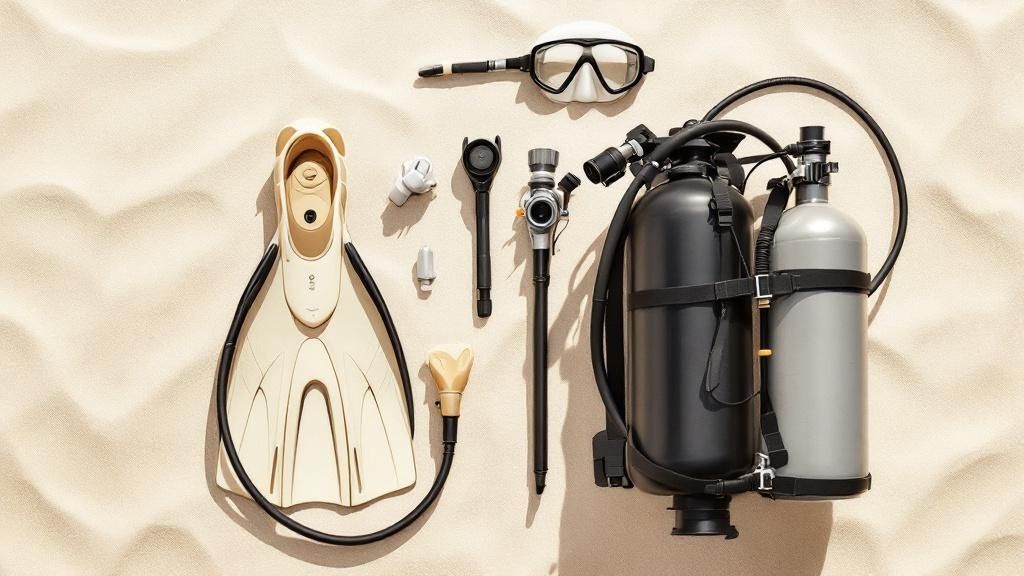
When it comes to packing, think efficient. Bringing your own mask for a perfect fit and a dive computer you know inside and out is always a great call. But dragging bulky gear like BCDs and regulators through the airport? Save yourself the headache and airline fees by renting top-notch equipment from a trusted shop like Kona Honu Divers.
One thing you absolutely must pack is reef-safe sunscreen. Seriously, this is a big deal. Standard sunscreens are loaded with chemicals that are incredibly destructive to Hawaii’s delicate coral, and we need to protect what we love to see.
Here's the single most important piece of advice I can give you: book your dive tours way in advance. The really sought-after experiences, especially the Manta Ray Night Dive, can fill up weeks or even months ahead of time. Don't leave it to chance and miss out.
Safety is always the top priority on any dive trip. It’s a good idea to familiarize yourself with the basics of marine communication; this guide to legal and safe marine radio communication is a great resource. Also, remember that diving is a physical activity that requires a certain level of fitness and fresh skills.
Has it been a while since your last dive? Or are you looking to level up your certification? Consider shaking off the rust or learning something new with one of the many Big Island scuba classes available. It’s the best way to feel confident and ready to go.
Here at Kona Honu Divers, we're all about providing a safe, professional, and unforgettable adventure. We'll handle all the logistics, so you can just focus on the incredible underwater world waiting for you.
Frequently Asked Questions About Big Island Diving
Planning a dive trip always brings up a few questions. To help you get your fins wet with confidence, we've gathered the most common queries we hear about Big Island scuba diving. Our goal is to make sure you feel totally prepared and fired up for your underwater adventure.
Think of this as your final checklist before taking the plunge. We'll cover everything from the best time of year to visit to the incredible marine life you'll meet, giving you a crystal-clear picture of what to expect.
What Is the Best Time of Year to Scuba Dive on the Big Island?
Here’s the great news: The Big Island is a phenomenal year-round diving destination. That's one of its biggest draws.
If you're chasing those picture-perfect, flat-calm days, the summer months from May to October are your best bet. The seas are typically at their calmest, and the water is warmest, hovering between a balmy 77-80°F (25-27°C).
Winter can stir up bigger ocean swells, but the Kona coast's unique geography acts as a natural shield, keeping our dive sites wonderfully protected. Diving is still fantastic, and visibility often stays top-notch. Honestly, there’s no bad time to jump in.
Do I Need to Be an Advanced Diver to Enjoy Kona?
Not at all! The Kona coast is incredibly diverse, which is why we love it. There's an amazing variety of dive sites that cater to every single skill level. We have tons of calm, shallow reefs that are perfect for beginners and newly certified divers to build confidence while taking in the gorgeous scenery.
Here at Kona Honu Divers, we specialize in tailoring our diving tours to the experience and comfort level of every guest. This makes sure everyone, from first-timers to salty veterans, has a safe and unforgettable time. Trust us, we’ve seen it all and we’re ready for you!
What Kind of Marine Life Can I Expect to See?
The biodiversity here is just off the charts. On any given dive, you can pretty much count on seeing green sea turtles (honu), different kinds of moray eels, octopuses, and a whole spectrum of colorful reef fish like butterflyfish, angelfish, and triggerfish.
Of course, our specialty dives bring their own unique superstars. The Manta Ray Night Dive is a guaranteed spectacle you'll never forget. Plus, you never know when you'll get a surprise visit from spinner dolphins, eagle rays, or even a majestic whale shark cruising by.
Should I Bring My Own Dive Gear or Rent It?
This really comes down to personal preference. A lot of divers feel most comfortable using their own mask, regulator, and computer. There’s something to be said for the familiar fit and function of your own kit.
That said, renting is a fantastic and super convenient option. Lugging heavy, bulky equipment through airports is a drag. Renting high-quality, perfectly maintained gear from a professional shop like Kona Honu Divers saves you all that hassle and lets you just focus on the fun.