
Let's be honest, Big Island scuba diving is in a league of its own. It's legendary for a reason, offering some of the most mind-blowing and vibrant underwater experiences you can find anywhere on the planet. We're talking dramatic volcanic landscapes that look like another world, and face-to-face encounters with majestic manta rays. Hawaii's biggest island is a bucket-list destination for a reason, and it’s perfect for divers of all stripes.
Ready to Dive into Your Big Island Adventure?
Welcome to the underwater paradise of the Big Island. If you're looking for a world-class dive spot, you've found it. This guide is your first giant stride into an ocean realm carved by volcanoes, painted with vibrant coral reefs, and buzzing with an incredible variety of marine life. Just imagine dropping into warm, impossibly blue water where ancient lava flows have created intricate caverns and archways, now home to creatures you won't find anywhere else on Earth.
This isn't just another dive trip; it's an expedition into one of the most dynamic marine ecosystems on the planet. The Big Island of Hawaii pulls in roughly 150,000 dive tourists every year, who log over 100,000 certified dives annually. The Kona coast is the star of the show, mostly because its leeward position keeps the waters consistently calm, making for fantastic year-round diving. Want to know more? Check out what makes the Big Island a global diving hotspot.
Your Gateway to Kona's Underwater World
Think of this as your personal mission briefing. We’re here to help you plan the ultimate dive trip, covering everything from the must-see dive sites to the wildlife encounters you'll be talking about for years. We'll get into what makes the Kona coast's crystal-clear waters so special and, of course, the unforgettable Manta Ray Night Dive.
Here's a little taste of what makes this island so incredible for divers:
- Unique Volcanic Topography: You'll explore underwater lava tubes, arches, and craters sculpted over millennia by raw volcanic power.
- Abundant Marine Life: Get ready to meet Hawaiian green sea turtles, tons of colorful endemic fish, playful dolphins, and the gentle giant manta rays.
- Exceptional Conditions: We're blessed with consistently clear visibility, often pushing past 100 feet, and calm seas that are perfect for diving pretty much any day of the year.
To really get the most out of your adventure, you need a local expert to show you the ropes. That’s where we come in. Kona Honu Divers is ready to lead the way, offering a whole range of diving tours on the Big Island designed for safety, pure excitement, and a deep respect for our ocean home. With decades of local experience under our belts, our team makes sure every single dive is one for the logbook. Let’s get you ready for an adventure you’ll never forget.
Why Kona Is a Diver’s Paradise
So, what’s the secret sauce that makes the Kona coast the undisputed heart of big island scuba diving? It's all about a perfect tag team between geology and geography. Picture the massive volcanoes of Mauna Loa and Hualalai acting like colossal bodyguards, shielding the entire western coast from the powerful Pacific trade winds.
This natural barrier creates an underwater sanctuary that's hard to find anywhere else. What you get is consistently calm, crystal-clear water—perfect conditions whether it’s your first time breathing on a regulator or your five-hundredth logged dive. It’s this unique setup that truly makes Kona a diver's paradise.
That calmness directly translates to mind-blowing clarity. Visibility here often pushes past 100 feet, giving you the feeling of flying through an endless blue world. But these serene conditions aren't just a perk for us divers; they create a stable, protected environment where a complex and vibrant ecosystem can flourish without being battered by the open ocean.
The Volcanic Underwater Architecture
Kona's underwater world is a direct mirror of its fiery origins. Ancient lava flows have sculpted a dramatic and intricate seascape that is an absolute wonder to explore. Think of it as a submerged art installation, built by nature itself.
As a diver, you get to navigate through a maze of incredible formations that provide shelter for countless marine species. The underwater landscape is packed with features like:
- Lava Tubes and Caverns: These are hollowed-out tunnels, once raging rivers of molten rock, that are now mysterious passageways for adventurous divers to explore.
- Archways and Pinnacles: You'll see dramatic arches and towering volcanic spires rising from the ocean floor, creating stunning structures just covered in life.
- Craters and Ledges: Sunken craters and terraced ledges offer different depths and habitats, attracting a massive variety of sea creatures.
This unique topography means every single dive site has its own personality and its own set of secrets to uncover. It's an underwater playground that keeps you coming back, always wondering what's around the next volcanic corner.
A Haven for Diverse Marine Life
Thanks to the protected waters and complex volcanic structures, Kona has fostered one of the most vibrant marine ecosystems in the entire Pacific. The calm seas allow delicate coral gardens to thrive, forming the foundation of a bustling underwater city.
Here, you get to meet the locals—a dazzling array of fish and other marine animals. The Big Island is also home to a high percentage of endemic species, which means you'll see critters here that you literally can't find anywhere else on Earth.
You’ll encounter everything from the state fish, the famously named humuhumunukunukuāpuaʻa, to colorful butterflyfish unique to Hawaiian waters. Graceful green sea turtles, or 'honu', are also a common and cherished sight as they glide serenely over the reefs.
With such a rich and protected environment, it’s no surprise that Kona is the center of the big island scuba diving scene. It's the whole package: perfect conditions, stunning underwater landscapes, and a thriving ecosystem that makes every dive unforgettable. To see the full map and get the details on the sites this ecosystem supports, check out our guide to Big Island scuba diving locations. This is why Kona is, without a doubt, the place for your next dive adventure.
Exploring Top Big Island Dive Sites
Alright, now you know why Kona is a diver’s paradise. Let's start building your underwater hit list. The Big Island is sprinkled with incredible dive sites, and each one has its own personality and story to tell.
This isn't just about picking a spot on a map and jumping in. It’s about matching the dive to the adventure you’re craving. Want to hang out with a whole city of turtles? Explore dramatic volcanic archways? Float through an underwater metropolis buzzing with life? Kona’s got you covered.
That incredible variety is a direct gift from the island’s volcanic past. Over thousands of years, lava flows have carved out a seriously cool and complex underwater world that we get to explore today.
Turtle Pinnacle: A Green Sea Turtle Spa Day
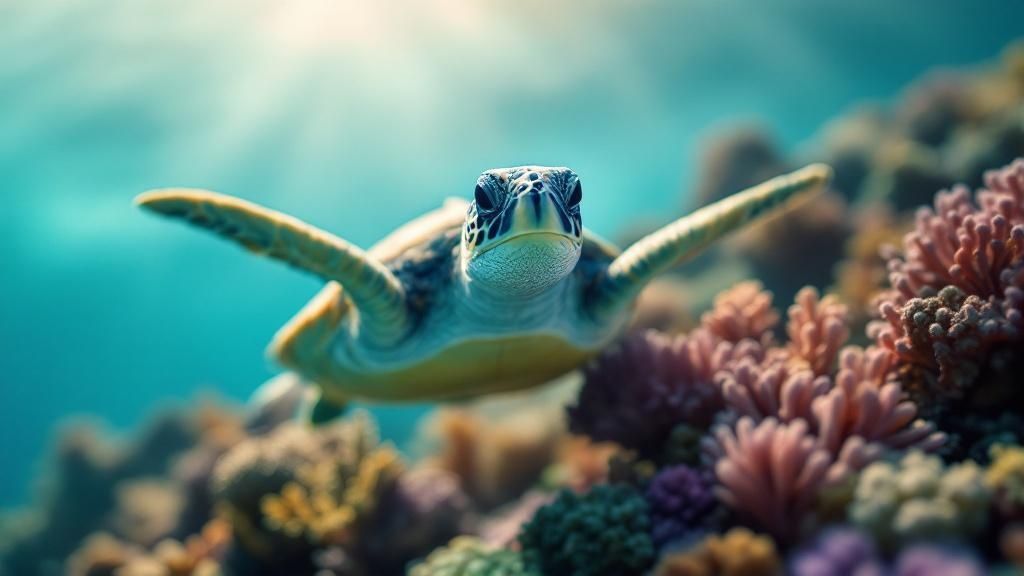
Picture an underwater cleaning station that's basically a luxury spa day for Hawaiian green sea turtles (we call them honu). That's Turtle Pinnacle, plain and simple. This site is famous for its massive coral heads that rise up from the seafloor, acting as a magnet for surgeonfish and other cleaner fish.
The turtles literally line up, waiting patiently for their turn to get algae and parasites nibbled off. It's an absolutely incredible behavior to witness firsthand.
- Typical Depth: 30-70 feet
- Skill Level: Perfect for all levels, from brand new divers to seasoned pros.
- What You'll See: Besides the guaranteed turtle encounters, expect to see schools of colorful reef fish, moray eels peeking out from their homes, and maybe even an octopus if you keep your eyes peeled.
For photographers, this dive is a gold mine. You get to capture one of Hawaii’s most iconic animals in its natural, relaxed state. It’s a gentle, beautiful dive that really captures the magic of Kona.
Golden Arches: Volcanic Grandeur
A powerful reminder of the island’s fiery origins, Golden Arches is a stunning site defined by its massive lava tube archways. Seriously, swimming through these things feels like you're exploring the ruins of some ancient, sunken cathedral. The way the light streams through the openings is just breathtaking.
This spot is a perfect example of how volcanic activity created a natural playground for divers. The complex structures offer shelter to a huge diversity of marine life, making every little nook and cranny worth checking out.
The arches themselves are often covered in colorful sponges and corals, adding to the visual spectacle. It’s a dive that combines geological wonder with vibrant marine biology, offering a different kind of thrill.
Keep a sharp eye out for well-camouflaged critters like frogfish and scorpionfish hiding against the volcanic rock. It’s also common to see majestic eagle rays gliding effortlessly through the open water between the formations. While boat dives like this one offer unique topography, you can also check out our guide on the best shore diving sites in Kona for more accessible adventures.
The Hive: A Buzzing Underwater Metropolis
If you want to see a site that is absolutely packed with life, The Hive is your spot. It’s called The Hive for a reason—it buzzes with so much marine activity it feels like a sprawling underwater city. The reef here is unbelievably dense and healthy, supporting a mind-boggling number of fish and invertebrates.
From the second you drop in, you're surrounded by clouds of fish. It's a sensory overload in the best possible way and a fantastic showcase of the sheer density of life Kona's protected waters can support.
This is a great place to just find a spot, hover, and watch the organized chaos of the reef unfold. You can see different species interacting, hunting, and hiding among the corals. It’s a living, breathing ecosystem on full display, and it's a favorite among many of our most experienced divers.
We've talked about some of the best spots, but seeing is believing. Here’s a quick-glance table to help you compare.
Popular Big Island Dive Sites Overview
| Dive Site Name | Best For | Typical Depth Range | Key Marine Life |
|---|---|---|---|
| Turtle Pinnacle | Turtle encounters, photography | 30-70 ft | Green sea turtles, reef fish, moray eels |
| Golden Arches | Volcanic formations, unique topography | 40-80 ft | Eagle rays, frogfish, diverse reef fish |
| The Hive | High marine life density, vibrant reef | 30-60 ft | Huge schools of fish, invertebrates, eels |
This is just a small sample of what's waiting for you beneath the waves. Each site offers a unique window into the incredible biodiversity of the Big Island.
The Magic of the Manta Ray Night Dive
Picture this: you're kneeling on the sandy ocean floor as the sun disappears completely. Your world is now a collection of powerful light beams, all pointing up toward the surface, creating a kind of illuminated underwater stage. Then, out of the darkness, giant, graceful shadows descend to perform a silent, effortless ballet just inches over your head.
This is the world-famous Manta Ray Night Dive, and it's more than just a dive—it's the bucket-list experience that defines Big Island scuba diving. It’s one of those rare encounters that feels truly magical, connecting you with some of the ocean's most majestic creatures.
The science behind the spectacle is actually pretty straightforward. Our bright lights act like a massive magnet for tiny plankton, drawing them into a dense, floating buffet. The local reef manta rays, some with wingspans stretching over 12 feet, have learned over the years that this is an easy, all-you-can-eat meal. They just glide in, mouths wide open, and filter the feast from the water.
What to Expect on This Unforgettable Journey
Your adventure kicks off with a stunning sunset boat ride along the Kona coast, which really sets the mood for the main event. As we cruise to one of the dedicated viewing sites, our expert guides will walk you through everything—safety, procedures, and most importantly, how to interact with the mantas respectfully.
Once we descend and get into position on the seafloor, the show begins. People often describe it as otherworldly. These gentle giants swoop and somersault through the light beams, completely wild but totally accustomed to our presence. This learned behavior is what makes the encounter so reliable and breathtaking.
It's an encounter built entirely on mutual respect. We follow strict guidelines to ensure the mantas are always safe and comfortable. The main rule is simple: observe only. You are a guest in their dining room, and touching the animals is strictly forbidden because it can damage the protective mucus coating on their skin.
This responsible approach is exactly why the experience has thrived for so long. Organized manta viewings have been a global attraction since the early 1980s, and its popularity has exploded. A 2015 study even noted a 38% increase in boats at the main viewing sites, showing just how important this is to the island.
Why Choose Kona Honu Divers for Your Manta Dive
For an experience this special, the dive operator you choose really matters. At Kona Honu Divers, our entire focus is on a safe, ethical, and truly awe-inspiring adventure. Our experienced crew manages every single part of the dive professionally, from the moment you step on the boat to your time underwater. We're all about sustainable practices that protect these magnificent animals for generations to come.
We also make sure you have everything you need for a comfortable and memorable night. The experience isn't just about seeing the mantas; it's about understanding them and our role in their world. You can learn more about the specifics of what makes our manta ray dive tours so special.
Even though you're a diver, it helps to understand the full picture. For a really deep dive into the whole manta phenomenon, check out this ultimate guide to the Kona Manta Ray night snorkel. To fully appreciate what makes this dive so incredible, check out our guide on the Kona Manta Ray Night Dive.
Advanced and Specialty Dive Opportunities
For those of us who have logged some serious bottom time, there's always a craving for something more. Something that pushes beyond the beautiful, sun-drenched reefs. If you’re ready to expand your boundaries and see the more mysterious side of the ocean, the Big Island delivers.
When the sun goes down, a completely different world awakens. And while the manta dive is an absolute spectacle, there's another, more surreal night dive that has become a bucket-list item for true adventure seekers: the Kona Black Water Night Dive. This isn't your typical reef dive; it’s a journey into the deep, dark, open ocean.
Dive into Outer Space
Imagine this: you're tethered to a boat, floating completely weightless over thousands of feet of inky black water. The only light is from your dive torch, cutting a narrow beam into the abyss. As you drift, you become a front-row spectator to the largest migration on Earth—the nightly vertical migration of pelagic creatures.
Bizarre, often bioluminescent organisms rise from the deep to feed near the surface. You'll see things that look like they belong on another planet, from glassy larval fish and alien-like squid to shimmering comb jellies. It’s honestly the closest you can get to diving in outer space, and it’s an experience that will fundamentally change how you see the ocean. We specialize in these unique trips, offering a professionally managed and unforgettable Black Water Night Dive for divers with the guts to explore the deep.
Beyond Black Water Adventures
The thrills don't stop there. The Big Island’s volcanic geology has created an underwater playground filled with complex structures that demand sharp skills and a calm mind to explore.
These are the kinds of dives that let you see a side of big island scuba diving very few people ever get to experience. Adventures can include:
- Exploring Lava Tube Systems: Weave your way through intricate, cavernous lava tubes—ancient pathways for molten rock that are now home to unique marine life. This requires spot-on buoyancy control and being comfortable in an overhead environment.
- Deep Dives on Walls: Drop down along dramatic underwater cliffs that plummet straight into the deep blue. These sites give you a chance to see different species that thrive at greater depths.
- Challenging Drift Dives: Let the ocean currents do the work and fly over long stretches of reef. It’s an exhilarating ride that requires precise timing and navigation.
Let's be clear: these dives aren't for everyone. They are designed for certified, experienced divers who are comfortable with challenging conditions and have their skills dialed in. The payoff is a huge sense of accomplishment and encounters with truly wild, untouched parts of the ocean.
Ready to take the plunge? Kona Honu Divers runs exclusive trips just for seasoned divers. Our premium advanced dive tours are designed to take you to these more demanding and rewarding sites, all led by our most experienced guides.
Your Big Island Diving Questions Answered
Planning a dive trip to a new place always stirs up questions. We get it. You want to make sure you've got all your ducks in a row so you can focus on what matters: the adventure that awaits under the surface.
We’ve put together answers to the most common questions we hear from divers planning their Big Island scuba diving trip. Think of this as your practical guide to getting the details sorted, so you can spend less time worrying and more time dreaming about the incredible dives ahead.
When Is The Best Time of Year To Dive The Big Island?
Honestly, thanks to the way the Kona coast is protected from the prevailing winds, there's no bad time to dive here. The diving is fantastic year-round. The "best" time really just comes down to personal preference and what you hope to see.
Summer (June through September) is when the water hits its peak warmth, often reaching the low 80s°F. The ocean is typically at its most calm, too—we're talking glassy, smooth conditions that make for easy boat rides and even easier diving.
Winter (December through March) has a different kind of magic. The water dips into the mid-70s°F, but that's a small price to pay for what you get in return: migrating humpback whales. There's truly nothing like hearing whale song reverberating through the water while you're exploring a lava tube. Visibility is stellar all year, frequently stretching past 100 feet, so you really can't go wrong.
Can I Try Scuba Diving Without A Certification?
You absolutely can! If you've always been curious about breathing underwater but aren't certified, the Discover Scuba Diving program is your ticket to the show. It's specifically designed for first-timers and is the perfect way to test the waters, so to speak.
Here at Kona Honu Divers, we run this program to get you in the water safely and with confidence. It’s a two-part experience:
- Pool Skills: First, a certified instructor will walk you through the basics of diving and teach you a few essential skills in a calm, controlled environment like a pool.
- Guided Reef Dive: Once you're comfortable, that same instructor will take you on an actual shallow reef dive, staying by your side the entire time.
It’s an incredible way to see if diving is your next big passion without committing to a full course. You get to experience the real deal and see firsthand why we love Big Island scuba diving so much.
What Gear Should I Pack for My Dive Trip?
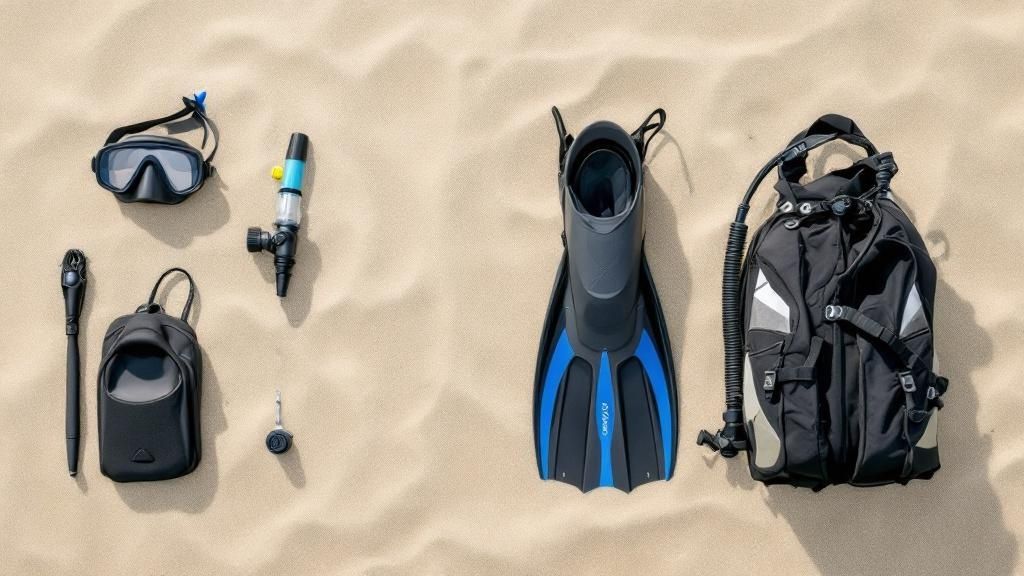
Packing for a dive trip is always a game of Tetris. To save yourself the headache of extra baggage fees, it's often easiest to rent the big stuff—like BCDs, regulators, and tanks—from a professional shop. At Kona Honu Divers, we obsessively service our rental gear to make sure it's in perfect working order for you.
That said, most seasoned divers prefer to bring their own "personal" gear for a perfect fit and familiar feel. Here’s what we recommend packing:
- Mask, Snorkel, and Fins: A leaky mask can ruin a dive. Bringing your own ensures a comfortable, custom fit.
- Wetsuit: A 3mm suit is usually perfect for our warm summer waters, but a 5mm will keep you cozier during the cooler winter months.
- Dive Computer: While you can rent one, having your own means you know its functions inside and out.
- The Essentials: Don't leave home without your certification card and logbook! And please, only pack reef-safe sunscreen to help protect our fragile coral.
- Comforts: A reusable water bottle and a light jacket for the boat ride back are always good ideas.
Bringing these key pieces will make your dives much more comfortable and enjoyable.
How Safe Is The Manta Ray Night Dive?
When you go with a professional, experienced operator, the Manta Ray Night Dive is an incredibly safe and well-managed experience. The entire dive is stationary; you settle into a designated spot on the sandy bottom, which eliminates the challenges of navigating in the dark. It’s no wonder this is one of the most popular diving tours on the entire island.
Before you even dip a fin in the water, our divemasters give a comprehensive safety briefing. They'll lay out the ground rules, the most important of which is a strict "no-touch" policy for the mantas. This is to protect both you and these gentle giants.
The "no-touch" rule is non-negotiable. Manta rays are covered in a protective mucus layer that acts as their immune system, shielding them from infection. Touching them strips this layer away, making them vulnerable to disease. Respecting this space is a cornerstone of responsible marine wildlife tourism.
With powerful lights, clear safety protocols, and constant supervision from our expert guides, it’s a controlled, safe environment perfect for any certified diver with decent buoyancy. It's a breathtaking adventure where safety—for both divers and mantas—is the top priority.
Ready to book your underwater adventure? The team at Kona Honu Divers is here to make your Big Island diving dreams a reality. With decades of local expertise and a passion for the ocean, we offer unforgettable and safe experiences for divers of all levels.