
Picture this: you descend into impossibly clear, blue water, and the only sound is the rhythmic hiss and bubble of your own breath. Below you, a dramatic volcanic wonderland unfolds, teeming with life you’ve only seen in documentaries. This is what Big Island scuba diving is all about—an experience that consistently lands on "best in the world" lists, and for very good reason. For anyone chasing a truly unforgettable underwater adventure, Hawaii’s largest island delivers.
Why the Big Island Offers World-Class Diving
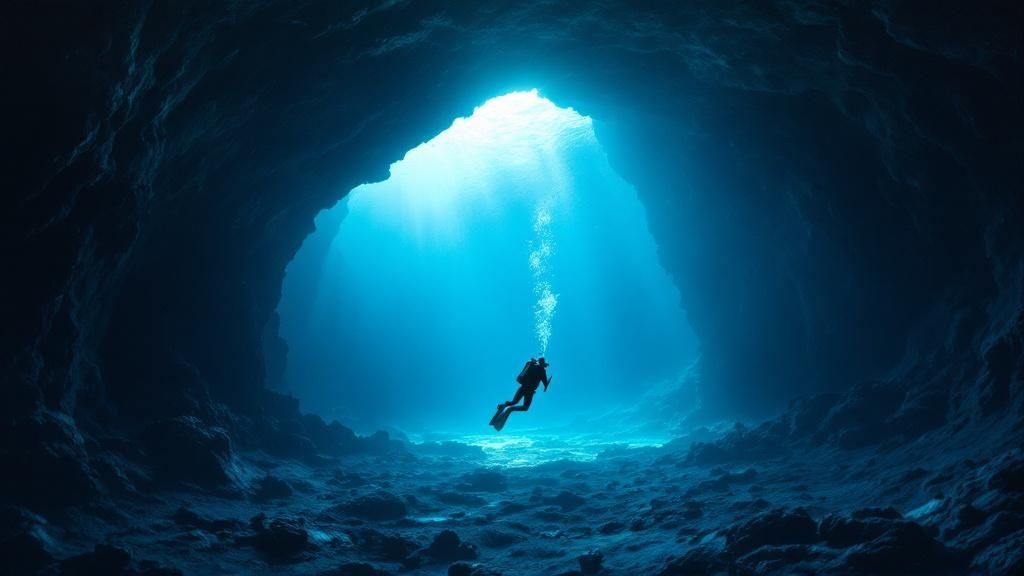
The Big Island isn't just another pretty spot in the tropics; its unique geology makes it a diver’s paradise, especially along the Kona coast. The island’s colossal volcanoes, Mauna Loa and Hualālai, act like a massive natural wall, shielding the western coastline from the gusty trade winds that can churn up the waters on other Hawaiian islands. This protection means we get exceptionally calm, clear seas, making Kona diving a spectacular and reliable year-round obsession.
The island’s volcanic heart is the true architect of its underwater magic. Over thousands of years, ancient lava flows have sculpted a breathtaking seascape you won’t find anywhere else. Forget gentle, sandy slopes. Here, divers are treated to:
- Dramatic Drop-Offs: Sheer walls that plunge straight into the deep blue.
- Intricate Lava Tubes: Ancient, hollowed-out tunnels just waiting to be explored.
- Majestic Arches and Caves: A playground of stunning underwater cathedrals.
This dynamic, rugged terrain has created the perfect foundation for a thriving and incredibly diverse ecosystem. The Big Island is a world-class scuba destination because of these unique formations and the legendary conditions. We’re talking about exceptionally clear water where visibility often punches past 100 feet. It’s like swimming in high definition.
That pristine environment supports an almost unbelievable amount of marine life. Encounters with Hawaiian green sea turtles, our beloved honu, are practically a daily occurrence as they cruise gracefully over healthy reefs. You’ll often spot whitetip reef sharks relaxing on sandy patches, and pods of spinner dolphins frequently put on an acrobatic show at the surface. And of course, the island is world-famous for its majestic manta rays, which gather every night for a mesmerizing feeding ballet.
Whether you're taking your first breaths underwater or you’re a seasoned pro with hundreds of dives in your logbook, diving Hawaii Big Island has an adventure waiting for you. The combination of protected waters, mind-blowing volcanic structures, and a sheer abundance of marine life makes it a genuine bucket-list destination. It’s an underwater world that promises something new and amazing on every single dive.
For a complete rundown of everything the island has to offer, check out our comprehensive guide to Big Island scuba diving.
Discovering the Top Dive Sites on the Big Island
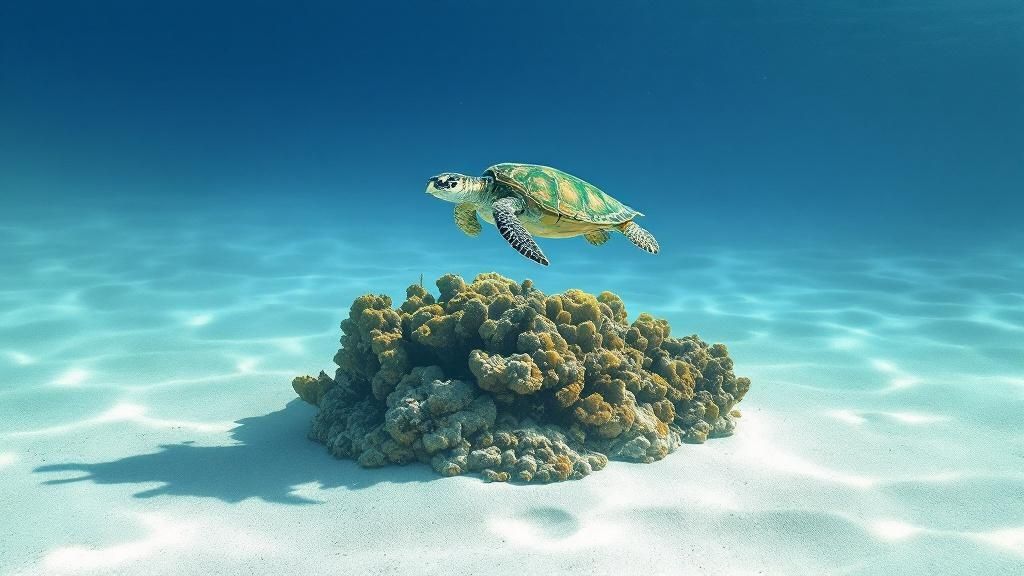
The Big Island is a diver's paradise, plain and simple. Thanks to its wild volcanic past, the underwater landscape here is unlike anywhere else on Earth. We're talking dramatic lava tubes, massive archways, and vibrant reefs teeming with life. This sheer variety is what makes scuba diving Big Island Hawaii an unforgettable, world-class adventure.
It doesn't matter if you're about to take your first breath underwater or you've logged hundreds of dives. The Kona coast has a spot with your name on it, guaranteeing every drop into the blue is a brand new discovery.
Dive Sites for Every Skill Level
For divers just starting out, Kona diving offers beautifully calm, shallow reefs that are basically underwater nurseries bursting with color. Sites like Pawai Bay are a perfect first taste, letting new divers get comfortable while being greeted by huge schools of bright yellow tangs and curious butterflyfish. These protected spots are ideal for building confidence and having a truly incredible first experience.
More seasoned divers can level up to explore some of Kona's more complex and thrilling sites. The diving Hawaii Big Island experience isn't complete without checking out iconic spots like Golden Arches, famous for its awesome lava tube swim-throughs. Gliding through these ancient volcanic formations is a genuine thrill that you just have to see to believe.
Feeling ready to push your skills? The Big Island has you covered. For certified divers seeking a real challenge, we have deep pinnacles and exciting drift dives that will put your training to the test. These advanced sites often have stronger currents and bring you face-to-face with bigger marine life, delivering a serious adrenaline rush.
The World-Famous Manta Ray Night Dive
You can't talk about Big Island diving without getting excited about the legendary Manta Ray Night Dive. This isn't just another dive; it's a bucket-list spectacle known across the globe. People use words like "magical," "surreal," and "life-changing" to describe it, and honestly, they're not wrong.
The setup is brilliant. We place powerful, eco-friendly lights on the seafloor, which act like a massive bug zapper for plankton—the manta rays' favorite meal. Divers then settle on the sandy bottom and simply watch the show. These gentle giants, with wingspans reaching up to 16 feet, perform a silent, graceful ballet, swooping and somersaulting just inches above your head.
This nightly feeding frenzy is a unique Kona coast phenomenon. It's a chance to get unbelievably close to one of the ocean's most majestic creatures in a way that’s simply not possible anywhere else on the planet.
Beyond the Reef: The Kona Blackwater Dive
If you're a truly adventurous and experienced diver looking for something completely different, you have to try the Kona Blackwater Dive. Forget the reef. This is a deep, open-ocean dive in the pitch-black of night. Tethered safely to the boat, you'll drift over thousands of feet of water and witness one of the largest migrations on Earth.
Every single night, a universe of strange and wonderful creatures travels up from the deep to feed near the surface. You'll encounter organisms that most people will never see—translucent larval fish, otherworldly bioluminescent jellies, and bizarre, beautiful critters straight out of a sci-fi movie. This is scuba diving Big Island at its most mysterious. It's less like a dive and more like a spacewalk, offering a peek into a completely hidden realm.
With so many incredible spots, the hardest part is just deciding where to go first! To get a better idea of what's out there, you can learn more about some of the most beautiful Kona diving sites.
Why Your Choice of Dive Operator Matters
Picking the right dive operator for your Big Island scuba diving adventure is one of the most important decisions you'll make. The company you choose is so much more than just a boat ride—they are your guides, your safety net, and the key to unlocking the best the underwater world has to offer. A great operator can elevate a good dive into a truly unforgettable memory.
So, how do you find the perfect match? It all starts with knowing what makes the best Kona diving companies stand out from the crowd. Your experience is directly tied to their professionalism, passion for the ocean, and unwavering commitment to safety.
Look for PADI 5-Star Credentials
One of the first things I always tell new divers to look for is a PADI 5-Star Dive Center rating. This isn't just some fancy sticker; it's a globally recognized stamp of excellence. It means the dive center has met tough standards for safety, training, customer service, and environmental stewardship.
Choosing an operator with this credential is a shortcut to peace of mind. You know you're diving with a company that invests heavily in its crew, gear, and daily operations, ensuring your diving Hawaii Big Island trip is both safe and professionally run.
Group Size Matters More Than You Think
Picture this: you're trying to watch a shy octopus change colors, but you're constantly being bumped and fin-kicked by a dozen other divers. That's where group size becomes a total game-changer. Some outfits pack their boats to the gills, which can lead to crowded dive sites and a rushed, impersonal experience.
Premier operators get it. They know a smaller group equals a better dive. With fewer people in the water, you get more one-on-one time with your guide, more space to explore at your own pace, and a much better shot at spotting timid marine life before it darts away.
Shops like Kona Honu Divers intentionally keep their groups small for exactly this reason. It transforms the dive from a simple group tour into a personalized underwater journey.
A Legacy of Excellence on the Big Island
Since the 1980s, dedicated dive companies have been instrumental in making the Big Island a world-class scuba destination. Pioneers like Jack's Diving Locker, a PADI 5-Star IDC center founded back in 1981, have certified thousands of divers and set a high bar.
Today, other operators like Kona Honu Divers carry that torch, celebrated for delivering top-tier experiences by capping their groups at just six divers for maximum safety and personal attention. This commitment is a big reason why scuba Big Island has such a stellar global reputation.
Kona Honu Divers: A Cut Above the Rest
When you’re searching for a top-tier operator, Kona Honu Divers is a name that comes up again and again. Their dedication to small groups, a flawless safety record, and a crew of seasoned pros shows what every diver should be looking for. It's an approach that makes every guest feel safe, valued, and part of the family.
But don't just take our word for it. The experiences of fellow divers speak volumes. For a fantastic breakdown of all your options, check out this guide on the top 10 Kona diving companies ranked. It’s a great resource to help you compare and choose the best fit for your trip.
Planning Your Trip Around the Seasons
Here's the great thing about Big Island scuba diving: it's fantastic pretty much any day of the year. But if you want to turn a great dive trip into the trip of a lifetime, timing your visit can make all the difference. The Kona coast is blessed with geography that keeps conditions favorable year-round, but each season brings its own unique magic to the underwater world.
Figuring out what you want to see most will help you nail down the perfect time to come.
Summer and Fall: A Diver's Dream
Most experienced divers I talk to will tell you that summer and fall—from June through November—is the absolute prime time for scuba diving Big Island. This is when the ocean is at its warmest and calmest. You get those beautiful, glassy surface conditions that make for smooth boat rides and effortless entries.
Even better, the underwater visibility often peaks during these months, sometimes stretching beyond 100 feet. The vibrant reefs and dramatic volcanic landscapes just pop with clarity. From June to November, the water temperature comfortably hangs out in the low 80s Fahrenheit (around 27-28°C), meaning you can often get away with a thinner wetsuit.
It just makes every part of the dive more enjoyable.
- Optimal Visibility: With hardly any significant ocean swells, the water stays exceptionally clear, which is a dream for wide-angle photographers.
- Calm Seas: The ocean is typically at its flattest. This is a huge plus for anyone prone to seasickness and leads to some seriously relaxing surface intervals between dives.
- Abundant Life: Marine life is incredibly active and predictable. You'll see everything from turtles happily munching on the reef to massive schools of fish swirling around you.
Winter and Spring: Special Encounters
When winter rolls in (December through March), the diving Hawaii Big Island experience takes on a completely different, almost spiritual dimension. The water might cool down a bit, dipping into the mid-70s (about 24-25°C), but the trade-off is something you'll never forget: humpback whales.
This is the peak of their migration season. While you probably won't see one on a dive, their presence is undeniable. You can often hear the hauntingly beautiful songs of male humpbacks echoing through the water—it's a powerful, moving soundtrack to your dive that you just can't get anywhere else.
Then there's spring (April to May), which many divers consider the sweet spot. It's the best of both worlds—the water is warming back up, visibility is fantastic, and you still have a lingering chance to hear those whale songs, but with fewer crowds than in the peak of summer.
Let's break down what you can expect throughout the year.
Seasonal Big Island Diving Conditions at a Glance
This table gives you a quick snapshot to help you decide when the Big Island is calling your name.
| Season | Water Temperature | Typical Visibility | Marine Life Highlights |
|---|---|---|---|
| Summer/Fall (Jun – Nov) | 80-83°F (27-28°C) | Excellent (80-100+ ft) | Calm seas, active reefs, schooling fish, turtle sightings. |
| Winter (Dec – Mar) | 75-78°F (24-25°C) | Good (60-80 ft) | Humpback whale songs, chances to see larger pelagics. |
| Spring (Apr – May) | 77-80°F (25-27°C) | Very Good (70-100 ft) | Warming water, fewer crowds, lingering whale songs. |
No matter which season you choose, the conditions are consistently great.
The truth is, scuba diving Big Island Hawaii is amazing all year, which is why the dive community here is so vibrant. The Kona coast gets an average of over 250 dive days a year, a number that speaks for itself. Add in the iconic marine life, from the migrating humpback whales to the world-famous manta rays that draw visitors every single night, and you have a world-class destination. You can learn more about what makes Hawaiian diving so accessible and popular on ThisWeekHawaii.com.
Regardless of when you plan your trip, you're in for an incredible time. Booking with a top-tier operator like Kona Honu Divers ensures you're with local experts who know exactly how to make the most of every season's unique offerings. Ready to explore our diving tours in Hawaii?
Frequently Asked Questions About Diving The Big Island
Got questions about diving on the Big Island? You're not alone. Planning a dive trip comes with a lot of details, and it's smart to get them sorted out before you book.
We get these questions all the time, so we’ve put together some straight-to-the-point answers from our years of experience diving these waters. Think of this as your final checklist to build your confidence and get you ready to jump in.
Is there good diving on the Big Island?
Yes, it’s not just good—it’s world-class. The Big Island diving experience is consistently ranked among the best on the planet. The island's volcanic past has left behind an incredible underwater playground of lava tubes, dramatic archways, and some of the healthiest reefs you’ll ever see. What really seals the deal is the Kona Coast. It’s uniquely shielded from the trade winds by massive volcanoes, meaning we get stunningly clear and calm water almost every single day. This is where you'll find bucket-list dives like the Manta Ray Night Dive and a crazy amount of marine life, from turtles and dolphins to multiple shark species.
What are the best months to scuba dive in Hawaii?
You can have a fantastic dive here any day of the year, but if you ask a local diver, they’ll probably tell you the prime time is from June to November. That’s when you get the warmest water and the flattest, calmest seas. It’s just perfect for any scuba diving Big Island Hawaii adventure. That said, diving in the winter (December to March) has a special kind of magic. You can actually hear the songs of migrating humpback whales echoing through the water on your dives. For a sweet spot with great conditions and fewer people, aim for the shoulder seasons in spring (April-May) or fall (September-November).
Is Kona good for scuba diving?
Kona is Big Island scuba diving. It's the undisputed hub and for good reason—it’s a globally recognized dive destination. Its west-facing coastline is protected by the behemoth volcanoes of Hualālai and Mauna Loa, creating a natural shield that gives us calm, clear water pretty much 365 days a year. Kona is your gateway to all the legendary sites: Manta Village, Garden Eel Cove, and countless lava tube networks. With a ton of professional Kona diving companies and marine life that never disappoints, Kona isn't just good, it's the gold standard. It's no surprise the most popular diving tours in Hawaii leave from our shores.
Kona Honu Divers is a top-tier operator known for delivering unforgettable underwater adventures. Their focus on small groups and uncompromised safety means you get a personal, high-quality experience every time you hit the water with them.
Is it better to snorkel or scuba dive in Hawaii?
Honestly, it just depends on what you're looking for. Snorkeling is fantastic—it’s easy, affordable, and lets you see all the vibrant fish and corals in the shallow reefs right from the surface. Anyone can do it. But scuba diving Big Island is a whole different ballgame. It's about full immersion. You're not just looking down at the underwater world; you become part of it. With scuba, you get to explore incredible underwater landscapes like lava tubes and archways, spend more time underwater, and see a wider variety of marine life that hangs out in deeper water. If you really want to experience the unique volcanic topography and the full diversity of life the Big Island has to offer, diving Big Island is the way to go.
Which Hawaiian island is best for scuba diving?
All the Hawaiian islands have their moments, but the Big Island is hands-down the best and most diverse for divers. It just has a unique combination of features that no other island can match. The underwater volcanic terrain here is simply unrivaled. Plus, the sheltered Kona Coast gives us reliable, crystal-clear conditions year-round, which you can't always count on with the other islands. And most importantly, the Big Island has those once-in-a-lifetime dives you won't find anywhere else, like the world-famous Manta Ray Night Dive and the surreal Kona Blackwater Dive. When you add it all up—variety, reliability, and big animal encounters—diving Hawaii Big Island takes the crown.
When to dive Kona?
The short answer? Anytime you can! We're lucky to have amazing Kona diving all year long. But, you can fine-tune your trip to what you want to experience most.
- Warmest Water & Calmest Seas: Plan your visit between June and October. It’s pure bliss.
- Humpback Whale Songs: Come between December and March for an underwater concert you'll never forget.
- Great Weather, Fewer Crowds: The shoulder seasons are perfect. Think April-May and September-November.
No matter when you come for a scuba Big Island trip, there's no bad time. The ocean is always waiting with something incredible to show you.