
If you're a diver, putting the Big Island of Hawaii on your bucket list is a no-brainer. This isn't just another tropical dive spot; it's a spectacular underwater playground where raw volcanic geology smashes up against vibrant marine life. The result? Some of the most unique and unforgettable diving on the entire planet.
So, Why is Kona a World-Class Diving Destination?
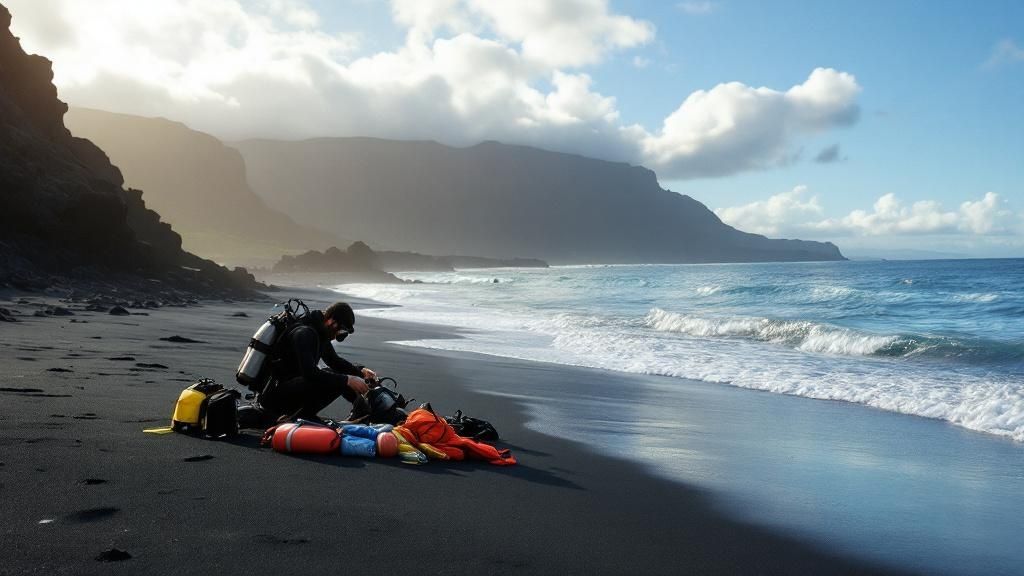
The Kona coast, nestled on the western side of the Big Island, is a diver's paradise. It's shielded from the gusty trade winds by the colossal volcanoes Mauna Loa and Hualalai. This natural barrier creates a pocket of exceptionally calm, clear water pretty much all year long. It’s the perfect setup for both a beginner's very first breaths underwater and a seasoned pro's exploration of intricate lava formations.
What really makes Kona stand out is the dramatic underwater landscape. It's a direct gift from the island's fiery volcanic past. Ancient lava flows have sculpted an incredible sub-aquatic world of arches, craters, canyons, and complex lava tubes. These aren't just cool to look at—they’re the perfect apartment buildings for a mind-bogglingly diverse population of marine creatures.
The Ideal Environment for Divers
Kona’s one-of-a-kind environment creates a truly world-class diving experience. The calm, protected waters often mean unbelievable visibility, and the volcanic terrain offers endless nooks and crannies to explore. It’s a combination that keeps divers coming back again and again.
Here's what gives Kona the edge:
- Exceptional Clarity: Without major rivers dumping runoff into the ocean, the water here stays crystal clear. Visibility often pushes past 100 feet.
- Warm, Comfortable Water: The water temperature is always inviting, hanging out between a balmy 76°F and 82°F (24°C to 28°C) year-round.
- Unique Underwater Landscapes: Where else can you swim through submerged volcanic craters and sprawling networks of ancient lava tubes? It's a surreal experience.
The island's marine ecosystem is famous for a reason. This volcanic coastline supports thriving coral reefs and a massive concentration of sea life, from tiny, colorful reef fish to majestic open-ocean giants. It’s this blend of geology and biology that turns every single dive into a genuine adventure. For a deeper dive into what our island has to offer, check out our complete guide to Big Island scuba diving.
Big Island Diving Seasonality Overview
While the diving here is fantastic all year, certain times are better for specific encounters. This table breaks down what you can expect during different seasons.
| Season | Avg. Water Temp (°F) | Typical Visibility | Marine Life Highlights |
|---|---|---|---|
| Winter (Dec-Mar) | 76° – 78° | Excellent | Humpback whale songs underwater, occasional whale sightings. |
| Spring (Apr-Jun) | 77° – 80° | Excellent | Manta ray activity is high, reef fish are abundant. |
| Summer (Jul-Sep) | 80° – 82° | Very Good | Calmest seas, pilot whales, warmer water. |
| Fall (Oct-Nov) | 78° – 80° | Good to Excellent | Fewer crowds, great manta and dolphin encounters. |
No matter when you visit, you're in for a treat. The key is knowing what you want to see, and we can help you plan the perfect trip around it.
Exploring Kona’s Most Iconic Dive Sites
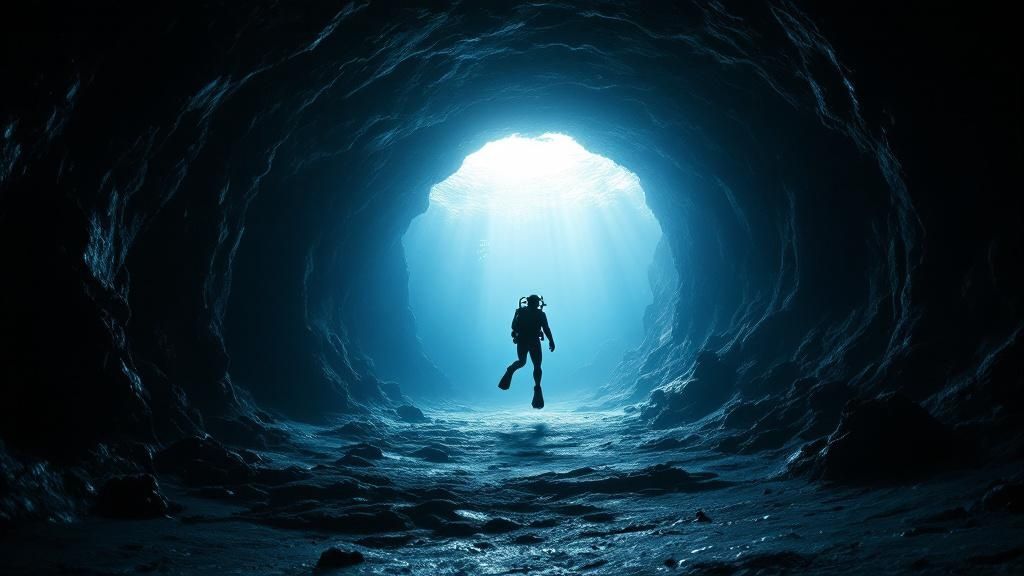
The Big Island’s Kona coast isn’t just one diving environment—it’s a whole string of unique underwater worlds, each with its own vibe. The same volcanic forces that sculpted the island didn't just stop at the water's edge. They plunged right into the sea, carving out dramatic cliffs, massive lava tubes, and sunken craters that are now buzzing with marine life.
Each spot offers a totally different experience, which is great because there's something for every skill level and interest. Whether you want a chill swim through coral gardens or a more technical dive exploring volcanic architecture, Kona has a site with your name on it.
This variety is what keeps divers coming back. One day you could be gliding over a shallow reef with Hawaiian green sea turtles, and the next, you might be dropping into the heart of an old volcanic crater. Let's take a look at some of the marquee sites that put Kona on the map.
Pu’uhonua O Honaunau (Two Step)
Most people know this spot as "Two Step" because of its super-easy entry from two natural lava rock steps. It’s a fantastic site for pretty much every diver, from beginner to pro. The entry puts you right into a protected cove where the reef is just teeming with life.
This place is a magnet for Hawaiian green sea turtles (Honu). Seriously, it's not unusual to spot several of these guys just chilling on the sandy bottom or cruising gracefully past you. The reef itself is a beautiful mix of finger coral and big coral heads, giving shelter to all sorts of critters, like:
- Schools of brilliant yellow tangs
- Curious butterflyfish and parrotfish
- Perfectly camouflaged octopuses (he'e)
With an average depth between 20 and 50 feet, it's an awesome spot for new divers or anyone who just wants to maximize their bottom time and soak it all in. The easy shore access and incredible wildlife make it a must-do.
Au Au Crater
If you want a dive that feels like you've landed on another planet, Au Au Crater is your spot. This half-submerged volcanic crater serves up some of the most dramatic underwater landscapes on the island. The main attraction is a huge, crescent-shaped crater where one wall has collapsed into the sea, creating an epic swim-through.
Inside, the crater walls are painted with corals and sponges, providing a home for eels, nudibranchs, and schools of fish. But the real kick here is the sheer sense of scale and the wild geology.
Descending into Au Au Crater feels like you're dropping into an ancient, sunken amphitheater. The sheer size of the lava formations and the way the light plays through the arches and swim-throughs is a powerful reminder of the island's volcanic origins.
This site is typically for intermediate divers since depths can hit 60 to 80 feet, and you can get some mild currents. For divers craving an even bigger challenge at sites like this one, we run specialized advanced dive tours that let you safely push your limits. You can find out more on our Premium Advanced Dive Tour page.
The Unforgettable Manta Ray Night Dive
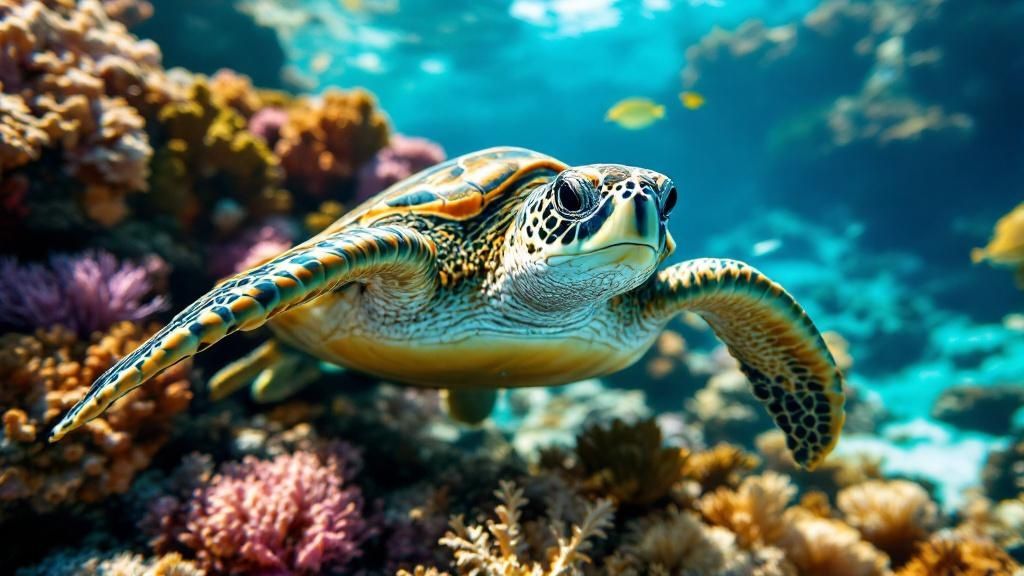
Picture this: you’re kneeling on the sandy ocean floor, surrounded by the velvet blackness of a Kona night. You flick on your dive light, aiming its beam up toward the surface, and you wait. Before long, a colossal, shadowy figure emerges from the darkness, swooping down with a grace that seems impossible for its size.
This is the world-famous Manta Ray Night Dive. It’s easily one of the most mesmerizing underwater encounters on the entire planet, and it happens right here.
This isn't your typical reef tour where you're finning around looking for critters. Think of it more like attending a magnificent underwater ballet where you have the best seat in the house. Your job is simple: settle into your spot, shine your light, and watch the show unfold. It’s an experience that consistently lands on top-ten dive lists worldwide and is an absolute cornerstone of any Big Island scuba diving trip.
The best part? This incredible spectacle is completely natural, all driven by a simple food chain interaction. Let’s pull back the curtain on how this nightly performance works and why Kona is the perfect stage for it.
The Science Behind the Manta Ballet
The real magic behind the manta ray night dive comes down to one tiny ingredient: plankton. These microscopic organisms are the main food source for manta rays, which are essentially giant, gentle filter feeders. The whole experience is smartly designed to gather a massive plankton buffet right where we'll be.
Here's how this incredible phenomenon plays out every single night:
- The Lights Go On: As soon as the sun sets, we set up powerful lights in the water. We create a "campfire" of lights on the ocean floor, which our divers gather around.
- Plankton Arrive: Just like moths drawn to a porch light, plankton are irresistibly attracted to the bright beams. They swarm in, creating dense, shimmering clouds in the light.
- The Dinner Bell Rings: Kona's local reef manta rays have been conditioned for years. They know these lights mean one thing: an easy, all-you-can-eat plankton feast.
- The Show Begins: The mantas glide in from the darkness and start feeding. They swoop, glide, and perform breathtaking barrel rolls right through the plankton clouds, often passing within inches of our divers.
What you get is a beautiful, symbiotic relationship. We get an unbelievably close look at these gentle giants, and the mantas get a reliable meal. It's a simple, effective system that has made Kona the undisputed global capital for manta ray encounters. To really get a feel for the magic, check out our full story on what it's like to go on the manta ray dive in Kona.
Ensuring a Safe and Respectful Encounter
As this dive's reputation has grown, so has the need for responsible, sustainable tourism. Kona's manta rays are a precious natural treasure, and protecting them is the absolute top priority for any reputable dive operator. We follow strict guidelines to make sure the interactions are safe for both the mantas and our guests.
The most important rule for the manta dive is passive observation. You are a guest in their dining room. The whole point is to let the mantas control the interaction, making sure they are never stressed, chased, or touched.
To make sure it’s a positive experience for everyone (mantas included!), you'll be briefed on a clear code of conduct. We'll ask you to stay in one spot on the sand and, crucially, to never reach out and touch the mantas. They might get close enough to brush against you, but it’s vital not to initiate that contact. Touching them can rub off the protective mucus layer on their skin, leaving them vulnerable to infection.
When you choose a professional, eco-conscious operator, you're doing more than just booking a dive; you're supporting the conservation efforts that keep this manta population healthy. Here at Kona Honu Divers, we are fully committed to these standards. We make sure every single dive is a testament to responsible marine tourism and a truly unforgettable adventure.
Diving the Deep with the Kona Blackwater Dive
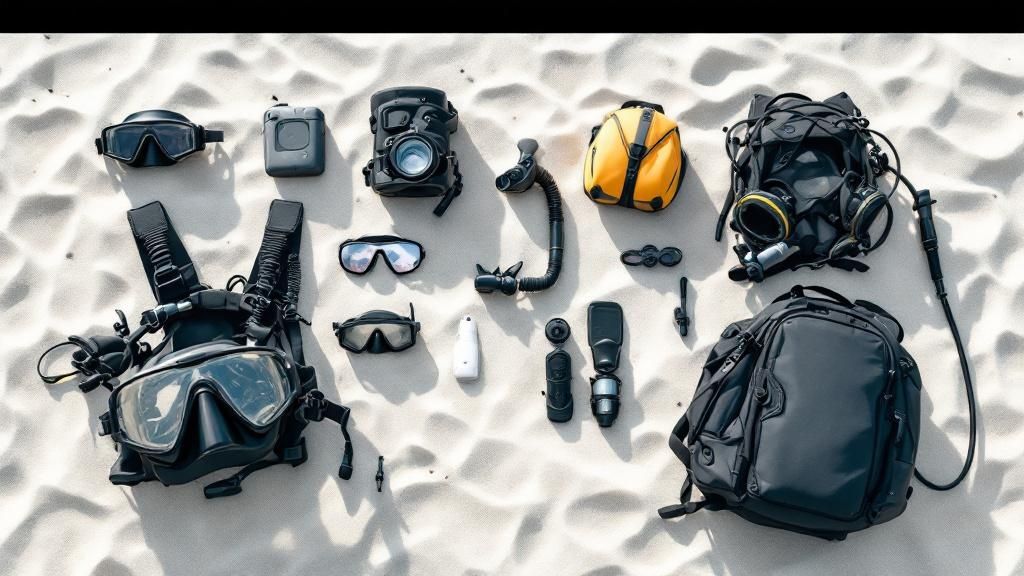
For the diver who thinks they've seen it all, let me introduce you to the final frontier: the Kona Blackwater Dive. This is not your typical reef dive. Forget the bottom. Forget the coastline. Picture yourself drifting miles from shore, suspended in the deep, inky black ocean beneath a sky packed with stars. This is pelagic night diving, and it's a journey into a bizarre, alien world that very few people ever get to witness.
The whole experience is profoundly different from anything else you’ll do in the water. You aren’t exploring a reef; you're exploring the water column itself. For safety and a bit of peace of mind, you're tethered to a large float on the surface, which is in turn tethered to the boat. This setup allows you to drift safely in the immense darkness, becoming a silent observer in a realm normally hidden from human eyes.
This dive puts you front and center for the largest migration on Earth. Every night, countless deep-water creatures swim up from the abyss to feed near the surface, and you’ll be right there waiting for them. The animals you'll meet here are unlike anything on a reef—they are strange, often see-through, and frequently glow in the dark. It’s a surreal feeling, more like floating through outer space than diving in the ocean.
An Otherworldly Cast of Characters
The critters that appear on a blackwater dive are straight out of science fiction. Many are in their larval stages, looking absolutely nothing like their adult forms. Their otherworldly shapes and behaviors are pure survival adaptations for life in the open ocean, where there's simply nowhere to hide.
Your dive light will catch a constant parade of beautiful and bizarre creatures drifting past. Some of the usual suspects you might encounter on this unique Big Island scuba diving adventure include:
- Bizarre Larval Fish: You might spot a larval flounder with its eyes still on opposite sides of its head, or tiny, transparent eels that look more like ribbons of glass.
- Pulsating Jellies: The darkness is filled with all sorts of ctenophores and siphonophores. Many create their own light, pulsing with eerie blues and greens as they float by.
- Translucent Squids and Octopuses: Pelagic cephalopods, often no bigger than your thumb, will jet through the water, their skin flashing with color.
The sheer strangeness of the creatures is what makes this dive so incredible. You’re not just looking at fish; you’re seeing life in its most primal, alien-like forms. It’s a humbling reminder of how much of our own planet is still a total mystery.
It isn't just about spotting individual animals, either. It’s about witnessing an entire ecosystem in motion. The slow-motion drift of life all around you is mesmerizing and gives you a real sense of connection to the vastness of the sea.
A Dive for the Advanced Adventurer
It’s really important to understand that the Kona Blackwater Dive is a genuinely advanced dive. It takes a specific skill set and, more importantly, a calm and confident mindset. You have to be comfortable in the dark, in deep open water, and have your buoyancy control absolutely dialed in. Drifting in pure blackness, far from the security of a reef, is an experience that demands focus and a cool head.
This dive is for certified advanced open water divers who already have a good number of night dives under their belt. Your ability to stay calm and manage your buoyancy without any visual references on the seafloor is crucial for both your safety and your enjoyment.
For those who meet the requirements, it’s a true once-in-a-lifetime chance to see a part of our planet that's still largely unexplored. If you're an experienced diver with an adventurous spirit, this dive is an unforgettable journey into the ocean's deepest mysteries. Ready to take the plunge? You can book this incredible adventure on our Kona Blackwater Dive tour page.
How to Choose the Right Kona Dive Operator
Picking the right dive operator for your big island scuba diving trip is probably the most important decision you'll make. It’s the kind of choice that can take a dive from just "good" to absolutely unforgettable. The right company does more than just ferry you to a dive site; they are your guide, safety crew, and local insider all rolled into one, making sure your experience is not only a blast but also completely safe.
Think about it—the best operators put your well-being first, and that starts with serious, no-compromise safety standards. We're talking about boats that are meticulously maintained, high-quality rental gear that you can trust, and emergency plans that are second nature to the crew.
And let’s not forget the boat itself! You’ll be spending a fair amount of time on it, so comfort matters. Look for operators who clearly invest in their vessels. Is there plenty of shade? A clean restroom? Is it easy to get in and out of the water? These little things add up to a much better day.
The Value of Local Expertise and Small Groups
Beyond the boat and gear, it’s the people that truly make a dive operator stand out. A seasoned local guide is worth their weight in gold. They don't just know the dive sites; they have an intimate relationship with them. They know the secret hideouts where octopuses lurk and the exact time of day a particular school of fish comes out to play.
Another huge factor? The size of the dive group. Companies that stick to smaller groups offer a far more personal and relaxed vibe.
With fewer divers in the water, you get more dedicated attention from your guide. There’s more room to explore without feeling like you're in a crowd, and you have a much better shot at spotting timid marine life that bigger, louder groups often scare away.
This personalized touch really changes the game. It lets the crew tailor the dive plan to your group's specific skill level and interests. It's a philosophy we've built Kona Honu Divers on—making sure every diver feels like a valued guest, not just another name on a roster. Don’t just take our word for it; see what our past divers have to say.
Training and Professionalism
The Big Island is home to a fantastic and professional scuba community, with plenty of great operators eager to show you our underwater world. A quick look at objective rankings like Google reviews can help you zero in on top-tier companies like Kona Honu Divers, Kona Shore Divers, and others known for their consistent, outstanding service.
These established shops offer the full package, from beginner certifications all the way to advanced specialty dives like the world-famous manta ray night dive—a massive draw for visitors. The quality and variety of these offerings are a testament to how professional and robust the big island scuba diving scene really is.
A great dive shop is also a hub for learning. Whether you're aiming for your first PADI Open Water certification or looking to sharpen your skills with an advanced course, the quality of the instruction is everything. You want an operator with experienced instructors who are genuinely passionate about teaching and helping you become a more confident, capable diver. For a deep dive into what to look for, check out our guide on how to choose a Kona dive shop.
Ultimately, it all boils down to finding a team that is professional, safety-obsessed, knowledgeable, and truly excited to share the magic of Kona's underwater world with you. When you find that perfect mix, you're in for an incredible adventure.
Your Big Island Diving Questions Answered
Planning a dive trip always comes with a few questions. To help you get everything sorted, we’ve put together answers to the things we get asked most about Big Island scuba diving. Think of this as a quick chat with an expert to get you feeling confident and ready for your adventure.
When Is the Best Time of Year to Dive on the Big Island?
Honestly, the diving in Kona is fantastic any time of year. But if you're looking for that absolute sweet spot, aim for August through October. During these months, the ocean tends to lay down flat, and the visibility can be mind-blowing, often stretching past 100 feet. It’s also a bit of a shoulder season, so you'll find fewer crowds, which makes for a much more peaceful experience out on the water.
That said, every season has its own magic. Come in the winter, and you'll be treated to the incredible sound of humpback whale songs providing the soundtrack to your dives. The surface might be a little choppier, but hearing those whales is something you'll never forget. No matter when you visit, there's always something amazing to see beneath the waves.
Do I Need to Be an Advanced Diver to Dive in Kona?
Not at all! Kona’s coastline is a perfect playground for divers of all experience levels. We have plenty of protected reefs and calm, shallow bays that are absolutely ideal for beginners, folks getting certified, or anyone just wanting a chill dive with turtles and tons of colorful fish.
If you’re a more seasoned diver craving a challenge, don't worry, we've got you covered. There are dramatic lava tubes, deeper offshore pinnacles, and some seriously fun drift dives to explore. Even our world-famous Manta Ray Night Dive is accessible to certified Open Water divers. For the real adrenaline junkies, the intense Kona Blackwater Dive is reserved for advanced divers only. Our job is to match you with a site that fits your skills and comfort level perfectly. If you're looking for those next-level dives, check out our premium advanced dive tours.
What Marine Life Can I Expect to See?
The waters off the Big Island are just bursting with life. On almost any dive, you can count on seeing Hawaiian green sea turtles (we call them honu), different kinds of moray eels peeking out from the reef, and cleverly hidden octopuses. Of course, there's also a dizzying variety of tropical fish. It’s also very common to see whitetip reef sharks cruising lazily over the sandy patches.
Look beyond the reef, and your odds get even better. You might spot a pod of spinner dolphins zipping by the boat, see a majestic eagle ray glide past in the blue, or even encounter larger shark species in the deeper water. For many, the real headliners are the gentle giant manta rays on the night dive and the strange, glowing creatures of the blackwater dives. You can explore all of our Big Island diving tours to see this incredible wildlife for yourself.
Is the Manta Ray Night Dive Safe?
Absolutely. When you go with a professional, safety-focused operator, the Manta Ray Night Dive is an incredibly safe and well-organized experience. We follow very strict rules to make sure both the divers and the mantas are protected.
Before you even hop in the water, you get a thorough briefing covering all the do's and don'ts. Once we descend, your group settles into a designated spot on the sandy bottom. You just hang out and watch the show as the mantas, drawn to the plankton in our lights, perform their amazing underwater ballet all around you.
Our divemasters are experts at managing this encounter, and the mantas are gentle giants completely focused on their meal. It’s a controlled environment that makes for a secure and truly breathtaking adventure. To book this unforgettable experience, you can visit our manta ray dive tours page.
Beyond scuba, the Big Island has other amazing ways to get in the water. For another perspective on our vibrant reefs, you might enjoy exploring Kealakekua Bay with Captain Cook snorkel tours, which offer a fantastic way to see the island’s marine life from the surface.
Now that you've got the answers, you're one step closer to planning the Big Island scuba diving trip of a lifetime. All that's left to do is book your spot and get ready to make some incredible underwater memories.