
Welcome to the underwater world of Hawaii's Big Island, a place that genuinely lives up to its reputation as a global diving hotspot. The island's dramatic volcanic heart has created a seascape unlike any other, and its calm, crystal-clear waters, especially along the Kona coast, make for some of the most consistent and breathtaking Big Island scuba diving you'll find anywhere. It's the kind of place that belongs on every diver's must-do list, no matter your experience level.
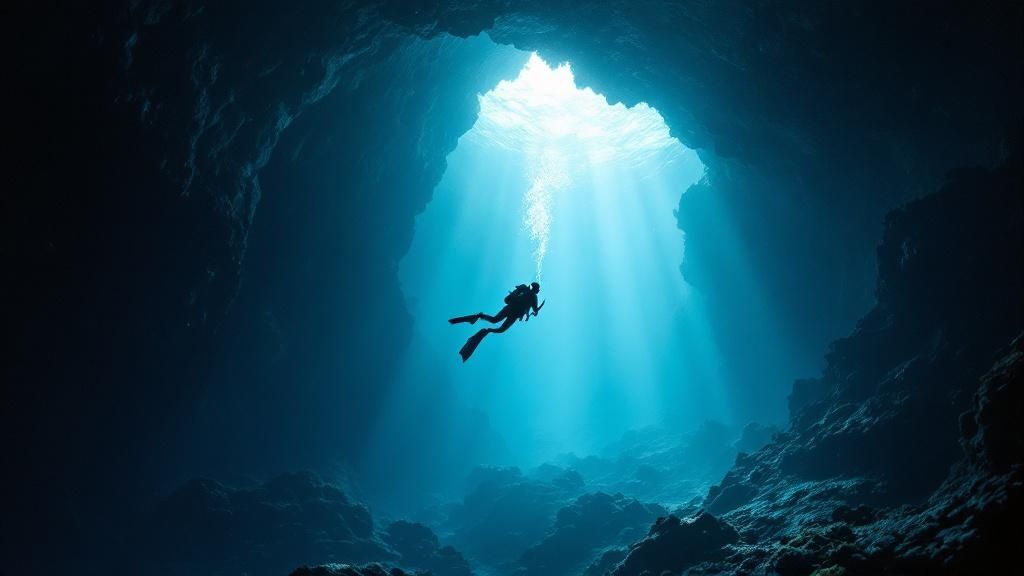
Picture this: you descend into a realm sculpted by raw, elemental forces. Ancient lava tubes transform into awe-inspiring underwater cathedrals, and vast coral gardens burst with a kaleidoscope of life. This is the core of what makes diving here so special—it’s an adventure that perfectly blends geological marvels with incredible biodiversity.
The magic really happens on the Kona coast. Thanks to its leeward position, it's shielded from the powerful trade winds that can churn up the waters elsewhere in Hawaii. The result? Exceptionally calm seas and phenomenal visibility that often stretches beyond 100 feet (30 meters). This natural gift makes Kona the undisputed epicenter for unforgettable underwater expeditions.
So, What's The Big Deal With Kona Diving?
The appeal of Kona goes far deeper than just its clear, placid water. The island's volcanic past has left behind a dramatic underwater landscape you simply won't find anywhere else on Earth.
When you dive here, you get to explore:
- Lava Tubes and Arches: Imagine swimming through massive caverns and archways forged by flowing lava centuries ago, now providing shelter to countless marine critters.
- Thriving Coral Reefs: You'll discover remarkably healthy coral ecosystems that are home to thousands of fish species, unique invertebrates, and of course, the cherished Hawaiian green sea turtle (honu).
- Once-in-a-Lifetime Encounters: Kona is home to world-famous experiences, none more so than the Manta Ray Night Dive—a truly mesmerizing underwater ballet that feels like something from another planet.
Big Island Dive Experience Snapshot
To give you a clearer picture, here's a quick look at the most popular types of dives you can experience on the Big Island. Each offers something a little different, catering to various interests and skill levels.
| Dive Type | Best For | Key Features | Typical Depth Range |
|---|---|---|---|
| Manta Ray Night Dive | All Levels (including snorkelers) | Watching giant mantas feed on plankton attracted by lights. A true bucket-list item. | 25-40 ft |
| Reef Dives (Day) | Beginners & Photographers | Exploring vibrant coral gardens, lava formations, and abundant fish life in bright, clear water. | 40-70 ft |
| Advanced "Blackwater" Dive | Experienced Divers Only | A unique night dive in deep open ocean to see bizarre, bioluminescent deep-sea creatures. | 30-50 ft (drifting over thousands of feet) |
| Introductory "Discover" Dive | First-Time Divers | A supervised, shallow dive to experience breathing underwater and see marine life without certification. | 20-40 ft |
This table is just a starting point. The beauty of the Big Island is the sheer variety. Whether you're chasing the thrill of a deep dive or just want to float peacefully over a reef, there's an adventure here with your name on it.
Think of this as your mission briefing. We're setting the stage for a deep dive (pun intended) into everything the Big Island has to offer. Whether you're a brand new diver looking to get certified or a seasoned pro hunting for a new challenge, the opportunities are endless. The island’s geography blesses it with uniquely stable conditions, making any season a great time to visit. While summer boasts the absolute calmest seas, winter diving comes with the incredible soundtrack of migrating humpback whales singing in the distance.
Ready to see which underwater adventure is calling your name? You can explore the full range of diving tours and start putting your dream trip together.
Discovering Kona’s Most Legendary Dive Sites
The Kona coast isn't just another spot on the map to go diving; it’s where Hawaii’s most incredible underwater dramas play out daily. Thanks to the Big Island's unique volcanic geology, we’re left with a subaquatic playground of staggering diversity. You could dive here for weeks and feel like you're exploring a new world with every descent. For anyone serious about Big Island scuba diving, getting to know these legendary sites is the main event.
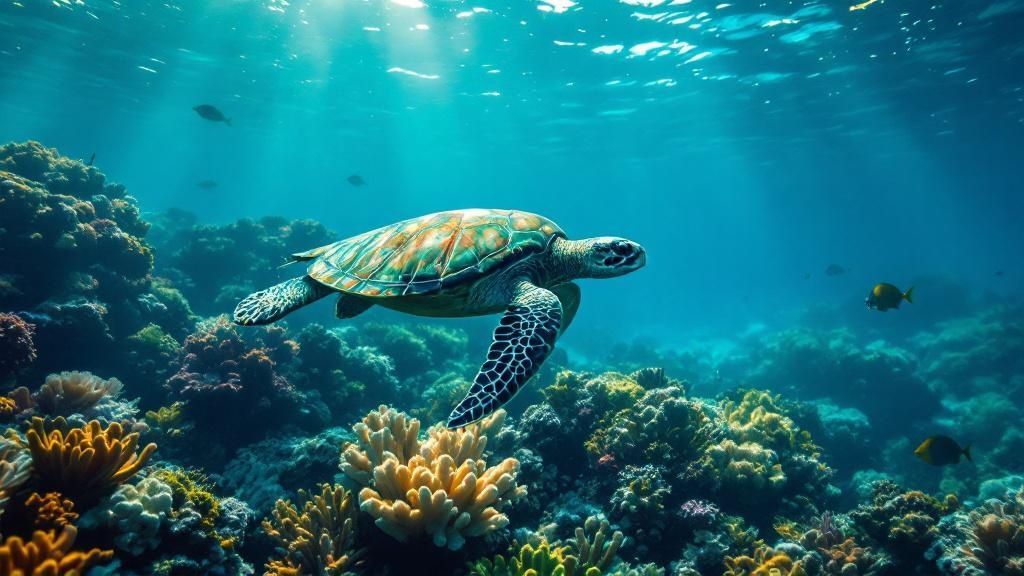
Picture yourself gliding through an ancient lava tube, its arched ceiling now painted with colorful sponges and corals. Or imagine hovering weightlessly over a "cleaning station," watching Hawaiian green sea turtles patiently waiting for tiny reef fish to nibble away algae. This isn't a fantasy—it's just another day of diving in Kona. The dramatic caverns, deep pinnacles, and intricate reef structures are all direct results of ancient lava flows, creating a truly one-of-a-kind underwater landscape.
Beginner-Friendly Coral Gardens
If you're new to the sport or just prefer a relaxed, mellow dive, Kona has you covered. The coast is dotted with shallow reef sites that are absolutely bursting with life. These coral gardens are usually tucked away in protected bays where the water is calm and crystal-clear, making for a safe and utterly enchanting experience.
Think of these sites as bustling underwater cities. On any given dive, you can expect to see:
- Vibrant Coral Formations: Fields of healthy hard and soft corals create a complex, beautiful habitat for countless creatures.
- Abundant Reef Fish: It’s common to be surrounded by massive schools of yellow tangs, ornate butterflyfish, and striking Moorish idols.
- Curious Critters: Keep a sharp eye out for moray eels peeking from crevices or an octopus masterfully camouflaged against the reef.
One of the most beloved spots is Turtle Pinnacle, a classic Kona dive famous for its turtle cleaning station. Here, you get a front-row seat to the incredible symbiotic relationship between honu (turtles) and reef fish. It’s a truly magical sight for divers of all skill levels.
Thrilling Dives for the Experienced
While Kona is exceptionally welcoming to new divers, it also delivers some serious thrills for the more advanced crowd. The underwater terrain gets bolder with dramatic drop-offs, complex networks of lava tubes, and deeper pinnacles that attract larger marine life. These dives demand solid buoyancy control and confidence, but the reward is often an unforgettable, once-in-a-lifetime encounter.
These advanced sites are where you really feel the island's volcanic past. Exploring the remnants of old lava flows feels like navigating a submerged, natural sculpture park. The sense of discovery is just immense.
A fantastic example is a site sometimes called Golden Arches, which is famous for its spectacular lava tube swim-throughs. Navigating these ancient tunnels as light filters down through openings in the ceiling is nothing short of awe-inspiring. For divers with the right training and experience, these advanced sites are what Kona diving is all about. If you're ready for that next level, consider an advanced dive trip, which is specifically designed to visit these more challenging and rewarding locations.
Planning Your Perfect Dive Itinerary
With over 40 moored dive sites along the Kona coast, figuring out where to go can seem a bit daunting at first. The secret is to match a site's personality with your own skill level and what you want to see. Are you dreaming of underwater photography in a sun-drenched coral garden, or is the mystery of a dark lava tube calling your name?
It really helps to understand the different topographies and the specific marine life each site is known for. Some spots, for instance, are known for frequent fly-bys from majestic eagle rays, while others are havens for spotting shy, elusive frogfish. The best way to guarantee an amazing trip is to go with a reputable local operator who knows these sites like the back of their hand. They can tailor the experience perfectly to what you're hoping for.
Experiencing Kona’s World-Famous Night Dives
When the sun dips below the horizon in Kona, the ocean doesn't just get dark—it comes alive with a completely different kind of magic. While daytime big island scuba diving is undeniably spectacular, the night reveals a hidden world of glowing creatures and nocturnal hunters. Two dives, in particular, have put Kona on every diver's bucket list: the legendary Manta Ray Night Dive and the mysterious Kona Blackwater Dive.
These aren't just your average night dives; they are profound experiences that will completely redefine what you think is possible after dark. One is a mesmerizing underwater ballet, and the other is a thrilling plunge into an alien abyss. Let's break down what makes each of these iconic dives so unique, so you can choose the adventure that will leave you absolutely breathless.
The Underwater Ballet of the Manta Ray Night Dive
Often hailed as one of the top ten dives on the planet, the Manta Ray Night Dive is a spectacle of pure grace and wonder. The concept behind it is brilliantly simple yet incredibly effective. Dive operators set up in a specific sandy-bottom area known as a natural feeding ground for reef mantas. Powerful lights are placed on the ocean floor, pointing straight up. These beams attract huge clouds of plankton, the mantas' favorite meal.
What happens next is something that truly borders on spiritual. Giant manta rays, some with wingspans stretching over 12 feet, glide in from the darkness to feast. They perform effortless barrel rolls and somersaults, swooping just inches above your head as you kneel on the seafloor. It’s an underwater ballet, and you have the best seat in the house.
This dive is surprisingly accessible and is open to certified divers of all levels. It all happens in a relatively shallow area, typically just 30 to 40 feet deep. You just find a spot, get comfortable, and let the show unfold around you. To get a real feel for this incredible encounter, you can learn more about the Manta Ray Night Dive in Kona and see why it’s a non-negotiable part of any Big Island trip.
Plunging into the Abyss on a Kona Blackwater Dive
If the Manta Ray Dive is a beautiful ballet, the Kona Blackwater Dive is a surreal trip into outer space. This isn't a reef dive. Instead, your boat heads miles offshore, positioning itself over thousands of feet of inky black water. Once there, you're tethered to the boat and descend to about 50 feet, drifting in the immense, dark water column. Lights are hung to attract life, but what rises from the depths is unlike anything you've ever seen on a reef.
The Kona Blackwater Dive is the closest you'll get to being an astronaut. You're floating in a dark cosmos, but instead of stars, you're surrounded by strange, bioluminescent creatures migrating up from the abyss. It’s a completely different dimension of diving.
This is the largest migration on Earth, happening every single night as countless deep-sea critters journey toward the surface to feed. You’ll find yourself face-to-face with organisms that look like they belong on another planet:
- Pteropods (delicate "sea butterflies")
- Juvenile Cephalopods (tiny, perfectly formed squid and octopuses)
- Bizarre Larval Fish (many still in their translucent, developmental stages)
- Jelly-like Salps and countless other glowing drifters
This is an advanced dive that requires excellent buoyancy control and a calm comfort in the vast open ocean. The reward, however, is an encounter with life forms that very few people on Earth ever get to witness.
Choosing the Right Crew for Your Dive Adventure
Let's talk about one of the most important choices you'll make for your Big Island scuba diving trip: the dive operator. This crew is far more than just your ride to the dive site. They're your guides, your safety net, and your local experts, all in one. Picking the right one can make the difference between a good dive and an unforgettable one.
It’s tempting to just look at the price tag, but the real value of a great dive shop goes way beyond the cost of a two-tank charter. Think of it like hiring a guide to climb a mountain. You wouldn't just go with the cheapest option without first checking their experience and safety record. The same exact logic applies when you're 50 feet underwater.
A truly top-tier operator puts your safety and experience above everything else. This means they have a flawless safety record, meticulously maintained gear, and boats that are comfortable and, crucially, not overcrowded. Small groups are a massive plus, giving you more personalized attention from your divemaster and a much more peaceful encounter with the marine life.
What to Look for in a Kona Dive Operator
When you start looking into different dive shops, you're searching for that perfect mix of polished professionalism and a genuine, infectious passion for the ocean. The best crews aren't just running a business—they see themselves as guardians of the reef.
Here’s a checklist of what really matters:
- Safety First: This is the absolute deal-breaker. Look for certifications from well-known agencies like PADI or SSI. The crew should give you a detailed, easy-to-understand dive briefing before you hit the water and be ready for any scenario.
- Experienced Local Guides: There's no substitute for experience. Guides who have been diving Kona's waters for years (or even decades!) have a sixth sense for it. They know the hidden nooks, the patterns of the local marine life, and how to read the conditions to keep everyone safe.
- Quality Boats and Gear: A comfortable boat with amenities like a hot freshwater shower, plenty of shade, and an easy way to get in and out of the water makes a world of difference. Your rental gear should also be modern and look like it’s been cared for obsessively.
- Small Group Philosophy: Operators who deliberately keep their groups small are focused on quality over quantity. This isn't just about avoiding a crowd; it’s about creating a relaxed, personal adventure where you feel like you have the reef to yourself. You can get a much deeper look in our guide on how to choose a Kona dive shop.
Advancing Your Skills in Paradise
The Big Island isn't just for divers who already have hundreds of dives under their belt. The calm, clear, and vibrant waters here create one of the most incredible classrooms on the planet. Whether you're trying it for the first time or earning an advanced certification, learning to dive in Kona is an experience you'll never forget. The consistently great visibility and protected bays take the stress out of learning new skills, letting you focus on your technique and just soak it all in.
From a "Discover Scuba" first-timer experience to professional-level training, the Big Island offers the perfect setting for growth. Imagine practicing your buoyancy while a green sea turtle glides past you—it's the kind of environment that builds confidence and creates lasting memories.
For those wanting to go all-in, some divers even arrange multi-day liveaboard dive trips to explore the more remote and untouched underwater sites around the islands.
The Kona Honu Divers Difference
Finding an operator that checks all these boxes is the key to an amazing trip. Here at Kona Honu Divers, our entire focus is on delivering a five-star experience built on a foundation of safety, deep expertise, and a genuine love for Hawaii's underwater world. But you don't have to take our word for it—see what fellow divers have shared about their experiences with us.
This commitment to being the best is part of a long, rich history here on the island. The Big Island's journey to becoming a world-class diving destination really kicked off in the 1970s with a few pioneers who pushed the limits of underwater exploration. The industry truly blossomed with the arrival of standardized training and the founding of legendary shops like Jack's Diving Locker in 1981, which helped cement Kona's reputation on the global stage.
Today, with over 50 dive charters serving around 150,000 dive tourists every year, the island's dive culture is mature, professional, and deeply respected. Choosing the right crew ensures your trip will be remembered for all the right reasons. When you're ready for an adventure with a team dedicated to giving you a safe and unforgettable experience, we're here to show you the best of Kona's waters.
Preparing for Your Kona Dive Trip
A great dive trip to the Big Island doesn't just happen. The real magic begins long before you even zip up your wetsuit. Think of it as your pre-dive ritual—a few crucial steps on land that set the stage for a safe, unforgettable experience under the waves. When you've done your homework, you can relax and truly soak it all in, confident that you’re ready for whatever Kona’s underwater world reveals.
Let’s start with the non-negotiables: dive safety. That "no-fly" time after your last dive isn't just a suggestion; it's essential. Your dive computer is the final authority, but the golden rule is to give yourself a solid 18-24 hours of surface interval before hopping on a plane. Just as important is hydration. Dehydration significantly increases your risk of decompression sickness, so make it a habit to drink water constantly, both before and after your dives.
Gear: What to Bring and What to Rent
Figuring out what gear to pack versus what to rent is a classic diver's dilemma. While you can absolutely rent a full kit in Kona, I’ve found that most experienced divers feel more comfortable bringing a few key personal items.
- Bring These: Your own mask and dive computer are absolute must-packs. A mask that fits your face perfectly is the difference between a blissful dive and a frustrating, leaky mess. Your computer is your lifeline—it tracks your personal dive history and is critical for safe ascents.
- Consider Renting: Heavier items like BCDs, regulators, and even wetsuits are often much easier to rent locally. Good dive shops in Kona take excellent care of their rental fleet, which saves you from paying extra baggage fees and lugging heavy gear across the ocean.
Speaking of wetsuits, let’s talk about what you’ll actually need. Here’s a quick seasonal breakdown to help you pack smart.
Seasonal Diving Conditions and Gear Guide for Kona
This table will give you a good idea of what to expect from the water conditions and which wetsuit will keep you most comfortable throughout the year.
| Season | Avg. Water Temp | Typical Visibility | Seasonal Highlight | Recommended Wetsuit |
|---|---|---|---|---|
| Winter (Dec-Feb) | 75-77°F (24-25°C) | 80-100+ ft | Humpback whale songs underwater | 5mm |
| Spring (Mar-May) | 76-78°F (24-26°C) | 80-100 ft | Manta ray mating season begins | 3mm or 5mm |
| Summer (Jun-Aug) | 78-80°F (26-27°C) | 100+ ft | Calmest seas, excellent visibility | 3mm |
| Fall (Sep-Nov) | 79-81°F (26-27°C) | 80-100+ ft | Tiger sharks may be more active | 3mm |
Ultimately, a 3mm or 5mm wetsuit is usually all you need, but it really comes down to your personal comfort and how easily you get chilled.
Your mental preparation is just as important as your physical gear. Before you descend, take a moment. Remind yourself to move slowly, breathe deeply, and just be an observer. The goal is to blend into the environment, not barge through it. This mindset makes you a safer diver and opens you up to more profound encounters.
Practicing Excellent Reef Etiquette
When we dive in Kona, we’re visitors in a delicate, living world. Practicing what we call "reef etiquette" is essential if we want to protect the very beauty we came all this way to see. It all starts with your buoyancy—mastering it means you won't accidentally kick, bump, or break the fragile coral, which is a living animal colony that can be killed by a single careless fin kick.
This respect extends to the animals, too. Never, ever touch, chase, or harass marine life. The best interactions happen when you let the animals decide. Give them their space, and you'll be amazed at how their natural curiosity often brings them closer to you. Remember, you're an ambassador for the entire diving community, and your respectful behavior helps preserve this incredible place for every diver who comes after you.
As you get ready for your scuba dives, you might also want to explore other ways to enjoy Kona's incredible marine life. This guide to planning a Captain Cook snorkel tour is a fantastic resource for understanding the local ecosystem and booking tours.
Your Unforgettable Dive Adventure Awaits
So there you have it. From Kona's sprawling coral gardens to the magic of swimming alongside gentle giants on a night dive, we’ve covered what it takes to plan an incredible Big Island scuba diving trip. You now know what makes this place a truly world-class diving destination.
What I've always loved about the Big Island is its unique combination of easy, year-round diving and truly epic underwater sights. It’s a rare spot that genuinely has something for everyone, no matter your experience level. Whether you’re dreaming of the legendary Manta Ray Night Dive or the thrill of exploring ancient lava tubes, the adventures here are unforgettable. The only thing left to do is take the plunge.
This is your nudge to book the trip, give your gear a final check, and get ready for an experience that will stick with you long after you've dried off. Kona's deep blue waters are ready to share their secrets.
From Dream to Reality
Making this happen is easier than you might think. The real secret is finding a safe, professional dive operator who knows these waters inside and out. A top-notch crew makes all the difference, transforming a good dive into an extraordinary one while keeping you safe and comfortable every step of the way.
Let them handle the logistics so you can focus on the adventure. This is your time to simply soak it all in, whether you're a brand-new diver or a seasoned pro who's seen it all.
The journey from reading about Kona's underwater marvels to witnessing them firsthand is one of the most rewarding steps you can take as a diver. The memories you create here will last a lifetime, fueling your passion for the ocean for years to come.
The Big Island’s marine ecosystem is a precious treasure, and every dive here is a chance to connect with it on a profound level. From the tiniest, most colorful reef fish to the majestic manta rays, the sheer abundance of life is captivating. Now’s the time to commit to the dive trip you’ve been imagining. An incredible adventure is just waiting for you to book it.
Your Big Island Diving Questions, Answered
Planning a dive trip to the Big Island always sparks a few questions. I've been there myself! To help you get your plans sorted and feel ready to hit the water, here are some straightforward answers to the questions I hear most often from divers heading to this underwater paradise.
What’s the Best Time of Year to Dive the Big Island?
Here's the great news: thanks to the calm, sheltered waters of the Kona coast, there really isn't a bad time to dive here. The diving is fantastic year-round.
That said, the seasons do offer slightly different flavors.
- Summer (June-September): This is when you'll find the absolute flattest, glassiest seas. If you're after buttery-smooth boat rides and incredibly serene diving conditions, summer is your prime window.
- Winter (December-March): The water might dip a few degrees, but winter brings an unforgettable trade-off. This is when the humpback whales are migrating, and hearing their songs echo through the water on a dive is a truly magical, once-in-a-lifetime experience.
Water temperatures are always comfortable, hovering around 75°F (24°C) in the winter and climbing past 80°F (27°C) in the summer. Honestly, the "best" time just comes down to what you value more—the calmest water imaginable or the haunting soundtrack of whale song.
Do I Need to Be an Advanced Diver to Dive in Kona?
Not at all! One of the best things about Kona is how welcoming it is to divers of all stripes. In fact, it's a perfect spot for beginners. Many of the most stunning dive sites are shallow, protected reefs just bursting with colorful fish and healthy coral. They're ideal for newly certified divers or anyone who just wants a relaxed, beautiful dive.
Shops like Kona Honu Divers are pros at guiding new divers and even offer Discover Scuba Diving programs if you have friends who've never even tried it.
But don't worry, there's plenty for experienced divers, too. If you're looking for a bigger challenge, Kona delivers with deep volcanic drop-offs, awesome lava tube swim-throughs, and unique trips designed for those with more bottom time. If that sounds like you, check out their advanced dive trip opportunities that explore these more demanding sites.
Can My Non-Diving Friends and Family Come on the Boat?
Absolutely! This is a huge perk of planning a Kona dive trip. Most dive boats are happy to have non-diving "ride-alongs" or snorkelers join the fun, making it an easy way to include everyone in the group. Many of the reefs are just as spectacular from the surface, so everyone gets to enjoy the incredible marine life.
The world-famous Manta Ray Night Dive is the perfect example. Dedicated snorkel tours run right alongside the dive boats. This means divers get their view from the seafloor while snorkelers watch the incredible manta ballet from above. It’s a shared experience, just from different perspectives. Just be sure to check with your specific operator on their policy for non-divers when you book.
What Kind of Marine Life Will I Actually See?
The sheer amount of life packed into the waters around the Big Island is just astounding. On pretty much any dive, you can count on seeing Hawaiian green sea turtles (honu), different kinds of moray eels peeking out of crevices, octopus (tako), and a whole kaleidoscope of reef fish—think butterflyfish, parrotfish, and Moorish idols. It's also common to see pods of spinner dolphins from the boat, and if you're lucky, they might even swim by for a closer look underwater.
Depending on the site and a bit of luck, you could also encounter majestic eagle rays, whitetip reef sharks resting on the sand, and bizarre-looking critters like frogfish. And of course, the night dives are a whole other world, with virtually guaranteed sightings of graceful manta rays or the weird, wonderful creatures that rise from the deep on a blackwater dive.