
Close your eyes and picture this: you're sinking gently into warm, turquoise water, with vibrant coral gardens and ancient lava formations unfolding all around you. That's the magic of Big Island scuba diving, a truly world-class experience. Thanks to the island's volcanic past and a coastline that’s perfectly sheltered, we have an underwater playground that's incredible for divers of any and every skill level.
Why Hawaii’s Big Island Is a Diver’s Paradise
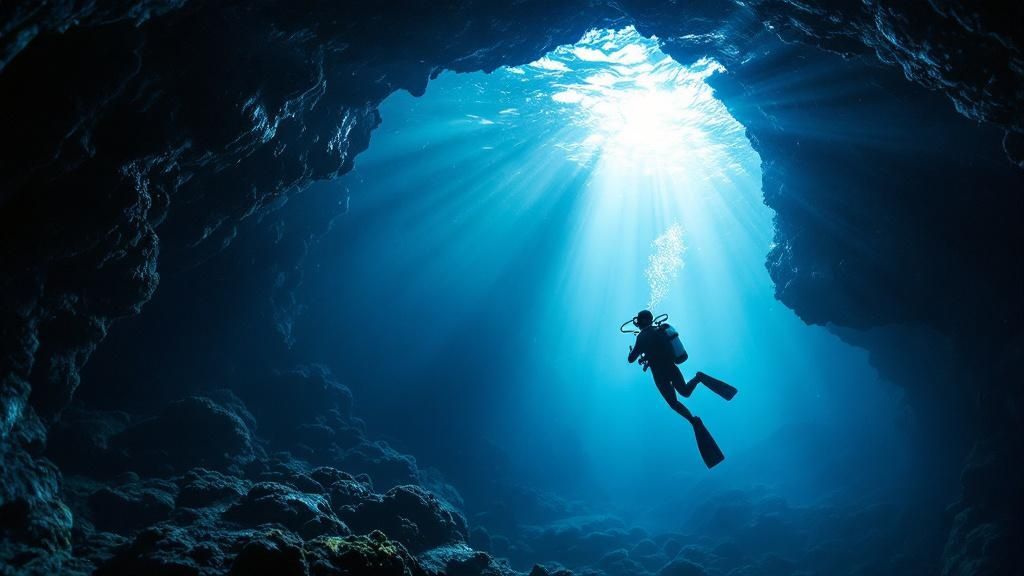
There's a reason the Big Island, and specifically the Kona coast, is famous among divers worldwide. The massive volcanoes on the island shield the Kona side from the regular trade winds. This protection means the water stays unbelievably calm and clear almost all year round. We're talking visibility that often tops 100 feet!
These perfect conditions have created a massive, thriving natural aquarium. You can explore dramatic lava tubes, swim through arches carved by ancient lava flows, and gaze down into mysterious deep-water ledges. From the second you dip below the surface, you're a guest in a bustling underwater world. It doesn't matter if you're a freshly certified diver or have thousands of dives under your belt—there's always something new to discover here. Learn more about what makes these conditions so special for Big Island scuba diving adventures.
What Makes Kona Diving Unique
So, what are you actually going to see down there? The marine life is just as varied and impressive as the underwater landscapes. While lots of places have beautiful reefs, the Big Island offers some truly one-of-a-kind encounters that you just won't find anywhere else.
- World-Famous Manta Ray Night Dive: This isn't just a great dive; it's one of the most iconic dives on the entire planet. Imagine watching the surreal, silent ballet of giant manta rays as they feed on plankton attracted to your light. It’s a bucket-list spectacle that brings divers here from all over the globe. You can book one of the world's best manta ray dive tours here.
- Encounters with Gentle Giants: Besides the famous mantas, you'll be swimming alongside Hawaiian green sea turtles, or honu, as we call them locally. These calm, graceful creatures are a common and beloved sight on nearly every single dive.
- Volcanic Underwater Architecture: The island’s fiery history is on full display beneath the waves. You'll get to explore ancient lava tubes, swim-through arches, and sheer underwater cliffs created by lava flows from long ago.
Here at Kona Honu Divers, our guides are fanatics about sharing these incredible sights with you, but always in a way that's safe and respects the environment. Their local knowledge is second to none, ensuring you not only see the best spots but also gain a real appreciation for the delicate ecosystem you're visiting.
Ready to take the plunge? Check out our available diving tours and find the perfect underwater adventure for your trip.
When to Plan Your Big Island Dive Adventure
Timing your trip can be the difference between a great dive vacation and a truly unforgettable one. Now, the good news is that Big Island scuba diving is fantastic all year long. You can't really go wrong. But certain seasons have distinct personalities that might line up perfectly with what you want to see and experience underwater.
The Kona coast, where most of the diving happens, is a diver's dream. Its leeward position shields it from the gusty trade winds, which means we get consistently calm and clear water pretty much any time of year. So if you're looking at booking some awesome Hawaii diving tours, you can be confident you'll have a great time no matter which month you choose.
That said, if you ask a local diver for their absolute favorite time, many will point to late summer and early fall. The sweet spot from about August to October often brings the warmest water, sometimes hitting a perfect 80°F (27°C), and glassy ocean conditions that make for incredible visibility. It's also a bit of a "shoulder season," so you'll find fewer crowds, which just adds to the relaxed vibe. For a deeper dive into what to expect, thisweekhawaii.com has some great insights on scuba diving in Hawaii.
Diving Through the Seasons
Each season on the Big Island brings its own unique flavor to the underwater world. Knowing what to expect can help you pick the perfect time, whether you're hoping to hear whale songs on your safety stop or just enjoy the calmest seas possible.
To give you a quick snapshot, here’s a look at what the conditions are like throughout the year.
Seasonal Big Island Diving Conditions
| Season | Average Water Temp (°F) | Typical Visibility | Key Highlights |
|---|---|---|---|
| Summer (June – Aug) | 77°-79° | Excellent | Warm, calm waters; great for families and seeing vibrant reef life. |
| Fall (Sept – Nov) | 78°-80° | Exceptional | The "golden season" with the warmest water and glassy seas. |
| Winter (Dec – Feb) | 75°-77° | Good to Great | Humpback whale songs provide a magical underwater soundtrack. |
| Spring (March – May) | 76°-78° | Very Good | A great balance of warming water, fewer people, and active marine life. |
As you can see, you’re in for a treat no matter when you visit. The water is always warm enough for a comfortable dive, and visibility on the Kona coast rarely disappoints.
Planning for Marine Life Encounters
While many of our famous residents—like the graceful Hawaiian green sea turtles and, of course, the manta rays—are here year-round, some encounters are purely seasonal. The most spectacular of these has to be the humpback whale migration.
From about December through March, these absolute giants of the ocean travel to Hawaiian waters to breed and give birth. Now, seeing one underwater is extremely rare and tightly regulated for their safety. But what you will experience is hearing them.
Their complex, haunting songs travel for miles and become the soundtrack to your winter dives. It's a deeply moving, almost mystical experience that adds a whole other layer of magic to any Big Island scuba diving adventure. You haven’t really dived Kona until you’ve heard the whales sing.
Exploring the Big Island’s Most Iconic Dives
This is where your dive log really starts to get interesting. The Big Island is home to some of the most unique and unforgettable underwater experiences on the entire planet—dives that are on the bucket lists of adventurers from all over the world. While the island has a massive catalog of incredible sites, two particular night dives stand out as the absolute must-do experiences that truly define Big Island scuba diving.
Beyond the amazing daytime dives, a whole other world wakes up after the sun goes down. Exploring the ocean at night gives you a completely different perspective, revealing creatures and behaviors you'd almost never see in the daylight. These iconic night dives aren't just about what you see; they're about the feeling of witnessing one of nature's most spectacular and surreal performances firsthand.
The World-Famous Manta Ray Night Dive
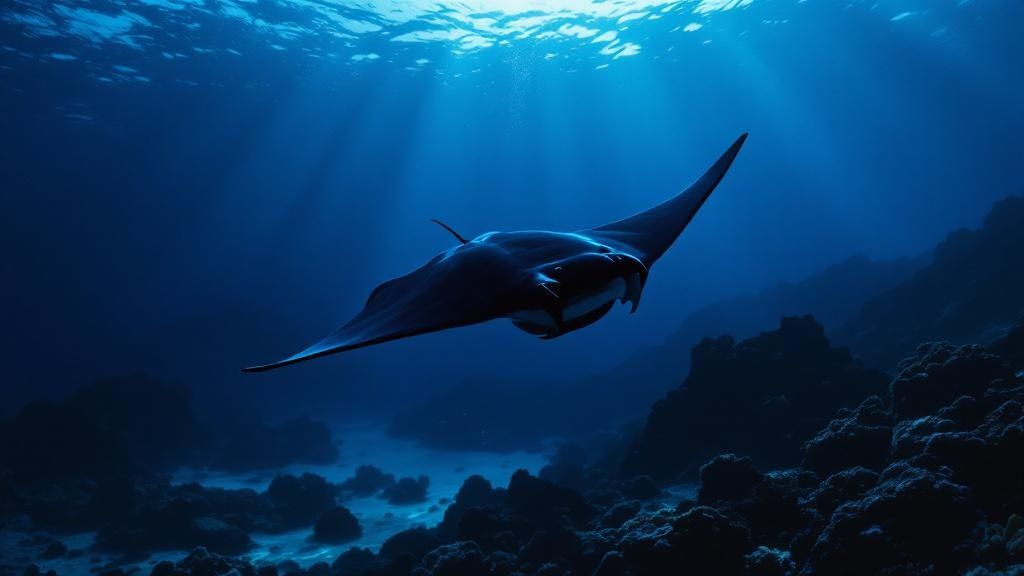
If there’s one dive that's synonymous with Hawaii, this is it. The Manta Ray Night Dive is consistently ranked as one of the best night dives in the world, and for good reason. It feels less like a dive and more like an underwater ballet—a memory that sticks with you forever.
The setup is brilliant in its simplicity. We place powerful lights on the ocean floor, pointing straight up. These lights attract massive clouds of plankton, which just so happens to be the manta rays' favorite meal. As a diver, you just settle in around the lights, get comfortable, and watch the show begin.
It’s impossible to describe the feeling of watching a massive fish the shape of a stealth bomber coming into vision. It’s akin to watching your child ride a bike for the first time or finding a winning lottery ticket.
These gentle giants, with wingspans that can stretch over 12 feet, swoop and glide right over your head in a silent, mesmerizing dance. They perform effortless barrel rolls as they filter feed, sometimes coming within inches of you. It's a completely safe, stationary dive that's perfect for all certified divers and is an absolute must-do. People travel across the globe for this, and it's right here on the Kona coast. Ready to see it for yourself?
The Enigmatic Blackwater Dive
For those looking for an adventure that really pushes the boundaries of exploration, the Blackwater Dive is a trip into another dimension. This dive, also known as a Pelagic Magic® dive, is unlike anything else in the scuba world. You're tethered to the boat, drifting in the deep, open ocean at night, with thousands of feet of water below you. The Blackwater Dive tour is a truly unique experience.
Out here, you get to witness one of the largest migrations on Earth, as bizarre and beautiful deep-ocean creatures travel toward the surface to feed under the cover of darkness. Many of these animals are bioluminescent, creating their own light show in the inky blackness.
What you'll see on a Blackwater Night Dive is a gallery of the weird and wonderful:
- Larval Creatures: See the juvenile stages of familiar animals like eels and lobsters, which look completely alien.
- Jellyfish and Siphonophores: Encounter pulsating, glowing organisms that drift like otherworldly spaceships.
- Bioluminescent Wonders: Witness a living light show as creatures flash and sparkle in the dark.
This is a dive for the truly adventurous, offering a rare glimpse into a world that few people ever get to see. It’s a profound reminder of just how much of our ocean is still a complete mystery.
Of course, these iconic night dives are just the beginning. The Big Island also offers a rich tapestry of daytime adventures, from navigating ancient lava tubes and arches to exploring vibrant reefs teeming with turtles and tropical fish. Each site has its own personality, and there are countless adventures waiting for you. For a complete guide to planning your trip, check out our overview of diving tours.
How to Choose the Right Kona Dive Operator
Picking your dive operator for a Big Island scuba diving trip is one of the most important calls you'll make. The right guide doesn't just point out the cool stuff; they elevate the whole adventure. They keep you safe, share their deep local knowledge, and make sure you leave with a profound respect for the underwater world. A great operator is the difference between a good dive and an unforgettable one.
Think of it like hiring a guide to climb a mountain. You wouldn't just grab someone who knows the trail. You'd want a seasoned expert who can read the weather, knows all the secret viewpoints, and has top-tier safety gear. It's the exact same principle under the waves. The quality of the boat, the rental gear, the crew's expertise, and their commitment to small groups all make a huge difference in how much you'll enjoy your dive—and how safe you'll be. This is why it is critical to select a reputable company for your Kona diving tours.
What to Look For in a Premier Dive Shop
When you're sizing up dive operators in Kona, a few key things separate the okay from the truly exceptional. You want a company that's obsessed with the entire experience, from the moment you book to the post-dive stories on the boat ride home.
A premier operator like Kona Honu Divers really shines because of their dedication to these details. They've built their reputation on years of safe, high-quality, and memorable adventures, which you can see in their endless five-star reviews. They get that a great trip is about more than just getting wet; it’s about feeling safe, supported, and totally inspired. You can get the full story on why they were voted the best dive operator in Kona.
Here’s what you should be looking for:
- PADI 5-Star Instructor Development Center (IDC) Status: This is the highest rating a PADI shop can earn. It’s a huge indicator of their commitment to top-notch professional training, quality education, and environmental stewardship.
- Small Group Sizes: A lower diver-to-guide ratio is a game-changer. It means you get more personal attention, better safety supervision, and a much more intimate, less crowded experience at the dive sites.
- High-Quality, Well-Maintained Gear: Your life support equipment has to be flawless. The best shops invest in modern, regularly serviced rental gear and often offer perks like free Nitrox for certified divers.
- Experienced and Passionate Crew: Look for divemasters and instructors who aren't just certified, but live and breathe the ocean. Their local knowledge and genuine passion for marine life and conservation are what make a trip special.
Spotlighting Kona's Top Operators
The Big Island is lucky to have a dive community built on a foundation of pure passion and excellence. Two names, however, always seem to float to the top: Kona Honu Divers and Jack's Diving Locker. Kona Honu Divers is known for making every diver feel like family, with a modern fleet (hot showers, anyone?) and a crew that’s all about creating an amazing experience.
Jack’s Diving Locker is another cornerstone of our community. Founded way back in 1981, they’ve been a major force in the local dive scene for decades. As a PADI 5-Star IDC, their reputation for thorough training and safety is rock-solid, backed by an average rating of 4.86 out of 5 across hundreds of reviews. Divers rave about their knowledgeable staff and focus on small groups, which guarantees a quality dive. You can find more details about their contributions to the local scuba diving scene and community.
By choosing an operator that invests in safety, sustainability, and education, you're not just booking a dive; you're supporting the health of the very ecosystem you've come to explore. Your choice matters.
In the end, picking the right operator comes down to finding a team that shares your excitement and dive goals. This is the key to making sure your Big Island scuba diving trip is safe, awe-inspiring, and absolutely unforgettable.
Getting Your Scuba Certification on the Big Island
The Kona coast is famous for its calm, clear, and warm waters. It's more than just a place for incredible dives—it’s the perfect natural classroom to learn and level up your scuba skills. For a lot of people, a Big Island scuba diving trip is the push they need to finally get certified or take their diving to the next level. I can tell you from experience, the journey from non-diver to confident underwater explorer is unbelievably rewarding, and there's no better backdrop for it than Hawaii.
Whether you’re just curious about what it’s like to breathe underwater or you're all in on becoming a fully certified diver, there’s a path that’s right for you. The whole process is designed to be straightforward, safe, and build your confidence one skill at a time.
Starting Your Underwater Journey
For anyone who’s never tried scuba, the first step is usually the Discover Scuba Diving (DSD) experience. Think of it as a "try before you buy" option for your vacation. It's not a full certification course, but it’s a fantastic way to get a taste of the underwater world under the direct supervision of a PADI Professional.
If you already know you’re ready to commit, the PADI Open Water Diver course is your ticket to a lifetime of adventure. This is the world's most popular and widely recognized scuba certification, and for good reason. The course usually breaks down like this:
- eLearning: You can knock out the "book work" online before you even pack your bags, which saves a ton of precious vacation time.
- Confined Water Dives: This is where you'll get comfortable with the gear and practice essential scuba skills in a calm, shallow spot like a pool or a sheltered bay.
- Open Water Dives: Now the real fun starts! You’ll complete four dives out in the ocean, putting your new skills to use while exploring Kona’s stunning reefs.
Once you're certified, you'll be qualified to dive with a buddy to a maximum depth of 60 feet (18 meters). To see all the options, you can learn more about getting your Kona scuba certification course and find a program that fits your schedule.
Advancing Your Dive Skills
Already have your Open Water card? The adventure doesn’t stop there. Big Island scuba diving offers some amazing opportunities to continue your education and become an even more capable and confident diver. The PADI Advanced Open Water Diver course is the natural next step. For more experienced divers looking to explore deeper sites and more challenging environments, our premium advanced dive tours are the perfect fit.
This course is less about drilling skills and more about experiencing different kinds of diving. You’ll do five "adventure dives," which include a mandatory deep dive and an underwater navigation dive. For the other three, you get to choose from cool options like night diving, wreck diving, or working on your buoyancy. It's a fantastic way to build on your skills while exploring some of Kona's best sites.
Continuing your education isn't just about collecting another card. It’s about unlocking new parts of the ocean, gaining a deeper sense of confidence, and becoming a safer, more aware buddy for anyone you dive with.
Beyond the Advanced course, you can really dial in on what fascinates you with specialty certifications, like underwater photography or enriched air (Nitrox). One of the most respected courses is the Rescue Diver course. While it's heavily focused on dive skills, it also requires current CPR and First Aid training. It’s a good idea to understand how to become CPR certified, as these are vital skills for any serious diver.
Packing and Preparing for Your Dive Trip
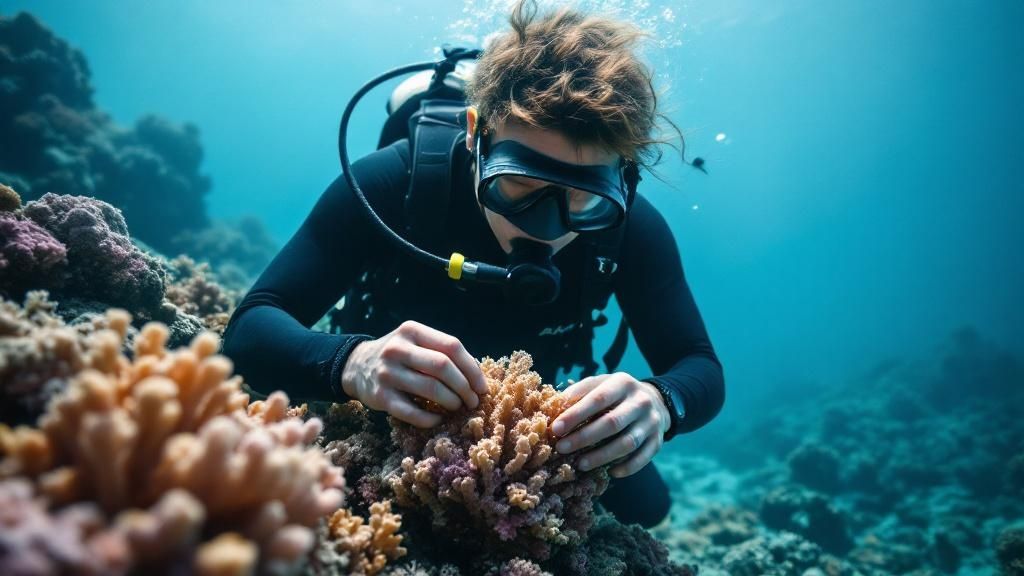
A little bit of prep on dry land goes a long way toward making your underwater experience smooth and unforgettable. Getting ready for your Big Island scuba diving trip isn't a huge chore, but thinking ahead can easily turn a good day of diving into a great one. This simple checklist will get you to the dock feeling ready and confident.
While we take pride in our top-notch, well-maintained rental gear here at Kona Honu Divers, a lot of divers just feel more comfortable bringing a few personal items. And we get it. A mask that fits your face perfectly means no annoying leaks, and using your own dive computer means you're already dialed in with its display and settings.
Preparing for a dive isn't just about your gear. It’s also about getting your mind and body ready for the unique environment you're about to explore. Show up well-rested, hydrated, and with a calm mindset, and you'll seriously boost both your fun and your safety.
Your Personal Dive Bag Checklist
For the boat trip, you really don't need a ton of stuff. A few key items, however, will make your surface intervals and the ride back to the harbor much more comfortable. Think about what you’ll need before, between, and after your dives.
Here’s what I recommend tossing in your day bag:
- Reef-Safe Sunscreen: This is an absolute must-have in Hawaii. Regular sunscreens have chemicals that are incredibly damaging to our fragile coral reefs. Please, only use mineral-based options with zinc oxide or titanium dioxide.
- Reusable Water Bottle: Staying hydrated is a cornerstone of dive safety. It’s one of the simplest things you can do to help reduce your risk of decompression sickness.
- A Towel and Dry Clothes: A warm, dry sweatshirt or shirt to pull on after your last dive makes the boat ride home so much better, especially after a chilly night dive.
- Proof of Certification: Don't leave your C-card and logbook behind! You'll need them, particularly if you're joining any of our advanced dives.
- Any Personal Gear: This is your mask, dive computer, or any other piece of equipment you’d rather use over a rental.
Physical and Mental Preparation
Your prep for an amazing Big Island scuba diving adventure starts before you even step out of your hotel room. Getting a solid night's sleep and skipping the heavy drinking the night before a dive are basic, non-negotiable safety rules. You want to arrive at the boat feeling rested and sharp.
Beyond just packing, it’s also smart to prepare your body and mind for the unique feeling of being underwater. For example, looking into mastering breathing techniques for divers can dramatically improve your comfort and air consumption. A quick mental run-through of basic hand signals and safety drills also helps you feel more prepared for a fantastic day exploring Hawaii’s underwater world. Check out our full list of Kona diving tours to find your next adventure.
Frequently Asked Questions About Diving in Kona
It's natural to have a few lingering questions as you lock in your travel plans. We get it. Here are some of the most common things people ask about Big Island scuba diving, so you can feel totally confident when you book your underwater adventure.
Can I Scuba Dive on the Big Island Without a Certification?
You bet! Most dive shops, including us here at Kona Honu Divers, have what's called a "Discover Scuba Diving" program. Think of it as a test drive for scuba.
A seasoned PADI professional will walk you through the absolute basics in a super safe, controlled spot, and then guide you on a real, shallow dive. It's the perfect way to experience the magic of breathing underwater without having to commit to the full certification course right away.
Honestly, a lot of people try it, get hooked, and sign up to get certified right after. It's a fantastic introduction and easily one of our most popular Hawaii diving tours for first-timers.
What Marine Life Will I See Besides Manta Rays?
Oh, the reefs here are just buzzing with life! While the mantas are the stars of the show, you have a really good shot at seeing all sorts of incredible creatures on any given dive.
- Hawaiian green sea turtles (honu) are a common sight, either chilling out on the reef or gracefully swimming past.
- All kinds of eels, like the big yellowmargin morays, poking their heads out of the lava rock formations.
- Playful spinner dolphins are frequently spotted from the boat, and if you're really lucky, you might see them underwater.
- Octopuses, the masters of disguise, doing their best to blend in with the rocks.
- A literal rainbow of reef fish, from butterflyfish and parrotfish to our quirky state fish, the humuhumunukunukuāpuaʻa.
And depending on the site and the time of year, you might even spot majestic eagle rays, whitetip reef sharks, or hear the unforgettable songs of humpback whales echoing through the water during the winter.
Is the Manta Ray Night Dive Safe for New Divers?
Yes, absolutely. The Manta Ray Night Dive is incredibly safe and specifically designed to be accessible for divers of all skill levels, even brand-new divers with a basic Open Water certification.
Here’s the key: the dive is stationary. You aren't swimming around in the dark. Instead, you'll settle into a relatively shallow, sandy spot and hold onto rocks or a guideline. Your divemaster gives a super thorough briefing before you get in and stays with the group the entire time.
This setup lets you just relax and be completely mesmerized by the show as the giant mantas glide just inches above you. It's a totally controlled, safe, and truly unforgettable experience.