
Picture this: you're sinking slowly into perfectly clear, warm water. Sunlight streams down through ancient volcanic archways, lighting up a world packed with more life than you can imagine. That’s not a scene from a movie; it's the reality of Big Island scuba diving, an experience that easily ranks among the best on Earth. Thanks to the island's unique geology and protected waters, it’s a true underwater paradise.
Why the Big Island Is a Diver’s Paradise
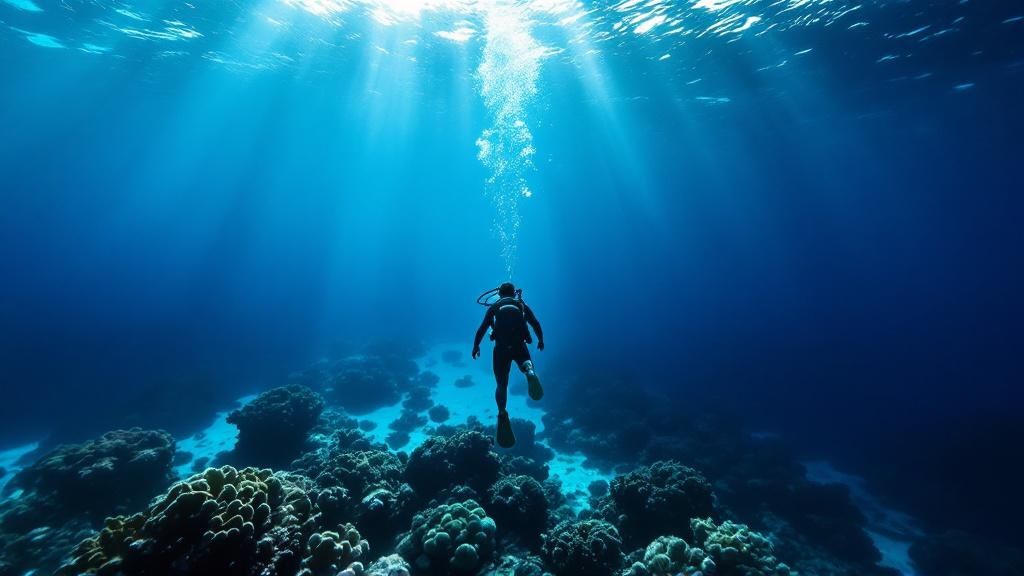
So, what makes this place so special? It all comes down to its dramatic volcanic past. The massive volcanoes of Mauna Loa and Mauna Kea create a giant natural wall, shielding the western Kona coast from the heavy trade winds that batter other parts of Hawaii. The result is stunningly calm, almost lake-like conditions for most of the year, which makes Kona diving incredibly enjoyable and accessible for everyone.
That calmness is a huge factor in the second big draw: unbelievable water clarity. Visibility often stretches beyond 100 feet, letting you soak in every detail of the mind-blowing underwater scenery. Add in water temperatures that hover between a comfortable 75-80°F (24-27°C), and you've got perfect conditions for diving any day of the year.
Before we dive deeper, here’s a quick snapshot of what to expect when you gear up for a Big Island dive.
Big Island Diving At a Glance
| Feature | Details |
|---|---|
| Water Temperature | 75-80°F (24-27°C) year-round |
| Visibility | Excellent, often exceeding 100 feet |
| Marine Life | Manta rays, dolphins, sea turtles, endemic fish |
| Underwater Terrain | Lava tubes, arches, pinnacles, drop-offs |
| Best Coast for Diving | Kona Coast (western side) |
| Key Attraction | World-famous Manta Ray Night Dive |
This combination of clear, calm water and incredible topography makes for some of the best diving you'll ever experience.
Unique Underwater Landscapes
Down below, the world is a direct reflection of the island's fiery birth. Ancient lava flows have carved out a spectacular underwater playground you won’t find anywhere else. You’ll get to explore:
- Lava Tubes and Caverns: Weaving through intricate networks of submerged volcanic tubes is a classic Kona experience, with dramatic swim-throughs at every turn.
- Arches and Pinnacles: You'll navigate around majestic archways and towering rock spires that shoot up from the seafloor, acting as magnets for huge schools of fish.
- Dramatic Drop-Offs: There's nothing quite like the feeling of drifting along a deep underwater cliff that disappears into the blue abyss.
This one-of-a-kind geology creates a complex and thriving habitat for an insane amount of marine life. I’m talking about everything from sprawling, colorful coral gardens to up-close encounters with our beloved green sea turtles, or honu. It’s this blend of perfect conditions and unique terrain that makes diving Hawaii Big Island an adventure you’ll never forget. You can find out more about what makes the conditions here so special at Kona Honu Divers.
Whether this is your first trip or you're a seasoned pro returning for more, understanding these basics is key. The island's natural gifts are the foundation for the world-class dive sites and unforgettable animal encounters we're about to get into. For a complete overview, check out our full Big Island scuba diving guide. This is where your adventure truly begins.
Exploring Kona’s Most Unforgettable Dive Sites
Alright, so you get why the conditions for scuba diving Big Island Hawaii are so incredible. Now for the fun part: figuring out which spots to hit. The Kona coast is absolutely littered with world-class dive sites, each one a unique playground carved out by ancient lava flows. We're talking everything from shallow, sun-drenched reefs perfect for your first few dives to dramatic underwater cliffs and caverns that will get even the most seasoned diver’s heart pumping.
Honestly, the sheer number of options can be a little dizzying. That's where a good local crew comes in. Dive operators like Kona Honu Divers have spent years, day in and day out, exploring these waters. They know every nook, cranny, and secret spot, and more importantly, they know where the action will be on any given day. They’re your key to unlocking the best of this underwater paradise.
Ready to see what’s out there? You can take a look at the full menu of adventures on our diving tours page.
Dive Sites for Every Skill Level
One of the best things about Kona diving is that you don't have to be a hardcore technical diver to see mind-blowing stuff. Many of our most famous sites are fantastic for divers of all certification levels.
-
Golden Arches: Just imagine effortlessly gliding through a massive, sunlit lava rock archway. This spot is a photographer's dream, known for its stunning topography and huge, swirling schools of bright yellow tangs.
-
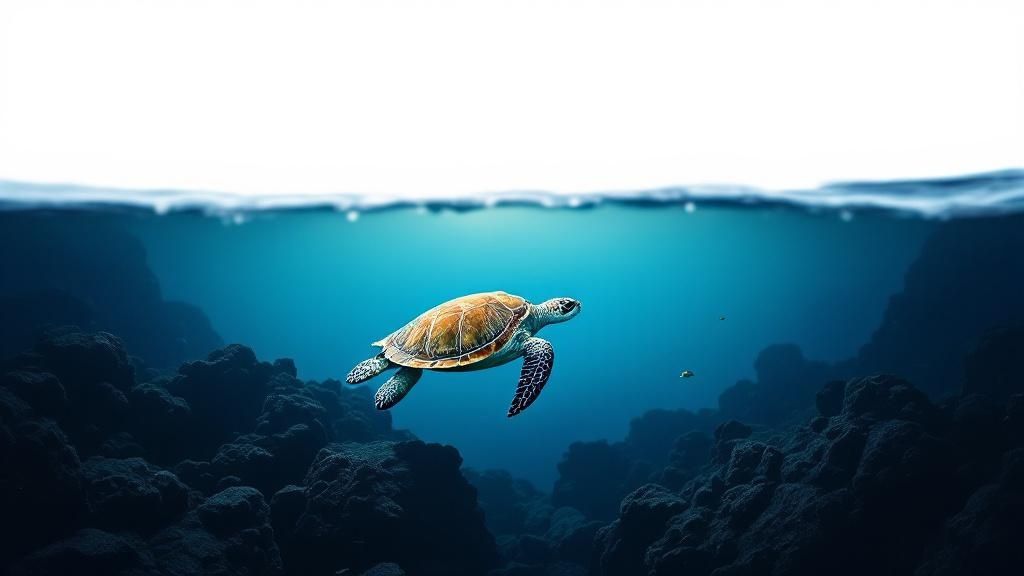
Turtle Pinnacle: The name says it all. This is a natural "cleaning station" where Hawaiian green sea turtles, or honu, gather to get spruced up by local reef fish. You just get to hang back and watch this incredible symbiotic relationship unfold. It’s a signature experience of diving Hawaii Big Island.
-
Eel Cove: If you love peeking into all the little nooks and crannies, you'll love Eel Cove. It’s a maze of small caves and overhangs where you can spot all kinds of moray eels poking their heads out, not to mention whitetip reef sharks taking a nap.
These sites give you a fantastic taste of the unique geology and marine life that make scuba diving Big Island a bucket-list destination.
Opportunities for the More Experienced Diver
Got a few more dives under your weight belt? Kona has plenty of deeper, more complex sites to give you a proper thrill. These spots often mean more dramatic drop-offs, a bit more current, and a better chance of running into bigger pelagic species cruising in from the deep blue.
A huge advantage of going out with a seasoned charter is their knack for matching dive sites not just to your certification card, but to your actual comfort level and what you want to see. They know the advanced sites that offer bigger rewards and make sure your Big Island diving trip is both safe and absolutely epic.
Exploring these deeper sites usually requires an Advanced Open Water certification. It’s a whole different side of Kona’s underwater world, full of hidden ecosystems and creatures you won’t find in the shallows. If you're ready to push your skills, booking an advanced dive tour is the way to see what lies beyond the reef.
Trusting the Experts at Kona Honu Divers
Picking the right dive boat is just as important as picking the right dive site. At Kona Honu Divers, we've built our reputation on safe, fun, and unforgettable dives that are dialed in for our guests.
With our crew's deep local knowledge, you can relax knowing we're taking you to the absolute best spot for the day's conditions, ensuring every scuba Big Island trip with us is exceptional. Whether it's guiding you through an intricate lava tube or pointing out a perfectly camouflaged frogfish, our experienced team knows how to turn a good dive into a great one.
Experience the Magic of a Manta Ray Night Dive
Some dives just stick with you forever. The world-famous Manta Ray Night Dive is absolutely one of them. This isn't just another notch on your dive belt; it's a profound, almost spiritual encounter that has come to define Big Island scuba diving for so many of us. It's so reliable and mind-blowing that it's become a global icon for marine ecotourism.
So, how does the magic happen? It's a brilliantly simple setup. As the sun dips below the horizon, dive boats head to specific spots along the Kona coast. We lower powerful, eco-friendly lights into the water, which act like a giant dinner bell, attracting a thick cloud of plankton—the manta rays' favorite meal.
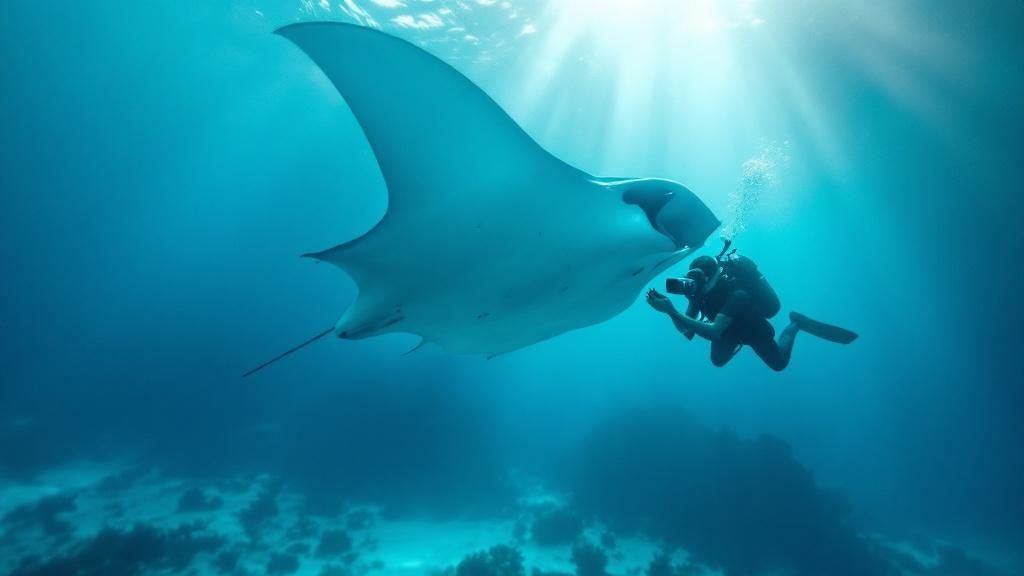
What follows is pure underwater theater. Drawn in by the all-you-can-eat buffet, huge manta rays, some with wingspans stretching up to 16 feet, glide in from the darkness. They perform a silent, weightless ballet, swooping and barrel-rolling just inches from your head. It’s an unforgettable spectacle and a huge reason people choose to scuba Big Island. To book this bucket-list experience, check out our manta ray dive tours page.
A Glimpse into the Abyss: The Kona Blackwater Dive
If the manta dive is a graceful ballet, the Kona Blackwater Dive is like a trip to another planet. This isn't your typical night dive. We take you far from the reef into the deep open ocean, where you'll be suspended over thousands of feet of water. The whole point is to witness one of the Earth's largest daily migrations: the vertical trek of deep-sea creatures toward the surface to feed.
As you drift in the darkness, safely tethered to the boat, you'll see a bizarre and beautiful parade of life that rarely, if ever, sees the light of day.
- Bioluminescent Wonders: You'll be surrounded by strange larval fish, see-through squids, and otherworldly jellyfish that glow and flash with their own light.
- Alien-Like Creatures: Get ready to meet organisms that look like they're straight out of a sci-fi movie, rising from the crushing depths below.
- A True Open-Ocean Thrill: There’s a humbling, awe-inspiring feeling that comes from floating in the vast, dark blue while a hidden world comes to life around you.
This is a specialized, advanced adventure that offers a rare peek into the mysteries of the deep. It’s a core reason why experienced divers from around the globe consider diving Hawaii Big Island a top-tier destination. If you're ready for this unique challenge, you can book your Blackwater Dive tour.
How to Choose the Best Dive Company in Kona
With so many Kona diving companies to choose from, it can feel like a tough decision. But here’s the thing: picking the right guide is the secret sauce that takes a good dive and makes it an absolutely unforgettable experience. A PADI certification is the bare minimum, a starting point. The truly great operators are obsessed with the details that turn an ordinary trip into a safe, personal, and premium adventure.
If there's one thing to look for above all else, it's small group sizes.
Ever been on a boat that felt more like a cattle car? It’s a recipe for crowded dive sites and a rushed, impersonal vibe. The best companies in Kona deliberately keep their groups small. This isn’t just about comfort; it’s about a better guide-to-diver ratio, which means more safety and a much more relaxed, intimate tour of the underwater world.
What Distinguishes the Best Operators
Beyond just keeping groups small, a few other things really make a dive operation stand out. An experienced local crew is worth its weight in gold. Seriously. These are the guides who know the dive sites like the back of their hand. They know where to find that elusive octopus, how to read the ocean's moods, and how to get you in the water at the absolute best time and place. They’re the difference between just seeing fish and having a truly awe-inspiring Big Island diving journey.
Another huge factor? The boat and the gear. A comfortable, well-kept boat makes your surface time between dives so much better. And having access to reliable, top-notch rental gear is non-negotiable for your safety and enjoyment underwater. If you want to dig deeper into this, we have a complete guide on how to choose a Kona dive shop.
The Kona Honu Divers Difference
Here at Kona Honu Divers, everything we do is built around giving our guests an incredible experience. We believe that scuba diving Big Island should be about wonder and discovery, not about feeling stressed or dealing with clunky logistics. We’re also deeply committed to sustainable practices that respect the fragile marine ecosystem we're so lucky to share with you.
We’ve worked hard to build a reputation we’re proud of, and you can see it in our guest reviews. Time and again, visitors rave about the personal attention and our safety-first mindset. It's a proven formula: for example, you can see on TripAdvisor that Kailua-Kona operators prioritizing small groups consistently get outstanding satisfaction scores. Many outfits, including Kona Honu Divers, cap their trips at just six divers, which makes a world of difference in the quality of the dive.
For our certified divers with a bit more experience under their weight belts, we offer specialized trips designed to explore deeper sites and more challenging environments. These tours are a chance to push your skills and see a completely different side of Kona's underwater world. You can check out those opportunities on our advanced dive tour page.
Planning Your Ultimate Big Island Dive Vacation
Alright, let's get down to the brass tacks and turn that dream Big Island scuba diving trip into a reality. Good planning is the secret sauce for any great vacation, and it's absolutely essential for a seamless underwater adventure. We'll walk through everything from the best time of year to visit to making sure you've got the right gear.
When you're dealing with an activity as popular as diving Big Island, a little foresight makes all the difference. Think of this as your logistical playbook.
When to Dive: Kona's Best Conditions and Highlights
One of the absolute best things about scuba diving Big Island Hawaii is that it’s a year-round affair. The Kona coast is tucked away on the leeward side of the island, which keeps the ocean remarkably calm and diveable pretty much any day you want to go. That said, the seasons do bring subtle changes to the experience.
It's helpful to know what to expect before you book. Here’s a quick look at the seasonal diving conditions to help you pick the perfect time for your trip.
Seasonal Diving Conditions in Kona
A guide to water temperature, visibility, and marine life highlights throughout the year to help you plan your trip.
| Season | Avg. Water Temp | Typical Visibility | Marine Life Highlights |
|---|---|---|---|
| Summer (Jun-Aug) | 78-80°F (25-27°C) | Excellent (100+ ft) | Peak season with warm water and great vis. |
| Fall (Sep-Nov) | 80°F+ (27°C+) | Excellent (100+ ft) | The sweet spot! Warmest water, fewer crowds. |
| Winter (Dec-Mar) | 75-77°F (24-25°C) | Very Good (80-100 ft) | Humpback whale season! Hear their songs underwater. |
| Spring (Apr-May) | 76-78°F (24-25°C) | Very Good (80-100 ft) | Shoulder season with warming water and fewer people. |
As you can see, there’s truly no bad time for diving Hawaii Big Island. It really just boils down to what you're looking for—do you prefer the warmest possible water, or is the chance to hear humpback whales the ultimate prize? You can't go wrong.
What to Pack vs. What to Rent
Packing for a dive trip is always a bit of a balancing act. You want your own familiar gear, but you don't want to get hit with insane baggage fees. I always recommend bringing your own mask (for a perfect fit) and dive computer (for safety and familiarity), but you can absolutely save space by renting the bigger stuff.
Most divers find that a 3mm full wetsuit is the magic number for the Big Island’s water temperatures all year long. You'll see some tough locals in just a rash guard when the water hits its peak in the fall, but for most of us, a 3mm suit provides that perfect Goldilocks-level of warmth without feeling restrictive, keeping you comfortable for multiple dives a day.
Reputable Kona diving companies like us at Kona Honu Divers have high-quality rental gear, including BCDs, regulators, and wetsuits. Renting saves you the headache and expense of dragging bulky equipment through the airport.
Certifications and Booking in Advance
Your certification level is your key to unlocking different underwater worlds here. An Open Water certification gets you access to most of Kona's incredible shallow reefs, which are teeming with life. But to explore deeper sites or join a specialty dive like the world-famous Kona Blackwater Dive, you'll need your Advanced Open Water certification. And honestly, what better place to get certified than in paradise?
Now for a crucial piece of advice: The most popular tours, especially the Manta Night Dive, sell out. I'm not talking days in advance—I mean weeks, or even months, during the high season.
Do not wait until you're on the island to book your Manta Ray Night Dive. I can't stress this enough. It’s one of the most sought-after experiences in all of Hawaii. Booking ahead is the only way to guarantee your spot and avoid the massive disappointment of missing out.
The same logic applies to other specialty charters and even our standard two-tank morning dives when the island is busy. A little bit of planning ensures you get the dives you came for on the days you want. Take a look at our full range of diving tours and get your adventure locked in!
Frequently Asked Questions
Is there good diving on the Big Island?
Absolutely. The Big Island is, without a doubt, one of the world's best diving destinations. The Kona coast is the star of the show, with its ridiculously clear and calm water, unique volcanic landscapes like lava tubes and arches, and mind-blowing biodiversity—including the world-famous manta ray night dive.
What are the best months to scuba dive in Hawaii?
You can have a fantastic dive here any time of year. But if you're chasing the warmest water (around 80°F/27°C) and the flattest, calmest seas, late summer and early fall (August to October) are pretty much perfect.
Is Kona good for scuba diving?
Kona is the epicenter of scuba diving Big Island Hawaii. Its west-facing coastline is sheltered from the trade winds by the island's massive volcanoes. The result? Water conditions that often feel like a lake, with visibility that can easily top 100 feet.
Is it better to snorkel or scuba dive in Hawaii?
They're both amazing but offer totally different perspectives. Scuba diving lets you get deeper, explore more intricate structures, and have longer, more up-close encounters with marine animals in their own element.
Which Hawaiian island is best for scuba diving?
While every island has something to offer, the Big Island consistently gets the top spot. It's the whole package: unmatched water clarity, wild volcanic topography, calm Kona coast conditions, and bucket-list dives you can't do anywhere else. It’s the go-to for serious divers.
When to dive Kona?
Any month is a good month to dive Kona. The water hits its peak warmth from August to October. If you visit in winter (December to March), the water is a bit cooler, but you get the incredible bonus of hearing whale songs underwater. There's really no bad time for diving Big Island.