
Welcome to your complete guide for exploring the underwater wonders of Hawaii's Big Island. The diving here is truly world-class, defined by dramatic volcanic landscapes and a vibrant marine ecosystem that you just have to see to believe. The Kona coast, in particular, is a diver's paradise, blessed with crystal-clear, calm waters and an incredible amount of life.
Your Guide to Scuba Diving on the Big Island
If you're looking for the ultimate resource for big island scuba diving, you've found it. This guide is your map to the most iconic dive sites, a behind-the-scenes look at the world-famous manta ray night dive, and a complete rundown of everything you need to plan your underwater adventure. It doesn't matter if you're a seasoned pro with hundreds of dives under your belt or just starting out—the Big Island has something amazing in store for you.
The island’s reputation is well-earned, attracting divers from all over the world. It’s become such a premier destination that it hosts around 100,000 certified scuba dives every single year. This incredible volume of diving is supported by a solid network of over 50 dive shops and charter boats, which cater to about 150,000 dive tourists annually.
What Makes Big Island Diving So Special?
So, what’s the secret? What really sets the Big Island apart from other top-tier dive destinations? It's a perfect storm of unique geology, protected waters, and marine life that you won't find anywhere else. The entire western coast, especially around Kona, is sheltered from the Pacific's strong trade winds by the sheer size of volcanoes like Mauna Loa and Hualalai. This creates a natural shield, resulting in consistently calm and clear conditions where visibility often tops 100 feet.
This volcanic origin has also carved out a stunning underwater playground. Picture yourself exploring:
- Ancient Lava Tubes: Imagine swimming through massive caverns and archways sculpted by lava flows from centuries ago.
- Dramatic Drop-Offs: The seafloor can suddenly fall away into the deep blue, creating breathtaking walls to descend along.
- Thriving Coral Gardens: The reefs here are bursting with life and color, a clear sign of a healthy and protected ecosystem.
This one-of-a-kind environment has become a sanctuary for an unbelievable variety of marine creatures. Just below the surface, a whole different world is waiting for you.
The real magic of diving here is the sheer diversity. One day you can be exploring a shallow reef packed with colorful tropical fish, and the very next, you could be face-to-face with the gentle giants of the sea on a world-famous night dive.
Planning Your First Dive
Ready to take the plunge? Getting started is a lot easier than you might think. Kona's calm, pool-like waters are absolutely perfect for beginners who want to get certified or for certified divers who need a gentle re-entry after some time away. Local operators offer everything from introductory "discover scuba" dives to full PADI certification courses. Explore the diving tours available to find the perfect fit for your skill level.
Why Kona is the Heart of Big Island Diving
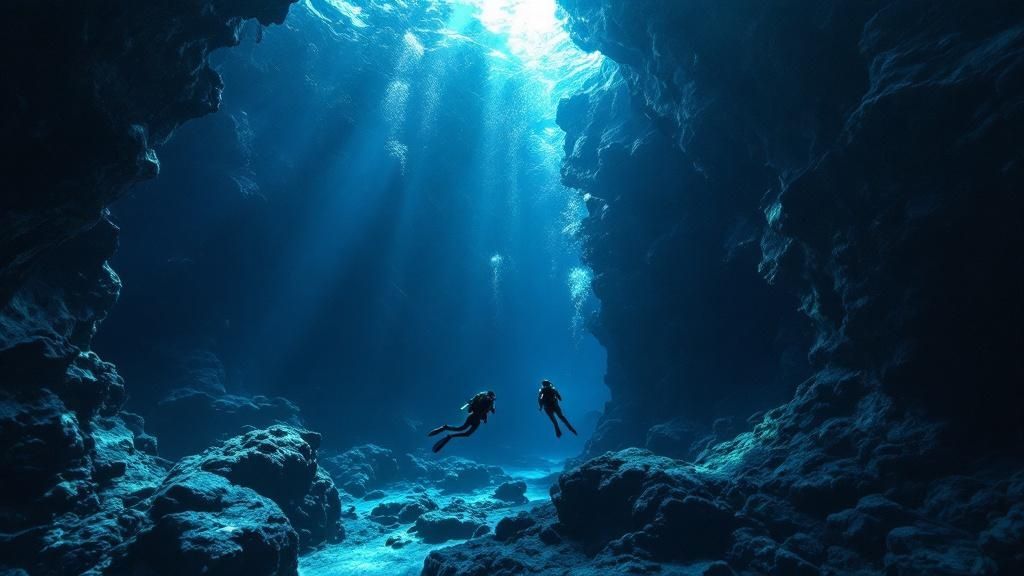
When you ask seasoned divers about the best big island scuba diving, you'll hear one name pop up over and over again: Kona. There's a very good reason for this. Kona's spot on the western coast puts it in the lee of the island's massive volcanoes, Mauna Loa and Hualalai, which act like enormous natural barriers against the powerful trade winds that batter other shorelines.
This geographic sweet spot is a gift to divers. The result is consistently calm, clear water where visibility often stretches beyond 100 feet. It's the kind of reliable, stunning clarity that makes every dive feel special.
The Volcanic Sculptor
Those same volcanoes that block the wind are also the architects of an incredible underwater world. Ancient lava flows have cooled and solidified into a dramatic seascape, creating a diver's playground full of breathtaking formations you won't find anywhere else.
When you drop beneath the surface in Kona, you're exploring a world shaped by fire and water:
- Lava Tubes and Arches: Picture yourself swimming through majestic caverns and under graceful archways that were forged by molten rock centuries ago. These natural swim-throughs are a highlight of any Kona dive.
- Dramatic Drop-Offs and Pinnacles: The seafloor can suddenly give way to sheer walls that plunge into the deep blue. In other spots, ancient volcanic vents rise from the depths like underwater cathedrals, attracting huge schools of fish.
- Complex Reef Structures: All that volcanic rock provides the perfect, rugged foundation for coral to take hold, leading to intricate and healthy reef systems that are absolutely bursting with life.
This unique underwater topography is what truly makes Kona stand out. It’s a dynamic, three-dimensional environment that promises new discoveries on every single dive. Partnering with a skilled local operator like Kona Honu Divers ensures you’ll see the absolute best of what these volcanic waters have to offer. See what fellow divers have to say about their experiences.
A Haven for Marine Life
All this incredible structure, combined with calm, protected waters, has turned the Kona coast into a sanctuary for an unbelievable diversity of marine life. The healthy coral gardens act as the foundation for a vibrant ecosystem, from the smallest, most colorful reef fish to much larger, majestic animals.
The real secret to Kona's magic is how its geology and biology work together. The protected, nutrient-rich waters create the perfect conditions for a thriving food web, which in turn attracts an abundance of life from the bottom of the food chain to the top.
What does this mean for your dive? It means you have a fantastic chance of encountering green sea turtles (honu) resting on the reef, watching pods of spinner dolphins cruise by, and spotting countless fish species that are only found here in Hawaii. It’s this rich biodiversity, combined with the spectacular underwater scenery, that makes Kona the undisputed heart of Big Island diving. Exploring these incredible waters is an experience you won't soon forget, and the diving tours available are designed to show you the very best of this underwater paradise.
The World-Famous Manta Ray Night Dive
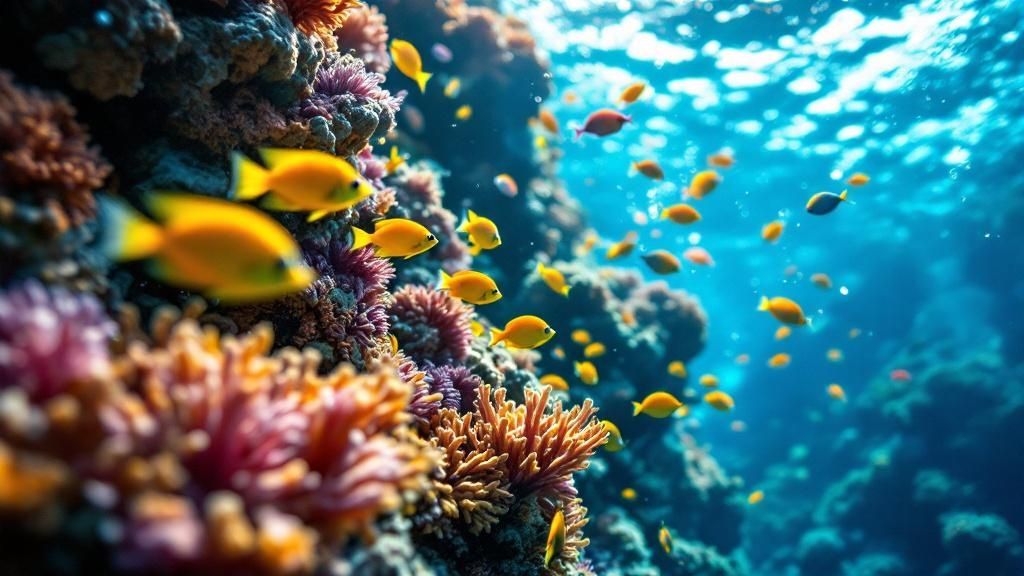
Get ready for what is, without a doubt, one of the most incredible underwater experiences on the planet: the Kona manta ray night dive. This isn't just another stop on a big island scuba diving checklist; it's a world-renowned, bucket-list adventure that consistently leaves even the most jaded divers completely awestruck.
Picture this: you descend into the warm, dark ocean just after sunset. Your group settles onto a sandy patch on the seafloor, pointing your dive lights up into the water column. And then, they come. Majestic manta rays, some with wingspans stretching over 14 feet, materialize from the darkness. They glide, swoop, and perform a silent, surreal ballet just inches above your head.
The Science Behind the Spectacle
So, how is this underwater show so unbelievably reliable, night after night? The secret lies in a brilliant, almost accidental, partnership between biology and human ingenuity. Years ago, a hotel pointed its lights into the ocean, attracting clouds of plankton. The mantas, never ones to miss a free meal, showed up to feast.
Today, dive operators have perfected this process. We set up powerful, stationary lights on the ocean floor—our underwater "campfires." These light beams attract enormous schools of plankton, the mantas' favorite food. The rays, intelligent and opportunistic, have learned that these lights signal an all-you-can-eat buffet. They swoop and soar through the light, mouths wide open, filtering the water in a breathtaking display.
It’s a beautiful, symbiotic relationship. We provide the light, which gathers their food, and in return, we get a front-row seat to one of nature’s greatest performances. The entire encounter is carefully managed to ensure these gentle giants are respected and kept safe. Strict guidelines are in place—no touching, no chasing—to preserve this unique interaction for generations. To learn more about what makes this dive so special, check out this deep dive into the Kona manta ray night dive.
Your Manta Ray Encounter
The experience is structured for maximum safety, comfort, and, of course, the best possible view. After a thorough briefing from your guide, you'll descend and find a spot around the central light source. Once you're settled on the sandy bottom, all you have to do is relax, breathe, and look up. The show is about to begin. If you're ready to see it for yourself, you can book a manta ray dive tour and witness the magic firsthand.
A few key rules ensure a great experience for both divers and mantas:
- Stay Put: Divers are asked to remain stationary on the sandy bottom. This creates a clear and predictable "viewing arena" and allows the mantas to glide overhead without obstruction.
- Hands Off: This is the most important rule. Manta rays have a protective mucus coating on their skin. Touching them can strip this layer, leaving them vulnerable to infections.
- Master Your Buoyancy: Good buoyancy control is crucial. You want to stay comfortably neutral, remaining horizontal on the seafloor so you don't accidentally float up into the path of a feeding manta.
This isn’t just another dive; it's a core memory in the making. The feeling of a massive, graceful creature soaring directly over you is something photos and videos simply cannot capture. It’s an experience that stays with you long after you’ve surfaced.
Exploring Kona’s Most Incredible Dive Sites
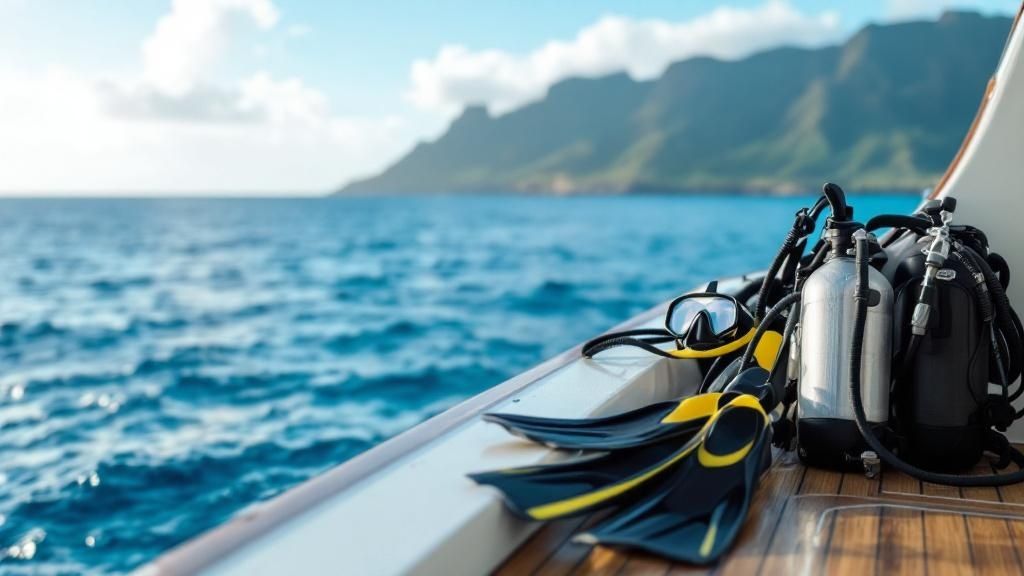
Sure, the manta ray night dive gets a lot of the glory, and for good reason. But what truly makes Big Island scuba diving a world-class experience is the sheer diversity of dive sites peppering the Kona coast. Each spot has its own unique vibe, a distinct personality shaped by ancient lava flows and now home to an incredible cast of marine life.
Think of it like exploring an underwater city. You’ve got quiet neighborhoods with serene coral gardens, and then you have dramatic canyons and volcanic formations that feel like bustling downtown districts. It's this variety that keeps divers coming back for more. Let’s take a look at a few of my favorite "neighborhoods" you can explore.
Top Kona Dive Sites at a Glance
To give you a quick overview, I've put together a table of some must-see spots. It’s a great starting point for matching your dive style and experience level to the perfect underwater adventure.
| Dive Site Name | Key Features | Best For |
|---|---|---|
| Golden Arches | Large lava tube arches, swim-throughs, frogfish, moray eels | All Levels |
| Turtle Pinnacle | Sea turtle "cleaning station," high turtle population, calm observation | All Levels |
| Blackwater Dive | Open-ocean night drift, bioluminescent & pelagic creatures | Advanced Divers |
| Puhi Bay (Hilo Side) | Muck diving, shore access, rare critters like nudibranchs & frogfish | Intermediate/Advanced |
| Crescent Beach | Lava rock canyons & ridges, eagle rays, vibrant reef fish | Intermediate |
Of course, this is just a small sample. The Kona coast is packed with hidden gems, but these sites consistently deliver unforgettable experiences.
Golden Arches: A Lava Rock Masterpiece
Imagine descending into a world sculpted by volcanic fire—that's exactly what it feels like at Golden Arches. This site is famous for its incredible lava tube formations. You'll find two huge, sweeping arches that form a stunning swim-through, creating the perfect photo op as sunlight streams down from above.
It's a genuine playground for both divers and marine life. As you cruise through the rocky terrain, keep your eyes peeled for:
- Frogfish: These are the ultimate masters of disguise. You'll often find these fascinating ambush predators sitting perfectly still, blending in with nearby sponges.
- Whitemouth Moray Eels: It's almost a guarantee you'll see their heads peeking out from crevices in the reef, a classic sight in this geologically rich environment.
- Schools of Butterflyfish: Bright and energetic, these fish add a brilliant splash of color against the dramatic, dark volcanic rock.
Turtle Pinnacle: A Gathering of Honu
Just as the name suggests, Turtle Pinnacle is hands-down one of the best spots on the Big Island to see the beloved Hawaiian green sea turtle, or "honu." The site is centered around a large pinnacle that rises from the seafloor, which has become a natural "cleaning station."
Here, smaller reef fish like Hawaiian cleaner wrasse gather to nibble parasites from the turtles' shells and skin. It’s a perfect example of a symbiotic relationship in action, and it's absolutely mesmerizing to watch. Divers can often just hover nearby and see multiple turtles patiently lining up for their turn at this underwater spa. It’s a peaceful, beautiful scene that truly captures the gentle spirit of these ancient mariners.
The real secret to an amazing turtle encounter is to just be calm. If you can remain still and respectful, the honu will go about their business naturally, giving you a far more authentic and rewarding experience.
The Thrilling Kona Blackwater Dive
If you're an adventurous diver looking for something completely different, the Kona Blackwater Dive is an experience you can't miss. This isn't about exploring a reef. It's about drifting in the deep, open ocean at night while tethered to the boat, watching one of the largest migrations on our planet unfold right before your eyes.
Every single night, countless bizarre and beautiful creatures travel from the abyss to feed near the surface. You'll float in the dark, and your dive light will illuminate a world of strange, bioluminescent, and often transparent organisms that look like they're from another planet. You might see:
- Pelagic Sea Horses: Tiny, incredibly delicate creatures that just drift in the water column.
- Larval Stage Fish: You can see familiar reef fish in their alien-like baby forms.
- Jellies and Ctenophores: Pulsing with iridescent light, these are some of the most hypnotic creatures of the deep.
This unique pelagic dive is a true plunge into the unknown. If you're ready for this one-of-a-kind experience, you can learn more and book a spot on a Blackwater Dive tour. Boat dives are fantastic for reaching these premier locations, but don't forget about the incredible spots you can get to right from the shore. For anyone interested in gearing up and exploring on their own, our guide to the best shore diving sites in Kona is a great resource to get you started.
Advanced Diving for Experienced Adventurers

So, you’ve logged your dives, mastered your buoyancy, and now the shallow reefs feel a little too familiar. You're ready for the real magic that Big Island scuba diving has to offer. For those with the certification and experience to back it up, Kona’s deeper waters are calling. This is where you get to descend along dramatic volcanic walls, explore remote pinnacles, and navigate the kind of underwater architecture that truly tests your skills.
Advanced diving isn't just about chasing depth numbers. It's about having the skill, confidence, and situational awareness to handle more demanding environments. We're talking about sheer drop-offs that vanish into the deep blue, complex lava tube systems, and sites where the currents demand respect. These are the places that often attract the bigger, more impressive marine life. For experienced divers looking for these kinds of challenges, we offer dedicated advanced dive tours.
What Awaits in the Deeper Blue
Once you venture beyond the standard reef tours, a whole new world of encounters opens up. The cooler, deeper waters off the Kona coast are home to a different cast of characters than the ones you see hanging out in the sunlit coral gardens.
On an advanced dive, you're more likely to cross paths with:
- Larger Pelagic Species: Scalloped hammerheads, oceanic whitetips, and even the occasional tiger shark are more frequently spotted out in the blue.
- Unique Geological Formations: You'll get to explore pristine, less-visited sites with towering underwater pinnacles and untouched lava formations that feel truly ancient.
- Schools of Big Game Fish: Nothing quite compares to seeing massive schools of jacks or barracuda moving as one in the open ocean.
The deeper you go, the more you can appreciate the island's raw volcanic power. While our recreational dives have clear limits, it’s fascinating to know that scientific submersibles have explored these Hawaiian waters down to 2,000 meters. As detailed in explorations covered by NOAA, these deep dives have revealed vast seamounts that shape the entire marine ecosystem we get to enjoy.
Safety and Expertise are Paramount
Taking on more challenging dives means putting safety first, and that always starts with choosing the right operator. You absolutely need a crew that specializes in advanced diving. Their local knowledge of currents, complex site navigation, and ability to handle any situation with a calm, professional demeanor is non-negotiable.
At Kona Honu Divers, we get the thrill of advanced diving because we live for it. Our team is made up of seasoned instructors who have the expertise to guide you safely through Kona's most demanding—and rewarding—dive sites.
We see a great advanced dive as a partnership between a skilled diver and an expert guide. Our team is genuinely passionate about sharing the deeper secrets of the Kona coast with divers who are ready for the adventure. If you're an experienced diver looking to push your boundaries, our premium advanced dive trips were designed just for you.
Planning Your Big Island Dive Adventure
Alright, you've seen what makes the Big Island a world-class dive destination. Now for the fun part: planning your trip. Getting the logistics sorted out shouldn't feel like a chore; it’s the first step of the adventure.
We get these questions all the time from divers getting ready to head our way. Think of this as your practical, no-nonsense guide to making sure your trip goes off without a hitch. Let’s get you ready to dive.
When Is the Best Time of Year to Dive?
Honestly, any time is a good time to dive in Kona. That’s one of the best things about this place. The water stays warm and the visibility is great pretty much year-round.
That said, there are a few subtle differences between the seasons that might influence when you visit:
- Summer (May-September): This is when the ocean is at its calmest. We often get those beautiful, glassy days where the water is flat as a pancake. It’s perfect for beginners and makes getting to any dive site a breeze.
- Winter (October-April): Winter can bring bigger swells, but it’s also when the humpback whales arrive. There's nothing quite like hearing whale song underwater—it's a deep, powerful sound that vibrates right through you. It's an experience you'll never forget.
Ultimately, you can't go wrong. It just comes down to the kind of adventure you're after.
Do I Need to Be Certified to Dive?
Nope, you don't! If you've always been curious about breathing underwater but aren't certified, the PADI Discover Scuba Diving program is for you. It's a fantastic, safe way to try scuba with an instructor by your side the entire time. No experience needed.
For those ready to take the plunge and become fully certified, we offer the complete PADI Open Water Diver course. And really, what better classroom could you ask for than the warm, clear waters of Kona?
What Kind of Marine Life Will I See?
The manta rays might be the stars of the show, but the supporting cast is incredible. The Kona coast is bursting with life, including many species you can only find here in Hawaii.
On a typical Kona Honu Divers tour, it’s common to see:
- Hawaiian Green Sea Turtles (Honu): You’ll spot them everywhere—cruising gracefully by, munching on algae, or just chilling out on the reef.
- Spinner Dolphins: We almost always see pods of these acrobatic dolphins from the boat. Sometimes, if you're lucky, they'll swim past you on a dive.
- Vibrant Reef Fish: The reefs are a kaleidoscope of color, home to butterflyfish, parrotfish, and Hawaii's state fish, the Humuhumunukunukuāpuaʻa (try saying that three times fast!).
- Eels and Reef Sharks: Always keep an eye on the little nooks and crannies for moray eels. You'll also likely see whitetip reef sharks resting on the sandy bottom—they're harmless and beautiful to watch.
What Should I Pack for My Dive Trip?
Packing for a dive trip to Kona is pretty straightforward. We provide all the major dive equipment you’ll need, and it’s all top-quality gear. But, we know divers have their favorite pieces of kit, so here's a quick rundown.
- The Must-Haves: Definitely bring reef-safe sunscreen, your swimsuit, a good hat, and sunglasses.
- Your Personal Gear (Optional): Many experienced divers prefer to bring their own mask for a perfect, leak-free fit. Bringing your own fins and dive computer is also common.
- Capture the Moments: Don't forget an underwater camera! The photo ops here are endless, and you'll definitely want to show your friends back home what you saw.