
You're standing on the boat rail at dusk, mask already fogged once, wondering if tonight will be calm or crowded, whether the mantas will show, and whether the whole thing is going to feel magical or chaotic. That uncertainty is normal. The Big Island manta ray night snorkel can be one of the cleanest wildlife encounters in Hawaiʻi, but only if you choose the right site, the right operator, and the right behavior in the water.
What This Kona Night Actually Feels Like
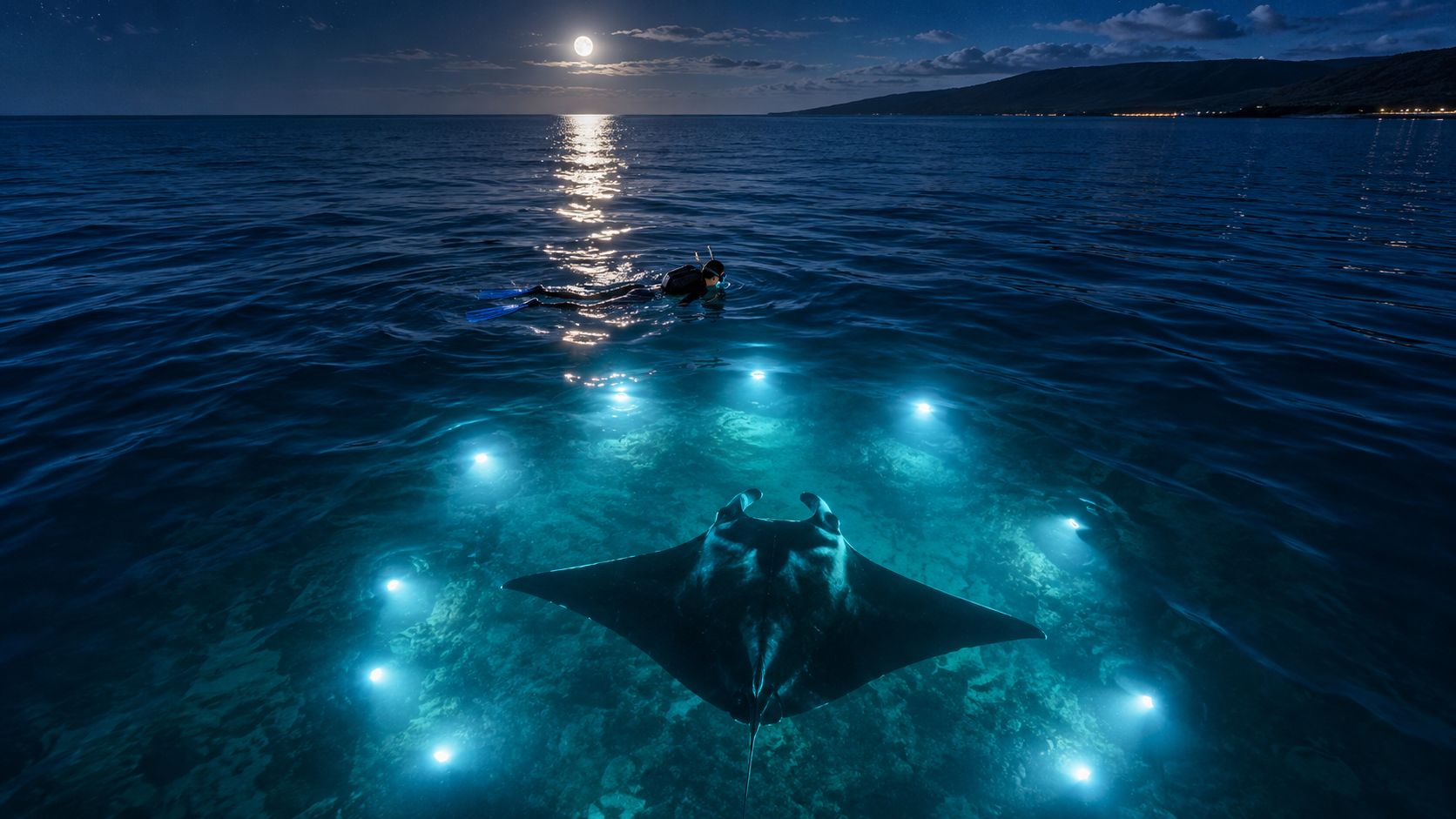
The first thing you notice is the light cone. The surface glows below you, the water goes black outside that circle, and then a manta ray appears from the dark with a slow, effortless roll that makes the whole boat go quiet. It doesn't feel like chasing wildlife. It feels like floating inside a controlled feeding station while a giant animal decides whether to make another pass.
That is the basic setup. Downward-facing lights gather plankton, plankton gathers reef manta rays, and snorkelers stay flat at the surface while the animals feed underneath. The value is in the behavior, not in baiting or handling. If the operator is doing it right, you are not swimming after mantas. You are holding position and letting them come to you.
This Kona experience has a long paper trail behind it. Historical accounts put 1985 as the milestone year when Keller Laros first encountered manta rays during a nighttime dive off Kona, and by 1991 he was naming and cataloging individual rays, which created the basis for long-term identification and monitoring (Scuba Diving). That matters because the encounter is not a novelty attraction. It is a documented wildlife aggregation with known individuals, repeat visitors, and years of observation behind it.
The best nights feel calm even when the boat is busy. If you can float still and keep your light cone clean, the mantas do the rest.
The practical expectation is simple. You will be floating at the surface, watching mantas make repeated feeding passes below you, and your job is to stay stable, warm, and out of their way. If that sounds almost too simple, that is because the experience works best when guests do not try to improve it in the water. The challenge is choosing a trip that keeps the human side just as controlled as the animal side, as described in this Kona manta night swim overview [https://konahonudivers.com/manta-ray-night-swim/].
Booking Logistics and Timing Your Trip
Book early enough to keep room in your schedule for weather, surf, or a rerun on a better night. That's not pessimism, it's how you protect the experience. The most frustrated guests are usually the ones who treat the manta snorkel like a fixed appointment instead of a wildlife outing that depends on ocean conditions.
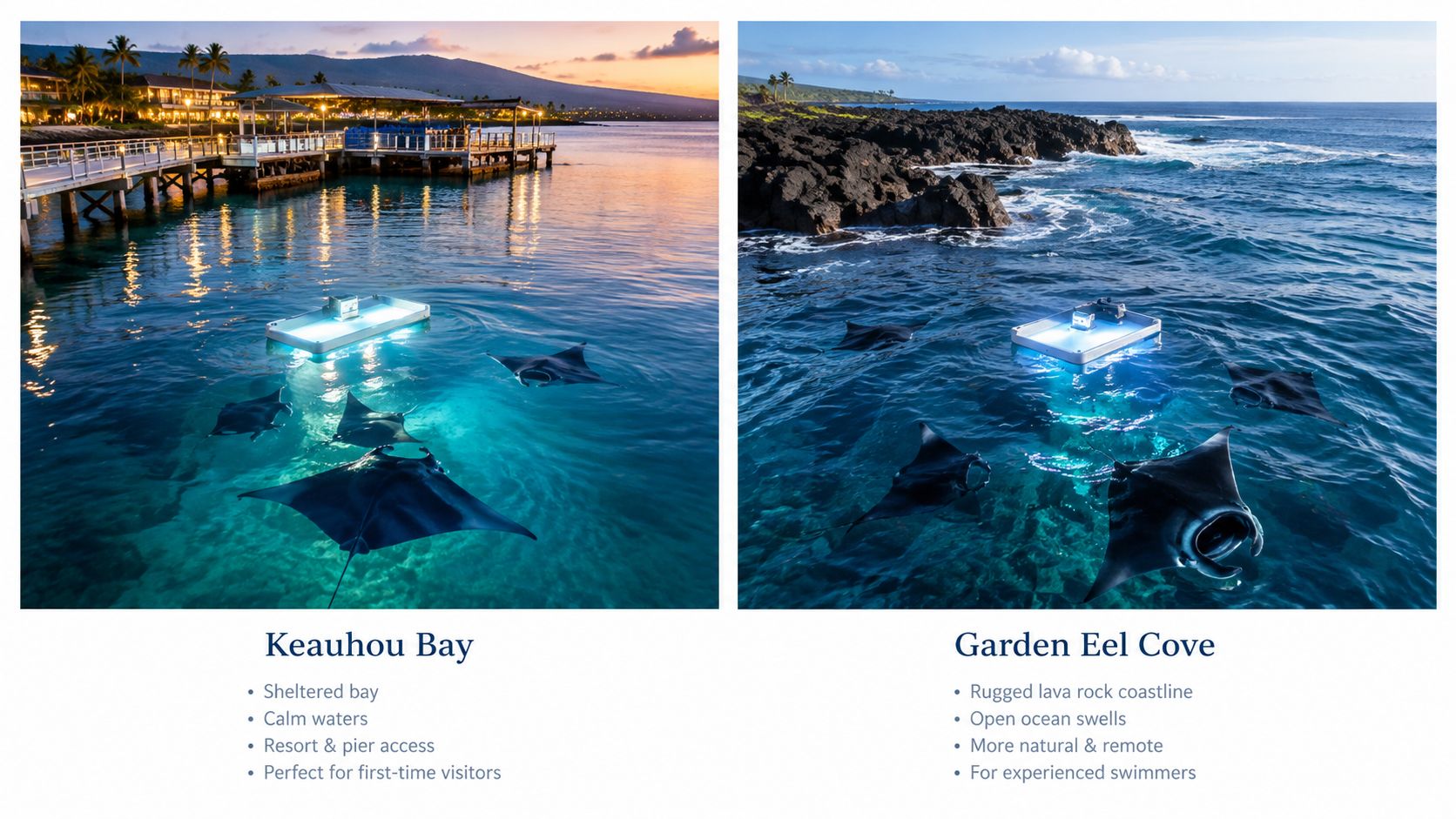
Commercial manta-viewing operations in Hawaiʻi are governed during 4:00 p.m. to 4:00 a.m. manta-viewing hours, with boats operating from a commercial mooring and live boating limited to entering and leaving the viewing area (DLNR document). In practice, that means your check-in might be before sunset, your ride out is part of the experience, and your time in the water usually happens after the sky gets dark enough for the lights to work properly.
If you only have one free evening, choose the night that gives you the best margin. If you're arriving from another island the same day, don't try to squeeze the snorkel into a late-flight arrival unless you're comfortable moving fast, skipping dinner, and handling gear with zero margin for delay. A smoother plan is to arrive, hydrate, eat lightly, and give yourself time to get to the harbor without rushing.
What to line up before you leave the hotel
- Check the operator's check-in window early. Late arrivals are a self-inflicted problem, and they usually mean a worse briefing and a more awkward entry.
- Keep dinner light. The boat motion matters more than people think, especially after a long day in Kona heat.
- Bring the same name for every reservation detail. Small booking mismatches create unnecessary harbor stress.
- Ask whether the trip is a sunset departure or a later run. That changes how you dress, how you fuel, and how much time you spend on deck before getting wet.
If you want a local planning reference, use this Kona manta timing guide to line up the trip with your broader Big Island itinerary. The right night is the one that lets you show up rested, on time, and not already seasick before you ever hit the water.
Choosing Between the Two Viewing Sites
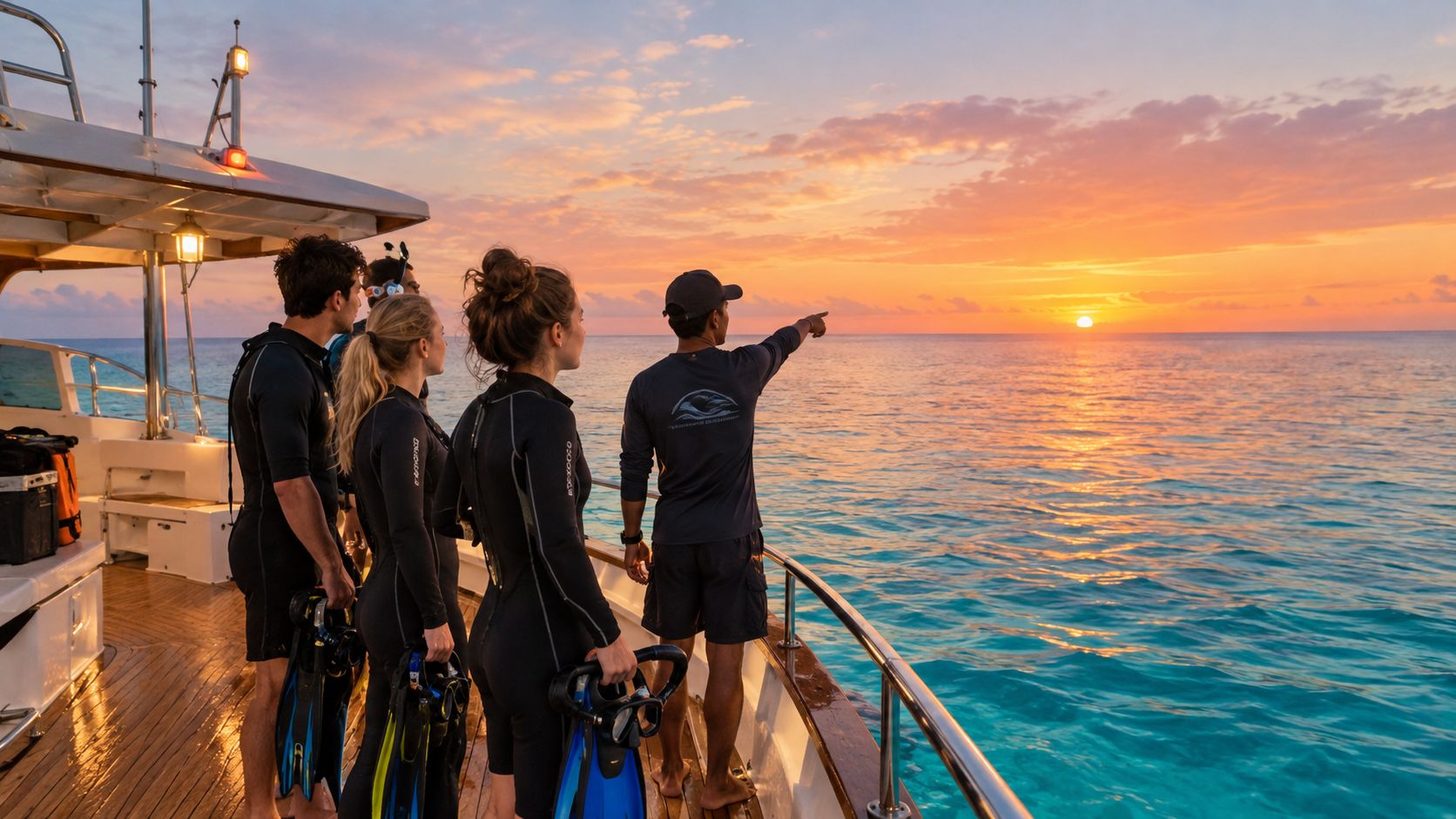
The two names you will hear most often are Garden Eel Cove and Keauhou. They may sound similar in a booking conversation, but they do not deliver the same night on the water. One site usually gives crews more control over the lineup, the light field, and guest spacing. The other can still produce a strong manta encounter, but it asks more of the captain and the swimmers.
A University of Hawaiʻi study that analyzed more than 23,000 sightings from 2010 through 2022 found that Garden Eel Cove consistently supported larger aggregations than Keauhou, across 167 individually identified reef manta rays (University of Hawaiʻi study). The same record also showed stronger female presence and site fidelity at Keauhou, which is a reminder that these sites behave differently rather than serving as duplicates.
For most snorkel guests, Garden Eel Cove is the more controllable choice. The surface setup is easier to manage, the viewing lane tends to be cleaner, and crews can usually hold a group in place with fewer moving parts. Keauhou can still be excellent, but it puts more weight on operator discipline. If the boat plan feels loose, the night usually feels loose too.
A good operator chooses the site, sets the group well, and runs a clean briefing. A weak operator treats site choice like a sales point and hopes the ocean covers the gaps.
For a practical comparison of crowding, control, and how each site is usually run, read this Manta Heaven vs Manta Village guide. If you care about a calmer surface, fewer boats in the viewing lane, and a more readable light field, Garden Eel Cove is usually the stronger pick. If an operator talks as if switching sites midstream is a normal fix, that is a warning sign. Site discipline is part of safety, not just convenience.
Gear, Clothing, and Seasickness Prep
Warmth matters more than most first-timers expect. You're floating still at night, often after a boat ride, and a thin swimsuit alone can make the second half of the outing miserable. A 3mm wetsuit, wetsuit top, or a proper thermal layer keeps your shoulders from stiffening up while you wait for the mantas to come through.
Mask fit matters just as much. A leaky mask ruins the whole night because you end up adjusting gear instead of watching the feeding passes. Bring what helps you stay calm and horizontal, not what looks fine in daylight. A towel and dry layer for the ride back are smart, and cotton is a bad choice because it stays cold once it gets damp.
If you're prone to motion sickness, treat prevention as part of the trip, not an afterthought. The boat leg can be enough to trigger nausea if you wait until symptoms start. Options people commonly use include the Ship-EEZ Seasickness Patch, Dramamine pills, Bonine pills, Sea Band wristbands, and ginger chews. They're not interchangeable, and they don't all fit the same guest.
A practical way to think about them is this:
- Patch: Better for guests who want to set it and leave it alone.
- Pills: Better if you know what works for your body and you can time it before boarding.
- Wristbands: Good as a low-risk backup, especially for guests who dislike medication.
- Ginger: Helpful for mild nausea or as an add-on, not a rescue plan.
If you've ever been seasick on a sunset boat ride, handle it before you get to the harbor. If you need a deeper breakdown, this how to avoid sea sickness guide is worth reading before you pack. A calm stomach makes a better manta night than any camera upgrade does.
In-Water Safety and Etiquette Rules
The main rule is simple. Stay at the surface and do not free-dive toward the mantas. Once you're in the water, the goal is flat, stable, and still. You're there to observe feeding passes, not to close distance or “get closer” on your own.
The best body position is horizontal at the surface with your buoyancy under control and your eyes looking down into the lit zone. Most crews use a lighted flotation board or a similar setup so guests can hold position without kicking through the feed lane. That's not just for comfort. It keeps the light field clean and gives the mantas a predictable corridor.
Do not touch, grab, ride, chase, or try to intercept a manta, even if it comes close enough to brush past your mask. These animals are wild, and they choose their own line through the water. The crew's job is to keep people out of that line. Your job is to stay quiet enough that the group doesn't turn into a moving obstacle.
What the briefing usually sounds like
- Surface flat. Stay horizontal and keep your fins controlled.
- Look down. The action is under the light, not behind you.
- Back to boat. If the crew redirects you, they're protecting the group and the animals.
- Hold still. Kicking harder doesn't make mantas appear sooner.
A crowded night can make all of this harder, which is why guide discipline matters so much. Vertical finning, splashing, and random light use break the feed lane and create avoidable collision risk. The best guests aren't the boldest ones. They're the ones who can stay calm while everything around them looks busy.
How Crowding Changes the Experience
Crowding is what turns a manta night from calm to chaotic. The rays may still show up, but a busy deck and a crowded viewing lane make the whole trip feel like managing bodies instead of watching wildlife. A Hawaii County safety assessment documented 16 to 19 vessels and roughly 160 to 190 people in the water on observed nights, which is why surface control and spacing matter so much (Hawaii County safety assessment).
That same assessment also found that 82% of surveyed snorkelers felt crowded by snorkelers, 78% by boats, and 69% by scuba divers. Reported acceptable limits averaged about 52 snorkelers, 32 divers, and 11 boats at one time. Those figures are not universal rules, but they make one thing plain, guest tolerance drops fast when the site gets packed.
The booking question is not whether mantas appear. It is how well the operator controls the night when they do. A trip can have strong wildlife activity and still feel rough if the boats are bunched together, the guide-to-guest ratio is thin, or the entry and float setup turns disorganized.
Ask about crowding before you ask about sightings. A cleaner, safer night with fewer bodies in the water usually beats a messy night with more mantas.
| Question | Why It Matters | What Good Sounds Like |
|---|---|---|
| How many guests are in the water with my group? | Smaller groups are easier to keep steady and calm. | A clear cap and a plan for spacing. |
| How are boats positioned during viewing? | Boat placement affects propeller risk and swimmer comfort. | “We hold the viewing lane and keep engines out of the light zone.” |
| What is the guide-to-guest ratio? | More attention means better corrections and fewer drift problems. | A ratio that lets guides actually watch everyone. |
| What flotation system do you use? | A stable board or similar setup keeps guests horizontal. | “Everyone has a secure float and a clear hold point.” |
| What happens if the night is too crowded or conditions change? | The cancellation policy shows how seriously the operator treats safety. | A clear reschedule or no-go policy without pressure tactics. |
Garden Eel Cove is usually the easier site to control because the viewing area is more predictable and operators can manage positioning with less guesswork. Keauhou Bay can still be good, but once the water gets busy, the margin for error gets thinner. If you want a safer night, ask the operator where crowding is most likely to build and how they keep their group out of it.
A responsible operator should answer those questions plainly. If they cannot, they are selling a vague night, not a well-run one.
Photography, Glow Tips, and Lights
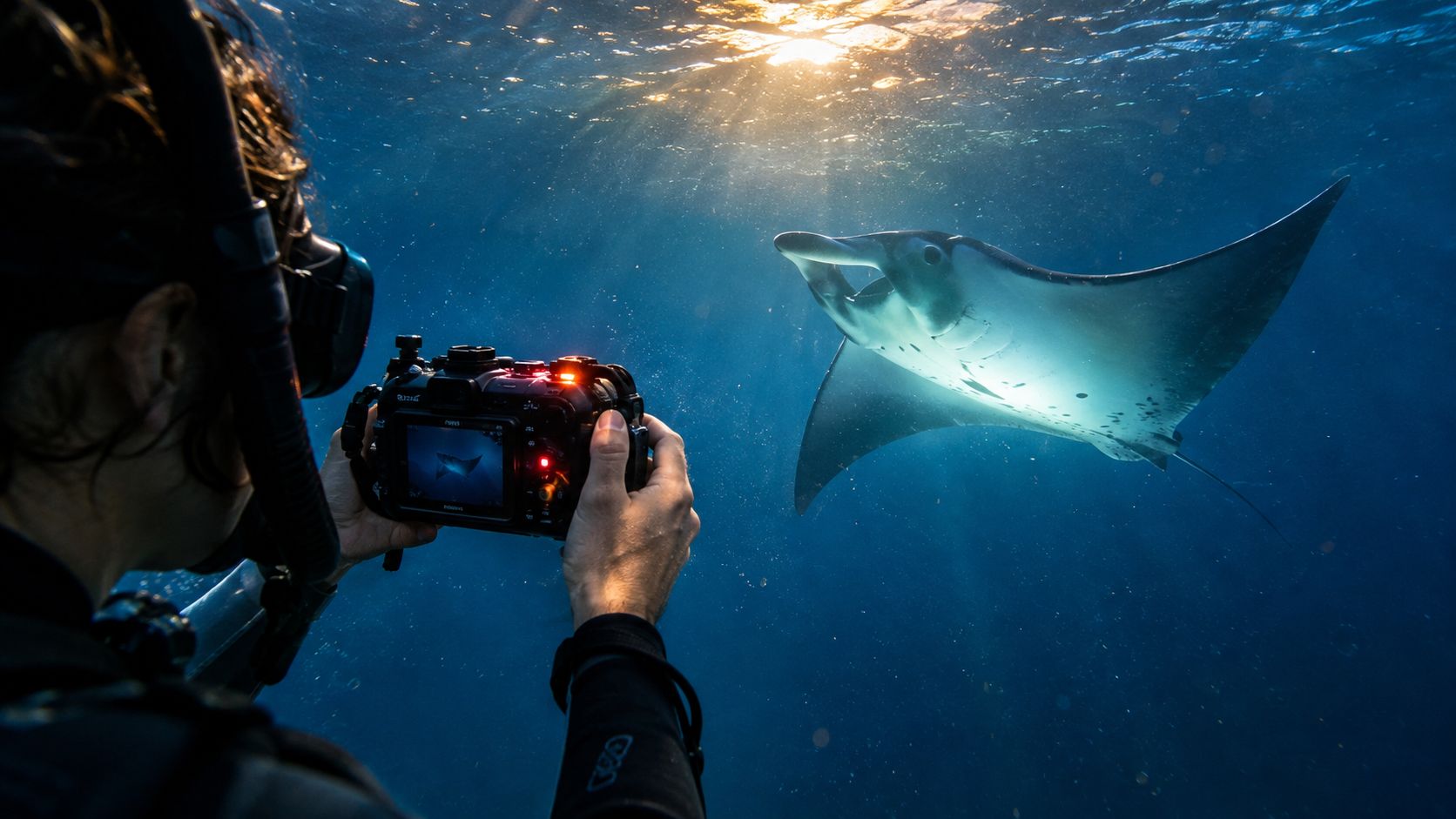
The best manta photos usually come from doing less, not more. The light field at the surface is the whole system, so your job is to protect it. Plankton gathers in the glow, mantas follow the plankton, and the image gets better when swimmers stay still and let the scene settle.
Flash is the quickest way to ruin both the shot and the atmosphere. Selfies in the active viewing zone are the same problem in a different form because they pull attention away from the light cone and make people lift their heads when they should be looking down. If you're using a camera, keep it low, steady, and out of other swimmers' space. If you're not confident with night settings, leave the camera on the boat and watch the animal.
A few practical habits help more than expensive gear:
- Use low output. Bright personal lights flatten the scene and can scatter plankton away from the viewing line.
- Stay level. Leaning over the board changes the light field and crowds the swimmer next to you.
- Stop chasing frames. One extra kick for one more pass often ruins the next pass for everyone.
- Accept silt and bubbles. If the water gets stirred up, the image quality drops fast.
The system works because the light is stable. If one person sweeps a flashlight across the feed lane, the whole viewing area gets messy. That's why the best crew instructions sound repetitive. They're protecting the glow, not nagging for no reason. For guests who want a more camera-focused version of the outing, this Kona manta night dive with photo package is a useful reference point for how operators package the visual side of the experience.
If no mantas show, the night still counts when the operation was run well. Natural feeding conditions change, and a good crew can't force plankton to behave on command. What they can do is keep the site organized, maintain a stable light field, and avoid turning a quiet night into a bad one. That's the standard worth paying for.
Kona Honu Divers runs manta snorkel trips with the gear, flotation, and briefing structure that matter on a night like this, and they also operate other Kona ocean trips for guests who want a broader Big Island water day. If you're ready to plan a controlled, well-run manta outing, visit Kona Honu Divers and compare the options before you book.