
Picture this: you’re descending into the warm, dark Pacific Ocean. Suddenly, giant, gentle shadows begin to glide through the beams of light all around you. It’s not a movie—it’s the world-famous Big Island manta ray dive, an experience that truly defines Hawaiian adventure. The whole spectacle works by using powerful underwater lights to attract plankton, which in turn draws in majestic mantas for a nightly feeding ballet you have to see to believe.
Experience Kona’s World-Famous Underwater Ballet
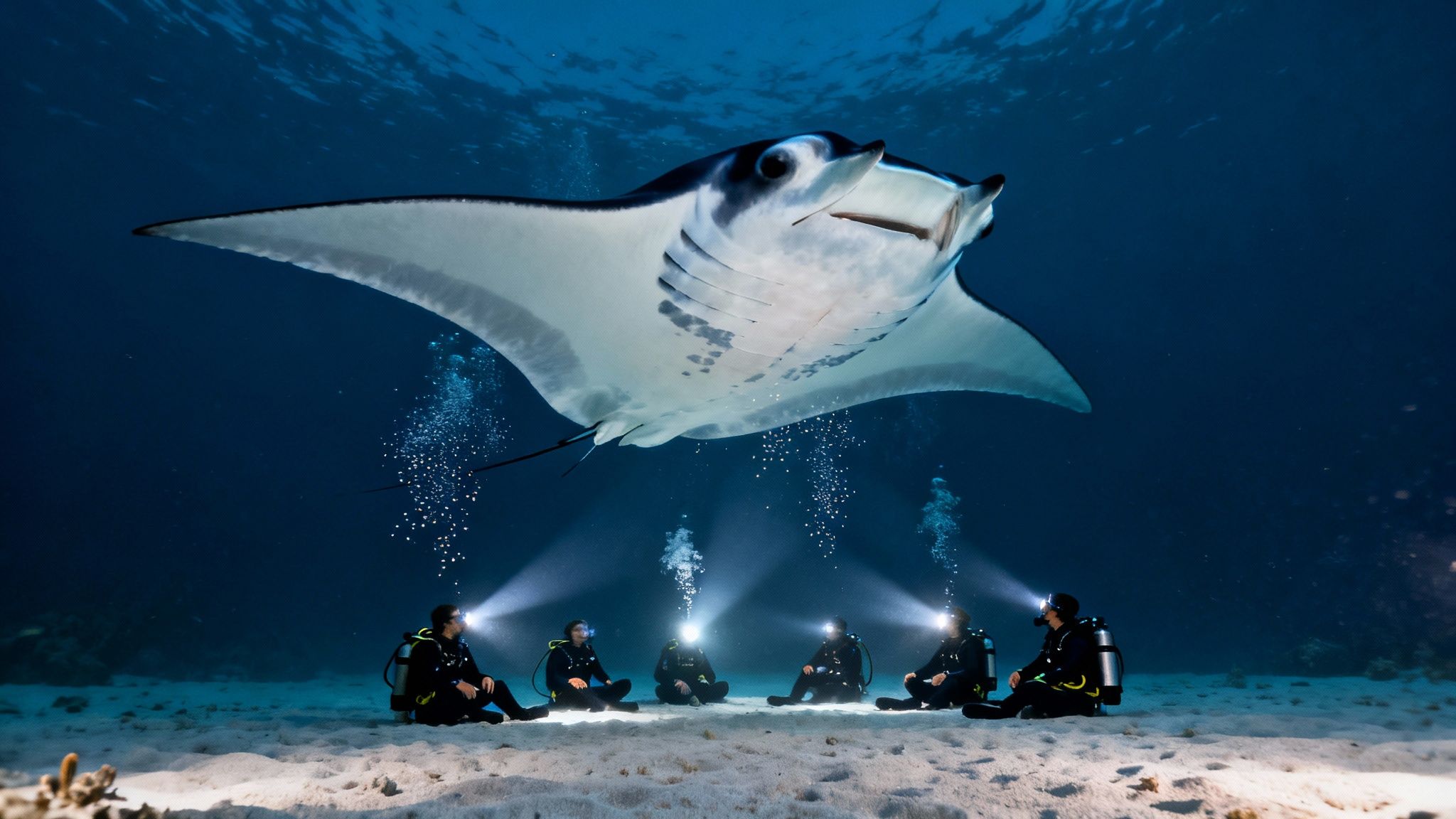
There's a good reason the Kona coast is called the 'Manta Ray Capital of the World.' It offers one of the most reliable and jaw-dropping wildlife encounters you can find anywhere on Earth. While manta sightings in other parts of the world are often seasonal and hit-or-miss, Kona’s show goes on year-round. It’s a chance to see these graceful giants, with wingspans stretching up to 16 feet, perform an underwater dance just inches above your head.
The magic kicks off right after sunset when dive operators switch on their lights. These lights create a dense cloud of plankton, the manta rays' favorite meal. Like a dinner bell, this brings the mantas in to swoop and somersault through the light beams, scooping up the tiny organisms with their massive mouths.
Why Kona is a Unique Manta Destination
The Kona Coast has cemented its reputation as one of the most dependable places to see manta rays, with operators consistently reporting an 85-90% sighting success rate all year long. This incredible consistency is thanks to a stable, non-migratory population of reef mantas that call this coast home. In fact, researchers have identified and cataloged over 318 individual mantas here since 1979. You can learn more about the Kona manta population and its history.
This reliability takes the guesswork out of planning. You don't have to stress about timing your trip to a specific "manta season," because pretty much every night offers a high chance of a spectacular show.
I’ve heard it described as surreal—like watching a stealth bomber glide silently through the water. It’s a peaceful, humbling, and completely mesmerizing encounter that puts you face-to-face with the ocean's gentle giants.
The Two Main Manta Dive Locations
When you start looking into a Big Island manta ray dive, you'll quickly discover there are two main spots where these feedings happen. One is south of Kona, and the other is up north, closer to the airport.
While both sites attract mantas, they offer completely different experiences. Everything from the water conditions and comfort to the quality of the viewing area itself can vary dramatically. Choosing the right dive site is probably the most important decision you'll make, as it directly shapes how magical your tour will be. While not for the manta dive itself, a snorkelling sea scooter can be a fun way to explore other reefs on your own time.
Next, we'll dive into why one of these locations is the clear winner for this once-in-a-lifetime experience.
Why Garden Eel Cove is the Superior Dive Site
When you're planning a manta ray dive on the Big Island, you’ll hear about two main spots: Manta Village to the south and Garden Eel Cove up north. While both are known for mantas, the actual experience you'll have is worlds apart. The choice of location really matters, and Garden Eel Cove is the superior choice for your dive tour.
Here at Kona Honu Divers, we've made a conscious decision to run all our manta ray dive tours at Garden Eel Cove. We’ve dived both sites countless times, and for us, the northern location consistently delivers a better, safer, and just plain more magical encounter.
It starts with the boat ride. Garden Eel Cove is tucked into a bay near the airport, which naturally protects it from the open ocean. This protected location usually means calmer waters and a much smoother trip out and back—something you’ll really appreciate after a night dive when the wind can kick up.
A Natural Underwater Amphitheater
What truly makes Garden Eel Cove the superior choice is its underwater layout. The viewing area is like a natural sandy amphitheater, creating the perfect stage for the manta show.
As divers, we settle onto the sandy bottom, find a comfortable spot, and shine our lights straight up. This creates a column of light, our "campfire," which attracts the plankton the mantas feed on.
This setup is ideal. You can just relax and get lost in the moment without fighting currents or constantly adjusting your buoyancy. The mantas swoop and barrel roll right over your head, sometimes just inches away, all within a predictable, contained, and better viewing area. It’s an intimate and organized experience.
Better Reefs Mean a Better Experience
The other huge plus for Garden Eel Cove is the incredible, healthy reef surrounding the "campfire." It's a vibrant ecosystem buzzing with marine life. Since our manta trip is a two-tank dive, your first dip in the water is at twilight. This is your chance to explore one of Kona's most beautiful and better reefs before the main event.
That first twilight dive is an amazing experience on its own. You'll see schools of colorful fish, find moray eels peeking out from their homes, and watch as the whole reef transitions from day to night. It adds so much value to the trip, turning it into a full evening of world-class scuba diving on the Big Island.
Manta Ray Dive Site Comparison
To really understand the differences, it helps to see the two main sites side-by-side. While both have their merits, you can see why we feel Garden Eel Cove offers a more premium, comfortable, and reliable experience for our divers.
| Feature | Garden Eel Cove (North Site) | Manta Village (South Site) |
|---|---|---|
| Location | North Kona, near the airport | South Kona, near the Keauhou Sheraton |
| Conditions | Generally calm, protected cove | More exposed to open ocean swell |
| Underwater Topography | Sandy "amphitheater" bottom | Rocky, uneven bottom with coral heads |
| Viewing Setup | Divers sit comfortably on the sand | Divers often have to cling to rocks |
| Reef Quality | Excellent, vibrant coral reef | Good, but can be impacted by runoff |
| First Dive | High-quality twilight reef dive | Can vary; sometimes just a short tour |
Ultimately, the combination of a beautiful twilight reef exploration followed by a comfortable, jaw-dropping manta encounter makes Garden Eel Cove the clear winner. You can learn more about what makes this site so special by exploring our guide to Manta Ray Heaven at Garden Eel Cove.
Getting Ready for Your Manta Ray Night Dive
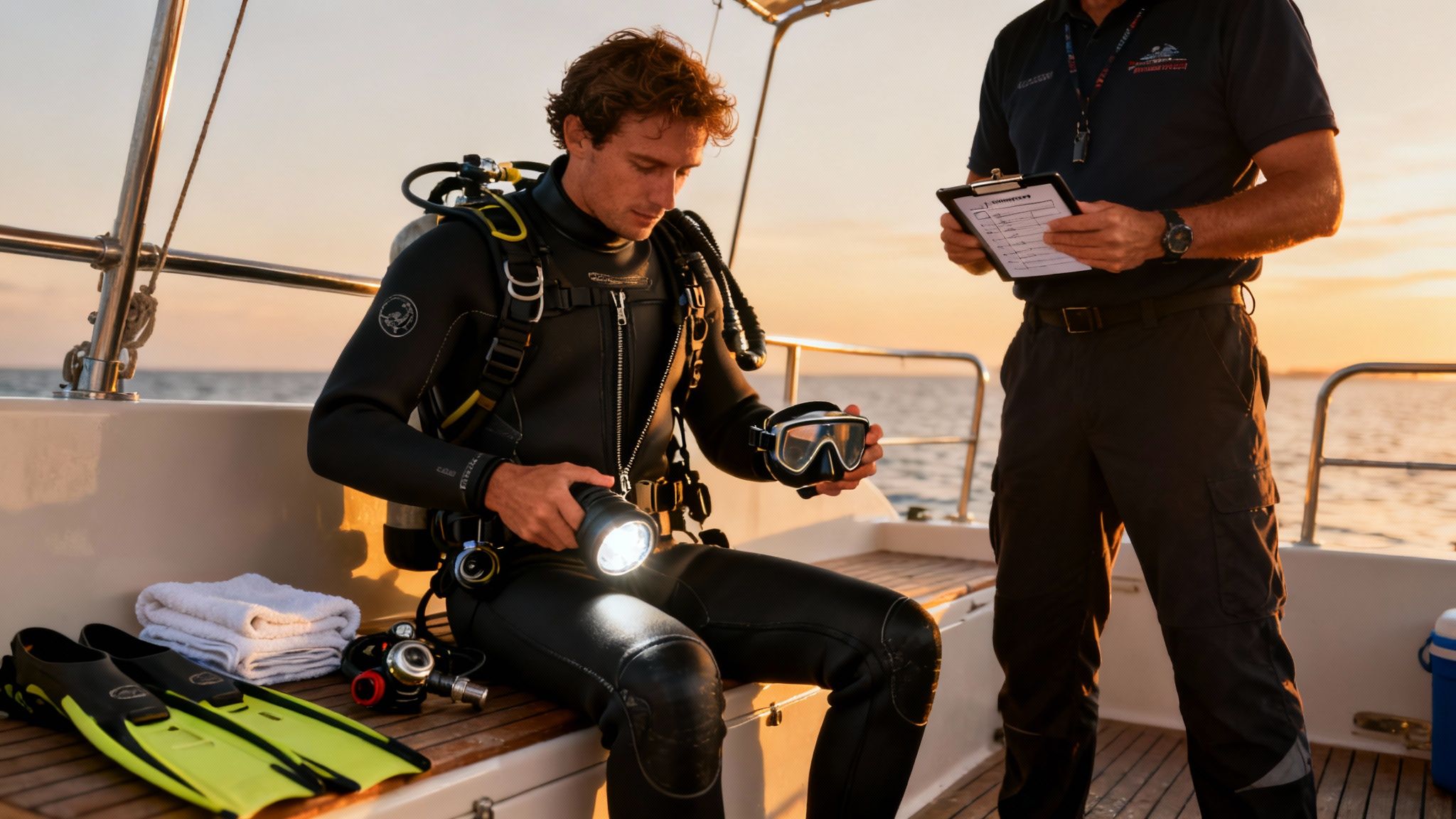
A little prep work can make the difference between a good dive and an unforgettable one. Getting ready for the Big Island manta ray dive isn't complicated, but knowing what to expect and what to bring will let you relax and soak in every magical moment.
The good news? You don't need a stack of certification cards for this adventure. An Open Water Diver certification is all you need. The dive itself is fairly shallow, usually around 30-40 feet, and you’ll be stationary for most of it. That said, having a recent dive under your belt definitely helps with confidence and buoyancy, especially when you're navigating in the dark.
Gearing Up for the Dive
Reputable operators like Kona Honu Divers have you covered with all the essential equipment. We provide thick, warm wetsuits, high-powered dive lights to attract the plankton, and all the standard scuba gear you'd expect. For those certified, we even offer free nitrox to give you a bit more bottom time and help you feel less tired afterward.
Even with gear provided, a few personal items will make your experience much smoother:
- Swimsuit: The easiest approach is to wear it under your clothes to the boat.
- A Towel and Warm Clothes: You’ll be grateful for something dry and cozy for the ride back to the harbor.
- Reef-Safe Sunscreen: The sun will still be out on the way to the dive site. If you're looking for tips, this ultimate guide to sun protection is a great resource.
- C-Card and Logbook: Don't forget proof of your certification!
If you want a closer look at the high-quality rental equipment we use on our boats, check out our guide on the gear you will need for your Kona diving adventure.
The Pre-Dive Briefing: What You Need to Know
Before anyone gets in the water, your divemaster will give a detailed pre-dive briefing. This isn't just a formality—it's crucial for a safe and successful night dive. Make sure you listen up, as the crew will explain procedures specific to this one-of-a-kind experience.
They’ll review the hand signals we use at night (which involve your flashlight) and lay out the dive plan. You'll know exactly where the group will be positioned on the sandy bottom and how to aim your lights to create the "plankton buffet" that draws the mantas in.
The most important part of the briefing covers the manta interaction rules. This is our code of conduct for being respectful guests in their world. The golden rule is passive observation: no touching, no chasing, and never block a manta's path. Following these guidelines protects these gentle giants and ensures everyone on the dive has a truly incredible, natural encounter.
What To Expect On Your Tour With Kona Honu Divers
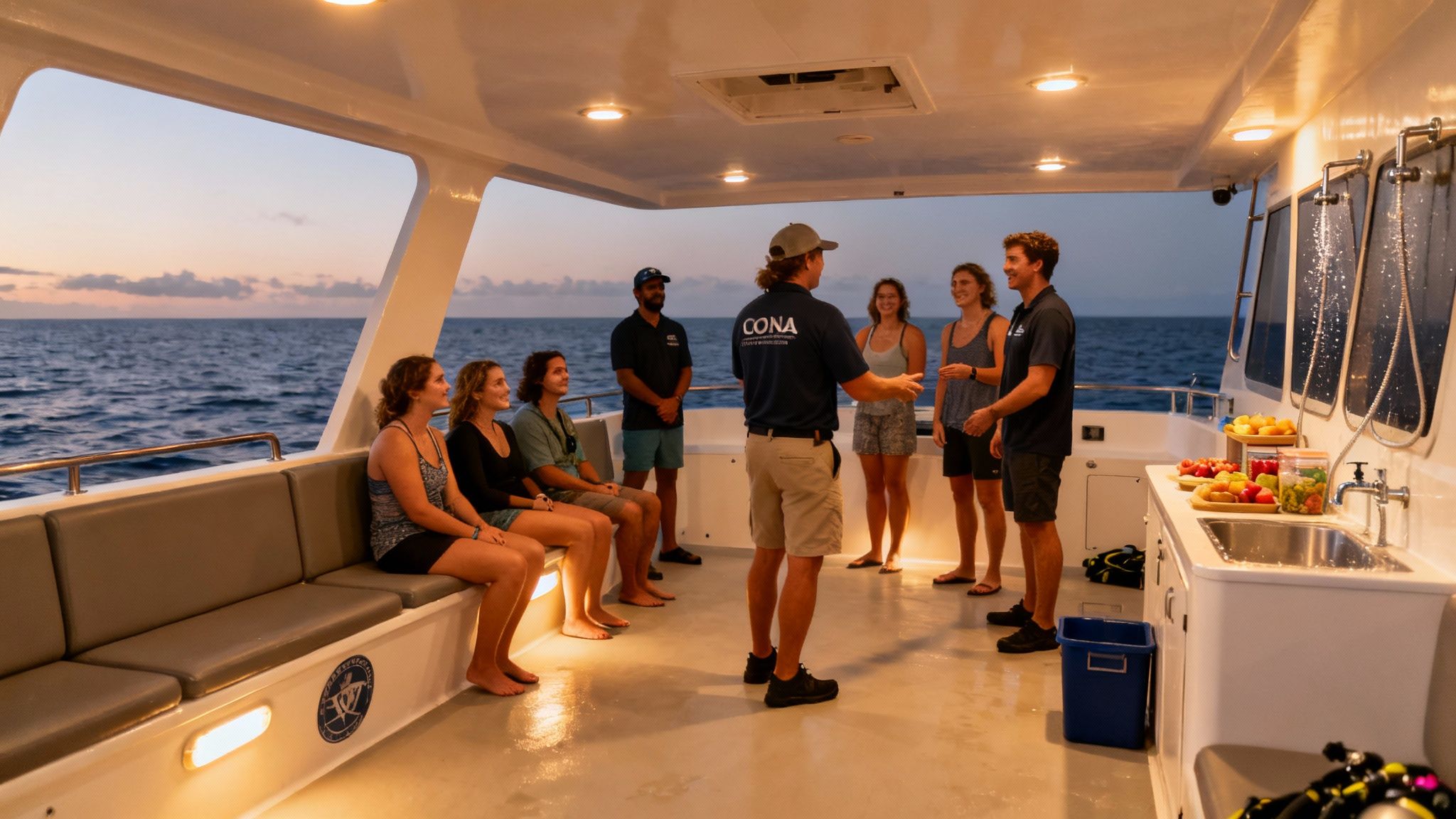
Choosing the right operator can make or break your Big Island manta ray dive, and we take that responsibility seriously. From the moment you check in, you’ll feel the Kona Honu Divers difference. Our crew members aren't just doing a job; they're passionate divers who live for this stuff and are genuinely stoked to share the experience with you.
We put a huge emphasis on comfort and safety. Our boats are spacious and built specifically for divers, so you won’t be bumping elbows while trying to gear up. There’s plenty of room to move around.
After the dive, you'll really appreciate the little things, like our onboard hot freshwater shower to rinse off the salt and warm up. We also have plenty of snacks and drinks ready to help you refuel on the cruise back to the harbor.
The Two-Tank Manta Adventure
This isn't just a quick splash-and-dash. We structure our manta trips as a complete two-tank evening adventure to give you the absolute best experience at Garden Eel Cove.
Your first dive is at twilight. As the sun dips below the horizon, you’ll explore one of Kona’s most vibrant reefs. It’s a magical time to be underwater, watching the whole ecosystem shift from day to night as reef fish find their hiding spots and the nocturnal critters start to wake up.
Then, when it’s completely dark, it's time for the main event. For the second dive, we head to the "campfire" on the sandy bottom. You’ll settle in and get front-row seats for the unforgettable manta feeding ballet. To get an even better feel for our process, you can find more details on our manta ray night dive tours.
A Commitment to Excellence
We truly believe that a world-class dive experience starts with an excellent team. Our divemasters and captains are seasoned experts in Kona's waters, but more than that, they know how to create an environment that’s safe, fun, and incredibly memorable for everyone on board.
But you don’t have to take our word for it. The reviews from our divers say it all. Below, you can see real-time feedback from people who have joined us for the manta ray dive.
Ready to see the underwater ballet for yourself? You can book one of our premier manta ray dive tours and lock in your spot for an incredible night.
How to Be a Good Guest in the Manta’s World
Being in the water with Kona’s gentle giants is a genuine privilege, and it comes with a responsibility to protect them. The entire experience is built around one core idea: respectful, passive observation.
The number one rule? It's simple. Let the mantas control the encounter. Once you’re down, you’ll find a spot on the sandy bottom, get comfortable, and essentially become part of the scenery.
This hands-off approach isn’t just for your safety; it’s for theirs. When you stay still, the manta rays see you as a non-threatening part of the environment. This is what allows them to relax and carry on with their nightly feeding ballet, often gliding just inches above your head in a breathtaking display of trust and curiosity.
The Rules of the "Road"
To make sure every Big Island manta ray dive is a positive one for both divers and mantas, everyone follows a strict code of conduct. These guidelines protect the animals and, honestly, create a much better, more natural experience for everyone in the water.
- Look, Don't Touch: I know it's tempting, but you absolutely cannot touch the mantas. They're covered in a protective mucous layer that acts as their immune system. Touching them strips this coating off and can leave them vulnerable to nasty infections.
- Don't Chase or Block: This is a big one. Never chase a manta or swim directly above it. Doing so can block its path to the surface or its feeding lane. Your job is to be a stationary observer from below, giving them the freedom to move naturally.
- Nail Your Buoyancy: Solid buoyancy control is non-negotiable here. It keeps you from accidentally kicking up sand (which clouds the view for everyone) or, even worse, bumping into the delicate coral reef that borders the sandy viewing "arena."
Why This Matters So Much
Following these rules is critical, especially when you understand the conservation challenges facing Hawaii's manta rays. Their population is fragile due to a remarkably slow reproductive rate and a unique, isolated gene pool.
A female reef manta might only give birth to a single pup every 2 to 3 years, and they don't even reach maturity until they're 8-10 years old. The Big Island's population is genetically distinct, which makes local conservation and responsible tourism absolutely essential for their survival. If you're curious, you can discover more insights about the unique genetics of Hawaii's mantas.
By treating these magnificent creatures with the respect they deserve, you become an active part of their preservation. A mindful diver not only gets a better show but also helps guarantee that future generations can experience this same incredible underwater wonder.
Your Manta Ray Dive Questions, Answered
Even with all the details, you probably still have a few questions floating around. That’s completely normal! Here are some of the most common things we get asked by divers just like you, so you can feel totally confident before you even hit the water.
Is This Dive Okay For A Newer Diver?
Absolutely. If you’ve got your Open Water certification, you're good to go. The Big Island manta ray dive is surprisingly chill and perfect for those who don't have a ton of dives under their belt.
The whole thing happens in pretty shallow water—we're talking 30-40 feet, max. Once you're down, you just find a spot on the sandy bottom and settle in for the show. Our divemasters give a really detailed briefing before we get in, and they're right there with you the whole time, making sure everyone is safe and having the time of their lives.
Can My Family Come If They Don’t Dive?
Yes, and honestly, this is one of the best parts about this particular trip. It’s one of the few adventures where divers and non-divers can share the exact same incredible experience. Most boats, ours included, welcome snorkelers.
They'll float up on the surface, holding onto a big, custom-made light board. That board shines down into the water, attracting the plankton, and the mantas come right up to them. So while you’re watching from below, they’re getting an amazing view from above. It’s a fantastic way for everyone to make the same memory. We have several scuba diving tours that are perfect for the whole family.
What Are The Actual Chances Of Seeing Manta Rays?
Look, with wildlife, there are never any iron-clad guarantees. But let me tell you, this is as close as it gets. The success rate for seeing mantas on the Kona coast is consistently over 90%. It's one of the most dependable wildlife encounters in the world.
Why? Because this isn't a migration. We have a resident population of mantas that have figured out this is an easy, reliable buffet for them, and they show up almost every single night to feed. They live here. That means your odds of an incredible encounter are sky-high.
When Is The Best Time Of Year To Go?
The best time is whenever you can make it to the island! Seriously. The Big Island manta ray dive is spectacular year-round. Since the mantas live here and don't migrate, your chances of a great show are just as good in December as they are in July.
The only thing that really changes is the water temperature—it can get a bit cooler in the winter. But we’ve got you covered. We provide nice, thick wetsuits to keep you toasty warm no matter what the calendar says. This adventure is always here waiting for you.
Ready to see this underwater ballet for yourself? Join Kona Honu Divers for a night you'll never forget with Kona's gentle giants. Book your spot on our world-famous manta ray dive tour today!