
Picture this: you're floating in the warm, dark Pacific Ocean off the Kona coast. Suddenly, immense, graceful shadows with wingspans several feet wide glide effortlessly just inches above you. It's an underwater ballet, and you have a front-row seat.
This is the legendary Big Island manta ray dive, an experience so surreal and awe-inspiring that it’s consistently ranked among the best night dives in the world. It's not a "maybe" encounter; it's one of the most reliable and unforgettable meetings with gentle giants you can have anywhere on the planet.
Experience Kona’s World-Famous Manta Ray Dive
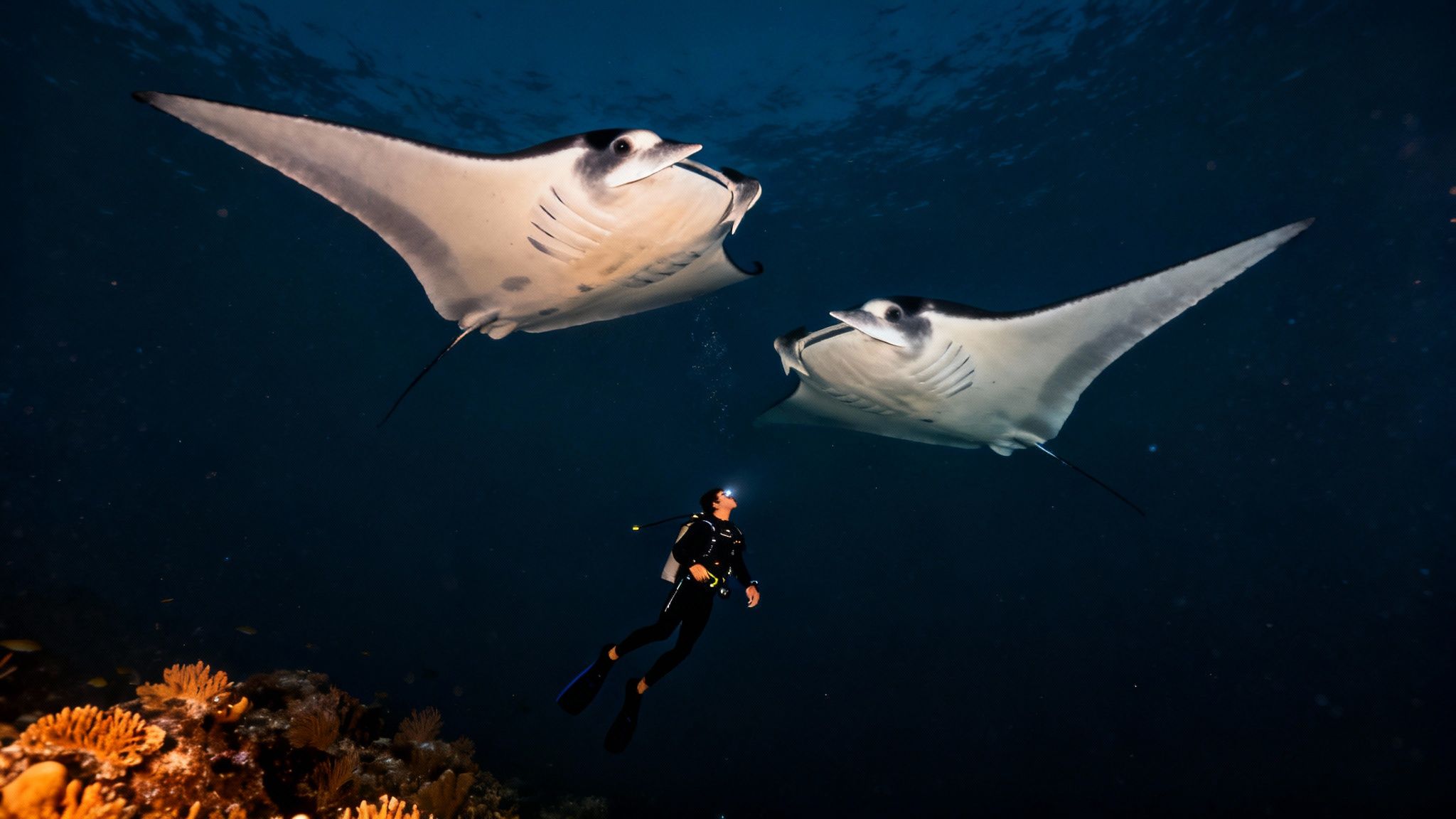
This guide is your complete walkthrough for this incredible Kona adventure. We'll dive into the unique science that makes Kona’s coastline the perfect stage for this nightly spectacle and show you how to turn a great vacation into a lifelong memory.
More than just a dive, this is a genuine connection with one of the ocean's most majestic creatures. From understanding the marine biology at play to choosing a top-tier operator like Kona Honu Divers, who puts safety and education first, you'll learn everything you need to make this the absolute highlight of your Hawaiian trip.
The Manta Ray Capital of the World
So, why has Kona become the undisputed global capital for manta ray encounters? It’s not just luck—it’s a perfect storm of geology and biology.
The Big Island's volcanic coastline creates nutrient-rich upwellings that fuel massive blooms of plankton, which happens to be the manta rays' favorite meal. This natural phenomenon turns dive sites like "Manta Village" and "Manta Heaven" into reliable, all-you-can-eat buffets for these magnificent animals.
This unique environment supports a thriving local population of over 450 identified individuals, a staggering number for an isolated island chain. The best part? The sightings are incredibly consistent, with night dives boasting an 85-90% success rate year-round. This reliability is precisely what has cemented Kona’s reputation and draws divers from all over the globe. You can learn more about what makes the Kona manta dive so special on konahonudivers.com.
Why Kona Honu Divers Stands Out
When you're dealing with a natural wonder like this, the operator you choose makes all the difference. Your experience should be safe, ethical, and truly memorable, and that's where Kona Honu Divers comes in. We’re absolutely committed to delivering a world-class dive that respects these incredible animals.
Here’s what you can expect when you dive with us:
- Expert Guidance: Our crew isn't just there to lead the dive; they're passionate experts. You’ll get in-depth educational briefings that help you understand manta ray behavior and the importance of conservation.
- Safety First: We operate under the highest safety standards. Our goal is to make sure you feel completely comfortable and secure throughout the entire two-tank adventure.
- Sustainable Practices: As dedicated ocean advocates, we strictly follow guidelines that ensure our presence never disturbs the mantas' natural feeding patterns. It’s all about observation, not interaction.
Ready to witness the magic for yourself? The 2-Tank Manta Ray Night Dive & Snorkel is our premier adventure for certified divers.
How the Manta Ray Night Dive Really Works
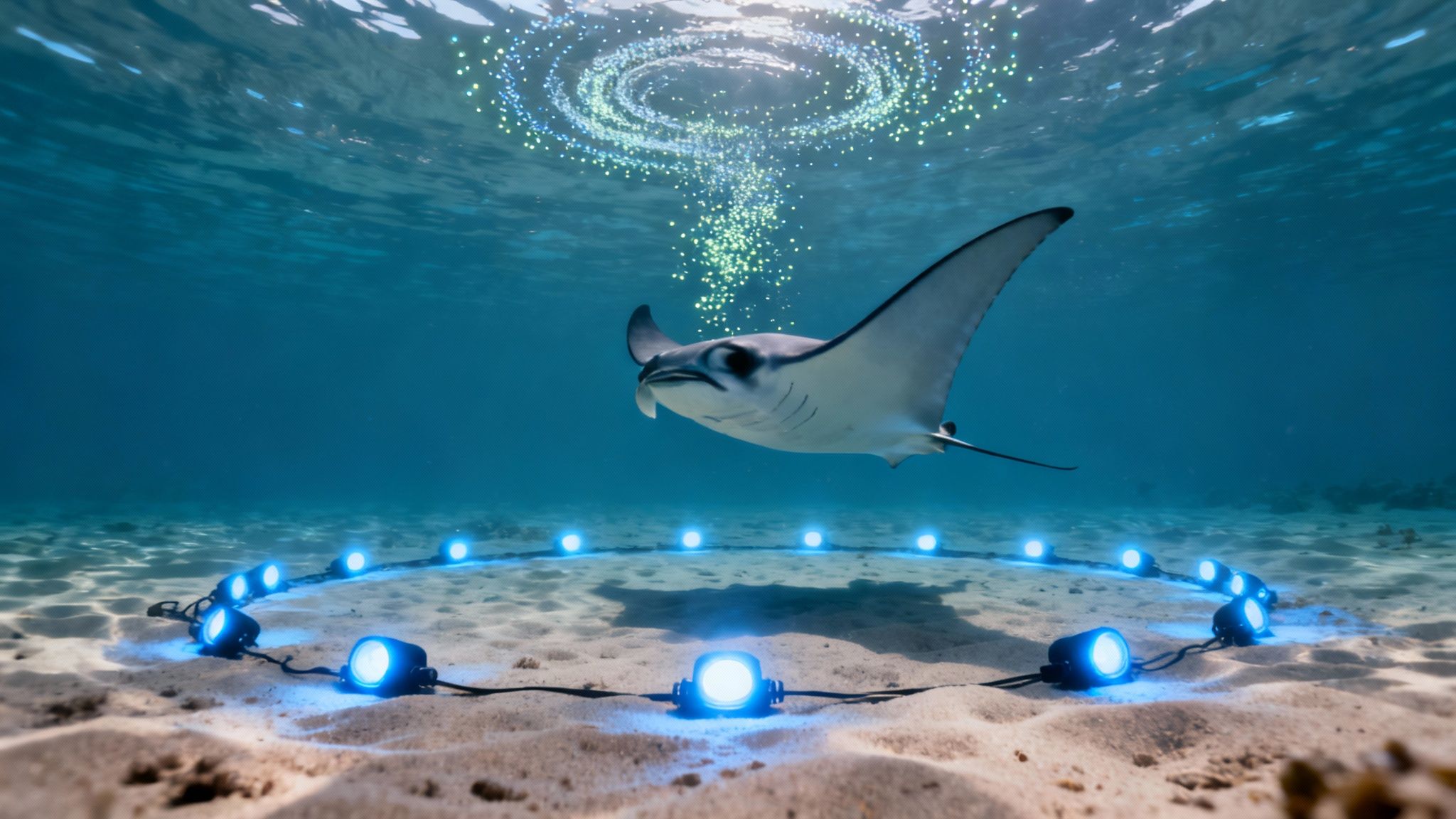
So, what’s the secret behind the legendary Big Island manta ray dive? It’s a beautifully simple idea that creates one of the most magical underwater shows on the planet. Think of it as building an "underwater campfire" that attracts Kona's gentle giants.
After sunset, our boats head out to one of the well-known manta feeding spots. Once we're anchored, we set up powerful lights. If you're diving, you'll descend to a sandy spot on the ocean floor, usually around 35 feet, and shine your light toward the surface. If you're snorkeling, you'll hang onto a specially designed flotation board that has bright lights pointing straight down into the dark water.
This collection of beams cuts through the darkness, creating a huge column of light. Almost instantly, this light attracts swarms of tiny organisms called plankton—the manta rays' favorite meal. The water quickly becomes a thick, glowing soup, a perfect buffet that sets the stage for our guests of honor.
The Underwater Ballet Begins
Once their dinner is served, the mantas begin to arrive. They’re drawn in by the irresistible cloud of plankton and glide gracefully into the light to start feeding.
What happens next is nothing short of a breathtaking underwater ballet. The mantas perform effortless barrel rolls and looping somersaults, swooping through the beams of light with their huge mouths wide open to filter out the plankton. It’s not uncommon for them to pass within inches of you, their massive wingspans casting incredible shadows.
This whole experience is built on passive observation. It's a core principle we follow strictly here at Kona Honu Divers: we watch without interfering. This allows the mantas to feed naturally in their own habitat, just as they always have.
This commitment to responsible tourism is what keeps the encounter magical for us and safe for them. To get a better sense of the logistics, you can learn more about the Kona manta ray night dive right on our site.
Manta Village vs. Manta Heaven
Here in Kona, we're lucky to have two world-famous manta ray dive sites. Each one offers a slightly different, but equally amazing, experience.
-
Manta Village (Keauhou Bay): This is the original feeding site, located just south of Kailua-Kona. It's known for being incredibly reliable, with a success rate of over 90%. You might see a few fewer mantas here on average, but its consistency makes it a fantastic and dependable choice.
-
Manta Heaven (Garden Eel Cove): Found north of Kona near the airport, this spot is famous for sometimes attracting huge groups of rays. On a good night, it’s not unusual to see a dozen or more swirling in the lights at once. It’s a truly mind-blowing spectacle.
Both sites are incredible, and the location we choose on any given evening often comes down to the ocean conditions and our schedule.
Choosing Your View: Scuba vs. Snorkel
One of the greatest things about the manta experience is that almost anyone can do it, whether you're a certified scuba diver or have never put on a fin. The only real difference is your perspective.
Scuba Diving
As a diver, you get the "bottom-up" view. You'll be settled on the sandy seafloor, looking up as these majestic creatures soar directly over your head. This angle gives you a profound sense of their sheer size and grace, making you feel completely immersed in their world.
Snorkeling
Snorkelers get a fantastic "top-down" perspective. You’ll be at the surface, holding onto a comfortable, custom-built light board, watching the mantas swim up from the dark depths to feed right beneath you. It’s an equally thrilling view and a perfect option for anyone, no certification needed.
No matter which you choose, you're guaranteed an unforgettable, front-row seat to one of nature's greatest shows.
Understanding Kona’s Gentle Giants
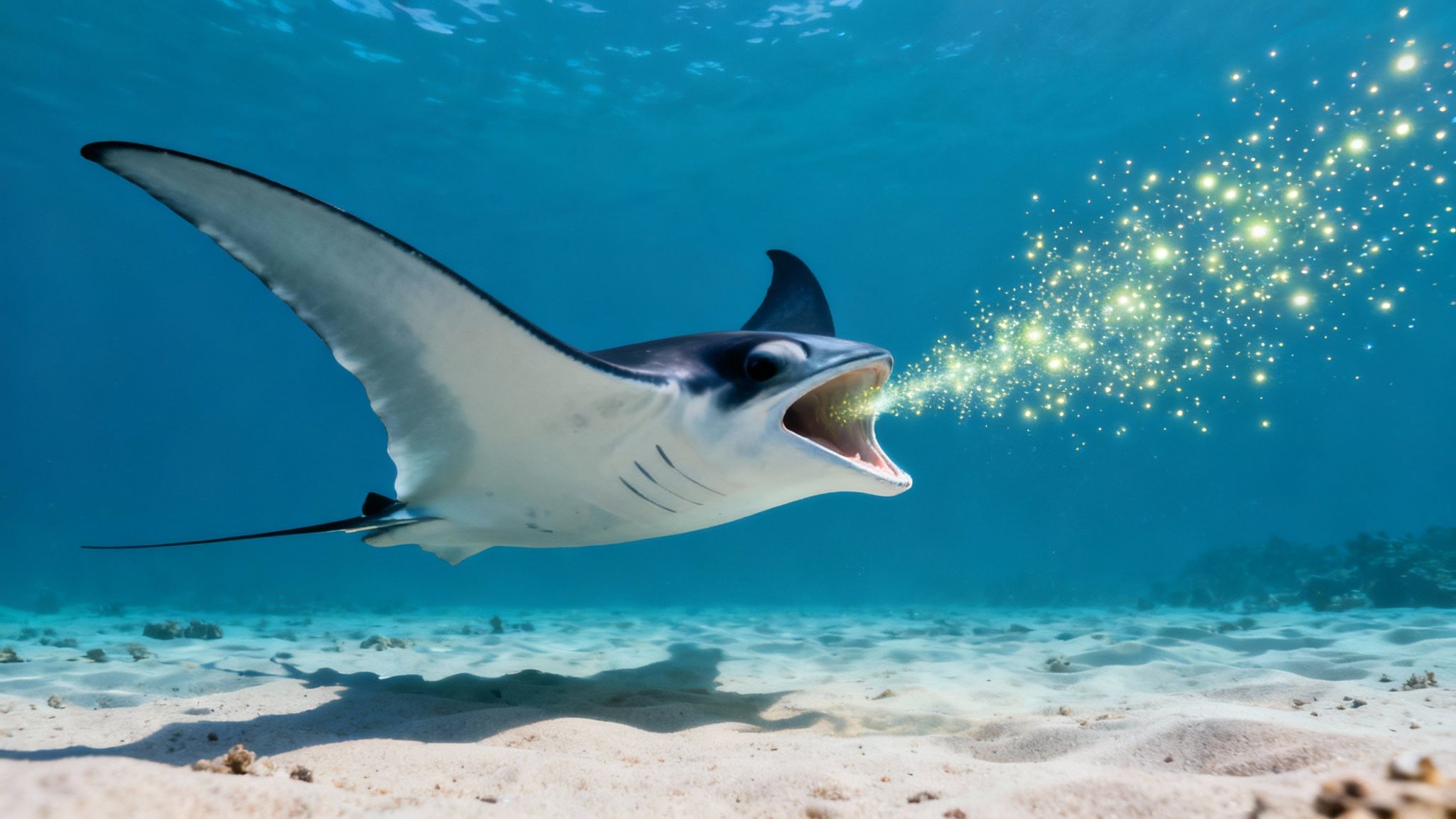
The real stars of the show on any Big Island manta ray dive are the resident reef mantas, or Mobula alfredi to the scientists. To really get the most out of this experience, it helps to know a bit about who you’re meeting down there.
First things first: forget everything you’ve seen in the movies. These are not scary sea monsters. Kona’s mantas are intelligent, curious, and completely harmless. They’re gentle giants in every sense of the word—they have no teeth, no stingers, and no barbs. They are the true ballerinas of the ocean, gliding through the water with an elegance that just doesn't seem possible for their size.
Anatomy of a Gentle Giant
The scale of these animals is the first thing that will take your breath away. A full-grown Kona manta can have a wingspan stretching over 12 feet wide. Seeing one of them soar just inches over your head is something you never forget.
Their bodies are perfectly designed to filter-feed on their favorite food: plankton. They use two special fins on either side of their head, called cephalic fins, to scoop plankton-rich water into their huge mouths. When they’re not eating, they roll these fins up tight, which gives them a horned look. It’s this look that earned them the old sailors’ nickname “devil fish,” but trust me, their personality couldn’t be further from the name.
But one of their most incredible features is hidden on their belly.
Every single manta ray has a unique pattern of black spots on its underside. This pattern is just like a human fingerprint, allowing researchers and local dive guides to identify, name, and track each individual manta over its long lifespan.
When you're on a dive, you might hear your guide get excited and call out names like "Lefty" or "Big Bertha." They’re not just making them up—they're recognizing old friends by their spots. This transforms the dive from just watching wildlife into a personal introduction to the locals.
An Isolated and Vulnerable Population
While Kona’s manta population is a world-famous ecotourism success, these animals are more fragile than most people realize. Their slow reproductive cycle and specific habitat needs make them incredibly vulnerable to environmental changes and human impact.
Recent genetic research has shown just how fragile they are. The studies revealed that Hawaii’s reef manta populations are small, isolated to their specific islands, and genetically distinct. Here on the Big Island, scientists believe there are only about 104 adult breeding individuals. That number is shockingly small.
What’s more, the females almost never leave the island they were born on, and males only migrate once in a blue moon. This isolation means very low genetic diversity, making the population less able to handle threats like disease or injuries. You can read the full research on Hawaiʻi's unique manta populations to dive deeper into these critical findings.
Knowing this adds a whole new layer of meaning to your experience. You're not just an observer; you're a witness to a delicate ecosystem and a participant in its conservation story. Choosing a responsible operator like Kona Honu Divers for your manta ray dive tour means your adventure directly supports the protection of these amazing animals for generations to come.
How to Choose the Best Manta Ray Tour
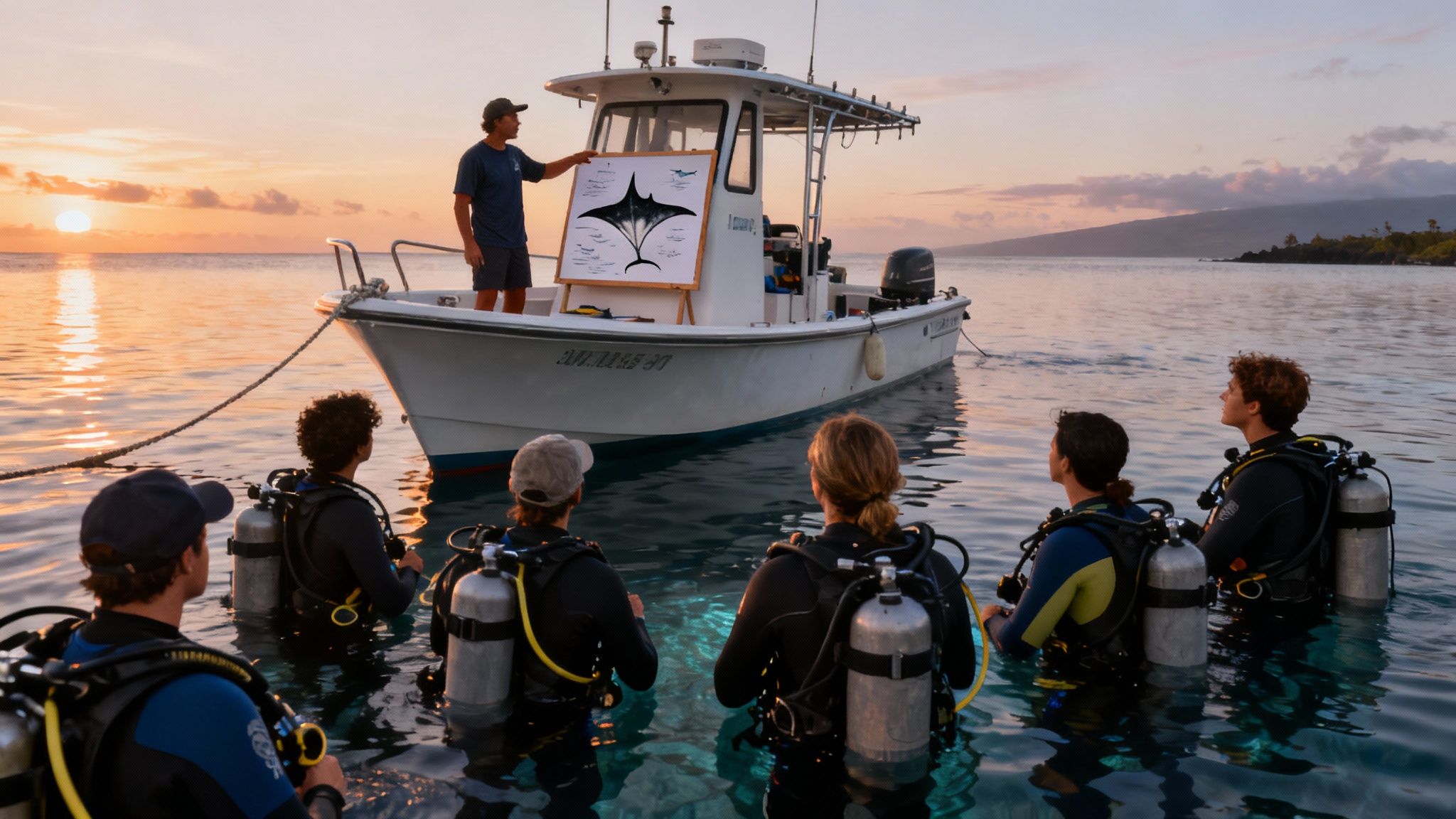
Choosing the right operator for your Big Island manta ray dive is easily the most important decision you'll make for this trip. It can mean the difference between a rushed, crowded boat trip and a truly awe-inspiring, intimate adventure with these incredible animals.
Simply put, not all tours are created equal. Knowing what to look for is the key to ensuring your experience is not just amazing, but also safe and ethical.
The best operators live and breathe three things: safety, small group sizes, and a genuine commitment to the manta rays' well-being. A top-tier company will have a flawless safety record, give you a thorough briefing so you know exactly what to expect, and use high-quality gear that’s meticulously maintained. They also keep guest numbers low for a personal, front-row seat to the action.
Most importantly, look for operators who are Manta Ray Green Listed or follow similar strict guidelines. This is your guarantee that they operate in a way that protects the mantas and their habitat, turning your adventure into a positive force for conservation.
Why Kona Honu Divers Is a Top Choice
Here at Kona Honu Divers, we don't just run a tour; we craft a world-class experience. Our whole operation is built on a deep respect for the ocean and a passion for sharing its wonders with you. We've designed everything to give you the safest, most comfortable, and most memorable manta encounter possible.
Here's a quick look at what sets us apart:
Kona Honu Divers Manta Tour Highlights
| Feature | Benefit for You |
|---|---|
| Spacious Custom Boat | Our dive boat, the Honu One, gives you plenty of room to gear up and relax. No bumping elbows here—the journey is part of the premium experience. |
| Highly Experienced Guides | Our divemasters are seasoned pros who know Kona’s waters inside and out. They provide fantastic briefings on manta biology, so you’ll understand the magic you're witnessing. |
| Commitment to Sustainability | We strictly follow passive observation rules. Our goal is to watch the mantas' natural feeding behavior without ever interfering, ensuring they'll be here for generations to come. |
Our reputation really speaks for itself, and the glowing reviews from our guests highlight our team's commitment to creating memories that last a lifetime.
Did you know that your trip makes a real difference? Each year, around 80,000 tourists come to the Kona Coast for manta ray activities. This not only boosts the local economy but also drives home the importance of conservation. You can find more manta ray tourism statistics on mantarayadvocates.com.
Making an Informed Decision
It's easy to spot the difference between a budget trip and a premium adventure when you look at the details. A cheaper tour might be tempting, but it often cuts corners on safety, comfort, and ethical practices.
When you invest in a quality tour, you’re supporting a local business that puts marine conservation first while providing a truly superior experience. To help you get ready, we've put together a detailed guide on what to expect from a manta ray dive in Kona.
Ready to see for yourself why so many people choose Kona Honu Divers for their Big Island manta ray dive? Take a look at our premier 2-tank manta ray dive tour and book an adventure you'll never forget.
Preparing for Your Manta Dive Adventure
A little bit of prep work can make all the difference between a good manta ray dive and a truly unforgettable one. Think of this as your practical game plan for the big night—we’ll walk through all the logistics so you can feel relaxed, confident, and ready for the main event.
When you know what to expect, from checking in at the harbor to the boat ride back under the stars, you can focus all your attention on the incredible underwater ballet of the mantas.
Your Pre-Dive Checklist
So, what does the evening actually look like? It’s pretty straightforward. You’ll usually meet us at the harbor in the late afternoon for a detailed briefing from your guides. Then, we head out for a beautiful twilight dive as the sun dips below the horizon. The second dive is the headliner—that’s when we turn on the lights and the mantas arrive for their nightly feast.
Here’s a quick list of what you should pack to make the trip as comfortable as possible:
- A Towel and Something Warm: Even in paradise, the boat ride home at night can get surprisingly chilly after you’ve been in the water. A dry towel and a warm hoodie or jacket are absolute essentials for the trip back to shore.
- Reef-Safe Sunscreen: You'll want some sun protection for the boat ride out, and choosing a reef-safe option helps protect our delicate coral ecosystems.
- Reusable Water Bottle: Staying hydrated is key. Bringing your own bottle is a great way to help us reduce plastic waste.
- Your Dive Certification Card: For all our scuba divers out there, don’t leave your C-card at home!
You can leave the heavy lifting to us. We provide all the essential scuba gear, including a top-notch BCD, regulator, wetsuit, mask, fins, and powerful dive lights. We also have snacks and drinks on the boat to keep your energy up. For a complete rundown, check out our guide on the gear you will need for your Kona diving adventure.
Tips for a Smooth Adventure
Nobody wants seasickness to spoil the fun. If you’re prone to motion sickness, we strongly recommend taking medication an hour or two before you get on the boat. It works much better as a preventative measure than a treatment once you’re already feeling queasy.
For certified divers, the minimum certification required for the manta dive is Open Water Diver. If it’s been a little while since your last dive, a quick refresher is a fantastic way to knock the rust off your skills and boost your confidence before the big night.
My best piece of advice? Relax and trust your guides. We’re seasoned pros, and our number one job is to keep you safe while making sure you have an incredible experience. Pay close attention during the briefing, and please, don't ever hesitate to ask questions!
And if you’re an experienced diver looking for another truly unique night dive, the Kona coast has you covered. You should check out the world-famous Kona Blackwater Dive. It's a completely different kind of adventure, where we drift in the deep, dark ocean to see the bizarre and beautiful creatures that migrate toward the surface after sunset.
With these simple preparations out of the way, you'll be ready to dive in and fully immerse yourself in one of the most magical wildlife encounters on Earth.
Answering Your Top Manta Ray Dive Questions
If you're thinking about booking a Big Island manta ray dive, you probably have a few questions running through your mind. We get it. To make sure you feel confident and ready for the adventure, we’ve put together answers to the questions we hear most often.
Is the Manta Ray Dive Safe?
Absolutely. Manta rays are incredibly gentle creatures—true gentle giants of the ocean. They don’t have teeth, stingers, or barbs, so they pose no threat to people.
The real safety factor comes down to the dive operation you choose. At Kona Honu Divers, our experienced guides give a thorough briefing before you ever hit the water. The whole encounter is designed for passive observation, which keeps both you and the mantas safe and comfortable.
What’s the Best Time of Year to See Manta Rays in Kona?
This is one of the best parts about diving in Kona: you can see manta rays all year long! Their main food source, plankton, is always present in our waters, so there isn’t a specific “manta season.”
Sighting success rates stay consistently high, usually hovering between 85-90%, no matter which month you visit. This gives you total flexibility when planning your trip.
Can I Touch the Manta Rays?
This is a firm no. Touching the mantas is strictly forbidden on any responsible tour, and for a very good reason. The natural oils on our skin can strip away the protective mucous coating on their bodies, leaving them vulnerable to dangerous infections.
The golden rule of any sustainable wildlife encounter is to observe, not interfere. This hands-off policy is critical for protecting the long-term health and well-being of Kona's manta ray population.
What if I’m Not a Certified Diver?
No problem at all—you don't have to miss out on the magic! We have a fantastic snorkeling option on our manta ray tours.
You'll float on the surface, holding onto a specially designed light board. The lights attract the plankton, and the mantas swim right up to feed, giving you an incredible bird's-eye view of the underwater ballet. It's the perfect way for everyone in your group to experience this amazing night.
It’s Time for Your Own Manta Encounter
We've covered a lot of ground—from the biology of these gentle giants to the logistics of the dive itself. But reading about it is one thing. Experiencing the Big Island manta ray dive firsthand is something else entirely. It’s an encounter that stays with you, a memory that will sparkle long after you've dried off.
When you dive with a committed, passionate crew like ours at Kona Honu Divers, you’re doing more than just booking a tour. You're becoming part of a bigger story—one that supports the protection of Kona's incredible marine life and ensures these mantas continue to thrive for generations to come.
You know how the dive works, what to bring, and what to expect. The only thing left to do is jump in and see the underwater ballet for yourself. This is one of those can't-miss, life-list adventures.
The mantas are waiting. Come join us and create a story you’ll be sharing for the rest of your life. You can book your spot on the top-rated Kona Honu Divers manta ray dive tour here.