
Picture this: you’re slowly descending into warm, impossibly clear blue water. Sunlight streams down from the surface, lighting up ancient lava tubes and reefs bursting with color. That’s the magic of Big Island Hawaii scuba diving, an experience that rightfully earns its place among the best in the world. The island’s one-of-a-kind geology and naturally protected coastline have created a true underwater paradise.
Why The Big Island Is A Premier Scuba Diving Destination
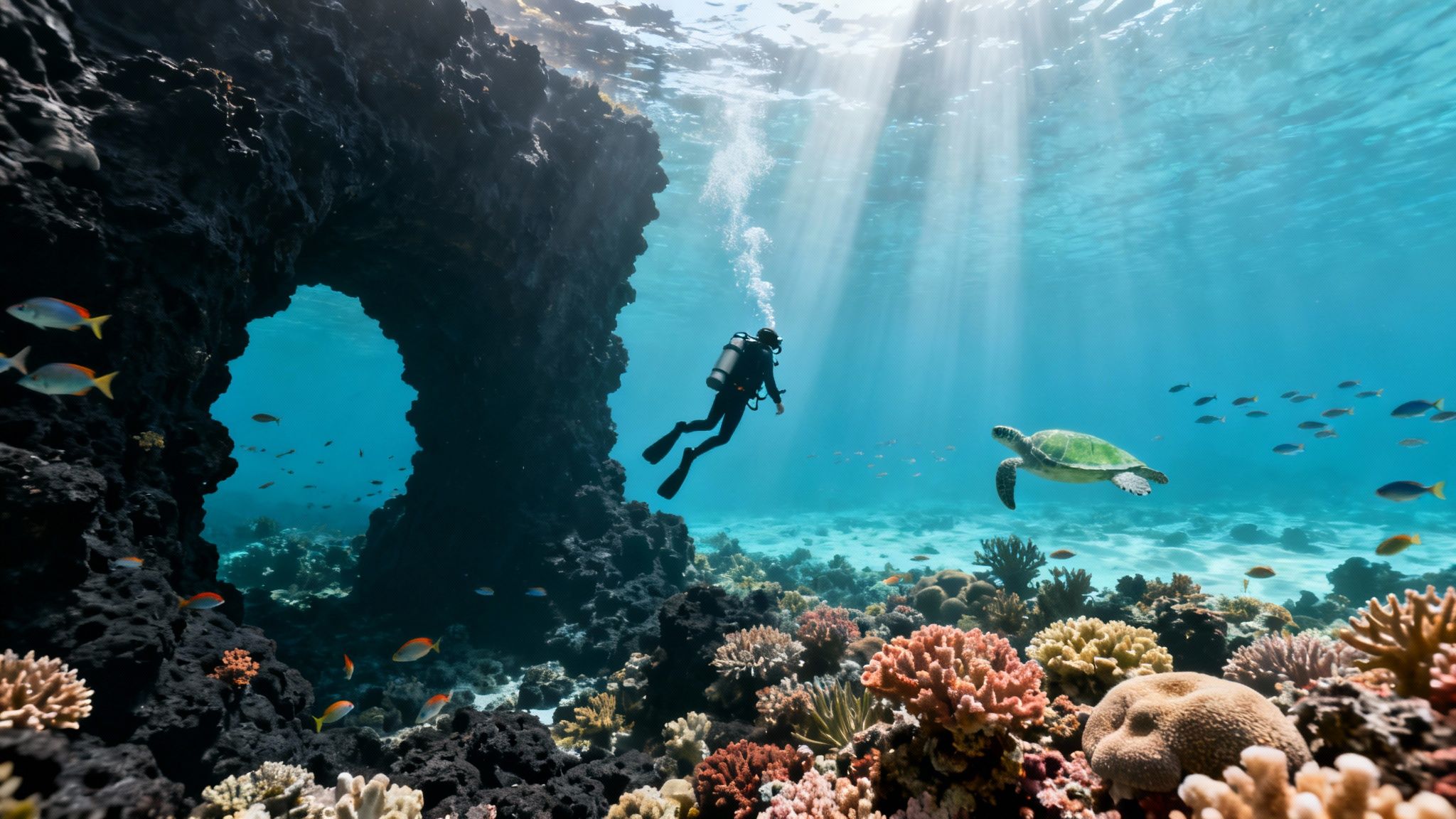
So, what exactly puts the Big Island—and the Kona coast in particular—on the global scuba map? It all comes down to its volcanic heart and its perfect spot in the ocean. The colossal volcanoes, Mauna Loa and Hualalai, act as a natural shield for the western coast, blocking the powerful trade winds.
The result? Exceptionally calm, clear waters almost every day of the year. This sheltered environment is a haven for marine life and creates incredible, predictable conditions for divers, from beginners making their first splash to seasoned pros.
That same volcanic activity has also carved out a breathtaking underwater world. Forget about endless sandy flats; Kona’s coastline is a dramatic landscape of incredible lava formations. On any given dive, you can explore a maze of:
- Lava Tubes and Caves: Imagine swimming through ancient tunnels where molten rock once carved its path through the earth.
- Arches and Pinnacles: These stunning structures rise from the deep, creating complex, multi-level habitats for marine life to thrive.
- Pristine Coral Reefs: Built upon a solid foundation of ancient lava flows, these reefs are teeming with vibrant corals and an explosion of life.
An Unmatched Diversity of Marine Life
This unique topography creates the perfect home for a staggering variety of sea creatures. The Big Island is a true biodiversity hotspot, with its reefs supporting over 1,100 marine species—that’s more fish diversity than any other Hawaiian island. It’s this rich ecosystem that draws certified divers from every corner of the globe.
From majestic green sea turtles gliding effortlessly past your shoulder to elusive octopuses camouflaged in plain sight, every single dive reveals something new.
It’s this powerful combination—calm conditions, fascinating geology, and an abundance of wildlife—that cements the Big Island's reputation as a world-class diving destination. To get a better sense of what makes this island so unique, see our full guide on why the Big Island is so good for scuba diving.
But the adventure doesn't stop when the sun goes down. The island is famous for its nighttime dives, including the legendary manta ray night dive and the surreal Kona blackwater dive—experiences you truly can't have anywhere else on Earth.
To give you a quick overview, here's a snapshot of what makes diving here so special.
Big Island Scuba Diving Highlights At A Glance
| Feature | Why It's Exceptional | Best For |
|---|---|---|
| Volcanic Topography | Underwater lava tubes, arches, and caves create a unique and dramatic landscape unlike anywhere else. | Exploration, underwater photography, and adventure divers. |
| Exceptional Visibility | Calm, clear waters often provide 100+ feet of visibility, protected by the island's massive volcanoes. | All divers, especially those who love photography and spotting distant marine life. |
| Rich Biodiversity | Home to over 1,100 marine species, including a high percentage of endemic fish found only in Hawaii. | Wildlife enthusiasts, naturalists, and anyone who loves vibrant, active reefs. |
| Iconic Night Dives | World-famous for the Manta Ray Night Dive and the unique Blackwater Dive, offering surreal encounters. | Advanced divers, thrill-seekers, and those looking for a once-in-a-lifetime experience. |
| Year-Round Diving | Consistent water temperatures and calm conditions mean there is no "off-season" for diving on the Kona coast. | Divers of all levels looking for a reliable and accessible destination anytime. |
This table just scratches the surface of what's waiting for you beneath the waves.
Whether you're strapping on a tank for the first time or you're a veteran with hundreds of dives in your logbook, the Kona coast has an unforgettable underwater adventure waiting for you.
Mastering Kona’s Legendary Night Dives
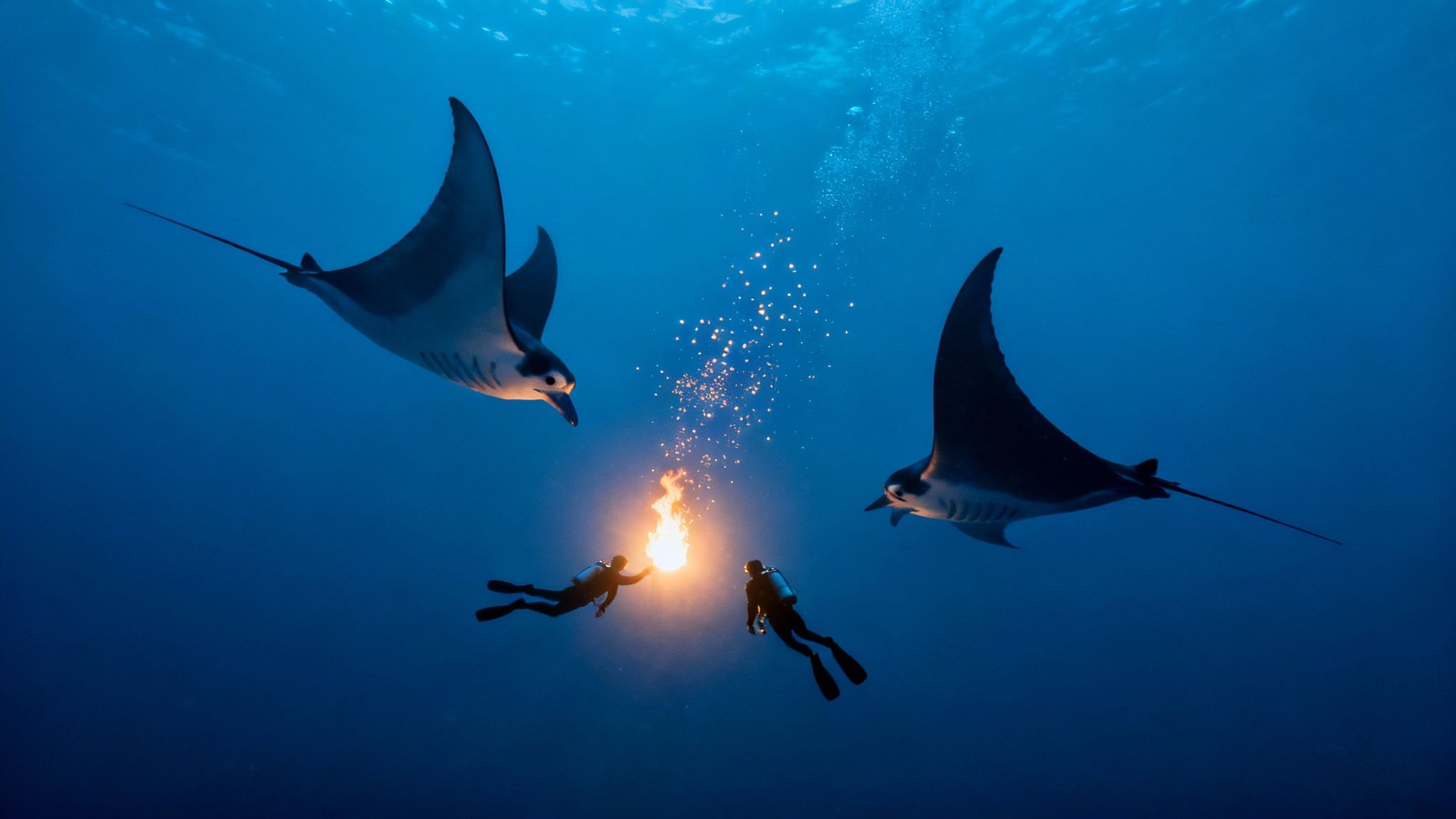
When the sun dips below the horizon in Kona, the real show begins. For those exploring Big Island Hawaii scuba, the Kona coast offers two of the most unforgettable night dives you'll find anywhere on Earth. These aren't just dives; they're front-row seats to nature's most spectacular underwater performances.
First up is the world-famous manta ray night dive, an experience that feels like a meticulously choreographed underwater ballet. The setup is simple but ingenious: powerful lights are placed on the ocean floor, creating a “campfire” that attracts massive clouds of plankton. This all-you-can-eat buffet, in turn, draws in the stars of the show—dozens of majestic manta rays.
As a diver, you settle on the sandy bottom, aiming your light upward. Then, you just watch as these gentle giants, some with wingspans over 12 feet, glide, swoop, and somersault right over your head. It's a surreal, humbling, and absolutely breathtaking encounter.
The Superior Choice: Garden Eel Cove
While there are a couple of spots for this dive, Garden Eel Cove (often called Manta Heaven) is hands-down the best place to be. Its unique geography gives it a serious edge for a better all-around experience.
- Protected Location: Tucked inside a cove, the site is shielded from the big ocean swells, which means calmer, more predictable, and more comfortable dives.
- Better Viewing Area: The sandy bottom at Garden Eel Cove creates a perfect natural amphitheater for divers. You have plenty of room to get comfortable without bumping into any fragile coral.
- Healthier Reefs: The coral gardens surrounding the site are vibrant and full of life, making your descent and ascent just as beautiful as the main event.
Put it all together, and you get a more reliable and visually stunning manta encounter. Kona's manta dives are the crown jewel of Big Island scuba for a reason, with sighting success rates often pushing 100%. To give you an idea, a 2013 study at a nearby site logged an average of 11 mantas per night—a number that blows other locations out of the water.
The Kona Blackwater Dive: A Journey Into The Abyss
Ready for something completely different? For the truly adventurous diver who wants an experience that feels like it’s straight out of a sci-fi movie, the Kona blackwater dive is a must. Forget the reef. On this dive, you’re floating in the deep, inky blackness of the open ocean, thousands of feet above the seafloor.
This dive is your ticket to witnessing the largest animal migration on Earth. Every single night, countless bizarre and often bioluminescent creatures journey from the deep to feed near the surface, only to disappear back into the abyss before sunrise.
Tethered to the boat by a downline lit with powerful lights, you become a human observation post in the middle of this massive vertical migration. The things you see are a testament to nature's wild imagination—weird larval fish, glowing jellyfish, and tiny squids that sparkle in the dark. It’s a surreal and deeply humbling experience. Find out more about the unique critters on Kona's black water dives.
If you're ready to see a world few ever will, the Kona blackwater dive tour is a safe, professionally guided trip into the void. This is the kind of dive that changes how you see the ocean forever.
Exploring The Top Dive Sites Along The Kona Coast
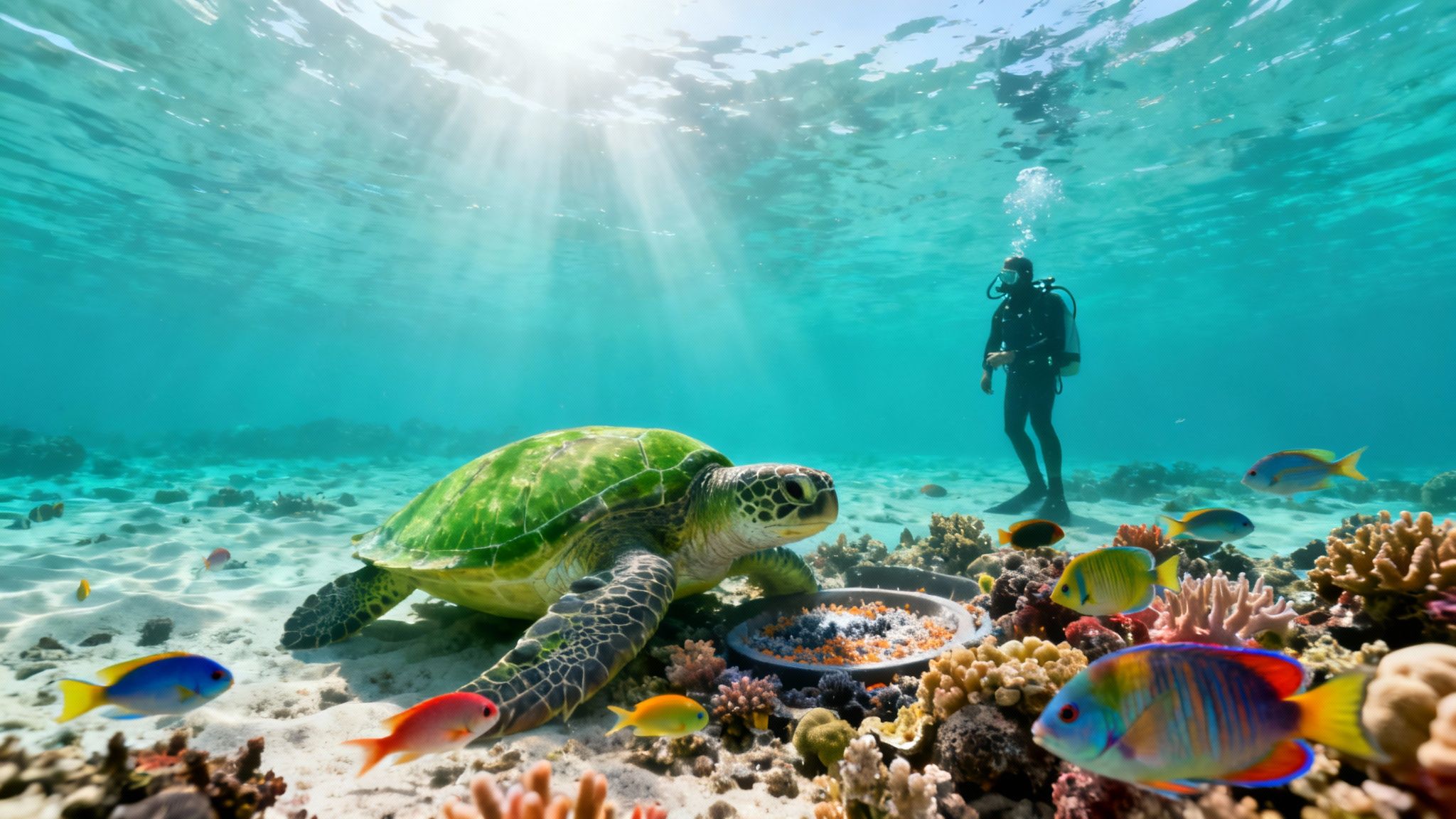
The Kona coast is like an underwater treasure map. Each dive site is its own unique destination, marked by incredible lava formations, brilliant coral reefs, and bustling marine life. When you go for a Big Island Hawaii scuba adventure, you're not just getting wet—you're exploring a submerged world sculpted by volcanoes.
This unique geology creates a playground that has something for everyone, whether you're taking your first breaths underwater or have logged hundreds of dives.
Ideal Dive Sites For Beginners
For new divers or those who just want to kick back and enjoy a relaxed swim, Kona is full of beautiful, calm sites. These spots are usually tucked away from the big ocean swells, which means the water is clearer and the conditions are gentle. It’s the perfect environment to build confidence while being surrounded by an absolute explosion of life.
One of our all-time favorite spots for new divers is Pawai Bay. Think of it as the perfect introduction to what Kona diving is all about. It’s famous for its "turtle cleaning stations," where you can watch Hawaiian green sea turtles (Honu) hang out patiently as tiny reef fish give them a full-service spa day, nibbling algae off their shells.
But the turtles are just the beginning. Pawai Bay also has:
- Cool Lava Formations: You’ll find easy-to-navigate arches and swim-throughs that give you a taste of adventure without being overwhelming.
- Clouds of Colorful Fish: Get ready to be surrounded by schools of bright yellow tangs, butterflyfish, and parrotfish.
- Vibrant Coral Gardens: The reef itself is a living city, providing homes for moray eels, octopuses, and countless other critters.
Another fantastic spot is Kailua Bay. It’s shallow and well-protected, making it the ideal place for a quick refresher dive or a simple, stunning tour of the reef. These sites are proof that you don't have to go deep to see the best of Kona.
Advanced Dives For The Experienced Diver
If you’ve got more experience under your weight belt, the Kona coast reveals its wilder side. These advanced sites are where the island’s volcanic power is on full display, offering more dramatic topography, a bit more of a challenge, and unforgettable encounters.
A perfect example is Au Au Crater, a partially collapsed lava dome that looks like a massive underwater amphitheater. The sheer scale of the place is just awe-inspiring, with towering walls and deep crevices that make you feel like a tiny explorer in a giant’s world. The currents here can be a little stronger, so solid buoyancy control and awareness are key.
Taking on these more challenging dives gives you a backstage pass to a wilder, more untouched version of Kona. You'll explore deeper lava tubes, navigate around complex pinnacles, and meet marine life that hangs out in the deeper, cooler water.
This is where you're more likely to see bigger pelagic species, like majestic eagle rays or even the occasional shark cruising by in the deep blue. Exploring these sites takes more skill, but the reward is an adventure you’ll be talking about for years. That’s why we offer specialized advanced dive tours to guide experienced divers through these incredible environments safely.
Why Every Kona Dive Is Different
Here’s the thing about Kona: no two dives are ever the same. The volcanic rock has created an endless variety of structures, from huge caverns to delicate, finger-like lava flows. This means you can dive the same site multiple times and have a completely different experience just by changing your depth or your route.
One minute you might be pointing out a tiny, colorful nudibranch on a coral head, and the next you could be looking up to see a pod of spinner dolphins cruising past.
Here at Kona Honu Divers, we’ve spent decades getting to know these waters like the back of our hand. Our guides know every secret spot, every hidden arch, and every turtle’s favorite napping spot. We always tailor our diving tours to the day’s conditions and the group’s experience level to make sure every single dive is safe, exciting, and full of new discoveries.
Whether you’re in the mood for a peaceful drift over a sunny reef or an adrenaline-pumping swim through a lava tube, the Kona coast has the perfect dive waiting for you.
How To Choose The Right Dive Operator In Kona
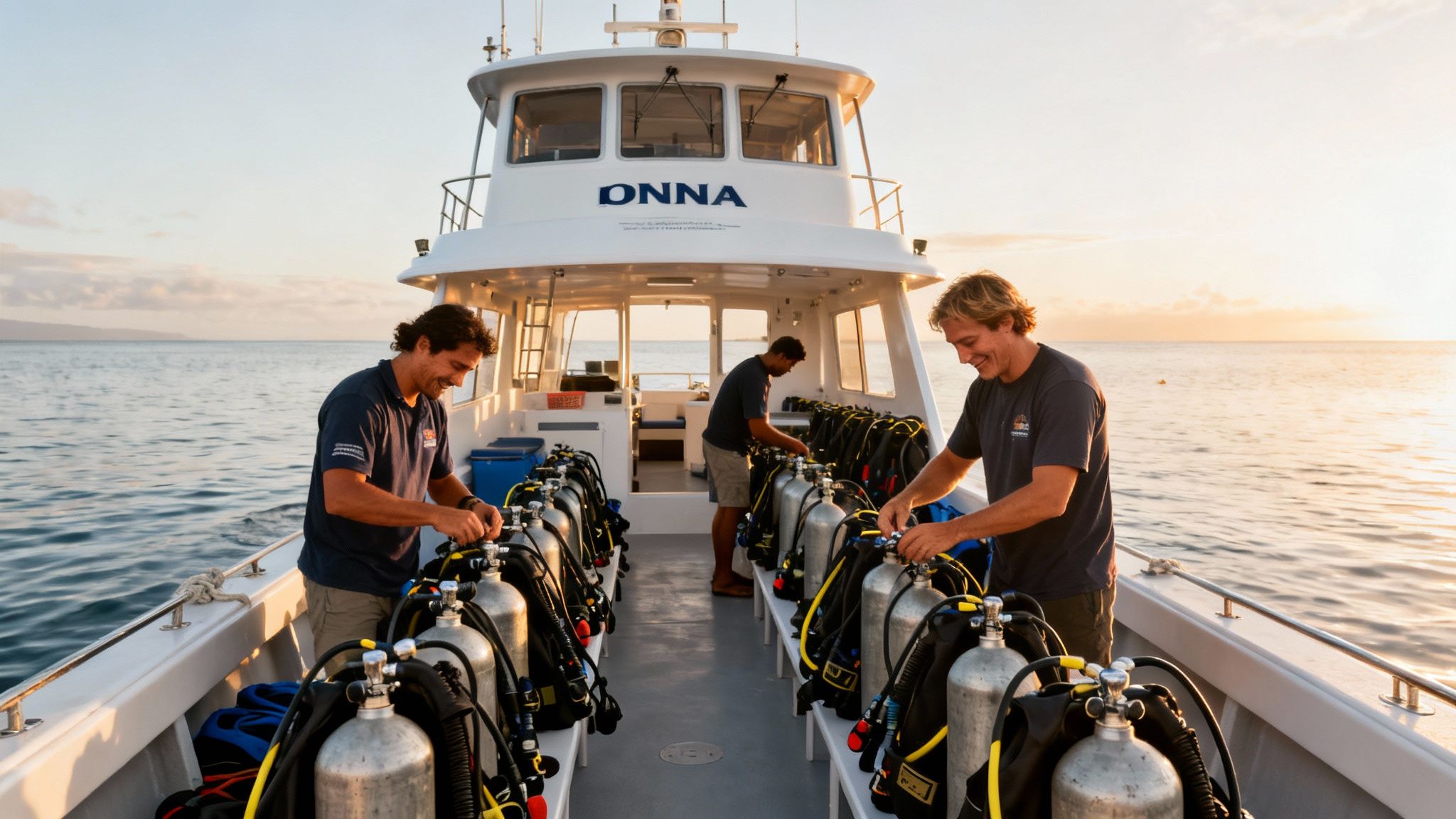
Picking the right company for your Big Island Hawaii scuba adventure is a huge decision. It can genuinely make or break your entire trip, turning it into either a lifelong memory or a frustrating experience you'd rather forget. The goal isn't just to find a boat to get you from point A to point B; it’s about finding a crew that puts your safety and experience above all else.
A truly great dive operation stands on three pillars: an unshakable safety record, top-notch boats and gear, and a crew with real-world, seasoned experience. These aren't just bullet points on a website—they are the bedrock of every safe, fun, and awe-inspiring dive.
The Pillars Of A Premier Dive Operation
Think of it this way: the beautiful reef is your destination, but the dive operator is the vehicle you take to get there. You could cram into a clunky, unreliable rust-bucket and maybe get there eventually, but the journey would be miserable. Or, you could travel with a seasoned driver in a comfortable, well-maintained ride that makes the entire trip smooth and stress-free. In scuba diving, that difference is everything.
Here’s what really matters when you're looking:
- Safety Is Never Optional: A premier operator lives and breathes safety. This means detailed pre-dive briefings, crystal-clear emergency plans, and a crew that can handle any situation with calm professionalism. Their equipment is immaculate, and safety is woven into every single thing they do.
- Quality Boats and Gear: Your comfort on the surface is just as important as your safety underwater. Look for operators with spacious, stable boats where you aren't tripping over other divers. Their rental gear should be meticulously serviced, because the last thing you want to think about at 100 feet is whether your regulator works.
- An Experienced and Passionate Crew: The best dive guides are more than just underwater tour leaders. They're naturalists, educators, and safety wardens all in one. A truly experienced crew knows the dive sites like the back of their hand—every hidden lava tube and every potential current—and can perfectly match the dive to the group's ability and the day's conditions.
Why Kona Honu Divers Is The Gold Standard
At Kona Honu Divers, we didn't just meet these standards; we built our entire company on them. Our team brings a staggering 200 years of combined professional diving experience to the water every single day. That deep well of knowledge means you’re not just in good hands—you're diving with some of the most dedicated experts on the island.
Our philosophy is simple: we provide the kind of exceptional, safe, and comfortable experience we would demand for our own families. It’s a promise you can see in every detail.
We know a great day of diving starts long before you hit the water, which is why we invested in boats designed for divers. You’ll find spacious decks with plenty of room to gear up, shady spots to relax between dives, and the one thing every diver dreams of: a hot freshwater shower waiting for you on board.
We are also obsessed with our equipment. All our rental gear is proactively maintained to ensure it’s 100% reliable when you need it most. Plus, we offer complimentary nitrox for all certified divers, which can extend your bottom time and add another layer of conservatism to your dive profile. It can be tough to sort through all the options, so we put together a guide to help you compare the top 10 Kona diving companies and see for yourself.
In the end, our reputation has been built one dive at a time by thousands of divers just like you. We invite you to see what they have to say.
Choosing an operator with a rock-solid commitment to safety and quality isn't just a detail—it's the first and most important step toward the underwater adventure of a lifetime.
Understanding Dive Safety On The Big Island
Safety isn’t just a talking point; it’s the bedrock of every incredible dive you'll ever have. It’s completely normal to have questions about safety when planning a Big Island Hawaii scuba trip, but I can tell you from experience: Kona offers one of the most predictable and secure diving environments you’ll find anywhere on the planet.
So, what makes it so safe? The island’s geography does a lot of the heavy lifting for us. The massive volcanoes of Mauna Loa and Hualalai act as a natural shield for the entire Kona coast, blocking the prevailing trade winds and creating exceptionally calm, protected waters. This means we rarely have to contend with the strong currents and big swells that can complicate dives elsewhere.
What you get instead are consistently fantastic conditions. We're talking about incredible visibility, often clearing 100 feet, and warm, comfortable water temperatures all year long. While you might hear about Hawaii's high drowning statistics for swimmers in open waters, the world of guided scuba diving on the Kona coast is a different story with a stellar safety profile. It’s a controlled, supervised environment where the risks are well-managed. You can learn more about Hawaii's ocean safety statistics and see just how scuba stands apart as a secure activity.
How Professional Operators Prioritize Your Well-Being
The calm ocean is one half of the safety equation. The other half is the crew you’re diving with. A truly professional outfit like Kona Honu Divers builds its entire operation around your safety, and you'll see it in everything they do.
It starts before you even hit the water with a thorough safety briefing. Your dive guide will walk everyone through the dive plan, make sure you're all on the same page with hand signals, and cover any procedures specific to that day’s site. These guides know the underwater terrain like the back of their hand—every lava tube, every subtle shift in the current, and where the coolest critters hang out—so you know you're always in good hands.
Of course, the gear has to be top-notch. A professional operator meticulously maintains every piece of rental equipment, from the regulators you breathe from to the BCDs that control your buoyancy. You should never have to wonder if your gear is going to work. The boat itself is a key piece of safety equipment, too, always stocked with emergency oxygen, first aid supplies, and solid communication systems.
Practical Safety Tips For Every Diver
Your guides are there to lead the way, but every diver has a role to play in their own safety. A little personal responsibility goes a long way in making sure every dive is a good one.
Here are a few simple things to keep in mind:
- Dive Within Your Limits: Be honest with yourself and your guide about your certification level and recent experience. There’s no shame in sitting out a dive that’s beyond your comfort zone. The ocean will be there tomorrow.
- Stay Hydrated: That beautiful Hawaiian sun is no joke. Drink plenty of water before and after your dives. Dehydration is a real issue and can increase your risk of decompression sickness.
- Listen to the Briefings: This is non-negotiable. Pay close attention. This is where you get the most critical, up-to-date information about the dive site, the day's conditions, and the specific safety plan.
By teaming up with a reputable guide and diving smart, you can be sure your Big Island adventure will be remembered for all the right reasons: thrilling sights, incredible marine life, and total peace of mind.
Planning Your Ultimate Big Island Scuba Trip
Alright, let's get down to the fun part: making this dream dive trip happen. Planning your Big Island Hawaii scuba adventure is almost as thrilling as the dives themselves, and a little bit of prep goes a long way. With some smart planning, you can easily create a seamless vacation that blends incredible diving with everything else the island has to offer.
The Kona coast is a diver's paradise year-round, thanks to its famously calm and clear waters. That said, there are a few seasonal perks to keep in mind. If you visit in the winter (December to March), you'll be treated to the sound of humpback whales serenading you on your dives. Summer, on the other hand, brings the warmest water, often hitting a balmy 80°F (27°C).
Booking And Packing Essentials
Some experiences here are true bucket-list dives, and the world knows it. The manta ray night dive, in particular, is legendary. It gets booked up weeks, sometimes even months, in advance, especially during holidays. My advice? Book that charter the moment you book your flight. You don't want to miss it.
Of course, your trip isn't just about diving. Finding the right place to crash after a long day in the water is just as important. For a more comfortable and private stay, you might want to look into luxury vacation rentals to find a spot that feels like home.
When you're packing your bags, a few extra items can make a huge difference. Here's what I never travel without:
- Reef-Safe Sunscreen: This is a big deal in Hawaii. The law requires mineral-based sunscreens (think zinc oxide or titanium dioxide) to protect our fragile coral. Leave the chemical stuff at home.
- A Warm Layer: Trust me on this one. Even after a dive in warm water, the boat ride back can get surprisingly chilly, especially after a night dive. A simple windbreaker or hoodie is a lifesaver.
- Reusable Water Bottle: Hydration is key to safe diving. Do your part to cut down on plastic and bring a bottle you can refill.
- Dry Bag: A small dry bag is essential for keeping your phone, wallet, and towel bone-dry while you're out on the water.
Structuring Your Perfect Dive Vacation
The best way to experience the Big Island is to mix it up. Don't just dive, dive, dive. The island is massive and has so much to see, from active volcanoes and deep green rainforests to world-class beaches. I always recommend alternating your dive days with land-based adventures.
A great rhythm is to schedule your dives for the morning, which leaves your afternoons wide open for exploring.
One critical safety tip: always plan for your surface interval. You can't fly or head up to high altitudes like the summit of Mauna Kea right after diving. A good rule of thumb is to make your last full day on the island a no-dive day.
This balanced approach ensures you get to experience the magic both above and below the waves without ever feeling rushed. When you're ready to lock in your dates and get on the boat, we're ready for you.
Frequently Asked Questions About Kona Scuba Diving
Planning a dive trip to the Big Island always brings up a few questions. We get it. You want to make sure you're ready for the adventure of a lifetime. Here are some of the most common questions we hear from divers getting ready to explore Kona's underwater world, along with our straightforward answers.
What Certification Level Do I Need to Dive In Kona?
Kona has something incredible to offer divers of every stripe. If you've never even tried scuba, you can hop on a Discover Scuba Dive. It's the perfect way to experience a calm, shallow reef and see if diving is for you.
For those already certified, the sky's the limit. Your Open Water card will get you into most of our amazing sites. But if you're an advanced diver, you’ll be able to explore some of the deeper lava tubes and more intricate underwater formations. We run a full range of scuba diving tours designed for specific experience levels.
Is The Manta Ray Night Dive Safe For Beginners?
Absolutely. The world-famous manta ray night dive is one of the safest and most controlled dives you can do, which is why it’s perfect for new divers.
It's a guided, stationary experience where you hold onto a light source on the bottom in a shallow, protected bay. Our professional divemasters give a detailed briefing beforehand and are right there in the water with you, making sure you're safe and comfortable while you watch the show.
Can My Non-Diving Family Members Join The Boat Trips?
You bet! We love when the whole family comes out. Our charters are designed to be fun for everyone, not just the divers.
The manta ray trip is a huge hit with snorkelers, who get an incredible bird's-eye view of the mantas from the surface. It’s the perfect way for mixed groups of divers and non-divers to share an unforgettable evening.
What Is The Water Temperature and What Wetsuit Will I Need?
You're in for a treat—the water here is beautiful year-round, typically hovering between a comfortable 75-80°F (24-27°C).
To stay perfectly warm for the whole dive, we recommend a 3mm or 5mm full wetsuit. If you don't have your own, no worries. We have a fleet of high-quality rental wetsuits ready to go, so you can just focus on the amazing dive ahead.