
You’re probably in the same spot most divers are when they start planning a Hawaii trip. You want warm water, clear visibility, a real chance at memorable wildlife, and a destination that works whether you’re newly certified or already hunting for something more technical. You also don’t want to waste dive days figuring out which marketing claims are real and which ones are just brochure copy.
That’s where big island hawaii scuba stands apart.
The Big Island gives divers an unusual combination of scale and consistency. The island hosts over 1,000 documented dive sites and supports approximately 1,100 fish species, with 129 found only in the Hawaiian Island chain, according to this Big Island diving overview. More important than the raw numbers is what they mean in the water. You’re not choosing between one famous dive and a lot of filler. You’re choosing among lava tubes, arches, pinnacles, reef systems, caves, and pelagic experiences that feel completely different from one another.
Some travelers start by comparing operators and site lists, which makes sense. If you want a useful overview of Kona's best dive sites, that guide is a good starting point. But site lists alone don’t tell you why Kona works so well, or why some dives are dependable enough to book around while others need more flexibility.
That’s the part that matters. The Big Island rewards divers who understand the conditions, the logistics, and the kind of trip they want. If you’re looking for a broad launch point, Kona dive planning starts here. From there, key decisions are about matching your skill level and interests to the right kind of water time.
Your Ultimate Big Island Scuba Adventure Starts Here
A lot of Hawaii dive planning starts with the wrong question. People ask, “What site should I book?” before they ask, “What kind of diving do I want this trip to be?”
On the Big Island, that distinction matters. One diver wants easy entries, long reef drifts, and a first look at Hawaiian endemic fish. Another wants a manta night dive. Another wants deeper structure, remote topography, and a charter that isn’t built around beginners. The island can support all of those goals, but the plan should fit the diver.
What makes this place special isn’t just the postcard version of tropical diving. It’s the way volcanic geology shapes the entire experience underwater. You’re not descending onto generic reef. You’re moving through formations built by lava flow, with tubes, archways, caverns, and abrupt changes in structure that keep each dive visually distinct.
What divers usually notice first
Beginners usually notice how accessible the diving feels. The water is warm, the marine life is active year-round, and many Kona dives feel inviting rather than intimidating.
Experienced divers notice something else. They notice how much variety the island packs into a single destination, and how easy it is to build a trip that combines classic reef diving with signature night dives and more advanced profiles.
Big Island diving works best when you stop treating it like a one-dive destination and start treating it like a full dive week.
That’s why people come back. You can spend one day in coral gardens, another exploring lava architecture, and another in a night environment that feels unlike anywhere else in recreational diving.
Why the Kona Coast Offers World-Class Diving Conditions
The reason Kona has such a strong reputation is simple. The coast is set up by geography to dive well.
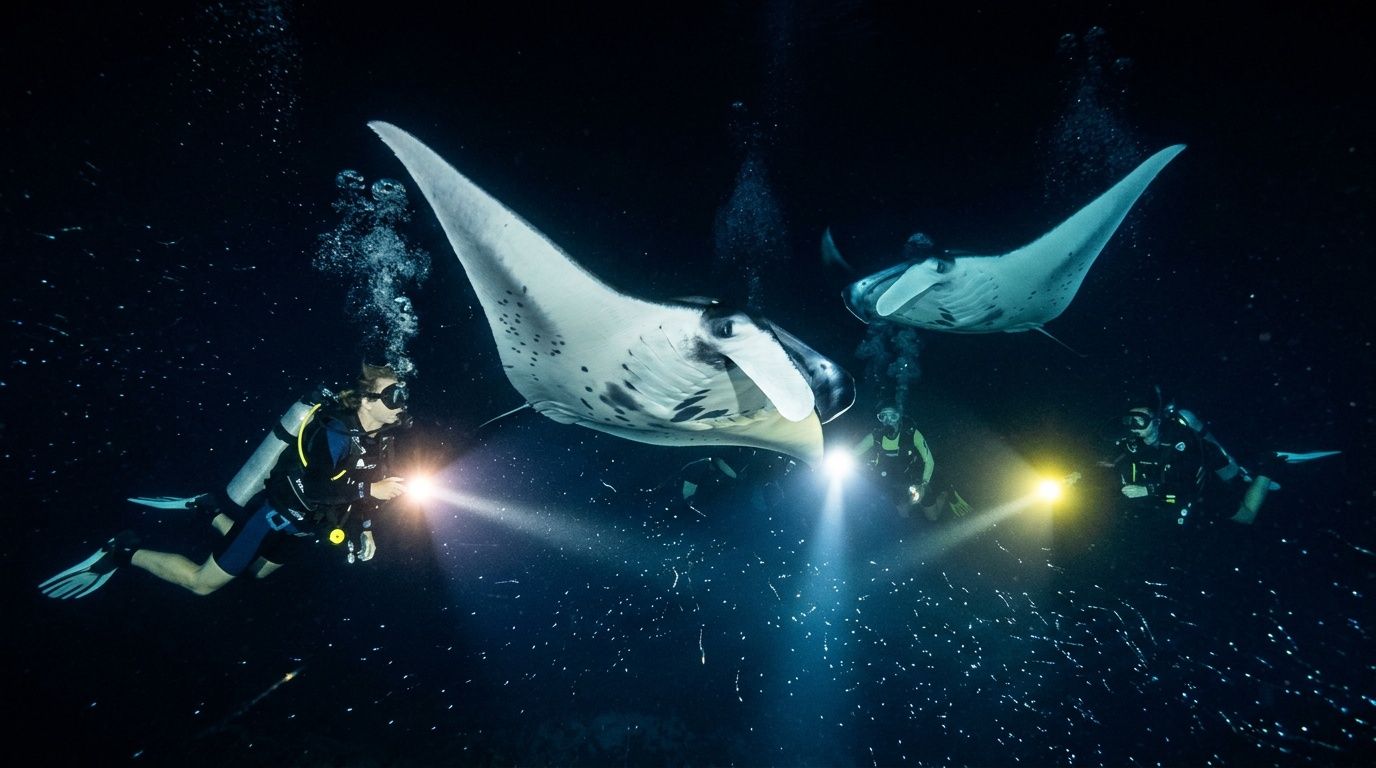
The Kona coast sits on the island’s sheltered western side. That leeward microclimate matters more than most visitors realize. As described in this explanation of what makes Kona diving unique, the island’s volcanic peaks block prevailing trade winds, which helps produce water conditions with visibility that consistently surpasses 100 feet and water temperatures that remain stable between 75-80°F year-round.
That isn’t just nice for vacation photos. It changes how diving operates day to day.
Why the microclimate matters underwater
In many tropical destinations, good diving exists, but it’s less predictable. Wind can chop up the surface, swell can limit site choice, and visibility can swing enough to change the character of a dive. Kona is different because the coast is naturally protected.
That protection gives divers a few practical advantages:
- Better navigation: Complex underwater terrain is easier to enjoy when visibility stays strong.
- More reliable planning: Operators can build trips with less weather-driven improvisation.
- More comfortable diving: Stable temperatures simplify exposure planning for most recreational divers.
The underwater terrain also makes more sense once you connect it to the island’s geology. Lava didn’t build a flat seabed. It built tunnels, walls, swim-throughs, arches, and broken volcanic contours that hold marine life and create natural routes through the reef.
Conditions that support different skill levels
For newer divers, calm and clear water reduces task loading. It’s easier to monitor buoyancy, stay oriented, and look around.
For advanced divers, consistency opens the door to more precise diving. If you’re working through lava structures or diving sites with more dramatic topography, predictable visibility and temperature remove some of the friction that turns a good dive into a stressful one.
Here’s the practical trade-off:
| Diver type | What helps most in Kona | What still matters |
|---|---|---|
| Newer diver | Calm water and clear visibility | Good briefing and buoyancy discipline |
| Intermediate diver | Easy progression into more varied sites | Honest self-assessment on comfort in current and depth |
| Advanced diver | Reliable conditions for more complex topography | Proper planning for deeper or more remote profiles |
Practical rule: Great conditions don’t replace judgment. They give you more room to use good judgment well.
That’s why Kona has earned its reputation. The coast doesn’t just look good in ideal conditions. It delivers an environment where high-quality dives are more repeatable, more planable, and more enjoyable across a wide range of diver experience.
The Three Must-Do Dives on the Big Island
If you only read one planning section, read this one carefully. The Big Island offers a lot, but three experiences define the destination for most divers. They’re not interchangeable, and they don’t scratch the same itch.
Manta ray night dive
This is the signature dive. It deserves the reputation.
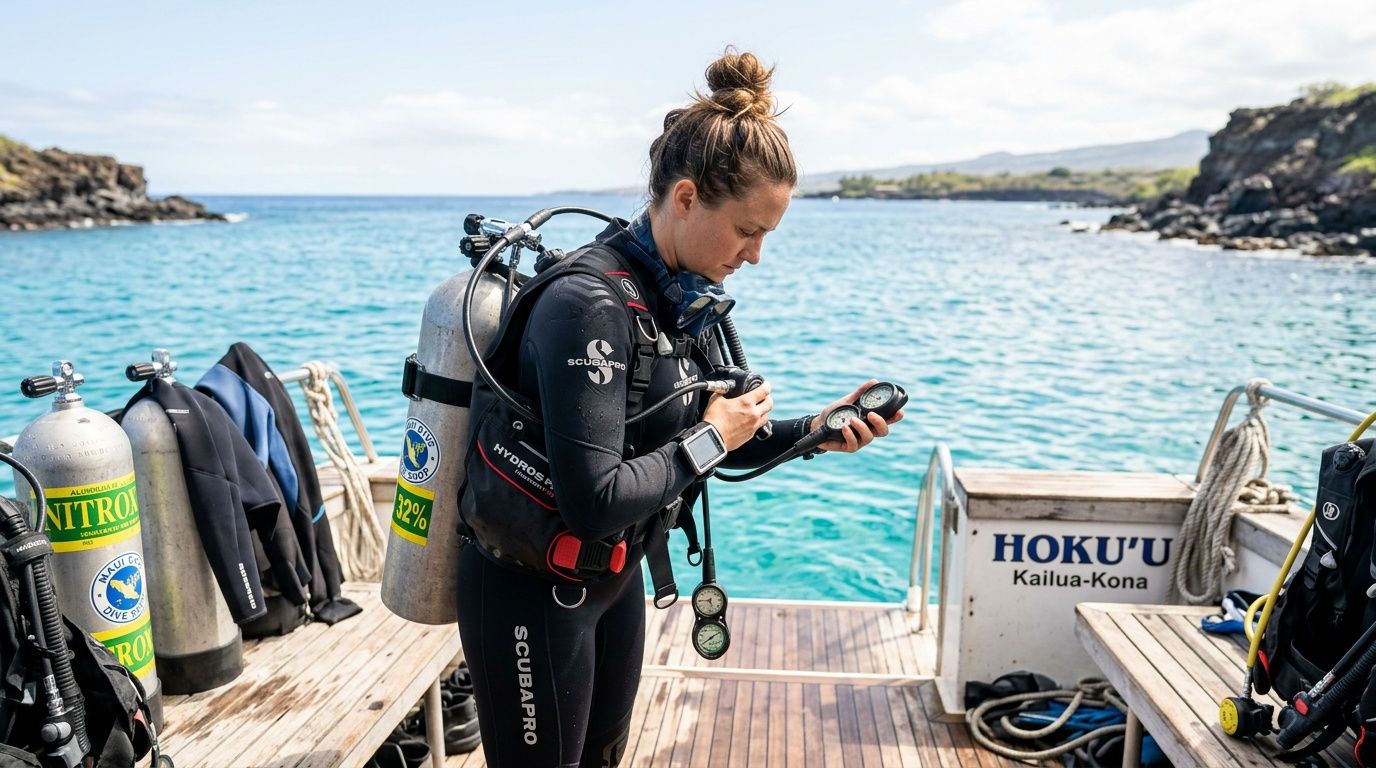
The setup is highly specific. At locations like Keauhou Bay, divers descend to about 35 feet onto an underwater shelf while lights attract plankton, which in turn draws manta rays. That system reliably brings in 10 or more manta rays with 12-foot wingspans, according to this Big Island manta dive guide. The depth matters because it keeps divers in a recreationally manageable zone while creating a stable viewing platform.
What works about this dive is the combination of depth, predictability, and behavior. You’re not chasing a fast pelagic encounter and hoping for luck. You’re positioned in one place while the animals come into the light field to feed. That makes the experience dramatic, but also surprisingly accessible for certified divers who are comfortable at night.
If you’re choosing a manta site, Garden Eel Cove gets my nod over more exposed options for three reasons. It’s more protected, the viewing area is better organized for divers, and the surrounding reef structure tends to make the overall experience feel cleaner and less chaotic. If mantas are the reason you’re coming, book a tour built around that experience through the manta ray dive tour page.
A few realities matter here:
- Good buoyancy matters more at night: You don’t want to be the diver finning up sediment into the lights.
- This isn’t a chase dive: The best manta divers stay still, stay low, and let the show come to them.
- Night comfort counts: If you’re uneasy in low-light conditions, do an easy night dive first if possible.
Nobody remembers this dive because it was merely “good for Hawaii.” They remember it because it feels completely different from ordinary reef diving.
For broader planning context on local site styles, this overview of Big Island diving is useful.
Blackwater dive
If the manta dive is Kona’s most famous experience, blackwater is the one divers talk about in hushed, excited tones afterward.
This is not reef diving at night. It’s an open-ocean drift over deep water in darkness, focused on the vertical migration of pelagic life. You’re there to see delicate, strange, often translucent animals that few ever encounter. Larval fish, jellies, squid, and other deep-ocean organisms can turn a single dive into something that feels closer to science fiction than tourism.
Blackwater isn’t hard because of depth. It’s hard because of context. There’s no reef for orientation, no obvious bottom reference, and no familiar visual frame. Divers who do well on blackwater tend to be calm, trim-focused, and completely comfortable in their own awareness underwater.
What works:
- Divers with strong buoyancy and situational awareness
- People who enjoy unusual marine life more than “big animal” checklists
- Photographers who understand that subject matter may be tiny, transparent, and fast
What doesn’t:
- Treating it like a novelty add-on after a long day
- Booking it before you’re mentally comfortable with night diving
- Expecting a traditional scenic dive
If that kind of pelagic diving is what you’re after, the Blackwater Dive tour page is the relevant booking path.
Daytime reef and lava dives
Classic daytime diving still matters here, and I’d argue it matters more than people think. The marquee night dives are memorable, but your understanding of big island hawaii scuba really comes from seeing the daylight structure that the coast is built on.
Beneath the waves, the island’s volcanic character shows up most clearly. You get coral growth laid over lava features, swim-throughs that feel architectural rather than decorative, and reef systems with enough variation to keep even experienced divers engaged.
From a practical standpoint, daytime dives are where most visitors should spend the bulk of their trip. They let you settle in, dial buoyancy, and appreciate Hawaiian fish life without the extra task loading of a night profile.
Here’s a useful way to think about the three experiences:
| Dive type | Best for | Main appeal | Main caution |
|---|---|---|---|
| Manta night dive | Almost any certified diver comfortable at night | Predictable large-animal encounter | Night comfort and discipline on the bottom |
| Blackwater | More experienced, calm divers | Rare pelagic life and open-ocean immersion | Psychological comfort in darkness and blue water |
| Day reef and lava dives | Everyone | Geology, endemic fish, easy variety | Don’t underestimate buoyancy around structure |
If you only have a few days, I’d pair daytime reef dives with one marquee night dive. If you have a full week, do all three. That combination gives you the broadest and most honest version of what diving the Big Island is.
Planning Your Trip Certifications Seasons and Safety
Good dive trips are built before you board the boat. On the Big Island, planning well doesn’t mean overcomplicating things. It means making a few smart decisions early.
Choose your season with realistic expectations
Kona is rightly known for calm water, but “year-round” doesn’t mean “identical every day.” As noted in this guide to Kona seasonal visibility and conditions, visibility can change with time of day, recent rainfall, and plankton blooms, and early morning dives often offer the clearest water.
That’s the planning gap many general travel guides skip. They make Kona sound uniformly perfect. In practice, the coast is reliable, but your best move is still to book with some nuance.
A simple approach works well:
- If visibility is your priority: Favor morning dives.
- If you’re building a multi-day trip: Spread your key dives across different days instead of stacking everything into one.
- If you’re traveling with family or mixed experience levels: Leave room for weather, comfort, and surface recovery time.
Match certification to the dive, not your ego
One of the easiest ways to have a mediocre trip is to book beyond your current comfort level because the site sounds exciting.
For new or recently certified divers, straightforward reef dives and carefully guided night dives are the right starting point. If you haven’t dived in a while, a refresher before a marquee experience is usually the smart move.
If you’re more experienced and want deeper profiles, more remote structure, or progression beyond standard recreational diving, look for trips designed for that segment. The advanced long-range dive tour is the relevant type of option when your goal is more demanding terrain rather than general sightseeing. If you still need training before booking those profiles, Big Island scuba certification options are worth reviewing first.
The right dive for your trip is the one you can enjoy with control. Not the one that sounds impressive in a caption.
Handle seasickness before it handles you
A lot of divers are reluctant to admit they get seasick. That’s a mistake. Boat comfort affects air consumption, fatigue, and how much you enjoy both dives.
If you know you’re sensitive, prepare before departure. Useful options include the Ship-EEZ Seasickness Patch, Dramamine pills, Bonine pills, Sea Band wristbands, and Ginger chews.
A few practical habits help too:
- Eat lightly: Don’t board on an empty stomach, but don’t crush a heavy breakfast either.
- Hydrate early: Start before the trip, not once you feel off.
- Stay in the breeze: Fresh air helps many divers more than they expect.
- Speak up: Let the crew know if you’re prone to motion sickness.
Safety that actually matters
The most important safety habits on this trip aren’t glamorous.
- Be honest about your recent diving: “Certified” and “current” aren’t the same thing.
- Check weighting carefully: Overweighting ruins more Kona dives than current does.
- Respect your surface interval: Especially if you’re trying to fit a lot into a short vacation.
- Listen to the briefing: Local topography can be easy to enjoy and easy to misread if you stop paying attention.
A clean, enjoyable Big Island trip usually comes down to this. Book dives that fit your training, give yourself enough rest, and solve comfort problems before they become dive problems.
Choosing Your Adventure with Kona Honu Divers
You finish an easy reef dive in the morning, feel settled in Kona’s conditions, and start asking the right question. What should the next dive be? On this coast, that choice matters because the geology creates very different experiences within a short boat range. Lava tubes, steep drop-offs, cleaning stations, calm night sites, and blue-water pelagic encounters are all on the table if the operator has the crew, schedule, and site access to run them well.
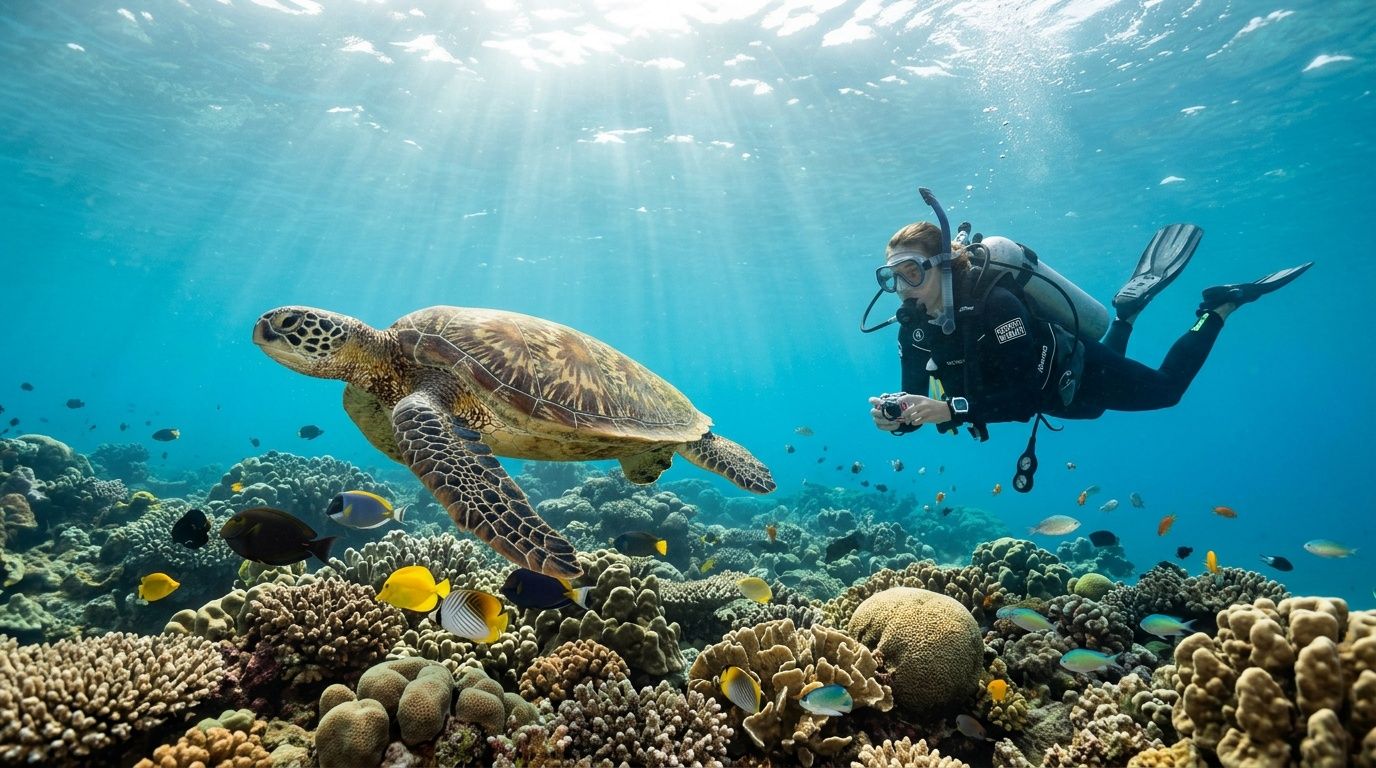
Kona Honu Divers stands out for one practical reason. Divers can build a full Kona week with one shop instead of piecing together separate operators for daytime reefs, manta nights, and blackwater. That continuity helps. A crew that has already seen your buoyancy, gas consumption, comfort in current, and confidence after dark can point you toward the right next charter with a lot more accuracy than a generic booking form can.
That matters even more on the Big Island because Kona rewards good sequencing. Start with a standard two-tank day if you want to get oriented to the lava structure and local procedures. Add a manta night once you are comfortable with entries, exits, and the pace of the boat. Save blackwater for the diver who is comfortable in open water at night and understands that the appeal is not reef scenery but the strange midwater life that rises from depth. The gear recommendations for Kona diving trips become more important as the dives get more specialized.
Match the trip to the experience you actually want
| Goal | Best fit with Kona Honu Divers |
|---|---|
| Relaxed reef diving and fish life | Standard daytime 2-tank charter |
| Signature Big Island wildlife encounter | Manta ray night dive |
| Unusual pelagic subjects and night photography | Blackwater dive |
| A week that progresses from easy to more demanding | Mix charters with the same operator and let the crew guide the order |
Experienced divers usually care less about marketing labels and more about execution. Fair enough. Key questions include whether the boat is set up for the profile, whether the briefing matches the site, and whether the crew chooses locations based on conditions instead of convenience.
Kona Honu’s format works well for that kind of diver because the menu is broad without being random. You can keep the trip simple. You can also build a smarter progression, one that starts with familiarization and ends with the dives that make Kona different from other tropical destinations.
One operator or several
Splitting your diving between shops can work, especially if you are chasing a very specific schedule. But there is real value in staying with one crew for most of the week.
By the second or third trip, good guides know whether you are underweighted, task-loaded with a camera, relaxed at night, or ready for a more technical briefing. That kind of familiarity improves site selection and often improves the dive itself. For visitors who want the classic Kona progression, reef by day, mantas at night, then something more specialized, keeping it under one roof is usually the cleaner plan.
Your Pre-Dive Checklist Gear and Conservation
The easiest way to improve your dive day is to pack like a diver, not like a beachgoer. Small things matter more than people think.
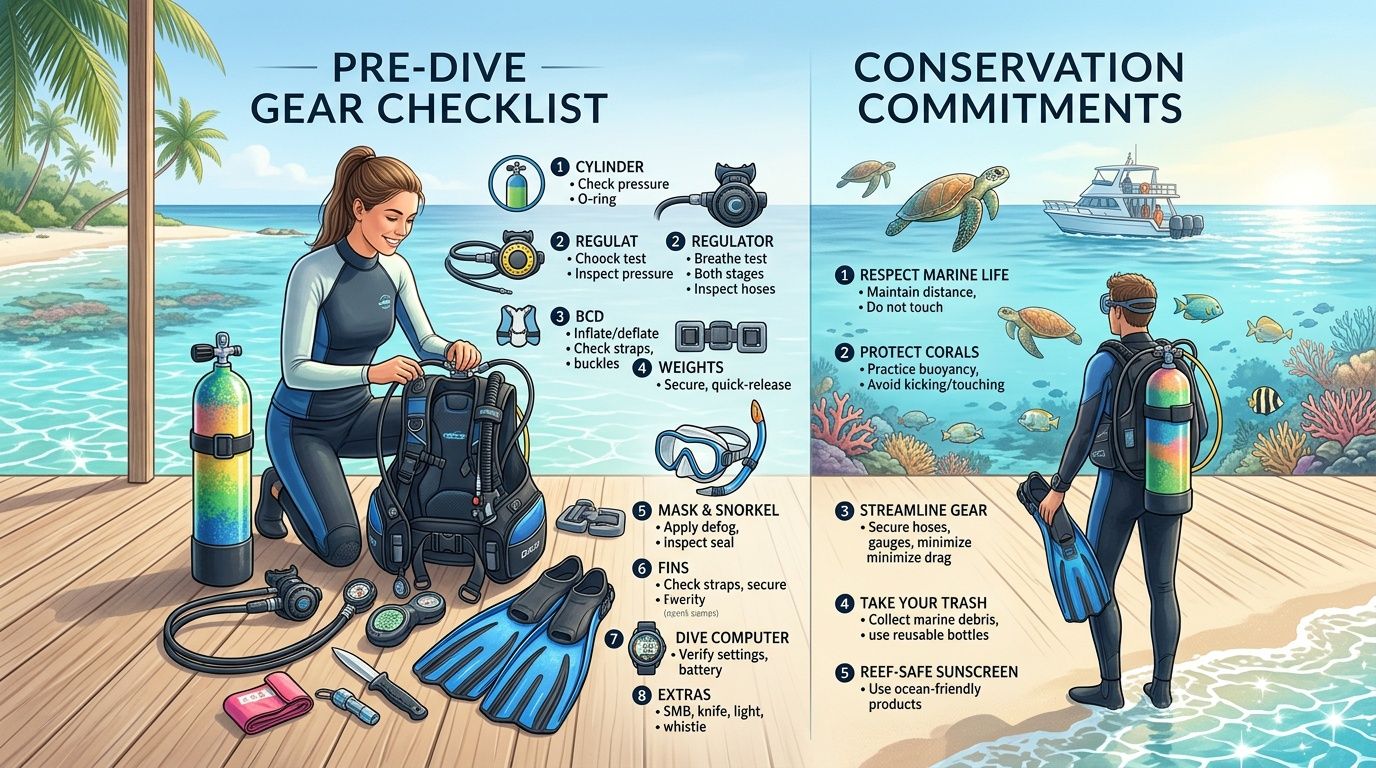
A practical gear refresher is available in this guide to the gear you will need for your Kona diving adventure. Even if you’re renting the major kit, personal prep still changes the quality of the day.
What to bring every time
- Swimwear you can move in: Don’t make your exposure layer and your comfort an afterthought.
- Towel and dry clothes: The boat ride back feels different when you’re warm and dry.
- Water and light snacks: Fatigue sneaks up on divers who underfuel.
- Reef-safe sunscreen: Apply it with enough time before getting in the water.
- Mask and computer, if you own them: Familiar personal gear reduces friction fast.
If you wear corrective lenses, solve that before the trip. If your mask fit is questionable, solve that before the trip too. Few things ruin a dive faster than spending the whole descent clearing a leaking mask.
Conservation is part of dive skill
On the Big Island, good conservation practice isn’t separate from good diving. It is good diving.
Coral and volcanic structure can look tough from a distance, but they’re easy to damage with poor buoyancy, careless finning, or casual hand contact. The same applies to marine life. Turtles, manta rays, and reef fish all benefit when divers stay controlled and observational instead of intrusive.
Leave the reef exactly as you found it. The goal is to witness, not to rearrange.
A few habits do most of the work:
- Stay off the bottom: Kneeling isn’t neutral just because it feels stable.
- Keep your fins up: Especially near coral heads and lava ledges.
- Don’t touch wildlife: Not to guide it, not for a photo, not ever.
- Secure accessories: Gauges, octos, and cameras can do damage when they drag.
The divers who get the best encounters are usually the least disruptive. Calm body position, slow movement, and clean buoyancy don’t just protect the reef. They also make marine life more willing to stay close.
Start Your Big Island Dive Story Today
The Big Island lives up to its reputation. It combines volcanic underwater terrain, warm water, strong visibility, signature night diving, and enough variety to keep both new and seasoned divers interested for more than a quick vacation sample.
That’s the appeal of big island hawaii scuba. You can build a trip around comfort and discovery, or around challenge and progression. Both approaches work here if you plan them well.
If mantas are on your list, do them right. If blackwater has been sitting in the back of your mind for years, this is one of the places to commit. If you're looking for a week of reliable reef diving in visually striking terrain, Kona delivers that too.
The best dive trip is usually the one that balances ambition with judgment. Book the dives you’ll enjoy. Leave enough space to absorb the experience. Respect the animals, the reef, and your own limits.
If you’re ready to turn the trip from “someday” into dates on a calendar, start with Kona Honu Divers and choose the dives that match how you like to be underwater.