
Welcome to the ultimate guide for anyone dreaming of Big Island Hawaii scuba diving. If you're looking for a truly world-class experience, you've found it. The Kona coast is defined by its dramatic underwater landscapes, shaped by volcanoes and blessed with incredibly clear, calm waters.
From navigating ancient lava tubes to floating alongside majestic manta rays on a night dive, the Big Island delivers one-of-a-kind adventures for every diver. Book one of our diving tours to experience it for yourself.
Why The Big Island Is A World-Class Diving Destination
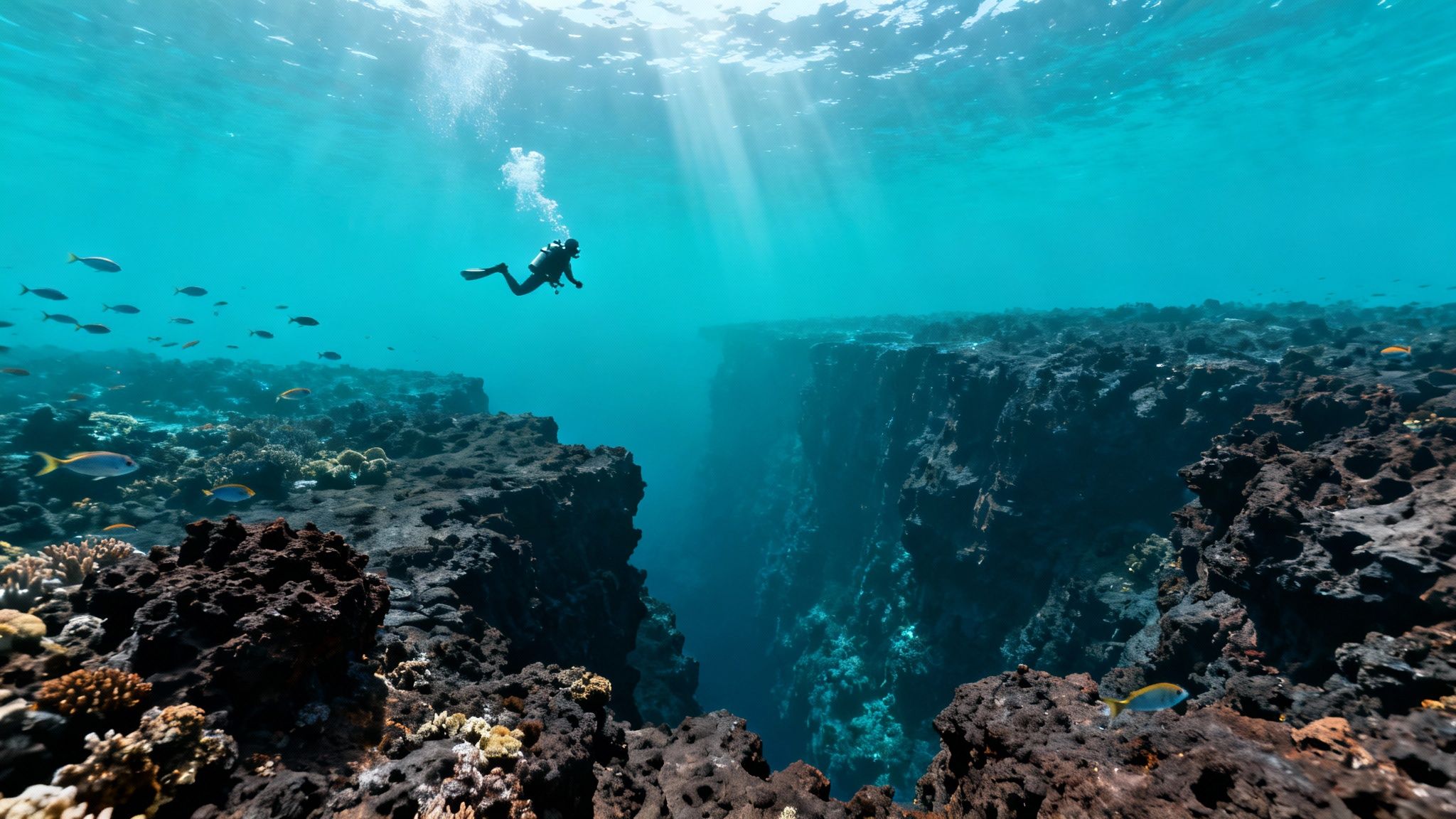
The Big Island isn't just another pretty tropical dive spot; it's an underwater world sculpted by volcanic fire and sheltered by nature itself. What sets the Kona coast apart is its unique protection from the prevailing trade winds, thanks to the sheer size of the Mauna Loa and Hualalai volcanoes.
This natural barrier creates consistently calm and glassy conditions on the water. It’s a game-changer, making this an ideal spot for everyone—from those taking their first breath underwater to seasoned pros looking for their next big thrill.
This geological gift means we get spectacular underwater visibility that often pushes past 100 feet. That kind of clarity lets you soak in every detail of the vibrant coral gardens and intricate lava formations. The underwater topography here is genuinely special, featuring a stunning collection of structures you just won't find anywhere else.
What Makes Kona Diving So Special
Diving off the Kona coast means exploring an ecosystem that thrives in the heart of volcanic history. The underwater landscape is a diver's playground, full of:
- Ancient Lava Tubes: Imagine swimming through massive caverns and archways formed by ancient lava flows, which are now home to all sorts of marine life seeking shelter.
- Dramatic Drop-Offs: Descend along steep underwater cliffs that plunge into the deep blue, where you have a great chance of spotting larger pelagic species cruising by.
- Pristine Coral Reefs: The Big Island boasts some of the healthiest and most expansive coral reefs in all of Hawaii, supporting a dense and dazzling population of tropical fish.
This unique combination of calm water and complex volcanic structures has cemented the Big Island's reputation as a premier scuba diving mecca. With over 100 documented dive sites along the Kona coast alone, the variety is staggering. You can find everything from shallow reef explorations perfect for beginners to deep, technical dives that will challenge the most advanced divers.
The biodiversity here is another huge draw. On any given dive, you can expect to bump into green sea turtles, pods of spinner dolphins, reef sharks, and countless species of colorful fish. These thriving ecosystems offer endless opportunities for discovery and incredible underwater photography.
To give you a quick overview, here's what makes the Big Island stand out:
Why Choose the Big Island for Your Next Scuba Adventure
| Feature | Why It's Special | Best For |
|---|---|---|
| Volcanic Topography | Explore lava tubes, arches, and pinnacles created by volcanoes. A truly unique underwater landscape. | Divers seeking adventure and unique photo opportunities. |
| Calm, Clear Waters | The Kona coast is shielded by massive volcanoes, resulting in exceptionally calm conditions and visibility often exceeding 100 ft. | All skill levels, from beginners to advanced divers and photographers. |
| Manta Ray Night Dive | Home to the world-famous manta ray night dive, an unforgettable "bucket list" experience for divers. | Anyone looking for a once-in-a-lifetime wildlife encounter. |
| Incredible Biodiversity | Healthy coral reefs support a rich ecosystem of turtles, dolphins, sharks, eels, and countless tropical fish. | Marine life enthusiasts and underwater naturalists. |
| Year-Round Diving | Consistent water temperatures and conditions mean you can plan your dive trip for any season. | Divers who need flexible travel schedules. |
Ultimately, the Big Island offers a dive experience that is as diverse as it is beautiful. Whether you're drawn by the promise of giant mantas or the thrill of exploring a lava tube, Kona delivers.
To learn more about what makes this place the perfect choice for your next trip, check out our detailed guide on why the Big Island is so good for scuba diving.
Ready to see it for yourself? The underwater world of Kona is waiting.
Exploring Kona’s Signature Dive Experiences
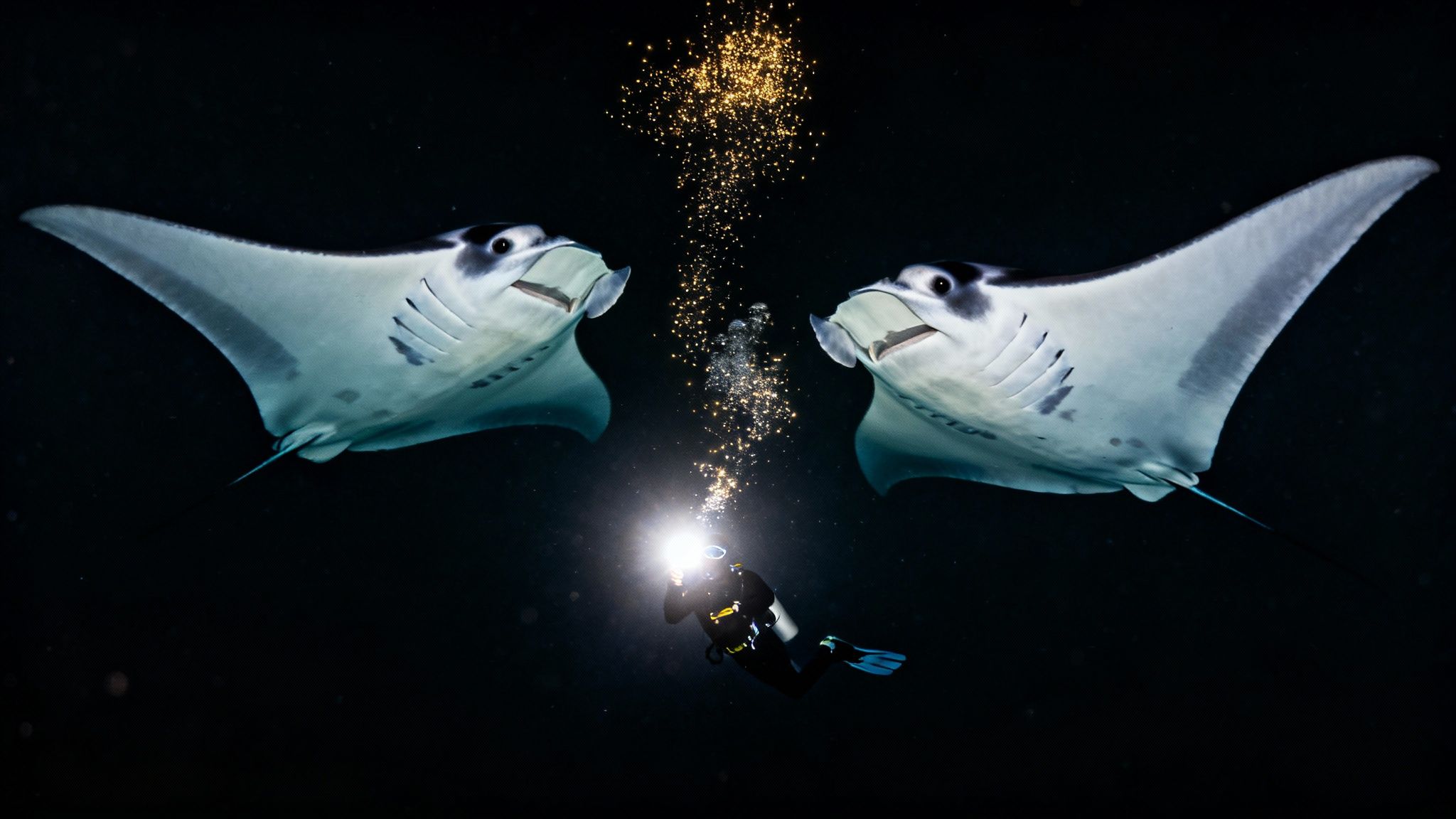
While you’d be hard-pressed to have a bad dive along the Kona coast, some experiences are simply legendary. These are the signature dives that pull people from all over the world—the ones that go from a bucket-list item to a lifelong memory.
They're more than just a dive; they are immersive encounters that truly define Big Island Hawaii scuba. From the silent, graceful ballet of giant manta rays to a surreal journey into the ocean's midnight zone, Kona offers underwater adventures you'll be talking about for years to come.
The World-Famous Manta Ray Night Dive
Picture this: you're kneeling on the sandy ocean floor in the dark. You point your dive light up, creating a column of light that illuminates the plankton in the water. Then, a shadow emerges from the blackness. A majestic manta ray, with a wingspan wider than you are tall, glides effortlessly into the light, performing graceful barrel rolls just inches above your head. This is the Kona Manta Ray Night Dive, and it is every bit as incredible as it sounds.
This dive is easily one of the world's most iconic scuba experiences, and for good reason. We see mantas with a staggering 95% success rate all year long. The dive itself is shallow, usually around 30-50 feet, where divers gather on the sand with their lights. This light attracts the plankton, which in turn brings in the mantas for a feeding frenzy. It's not uncommon to be surrounded by up to 20 rays on a single dive, some with wingspans stretching 14 feet! This spectacle draws over 50,000 people here every year.
While there are a couple of spots for this dive, we firmly believe Garden Eel Cove is the superior choice. The site is more protected from the elements, which almost always means a calmer, more comfortable experience for everyone. More importantly, the underwater topography forms a natural amphitheater, giving divers a better viewing area. The surrounding reefs are also healthier and more vibrant, adding to the magic of the dive.
Ready to witness this unforgettable underwater performance? Kona Honu Divers offers world-class Manta Ray Dive Tours led by experts who care deeply about your safety and the well-being of these gentle giants.
The Surreal Kona Blackwater Dive
For certified advanced divers looking for something completely different, the Kona Blackwater Dive is an adventure into another world. This isn't about reefs or the seafloor. Instead, you'll be tethered to the boat, drifting in the deep open ocean miles offshore, suspended over thousands of feet of inky black water.
Down there in the absolute dark, you'll witness the largest animal migration on Earth. Tiny, alien-like creatures from the abyss rise toward the surface to feed under the cover of night. You'll see things that look like they belong on another planet: bioluminescent organisms, strange larval-stage fish, and bizarre jellies.
The Kona Blackwater Dive is often described as a "spacewalk" in the ocean. It’s a humbling, mind-bending experience that reveals a hidden universe of life rarely seen by human eyes.
This dive demands excellent buoyancy control and a calm mind—you're just floating in pure blackness, guided only by the glow from your lights. It’s a profoundly different kind of Big Island Hawaii scuba experience that pushes the boundaries of underwater exploration. For those up for the challenge, it offers an unparalleled glimpse into the mysteries of the deep. You can discover more about this specialized adventure in our blackwater dive guide.
If you’re an experienced diver ready for this next-level adventure, book your spot on a Kona Blackwater Night Dive and prepare to see the ocean in a whole new light.
Exploring Volcanic Lava Tubes and Pinnacles
Beyond the famous night dives, Kona's volcanic past has created a spectacular underwater playground for daytime exploration. The island's dramatic lava flows have sculpted an incredible underwater landscape full of massive lava tubes, caverns, and dramatic archways.
Swimming through these structures feels like exploring a submerged cathedral. Sunlight filters through openings in the ancient lava rock, creating mesmerizing beams that dance in the clear water. These swim-throughs are often buzzing with life, from schools of colorful fish seeking shelter to white-tip reef sharks resting on the sandy bottom.
For more experienced divers, we head to advanced sites with deep pinnacles and dramatic drop-offs that offer a different kind of thrill. These challenging dives are perfect for anyone wanting to explore Kona's rugged, untamed side. These unique formations require skill and confidence, making them a perfect objective for our Advanced Dive Tour.
Discovering the Top Dive Sites Along the Kona Coast
While the manta ray night dive and the blackwater dive get a lot of the spotlight, the everyday diving along the Kona coast is where you’ll find the true heart of the island’s underwater world. We have over 100 documented sites, and the volcanic history here has shaped an incredible underwater playground.
These aren't just your typical coral reefs. Think massive lava domes, intricate networks of swim-throughs, and dramatic archways, all buzzing with life. Every drop into the water offers a completely new adventure.
Au Au Crater: A Submerged Volcanic Dome
One of the most awe-inspiring and unique sites we dive is Au Au Crater. It's often called "The Dome," and once you see it, you'll understand why. It’s not a crater from an impact but a massive, collapsed lava dome that creates a giant underwater amphitheater—a photographer's dream.
The topography here naturally shelters marine life. We typically explore the rim at about 35-60 feet before dropping into the sandy bowl. It’s common to see huge schools of pyramid butterflyfish, eagle rays cruising by, and the occasional—and very well-camouflaged—frogfish.
Its protected nature and manageable depth make Au Au Crater a fantastic spot for everyone, from newly certified divers to old pros looking for a stunning, relaxing dive.
Golden Arches: Turtle Cleaning Stations and Swim-Throughs
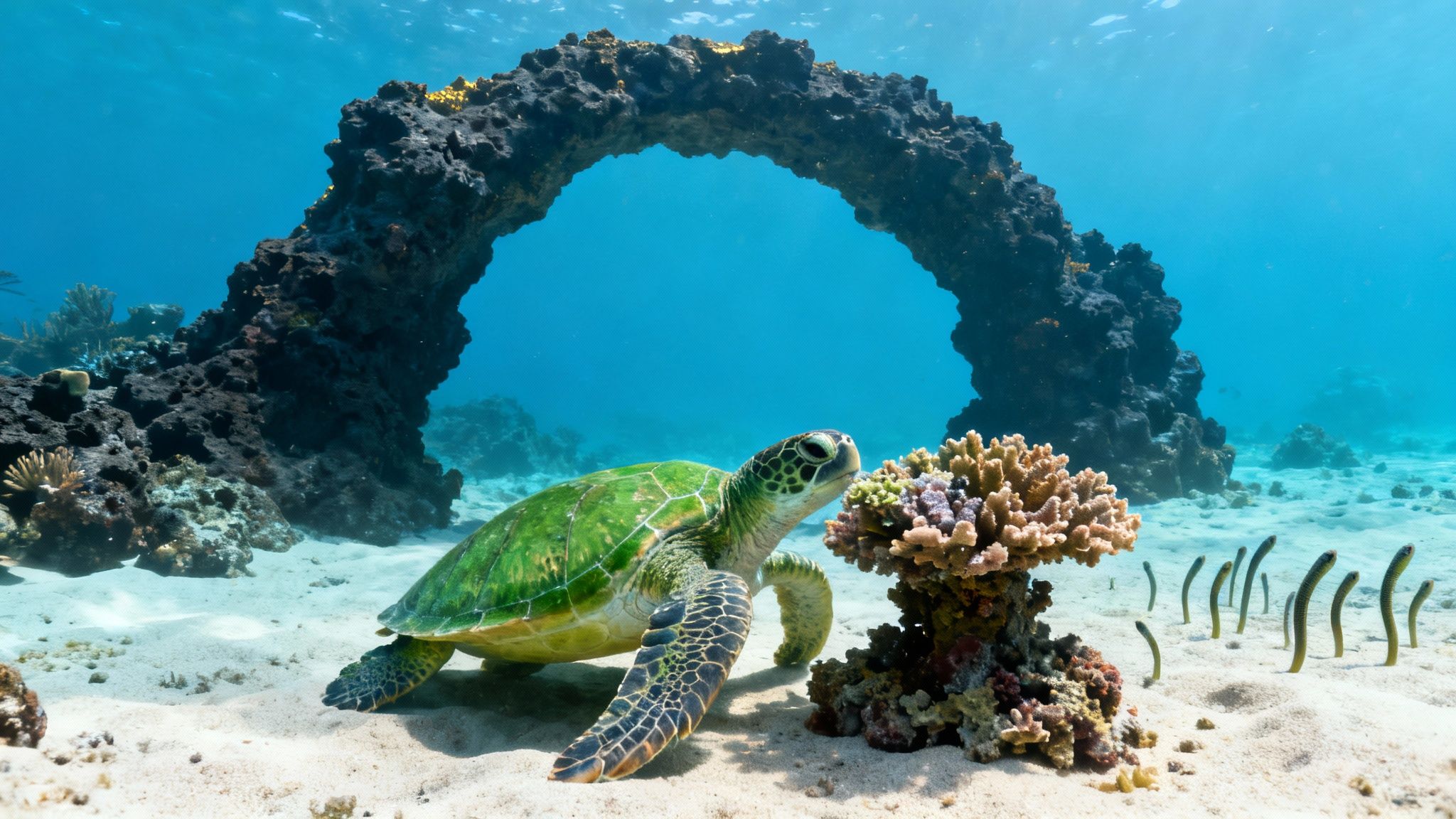
If you love dramatic swim-throughs and want an almost-guaranteed turtle sighting, Golden Arches has to be on your list. The name comes from the magnificent lava rock arches you can easily and safely navigate. Gliding through them feels like you're exploring ancient, sunken ruins.
But the real magic of Golden Arches is its fame as one of Kona's busiest turtle cleaning stations. This is where Hawaiian green sea turtles, or honu, come to get algae and parasites picked off their shells by surgeonfish. It's a natural spa day for the turtles and an unforgettable show for us.
There's nothing quite like watching a honu hover patiently in the water while a whole crew of smaller fish gets to work. It’s a perfect, real-world example of the symbiotic relationships that make these reefs so special.
This site is great for all skill levels, with depths usually between 25 and 50 feet, allowing for plenty of bottom time to take it all in.
Shark Nurseries and More Advanced Dives
Beyond the well-known spots, Kona offers sites that let you observe specific animal behaviors, like shark nurseries. At places like Suck ‘em Up and Kalokos, it's common to find whitetip reef sharks resting in lava tubes or under ledges during the day. Seeing these graceful predators in their own environment is a truly humbling experience.
These sites often have more complex structures, with caverns and swim-throughs that demand good buoyancy control. This makes them a better fit for intermediate to advanced divers. For underwater naturalists, the chance to see sharks in such a calm, non-threatening setting is a huge draw.
With so many dive locations, there's always something new to see. For a deeper look at what to expect from different spots, check out our comprehensive guide to Big Island scuba diving sites. Building the perfect dive plan is all about matching your interests with the incredible opportunities waiting for you here in Kona.
How to Plan Your Big Island Dive Trip
A truly great Big Island Hawaii scuba adventure doesn't just happen when you splash into the water—it starts with smart planning. Taking a little time before you leave home can make the difference between a good trip and an unforgettable one, ensuring every moment is spent enjoying the incredible underwater world.
The key is to understand the island's unique rhythm. This means knowing the best times to visit for specific marine life, what gear to bring, and why booking your spot on the boat ahead of time is so important. Let's walk through how to set yourself up for the perfect Kona dive vacation.
When to Visit The Big Island
Honestly, there's no bad time to dive in Kona. The conditions are fantastic year-round, but what you might see changes a bit with the seasons.
Summer, from June through August, brings the warmest water, often topping out at a balmy 80°F (27°C). The seas are typically glass-calm, making for incredibly smooth boat rides and easy diving. Winter, on the other hand, is humpback whale season. From December to March, you can often hear their haunting songs echoing through the water on your dives—a truly profound experience you'll never forget.
No matter when you come, the Kona coast is naturally sheltered, which means we get consistently great conditions. Visibility often pushes past 100 feet, and dive trips are rarely canceled due to weather. It’s one of the most reliable dive destinations on the planet.
Thinking about when to plan your trip? Here's a quick seasonal cheat sheet.
Big Island Diving Conditions Throughout the Year
This table breaks down what you can generally expect from the Kona Coast's underwater environment during each season.
| Season | Avg. Water Temp (°F/°C) | Typical Visibility | Marine Life Highlights |
|---|---|---|---|
| Winter (Dec-Mar) | 75-77°F / 24-25°C | Excellent (100+ ft) | Humpback whale songs, spotted eagle rays |
| Spring (Apr-Jun) | 76-78°F / 24-26°C | Excellent (100+ ft) | Peak manta ray activity, turtle nesting season |
| Summer (Jul-Sep) | 78-80°F / 26-27°C | Excellent (100+ ft) | Calmest seas, pilot whales, occasional tiger sharks |
| Fall (Oct-Nov) | 77-79°F / 25-26°C | Excellent (100+ ft) | Fewer crowds, consistent manta sightings |
While this gives you a good idea, remember that Mother Nature always has the final say!
Packing Essentials and Gear Considerations
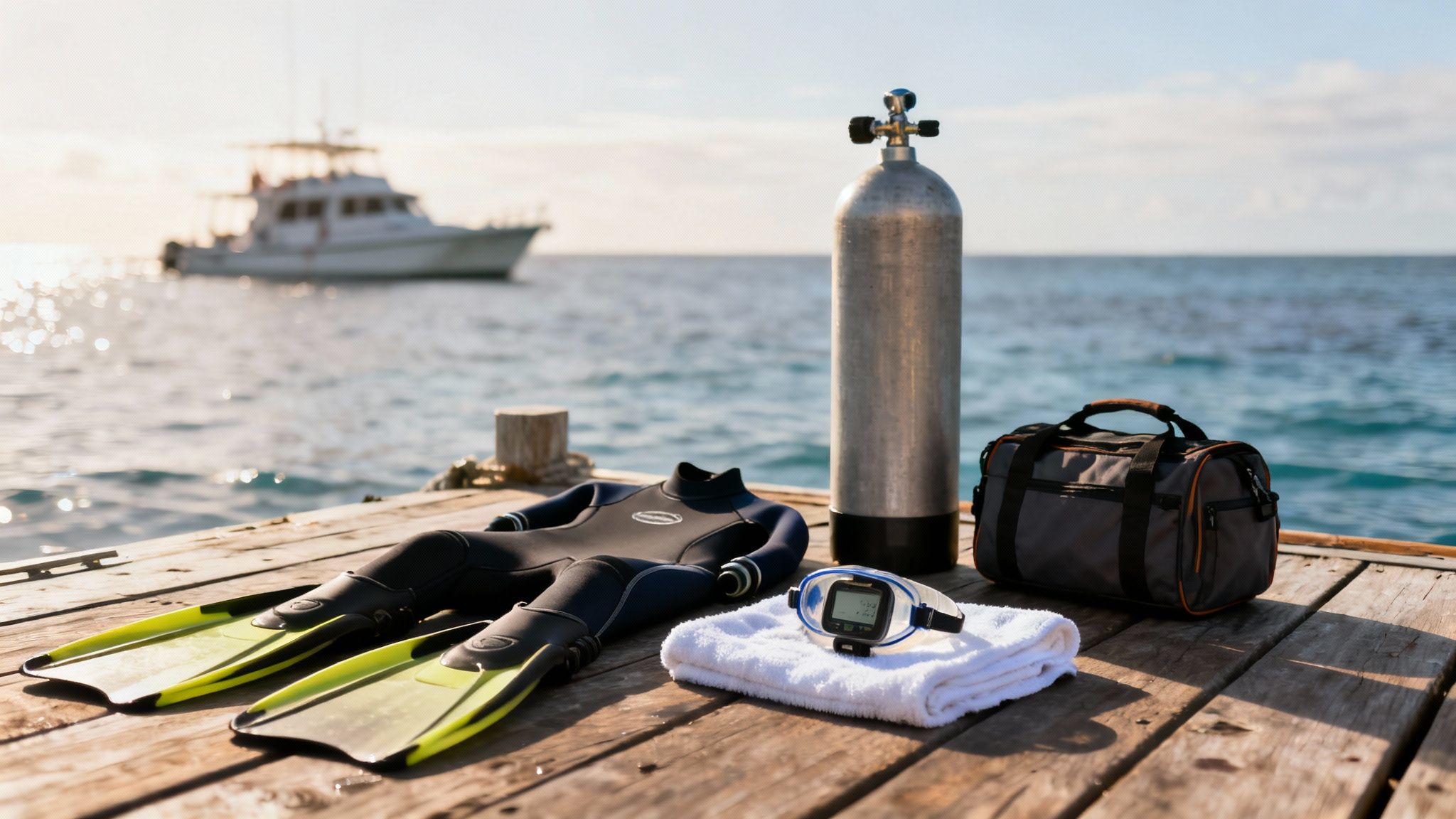
While you can rent everything you need here, there’s a lot to be said for bringing your own personal gear. A mask that fits your face perfectly, your own dive computer, and a familiar wetsuit (a 3mm is usually fine, though some prefer a 5mm in winter) can make your dives that much more comfortable.
Of course, don't forget the surface essentials: reef-safe sunscreen, a good hat, sunglasses, and a reusable water bottle are must-haves.
If you'd rather travel light, make sure you choose an operator with top-notch rental equipment. At Kona Honu Divers, we take pride in our gear. It’s all meticulously maintained and serviced, so you can dive with total confidence. Plus, we offer free nitrox for all certified divers, which can help extend your no-deco time and leave you feeling less tired at the end of the day.
The Importance of Booking in Advance
Kona isn't a secret anymore. As a world-class dive destination, our most popular charters—especially the legendary Manta Ray Night Dive—fill up fast. This is especially true during the busy season (holidays and summer months).
To avoid showing up only to find the boat is full, we can't stress this enough: book your Kona Honu Divers' diving tours well before your trip.
Locking in your spots early does more than just guarantee you a place. It helps us manage logistics, pair divers of similar skill levels, and ultimately deliver a safer and more personalized experience for everyone. Don’t leave it to chance—plan ahead so you can tick off every dive on your Big Island bucket list.
Choosing the Right Dive Operator in Kona
Let's be honest, who you dive with can make or break your entire trip. The incredible underwater world of the Big Island is always there, but your safety, comfort, and just how much fun you have are all in the hands of the crew and the boat you choose. A good dive operator doesn't just drive you to a spot on the map; they shape the entire experience.
When you're looking at different companies, it’s easy to get focused on price, but that’s only a tiny part of the story. You're really investing in a team you can trust with your well-being in an environment that's always changing. Think about things like the crew's experience, the condition of the boat, and what their safety standards look like. That's what separates a "meh" dive from a truly unforgettable one.
What to Look for in a Top-Tier Dive Company
Not all dive operations are created equal, and the differences become pretty clear once you're on the water. To make sure you have the best possible time, here are a few things that should be non-negotiable:
- Safety Record and Standards: This is everything. You want a company with a long, squeaky-clean safety record. Do they have clear emergency plans? Is the boat properly equipped with oxygen and first aid? Your safety has to be their number one priority, no exceptions.
- An Experienced Crew: A seasoned crew is worth its weight in gold. Guides who know the dive sites like the back of their hand can point out camouflaged critters, find the coolest swim-throughs, and adjust the dive plan on the fly to match the day’s conditions. They turn a good dive into a great one.
- Boat Quality and Comfort: You'll be spending a fair bit of time topside, so the boat matters. Look for a vessel that’s spacious and doesn't feel like a sardine can. Little luxuries like a hot freshwater shower after a dive, plenty of shade, and an easy way to get in and out of the water are signs of a company that cares about your comfort.
- Customer Service and Reviews: What are other divers saying? A handful of good reviews is nice, but thousands of glowing ones tell you that a company consistently delivers a fantastic experience.
Why Kona Honu Divers Sets the Standard
At Kona Honu Divers, we've built our entire operation around the belief that an incredible dive trip comes from a blend of safety, expertise, and a real love for the ocean. We sweat the small stuff because we know it’s what matters most to you.
Our crew brings an amazing 200+ years of combined professional diving experience to every single trip. That depth of knowledge means our guides aren’t just leading you on a tour; they're sharing a deeper understanding of Kona’s ecosystem, all while keeping a constant, watchful eye on your safety.
We operate with the belief that comfort and safety are two sides of the same coin. A relaxed, comfortable diver is a safer, more confident diver who can fully immerse themselves in the beauty of the underwater world.
You’ll feel this philosophy the moment you step onto one of our boats. We run spacious, Coast Guard-certified vessels designed from the keel up for diver comfort. You'll have room to move, and our famous hot showers feel absolutely amazing after a dive. We also offer complimentary nitrox for certified divers, which means more bottom time and less fatigue—letting you make the most of your day.
But you don't have to take our word for it. Our impeccable safety record and the thousands of divers who have shared their amazing experiences with us speak for themselves.
At the end of the day, picking a dive operator is an investment in your safety and your vacation memories. When you go with a company that has proven experience, top-notch boats, and a genuine commitment to their divers, you're setting yourself up for an adventure you’ll remember for all the right reasons.
Ready to see what a difference a premier dive operation makes? Take a look at our full range of Kona diving tours and find your perfect trip.
Getting Certified or Advancing Your Dive Skills in Kona
The calm, clear, and warm waters along the Kona coast aren't just great for fun dives—they create the perfect natural classroom for anyone learning to scuba. If you've ever thought about exploring the underwater world, this is the place to start. The protected bays provide a comfortable, confidence-inspiring environment for taking your very first breaths underwater.
Not sure you're ready to commit to a full course? A Discover Scuba Diving experience is the perfect test drive. It's a one-day program where you gear up and explore a shallow reef with a professional instructor right by your side. You get to experience the real magic of Big Island Hawaii scuba without the full-time commitment.
For those ready to take the plunge, Kona is an incredible spot to earn your PADI Open Water Diver certification. The training blends online theory with hands-on practice in the ocean itself. Forget sterile swimming pools; here, your training dives feel like an adventure from day one.
Continuing Your Dive Education
Getting your Open Water card is a bit like getting your driver's license—the real learning begins once you're out there on your own. For certified divers, the adventure is just getting started. Kona's diverse dive sites offer the perfect training ground to expand your skills and become a safer, more capable diver.
The Advanced Open Water Diver course is the natural next step. It's not about super technical, difficult dives; it's all about building confidence and gaining experience through five different "adventure dives."
You'll always do the core dives in deep diving and underwater navigation, and then you get to choose three others. Around here, some of the most popular choices are:
- Night Diver: This is a must-do, especially if you want to experience the world-famous manta ray dive as a fully certified night diver.
- Peak Performance Buoyancy: This is the secret to becoming a great diver. You'll master hovering effortlessly, which helps you conserve air and protect the delicate reef below.
- Fish Identification: Learn to put a name to all the unique critters you're seeing on Kona's vibrant reefs.
Taking an advanced course on vacation is one of the best ways to get more out of your trip. You're not just sightseeing; you're actively sharpening your abilities with an expert guide, which makes every single dive afterward that much more rewarding.
Mastering New Challenges
Ready for more? Courses like Rescue Diver are a game-changer. It's a serious course, but it teaches you critical problem-solving skills and how to handle dive emergencies, making you a much better dive buddy and a more self-reliant diver. Ask anyone who's taken it—they'll almost always say it's the most rewarding certification they've ever earned.
If you're an experienced diver looking to push your boundaries, Kona has plenty to offer. The best way to safely explore our lava tubes or deeper pinnacles is by taking a specialty course focused on those exact environments. Working with the experienced instructors on the Kona Honu Divers team means you get personalized, thorough training that builds real confidence, not just a check in a box.
These are the skills that open the door to unique charters like our premium advanced 2-tank trip—an adventure we designed specifically for divers who want to see Kona's most rugged and remote underwater landscapes.
Frequently Asked Questions About Big Island Scuba
Planning a dive trip to the Big Island always brings up a few key questions. Here are some quick answers to the things we hear most often from fellow divers.
Do I Need A Wetsuit to Scuba Dive in Kona?
Yes, you'll definitely want one. While the water feels fantastic, hovering between a pleasant 75-80°F (24-27°C), your body will lose heat over the course of a 45-minute dive. On your second or third dive of the day, you'll really be glad you have it.
Most divers here find a 3mm or 5mm full wetsuit is perfect. It not only keeps you warm but also provides great protection from the sun on the boat and prevents any accidental scrapes against the lava rock formations underwater.
Are There Good Snorkeling Spots for Non-Diving Family Members?
Absolutely! The Kona coast is a snorkeler's dream, and it’s a fantastic way to include everyone in the adventure. Many of the premier dive sites offer incredible snorkeling right on the surface.
We love having snorkelers join our dive boats at Kona Honu Divers, as it makes for a perfect family day on the water. Legendary spots like Kealakekua Bay and Two Step are world-class for both diving and snorkeling, with calm, clear water teeming with fish.
What Is The Best Time of Day to Dive in Kona?
There’s really no single "best" time—it just depends on the kind of experience you're after. For calm seas and stunning visibility, it's hard to beat the morning. The classic two-tank morning charter is popular for a reason; you get pristine conditions for exploring the vibrant reefs.
That said, some of the most magical moments happen after the sun goes down. The Manta Ray Night Dive is an unforgettable, world-famous spectacle. So, the best time of day is really about which adventure you want to have.
Is Shore Diving Possible on the Big Island?
Yes, and there are some truly wonderful shore dives here, especially along the Kona and Kohala coasts. Places like Two Step (Honaunau Bay) are famous for having incredibly easy access and beautiful, shallow reefs that are perfect for a relaxed dive.
Keep in mind, though, that many shore entries involve navigating sharp, uneven lava rock. It requires a bit of confidence, good fitness, and careful planning. For access to the most remote and untouched sites without the hassle, boat diving is almost always the way to go.