
You’re probably in the same spot most visiting divers are in. You’ve booked Hawaii, you know you want warm water and clear visibility, and now you’re trying to figure out whether the Big Island is worth building the trip around.
It is.
If your goal is serious diving, not just checking a vacation box, big island hawaii scuba should be at the top of your list. The Kona side gives you the kind of diving that keeps people talking long after the trip is over. Calm mornings. Lava formations that don’t look like anywhere else in the Pacific. Night dives that feel unreal. And enough variety that you can build a whole dive vacation without repeating the same experience.
Your Ultimate Underwater Adventure Awaits in Kona
The usual Hawaii fantasy is simple. You roll out of bed before sunrise, grab coffee, step onto the boat, and by the time the coastline glows gold you’re already kitted up and staring into blue water so clear it barely looks real. That part isn’t fantasy on the Big Island. It’s why divers keep coming back.
Kona isn’t a niche destination that only insiders know about. It runs at real scale. The island logs about 100,000 certified scuba dives annually, has over 50 professional dive shops and charters, and those operators guide more than 150,000 diving tourists each year, according to this overview of Big Island scuba diving. Those numbers tell you something important. This isn’t a place with one or two good sites. It’s a fully developed dive destination with enough depth, variety, and demand to support a huge diving community.
That matters when you’re planning a trip.
A destination with heavy diver traffic usually gives you better logistics, more trip options, more training opportunities, and crews who know how to run boats efficiently. That’s exactly what you want on vacation. You don’t want to spend your Hawaii trip gambling on whether the operator has enough experience or whether conditions usually cooperate.
If you want a solid starting point for mapping out your trip, start with this guide to Kona scuba diving. It’ll help you match the type of diving you want with the kind of day you want to have.
Practical rule: If diving is one of the main reasons you’re visiting Hawaii, stay on the Kona side. Don’t build a dive-heavy trip around a long commute.
The biggest mistake travelers make is treating the Big Island like one uniform dive map. It isn’t. Kona is where the classic boat diving experience comes together most consistently, and if you want easy access to iconic dives, that’s the move.
Why the Big Island Offers World-Class Diving
The Big Island earns its reputation underwater. It doesn’t rely on marketing fluff or postcard clichés. The diving is strong because the island itself is built for it.
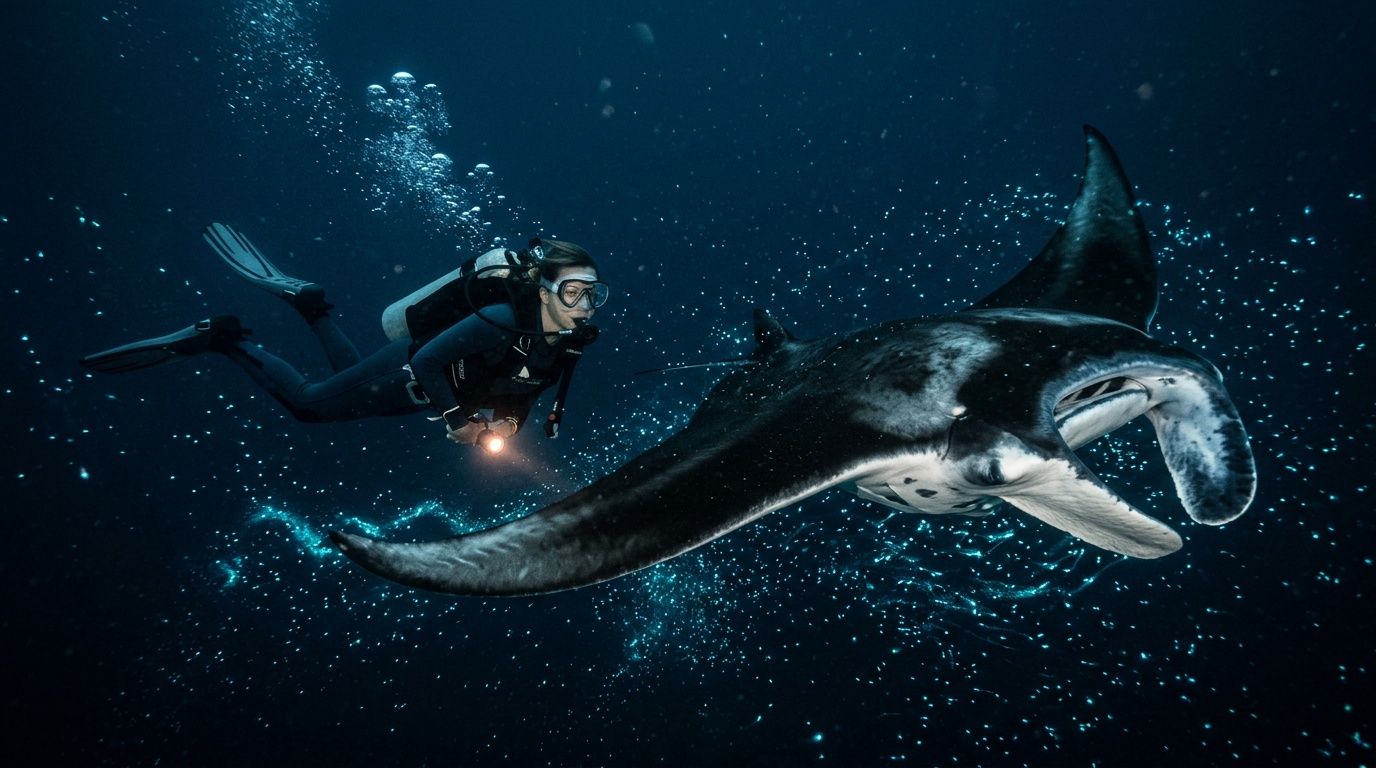
Volcanoes do more than shape the skyline
Kona and Kohala sit in the lee of the island’s massive volcanoes. That shelter is a big deal. It helps create the calm, clear conditions divers want instead of wind-beaten, churned-up water. Add in young volcanic geology and you get an underwater world full of lava structure, dramatic contours, and terrain that feels very different from older tropical reef systems.
That’s one of the reasons Big Island diving feels so distinct. You’re not just drifting over coral heads and calling it a day. You’re moving through lava tubes, arches, drop-offs, and reef zones built on fresh volcanic foundations.
If you want to browse trip styles that match that environment, the main Big Island diving tours page is the easiest place to compare what fits your experience level and interests.
The biodiversity is the real closer
The underwater life here isn’t just pretty. It’s unusually specific to Hawaii. The Big Island is home to 1,100 fish species, 129 of them are found exclusively in the Hawaiian island chain, and more than 25% of all marine species in Hawaii are endemic, according to Scuba Diving magazine’s guide to Hawaii’s Big Island.
That changes the feel of every dive.
You’re not only coming to see reef fish. You’re diving in a place where a meaningful chunk of what you see exists only here. For marine life lovers, photographers, and divers who are tired of interchangeable tropical destinations, that’s the difference between a fun trip and a memorable one.
Why this matters to your trip
A lot of travel articles treat “good diving” like one generic category. That’s lazy. I’d break the Big Island advantage into three parts:
- Conditions that favor diving: The leeward side is known for calm, clear water and dependable access.
- Terrain with personality: Young lava topography gives dives real structure and visual drama.
- Species you can’t see just anywhere: Hawaii’s endemism means your fish ID slate gets more interesting fast.
Some destinations are easy. Kona is easy and distinctive, which is far rarer.
That’s why divers of very different skill levels can all leave happy. Newer divers get forgiving conditions. Experienced divers get terrain, life, and night dives that don’t feel repetitive.
Kona Honu Divers runs tours in this environment and is one local option divers use for day trips, manta dives, blackwater dives, courses, and gear support.
Must-Do Dives From Manta Rays to Blackwater Aliens
If you only book one standard reef charter and call it good, you’re leaving the best of Kona on the table. The smart move is to treat the trip like a progression. Start with daytime diving to settle in. Add the manta night dive. Then, if you’ve got the experience and appetite for something strange, book blackwater.
That lineup gives you the full Big Island story.
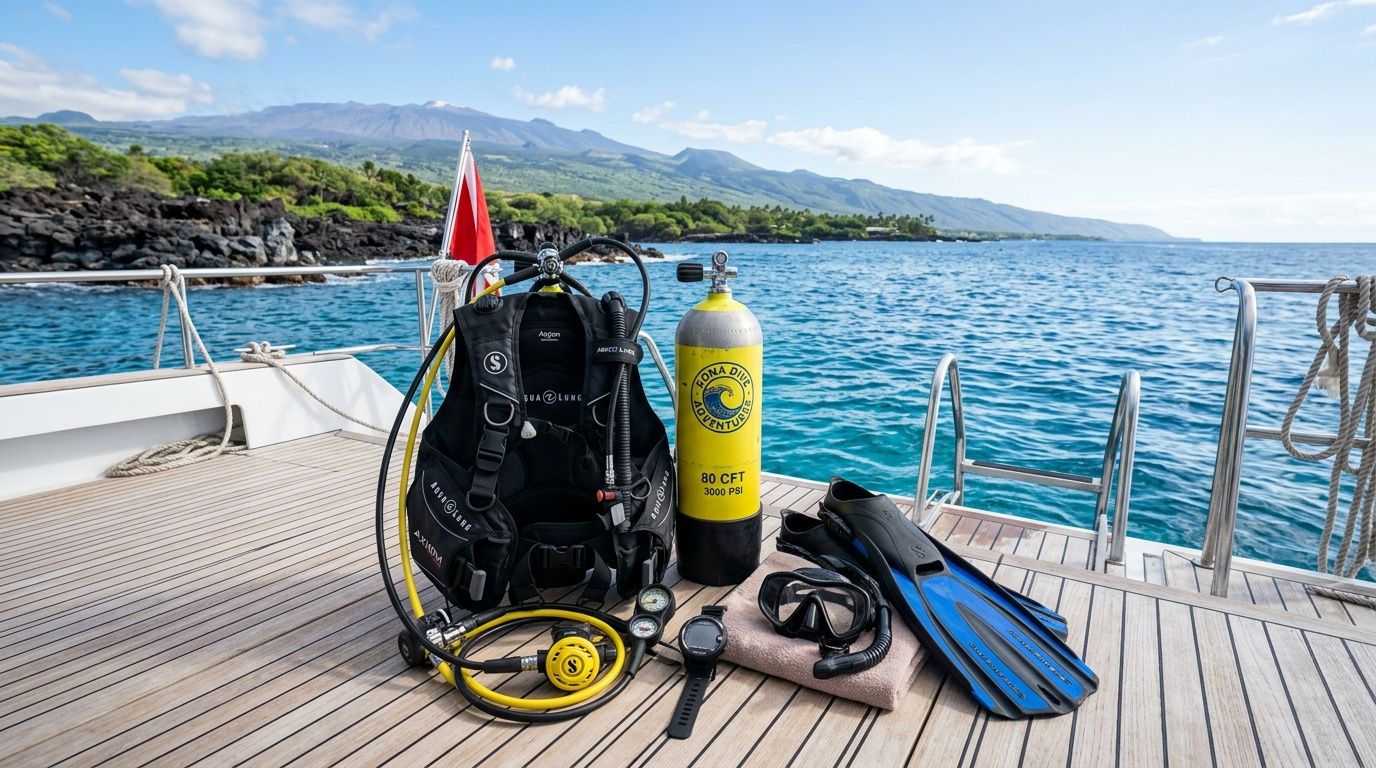
Start with classic day diving
Day diving is where you get your bearings, dial in weighting, and stop feeling like a traveler and start feeling like a diver on the island. Kona’s leeward coast frequently offers visibility exceeding 100 feet, though conditions can vary by site, and open-ocean spots like Au Au Crater are known for 100-foot-plus clarity that photographers love, as described in this guide to Big Island dive visibility.
That site selection matters more than most visitors realize.
A good operator doesn’t just run the same plan every day. They use local knowledge to choose where the water is cleanest and the experience will be strongest. On some days, an open-ocean site is the obvious call. On others, a more protected option makes more sense. That flexibility is part of what separates a smooth dive vacation from a mediocre one.
If you want a feel for one of the island’s signature experiences before booking, take a look at this page on the manta ray tour on the Big Island.
Book the manta dive, and choose the right site
The manta ray night dive deserves its reputation. It’s not overhyped. It’s one of those rare bucket-list dives that still delivers when you do it.
My opinion is simple. Garden Eel Cove is the superior choice for the manta dive. It’s more protected, the viewing area is better, and the surrounding reef makes the whole experience feel more complete. If you’re deciding between manta options, don’t overcomplicate it. Pick the location that gives you the cleaner setup and stronger viewing conditions.
You can book that experience directly on the 2-tank manta dive and snorkel tour page.
Show up calm, listen carefully to the briefing, and keep your body position clean on the bottom. Good manta encounters reward divers who stay still and let the animals own the water column.
A manta dive also works well in the middle of your trip. By then, most divers have shaken off travel rust and can enjoy the dive instead of fumbling with gear and buoyancy.
Then go weird with blackwater
If manta diving feels iconic, blackwater feels surreal.
You head offshore at night, suspend in the open ocean over deep water, and watch pelagic larvae and strange drifting life rise toward the light. It doesn’t feel like a reef dive. It feels like floating in a living science documentary. For experienced divers who think they’ve seen everything, this is often the dive that resets their expectations.
If that’s your kind of adventure, book the Blackwater night dive tour.
Blackwater isn’t the right first dive of your trip. It’s better after you’ve already done a couple of easy, controlled dives locally and you’re fully comfortable with your gear, trim, and situational awareness in the dark.
Save one day for advanced terrain
The Big Island’s volcanic structure is part of the appeal, so don’t leave without doing a dive that leans into that. Lava tubes, craters, swim-throughs, and deeper walls give advanced divers the type of underwater architecture that makes Kona feel different from standard tropical reef destinations.
If you’re looking for those more experienced profiles, use the premium advanced 2-tank trip page to see what fits your certification and comfort level.
Here’s the trip order I’d recommend for most certified divers:
- First morning: Easy day charter to get comfortable in local conditions.
- Second or third dive day: Manta night dive at Garden Eel Cove.
- Later in the trip: Blackwater or a more advanced long-range day.
That sequence works because your confidence grows with each outing. You’re not forcing the most technical or mentally demanding dive into the first window available.
The best itinerary is the one that builds
A lot of divers try to stack the flashiest experiences back-to-back. That sounds fun on paper. In practice, it can leave you rushed, overtired, and less present.
Use a build like this instead:
| Trip phase | What to book | Why it works |
|---|---|---|
| Early trip | Standard day diving | Easy reset after travel and a buoyancy tune-up |
| Mid trip | Manta night dive | You’re settled in and ready to enjoy it fully |
| Late trip | Blackwater or advanced charter | Best done once you’re sharp and comfortable |
That’s how I’d structure a real Kona trip for a friend, not just a blog reader.
Planning Your Dive Trip Seasons Safety and Gear
Kona is forgiving by dive-travel standards, but good trips still come from good planning. You don’t need to overengineer it. You do need to think through season, comfort, certification, and what gear merits space in your bag.
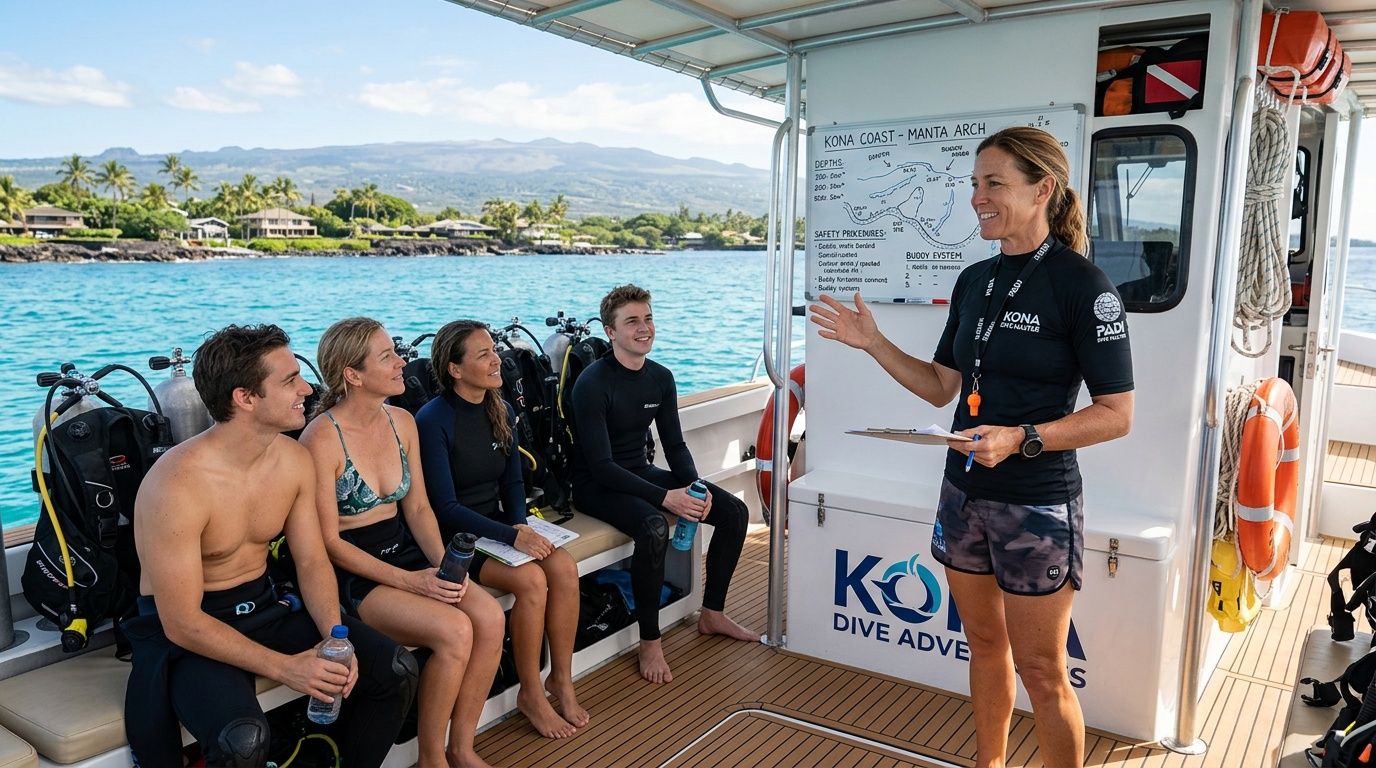
Conditions are warm, but your planning still matters
The Kona coast typically offers water temperatures of 75-85°F with visibility often exceeding 100 feet, and operators offering EAN32 nitrox can extend bottom times by 10-15 minutes on dives in the 60-100 foot range compared with air, according to this overview of Kona coast diving conditions and nitrox use.
That gives you two clear takeaways.
First, you can dive comfortably here across the year without treating the trip like an expedition. Second, nitrox is worth using if you’re certified for it and you’re planning multiple dives. More bottom time in that depth range is useful, and the safety margin is useful too.
Safety is mostly about honest self-assessment
Kona rewards divers who know what kind of diver they are right now, not what kind they used to be on their last trip.
If you haven’t been in the water for a while, start easy. If your buoyancy is rusty, don’t make blackwater your reunion with scuba. If deeper or more complex profiles make you tense, book the straightforward dives first and build back up.
A simple planning filter works well:
- Newly certified or returning after time off: Start with easy morning boat dives and refresh your core skills.
- Comfortable recreational diver: Add manta once you’ve had a checkout-style day locally.
- More experienced diver: Layer in advanced terrain or blackwater after you’ve settled into local conditions.
Rent less ego, more caution. Most vacation diving problems start when people try to pick dives for the story instead of for their current skill level.
Seasickness can ruin a good boat day
Even if you’re not usually seasick, don’t get cocky on vacation. Early departures, excitement, coffee on an empty stomach, and boat motion can hit differently than expected.
If you know you’re sensitive, bring a plan. Good options include the Ship-EEZ Seasickness Patch, Dramamine pills, Bonine pills, Sea Band wristbands, and Ginger chews.
I’d approach it like this:
- Use a patch or medication early: Take or apply it before the boat leaves, not after you already feel bad.
- Pack a backup option: Wristbands or ginger chews are easy to keep in your dry bag.
- Don’t skip breakfast entirely: Light food is usually smarter than coffee alone on an empty stomach.
Pack for diving, not for fantasy shopping
Most divers overpack clothes and underpack useful little items. Prioritize the things that make repeated boat diving easier.
Bring your mask if you trust it. Bring your computer if you know how it behaves. Bring a save-a-dive kit if you have one. And if you use a smartwatch or fitness watch around the water, this practical piece on choosing a better setup for swimming with a smartwatch is worth reading before the trip.
For a more complete dive-specific checklist, this guide to the gear you will need for your Kona diving adventure is useful.
What I’d put in the bag
| Priority | Bring it? | Why |
|---|---|---|
| Mask you trust | Yes | Familiar fit matters more than almost anything |
| Dive computer | Yes | Better continuity across multiple dives |
| Motion sickness backup | Yes | Cheap insurance for your boat days |
| Full personal kit | Optional | Rent if travel simplicity matters more |
| Extra random clothes | No | You’ll wear the same practical stuff repeatedly |
The best-planned trip isn’t the one with the most gear. It’s the one where every dive day starts simple, calm, and comfortable.
How to Choose the Right Dive Operator in Kona
Most visitors choose a dive operator too casually. They compare price, glance at a boat photo, and book. That’s backwards. On the Big Island, the operator shapes almost everything that matters, including site choice, safety culture, pacing, and how much you enjoy the day.
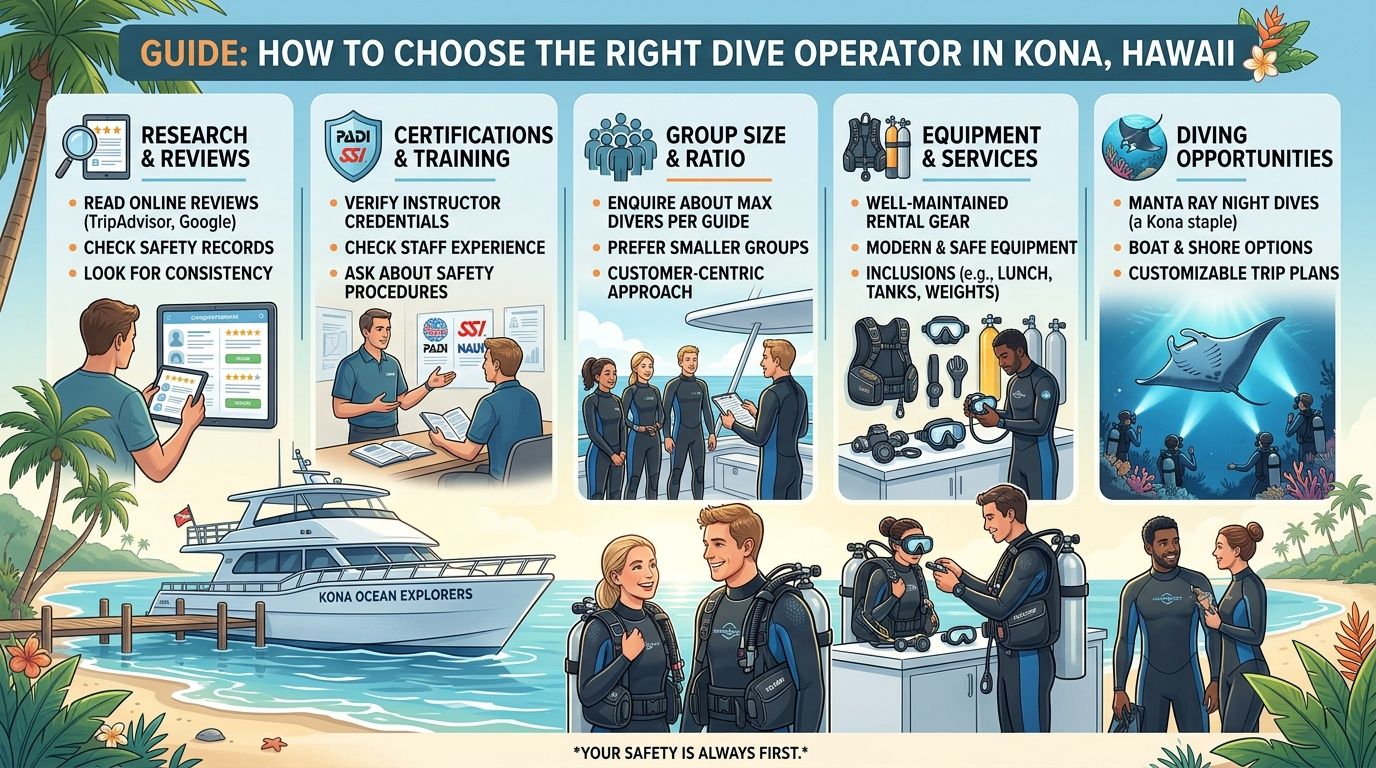
Start with the things that affect your dive
A strong operator usually gets the basics right in ways you’ll notice immediately and subtle ways you won’t.
Look for these signs:
- Clear trip matching: They should help place you on dives that fit your actual experience.
- Crew that briefs well: Good briefings are organized, specific, and easy to follow.
- Boat workflow that feels calm: Efficient setup matters. Chaos on deck usually leaks into the rest of the day.
- Thoughtful site selection: The crew should adjust plans around conditions rather than forcing the same itinerary.
That’s the baseline. If a shop can’t convince you on those points, keep looking.
Then look at comfort and value
Divers often underestimate how much small perks affect the overall trip. Nitrox access matters if you’re doing repeated dives. Well-maintained rental gear matters if you didn’t bring your own. Boat design matters if you like room to move, stable entries, and less clutter underfoot.
The operator should also make the day feel manageable for mixed groups. If you’re traveling with one diver, one snorkeler, and one person who just wants a smooth boat experience, organization counts.
A quick decision framework
Use this simple comparison when you’re narrowing choices:
| What to check | Good sign | Warning sign |
|---|---|---|
| Booking process | Questions about experience and goals | Only talks about payment |
| Dive briefing | Specific, structured, safety-focused | Vague and rushed |
| Site planning | Adapts to conditions | Same canned route every day |
| Gear and boat | Clean, organized, easy flow | Cluttered, confusing setup |
The operator isn’t just transport. They set the tone underwater before you ever hit the water.
If you want a local example to evaluate, this page on choosing a Kona diving company is relevant because it highlights the kinds of details divers should pay attention to when comparing options.
One practical point worth weighing is nitrox availability for repetitive diving. Another is whether the crew can support very different goals on the same trip, such as a straightforward reef charter for one diver and a more ambitious schedule later in the week for another. The right operator should help you sequence those choices without making the trip feel complicated.
My recommendation
Choose the shop that makes you feel like the day is already under control before you even board. That usually means responsive communication, smart trip placement, and a crew that sounds like they’ve done this a lot.
Don’t chase the cheapest seat unless your standards are low. In Kona, a better-run boat often produces a better dive day, even when the ocean itself is doing most of the work.
Frequently Asked Questions About Big Island Scuba
Some questions always come up right before booking. Good. That means you’re thinking like a diver, not just a tourist.
Can beginners dive on the Big Island?
Yes, but beginners should stay in their lane and book accordingly. Kona is friendly to newer divers because conditions are often calm and operators can choose approachable sites. That said, “beginner-friendly” doesn’t mean every signature dive is the right first move.
If you’re not certified and want to know what your options look like, this guide explains whether you can scuba dive in Hawaii without certification.
Do I need to be advanced certified for everything people talk about in Kona?
No. Many visiting divers can enjoy regular boat charters and some night experiences with standard recreational training and solid comfort in the water. More demanding dives are different. Blackwater, deeper profiles, and advanced terrain are better suited to divers who already have good buoyancy, awareness, and recent experience.
The right question isn’t “Am I allowed?” It’s “Will I enjoy this safely?”
Is the manta ray dive worth building a trip around?
Yes. If you’ve never done it, it’s one of the easiest yes decisions on the island. The key is to book it as part of a smart dive schedule, not as a random add-on when you’re exhausted or arriving jet-lagged.
I’d rather see you do fewer dives and enjoy the manta dive properly than cram your trip with too much and feel spent.
What if I’m traveling with non-divers?
That’s common. Big Island trips often include mixed groups, and that’s manageable if you plan clearly from the start. Divers can book scuba days while family members snorkel, relax, or do separate island activities.
If your group includes both confident divers and casual ocean people, choose operators and schedules that don’t force everyone into the same pace.
Should I bring all my own gear?
Bring what you know and trust most. For many divers, that means mask, computer, and maybe exposure gear. If traveling light matters more to you than familiarity, renting can make sense.
The deciding factor is simple. If a piece of gear affects comfort or confidence every minute of the dive, I lean toward bringing your own.
Is big island hawaii scuba good year-round?
Yes. The island is known for warm water and strong visibility, which is why dive travel works here so well across the calendar. Conditions still vary by day and site, so your best advantage is a crew that knows where to go when one plan looks weaker than another.
That’s another reason not to lock yourself into a rigid fantasy itinerary before you arrive.
How many dive days should I plan?
If scuba is one of the main reasons you’re visiting, give it more than a single morning. One day is enough to tease you. Multiple days let you experience the range that makes Kona special, including daytime reefs, night diving, and at least one more unusual profile if your experience supports it.
A better trip usually comes from variety, not from trying to repeat the same kind of dive.
What should I pack besides standard dive gear?
Keep the non-obvious stuff in mind:
- Motion sickness prevention: Even if you’re usually fine.
- Reef-safe sun protection and practical boat clothes: You’ll use these more than resort outfits.
- Dry bag and hydration habits: Boat days are easier when your setup is simple.
- Certification card and nitrox card if applicable: Don’t assume you can wing this at check-in.
Any final advice before I book?
Yes. Match your itinerary to your actual skill level, not your vacation ambition. Build your trip in layers. Easy day dives first. Signature night dives once you’re settled. More advanced experiences only if your comfort and recent diving support them.
That approach leads to better memories and fewer dumb mistakes.
If you’re ready to turn the trip from “maybe we’ll dive” into a real Kona dive plan, start with Kona Honu Divers. Look at the available charters, choose the dives that fit your experience, and book the schedule that gives you room to enjoy the island instead of rushing through it.