
A lot of travelers land on the Big Island with the same question. They’ve heard Kona diving is special, they’ve seen the manta photos, and they want to know how to turn a limited vacation window into dives that are worth the trip.
That’s the right question to ask.
Big island hawaii scuba isn’t just about picking a random charter and hoping the ocean delivers. The strongest trips come from matching your skill level to the right dives, choosing boat diving when it solves real access and safety problems, and building your schedule around the experiences this coast does better than almost anywhere else. Get that part right, and the island gives back in a big way.
Welcome to the Ultimate Underwater Paradise
You back-roll off the boat, look down, and the first thing that grabs you is the structure. Dark lava ledges step away beneath you, pockets in the rock hold schools of reef fish, and the whole site feels sharper and more dramatic than the broad coral gardens many divers expect in Hawaii.
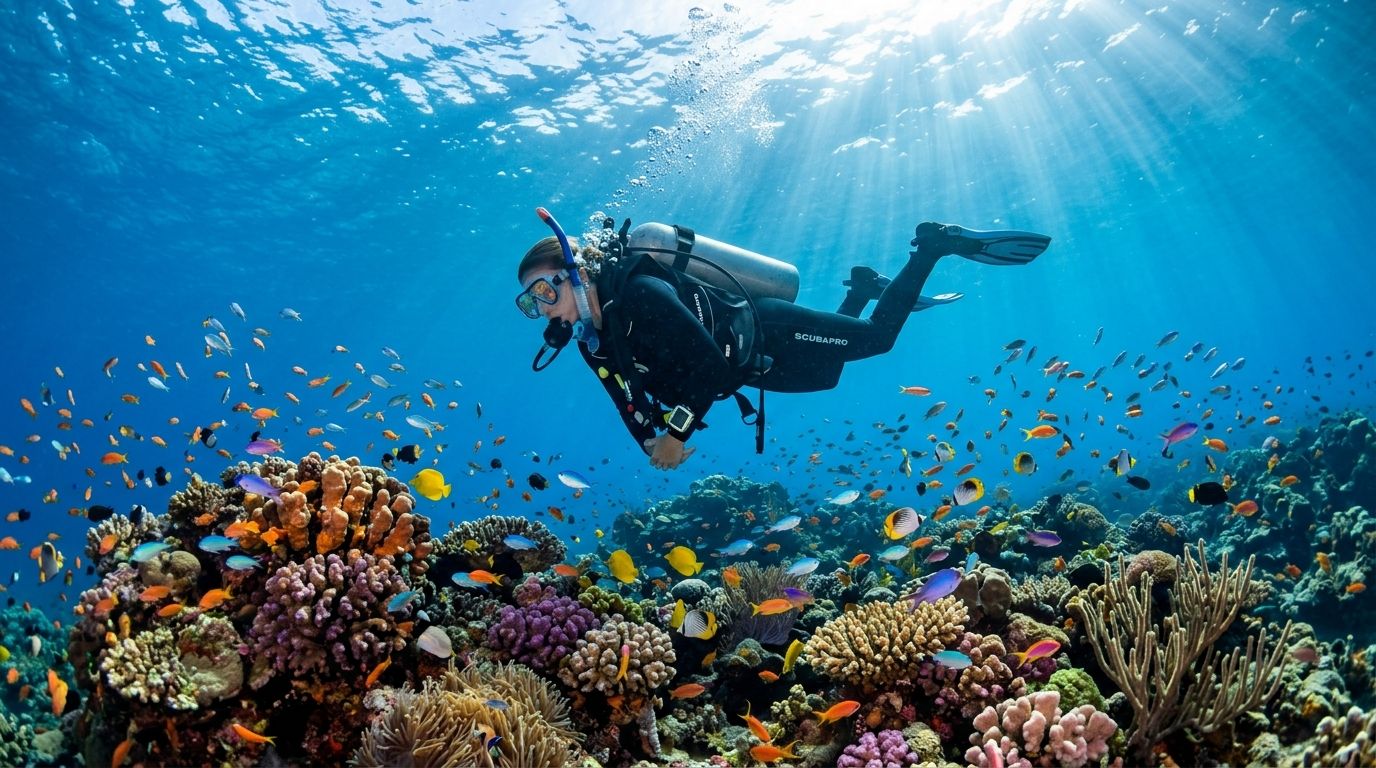
That first impression matters. Big Island diving has a distinct look and feel. The underwater terrain is young, volcanic, and full of relief, so even an easy reef dive can feel cinematic. You are not just drifting over coral heads. You are following lava fingers, swim-throughs, shelves, and broken basalt that create hiding places for eels, octopus, and the fish species Hawaii is known for.
For newer divers, that terrain makes the dive memorable without requiring complicated profiles. For experienced divers, it adds texture to everything, from fish behavior to wide-angle photography to simple navigation.
The other thing good operators understand is that a great Kona trip is rarely built site by site in isolation. It is built as a plan.
That means reserving the signature dives early, choosing boat diving when it gives you cleaner entries and access to better conditions, and leaving enough flexibility in the schedule for weather, surface intervals, and fatigue. On this coast, logistics are part of the experience. They are also part of safety. A well-run day with a crew that knows the moorings, current patterns, and diver mix on board usually produces better diving than a last-minute scramble ever will.
What the underwater world feels like
The Big Island rewards attention. A lava wall that looks barren from twenty feet away starts to fill in as you slow down. Butterflyfish work the cracks, nudibranchs show up on the hard substrate, and a single ledge can hold enough life to keep a patient diver occupied for most of the dive.
That range is why the island works so well for mixed groups. One diver can enjoy a calm, straightforward reef profile while another is focused on composition, macro life, or the shape of the lava itself. The dive still feels rich to both of them.
Practical rule: Book the experiences people travel here for first, then build the rest of the week around those dives.
Why people come back
Repeat visitors usually come back for the same reason. Kona gives them variety without forcing them to spend the whole trip adapting to rough conditions, long run times, or complicated entries. One day can be relaxed reef diving. Another can be a manta night dive. Another can call for stronger buoyancy control and more comfort around lava topography and depth.
That is why operator choice matters from the start. A top-tier Kona boat is not just transportation. It helps you match the right dives to your skill level, avoid wasting vacation days on poor-fit charters, and set up the kind of trip that feels smooth from check-in to your final safety stop.
Why Kona's Coast is a Diver's Dream
Kona works because geography does a lot of the heavy lifting. The coast sits on the leeward side of the island, protected by massive volcanic shields from the prevailing trade winds. That shelter is the foundation for the calm water and clarity divers talk about year after year.
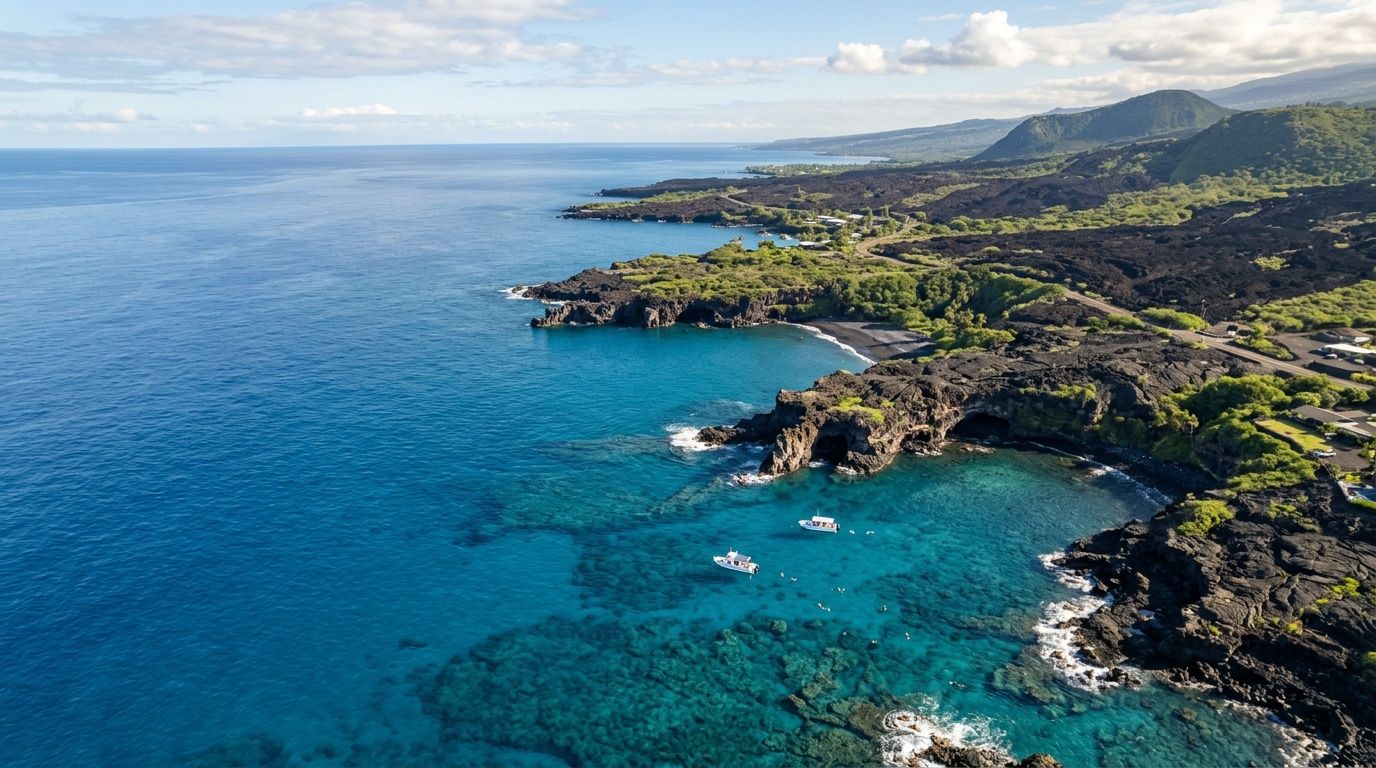
The result is straightforward. The Kona coast regularly delivers visibility over 100 feet and 75-80°F water year-round because that leeward position reduces surface agitation and helps preserve underwater clarity, as described in Kona coast diving conditions.
The leeward advantage in plain terms
If you’ve only done diving in places where the site list changes constantly with weather, Kona feels refreshingly dependable. Protected water makes planning easier. It also makes briefings more useful because the site often looks underwater the way the guide described it on deck.
That reliability helps different divers in different ways:
- Newly certified divers get conditions that are easier to manage without burning energy on surge and rough entries.
- Photographers get cleaner water and better light penetration.
- Travelers with short itineraries lose fewer dive opportunities to marginal ocean conditions.
- Families and mixed groups have fewer moving parts to manage.
Why boat schedules are more dependable here
Strong dive operations thrive where the coastline supports consistent access. Kona gives crews a wide working area along the sheltered side of the island, which makes it easier to choose sites that match both conditions and guest ability on a given day.
That’s one reason Kona diving tours on the leeward coast are such a practical starting point when you’re building a trip. The coast itself supports the kind of dependable schedule most vacation divers need.
Calm water doesn’t remove the need for good judgment. It gives crews more good options.
Kona compared with rougher access diving
Some divers chase novelty and forget that reliability is part of quality. A remote site sounds exciting until the entry is awkward, the current is pushing, and half the group starts the dive already stressed.
Kona’s biggest strength is that it usually doesn’t force that trade.
| Dive planning factor | Kona coast reality | Why it matters |
|---|---|---|
| Water clarity | Often very high | Better navigation and more enjoyable wildlife viewing |
| Surface conditions | Commonly manageable | Easier entries and calmer surface intervals |
| Site variety | Broad range along the coast | Easier to match divers to the right dive |
| Trip planning | More predictable | Better for short vacations and fixed schedules |
That predictability is a real advantage, not a boring one. It’s what lets divers spend more of their trip enjoying the water instead of adjusting to it.
The Unmissable Dives of the Big Island
Some dive destinations ask you to build your own highlight reel. Kona doesn’t. A few experiences rise to the top quickly, and if you plan around them, your trip gets better.
The manta ray night dive
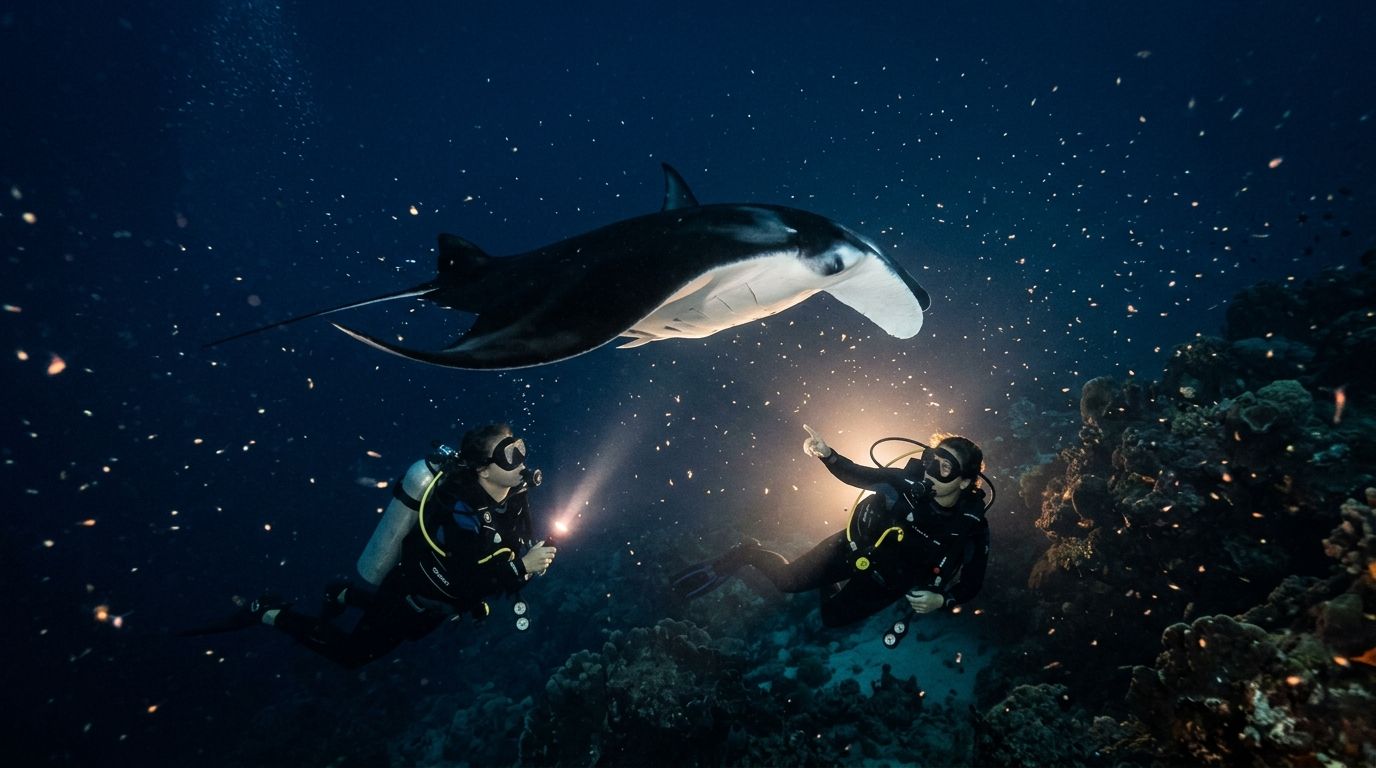
If you only have room for one signature dive, make it the manta night.
This experience has been running since 1992, and sites such as Garden Eel Cove report an average of 15 manta sightings per dive, according to this overview of Big Island scuba diving history and manta diving. It’s also one of the defining reasons the island draws 150,000+ annual dive tourists.
Garden Eel Cove stands out for practical reasons, not hype. Its protected location helps keep the experience orderly. The viewing area works well for divers who want a stable, controlled place to settle in. The surrounding reef structure adds value even before the mantas arrive.
That last point matters. A manta dive should feel like a complete dive, not just a waiting room in the dark.
For many visitors, the easiest way to understand the experience is to compare scuba and surface options side by side. The surface version is popular too, and this manta ray night snorkel in Kona helps non-divers or mixed groups see how the encounter works.
If you’re booking the scuba version, manta dive trips at Garden Eel Cove are the logical target.
What works on this dive:
- Settle early: Get stable, stay low, and let the action come to you.
- Keep your light discipline clean: Too much fidgeting turns an elegant encounter into a distracting one.
- Treat it as wildlife observation: The best manta dives happen when divers stop trying to improve the show.
What doesn’t work:
- Chasing mantas: You won’t improve the encounter. You’ll just make the group messier.
- Overloading yourself with camera tasks: If your buoyancy slips when you film, you’re doing too much.
- Booking by price alone: On a crowded night dive, site setup and in-water control matter.
The blackwater dive
Blackwater isn’t a reef dive at night. It’s a completely different category.
You descend in open ocean on a lit line with no reef under you and no familiar bottom reference. Then the pelagic world rises into the light. Larval fish, gelatinous drifters, squid, and strange midwater life appear out of darkness in a way that feels more like watching a migration than touring a dive site.
Composure matters. Divers who enjoy blackwater usually have solid buoyancy, good situational awareness, and enough experience to stay relaxed without a seafloor for reference.
Blackwater night diving off Kona is worth considering if you already know you like unusual dives more than conventional reef sightseeing.
Some divers come out of blackwater talking about species. Others come out talking about how it changed their sense of the ocean. Both reactions are normal.
Advanced and long-range diving
The Big Island also rewards divers who want more ambitious daytime profiles. That doesn’t necessarily mean extreme diving. It usually means sites that ask for better trim, stronger awareness, and a willingness to manage more complex terrain.
For these trips, lava tubes, arches, deeper reef structure, and less casual site selection become the draw. Advanced divers tend to get the most from these trips when they show up current in the water, honest about their comfort level, and ready to follow a briefing precisely.
If that’s your lane, advanced long-range charters in Kona are where to look.
A simple way to choose:
| Dive type | Best for | Main trade-off |
|---|---|---|
| Manta night | Almost every certified diver | Night diving adds task loading |
| Blackwater | Experienced, calm divers | No bottom reference and open-ocean setting |
| Advanced long-range | Divers wanting more technical-feeling terrain | Requires better control and comfort |
The mistake I see most often is divers booking the most dramatic-sounding option instead of the one they’ll enjoy most. On the Big Island, the right dive for your actual skill level almost always beats the flashy one you’re not ready to appreciate.
Planning Your Dive Your Skill Level and Certifications
The good news is that a lot of Big Island diving is available to regular recreational divers. Most of the island’s 1,000+ dive sites are accessible to Open Water divers, while advanced training opens more specialized experiences, and guided boat diving offers a safer, simpler experience than independent shore diving at places like Two Step, where currents and crowds require strong local knowledge, as noted in this guide to shore diving trade-offs on the Big Island.
That means your first planning question isn’t “What’s the coolest dive?” It’s “What dives match the way I dive right now?”
If you're newly certified
Open Water divers can have an excellent Kona trip. Calm boat diving, strong visibility, and reef-focused dives are often the right choice when you’re still building comfort after certification.
What usually works best:
- Start with daytime boat dives: Give yourself a chance to settle in before adding a night dive.
- Be honest about recency: If your last dive was a while ago, say so when booking.
- Keep task loading low: This isn’t the trip to test new camera systems and new gear configurations at the same time.
If you’re not certified yet, introductory programs can still get you underwater in a controlled format. Learn to scuba in Kona is the first step if you want to see whether scuba fits your vacation.
If you're experienced and want more range
Advanced divers have more options, but they also need more self-awareness. Night diving, blackwater, and long-range trips are more rewarding when you already handle buoyancy, gas awareness, and group positioning without much mental strain.
A few practical filters help:
- Choose blackwater if you stay calm without a bottom reference.
- Choose advanced daytime charters if volcanic structure and site variety are what you want most.
- Choose nitrox if you plan multiple dives and want more flexibility in repetitive recreational profiles.
The best divers to guide are usually the ones who know exactly what they enjoy and exactly what they don’t.
What to sort out before you fly
Packing and planning errors usually start on land, not on the boat. A simple pre-trip resource like this complete Hawaii vacation checklist helps catch the basics before you realize you forgot something small but annoying.
Bring your certification info, confirm your comfort with the dives you booked, and don’t overstate your experience. On the Big Island, accurate self-assessment makes the trip smoother for everyone.
Choosing Your Dive Operator Why Kona Honu Divers Excels
The operator you book shapes the trip more than most visitors expect. On paper, many charters can look similar. In practice, the important differences show up in boat design, gear condition, briefing quality, and how the crew handles mixed experience levels.
What matters when choosing an operator
A serious diver should look for four things first:
- Safety culture: Listen for clear briefings, realistic site planning, and conservative decision-making.
- Boat workflow: A well-run boat saves energy before you even enter the water.
- Crew experience: Good guides don’t just know the reef. They know how to manage people.
- Fit for your goals: Some operations are better for casual reef diving, others for more specialized trips.
A polished website doesn’t tell you much about any of that. Operational details do.
Why this operation gets attention from divers
For travelers comparing options, one useful reference point is this overview of Kona Honu Divers being voted best dive operator in Kona. The company runs custom boats, supports a wide range of trips, and is known for organized boat diving that suits both newer and experienced divers.
It also offers free nitrox, which matters for divers planning multiple boat dives and wanting more flexibility on repetitive profiles. That’s a practical value point, not marketing fluff.
Just as important, an operation with a clean, predictable deck routine tends to create better diving. Divers gear up calmer, entries happen with less chaos, and guides spend less time correcting avoidable mistakes.
The real trade-off between cheap and good
Budget matters. But the cheapest seat on the water can become expensive in all the wrong ways if the boat is cramped, the gear process is sloppy, or the site match is poor.
A stronger operator usually improves:
| Decision area | Weak operator result | Strong operator result |
|---|---|---|
| Briefings | Generic and rushed | Site-specific and useful |
| Entries and exits | Stressful | Smooth and well-timed |
| Diver matching | Mixed poorly | Better aligned by experience |
| Overall day | Feels reactive | Feels organized |
That difference is especially noticeable on night dives and on any trip with less forgiving logistics.
Essential Gear Safety and Seasonal Considerations
You feel this section in the first ten minutes on the boat. A diver with a mask they trust, fins that don’t cramp their feet, and a seasickness plan already in place usually starts the day calm. A diver sorting through unfamiliar gear while the harbor chop builds often burns energy before the first descent.
What to bring and what to rent
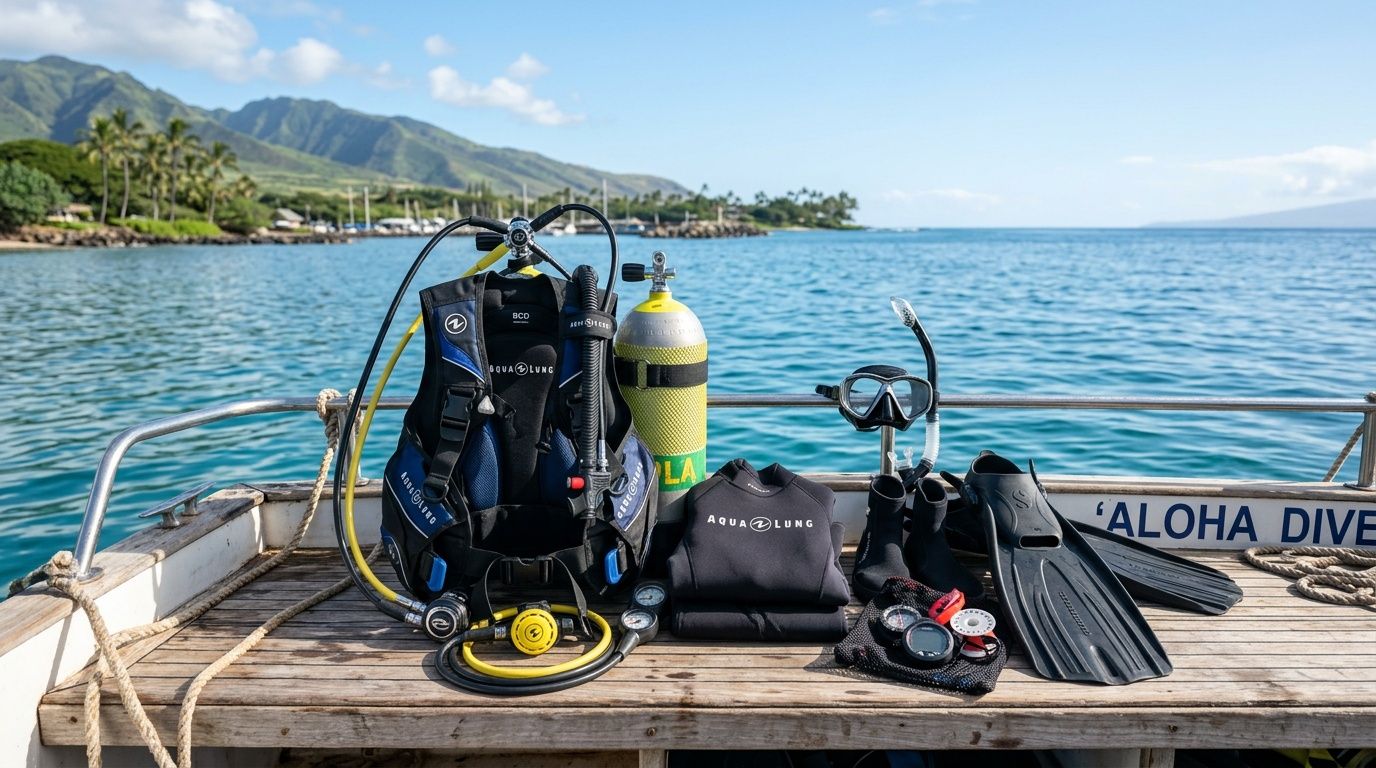
Bring the pieces that directly affect fit, comfort, and confidence. For visiting divers, that usually means your mask, computer, and exposure gear if you are particular about thickness or cut. I also like seeing divers carry a small save-a-dive kit with spare mask strap, fin strap, and mouthpiece. Those little parts fail more often than tanks or regulators do.
Renting the heavier items often makes more sense. BCDs, regulators, tanks, and weights travel poorly, add baggage cost, and still need to be checked and adjusted on arrival. Good rental gear from a well-run Kona operator is serviced, sized correctly, and set up for local diving conditions. That matters more than hauling your entire closet across the Pacific.
Before any boat day, it helps to review the basics of safe operations on the water. This essential boat safety equipment checklist is written for boaters, but divers can use it to ask better questions about emergency gear, communications, and readiness.
Seasonal comfort and exposure protection
Big Island water is comfortable by scuba standards, but comfort changes fast once you add multiple dives, wind on the ride home, and a night entry. A 3 mm full suit works for many divers. Some run cold and are happier in a 5 mm, especially on repetitive dive days or during winter.
Plan your thermal protection around the longest part of the day, not the first splash. If you are cold by the second tank, your air consumption usually climbs and your focus drops with it. That is a real trade-off, not a minor inconvenience.
Winter adds another layer to the experience. The ride out can include whale blows, spouts, and songs carrying through the water column, even when the dive plan is focused on reefs or mantas. You should treat that as a seasonal bonus, not as something to expect on every trip.
Seasickness is easier to prevent than recover from
Motion sickness can ruin a dive day fast. It is much easier to prevent than to fix once the boat is already rolling.
Useful options include:
- Ship-EEZ Seasickness Patch: Ship-EEZ patch for motion prevention
- Dramamine pills: Dramamine for boat-day seasickness support
- Bonine pills: Bonine as another motion sickness option
- Sea Band wristbands: Sea Band style wristbands for non-medication support
- Ginger chews: Ginger chews for a simple stomach-friendly option
Take your preferred remedy before departure, not after symptoms start. Show up hydrated, eat something light, and avoid a big greasy breakfast. If you want a dive-specific breakdown, how to avoid sea sickness on Kona dive boats gives practical timing and prevention tips.
One last point from years on these boats. The divers who have the best Big Island trips are rarely the ones carrying the most gear. They are the ones who stay warm enough, keep their setup simple, and solve small problems before the lines are untied.
Sample Big Island Scuba Itineraries
Good itineraries leave room for energy, weather judgment, and surface intervals. Bad itineraries try to do everything and end up making every dive feel rushed.
Three-day weekend plan
This version works well for certified divers who want one signature experience without overloading the trip.
- Day 1: Easy arrival day. No pressure. Get settled and organize gear.
- Day 2: Morning local reef diving on a 3-tank local charter in Kona. This gives you broad exposure to Kona’s volcanic reef structure in daylight.
- Day 3: Keep the morning relaxed, then do the manta night.
That sequence works because your daytime diving comes first. You get comfortable in Kona water before adding a night profile.
Five-day dive-focused vacation
This one suits divers who want variety.
| Day | Focus | Why it fits |
|---|---|---|
| 1 | Arrival and rest | Start fresh |
| 2 | Daytime reef boat dives | Reacclimate and check weighting |
| 3 | Manta night | Signature wildlife experience |
| 4 | Recovery morning or light activity | Stay fresh for the next big dive |
| 5 | Blackwater or advanced charter | Finish with the most specialized option |
Family or mixed-group version
If some people dive and others don’t, don’t force everyone into the same schedule every day. Let divers take a dedicated boat day while the rest of the group plans a shore day, sightseeing, or a separate ocean activity.
That usually produces a happier trip than trying to make every day fit everyone equally.
Frequently Asked Questions About Big Island Scuba
A lot of divers ask these questions after they have booked flights but before they have chosen how they are going to dive. That timing matters. The right answers shape your schedule, your operator choice, and how much you will enjoy the water once you are here.
What’s the best month to dive in Kona
Kona is a year-round dive destination, so the better question is what kind of trip you want.
Late summer into early fall often brings warm water and very clear conditions. Winter can be excellent too, with the added bonus of humpback whales in the area. You may hear them underwater on some dives, even when you never see them. Conditions still change day to day, so a good operator matters more than chasing one perfect month on the calendar.
I’m not certified. Can I still dive
Yes. An introductory scuba program is usually the right starting point for visitors who want to try diving without committing to a full certification course before the trip.
That said, not every person is a good candidate on every day. Comfort in the water, ability to follow instructions, and honest communication about nerves all matter. If someone in your group is unsure, say that up front. Good dive staff can place you in the right program instead of pushing you into a dive that feels too ambitious.
What bigger marine life might I see besides manta rays
You can see green sea turtles, spinner dolphins, reef sharks, and large schools of pelagic fish, depending on the site and conditions. The draw of Kona is not just one signature animal. It is the range of encounters across different dive styles and times of day.
Keep expectations realistic. Wildlife is never guaranteed, and that is part of what keeps these dives wild and worth doing.
Is shore diving a good idea for visitors
Sometimes. For experienced local divers with the right site knowledge, shore diving can be excellent. For visitors, it is often harder than it looks.
Entries can be slick, surf can build fast, and an easy exit at high tide may be awkward later in the dive. If you do not know the entry, the bottom profile, and the typical surge pattern, boat diving is usually the safer and more enjoyable call. I have seen plenty of capable certified divers have a rough time from the shoreline because they underestimated the entry.
If you want help turning these answers into a real plan, Kona Honu Divers is a practical place to start. Their schedule includes reef diving, manta trips, training, and more advanced charters, which makes it easier to match the diving to your certification, comfort level, and vacation timing.