
Picture this: you’re sinking into warm, unbelievably clear blue water. Sunlight streams down from the surface, lighting up ancient lava tubes and coral gardens buzzing with life. That’s what Big Island Hawaii scuba diving is all about—an incredible underwater world where every dive, from encounters with gentle sea turtles to exploring wild volcanic formations, feels like a new discovery. For anyone ready to jump in, a whole range of diving tours are waiting.
Why The Big Island Is A Diver's Paradise
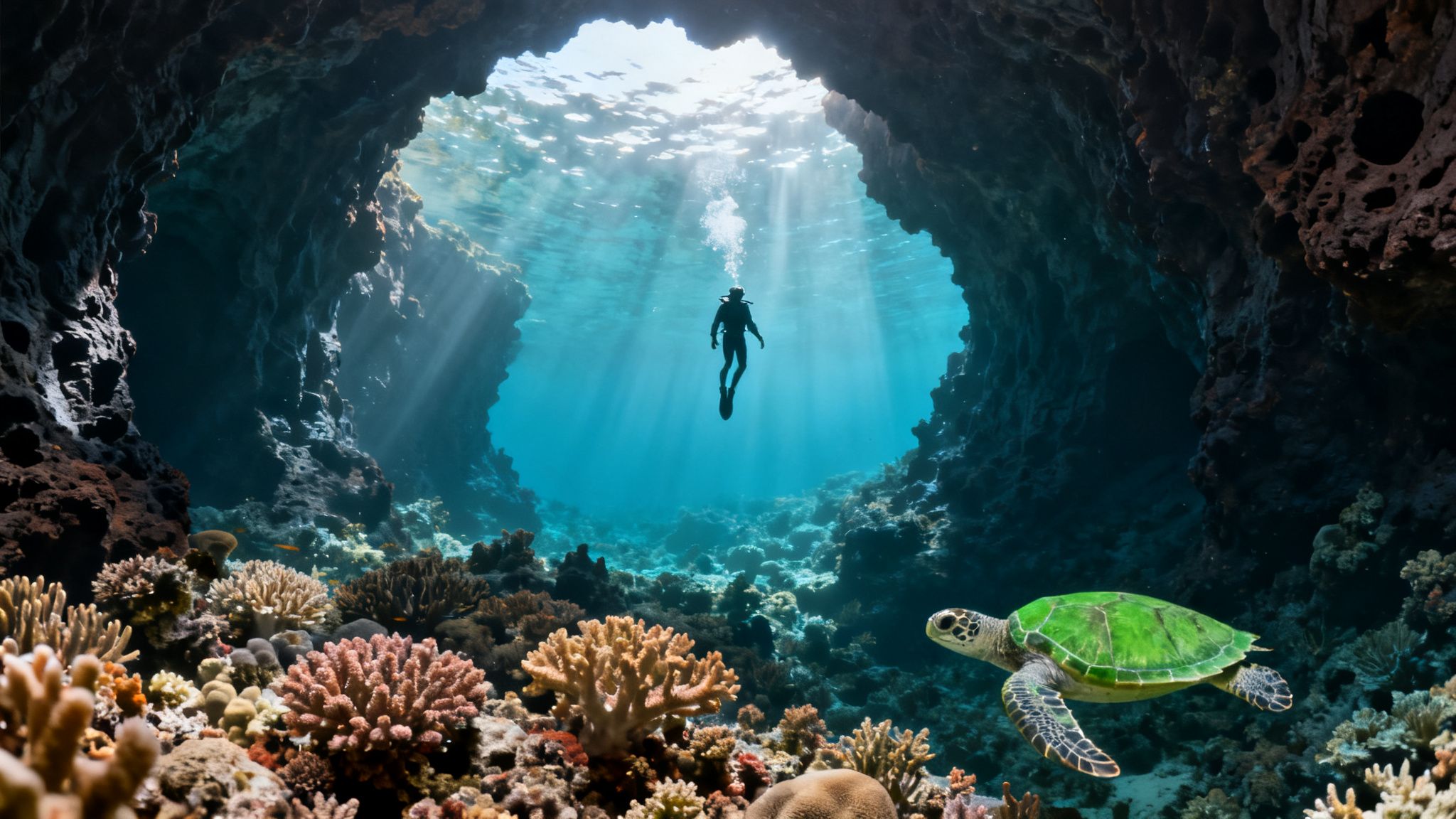
The Big Island isn't just another pretty spot in the tropics; it's the undisputed heart of scuba diving in the entire Hawaiian archipelago. Its one-of-a-kind geology, shaped by millennia of volcanic fire, has carved out a dramatic underwater landscape you won't find anywhere else on the planet. Divers get to explore a maze of lava tubes, glide through majestic arches, and navigate massive pinnacles that jut up from the deep.
What really puts the Kona coast on the map for divers is its consistency. The massive volcanoes on the island act as a natural shield, keeping the waters here incredibly calm and clear. It’s not uncommon for visibility to stretch well beyond 100 feet, creating near-perfect conditions almost every day of the year. This makes it an amazing place for your very first dive or your hundredth.
Big Island Scuba Diving at a Glance
Here’s a quick summary of what makes the Big Island a world-class scuba destination.
| Key Feature | Why It Matters for Divers |
|---|---|
| Volcanic Topography | Explore unique underwater landscapes like lava tubes, arches, and pinnacles created by ancient lava flows. |
| Exceptional Visibility | Calm, sheltered waters often provide over 100 feet of visibility, offering stunning, panoramic underwater views. |
| High Marine Biodiversity | The waters are a magnet for life, with a high concentration of species you can only find in Hawaii. |
| Iconic Marine Life | Home to world-famous Manta Ray night dives and frequent sightings of turtles, dolphins, and even whales. |
| Year-Round Diving | Consistent water temperatures and calm conditions mean you can plan a dive trip any month of the year. |
From the moment you hit the water, it's clear why this place is so special for underwater exploration.
An Unrivaled Underwater Ecosystem
The sheer amount of marine life here is astounding. The nutrient-rich waters fuel a vibrant ecosystem where bumping into incredible sea creatures is just part of a normal day.
- Honu (Green Sea Turtles): You’ll see these gentle giants everywhere, either resting on the reef or soaring gracefully past you.
- Spinner Dolphins: It's common for playful pods to escort the dive boat, and sometimes they'll even zip by during a dive.
- Manta Rays: The Kona coast is globally famous for its reliable manta ray encounters, a true bucket-list experience for any diver.
- Endemic Species: A huge number of the fish you'll see are found only in Hawaiian waters, making every dive a unique sightseeing trip.
This rich tapestry of life, set against the stunning volcanic backdrop, makes every single dive an adventure. It's no wonder the island has become a global hotspot for underwater explorers, drawing around 100,000 certified scuba dives annually and welcoming over 150,000 dive tourists each year. The warm water helps, too—a simple 3mm wetsuit is all you need to stay comfortable. You can dive deeper into what makes the Big Island a top dive location on konahonudivers.com.
Whether you're exploring a shallow reef or dropping down to a deep volcanic pinnacle, Big Island Hawaii scuba diving is an unforgettable journey into a world of brilliant color and breathtaking beauty.
Experiencing The Legendary Manta Ray Night Dive
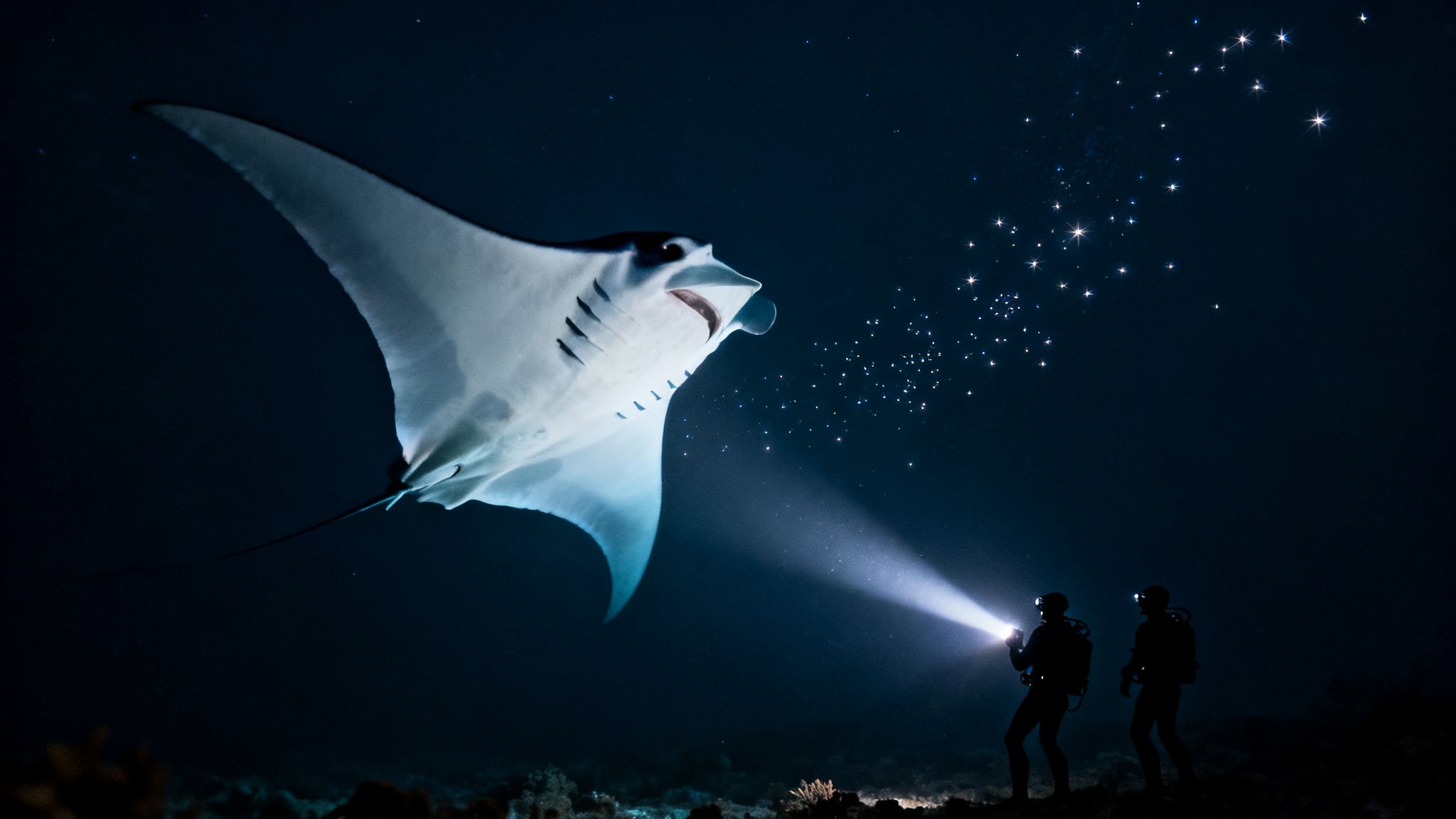
This isn’t just another checkmark in your logbook. The world-famous Manta Ray Night Dive is an underwater ballet, a breathtaking performance that’s rightfully earned its place as one of the most unforgettable dives on the planet. It's the signature Big Island Hawaii scuba experience, an encounter so reliable and awe-inspiring that divers fly in from all corners of the globe just to witness it.
The magic behind the dive is beautifully simple. Powerful lights are placed on the seafloor, which attract clouds of microscopic plankton—the mantas’ favorite meal. As the plankton concentrates in the light, the graceful rays glide in for their nightly feast. The best way to see them is with a dedicated manta ray dive tour.
The result is a mind-blowing spectacle. Massive mantas, with wingspans reaching up to 16 feet, soar and somersault through the beams of light, often coming within inches of your mask. It turns the Kona coastline into a spectacular stage for some of the ocean's most gentle giants.
Why Garden Eel Cove Is The Place To Be
While you can see mantas at a few spots, one location consistently delivers a superior experience: Garden Eel Cove. Known to local divers as "Manta Heaven," it is the superior choice for a manta dive tour because its protected location, better viewing area, and healthier reefs make all the difference.
- A Protected Location: Tucked away from the open ocean, the water here is often much calmer, making for a more comfortable and predictable dive.
- The Best Viewing Area: The bottom topography creates a natural amphitheater. Divers can settle onto the sand and look up, giving the mantas a wide, open stage to perform their acrobatic feeding maneuvers right over your head.
- A Healthier Reef System: The surrounding reef is vibrant and teeming with life, so the entire dive—from your descent to the main event—is visually stunning.
Choosing an operator that goes to Garden Eel Cove usually means a more serene and spectacular show, away from some of the more crowded locations. You can dive deeper into the science behind the Kona Manta Ray Night Dive to understand what makes it all work.
What to Expect on Your Manta Adventure
Your trip starts with a boat ride along the stunning Kona coast as the sun begins to set. On the way, the guides will give you a full rundown, explaining manta ray behavior, safety protocols, and how to interact responsibly with these protected animals. It’s a fascinating briefing that only builds the anticipation for what’s to come.
Once you hit the water and descend, you’ll find your spot on the ocean floor and aim your light upward, adding to the "plankton buffet." And then, the show begins.
It’s hard to put into words what it feels like to watch these colossal, graceful creatures glide effortlessly just above you. Sightings are incredibly reliable, too. Recent reports from Kona charters often show high counts—like 23 mantas on October 10th and an incredible 32 on November 23rd. You can see for yourself by checking out the latest manta ray sighting reports from Jack's Diving Locker.
This dive is pure magic. It’s impossible to describe the feeling of watching a massive fish the shape of a stealth bomber coming into vision. It’s akin to watching your child ride a bike for the first time or finding a winning lottery ticket.
This isn't just a dive you'll remember; it's a core memory you'll cherish for a lifetime. If there's one underwater experience you absolutely cannot miss on the Big Island, this is it.
Exploring Dive Sites Beyond The Manta Rays
The manta ray night dive might be the headliner, but it’s really just the opening act for the incredible underwater world the Big Island has to offer. The same volcanic power that forged the island itself also sculpted a submerged landscape of breathtaking variety. Trust me, there’s a perfect dive here for absolutely everyone.
Along the Kona coast, you’ll find a huge collection of vibrant reefs, dramatic drop-offs, and one-of-a-kind lava formations. Once you venture beyond the famous manta sites, you start to see the true depth of Big Island Hawaii scuba diving, where the daytime adventures are every bit as magical as the night.
Daytime Reef Dives and Turtle Sanctuaries
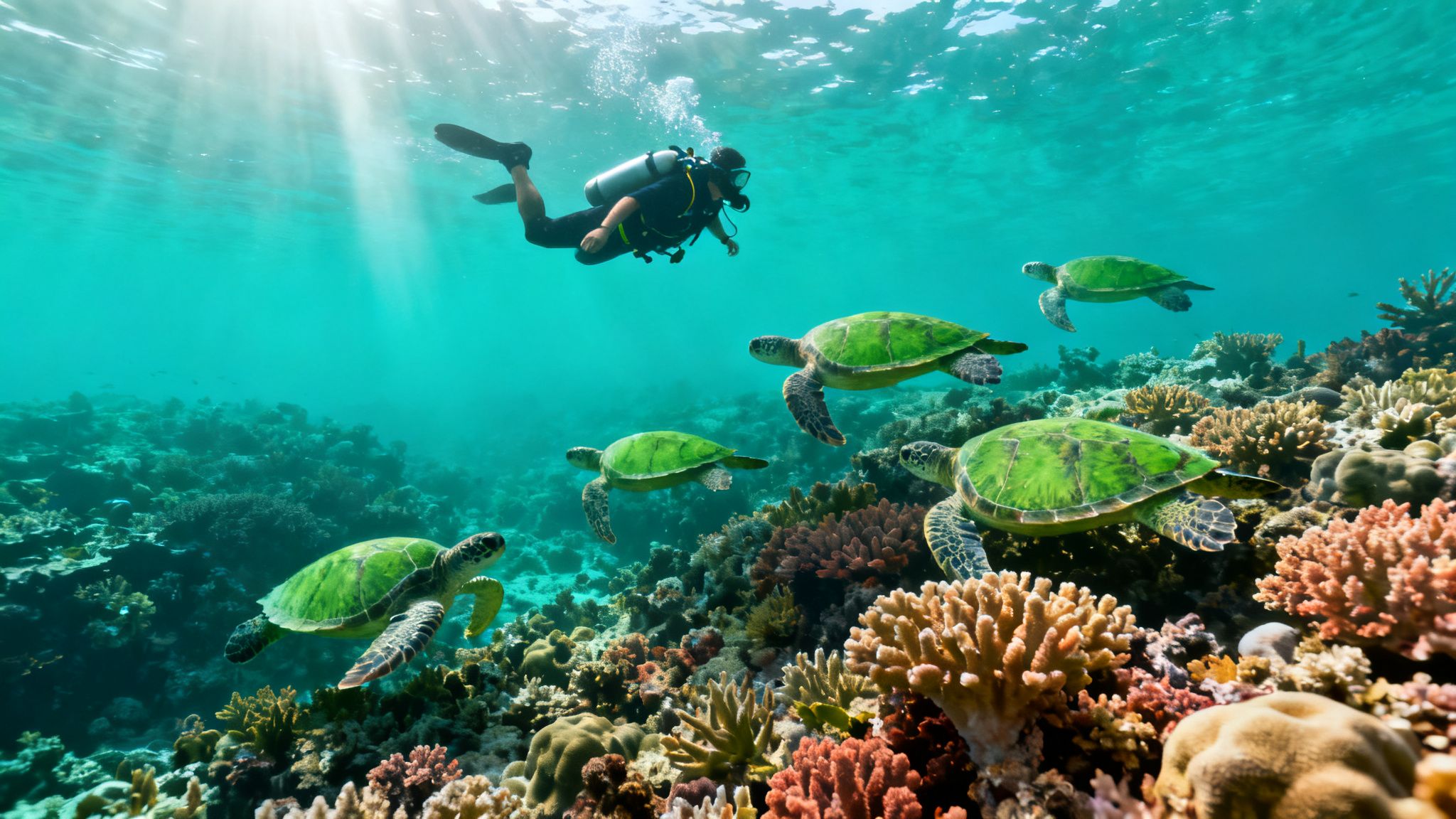
Kona's daytime reef dives feel like jumping into a living kaleidoscope. Sites like the historic Kealakekua Bay, which are naturally sheltered from the open ocean, are basically underwater nature preserves packed with life. Imagine sprawling coral gardens that are home to a dizzying number of fish species, many of which you can only find right here in Hawaii.
But let's be honest, the real stars of the show during the day are the Hawaiian green sea turtles, the honu. It’s never a question of if you'll see a turtle, but how many. You’ll find them everywhere—chilling on the reef, munching on algae, or just soaring through the water with effortless grace. These calm, protected bays offer some of the most peaceful and picture-perfect diving you could ask for.
The sheer density of life on a healthy Kona reef is something you have to see to believe. It’s a totally different vibe from the night dive—a bright, sun-drenched world where you could spend an entire tank just watching the little dramas of reef fish and turtles play out.
These spots are fantastic for divers of all stripes, whether you're fresh off your certification or a seasoned pro who just wants a beautiful, relaxing dive. The crystal-clear, warm water makes for an easy and unforgettable experience. If you're curious about the full range of what's out there, you can explore more of the top Big Island scuba diving sites here.
The Mysterious Kona Blackwater Dive
Ready for something completely different? The Kona Blackwater Dive is an experience straight out of a sci-fi movie. This isn't your typical reef dive. It’s a one-of-a-kind pelagic adventure into the deep, dark, open ocean, and you can book a Blackwater Dive tour to experience it yourself.
At night, you drift over thousands of feet of water, tethered to the boat, and simply wait. You're there to witness one of the planet's largest migrations, as strange and wonderful creatures rise from the abyss to feed near the surface. You'll see things that look like they belong on another world:
- Bioluminescent jellies that glow and pulse with an eerie light.
- Translucent larval fish that look like tiny, intricate glass sculptures.
- Pteropods and other bizarre invertebrates drifting in the darkness.
This dive is a massive thrill for adventurers and a dream come true for macro photographers. It’s a rare peek into a hidden universe that few people will ever get to see, and it completely redefines what scuba diving can be.
Advanced Diving: Lava Tubes and Pinnacles
For those with a bit more experience under their belts, the Big Island’s volcanic geology serves up an incredible underwater playground. The coastline is laced with dramatic lava tubes, massive archways, and deep pinnacles that offer a more challenging, and ultimately more rewarding, dive. There's nothing quite like navigating through an ancient lava tube and seeing shafts of sunlight piercing the ceiling from above.
These advanced sites often have stronger currents and deeper profiles, which in turn attract bigger marine life. It’s not uncommon to encounter huge schools of jacks, circling reef sharks, or majestic eagle rays patrolling the edges of the reef. Dives like these demand solid buoyancy control and an adventurous spirit, making them ideal for anyone on a dedicated advanced dive tour. It feels like you’re diving through the island's geological history—a powerful experience you won't soon forget.
How To Plan Your Perfect Big Island Dive Trip
Alright, you've got the incredible dives picked out—now for the nitty-gritty that makes a trip go from good to truly unforgettable. Planning your Big Island Hawaii scuba adventure is actually pretty simple, mainly because the Kona coast serves up amazing conditions all year long. Still, a little insider knowledge on timing, packing, and gear can make a world of difference.
Think of this as your logistical playbook. We'll walk through the key questions so you can show up relaxed, prepared, and ready to hit the water.
When Is The Best Time to Dive?
Honestly, there’s no bad time to dive in Kona. The "best" time really just boils down to your personal preferences for what you want to see and feel.
- Summer (May – October): This is the season for those famously calm, glassy waters. Both air and water temps are at their peak, with the ocean often a balmy 80°F. This is also when visibility is off the charts, frequently pushing past 100 feet. It’s an underwater photographer’s dream.
- Winter (November – April): The water might dip into the mid-70s, but winter brings something truly magical: whales. It's humpback season, and while seeing one underwater is the ultimate lottery ticket, hearing their haunting songs echo through the water on a dive is an experience that will stay with you forever.
What to Pack and What to Rent
Packing for Kona is a breeze. The water is so warm you can leave all that heavy neoprene at home.
For most people, a 3mm wetsuit is the sweet spot year-round. It gives you just enough thermal protection to stay comfortable without feeling restricted. In the summer, you'll even see some hardy divers perfectly happy in just a rash guard and shorts.
Besides your personal essentials like your mask and dive computer, here’s a quick list for your bag:
- Reef-safe sunscreen (a must!)
- A good hat and polarized sunglasses for surface intervals on the boat
- A reusable water bottle to stay hydrated
- A light jacket or hoodie for cooler evenings or breezy boat rides
Don't want to lug all your gear across the Pacific? Renting in Kona is a fantastic, hassle-free option. Top-notch operators like Kona Honu Divers keep their rental fleet in immaculate condition, so you can dive with confidence knowing your equipment is safe, reliable, and well-maintained.
The Nitrox Advantage
If you’re a certified Nitrox diver, using Enriched Air is one of the smartest things you can do to get more out of your trip. By increasing the oxygen percentage in your tank, you reduce the nitrogen.
The real-world benefit? Longer bottom times, especially on your second or third dive of the day. It means more time exploring a lava tube, more time watching a turtle munch on algae, and less post-dive fatigue.
Many of the best dive shops on the island have caught on to how much this improves the experience. For instance, Kona Honu Divers provides Nitrox free of charge for all certified divers on their boats. It’s a huge perk that lets you maximize every moment underwater.
Proper planning helps you spend less time stressing and more time living the adventure. To map out your entire trip, from dive days to dry days, learn how to create a travel itinerary that covers all your bases.
Choosing The Right Dive Operator In Kona
Picking your dive operator is probably the single most important decision you'll make for your scuba trip to the Big Island. Get it right, and you're in for an incredible, seamless adventure. The wrong choice, however, can quickly turn a dream vacation into a frustrating and stressful experience.
A great company does more than just ferry you to a dive site. They are the difference-maker, the ones who ensure every part of your day—from the boat briefing to the post-dive chat—is safe, comfortable, and truly memorable.
What Separates The Best From The Rest
When you start looking at different dive shops in Kona, a few things should be at the very top of your checklist. These aren't just nice-to-haves; they directly impact your safety and how much fun you'll have underwater.
- Impeccable Safety Record: This is non-negotiable. Look for an operator with a long, proven history of putting safety first. Read reviews specifically looking for mentions of their safety protocols, emergency planning, and overall professionalism.
- Experienced Guides and Crew: A seasoned divemaster isn't just a guide; they're a wildlife spotter, a problem-solver, and the person who can read the water and the group to make sure everyone has a great dive. Their expertise is what elevates a good dive to a fantastic one.
- The Quality of the Dive Boat: Don't underestimate the boat's role in your day. Is it cramped and chaotic, or spacious and well-organized? Things like ample shade, secure spots for your gear, and a comfortable ride make a huge difference.
- Well-Maintained Rental Gear: If you're renting, your gear needs to be top-notch. Good shops are meticulous about servicing their equipment. You want to see regulators, BCDs, and computers that are clearly well cared for, because your life depends on them.
You can often tell a lot about a dive shop by the vibe of the crew. When the guides are genuinely stoked to get in the water and share what they love with you, that passion is infectious. It's the secret ingredient to an amazing day of diving.
Choosing a dive operator is really an investment in your own experience. To dig deeper, we've put together a complete guide on how to choose a Kona dive shop.
Kona Honu Divers: A Benchmark for Excellence
If you want a real-world example of what a top-tier operation looks like, Kona Honu Divers is it. Their staff has a combined 200 years of experience, which translates into an insane amount of local knowledge and diving expertise on every trip. For them, this is clearly more than just a job.
Their boats are another standout feature. They were designed by divers, for divers, and you can tell. Small comforts, like a hot freshwater shower to rinse off with after your dive, feel like absolute luxury and show a real commitment to the customer experience. With thousands of five-star reviews praising their safety-first attitude and friendly, professional crew, they really set the standard in Kona.
Other Respected Operators in Kona
While we hold ourselves to a high standard, Kona is fortunate to have several other excellent, reputable dive companies. Finding the right fit for your personal style is what matters most.
Jack's Diving Locker is an institution here—one of the island's original dive shops. They've built a fantastic reputation over decades and are especially known for their wide range of training courses and extensive retail store.
Big Island Divers is another long-standing operator with a solid following. They run a variety of different charters and are a trusted choice for visitors and local divers alike looking for a quality day on the water.
At the end of the day, you want to find an operator that feels right for you. Whether you're looking for small, intimate groups, specific boat amenities, or access to particular dive sites, a little research up front will pay off with a safe and incredible underwater adventure in Kona.
Getting Your Scuba Certification In Paradise
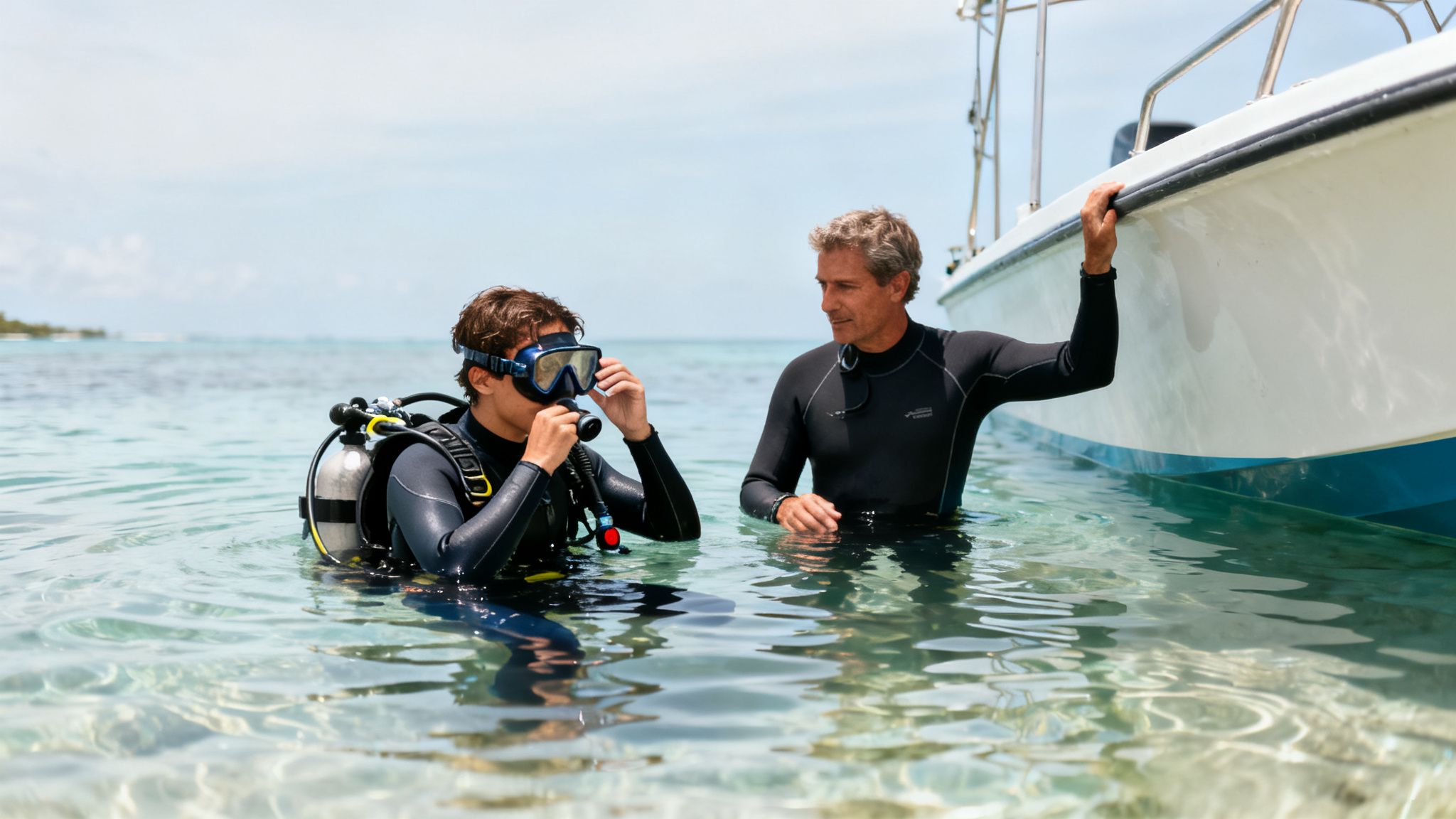
If you've ever dreamed of learning to scuba dive, I can't think of a better place to do it than the warm, clear waters of Kona. The Big Island turns the whole certification process, which can feel a little intimidating at first, into an unforgettable part of your vacation.
The Kona coast is naturally protected, making the ocean here incredibly calm and forgiving. Instead of fighting strong currents or murky water, you get to focus on learning your skills in a setting that’s not just safe and comfortable, but genuinely beautiful. It's the perfect underwater classroom.
Earning Your Open Water Certification
Getting certified is a lot more straightforward than you might think. Modern dive courses are brilliantly designed to fit into your vacation schedule, mixing online learning you can do at home with practical, in-water training.
The journey to becoming an Open Water diver breaks down into three easy-to-manage parts:
- Knowledge Development: The theory part is all online now. You can knock out the eLearning from your couch before you even leave home, getting all the fundamental safety concepts down at your own pace.
- Confined Water Dives: Once you arrive, you'll meet your instructor at a calm, shallow bay. This is where you get comfortable with the gear, practice basic skills like clearing your mask, and learn how to control your buoyancy. It's all about building confidence.
- Open Water Dives: Now for the best part! You'll complete four actual dives out on Kona's incredible reefs. You get to put everything you've learned into practice while exploring the underwater world, surrounded by sea turtles and schools of tropical fish.
After those dives, you’ll be a fully certified diver with a card that opens up a lifetime of underwater adventures all over the globe.
Continuing Your Dive Education
Already certified? The Big Island is a diver’s playground with endless ways to expand your skills and try something new. Whether you just need to shake off some rust or you're ready for a new challenge, there’s a course waiting for you.
A quick refresher course is a great idea if it’s been a year or more since your last dive. An hour or two with an instructor is all it takes to get your confidence back and sharpen your skills, ensuring you feel totally comfortable for the rest of your dives.
If you’re ready to take the next step, the Advanced Open Water course is a fantastic option. It lets you sample different types of diving, like deep and navigation, under the guidance of a pro. You can also dive into specialty certifications, like perfecting your buoyancy or learning underwater photography. It’s easy to continue your Big Island Hawaii scuba journey with a full range of diving tours and courses.
Your Big Island Scuba Questions, Answered
Alright, let's tackle some of the most common questions we hear from divers planning their trip. Getting these sorted out will help you feel confident and ready for an amazing time exploring the waters of the Big Island.
Is The Big Island A Good Place For New Divers?
It’s not just good—it's fantastic. The Kona coast is arguably one of the best places on the planet to get your fins wet for the first time. The water here is usually calm, warm, and so clear you’ll feel like you’re floating in an aquarium.
Most of the popular training spots are tucked away in bays, sheltered from the open ocean, which makes for a super gentle learning environment. Shops like Kona Honu Divers run Discover Scuba programs and full Open Water certifications. Your first underwater breaths will likely be on a stunning reef surrounded by curious fish and sea turtles—a pretty unforgettable way to start your diving life.
What If My Family Doesn't Scuba Dive? Can I Still Go?
Absolutely, this is a common scenario and Kona is set up perfectly for it. You don’t have to leave your non-diving family and friends behind.
Many dive boats, including the ones we run at Kona Honu Divers, are happy to bring snorkelers and ride-alongs. While you’re exploring the deeper parts of the reef, they can be snorkeling right above, spotting turtles, dolphins, and all sorts of colorful fish in the shallows. Even the world-famous Manta Ray Night Dive has a snorkel version that’s just as breathtaking.
When Is The Best Time Of Year To Dive In Kona?
Honestly, there's no bad time—Kona offers incredible diving all year long. That said, there are some subtle differences between the seasons.
Summer, from about May to October, usually means the flattest, calmest seas and the warmest water, often hitting 80°F. Visibility can be spectacular, frequently pushing past 100 feet.
Winter, from November to April, is humpback whale season. This is when things get truly magical. You might not see them underwater, but you'll almost certainly hear their songs vibrating through the water on your dives. The water temp might drop a few degrees into the mid-70s, but the diving is still top-notch.
Ready to see it all for yourself? Kona Honu Divers has a full lineup of diving tours for every diver, whether you're dreaming of the Manta Ray Night Dive or ready to explore some ancient lava tubes.