
Imagine slipping beneath the surface into crystal-clear water, sunlight filtering down to reveal ancient lava tubes and dramatic underwater archways. Vibrant coral gardens pulse with life all around you. This isn't a fantasy; it's just another day of Big Island Hawaii scuba diving, an experience that rightfully earns its spot among the world's best.
The Kona coast, in particular, is an underwater playground unlike anywhere else on Earth.
Why Kona Is a Scuba Diver’s Paradise
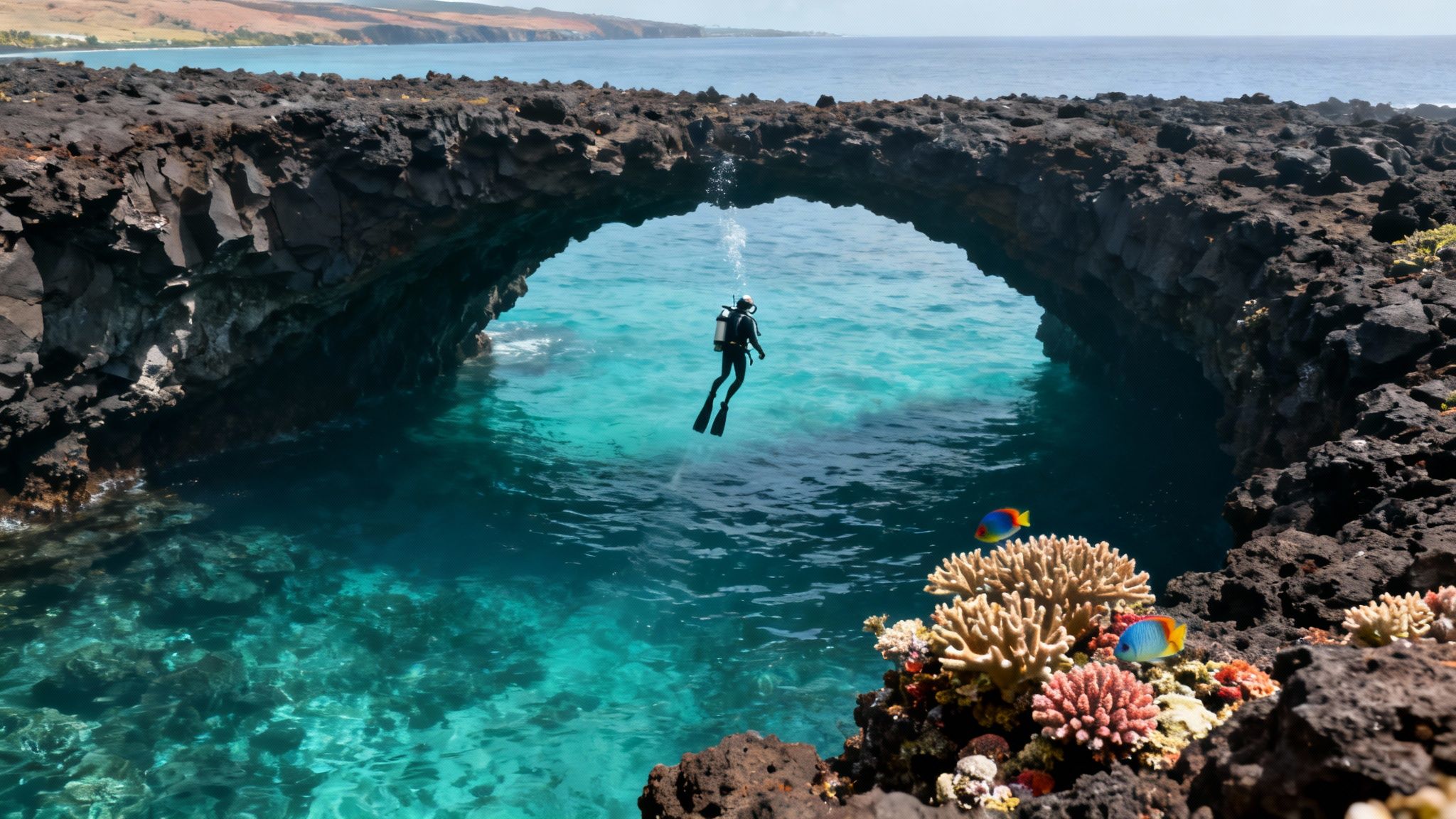
The secret to Kona’s incredible diving conditions is pure geography. The massive volcanoes of Mauna Loa and Hualalai act as a natural shield, protecting the entire western coast from the powerful trade winds that batter other parts of Hawaii. This creates a beautifully calm and predictable marine environment, making for comfortable and safe diving tours nearly 365 days a year.
That incredible calmness leads to another one of Kona's signature features: phenomenal visibility. It’s pretty common to have visibility stretching well beyond 100 feet, which lets you take in the full scale of the stunning underwater landscapes. The island’s volcanic past has sculpted a breathtaking seascape of lava tubes, huge archways, and submerged craters, all now blanketed in some of the healthiest coral reefs you'll find anywhere.
For divers looking to quickly understand what makes this place special, here's a snapshot.
Big Island Diving At A Glance
| Feature | What to Expect | Best For |
|---|---|---|
| Topography | Dramatic lava formations, arches, and healthy coral reefs. | Exploring unique underwater structures. |
| Visibility | Consistently clear, often exceeding 100 feet. | Underwater photography and videography. |
| Marine Life | High concentration of endemic species, manta rays, turtles. | Wildlife enthusiasts and critter hunters. |
| Conditions | Calm, protected waters year-round. | Divers of all experience levels. |
| Iconic Dives | World-famous Manta Ray Night Dive and Blackwater Dives. | Once-in-a-lifetime adventure seekers. |
This unique combination of factors has rightfully put the Big Island on every diver's map.
A Sanctuary for Unique Marine Life
What really makes Kona stand out is its mind-blowing biodiversity. The Hawaiian archipelago is one of the most isolated island chains in the world, which has resulted in a high number of endemic species. In simple terms, a huge chunk of the marine life you see here can't be found anywhere else on the planet.
A few of the local celebrities you can expect to meet include:
- Honu (Green Sea Turtles): These gentle giants are a constant, beloved presence. You’ll often find them resting on the reef or gliding gracefully past you.
- Spinner Dolphins: Famous for their acrobatic leaps, pods of spinner dolphins often visit Kona's bays to rest and socialize. It's a real treat to see them.
- Endemic Fish: Keep your eyes peeled for fish you won’t see anywhere else, like the Milletseed Butterflyfish, Potter's Angelfish, and the busy Hawaiian Cleaner Wrasse.
This rich ecosystem is no secret. The Big Island now welcomes around 150,000 dive tourists every year, who log well over 100,000 certified dives between them. That popularity is a direct reflection of the truly special underwater encounters Kona delivers.
Your Gateway to Kona's Underwater World
Whether you're about to take your very first breath underwater or you're a seasoned diver looking for a new thrill, Kona has you covered. The sheer variety of dive sites caters to every skill level, from shallow, protected coves perfect for beginners to deep, exhilarating lava tube swim-throughs for the more advanced. You can learn more about the unique aspects of diving in Kona right here on our blog.
At Kona Honu Divers, we’re proud to be the top-rated local experts ready to show you our backyard. Our experienced crew knows these waters like the back of their hands and is completely dedicated to giving you a safe, fun, and unforgettable adventure. We believe great diving is about the whole experience—from our custom-built boats to our deep commitment to marine conservation.
Ready to see the magic for yourself? Let’s dive in.
Kona’s Top Underwater Wonders: Your Guide to the Best Dive Sites
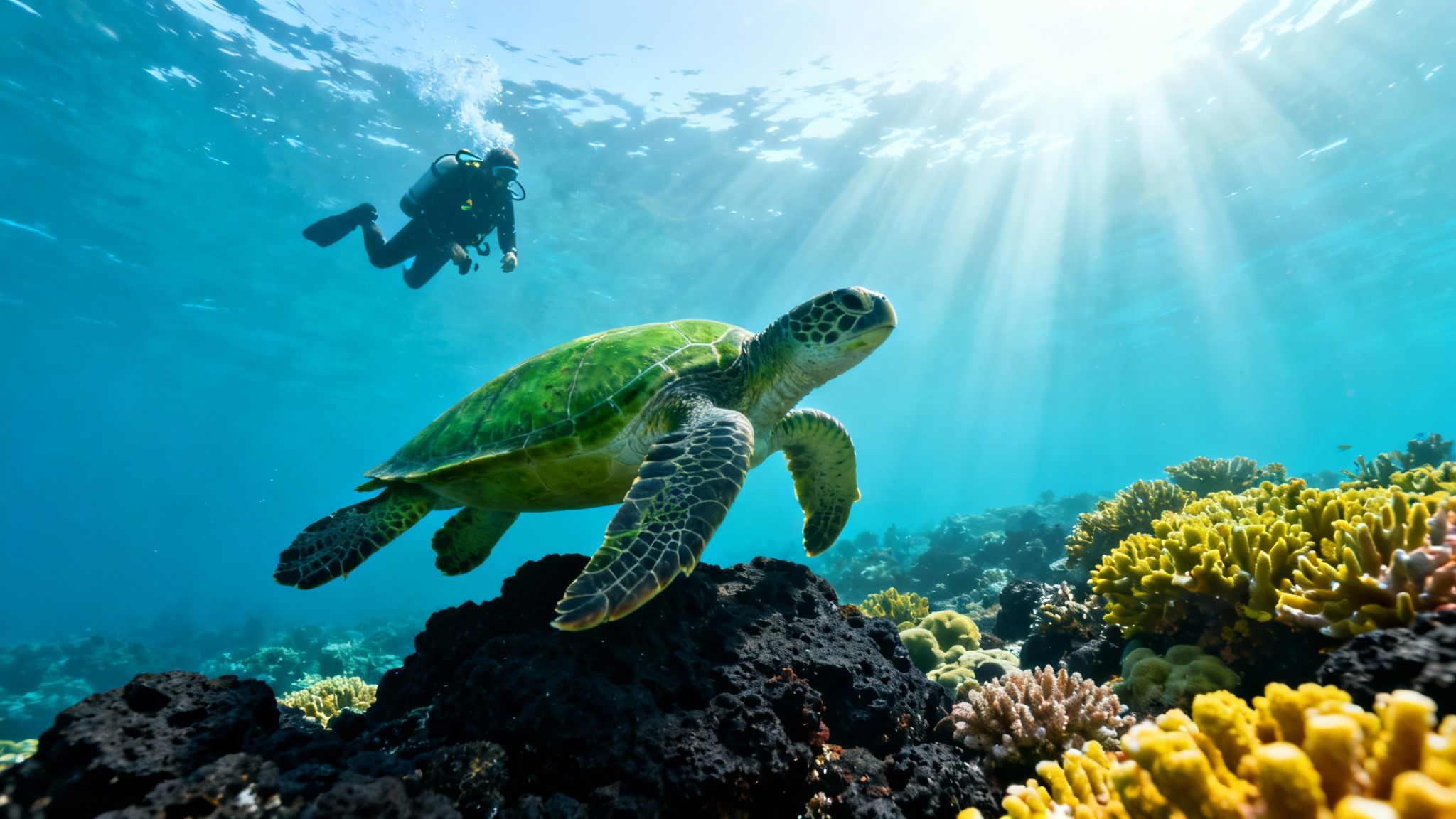
The Kona coast is a diver's dream, plain and simple. What you'll find here is an underwater world carved by volcanoes, resulting in a dramatic playground of lava tubes, dramatic arches, and vibrant coral gardens sheltered from the wind. Each site offers a unique glimpse into Hawaii's incredible marine ecosystem.
Whether you're a seasoned pro or just getting your fins wet, there's a perfect spot waiting for you. This is what Big Island Hawaii scuba is all about—exploring a world shaped by fire and sea.
Kealakekua Bay: A Protected Paradise
Kealakekua Bay isn’t just another beautiful dive site; it's a living piece of Hawaiian history and a protected Marine Life Conservation District. This is the spot where Captain James Cook first made landfall, and the calm, crystal-clear water makes it a true sanctuary for marine life.
The visibility here is often spectacular. Divers are greeted by massive, shimmering schools of yellow tangs and butterflyfish moving as one. The healthy coral is a bustling metropolis for eels, octopuses, and countless other critters. And if you're lucky, you might even spot a pod of spinner dolphins cruising through the bay—an unforgettable sight.
Two Step: An Easy Entry to an Amazing World
Just south of Kealakekua, you’ll find Honaunau Bay, better known to locals and divers as "Two Step." It gets its name from the natural lava rock ledges that create a perfect, two-step entry into the water, making it one of the easiest and most beloved shore dives on the island.
What makes Two Step a must-do is the sheer density of life. It’s a hotspot for honu (Hawaiian green sea turtles), and it's not unusual to find several of these gentle giants munching on algae or resting on the reef. The shallow, clear conditions also make it a paradise for underwater photographers.
Diving in Kona is like stepping into a different dimension. The clarity of the water and the sheer amount of life on every reef is something you have to see to believe. It's an environment that captivates you from the moment you descend.
Dive Sites for Every Skill Level
Beyond these famous spots, the Kona coast is packed with an incredible variety of sites. Many of the most pristine locations are only reachable by boat, which means you can leave the crowds behind and explore reefs that feel truly untouched.
- For Beginners: Protected spots like Pawai Bay are perfect for your first few dives. The shallow depths and calm waters let you focus on enjoying the beautiful coral gardens without any stress.
- For Intermediate Divers: Ready for more adventure? Sites like Golden Arches offer incredible lava formations, including fun swim-throughs that make for a dynamic and memorable dive.
- For Advanced Divers: If you're looking for a thrill, deeper sites like Au Au Crater can deliver. These spots sometimes have stronger currents, which can attract larger pelagic species like sharks and eagle rays.
No matter where you drop in, Kona’s underwater world is guaranteed to leave you wanting more.
Ready to see it for yourself? Kona Honu Divers offers guided diving tours to the best sites the Big Island has to offer, led by experienced local guides who know every nook and cranny of these reefs.
The Unforgettable Manta Ray Night Dive
Let’s be clear: this isn't just another entry in your dive log. The Manta Ray Night Dive is the signature experience for Big Island Hawaii scuba, a front-row seat to one of the most hypnotic ballets in the natural world. Divers fly in from every corner of the globe for this one-of-a-kind encounter.
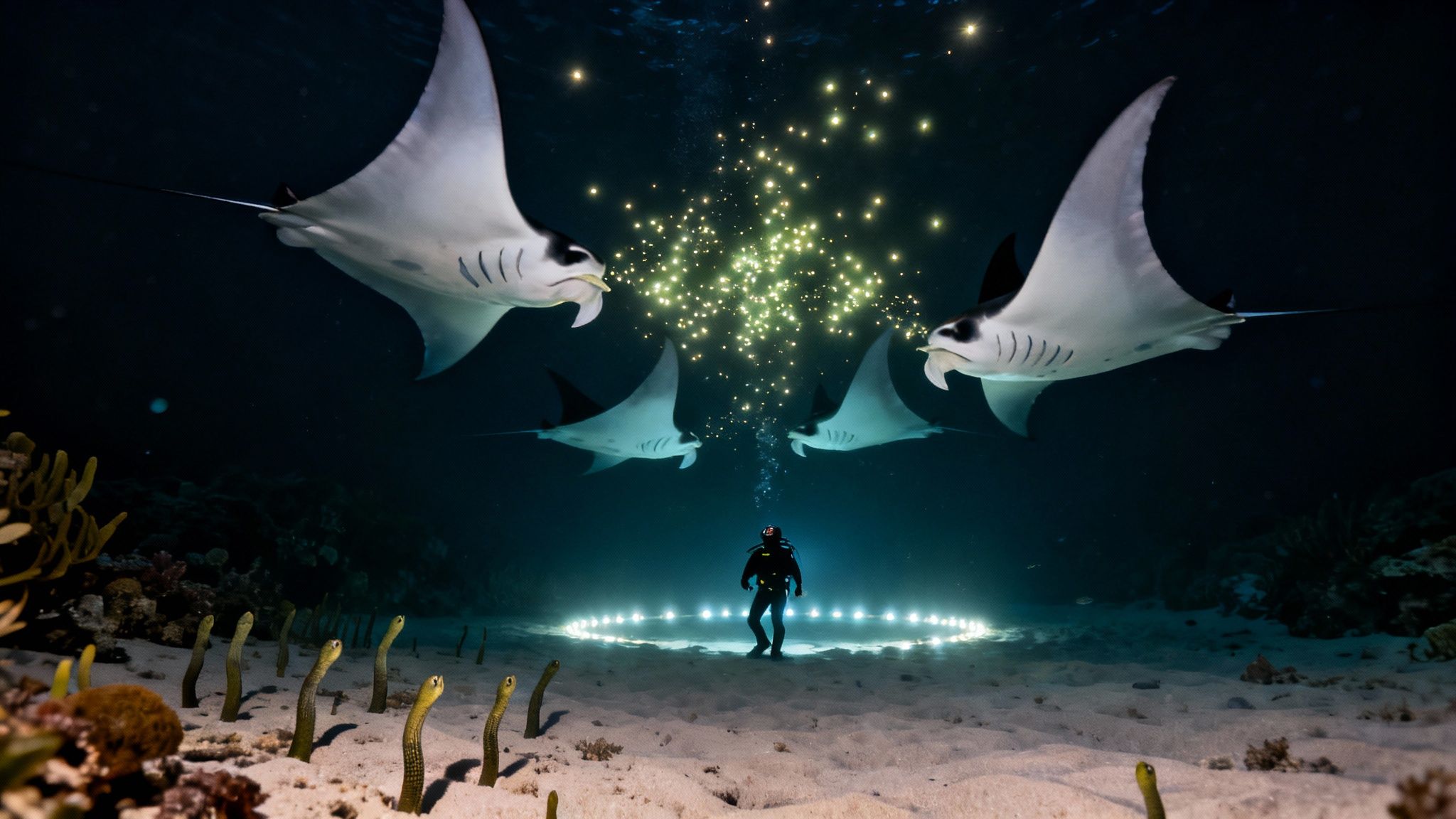
Picture this: you descend into the warm, darkening ocean just as the sun disappears. On a sandy patch of the seafloor, you and your group get settled around a collection of powerful underwater lights, creating what we affectionately call the "campfire."
That simple circle of light is what makes the magic happen. It draws in massive clouds of plankton, the tiny organisms that manta rays feast on. For these gentle giants, our campfire is an all-you-can-eat buffet they simply can't resist.
The Superior Choice: Garden Eel Cove
While there are a couple of spots to do this dive, Garden Eel Cove is the superior choice for your manta ray dive tour. Its protected location shields it from open ocean swells, which means calmer and more comfortable conditions. More importantly, Garden Eel Cove features a superior viewing area on a large, sandy bottom next to a vibrant reef. This thoughtful layout allows divers to settle comfortably without any risk of damaging the fragile coral, ensuring the encounter is as respectful to the marine environment as it is breathtaking for you.
As you wait in the quiet darkness, the first graceful shadow appears. Then another, and another. Before you know it, you’re surrounded by these majestic creatures, some with wingspans stretching up to 16 feet. They glide, loop, and perform effortless somersaults just inches above your head, their huge mouths wide open to filter the plankton from the water. It’s a silent, graceful performance that will absolutely take your breath away. You can learn more about the experience of scuba diving with manta rays in our detailed guide.
A Reliable and Responsible Spectacle
The Kona coast manta dive has become legendary for good reason. With sighting success rates averaging 85-90%, it's a true bucket-list item. These gentle giants are reliably drawn to these established feeding sites, where divers can remain still and watch the incredible show unfold—a spectacle that’s been drawing global praise since the 1990s.
Because this interaction is so special, picking a responsible operator is absolutely crucial. This is about more than just seeing mantas; it's about making sure the encounter is safe and respectful for these magnificent animals.
The Manta Ray Night Dive is an experience that changes you. To have an animal of that size and grace so close, moving with such purpose and elegance, is humbling. It’s a powerful reminder of the incredible beauty hidden just beneath the waves.
At Kona Honu Divers, we are completely committed to the established guidelines that protect the mantas and their home. Our crew gives a thorough briefing before every dive, ensuring everyone understands how to be a passive observer and let the mantas control the entire experience. We’re dedicated to creating a sustainable future for this world-famous dive, so generations to come can witness the magic. For a complete overview of what to expect, the Kona Manta Ray Night Snorkel Ultimate Adventure Guide is an excellent resource with essential tips.
This isn't just watching wildlife; it's being a part of their world for an evening. Don't miss your chance to join this once-in-a-lifetime adventure. Secure your spot on our acclaimed 2-tank Manta Ray Dive tour and get ready for a night you’ll never, ever forget.
Advanced Diving And The Kona Blackwater Dive
While Kona is a paradise for divers of all stripes, it holds some truly special adventures for those with more experience under their weight belt. If you're a certified diver looking for something beyond the usual reef tour, the Big Island Hawaii scuba scene delivers unique challenges you just won't find anywhere else. This is where the island’s raw, volcanic soul really comes to life.
Forget the shallow, sunlit reefs for a moment. Picture yourself exploring ancient lava tubes, navigating intricate swim-throughs and archways carved by molten rock ages ago. The deeper sites often bring stronger currents, which act as a dinner bell for larger marine life. It's down there that you stand a much better chance of spotting pelagics like majestic eagle rays, Galapagos sharks, and even scalloped hammerheads. This is the perfect opportunity for more experienced diving opportunities.
The Kona Blackwater Dive: An Otherworldly Experience
The absolute peak of advanced diving in Kona—and honestly, one of the most unique dives on the planet—is the Blackwater Dive. This isn't your typical reef or wreck dive. We're talking about drifting in the middle of the Pacific Ocean, miles offshore, in the pitch-black of night.
The experience feels less like swimming and more like floating through deep space.
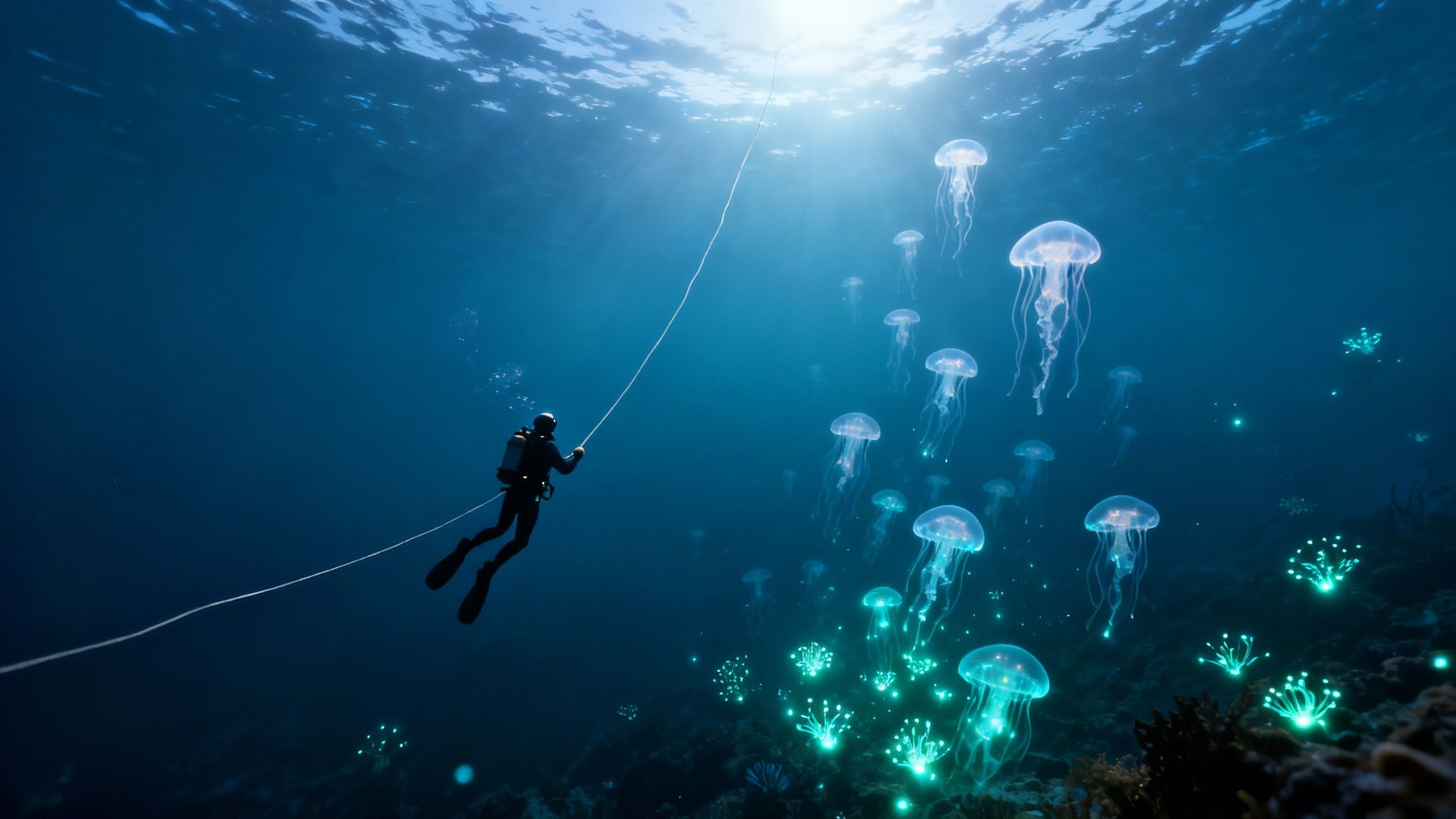
Tethered to the boat for safety, you descend into the abyss and just… drift. The only light is the beam from your torch, cutting through the inky darkness to reveal a bizarre and mesmerizing world of bioluminescence and alien-like creatures.
You’re getting a front-row seat to the largest migration on Earth, as countless deep-water organisms rise toward the surface to feed under the cover of night. You'll see things that defy imagination:
- Larval Creatures: Many critters are in their juvenile stage, looking nothing like their adult forms. It’s like a deep-sea nursery.
- Bioluminescent Jellies: Pulsating, glowing jellyfish drift by like living constellations.
- Strange Invertebrates: Creatures you've never heard of, like iridescent ctenophores and translucent squid, put on a stunning light show right before your eyes.
For underwater photographers or anyone fascinated by the weird and wonderful side of marine biology, the Blackwater Dive is an absolute must. To get a real sense of this unique adventure, you can learn more in our dedicated guide to blackwater diving in Kona.
Choosing The Right Operator For Advanced Dives
Let's be clear: advanced dives demand a higher level of skill, precision, and safety. When you’re navigating complex environments or drifting in the open ocean after dark, the expertise of your dive operator is non-negotiable. You need a team that knows these sites like the back of their hand and puts safety above all else.
At Kona Honu Divers, our crew is specially trained to lead these challenging yet incredibly rewarding trips. We run through exhaustive briefings, use top-of-the-line gear, and keep our groups small to make sure every diver gets the attention they deserve. We’ve built our reputation on providing safe, unforgettable experiences.
Our Premium Advanced 2-Tank Trip is designed specifically for certified divers ready to push their boundaries and see a side of Kona that very few ever will.
"The Blackwater Dive is surreal. You’re floating in nothingness, and then suddenly, these incredible, glowing creatures appear out of the dark. It’s like discovering a secret universe. It’s easily the most memorable dive I’ve ever done."
Ready to take your diving to the next level?
Planning Your Perfect Big Island Dive Trip
A great scuba trip to the Big Island starts well before your plane ever touches down in Kona. A little forethought goes a long way in making sure your vacation is smooth, safe, and timed just right for the best possible underwater experience. From picking the right season to packing the right gear, we’ll walk you through it.
The best part about diving here? Kona’s conditions are fantastic pretty much any day of the year. The water is always inviting, hovering between a comfortable 75-80°F (24-27°C), so you can leave your drysuit at home.
Still, there are some subtle seasonal perks. Late summer and early fall are often the sweet spot, when the water gets its warmest. It's no wonder why so many of the 150,000+ divers who visit Hawaii annually choose this time to explore Kona's vibrant reefs and dramatic underwater lava tubes. But winter has its own magic—from December to March, thousands of humpback whales arrive to breed. Hearing their songs echo through the water while you're on a dive is an experience that will stay with you forever. For a deeper dive into what to expect month-by-month, check out our full guide to diving conditions on the Big Island here.
What to Pack for Your Dive Trip
Packing smart means less worrying and more diving. While you can always rent excellent gear, most divers have a few personal items they just can’t live without.
Here’s a quick checklist to get you started:
- Your Core Dive Kit: At a minimum, bring your own mask, fins, snorkel, and dive computer. These are personal fit items, and having your own just makes every dive more comfortable. We can set you up with a top-notch BCD and regulator set if you want to travel light.
- Wetsuit: A 3mm wetsuit is the go-to for most of the year. If you run cold, or you're planning on a few night dives, a 5mm suit is a smart choice to stay toasty.
- Reef-Safe Sunscreen: This is non-negotiable. Standard sunscreens contain chemicals that bleach and kill our beautiful coral. Please, only pack mineral-based, reef-safe options to protect both your skin and our ocean.
- Underwater Camera: You’re going to want proof of that manta ray fly-by or the sleepy turtle you found. Trust us on this one.
- Dry Bag: A simple dry bag is a lifesaver on the boat for keeping your phone, keys, and a towel from getting soaked.
Important Travel and Safety Logistics
A few practical details will ensure your trip goes off without a hitch. First and foremost is the golden rule of dive travel: mind your surface interval before heading home.
Plan for a minimum 18-hour surface interval after your last dive before you get on an airplane. This is a critical safety rule to prevent decompression sickness, so make sure to schedule your final dive with this in mind.
Don’t want to haul heavy bags through the airport? We get it. Renting gear can make your life so much easier. Here at Kona Honu Divers, we offer a complete lineup of high-quality, meticulously maintained rental equipment. It saves you the hassle and extra baggage fees, and you can be sure your gear is perfectly suited for local conditions.
With these tips in your back pocket, you’ll show up on the Big Island feeling prepared, confident, and ready to jump right in.
Your Big Island Scuba Questions, Answered
It’s normal to have a few last-minute questions, even with a solid plan. We get asked these all the time, so let’s clear up some of the most common things people wonder about when planning their **Big Island Hawaii scuba** trip.
Do I Need to Be an Advanced Diver to Scuba Dive in Kona?
Nope, not at all! That’s one of the best parts about diving here—Kona has something incredible for every diver, no matter your experience level. We have plenty of calm, protected reefs that are perfect for your first few dives or for finishing up an Open Water certification.
If you’re a seasoned diver looking for a thrill, Kona delivers. You can explore deeper sites, navigate ancient lava tubes, and enjoy some truly epic drift dives. There’s always a new challenge waiting.
What Are the Water Temperature and Visibility Like?
The conditions off the Kona coast are a diver’s dream, and they stay that way pretty much year-round. You can expect the water to be a very comfortable **75-80°F (24-27°C)**. Most people are perfectly happy in a 3mm wetsuit.
As for visibility, it's often spectacular. Because we're sheltered from major ocean swells and there's very little runoff from the land, it’s not uncommon to have visibility well over 100 feet. That kind of clarity really lets you soak in the dramatic underwater cliffs and vibrant sea life.
What Kind of Marine Life Will I See?
Get ready for a busy reef! The sheer diversity here is mind-boggling. On almost any dive, you’re likely to cross paths with Hawaiian green sea turtles (*honu*), see a pod of spinner dolphins playing in the distance, and of course, meet our famous manta rays.
The reefs are packed with colorful fish, including many that you can only find here in Hawaii, like the milletseed butterflyfish. Depending on where you dive and what time of year it is, you might also spot eagle rays, reef sharks, or even hear the unforgettable songs of humpback whales echoing through the water during the winter months.
Can I Rent Scuba Gear on the Big Island?
Absolutely, and it’s what most people do. Lugging a full set of dive equipment across the Pacific is no fun, and renting makes life a lot easier.
You want to dive with equipment you can trust. A professional shop like Kona Honu Divers will have a full range of high-quality, meticulously maintained rental gear—from BCDs and regulators to wetsuits and dive computers. It's the best way to ensure you have safe, reliable gear without paying for extra checked bags.
Ready to jump in? We have a whole lineup of diving tours designed for every kind of underwater explorer.