
Pick the right reef and a Kona manta night stops being luck. That is the biggest decision on a Big Island dive trip, and visitors routinely get it wrong. The mantas here are residents, individually identified and returning to the same sites near Kailua-Kona year after year, so the reef you choose shapes what you see far more than the season does. When the boat runs Garden Eel Cove, that is the stronger viewing reef, and I would take it over the crowded alternatives any night.
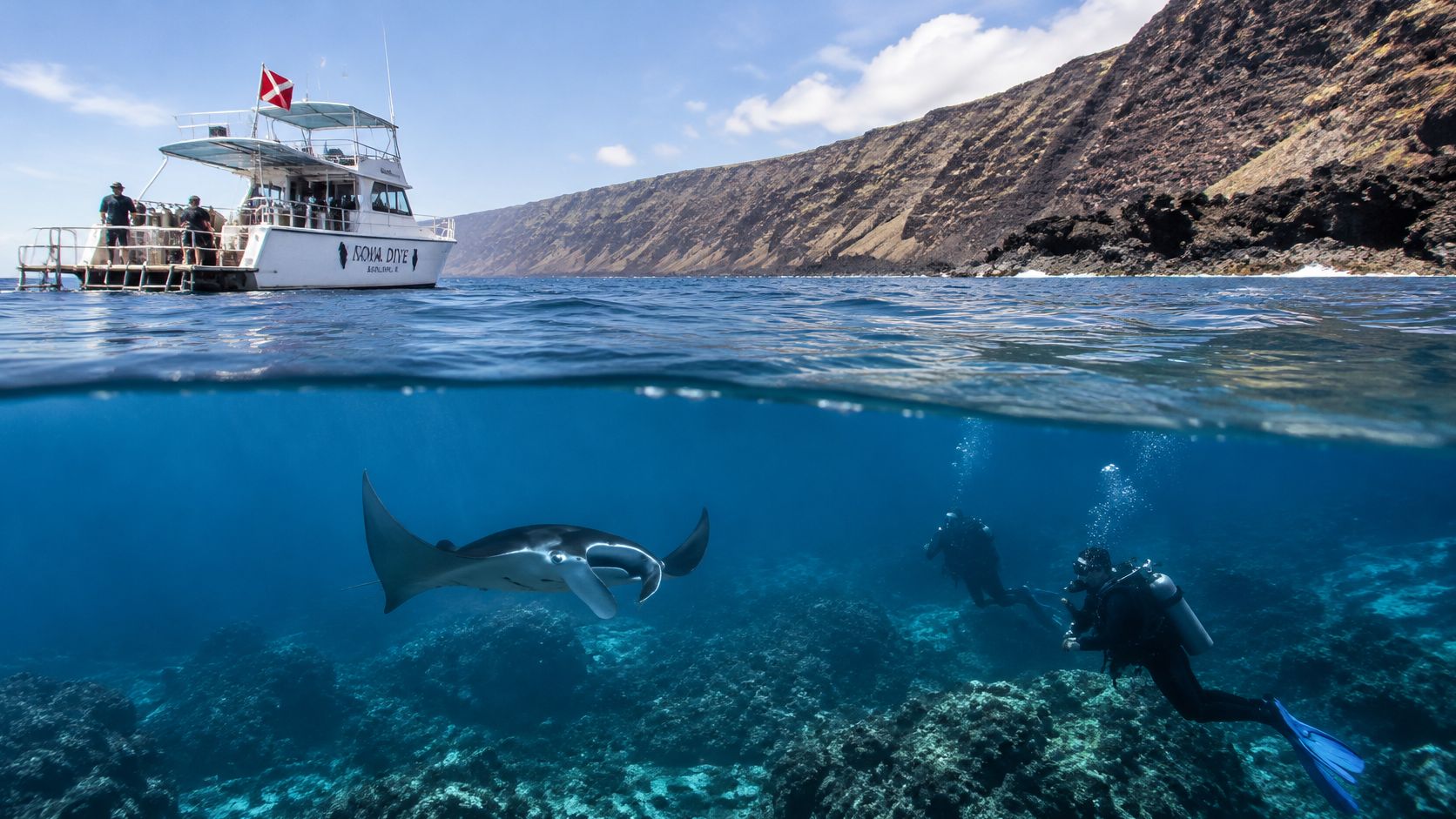
Ask hard questions before you book. Some charters cap group size; others mix snorkelers and divers on one boat and the experience suffers for it. Moorings matter too. Fishing line and abandoned gear snag on reef structure and create a real entanglement risk for the rays, so crews that brief spacing and keep the site clean are worth your money. Build the day around one charter you can reserve, not a wildlife postcard.
Table of Contents
- What Makes Big Island Diving Different
- Reading Kona Seasons and Water Conditions
- Signature Dives from Mantas to Blackwater
- Certifications Gear and Boat Rules
- Staying Safe and Protecting the Reef
- Sample Big Island Diving Days
- Choosing a Kona Operator and Booking
What Makes Big Island Diving Different
Site choice decides your manta night more than any other variable, and Kona has the receipts to prove it. The six-year record cited earlier tracked two established sites, Manta Heaven at Garden Eel Cove in Makako Bay and Manta Village at Kaukalaelae Point, and the encounters split hard: 19,841 observations at Manta Heaven against 5,603 at Manta Village, with mantas recorded on 92% of nights at the first site versus 78% at the second. Those figures describe research rather than guarantee your dive. They still explain why I send divers to Garden Eel Cove first.
A stronger reef comes with real limits. Each site holds a finite number of moorings, so on a busy evening boats stack up at Garden Eel Cove while Manta Village runs lighter traffic. Ask your operator which site your charter holds before you pay, because "manta dive" on a booking page can mean either reef.
Resident animals also carry a cost of residency. Kona's mantas routinely show fishing-line scars, and any crew that has worked these reefs long enough has cut monofilament off a wing. That's why the no-touch, no-chase briefing is strict and why the crew keeps line cutters on the boat.
The rhythm of a manta night
The study's observation dives began shortly after sunset, around 6:00 p.m., and ran approximately one hour. That schedule suits divers who want a focused encounter. Remember it is still a night dive: listen closely to the briefing, track your buddy, and follow the crew's timing in and out of the water.
Where site choice pays off
Kona rewards divers who plan around specific reefs rather than a generic checklist. Pick Garden Eel Cove for the manta night, then build the rest of your trip around what you want: a morning boat dive at a different pace, a shore entry on your own schedule, or a blackwater dive if you want something stranger after dark. A long record of resident manta use makes this coast special. It never turns wild animals into a scheduled performance, so book the stronger site and accept the odds as they are.
Reading Kona Seasons and Water Conditions
Kona's west-facing coast often rewards an early start. Morning boat trips are usually the more comfortable choice when the water is calmer; afternoon wind can make boat entries and ladder climbs less pleasant. A protected cove and an exposed point can feel like different dives on the same day, so don't book by calendar alone.
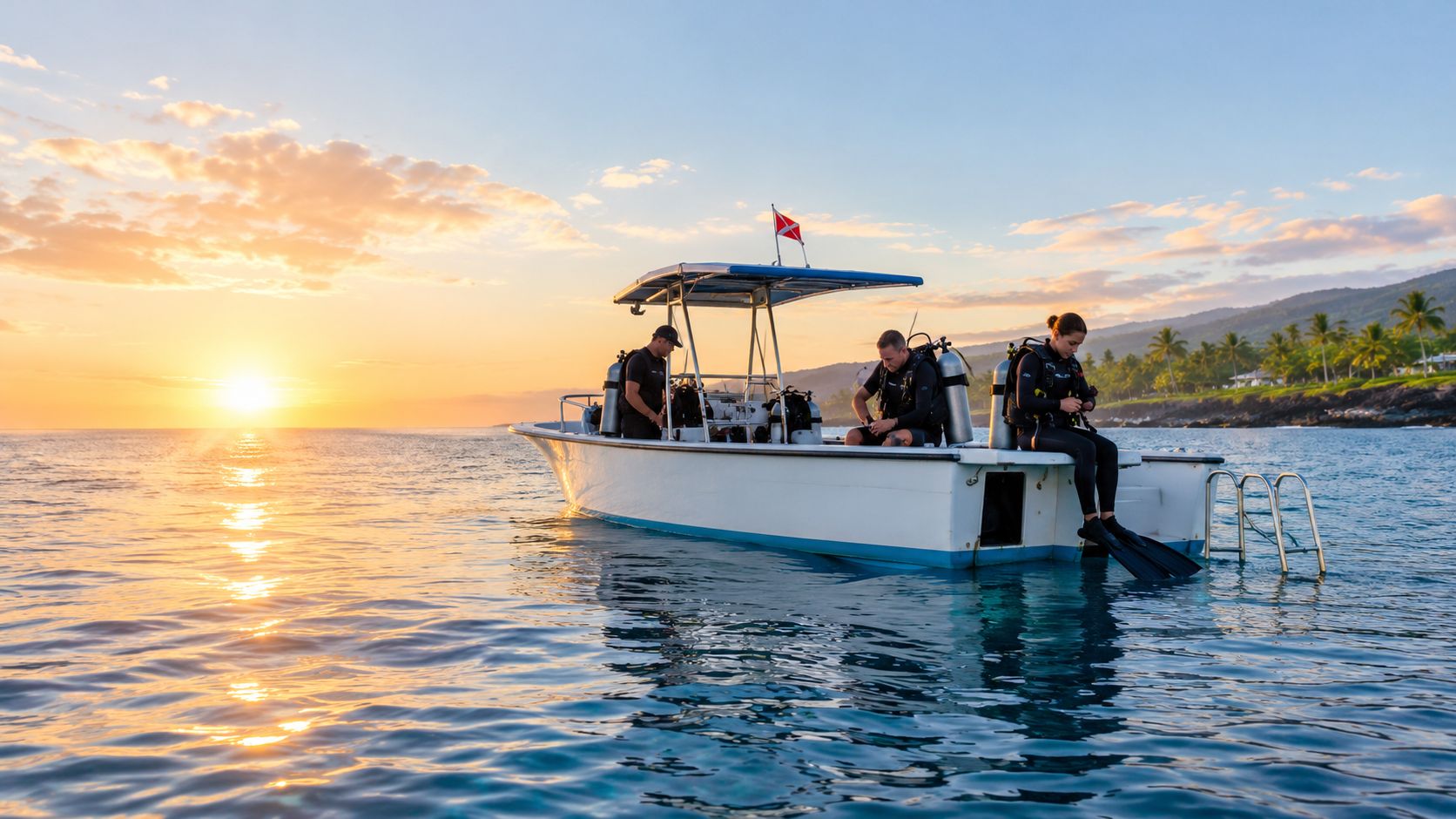
Choose the conditions, not a magic month
Visibility changes with swell, runoff after heavy rain, and plankton in the water. It isn't a fixed Kona number, and a responsible guide shouldn't promise a specific footage figure for your dive. Plankton can be part of what makes a manta feeding night active, while the same water conditions may affect how clearly you see across a reef.
Snorkelers spend more of their time near the surface and in shallow water, so rough surface conditions can shape their outing directly. Divers can reach deeper reef structure, but still need a comfortable entry, exit, and boat ride. On a manta night, the practical considerations shift toward lights, current, and plankton, rather than midday clarity alone.
For a seasonal overview before you choose dates, read this guide to the best months to scuba dive in Hawaii. Treat it as planning context, not a substitute for checking the marine forecast close to departure.
A booking plan that holds up
For a short vacation, use a simple sequence:
- Book the must-do boat dive for a calm morning. You'll start with a better chance of comfortable boat conditions and won't have to force an exposed shore entry.
- Keep an afternoon flexible. Use it for an easy shore option if conditions suit, or rest if the morning was full.
- Separate a late manta night from a long boat day when possible. That's especially sensible if anyone in the group is new to night diving.
The point isn't to chase a particular month or force every dive into a packed itinerary. Build around the type of experience you want, keep room for conditions to change, and make the operator's current advice part of the final decision.
Signature Dives from Mantas to Blackwater
A manta night, a blackwater drift, a shore dive, and a standard boat reef dive are not interchangeable experiences. They differ in where you go, what you watch, and how much of the dive depends on night conditions. For a first Big Island day, choose a standard boat reef trip or an appropriately guided shore dive. Save the specialty night for a separate outing.
Choose Garden Eel Cove for the manta tour
Garden Eel Cove, also known as Manta Heaven, is north of Kailua-Kona and distinct from the manta-viewing site near Keauhou Bay. It's the stronger choice for a manta-ray tour because its protected location offers a better viewing area and stronger surrounding reef structure. (Garden Eel Cove site overview)
Site choice changes the kind of encounter you may have. A 13-year analysis of 23,000 sightings involving 167 individually identified reef manta rays found that Garden Eel Cove had larger and more variable groups, while Keauhou had consistently smaller groups and a strongly female-skewed pattern, with females accounting for 91% of sightings. Group size also tracked zooplankton density. (13-year manta-site analysis)
Underwater lights concentrate zooplankton and create a temporary feeding patch. They don't make every night the same: current, visibility, light placement, and natural plankton density all affect activity. For the manta trip, choose a tour that visits Garden Eel Cove, and go in expecting a natural encounter, not a scripted show.
| Big Island Dive Styles Compared | Access | Time underwater | Best for |
|---|---|---|---|
| Manta night dive | Boat to a designated viewing site | Night dive, with the crew setting the plan | Divers who want to watch feeding mantas |
| Blackwater night dive | Boat offshore for an open-ocean drift under lights | Night dive, with conditions and the trip plan guiding the experience | Experienced divers drawn to pelagic animals rather than reef scenery |
| Shore diving | Enter from a suitable coastal access point | Flexible, within the diver's plan and conditions | Divers who want simpler logistics and can handle the entry |
| Standard boat diving | Boat to reef sites along the coast | Set by the trip and dive plan | A first Big Island dive day or divers wanting varied reef access |
Pick the night for what you want to see
Blackwater diving is an open-ocean night drift under lights, not a reef tour. The draw is pelagic life in dark water, so it suits divers who want a very different night underwater and are comfortable following the crew's procedures. Review the Kona blackwater night dive as a separate specialty outing.
Shore diving is logistically simpler when the entry is calm and the site is appropriate for your skills. Standard boat diving, by contrast, gives access to reefs that are harder to reach from land. For a second specialty night, pick either mantas or blackwater based on whether you want a reef-associated feeding encounter or open-ocean pelagic life. For details on the manta experience, read this guide to the Kona manta night dive.
Certifications Gear and Boat Rules
Before choosing a boat, check that you meet its actual requirements. An advanced two-tank Kona charter requires Open Water Diver certification and at least 25 logged dives. You also need to climb a floating vertical ladder without assistance while wearing scuba equipment. Those aren't fine-print details. They determine whether you can safely join and exit the boat.
Make a clear yes-or-wait decision
Each advanced dive ends at the earlier of reaching 700 psi or 60 minutes. Manta and blackwater night dives use 45-minute underwater periods. Plan around the actual limit, not the bottom time you hope to squeeze out, and be honest about how you handle a dark-water exit and a ladder climb.
- Yes: You hold the required certification, meet the logged-dive minimum, can manage the ladder independently, and are comfortable with the trip's dive plan.
- Not yet: You don't meet the experience or physical requirements. Choose a suitable introductory or certified fun dive instead.
- This exact trip: Confirm the specific charter's requirements with the operator before paying a deposit. Don't assume every advanced outing has identical rules.
The advanced long-range dive trip is for divers who already meet its bar. It's the wrong first splash for someone who's newly certified or unsure about a boat ladder in full gear.
Pack for your needs, not the whole boat
Bring your certification card and, for a trip with a logged-dive cutoff, proof of recent log entries. Pack a mask that seals on your face and any prescription lenses you need. Shore divers should also carry a surface signal appropriate to their plan. Ask the operator what rental gear is available and whether your size or configuration needs advance notice.
Rental gear, repairs, and nitrox are worth sorting before departure, rather than at the dock. Ask whether an early-diver discount applies and whether a package includes free nitrox; don't assume either benefit is part of every booking. If you're new to scuba, use an appropriate introduction or certified fun dive to build comfort first. Read more about learning to scuba dive before choosing a trip.
Staying Safe and Protecting the Reef
The steep Kona coastline makes fishing line and moorings a real entanglement hazard for manta rays, not a vague warning about ocean debris. Independent reporting describes accidental entanglement as a major threat and notes that local researchers are building a database of more than 250 individually observed Kona mantas and conducting DNA research into population structure. Reef mantas generally stay close to home and rarely cross the deep channels between islands. (Reporting on Kona manta research and entanglement)
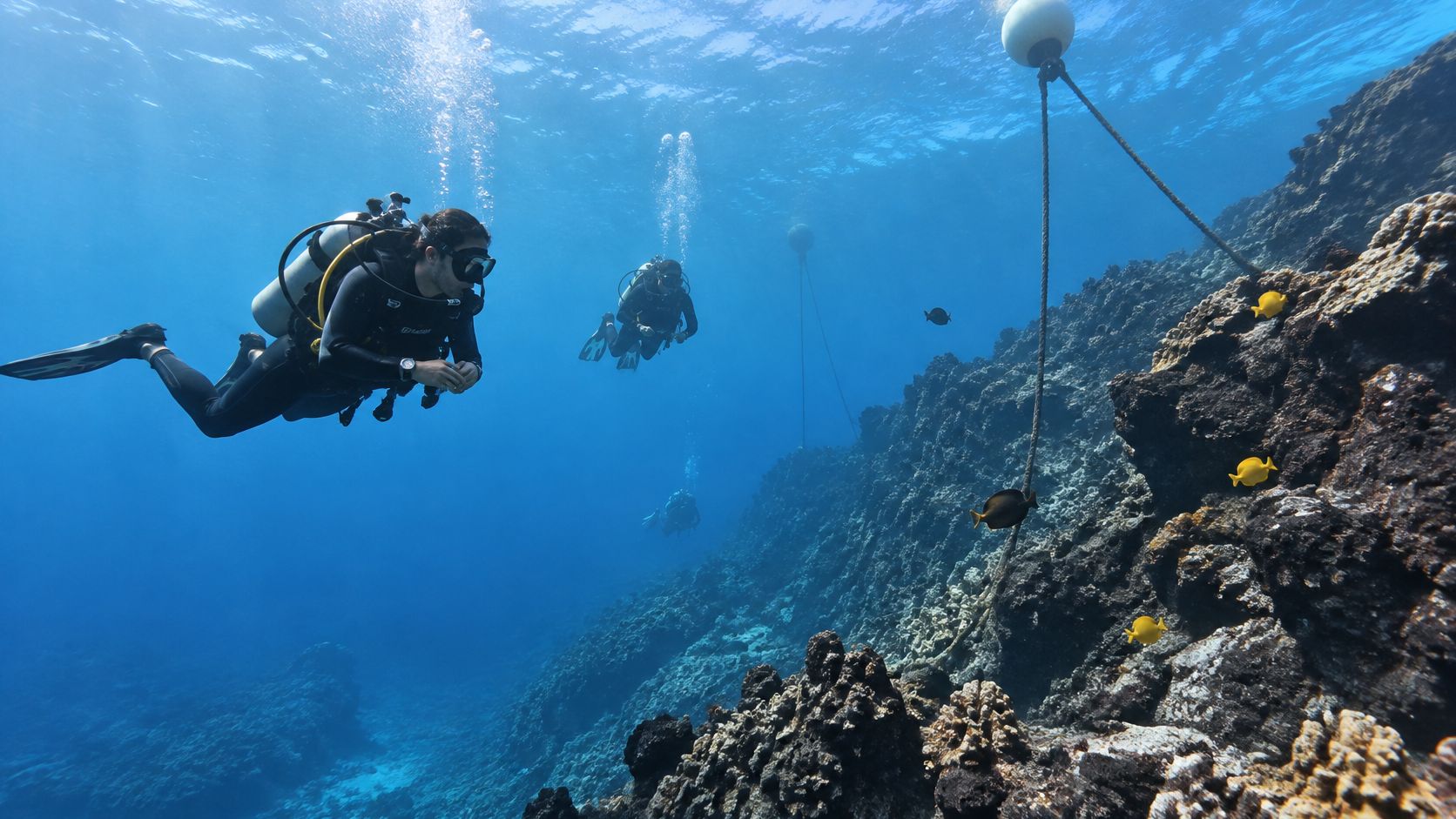
Keep your position and equipment controlled
Before settling into the viewing area, scan for line and other hazards. Clip your gauges and camera close to your body, stay where the crew directs, and let mantas choose their own path. Never chase or touch a ray.
The lights gather plankton into a feeding patch, and mantas pass through that illuminated area to feed. Divers who drift away from their position or let dangling equipment swing into the water can disrupt the animals' path. A predictable aggregation isn't proof that heavy or careless tourism is harmless; it's a reason to keep your own behavior deliberate.
Low-impact manta diving means holding your position, securing your gear, and letting the rays approach without contact or pursuit.
Treat the night plan as part of reef care
Maintain buddy contact, agree on night signals during the briefing, and follow the operator's time or pressure limit. If you spot entangling line, tell the crew rather than trying to remove a hazard yourself during a dive. Reporting it can help the people responsible for the site respond safely.
The local nature of the population makes site-level care matter. Use the responsible diver etiquette guide as a practical reminder: good manta encounters depend on control, patience, and respect for the animals' feeding space.
Sample Big Island Diving Days
Stacking a manta night onto the end of a full boat day is the mistake I see most often. Mantas are year-round residents along the Kona Coast, and night operations run at Manta Heaven off Kona International Airport and Manta Village near Keauhou Bay, with rays appearing most nights of the year (Kona manta locations and year-round activity). You don't need to cram. You need one good night, booked at the right site, with rest around it.
Site choice is what separates a real manta dive from a crowded boat ride. Book a trip going to Garden Eel Cove by name rather than an unnamed "manta night" slot. A fixed viewing reef holds the illuminated feeding patch better than open water, and rays at the manta sites sometimes arrive trailing fishing line, so you want a crew working a managed site they know well.
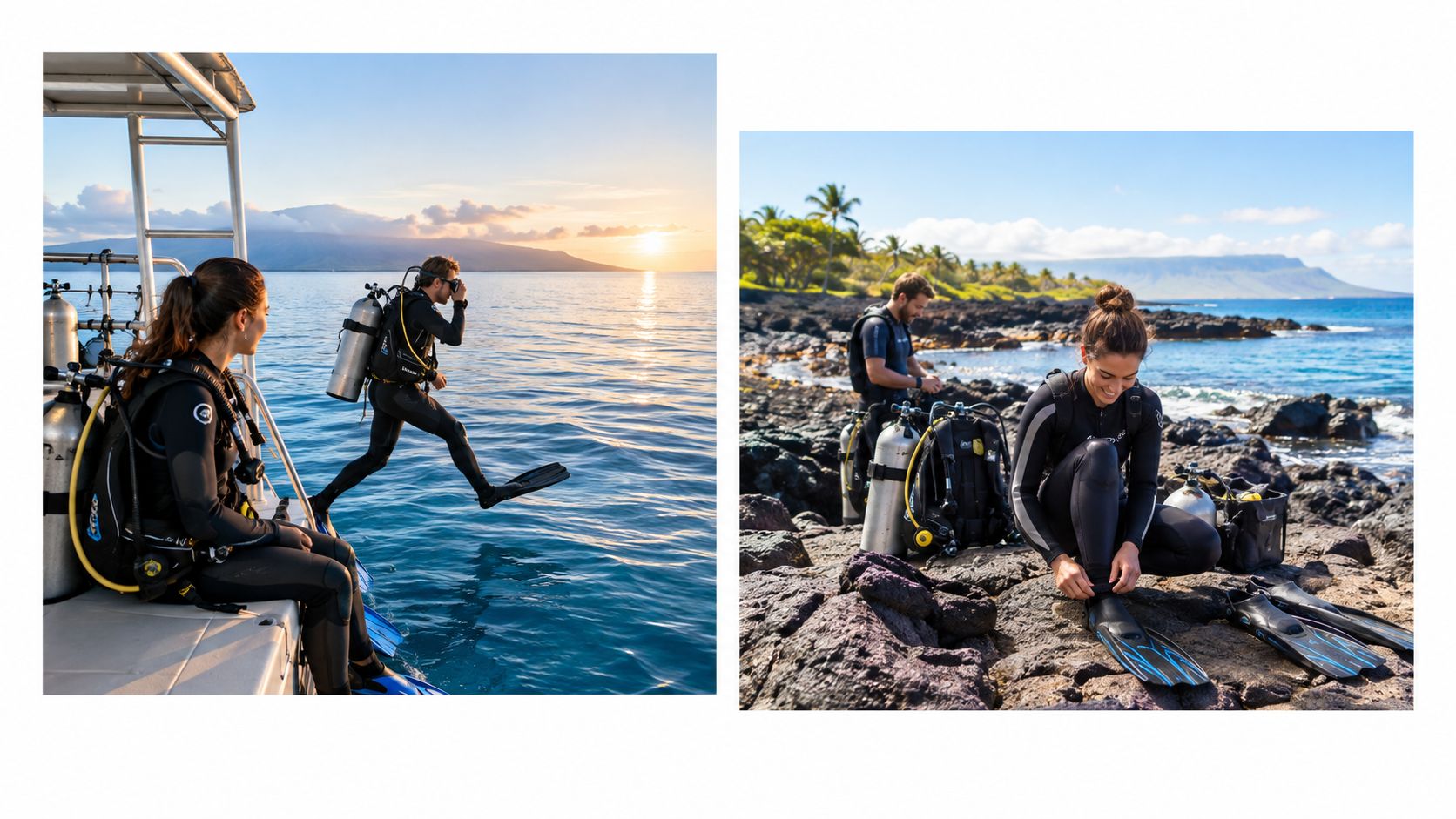
A first visit with a manta night
Dive the morning boat reef while conditions are calmest. Rest through the afternoon, eat early, and show up to the manta briefing fresh. First-time night divers need that gap. A diver who already spent six hours on the water is a diver watching their air gauge instead of the rays.
Day two stays loose. Pick a shore dive if conditions and experience line up, or take the recovery day. The signature encounter carries the trip, and nothing else on the schedule should ride on a single sighting.
A reef day and a blackwater specialty
Experienced divers who meet the operator's requirements should split the specialties: reef boat by day, blackwater on a separate night. Never run blackwater on the same evening as a first manta dive. Each trip carries its own briefing, lighting, and attention demands. Charters fill these night slots independently, so reserve both when you book rather than hoping to add one on island.
Mixed groups can pair scuba and snorkel plans where the operator runs both off one departure. Confirm that pairing at booking, since boat space is the limiting factor, not willingness.
A short stay with one signature night
Short trip? Pick one signature night and one easy boat morning. Put the outing you'd hate to miss first, then let the rest of the day flex with conditions and energy. Choose the day type that matches your group's experience level, hold the rest gap around the night dive, and treat the manta encounter as observation, never a guarantee.
Choosing a Kona Operator and Booking
Don't judge an operator by the photos alone. Ask how the crew briefs divers, how rental equipment is maintained, whether the boat's ladder suits your ability, and how the operation handles different experience levels. For advanced trips, confirm the certification and logbook rules, the gas and time limits, and whether nitrox is available for your package.
A manta tour should also name its viewing site. Garden Eel Cove's protected setting, viewing area, and surrounding reef structure make it the stronger choice for the manta dive. “Manta night” isn't a complete answer if you still don't know where the boat plans to go or what divers should expect once they arrive.
Check the operation behind the itinerary
Kona Honu Divers is one option for divers comparing day and night trips. The company describes custom dive boats, more than 200 years of combined crew experience, and offerings that include reef diving, manta and blackwater nights, rentals, repairs, and dive-travel support. Its package information includes early-diver discounts and free nitrox on package deals. Ask the crew which trip matches your certification, logged experience, and comfort with the ladder before booking.
For more practical criteria, use this guide to choosing a Kona diving company. A clear answer about requirements and site choice is more useful than a sales pitch.
Pick a trip that matches your certification and experience, choose Garden Eel Cove for the manta night, and leave a separate evening if you're adding blackwater. Check live availability before you lock the rest of your itinerary around a calm morning departure.
Kona Honu Divers offers guided day and night dives, including reef trips, a Garden Eel Cove manta experience, and blackwater diving for qualified divers. Choose the trip that fits your skills, then visit Kona Honu Divers to check the options and plan your Big Island dives.