
Table of Contents
- Olapa, Luu and Kahanuola at a glance
- Dive types, distance and who they suit
- Choose the environment before the vessel
- Depth bands and what each one requires
- Get usable answers before entering the water
- Bring evidence of current experience
- Advanced departures need more context
- Scuba and surface participation are different activities
- Why Garden Eel Cove is the better target
- Compare the arrangements that affect your day
- Put the important details in writing
Olapa, Luu and Kahanuola are names for separate boats in the Big Island Divers fleet, listed as 36-foot vessels from Kailua-Kona with up to 18 guests each. Why search a boat name before you know which trip matches your certification and the kind of diving you want?
That question explains many searches for Big Island Divers Olapa Luu Kahanuola. The useful comparison is which vessel is assigned, what itinerary it runs, and what experience the crew expects. Published fleet details conflict on one name, and the notes below cover that conflict.
Who Olapa, Luu and Kahanuola Are
Olapa, Luu and Kahanuola identify separate boats, not underwater locations. Big Island Divers uses the fuller names Moana Olapa and Moana Luu in its fleet information.
The operator's fleet page lists these as Kailua-Kona boats measuring 36 feet, with capacity for up to 18 guests each. Treat those as published specifications rather than a guarantee of your departure's passenger count.
Olapa, Luu and Kahanuola at a glance
| Boat | Length | Guest capacity | Home port |
|---|---|---|---|
| Moana Olapa | 36 ft | Up to 18 | Kailua-Kona |
| Kahanuola | 36 ft | Up to 18 | Kailua-Kona |
| Moana Luu | Listed as 36 ft; reconfirm assignment | Listed as up to 18; reconfirm | Kailua-Kona |
| All three combined | Separate vessels, not a combined length | Up to 54 if all three match; unconfirmed | Kailua-Kona |
There is a naming conflict to catch before organizing a group. The private-charter information documents Kahanuola as a 36-foot Lightning Radon, but related largest-boat information names Honu Iki, rather than Moana Luu, alongside Kahanuola and Moana Olapa.
That does not establish that Luu is unavailable or that its listed specifications are wrong. It means you should not treat the conditional combined capacity in the table as confirmed inventory for your dates.
Booking rule: A published vessel capacity is not the same as the number of guests booked, the size of your underwater group, or the availability of that boat.
For a family or private group, get the assigned vessel and passenger arrangement in writing. Ask whether divers and surface participants share the departure, and how the crew separates activities.
The names appear together because they belong to the same operating fleet. The boat identifies your transport platform. The itinerary identifies your experience. A familiar vessel name alone does not tell you whether you are booking reef diving, an advanced outing, a manta encounter, or an offshore night trip.
Which Dives These Boats Run and Where
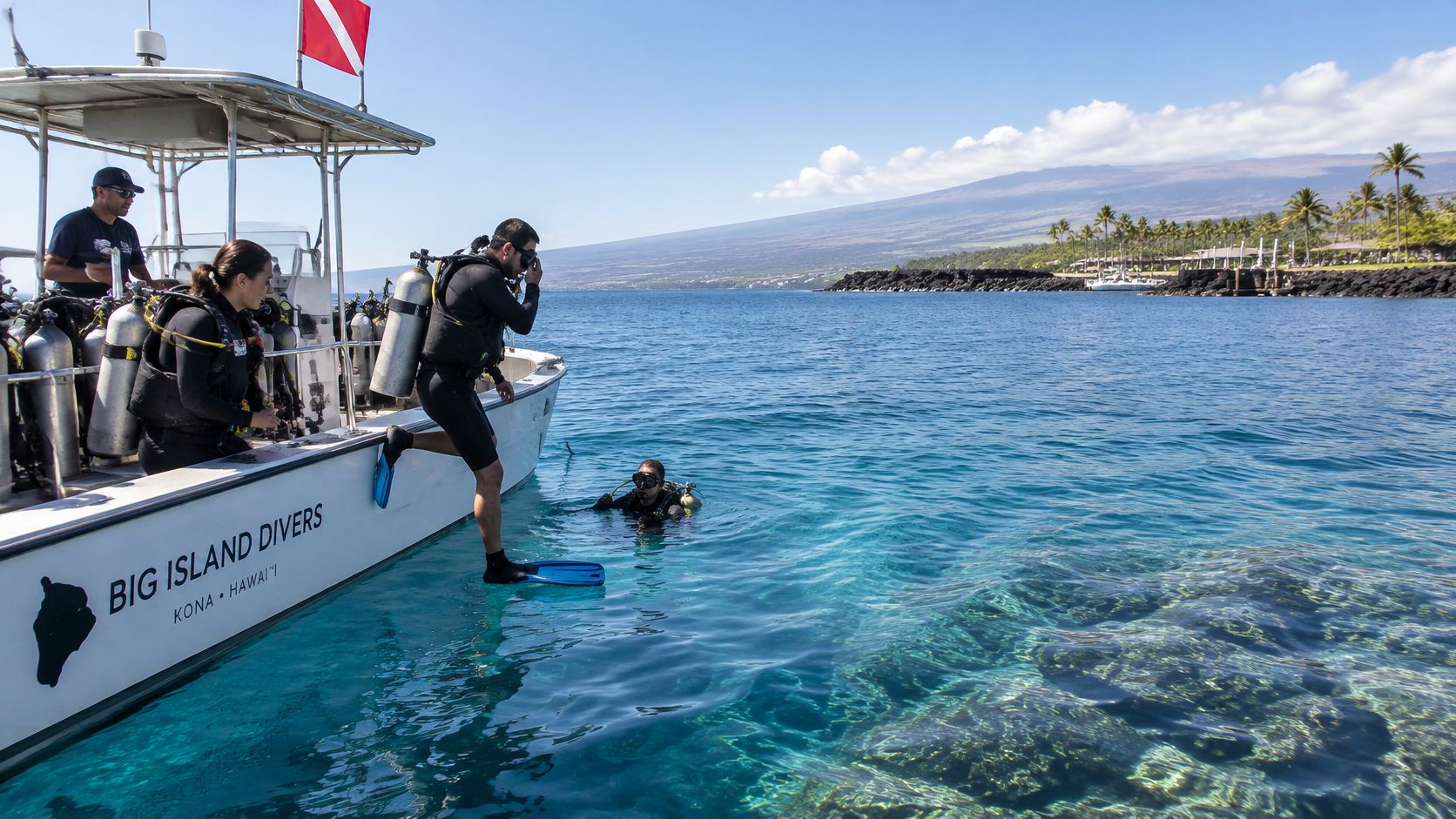
Standard reef diving is the baseline, not a promise that every charter follows the same coastal route. The operator describes ordinary sites as generally within a 25-minute boat ride of the harbor and within one-quarter mile of shore, while advanced morning and offshore night departures travel farther out.
Those are typical operating descriptions, not guaranteed transit times. The captain still has to account for conditions and the planned site.
Dive types, distance and who they suit
| Trip type | Where it runs | Distance offshore | Best for |
|---|---|---|---|
| Standard reef dive | Kona reef sites | Typically within a 25-minute ride; sites within one-quarter mile of shore | Certified recreational divers |
| Advanced morning charter | Remote dive sites | Farther offshore than ordinary reef dives; exact distance not published | Experienced divers |
| Blackwater night dive | Open ocean | Farther offshore; exact distance not published | Certified divers comfortable at night |
| Manta night dive | Garden Eel Cove, subject to conditions | Exact offshore distance not published | Certified divers, plus surface participants for the encounter |
A remote site is not automatically a better site for you. An advanced long-range dive itinerary makes sense when your experience supports the planned conditions, rather than because you want to get farther from the harbor.
A blackwater night dive is a different proposition again. Open water after dark removes familiar reef references, so comfort with buoyancy, equipment handling, and night procedures matters more than enthusiasm alone.
Choose the environment before the vessel
A manta outing centers on an encounter at an illuminated viewing area. It should not be confused with a roaming reef night dive or an open-ocean blackwater trip. The Kona diving and manta-site guide helps separate the destinations from the activities.
What changes between departures is practical: transit, planned depth, briefing content, and the equipment and experience the crew expects. A short coastal transfer can still lead to a demanding dive. A longer ride does not automatically imply greater depth.
Choose the environment you can manage comfortably. Then confirm which boat runs that departure, rather than working backward from a vessel name.
Depth Limits and Safety Briefing Checks
Depth is a dive-plan decision, not a feature of the boat. Hawaiian reef-research context distinguishes conventional work around 20 to 80 or 90 feet, habitat extending roughly 400 to 500 feet, and mixed-gas research dives around 250 feet. These describe different operating environments, not interchangeable recreational options.
Depth bands and what each one requires
| Depth band | Typical depth | What it requires |
|---|---|---|
| Recreational reef context | 20 to 80–90 ft | Appropriate scuba training and planning within no-decompression limits |
| Reef habitat beyond recreational limits | Roughly 400 to 500 ft | Technical-diving methods, not a longer recreational dive |
| Research expedition dives | About 250 ft | Mixed-gas technical procedures, redundant gas, and decompression planning |
These are not published depth promises for your Kona charter. A reef's full depth range does not tell you where your guide will take you, and research profiles do not authorize recreational guests to follow them.
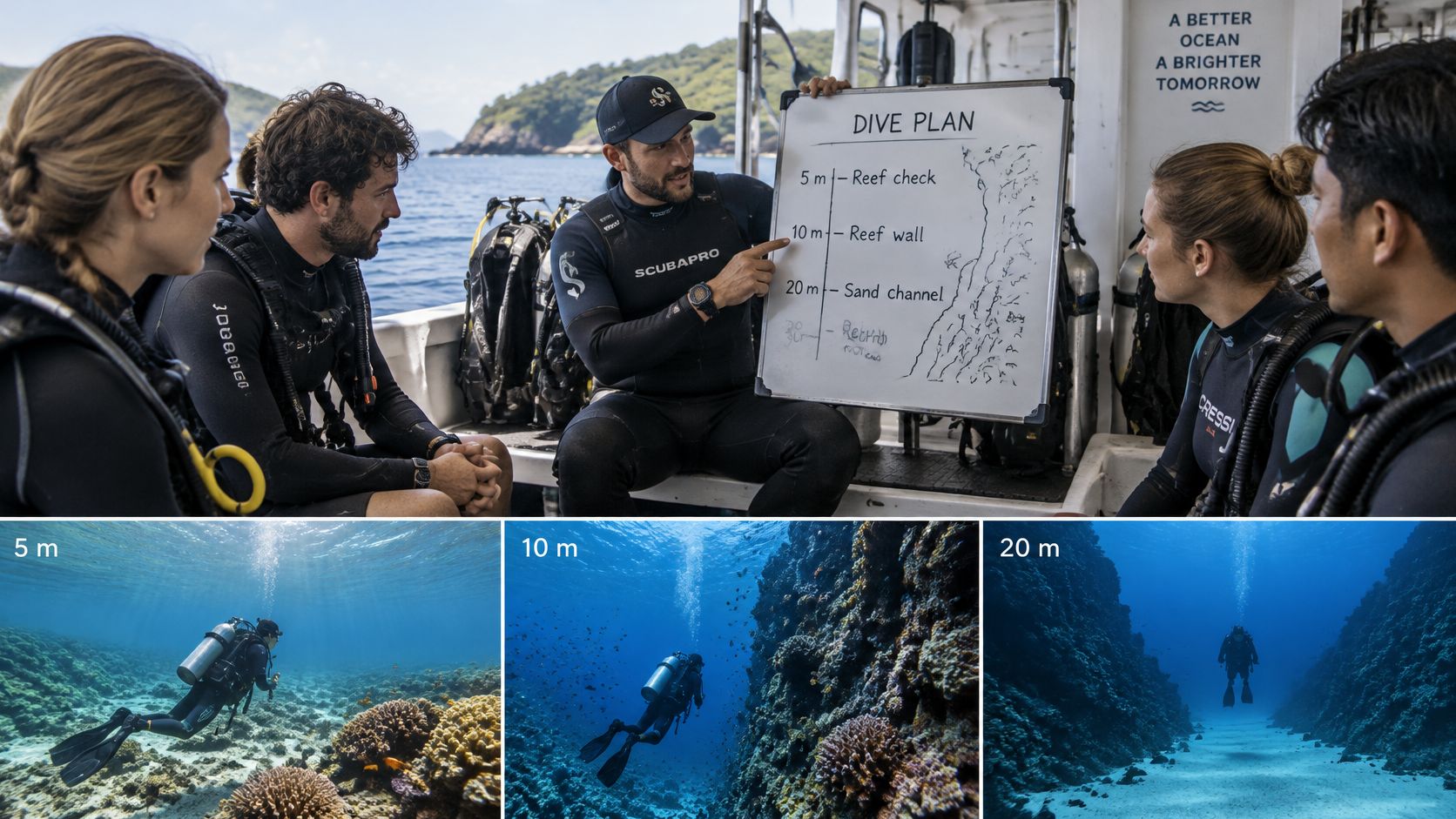
Gas use rises with depth. Inert gas loads faster. No-decompression margin narrows. Drifting deeper than planned can change the dive before remaining gas becomes an obvious problem, so hold the agreed limit and check instruments often.
Technical profiles require appropriate training, equipment redundancy, and staged decompression when applicable. Carrying an extra cylinder without knowing its procedures is not a substitute for that preparation.
Get usable answers before entering the water
Use the operator's contact information to resolve trip requirements before departure, then confirm the actual plan during the briefing:
- Maximum planned depth: Know the agreed limit before descending, so the group does not improvise it underwater.
- Certification prerequisites: Match the profile to your training, not merely your willingness to try it.
- Nitrox oxygen percentage: Analyze your cylinder and establish its maximum operating depth before using it.
- Computer settings: Confirm that your computer's gas setting matches the cylinder and that you understand its warnings.
- Reserve-gas policy: Know the turn and ascent expectations, including how you will signal them.
- Emergency ascent procedure: Identify your buddy, alternate air source, lost-buddy response, and the crew's instructions for separation.
A capable vessel can carry equipment for a demanding trip. It cannot give a passenger the training to make that dive safely.
For a specific encounter, use the Kona manta-dive depth explanation to frame your questions, not to replace the departure briefing.
Vague answers are a reason to ask again or select a different trip. If you are arranging a departure with our crew, explain your limits before booking rather than hoping to negotiate them at the entry point.
What Certification Each Trip Requires
Open Water Diver certification is the starting point for most regular certified-diver charters. At Kona Honu Divers, we require at least that qualification from a recognized agency such as PADI, SSI, or NAUI for most regular dive charters.
We always check each diver's certification and logbook before choosing sites that match their skill set. That is a practical screening process, not paperwork to get out of the way.
Bring evidence of current experience
Your certification tells the crew what you were trained to do. Your logbook helps explain what you have been doing, including recent conditions, depth, and whether you have been diving regularly.
Bring your physical certification card when you have it, and keep a usable digital record available as backup. A logbook can be paper or digital, but it should be accessible without relying on a connection at the dock.
- Certification card: Show your agency, qualification level, and identifying details.
- Recent dive records: Include enough information to discuss recency, environment, and comfort.
- Booking details: Complete the agency and certification fields accurately rather than guessing.
- Relevant limitations: Tell the crew about skills you are rusty on or conditions you would prefer to avoid.
For training questions, start with the Big Island scuba-certification guide. Do not assume that booking a more demanding departure includes the training needed to qualify for it.
Advanced departures need more context
For advanced morning or blackwater trips, expect a closer discussion of logged experience, particularly deep and night diving. Exact eligibility must come from the operator running the departure, rather than from a general boat guide.
Say you hold an advanced certification but have not dived recently. The useful information is not just the card title. It is how comfortably you can control buoyancy, monitor gas, and manage task loading today.
Site flexibility is a benefit when the crew uses it to match conditions and skill. A fixed-site promise is less valuable than an appropriate plan. If you are uncertain about readiness, describe the uncertainty plainly before committing.
Manta Night Dives From Garden Eel Cove
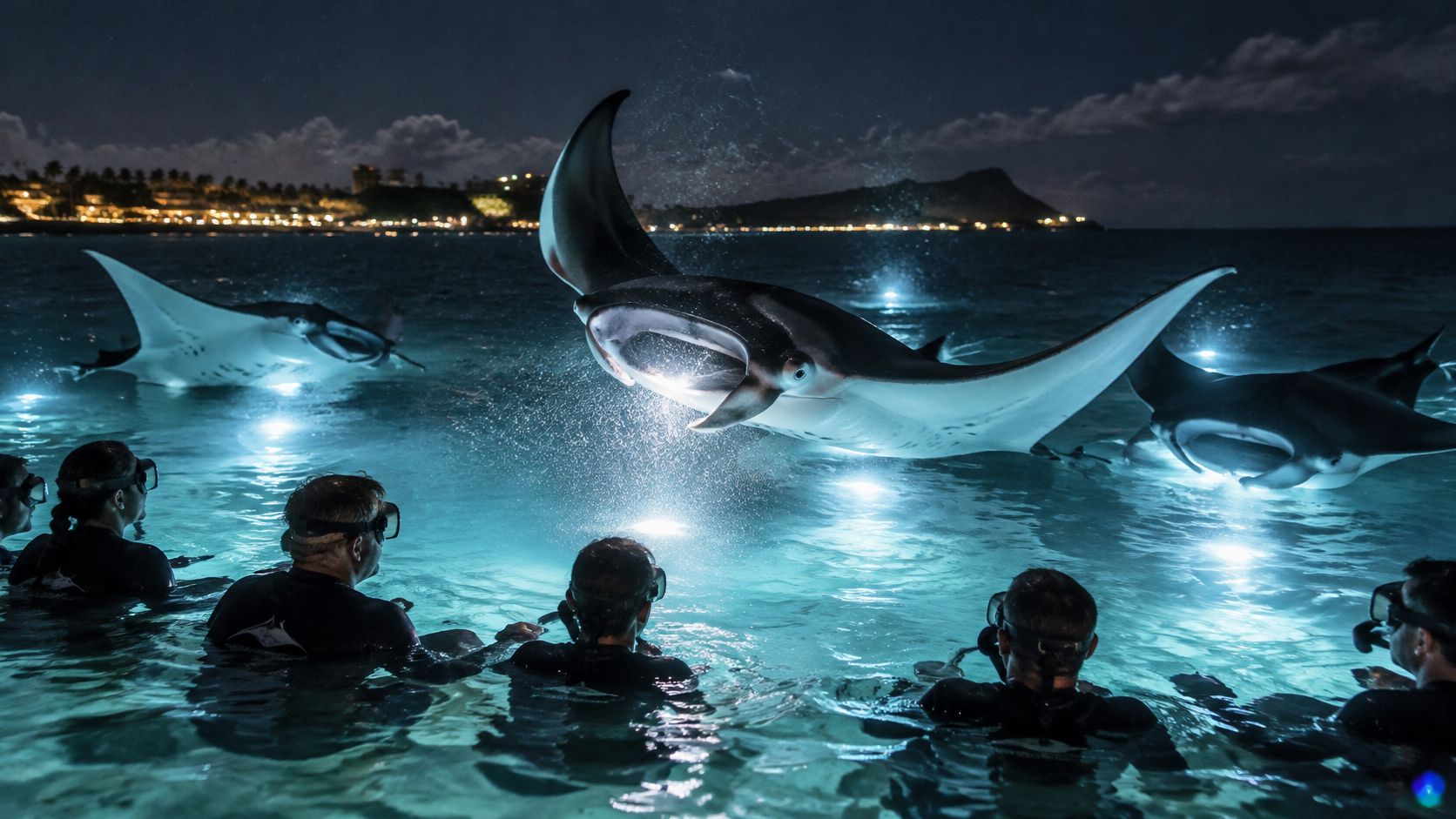
The illuminated manta encounter is the reason to book this trip. Divers watch from near the bottom while the animals feed in the lit water above them, rather than following a normal reef-tour route.
Garden Eel Cove is the preferred setting for that experience. Its protected location, viewing area, and surrounding reefs make it the stronger choice when conditions support the plan.
Scuba and surface participation are different activities
The published manta-night rules exclude non-certified guests from scuba participation, while allowing them to join as snorkelers or choose a separate introductory scuba experience on a two-tank local morning charter.
The in-water arrangement matters. Snorkelers remain flat at the surface around an illuminated raft. Scuba divers stay near the bottom. Neither group should move into the animals' feeding path to improve a photograph.
For a mixed group, choose each person's activity carefully. A confident surface participant does not need to become a diver to enjoy the encounter, and a non-certified guest should not treat the night charter as an introductory lesson.
Encounter etiquette: Hold your assigned position, keep your equipment controlled, and let the mantas choose their path through the light.
Why Garden Eel Cove is the better target
Garden Eel Cove, also called the northern Airport site, offers the combination I would prioritize: a protected setting, a better viewing area, and better surrounding reefs than the alternative manta venues. That combination supports a more appealing dive, not just a place to wait for an animal.
Protection does not mean the site is immune to ocean conditions. A captain may select another location because of sea state or recent manta sightings, and that is a legitimate operational decision rather than a failure to deliver a named venue.
Use the manta dive and snorkel tour details to distinguish activities, and the Hawaii Big Island manta-night guide to prepare for the encounter.
For families splitting between diving and snorkeling, confirm the activity assigned to each person before paying. The boat name will not resolve that distinction, and choosing the correct booking option avoids an uncomfortable surprise at check-in.
Choose Your Dive and Confirm Details Before Booking
Compare certification fit, planned depth and dive type, then group size and departure logistics. Those criteria tell you more about the day than the vessel name alone.
A larger passenger capacity may suit a private gathering, but it does not establish the underwater guide arrangement. A small dive group may be more useful to someone who wants closer attention, even when the transport boat has room for more passengers.
Compare the arrangements that affect your day
Our process at Kona Honu Divers centers on small groups and personal attention, starting with the certification and experience checks used to select suitable sites. Our dive days start at Honokohau Harbor, so distinguish the harbor meeting instructions from any shop address.
Use this practical comparison when reviewing departures:
- Fit for the diver: Look for a clear explanation of prerequisites and an itinerary compatible with your recent experience.
- Underwater organization: Establish how divers are grouped and how the guide handles different gas consumption or comfort levels.
- Departure logistics: Confirm the meeting location, check-in instructions, assigned vessel, and arrangements for anyone joining without diving.
- Changes to the plan: Understand how the operator handles weather, unsuitable conditions, and a site change before you commit.
Our guide to choosing a Kona diving company gives additional comparison points. Favor clear operational answers over a familiar name or an attractive photograph of a boat.
Put the important details in writing
For our departures, call 808-324-4668 if your experience or group arrangements need discussion. Review the full Kona diving-tour selection alongside the prerequisites, and consider our Big Island scuba diving discount packages if you are planning multiple outings.
Do not make the booking decision solely on whether a particular vessel appears in the listing. A different assigned boat may still deliver the appropriate itinerary, while the same boat on a different charter may be entirely unsuitable for your goals.
Before committing, record the boat assignment, activity, and planned depth in your booking correspondence. Use the briefing and certification checks to decide whether the answers fit your logged experience, then reserve the departure you can enjoy without stretching beyond your preparation.
Kona Honu Divers offers guided Kona reef dives, manta encounters, and advanced night-diving options for different experience levels. Visit Kona Honu Divers to compare departures, share your certification and recent diving history, and book the trip that fits you rather than choosing by boat name alone.