
A first-time diver surfaces off the Kona coast with a manta ray gliding overhead, its pale wings turning through the beam of the dive lights. On another night, a certified diver descends into open water and watches strange pelagic life rise from the deep. That contrast captures why Big Island divers in Hawaii get far more than a standard reef excursion.
The Ultimate Big Island Divers Hawaii Experience
Kona rewards divers who choose the experience before choosing the booking time. The leeward coast offers approachable reef diving, but it also delivers two distinctly different night adventures, manta encounters over a protected reef and blackwater exploration far offshore. A good operator should help you match the trip to your certification, comfort in the water, and appetite for open-ocean conditions.
The destination has grown well beyond its pioneer roots. One history of Big Island scuba diving describes an early scene with fewer than five dive shops and under 10,000 annual dive tourists in the 1970s, followed by steady expansion through later decades. The same source reports that the island now supports more than 50 dive shops and charters, about 150,000 dive tourists annually, and around 100,000 certified scuba dives each year. Those figures explain the range of choices available today, but they also mean that popular trips need deliberate planning.
Start with the right kind of day
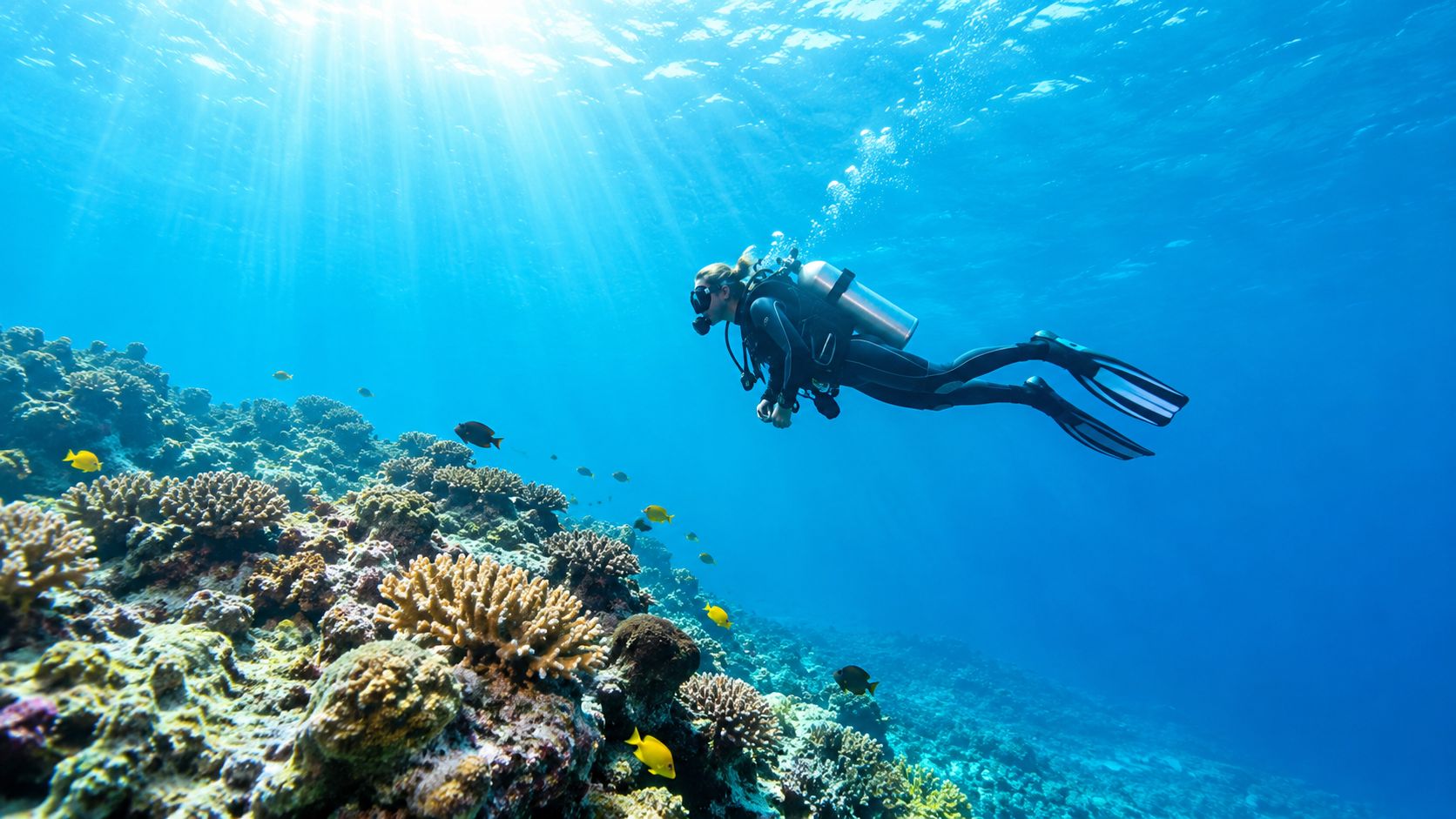
For a first dive on the island, I recommend a guided reef trip. It gives you time to settle into the water, check your weighting, and observe Kona's volcanic underwater terrain without adding the demands of a night departure or deep offshore setting.
Certified divers with several comfortable dives behind them can choose a two-tank outing, while families and mixed groups should ask about age, certification, and private supervision before paying. A professional crew will discuss the plan straightforwardly rather than pushing every guest toward the most dramatic excursion.
Local rule: Choose the dive that fits your current ability, not the dive that sounds most impressive in a brochure.
Kona's appeal comes from that flexibility. You can build a trip around relaxed reef exploration, reserve a manta night dive as the centerpiece, or pursue a highly specialized blackwater experience. The best itinerary leaves room for conditions and recovery, rather than packing every available day with demanding activity.
Signature Diving Adventures in Kona
Kona's manta ray night dive and blackwater dive belong on different parts of your decision tree. Both happen after dark, but the environment, pacing, and visual experience are completely different.
The manta dive is the more accessible choice for most visitors. Hawaii Island is described as the only Hawaiian island where visitors can dive or snorkel with manta rays at night, and reported wingspans can reach about 18 feet according to this Big Island manta ray tour guide. Boats commonly depart from Keauhou Bay or Kailua-Kona for sites including Manta Village and Manta Heaven.
Choose mantas for a focused wildlife encounter
Lights placed in the water attract plankton, and the plankton draws manta rays close to divers. You aren't chasing the animals across a reef. You hold position, maintain good buoyancy, and watch the rays make repeated passes through the illuminated water.
For this experience, I favor Garden Eel Cove. Its protected location, better viewing area, and healthier surrounding reefs make it a stronger choice for a dive tour than an exposed or poorly organized setup. If the manta encounter is your main reason for visiting, ask where the boat will operate and how the crew manages diver positioning before booking the Kona manta ray dive tour.
Choose blackwater for open-ocean discovery
Blackwater diving has no reef beneath you. Divers travel far offshore, descend into mid-water at night, and observe small pelagic organisms drifting upward from the deep. One account of blackwater diving in Hawaii describes an operation about three miles offshore after 10 p.m., over roughly 8,000 feet of water, with divers tethered to lines.
That setting demands a different mindset. The attraction isn't a predictable animal encounter. It's the possibility of seeing delicate, bioluminescent, and rarely observed creatures close to your light. Use the Kona blackwater dive tour for a specialized adventure, not as a first-ever scuba experience.
For a broader overview of reef, manta, and offshore options, explore this guide to diving Kona and the Big Island. My recommendation is simple. Book the manta dive if you want a dramatic, structured wildlife encounter. Book blackwater if the uncertainty of the open ocean is exactly what excites you.
Understanding Diving Conditions and Seasonality
Kona's most useful natural advantage is its position. The coast lies on the leeward side of the island, while Mauna Loa and Hualālai block much of the trade-wind exposure. That shelter produces unusually calm surface conditions, steadier boat rides, and visibility that frequently exceeds 100 feet, as explained in this overview of Big Island diving conditions.
Water temperature still changes through the year. Nearshore Kona water is reported around 74 to 76°F in late winter and 82 to 84°F in late summer, while visibility at favorable leeward sites can reach 100 to 150 feet or more during strong conditions, according to this seasonal Big Island scuba guide. Pack exposure protection for the actual season, not an imagined tropical average.
Match the season to your priority
May through October is often the most attractive period for divers who prioritize warmer water, calmer seas, and strong visibility. That makes it a practical window for photographers, newer divers, and anyone planning several boat trips.
Winter isn't a lost season. Kona remains a year-round diving destination, but north swells can reduce clarity at exposed west-side sites. Ask the operator which sites are sheltered on your dates instead of assuming the same itinerary works in every weather pattern.
| Your priority | Practical planning choice |
|---|---|
| Clear wide-angle photography | Favor the calmer, warmer period and confirm the site plan |
| Comfortable first boat dive | Choose a sheltered Kona departure and a guided reef trip |
| Manta encounter | Reserve the night dive separately from your daytime diving |
| Offshore blackwater experience | Allow flexibility for sea conditions and fatigue |
Medical planning matters as much as weather planning. A dive-focused guide notes that Hawaiʻi Island has no recompression chamber, and suspected decompression injuries require immediate medical help and consultation with DAN. Hawaii water-safety data also describe 2019 through 2023 drownings as mostly ocean drownings, a reminder that calm-looking water still deserves disciplined behavior.
After a concerning symptom, don't wait to see whether it disappears. Tell the crew immediately, seek emergency medical assistance, and follow professional guidance about further diving and flying. For a practical itinerary, use the Big Island scuba diving planning guide to compare trip types before you lock in dates.
Diving Courses and Certification Options
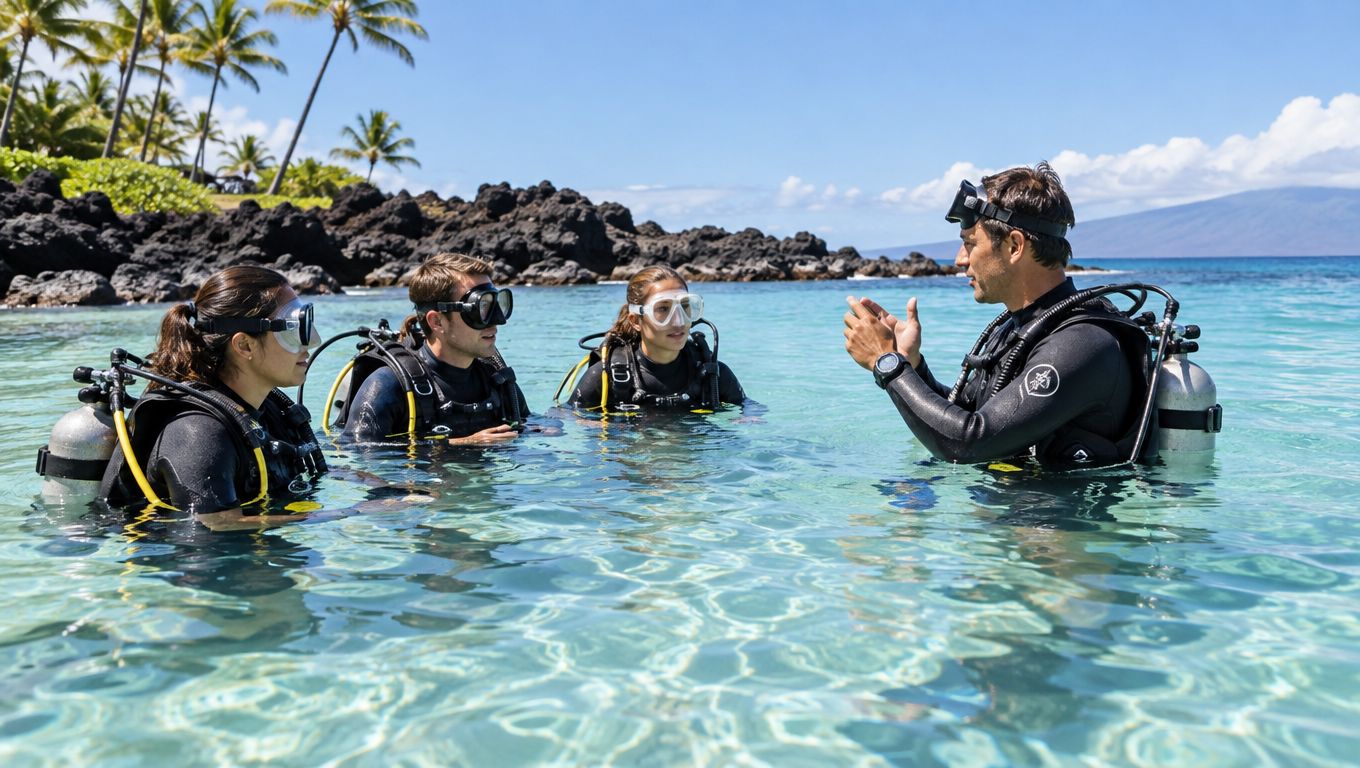
The right course depends on what you want to do after the vacation. If you're completely new to scuba, start with a discovery experience that emphasizes breathing, buoyancy, hand signals, and comfort. Don't treat an introductory dive as a shortcut to advanced conditions. Its value is giving you a controlled first impression of the underwater environment.
Select training by your next objective
New to scuba: Choose an introductory dive or begin an Open Water course if you want a formal qualification. Ask how much confined-water practice, academic work, and supervised ocean diving the course includes.
Recently certified: Book a calm guided reef trip first. This lets you rebuild routine with equipment, buoyancy, and entries before attempting a night or offshore specialty.
Continuing diver: Consider night, deep, rescue, or enriched-air education only when it supports a real diving goal. A certification is useful when it improves judgment and preparation, not when it only adds another card to your wallet.
Experienced diver: Discuss site depth, current, distance from shore, emergency procedures, and required experience before choosing a long-range charter. Advanced trips can be rewarding, but the crew needs accurate information about your recent diving and comfort level.
The Big Island scuba certification program should be evaluated by instructor communication as much as by the course title. A strong briefing explains what happens on the boat, what skills you'll practice, how the team handles changing conditions, and what equipment is supplied.
Build skills in the order you'll use them
Start with buoyancy. Good trim and controlled breathing protect the reef, conserve gas, and make marine-life observation easier. Add night procedures once you can manage your basic equipment without constant visual references. Save demanding offshore environments for the point when you can remain calm, communicate clearly, and respond to a problem without abandoning your buddy.
Certified divers seeking a more challenging itinerary can review an advanced long-range dive tour. Read the prerequisites carefully, and be candid about recent experience. A good dive plan begins with an accurate self-assessment.
Practical Booking and Logistics Tips
Booking a Big Island dive is easier when you separate the decisions. First choose the experience, then verify eligibility, then confirm the meeting point, equipment, and cancellation terms. Don't book a manta or blackwater trip solely because the departure time fits your hotel schedule.
Confirm the details that can stop a trip
Some operators require a minimum of three participants for a charter. A refresher may be required if you haven't dived for three or more years, and divers aged 10 or 11 may need a parent or guardian plus a private divemaster, according to published Big Island diver policies. These rules matter to families, solo travelers, and small groups, so ask before assuming every seat is interchangeable.
Use this quick booking sequence:
- State your experience accurately: Include certification level, recent dive history, and whether you need rental equipment.
- Ask about the exact departure: Confirm harbor, check-in time, parking, and whether transportation is included.
- Verify what comes aboard: Check whether tanks, weights, exposure protection, lights, and other equipment are supplied.
- Protect the best day: Put your signature dive early enough in the vacation to leave room for weather or a reschedule.
- Read the medical guidance: Complete forms carefully and ask questions before arriving at the dock.
A useful guide to Hawaii scuba diving costs can help you compare inclusions, but don't judge trips on headline price alone. Boat comfort, group size, gear condition, guide attention, and the suitability of the itinerary affect the experience.
Deal with seasickness before the boat moves
If you're prone to seasickness, prevention beats trying to recover after symptoms begin. Ask a medical professional or pharmacist which option is appropriate for you, especially if you're combining medication with diving or have an underlying health condition.
Common products divers consider include a Ship-EEZ Seasickness Patch, Dramamine pills, Bonine pills, Sea Band wristbands, and ginger chews. Sea Band is a cheaper generic option that gets better ratings, while ginger chews offer a non-pill alternative. Test any product before the trip, follow its label, and tell the crew if you feel unwell.
Choosing the Right Dive for Your Skill Level
Your certification level is only one part of the decision. Recent experience, buoyancy control, comfort at night, and response to boat motion matter just as much. Two divers with the same certification can need completely different itineraries.
Use this experience-based comparison
| Diver profile | Best starting point | Avoid for now |
|---|---|---|
| First-time participant | A discovery dive with close instructor support | Independent or demanding night diving |
| New certification | Calm guided reef diving | Choosing an offshore specialty as the first trip |
| Comfortable recreational diver | Two-tank reef diving, then a manta night dive | Hiding uncertainty about recent experience |
| Experienced night diver | Manta or other structured night experience | Assuming all night dives have the same demands |
| Advanced and current | Long-range sites after a detailed briefing | Treating remote diving as a casual upgrade |
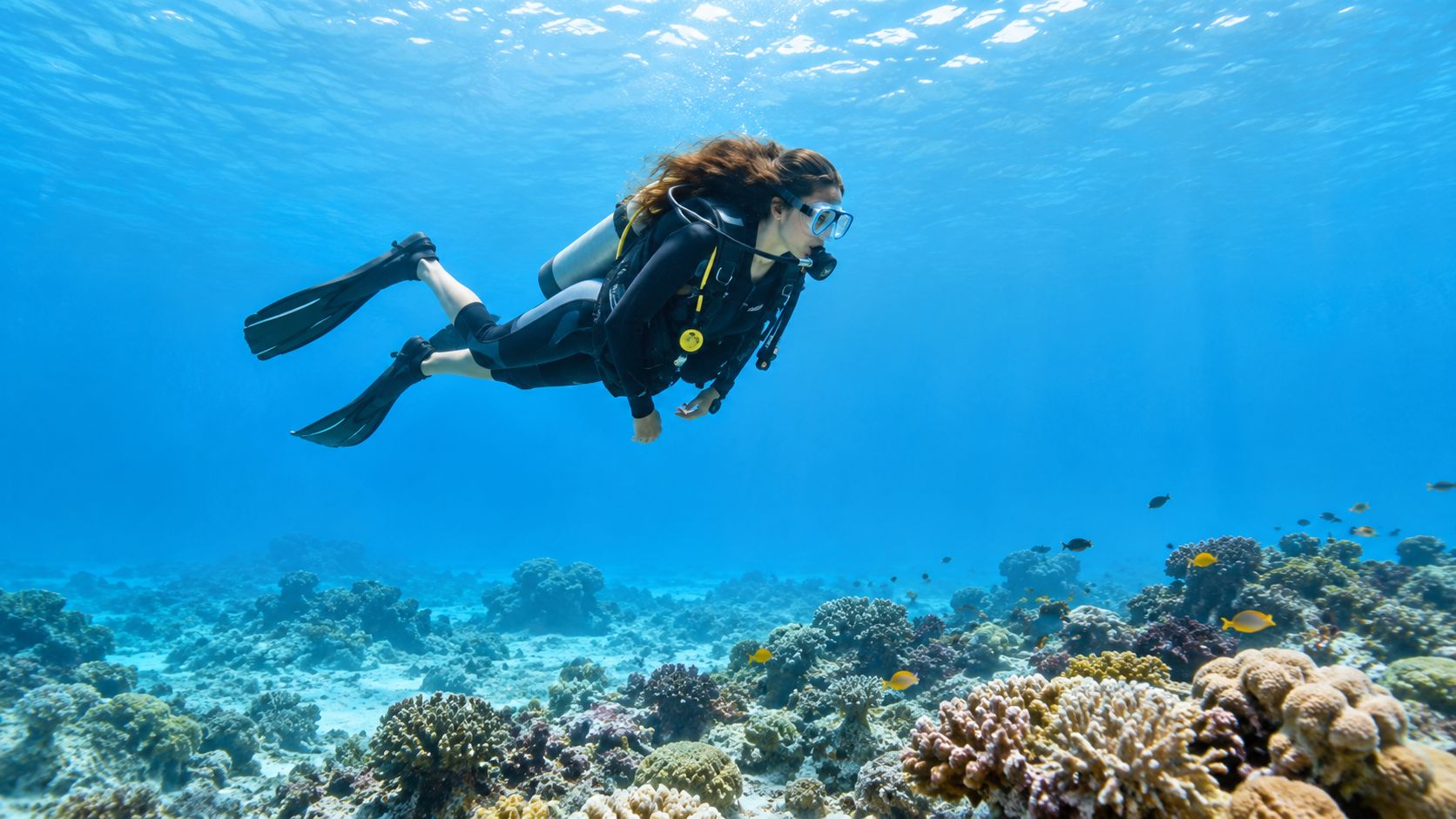
The beginner scuba diving option on the Big Island is the sensible route for visitors who want a first underwater experience without overcommitting. Instructors can focus on breathing, buoyancy, and communication while you observe the reef.
Families need extra attention to eligibility. Children's participation depends on the operator's rules, supervision requirements, health information, and comfort in the water. If one family member is certified and another isn't, consider a plan that keeps everyone involved without forcing the least experienced person into an unsuitable dive.
Know when to choose the unusual option
The manta dive works well for divers who can remain calm at night and follow a fixed positioning plan. The blackwater dive is a different proposition, with open-ocean exposure, tethered lines, and no reef directly below. Select it because you understand that environment, not because you've already completed a routine reef tour.
Experienced divers can ask about advanced long-range possibilities, remote volcanic formations, and the crew's expectations for depth and gas planning. The operator should be willing to say no when a trip doesn't fit your profile. That conversation is a sign of responsible planning, not a barrier to adventure.
Essential FAQs for Big Island Divers
Is Kona suitable for first-time divers?
Yes, provided you choose a guided introductory or shallow reef experience and disclose your health and water-confidence concerns. The leeward coast offers a practical setting for learning, but calm surface conditions don't eliminate the need for instruction, buddy procedures, and careful supervision.
What equipment should I bring?
Ask what the charter supplies before packing. Bring the personal items you know fit correctly, such as swimwear, sun protection, and any required medical information. If you use your own mask, computer, or exposure protection, tell the operator in advance so the crew can plan around it.
Can I join if I haven't dived recently?
Possibly, but don't assume. Some operators may require a refresher after three or more years without diving, so report your last dive when booking rather than at check-in. A refresher can be the fastest way to restore confidence and avoid turning a vacation dive into a stressful test.
Are manta and blackwater dives appropriate for everyone?
No. Manta trips are structured wildlife encounters, while blackwater trips take place in open water at night and require a stronger comfort level with the environment. Ask about certification, recent experience, tethering, sea conditions, and the cancellation or rescheduling policy before paying.
What happens after a suspected dive injury?
Tell the crew immediately and seek medical help. Hawaii Island has no recompression chamber, and suspected decompression injuries require urgent professional assessment and DAN consultation. Don't fly, return to the water, or dismiss symptoms without medical guidance.
When should I book?
Book signature trips early, particularly when your dates fall in the busier travel periods around December through January or May through August, when same-week availability can be tighter according to the published policy guidance. Reserve the trip most important to you first, then fill in flexible reef dives around it.
Kona Honu Divers offers guided Big Island day dives, night dives, certification courses, and advanced trips for divers with different experience levels. Review the available itineraries, confirm the requirements for your group, and visit Kona Honu Divers to choose a Kona dive that fits your goals and travel dates.