
One female reef manta ray is expected to move between Hawaiian island groups only about once every 1,300 years, according to genetic research involving NOAA's Pacific Islands Fisheries Science Center, the Hawaiʻi Association for Marine Education and Research, and the University of Miami. That single estimate changes how Big Island divers should choose a dive. You are not picking from a generic site list. You are entering water used by a small, resident population, over reefs found nowhere else, in a Pacific setting that can turn a good plan into a poor entry in hours.
For Big Island divers, the right order is level first, conditions second, site last. Match the dive to certification, recent experience, comfort in darkness and the least experienced person in your group. Then judge the operator by checks, briefings and reef practice. The wildlife may be memorable, but no responsible operator can promise it.
Which Big Island Dive Fits Your Level and Group
Big Island dive experiences at a glance
| Experience | Where | Best For | What You Often See |
|---|---|---|---|
| Manta ray night dive | Garden Eel Cove on the Kona coast | Certified divers comfortable in the dark | Resident reef manta rays feeding in the light |
| Blackwater night dive | Deep open water off Kona | Certified divers who accept changing pelagic life | Salps, siphonophores and ctenophores |
| 2-Tank Morning Dive | Kona coral gardens, lava tubes and swim-throughs | Any certified diver | Green sea turtles, moray eels and reef fish |
| Premium advanced 2-tank trip | Remote dive sites | Experienced divers with logged dives | Lava structure, coral habitat and reef fish away from heavily dived reefs |
Certification comes before enthusiasm. For most of Kona Honu Divers regular dive charters, you need at least an Open Water Diver certification from a recognized agency such as PADI, SSI or NAUI. Confirm that requirement before you book, and bring your card and logbook rather than relying on memory. A certification card proves training. Your logbook and recent dives tell a crew how ready you are today.
That distinction matters most for the two night options. The manta dive asks you to descend at dusk, settle in a group, manage lights and stay calm when a large animal passes overhead. Blackwater adds open water with no reef below you as a visual reference. If darkness, depth cues or buoyancy without the bottom nearby make you tense, choose a morning reef dive first and build toward a night dive.
Choose for the least experienced diver in the group, not the most confident voice at booking.
Mixed groups do not need to split up by default. Snorkelers and ride-alongs can join the dive boat, and divers should tell Kona Honu Divers when booking if snorkelers are in their party so seating, gear and supervision are planned correctly. That flexibility helps families. It does not lower the bar for divers. A non-diver can enjoy the boat while a diver still needs the right certification and comfort level for the profile chosen.
Shore options add another filter. Entries over lava, surge at the waterline and long surface swims can challenge a newly certified diver more than a guided boat dive on a calm reef. If you are comparing access points, start with guidance on the best shore diving on the Big Island and ask whether the entry suits your group on that day, not just in a photograph.
Shortlist two experiences now. Pick a primary choice that fits everyone and a backup if wind, swell or recent experience points to an easier profile. That shortlist makes the reef, manta and conditions decisions practical instead of theoretical.
Why the Big Island’s Reefs Stand Apart
The main Hawaiian Islands contain approximately 640 square miles, or 1,658 square kilometers, of coral reef habitat, supporting about 80 coral species and more than 1,500 reef-fish species, according to the U.S. Coral Reef Task Force page on Hawaiʻi. Over 1,250 species in that count are endemic to Hawaiʻi, meaning they are found nowhere else. You are not looking at a local version of a reef you could see anywhere. You are looking at a biological collection that exists only here.
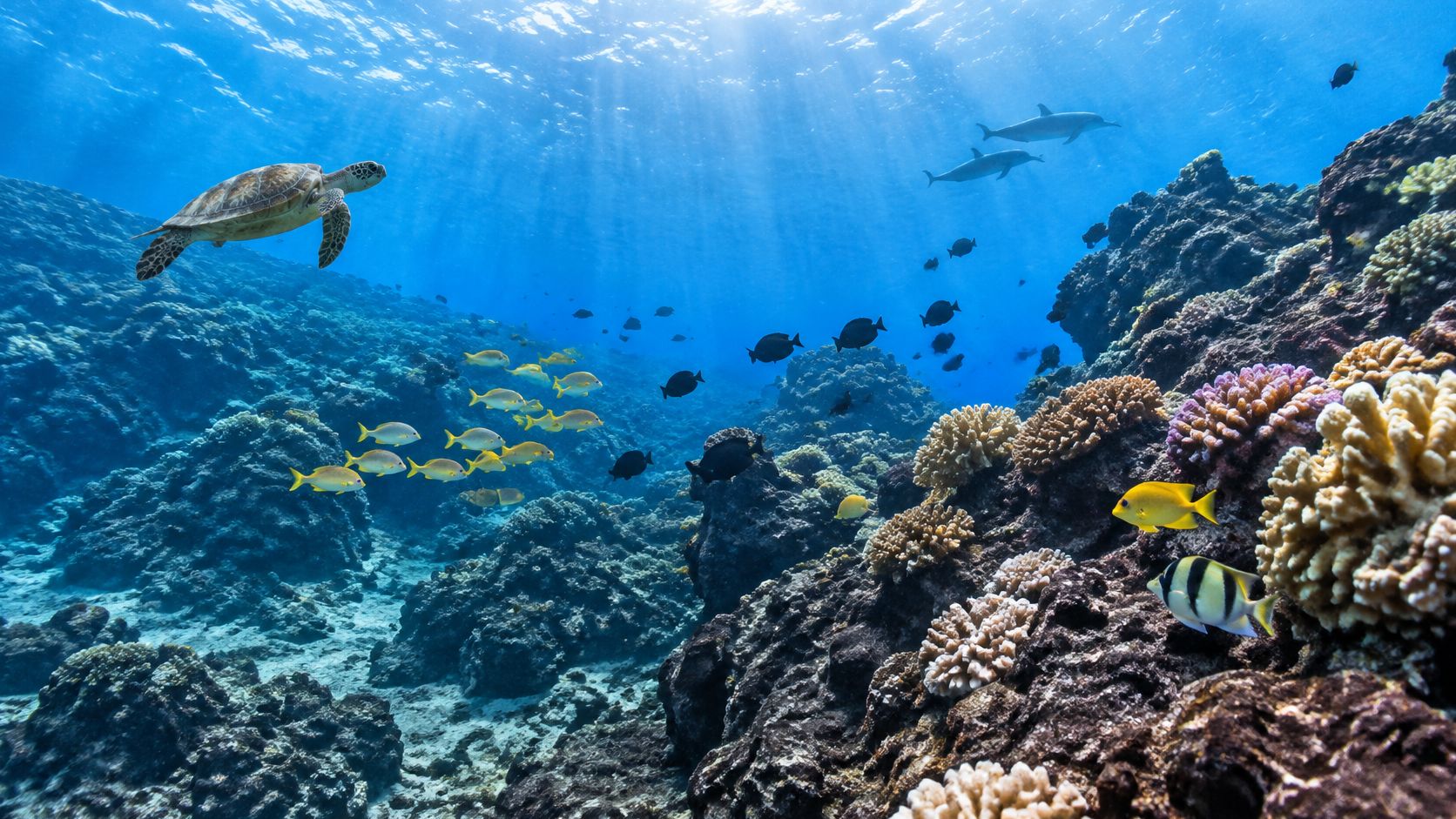
On a morning dive, coral gardens, ancient lava tubes and swim-throughs create the structure. Reef fish use the coral for shelter. Moray eels hold in crevices. Green sea turtles move between feeding and resting areas. The lava-formed habitat is part of the attraction, not scenery behind the animals.
At night, the same coastal system connects to a different food web. Plankton concentrated by lights draws reef mantas close to shore. Farther out, animals rising from deep water turn a blackwater dive into a pelagic sample rather than a reef tour. The reef explains the daytime dive. It also helps explain why Kona night dives are not interchangeable.
Hawaiʻi maintains 13 marine managed areas with different rules designed to protect ecosystems, sustain fisheries or conserve specific habitats, as described on the same Task Force jurisdiction page. Rules vary by place, so read signage, listen to the briefing and do not assume yesterday site rules apply today.
The reef works like a shared library where each coral head is a shelf that took years to build. A fin kick does not just stir sand. It can break the structure other animals use and leave damage the next group inherits.
Practical rule: Keep hands, knees, gauges and fins off coral, and fix buoyancy before you reach for a camera.
Treat the reef as a managed asset. Divers who hold position, avoid contact and follow local rules protect the reason the dive was worth booking.
Manta Ray Night Dives and Why Garden Eel Cove Leads
A Kona manta encounter is a feeding event, not a baited show. Underwater lights concentrate plankton, and reef manta rays approach to filter-feed on the plankton-rich water, a mechanism described by Hawaii.com's guide to Big Island manta ray tours. The rays can reach approximately 14 feet across, although many Kona individuals are closer to 12 feet. When plankton is present and a ray chooses to feed, you will watch repeated loops through the light rather than a brief pass.
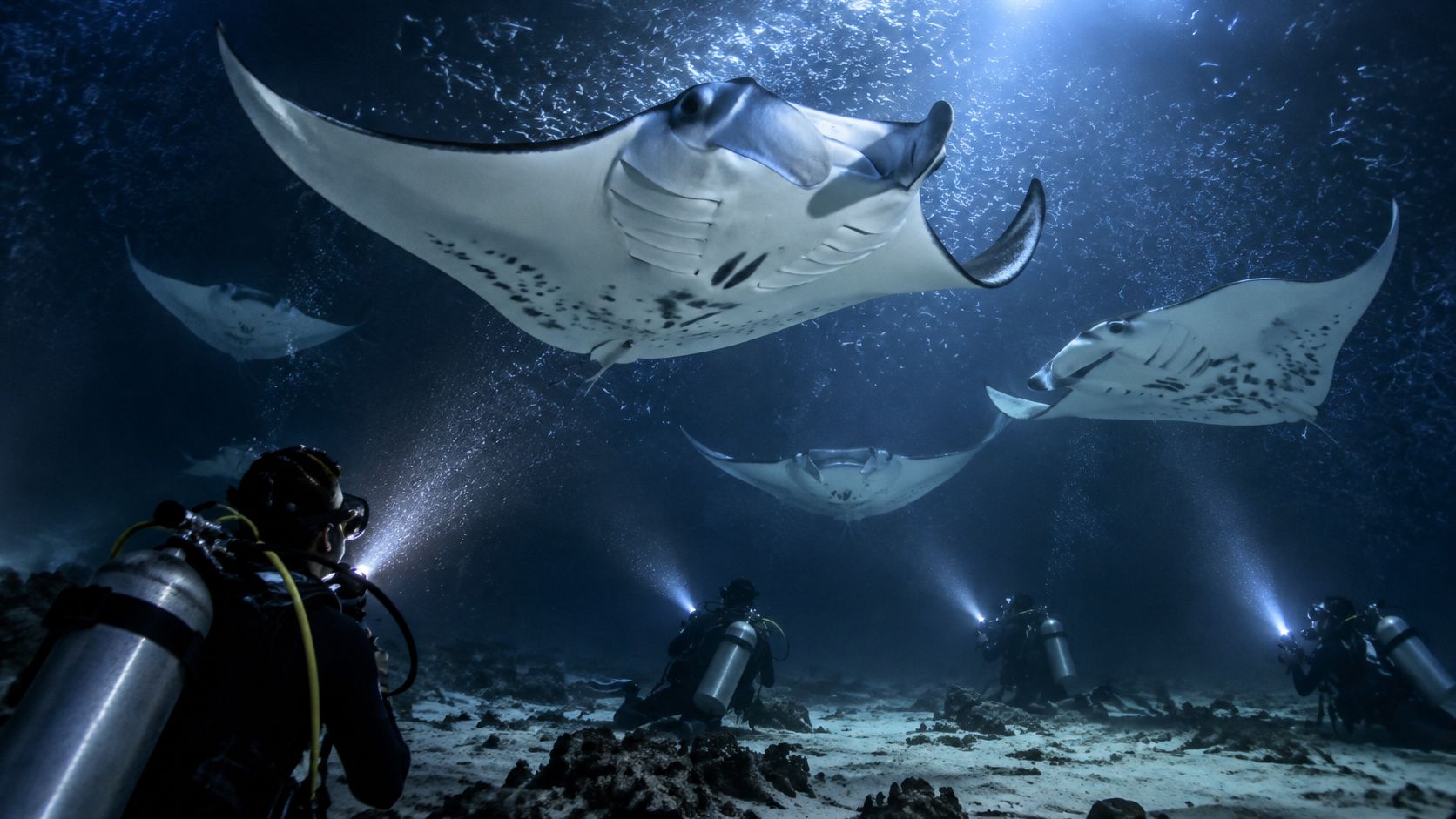
Garden Eel Cove, also known as Manta Heaven, is a protected manta-viewing location with a sheltered sandy area approximately 12 to 30 meters inside a reef amphitheater, according to Kona Honu Divers' guide to manta ray dives in Hawaii. That structure creates a more contained viewing area around the lights. It supports larger manta aggregations than Keauhou in long-term observations and gives divers nearby reef habitat instead of an exposed patch of sand.
Those features matter when you are managing darkness, other divers and a large animal overhead. Calmer conditions and better visibility around the viewing zone make positioning easier to hold. For the tour built around this site, see the Manta Ray Dive Tours option and confirm the day plan before departure.
Expect a briefing on lights and positioning, a dusk entry and time settled on the bottom watching feeding loops. Sightings are never guaranteed because rays come only when food and conditions bring them in. A night with no ray can still be a well-run dive. Any promise otherwise should lower your confidence in the operator.
A 2025 peer-reviewed study reports that Hawaiian reef mantas have low genetic diversity and limited migration between islands, characteristics that increase vulnerability to extinction, in Frontiers in Marine Science. Hawaiʻi Island and Maui Nui should be treated as separate populations. Local disturbance is not quickly corrected by animals arriving from elsewhere.
Hold a steady position. Do not touch, chase or block a ray, and keep fins off the reef while you watch. Learn more about the setting through this overview of the Hawaii Big Island manta ray night dive, then judge success by calm behavior and a protected encounter, not only by how close a ray passes.
Choose this dive if you want a resident-animal encounter in a contained, sheltered viewing area and you are comfortable accepting nature terms.
Blackwater and Advanced Dives for Experienced Divers
Blackwater diving removes the reef as your reference. You are suspended over deep open water after dark while vertically migrating animals rise toward the light. The reward is access to a pelagic community you will not see on a morning coral dive. The trade-off is variability you cannot schedule away.
A NOAA-archived study conducted 59 recreational scuba surveys off the Kona coast between November 2013 and May 2015 and found salps, siphonophores and ctenophores were the most abundant organisms encountered, according to the NOAA repository copy of the Kona blackwater study. A generalized additive model using 19 months of observations explained 43% of the variation in observed biodiversity. The three strongest predictors were water temperature, bathymetry and the El Niño-Southern Oscillation index.
Read that result as a booking warning. A technically excellent dive may produce very different organisms from one night to the next because temperature structure and large-scale climate conditions affect distribution. If you need a predictable subject for photography or a first night dive, blackwater is the wrong test.
Bring redundant lighting and disciplined buoyancy. Fragile gelatinous organisms can be hard to see and may be damaged by contact or exhaust bubbles, so guide briefings are operational instructions, not background color. Details for the Blackwater Dive tour should be matched against your logged night experience before you reserve.
The alternative for experienced divers is a premium advanced 2-tank trip to remote sites, outlined on the advanced long-range dive tour page. That option keeps terrain as the reference and suits divers who want less-visited reef and lava structure rather than open-water drift. It still demands recent dives, reliable air consumption and comfort with boat procedures away from the standard rotation.
Use this checklist before choosing either option:
- Logged night dives: You can manage lights, buddy contact and orientation without task overload.
- Buoyancy control: You can hold depth without the bottom and stop a descent quickly.
- Self-reliance: You can solve mask, light and positioning problems calmly.
- Remote terrain interest: You value site character over a predictable species list.
For more context on the open-water format, read this guide to a blackwater dive in Kona. Then ask the deciding question. Do you want variable pelagic life, or do you want the most reliable reef your experience allows? Your honest answer picks the trip.
Reading Ocean Conditions Before You Enter the Water
The most attractive site is not automatically the best dive that day. A lava entry that looks simple in a trip report can become the hardest part of the dive when swell hits it. Conditions and participant ability should set the site, not the other way around.
Hawaiʻi's Ocean Safety Division warns that the islands Pacific location creates hazards including strong currents, high surf, and waves breaking in shallow water, and says snorkelers should be experienced ocean swimmers familiar with those risks, on the state's Ocean Safety activity planning page. Certification alone does not prove you can handle a surge-filled exit in full gear.
Ocean conditions and what to do about them
| Condition | What It Means | Decision |
|---|---|---|
| Strong currents | Can carry divers away from the entry point | No shore entry; ask the guide about current first |
| High surf | Makes entries and exits difficult | Prefer a guided boat trip |
| Waves breaking in shallow water | Hazard at the entry and near the reef | Avoid shore entry that day |
| Diver-down flag | Required for scuba, freediving and snorkeling | Confirm the flag is displayed |
| Illuminated flag at night | Required for nighttime activity | Confirm before any night dive |
Check the surf and marine forecast the day before, then check again that morning. Compare what you see at the entry with what was forecast, because a calm west Kona morning and a hazardous shore entry can happen under the same blue sky. If sets are breaking on the shelf or the exit route is unclear, a guided boat trip is usually the safer substitution.
Families and novice divers need stricter thresholds than experienced local divers. A short delay matters less than a failed exit with a tired child, a new diver low on air or a snorkeler who is not a strong ocean swimmer. Background on visibility in Big Island scuba diving helps, but visibility is only one variable beside swell, wind and current. Conditions set limits. Skill sets the margin.
Ask any operator three direct questions:
- Current and swell: How are they assessed for today site?
- Wind change: At what point does the site or profile change?
- Emergency plan: What happens if a diver surfaces away from the group?
If those answers are vague, choose a different site, a different operator or a different day.
How to Choose a Dive Operator
You do not need a ranked list of every boat in Kona. You need a short checklist you can apply in one phone call. Score each operator on the same criteria, and treat evasive answers as information.
Operator checklist for Big Island dive trips
| Criterion | What to Ask | Why It Matters |
|---|---|---|
| Certification check | Are certification and logbook reviewed before sites are chosen? | Sites match your skill set |
| Group size | How many divers share each guide? | Smaller groups mean more personal attention |
| Gear setup | Does the crew handle gear setup? | Less to manage at the surface |
| Entry and mooring practice | How are entries and moorings controlled near live reef? | Mooring impacts have damaged live coral at a Kona manta site |
| Night briefing | Are lights, positioning and buoyancy briefed before night dives? | Fragile animals are easily damaged |
| Rental gear | How is rental gear serviced? | Maintained gear lowers the risk of failure |
Kona Honu Divers always checks each diver certification and logbook before choosing dive sites that match their skill set. That check protects a newly certified diver from being placed on a profile built for someone else, and it helps experienced divers get a site that uses their ability. Ask what happens if your recent experience does not fit the trip you requested. A good operator will offer a better-matched option rather than sell the seat.
Kona Honu Divers deliberately keeps dive groups small, so guides can watch air, buoyancy and positioning without spreading attention across a crowd. The crew handles all gear setup for divers, which reduces surface clutter and lets you focus on the briefing, buddy check and entry sequence. Kona Honu Divers runs dive and snorkel tours in Kona, Hawaii, with small groups and personal attention from the moment divers step aboard. For a broader framework, compare answers with this guide on how to choose a Kona diving company.
A Hawaiʻi Division of Aquatic Resources report documented coral restoration at Makakō Bay after live coral fragments were found scattered below a popular manta-dive mooring in November 2020, according to the Department of Land and Natural Resources news release. That incident shows the manta site includes living reef that can be damaged by mooring-related impacts. Ask how entries are controlled, where divers settle and how the crew keeps fins and equipment off coral.
Night briefings deserve the same scrutiny. Lights, spacing, lost-buddy steps and buoyancy should be covered before anyone enters the water. Rental gear servicing should be specific, not a shrug. Score the checklist, then book the operator whose answers protect both the diver and the reef.
Book Your Big Island Dive Trip
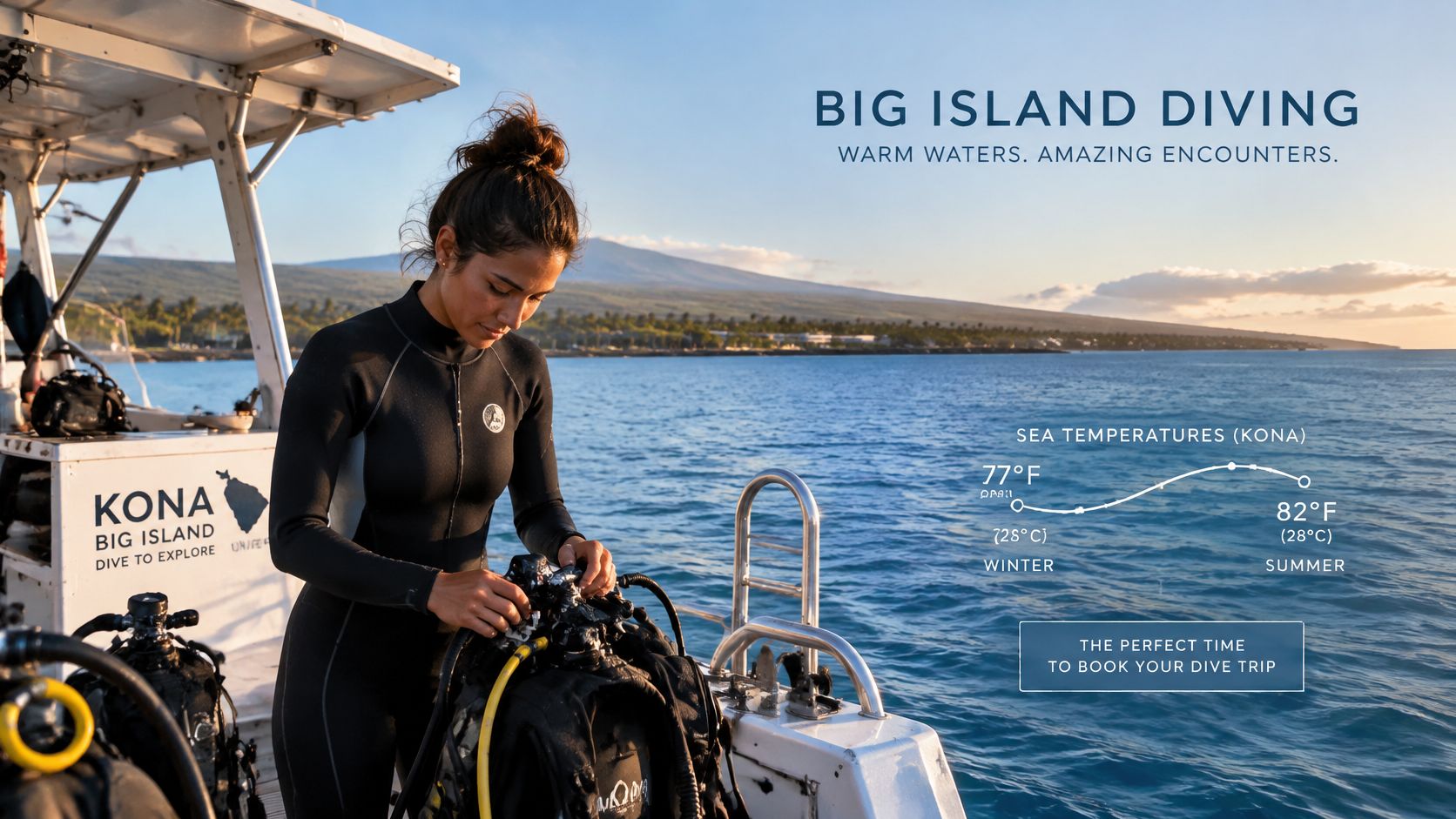
Start with water temperature, because it affects exposure protection and comfort on repeated dives. Sea-surface temperature during a six-year Kona manta photo-identification study ranged from approximately 24.5°C in March to 27°C in October, according to the NOAA repository copy of the Kona manta study. That range covers the study period only. For other months, check current ocean conditions before booking rather than stretching the research into a year-round promise.
Bring the items that remove friction at check-in and on the boat:
- Certification card and logbook: Needed for site matching and any advanced profile.
- Reef-safe sunscreen: Apply before boarding and keep it off hands that handle gear.
- Rash guard or wetsuit: Choose warmth for repeated dives, not just the first entry.
- Dive light with backup: Required for manta and blackwater nights, with fresh batteries.
- Own mask and fins: Bring them if fit matters to your comfort.
- Towel and water shoes: Useful for the boat, harbor and lava-edged access points.
- Waterproof bag: Protect your phone, ID and keys from spray.
The crew handles gear setup, so you rarely need to carry tanks or assemble equipment at the rail. You still own your buddy check. Confirm air on, releases accessible, weights secure and lights working before you step to the entry.
For cost planning, discount packages and multi-day deals can lower the cost of a multi-dive trip. Kona Honu Divers offers Big Island scuba diving discount packages, including multi-day packages and discounts. Compare the full range on the diving tours page against the two experiences you shortlisted earlier. Do not buy extra dives before you have confirmed certification fit, night comfort and a conditions backup.
Pick one experience, test it against your group weakest link and run the go or no-go check close to the date. That sequence gives Big Island divers a better chance at the dive they wanted, calm entries, clear briefings and reef and manta encounters handled with care.
Kona Honu Divers runs small-group reef, manta ray night, blackwater and advanced long-range dives from Kona, with certification and logbook checks that match sites to your experience. Choose the profile that fits your group, check conditions before you commit, and visit Kona Honu Divers to book a Big Island dive built around skill, safety and the reef itself.