
Kona gives big island divers two rare choices in one place, a resident manta aggregation of more than 270 identified reef manta rays and blackwater diving in the epipelagic zone. If you're trying to choose the right Big Island dive, that's the short answer, the rest comes down to whether you want graceful giants, open-ocean oddities, or classic reef life.
You can feel the decision point before you even book. One diver wants a calm, structured night with big animals gliding through light. Another wants the raw, suspended feeling of blackwater, where the ocean turns into a moving dark room full of drifting life. Kona is one of the few places where those experiences sit side by side, and that's what makes planning here so satisfying.
Why Kona Diving Stands Apart
The first time a diver drops into Kona at night, the water doesn't feel like a standard reef run. It feels staged by the ocean itself, with light drawing plankton into the beam and mantas moving through that glow like they own the place. The signature night experience didn't start as a polished attraction either, it grew from a small local experiment near the former Kona Surf Hotel in 1991, when one boat carried about 6–8 divers on selected nights each week, then expanded by 1993 to as many as five boats and about 50 people in the water. That history matters because it explains why Kona's dive scene still feels shaped by real marine behavior rather than by theme-park choreography. what makes diving in Kona unique
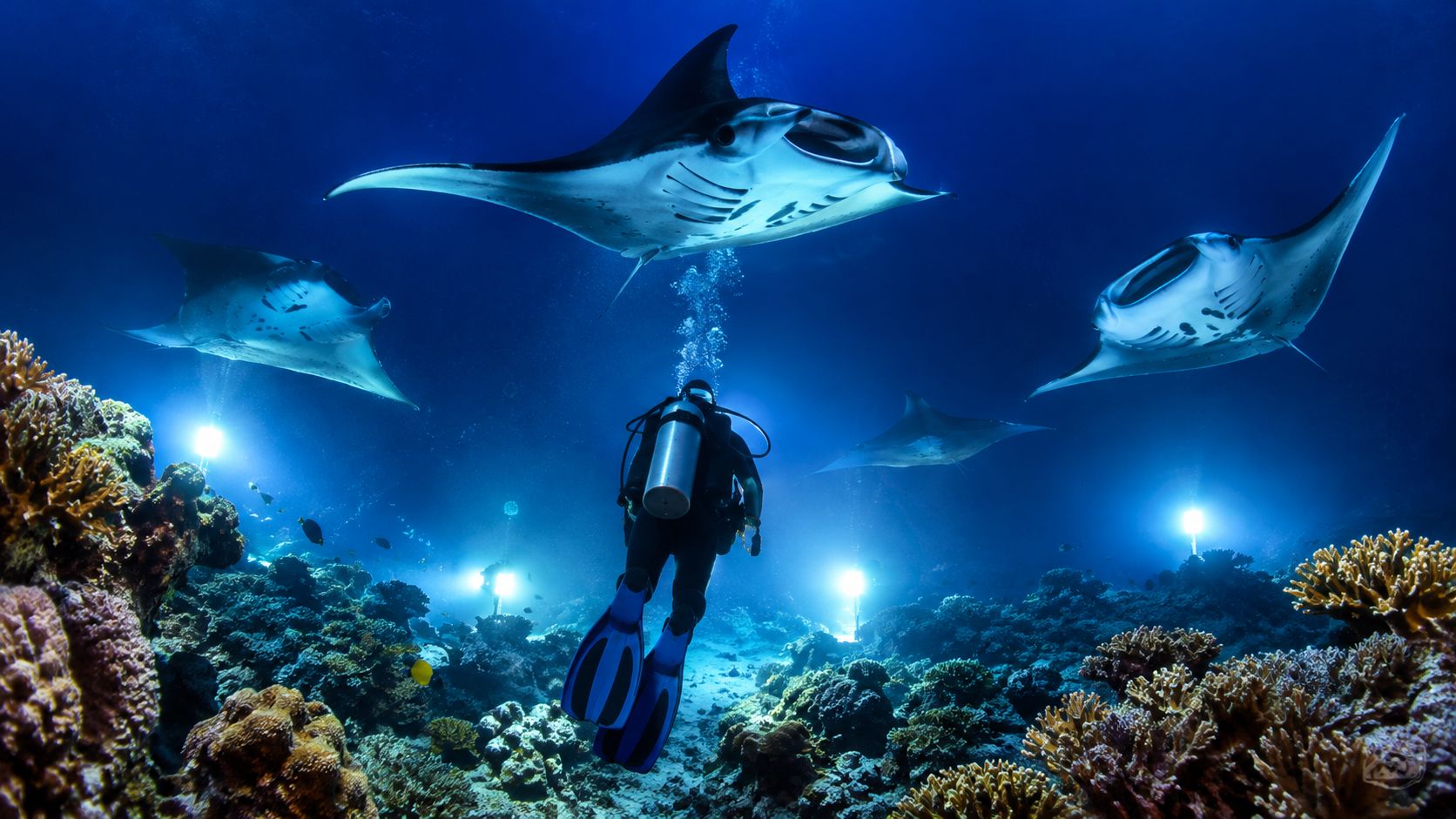
The manta dive feels earned, not manufactured
Kona's manta viewing works because artificial lights concentrate plankton, and plankton pulls the rays in to feed. That's a simple chain, but it creates one of the cleanest wildlife encounters in the Pacific when the site is managed well. The original viewing area also went through a real interruption, the Kona Surf Hotel closed in May 2000, shoreline lights went dark, and manta visits declined until the property reopened in October 2004 as the Sheraton Keauhou Bay Resort & Spa.
Practical rule: if the lights go out, the dinner bell changes. The whole encounter depends on that light-plankton relationship, so site behavior and shoreline conditions matter as much as luck.
Blackwater diving changes the whole frame
Blackwater diving feels like the opposite of reef diving because there's no bottom to orient you, only open ocean and the drift of tiny life passing through the beam. A NOAA-archived study of blackwater dives near Kona collected 76 specimens and used DNA barcoding to match genetic IDs with morphology and pigmentation where comparison was possible. That's a good reminder that the dive isn't just surreal, it's scientifically useful when observations are documented carefully. NOAA-archived blackwater study
For big island divers, that contrast is the point. Kona doesn't offer one “best” dive, it gives you a set of very different underwater moods, and each one rewards a different kind of diver.
Understanding Kona Dive Conditions
Kona's reputation starts with its conditions, not just its animals. The western coast is shielded by Mauna Loa and Hualalai, which helps keep the water calmer and more predictable than many other Hawaiian shorelines. That doesn't mean every day is flat, but it does mean divers get a reliable base to work from, especially compared with destinations that are far more exposed.
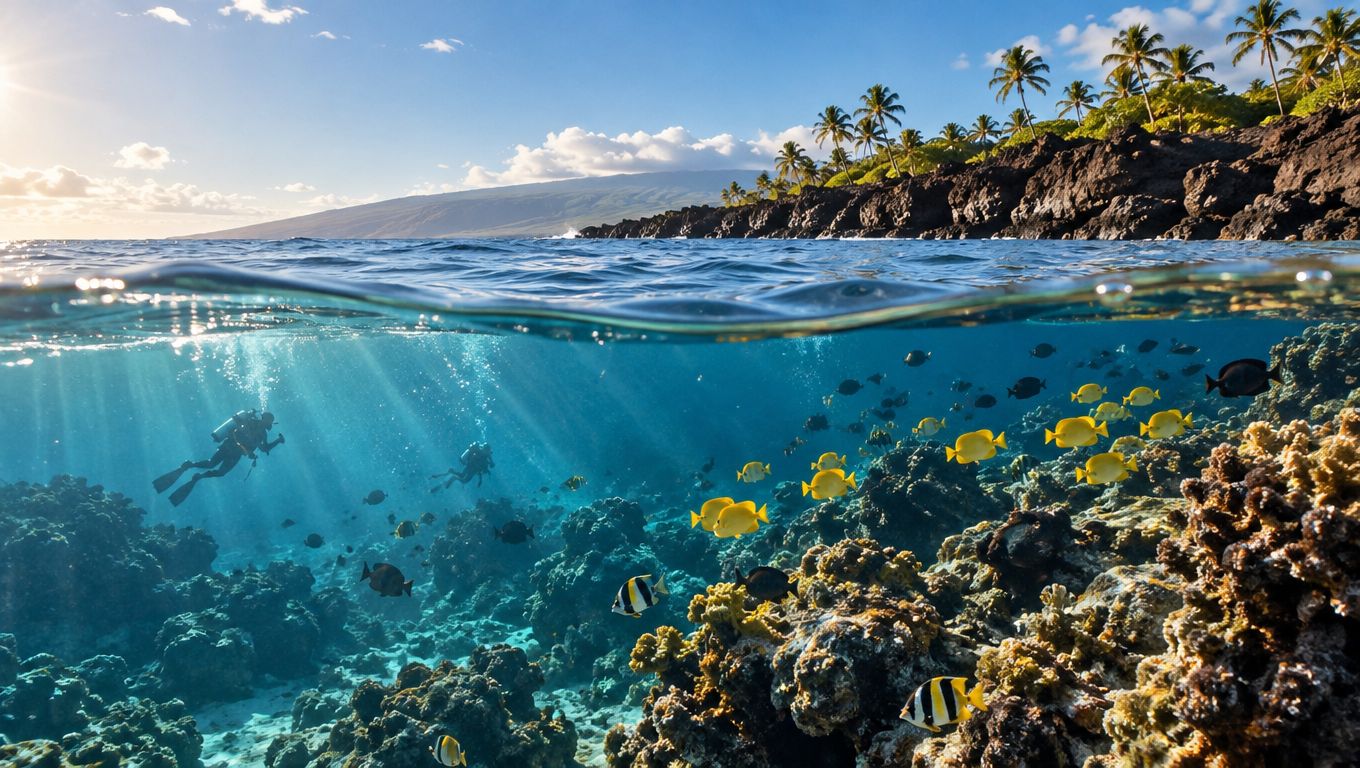
What the ocean usually gives you
Good Kona days often mean clear water and steady visibility, which is why reef detail, fish behavior, and photographer framing tend to stand out here. The Big Island's underwater terrain is volcanic, so instead of a flat sandy world you get lava tubes, arches, ledges, and drop-offs that break up the ground and create lots of hiding places for marine life. That structure is one reason dives here feel visually busy without feeling crowded.
Season matters, but not in a simplistic way. Summer usually gives divers calmer seas and easier entries, while winter can bring larger swells that affect surface conditions more than the deeper sites themselves. For blackwater and manta trips, those surface conditions matter because boat comfort and diver stability shape the whole outing.
Good planning starts on the boat, not underwater. If the ride is rough, everything becomes harder, from gearing up to staying relaxed once you're in the water.
Visibility and current shape the experience
The most important practical rule is to match the dive to the day, not just to the brochure. Stronger currents aren't the norm on many Kona sites, but certain dives still ask more of you, especially if your buoyancy is shaky or you don't like hanging in open water. For reef diving, that usually just means staying relaxed and controlled. For blackwater, it means being honest about your comfort level before you sign up.
If you want a deeper look at how water clarity changes the day, this guide on visibility in Big Island scuba diving is a useful companion. The main takeaway is simple. Kona's conditions are usually friendly, but the experience changes meaningfully with season, site, and the kind of dive you choose.
Choosing Your Kona Dive Experience
The smartest way to choose is to start with the feeling you want underwater, then match it to your training and comfort. Manta diving is the most iconic, reef diving is the most versatile, and blackwater is the most demanding in terms of mental discipline. All three are worth doing, but they reward different priorities.
| Kona Diving Experience Comparison | Skill Level | Wildlife | Best Season | Uniqueness |
|---|---|---|---|---|
| Manta night dive | Open Water or equivalent comfort in night diving | Reef manta rays feeding in artificial light | Year-round, with summer often easier on the water | Kona's signature close-up animal encounter |
| Blackwater diving | More advanced comfort in open water and night conditions | Larval fish, jellyfish, cephalopods, and other drifting pelagic life | Year-round, with conditions driven more by boat readiness than by reef season | Rare open-ocean night experience in the epipelagic zone |
| Reef diving | Broad range, from newer divers to advanced divers depending on the site | Coral reef life, turtles, tropical fish, and larger visitors | Year-round, especially pleasant when seas are calmer | The classic Kona baseline, with the most site variety |
Pick manta if you want a structured wildlife encounter
The manta night dive is the easiest “big experience” to recommend to people who want dramatic animals without technical stress. The encounter is predictable in the best possible sense, because the lights, plankton, and site setup create a feeding zone that mantas repeatedly use. Garden Eel Cove deserves special attention here because it's protected, offers a better viewing area, and gives divers a more comfortable setup for the tour. manta night dive in Hawaii
Pick blackwater if you want something strange and quiet
Blackwater isn't about a famous face or a big show. It's about hanging in the open ocean at night and watching tiny organisms drift past that most divers never see at all. If you like the idea of a dive that feels more like exploration than entertainment, this is the one.
Pick reef diving if you want the broadest range
Reef diving is still the foundation for most Kona visits. You get a normal rhythm, more visual structure, and a lot more flexibility for mixed-certified groups. It's the best choice when part of the group wants a relaxed day and part of the group wants to keep the schedule simple.
What to Expect from Top Dive Operators
A good Kona operator changes the whole trip before you even enter the water. The best crews make the logistics feel smooth, the boat feel stable, and the dive plan feel clear enough that you're not burning energy on avoidable confusion. That matters on night dives and blackwater trips especially, because comfort and calm are part of safety.
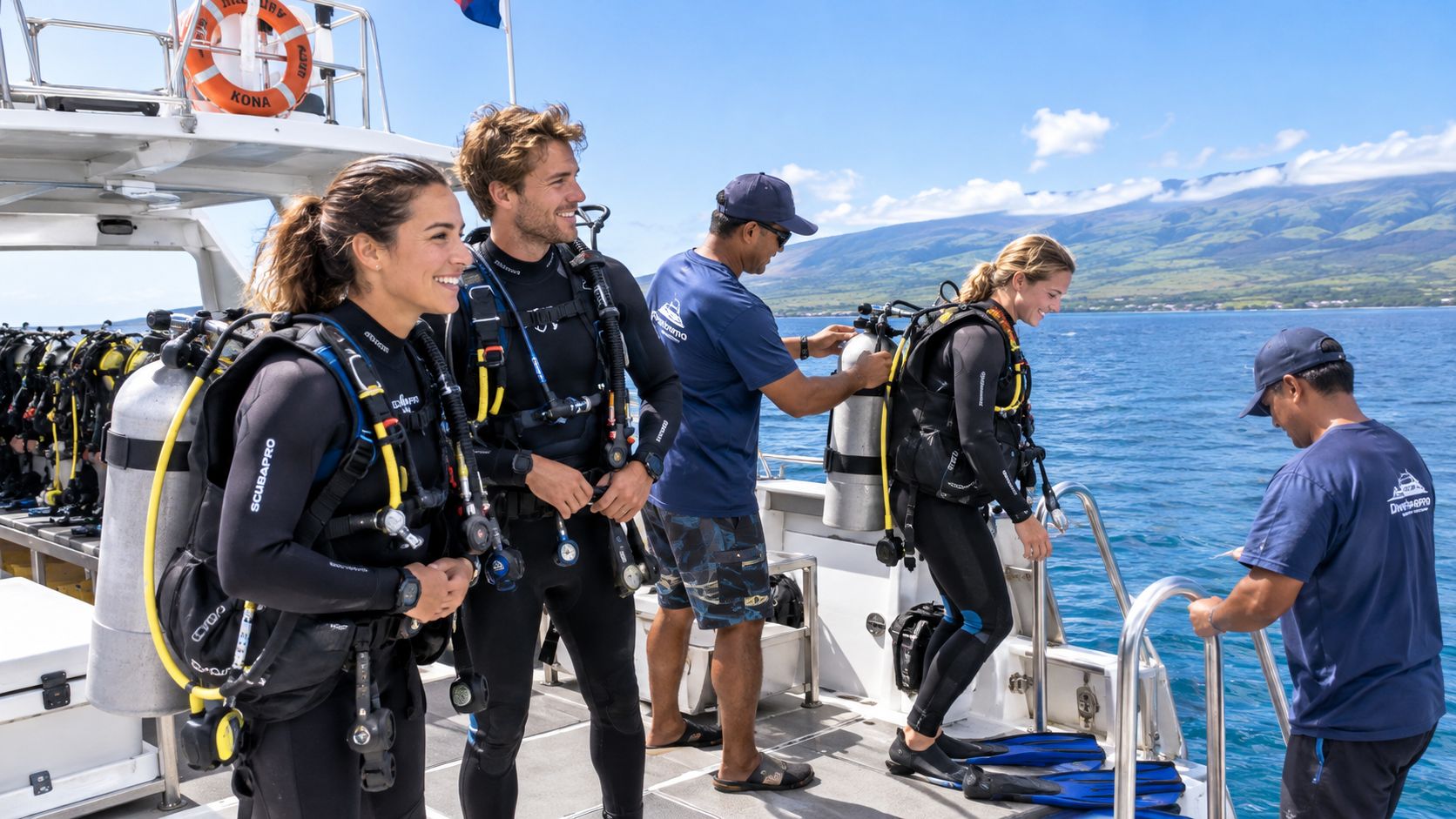
The boat and gear should do real work for you
Custom dive boats should feel stable, organized, and easy to move around on. Look for practical features like gear storage, changing space, and deck layouts that don't force everyone to crowd the same narrow corner while gearing up. Rental equipment should be modern and clean, because worn gear turns a relaxed dive into a series of small annoyances.
Crew knowledge matters just as much as hardware. A local guide who understands current, site selection, buoyancy control, and marine behavior can make a hard day manageable and a good day excellent. If you're considering Kona Honu Divers, expect them to be one operator in the mix that handles guided tours, nitrox, and a range of Kona dive styles.
The trip structure should feel organized, not rushed
Good trips usually start with check-in, gear sorting, and a clear briefing that covers entry, descent, expected wildlife, and what happens if the plan changes. After the dive, crews should debrief cleanly and give you space to reset before the next departure. That structure matters because divers who know what comes next are less likely to waste energy on uncertainty.
Ask how the crew handles small groups, surface support, and emergency communication before you book. Those answers tell you more than a sales page does.
Post-dive comfort counts, too. A crew that offers refreshments, helps with gear, and steers people toward good dining or rest options is usually thinking about the whole guest experience, not just the underwater segment. That's the kind of operation serious big island divers tend to return to.
Pricing and Booking Considerations
Good value in Kona isn't just the lowest price, it's the best combination of site quality, group size, safety, and what's included. A cheap seat on a crowded boat can cost more in lost comfort than it saves in money. The better question is whether the trip gives you the dive you wanted.
Book for fit, not just for availability
Morning trips often make sense because they're usually calmer and less hectic, and many operators reward early bookings with discounts. That can be a smart move if you want easier surface conditions and more room on the schedule later in the day. Multi-dive packages are usually the better value when you know you want more than one experience, especially if you're planning reef dives plus a manta or blackwater trip.
Free nitrox is another real value point for certified divers because it reduces gas cost pressure and can extend your usable bottom time within normal dive planning limits. Add-ons matter, too. Ask what's included, because a package that includes the dive, rental gear, and guide support is easier to compare than one that starts low and adds everything later.
Reserve early if your dates are fixed
Peak travel weeks fill the best boats first, especially for manta trips and specialty dives. If you're building a trip around a certification course or a specific wildlife experience, book ahead instead of hoping for a last-minute opening. That's especially true when your group has mixed skill levels or needs a specific schedule around flights and land plans.
A fair booking decision looks like this, in order:
- Choose the experience first: manta, blackwater, or reef.
- Check what's included: gear, nitrox, refreshments, guide ratio, and tax.
- Compare boat size and comfort: stability matters more than flashy language.
- Confirm cancellation and weather policies: night dives need flexibility.
- Lock dates early: especially if your travel window is short.
If you do those five things, the price usually makes more sense because you're buying the right trip, not just the cheapest one.
Preparing for Your Big Island Dive Trip
A good Kona day starts before you step on the boat. Match the dive to your comfort level first. Reef dives give you the widest margin for error and the most flexibility, while manta nights and blackwater trips ask for steadier nerves, better buoyancy control, and comfort in dark water or open ocean conditions.
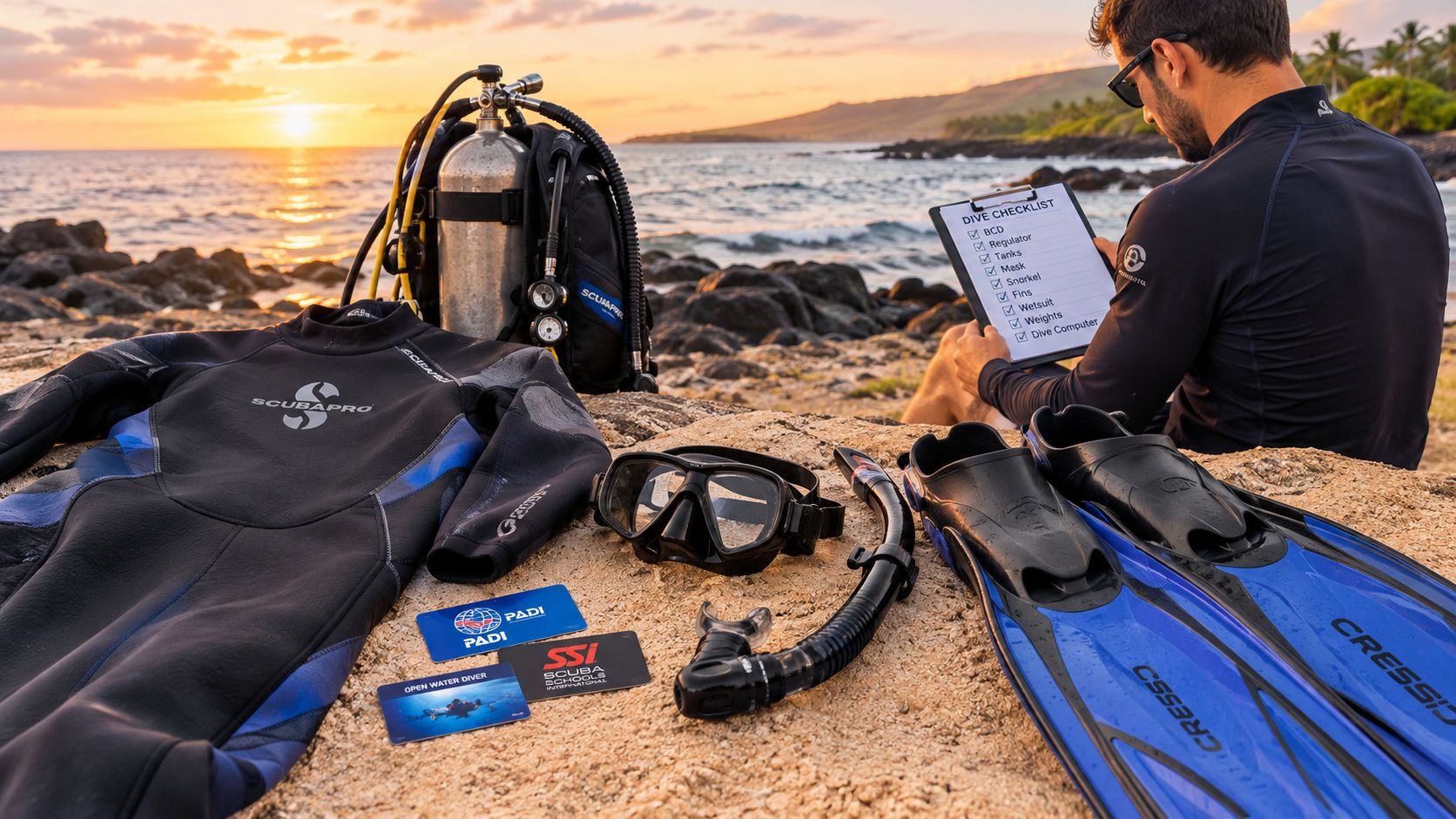
Seasickness is easier to prevent than to fix
Boat choice matters, and so does how you prepare. The Divers Alert Network recommends a wider-beam vessel because it tends to ride more steadily, picking dive sites closer to shore, avoiding alcohol and heavy meals the day before, and eating a light meal about 45–60 minutes before boarding. If you use motion-sickness medicine, many divers do better when they start it the night before rather than waiting until the morning, but read the label and learn how your body responds before you get on the water. DAN seasickness prevention For a fuller rundown of prevention strategies, see how to avoid seasickness.
Common items divers carry include the Ship-EEZ Seasickness Patch, Dramamine pills, Bonine pills, Sea Band wristbands, and ginger chews. Start anything new early enough to understand your reaction, because a bad surprise on a boat is a poor place to find out.
Pack for comfort and control
Bring what makes the day easier, not heavier. Reef-safe sunscreen, water, a towel, a warm layer for after the dive, and any personal items you rely on for comfort will cover most trips. If you are flying in from altitude or a colder climate, give yourself time to settle before stacking multiple dives into one day.
Talk through medical issues with both your physician and your operator. That is basic dive discipline, not overcaution. Gear choices matter too. What keeps you comfortable on the boat usually makes the underwater part better as well.
Planning Your Perfect Kona Diving Adventure
Start with the kind of memory you want to bring home. If you want a dramatic wildlife encounter, book manta. If you want something strange, quiet, and distinctly different, book blackwater. If you want a dependable all-around day with the widest range of marine life, plan around reef dives and mix in the others if your schedule allows.
Build the trip around your strongest constraint
Time, comfort, and certification usually decide the itinerary. If your trip is short, prioritize one signature dive and one simpler reef day rather than trying to cram in everything. If you have more flexibility, combine a manta night, a reef excursion, and a blackwater trip so you can compare the experiences instead of guessing from descriptions alone.
A practical timeline helps:
- Before travel: confirm certification status and any medical questions.
- A few weeks out: reserve the dives you care about most.
- A few days out: hydrate, rest well, and avoid overloading your schedule.
- Day of dive: keep meals light, gear organized, and expectations realistic.
That last part matters more than people think. The best dives usually come from divers who show up rested, steady, and ready to listen.
If you want to extend the trip, add one land-based day for Kona's coast, or keep winter open for whale activity offshore.
Kona rewards visitors who choose with intention. The place gives you options that don't feel interchangeable, and that's rare. Pick the dive that matches your skill, your curiosity, and your comfort level, then let the water do the rest.
If you want a crew that runs manta nights, blackwater trips, and local reef diving with the same attention to detail, Kona Honu Divers is set up for that style of trip. Their boats, guided dives, and booking options make it easier to match the right experience to your level, so you can spend less time guessing and more time in the water.