
You’re probably here because you’ve seen the photos. Glassy blue water. Bright reef fish. The white monument against black lava and green cliffs. It looks simple from shore, but big island captain cook snorkeling goes much better when you understand how the bay works before you show up.
Kealakekua Bay rewards people who plan well. It’s one of those places that can feel effortless if you choose the right access method, bring the right gear, and respect the conditions. It can also turn into a rough day if you underestimate the trail, the sun, or the swim.
That’s why this guide takes a realistic approach. I’ll walk you through what makes the bay special, what you’re likely to see underwater, and the safest ways to reach the Captain Cook Monument snorkeling area.
Welcome to Your Perfect Snorkeling Adventure at Kealakekua Bay
A lot of visitors arrive on the Big Island wanting one perfect snorkel day. They don’t want murky water, crowded beach entries, or a place that looks better online than it does in person. They want calm water, healthy reef, and that feeling of floating over a living aquarium.
Kealakekua Bay is usually the answer.
This protected bay covers 1,332 acres as a State Historical Park and Marine Life Conservation District, and that protection has helped create fish biomass 3 to 5 times denser than nearby fished areas, according to this Kealakekua Bay overview from Kona Snorkel Trips. For a snorkeler, that translates into something simple. You tend to see more life, more quickly, and in clearer surroundings than at many easy-access shoreline spots.
What first-timers notice right away
The bay feels sheltered. Even before you put your face in the water, you can usually tell this place is different from a more exposed stretch of coastline. The cliffs and shape of the bay help keep conditions calmer, which makes the experience easier for beginners and more enjoyable for experienced snorkelers.
Once you’re in, the reef starts almost immediately in the monument area. You don’t spend half your energy just trying to reach decent snorkeling.
Local guide view: People often think the monument is the main attraction. It’s memorable, but the real reason most visitors leave smiling is the water itself.
Why this trip sticks with people
Kealakekua Bay combines a strong first impression with a setting that keeps revealing more the longer you float. One minute you’re watching schools of reef fish move over coral heads. Next you look up and remember you’re also in a place with major Hawaiian history.
That mix is rare. You’re not just checking off another snorkel stop. You’re visiting a marine sanctuary that feels both beautiful and important.
Why Kealakekua Bay is a World-Class Snorkel Spot
The bay’s reputation isn’t hype. It comes from three things working together at the same time. Protected water, strong historical meaning, and reliable underwater viewing.
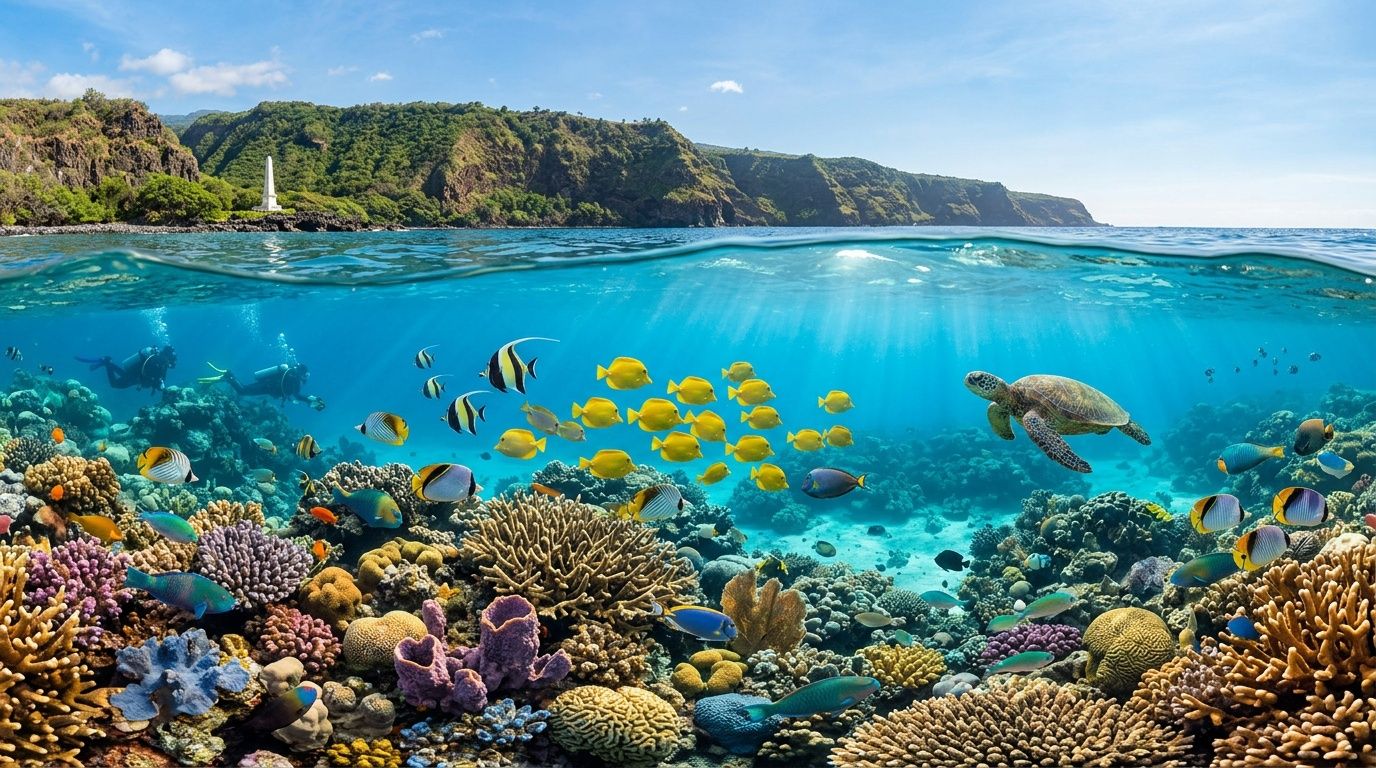
Kealakekua Bay draws an estimated 190,000 visitors yearly, and that demand helps fuel Hawaii’s $100 million snorkeling industry, according to this Kealakekua Bay depth and history page. The same source notes the significance of January 17, 1779, when Captain James Cook first arrived in the bay. That date matters because it marked a major moment in Hawaiian and European contact history.
Protected water changes everything
Some snorkeling spots are pretty when conditions line up. Kealakekua Bay is different because protection is built into the place itself, both legally and geographically.
The Marine Life Conservation District status helps marine life thrive. The bay’s shape also helps reduce the chop and surge that make many snorkel sites tiring. That means more time looking down at fish and coral, and less time fighting the surface.
For families and newer snorkelers, that difference is huge. Calm entry and stable visibility make people feel more confident. Confident snorkelers notice more.
History gives the place weight
You don’t have to be a history buff to feel that this bay is more than a scenic stop. The monument area is tied to a significant chapter in Hawaiian history, and that context changes the mood of the experience.
Instead of feeling like a random reef with a landmark, the bay feels layered. You’re swimming in a place that carries cultural and historical meaning well beyond tourism.
The underwater experience is unusually consistent
Visitors often ask what makes one good snorkel site better than another. Usually, it comes down to whether you can see much and whether marine life sticks around.
Kealakekua Bay does well on both fronts because of its combination of shelter and protection.
| World-class factor | What it means for you |
|---|---|
| Protected status | More abundant marine life and healthier reef conditions |
| Sheltered geography | Calmer water and easier surface swimming |
| Historic setting | A snorkel trip that also feels culturally significant |
Why people from very different skill levels all like it
Beginners like the calmer setting. Experienced snorkelers like the density of life and the depth changes near the reef edge. Photographers like the clear water. Families like that a guided boat trip removes the hardest logistics.
A place becomes world-class when it works for different kinds of visitors without losing what made it special in the first place.
That’s Kealakekua Bay in a nutshell.
How to Access the Captain Cook Monument
Here, many guides get too casual. They make the monument sound easy to reach, as if you can just park nearby and wander down for a quick swim. You can’t.
There’s no direct car access to the prime snorkeling area. In practical terms, most visitors choose between boat tour, kayak, or hike. Those choices are not equal in effort or safety.
The hardest independent option is the trail. The hike to the monument is 1.9 miles with a steep 1,300 ft elevation loss, and Hawaii DLNR reports indicate 15+ rescue operations annually in Kealakekua Bay. Aggregated visitor reviews also suggest 70% of independent visitors report fatigue-related issues, according to this Kealakekua Bay access guide from Love Big Island.
Comparing Access Methods to Captain Cook
| Method | Effort Level | Safety | Cost | Best For |
|---|---|---|---|---|
| Boat tour | Low to moderate | Highest for most visitors | Paid tour | Families, beginners, most travelers |
| Kayak | Moderate to high | Variable | Rental and permit related costs | Strong paddlers comfortable with planning |
| Hike | High | Lowest margin for error | Lower direct cost | Fit, heat-prepared visitors who know what they’re taking on |
Boat tour
A boat tour is often the most practical option. You skip the trail, avoid carrying gear in the heat, and enter the water closer to the best snorkeling zone.
This matters more than people think. When visitors arrive fresh, they tend to snorkel longer, stay calmer, and enjoy the bay more. If you want a straightforward option, this Kealakekua Bay snorkeling tour page shows what guided access typically looks like.
Kayak
Kayaking appeals to independent travelers because it feels adventurous and self-directed. It can be a good fit for experienced paddlers who understand permits, launch logistics, and changing ocean conditions.
What gets overlooked is the workload. You’re managing transport, paddling effort, sun exposure, and then still trying to have enough energy left to snorkel well. For some people that’s fun. For many vacationers, it’s more complicated than expected.
Hike
The hike sounds manageable on paper until the return climb starts after you’ve already been in the sun and salt water. The downhill section can also fool people into thinking the route is easier than it is.
If you hike, the hard part is often the way back up. Legs are tired, you’re warmer than you realized, and there’s very little forgiveness if you didn’t bring enough water or proper footwear.
Common mistakes with independent access
- Underestimating the heat: The trail is exposed, and the return climb can feel much harder after snorkeling.
- Bringing poor footwear: Slippers and casual sandals don’t give enough support on a steep, rough trail.
- Assuming help is nearby: Rescue is possible, but this is not a place to rely on last-minute fixes.
- Treating the bay like a beach park: It isn’t. Access takes planning.
Practical rule: If your goal is a relaxed snorkel day, choose the method that preserves your energy for the water, not the one that turns the approach into the main event.
My honest recommendation
If you’re traveling with kids, older relatives, occasional swimmers, or anyone who just wants a great day without unnecessary strain, book a boat. If you love self-supported adventure and have the fitness for it, kayak or hike can work, but they require a much more serious approach.
That’s the tradeoff. Solitude and independence can be rewarding, but they come with real effort and less margin for error.
Choosing the Best Captain Cook Snorkel Tour
Once you’ve decided to go by boat, the next question is simple. Which kind of tour gives you a safe, unrushed, useful experience instead of a crowded shuttle ride?
A good Captain Cook trip gives you enough water time to settle in, find your rhythm, and enjoy the reef. Captain Cook snorkel tours typically allocate 1.5 to 2 hours of total water time, which balances comfort in the water with enough time to explore areas where snorkelers may see over 100 fish species, according to this breakdown of Captain Cook tour water time.
What to look for before you book
The best tour for you isn’t always the biggest boat or the cheapest seat. Look at the parts that affect your actual day in the water.
- Crew attention: You want guides who watch guests, explain entry clearly, and help nervous snorkelers settle down.
- Reasonable water time: Too short feels rushed. Too long can leave newer snorkelers cold or tired.
- Clear safety process: Good operators explain where to snorkel, where not to drift, and how to reboard.
- Environmental respect: The crew should model good reef behavior, not just mention it.
Two tour options many visitors consider
If you want a direct monument-focused trip, one option is Kona Snorkel Trips Kealakekua Bay Captain Cook Monument tour. Another option is Captain Cook Snorkeling Tours. Both are relevant choices for travelers comparing dedicated Captain Cook outings.
Kona Honu Divers also offers a Captain Cook snorkel tour for visitors looking at guided boat access through a company that also runs other ocean activities on the Big Island.
Questions worth asking the operator
Some travelers focus only on departure time and price. Ask a few better questions and you’ll get a much clearer sense of fit.
- How much actual snorkel time is included?
- Do you provide flotation for beginners?
- How does the crew handle less confident swimmers?
- What happens if conditions change?
Those answers usually tell you more than the brochure copy.
The right tour should leave you feeling supported, not managed.
Marine Life to Expect and Responsible Viewing
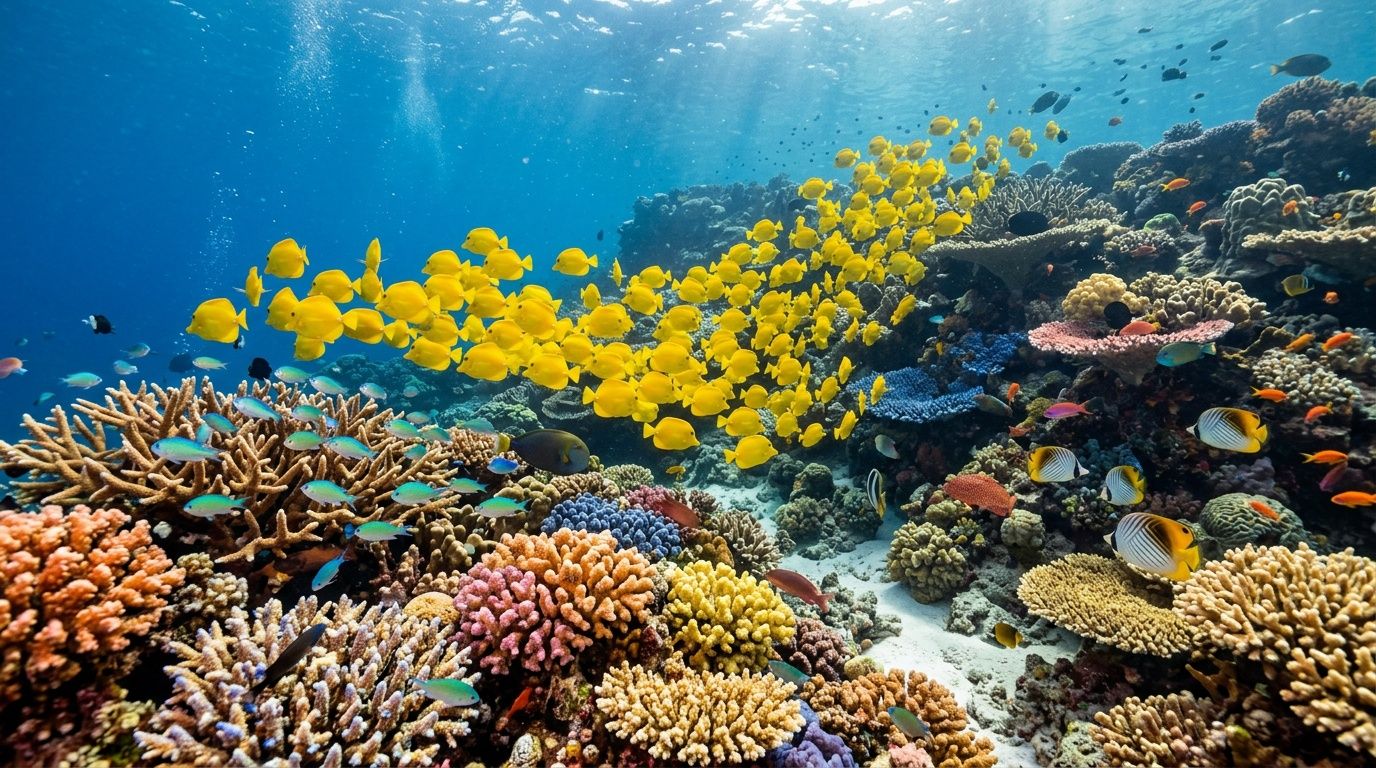
For many, the clarity is the primary draw, with the fish becoming a memorable bonus. Kealakekua Bay supports the kind of snorkeling where you don’t have to chase the experience. The reef is busy enough that if you float calmly and look carefully, marine life usually comes to you.
You can expect reef fish in large numbers, coral structure close enough to appreciate from the surface, and the possibility of seeing animals that make people stop talking for a minute. That might be a honu gliding across the bottom, a school shifting as one body, or dolphins in the distance.
What you’re likely to notice first
The fish density stands out quickly. Even casual snorkelers usually notice that they aren’t peering into empty water waiting for a sighting. The reef has activity across the whole scene.
Common observations include:
- Schooling reef fish: Bright groups moving over coral and lava structure.
- Butterflyfish and tangs: Easy for beginners to spot because of their color and movement.
- Honu: Often seen cruising calmly or resting lower on the reef.
- Spinner dolphins: Sometimes present in the bay, but they need space and legal protection.
Why responsible viewing matters more now
Recent monitoring has shown challenges such as minor coral bleaching from warmer waters, and regulations protecting spinner dolphin resting zones now restrict access to about 30% of the bay during peak morning hours, according to this Kealakekua Bay destination page. For visitors, that means two things. The reef needs careful treatment, and some areas may feel more concentrated with snorkel traffic during certain times.
That’s not a reason to skip the bay. It’s a reason to behave well in it.
Simple rules that protect the bay
- Keep your distance from wildlife: Don’t chase turtles or approach resting dolphins.
- Never stand on coral: Coral looks rock solid from above, but it’s living structure.
- Don’t feed fish: It changes natural behavior and doesn’t help the ecosystem.
- Stay aware of your fins: Many accidental reef contacts happen when people stop paying attention behind them.
If you want a solid refresher on ocean manners, this guide to responsible and considerate diver etiquette covers habits that also apply well to snorkelers.
Good snorkelers don’t just spot more marine life. They disturb less of it.
A better way to move through the reef
Float slowly. Keep your body horizontal. Use small fin kicks. Pause often.
That simple approach helps in three ways. You conserve energy, you avoid stirring up the area around you, and marine life acts more naturally when you aren’t charging through the water.
Your Essential Captain Cook Snorkeling Checklist
This is the practical part. Good planning doesn’t make the day less adventurous. It makes the adventure smoother.
At the monument area, primary snorkeling depths range from 10 to 30 feet, and the bay’s geography helps visibility routinely exceed 100 feet by reducing particulate suspension 70 to 80 percent compared with more exposed Kona snorkel sites, according to this detailed look at water depth at Captain Cook Monument. The most important takeaway is simple. You usually can’t stand where the best snorkeling happens, but you can still see very well from the surface.
What to pack
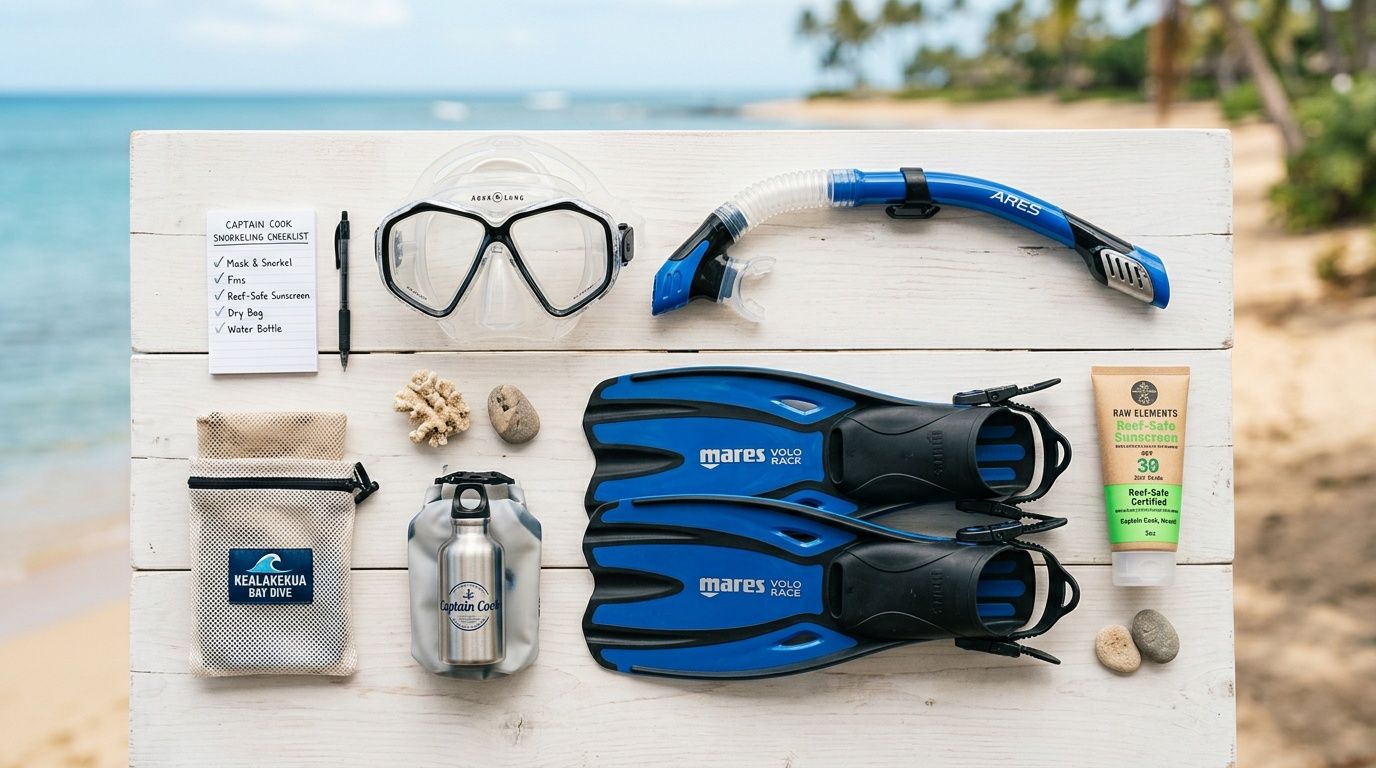
You don’t need much, but each item should solve a real problem.
- Reef-safe sunscreen: Mineral sunscreen is the safer choice for the reef and your skin.
- Rash guard or swim shirt: Better sun protection than relying only on lotion.
- Towel and dry clothes: Especially nice for the ride back.
- Hat and sunglasses: The reflected sun off the water adds up fast.
- Reusable water bottle: Hydration matters before and after snorkeling.
- Waterproof phone case or camera: You’ll want photos if conditions are clear.
If you’re still figuring out what gear matters most, this overview of the gear you will need for your Kona diving adventure is written for divers but still gives useful packing context for ocean trips in Kona.
Seasickness prep that’s worth doing early
Even people who feel fine on land can get queasy on a boat. If you know you’re prone to motion sickness, handle it before departure.
Options many travelers consider include the Ship-EEZ Seasickness Patch, Dramamine pills, Bonine pills, Sea-Band wristbands, or ginger chews.
Checklist before you get in the water
- Test your mask fit before the boat reaches the snorkel spot.
- Adjust fins on deck where it’s easier and safer.
- Listen to the site briefing even if you’ve snorkeled elsewhere.
- Use flotation if you’re unsure. Confidence saves energy.
- Drink water before and after your snorkel session.
Gear rule: The best snorkel setup is the one that lets you relax. A leaking mask or loose fin can ruin a calm day fast.
Best timing and mindset
Morning usually gives the calmest feel on the water. It also tends to be easier for newer snorkelers because they aren’t dealing with a long hot day before they ever get in.
The right mindset helps too. Don’t treat this like a sprint to cover the whole bay. Drift, observe, reset your breathing, and let the reef come into focus.
Frequently Asked Questions
Is morning or afternoon better?
Morning is usually the easier choice for most visitors. Conditions often feel calmer, and many snorkelers prefer starting the day fresh rather than trying to fit in a boat trip after a long afternoon in the sun.
Can beginners do big island captain cook snorkeling?
Yes, if they go on a guided boat tour. The bay can be very beginner-friendly because the water is often clear and sheltered, but the main snorkeling area isn’t shallow enough for comfortable standing. Beginners usually do best with flotation, crew guidance, and a controlled boat entry.
Do I need a permit to kayak there?
Yes, kayaking involves permit considerations and more planning than many visitors expect. It’s worth checking the current rules well in advance rather than assuming you can improvise on arrival.
Is the hike worth it?
For some visitors, yes. It offers independence and a different feel from a tour. But it’s worth it only if you’re prepared for the physical effort, heat, and uphill return. If your main goal is excellent snorkeling rather than a strenuous outing, a boat tour tends to be more enjoyable.
For broader trip-planning basics, these Kona Honu Divers FAQs are a useful place to sort out common logistics before you book.
If you want help turning your plan into a smooth day on the water, Kona Honu Divers offers Big Island ocean activities including Captain Cook snorkel trips, and it’s a practical place to start comparing guided options for your Kealakekua Bay visit.